

A pink bedroom can easily go in two very different directions: thoughtfully layered and sophisticated, or overly sweet and visually busy. The key is choosing the right shade, balancing it with calming neutrals, and giving the room enough texture to feel grown-up and inviting. Whether you love dusty rose, blush, muted mauve, or a stronger rosy pink, you don’t need to repaint everything or replace your furniture. Small changes can completely shift the atmosphere. These pink bedroom ideas explore everything from subtle accents and elegant color combinations to bold walls, cozy textiles, and clever solutions for smaller spaces.
1. Layer Soft Blush Pink With Cream
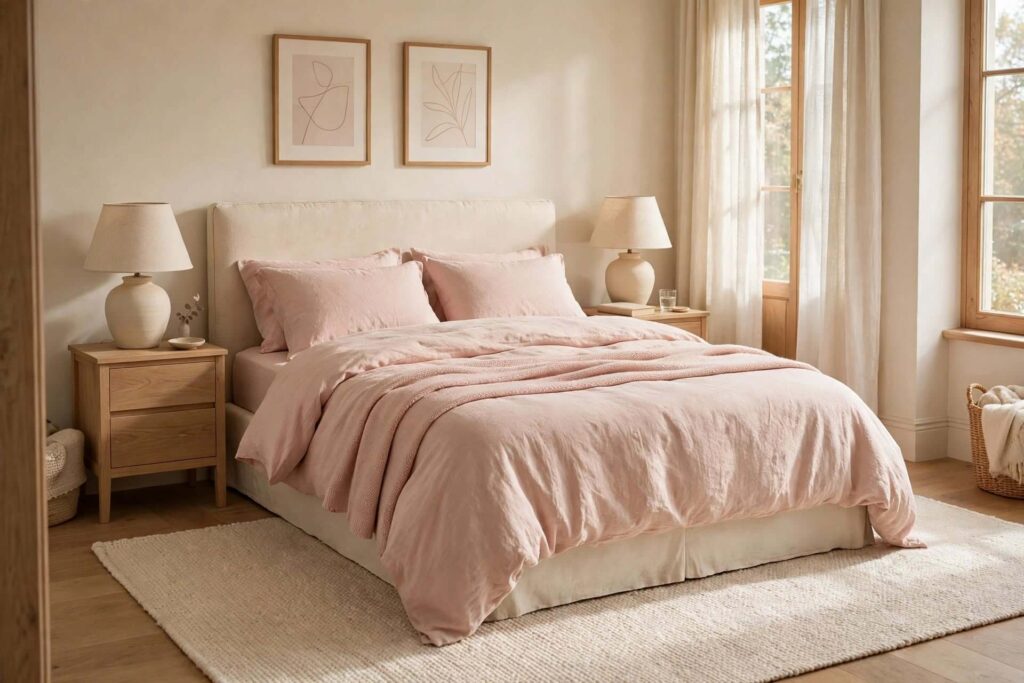
Blush pink becomes especially calming when paired with warm cream rather than stark white. Try creamy walls or bedding with blush pillows, a soft upholstered headboard, and a textured cream rug. Add light oak or natural wood nightstands to ground the palette. This combination works beautifully in bedrooms that need warmth without feeling overly colorful, and it is easy to update later because the neutral foundation can stay while accessories change.
Quick Win: Start with blush pillowcases, a throw, and one piece of wall art before committing to pink paint.
2. Create a Dusty Rose Feature Wall

If you want pink to make a stronger statement, a dusty rose feature wall can become the room’s natural focal point. Keep the remaining walls soft white or warm beige so the color feels intentional rather than overwhelming. A simple upholstered bed, brass reading lights, and neutral bedding allow the wall to do most of the visual work. This approach is particularly useful when you want personality without covering every surface in pink.
3. Mix Pink With Warm Terracotta
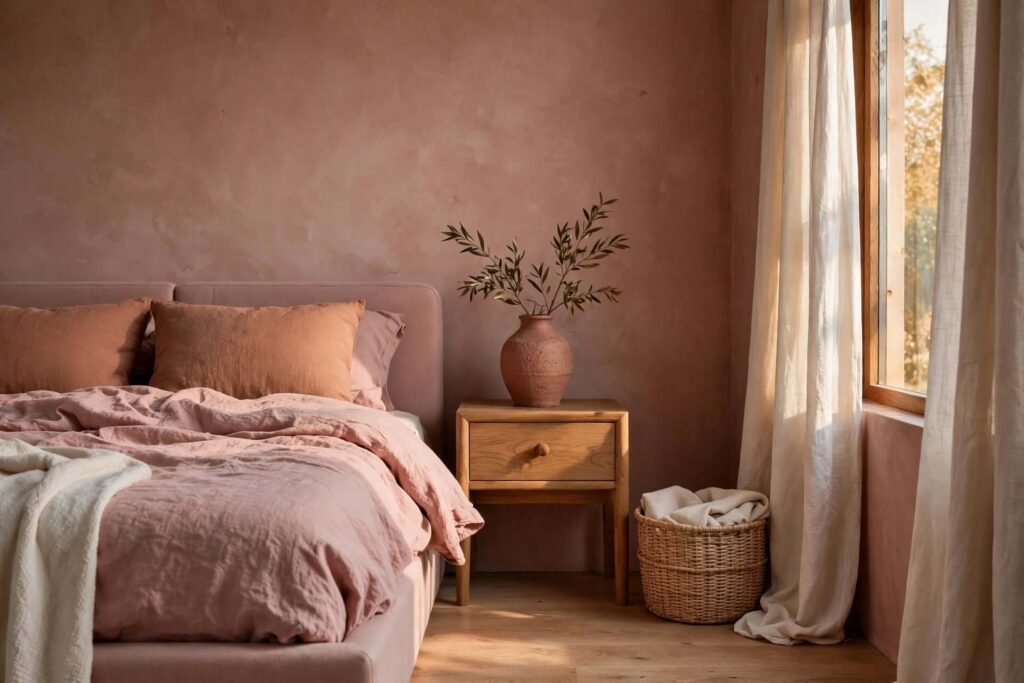
For a richer, more earthy bedroom, combine muted pink with terracotta and warm clay tones. Use dusty pink bedding against creamy walls, then introduce terracotta through cushions, ceramics, artwork, or a small bench. Natural wood and woven materials help connect the colors. The result feels collected and warm rather than sugary, making this palette a strong option for adults who want pink with a more grounded character.
Quick Win: Add one terracotta cushion and a handmade-looking ceramic vase to an existing pink-and-neutral bedroom.
4. Try Pink and Deep Green Together

Pink and deep green create a striking contrast that can make a bedroom feel sophisticated and layered. Choose a muted blush or dusty pink rather than an extremely bright shade, then introduce forest or olive green through curtains, a headboard, bedding, or artwork. Brass details and medium-toned wood add warmth between the two colors. This pairing works especially well when you want a bedroom with more depth and personality.
5. Use Pink Bedding Against White Walls
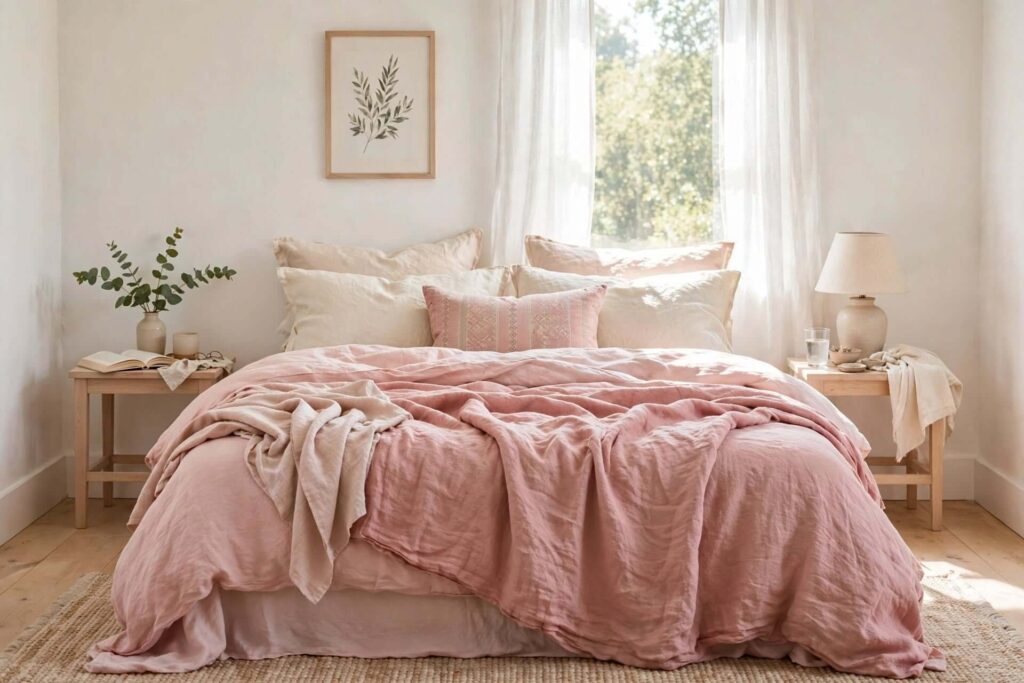
You don’t need pink walls to create a convincing pink bedroom. Keep the architecture crisp with warm white walls and let layered bedding introduce the color. Combine blush sheets, a dusty pink duvet, cream pillows, and one patterned lumbar cushion for depth. This is an excellent choice for renters or anyone who prefers flexibility because bedding can completely change the room without permanent alterations.
Quick Win: Replace only the duvet cover and two pillow covers with coordinated pink shades for an instant update.
6. Go Moody With Mauve and Charcoal

For a more dramatic interpretation, pair muted mauve with charcoal gray. A mauve upholstered bed or bedding can soften darker furniture while charcoal curtains or a rug give the room visual weight. Keep metallics understated and use warm lighting so the palette remains inviting rather than cold. This approach is particularly effective in larger bedrooms or spaces with good natural light.
7. Add a Pink Upholstered Headboard
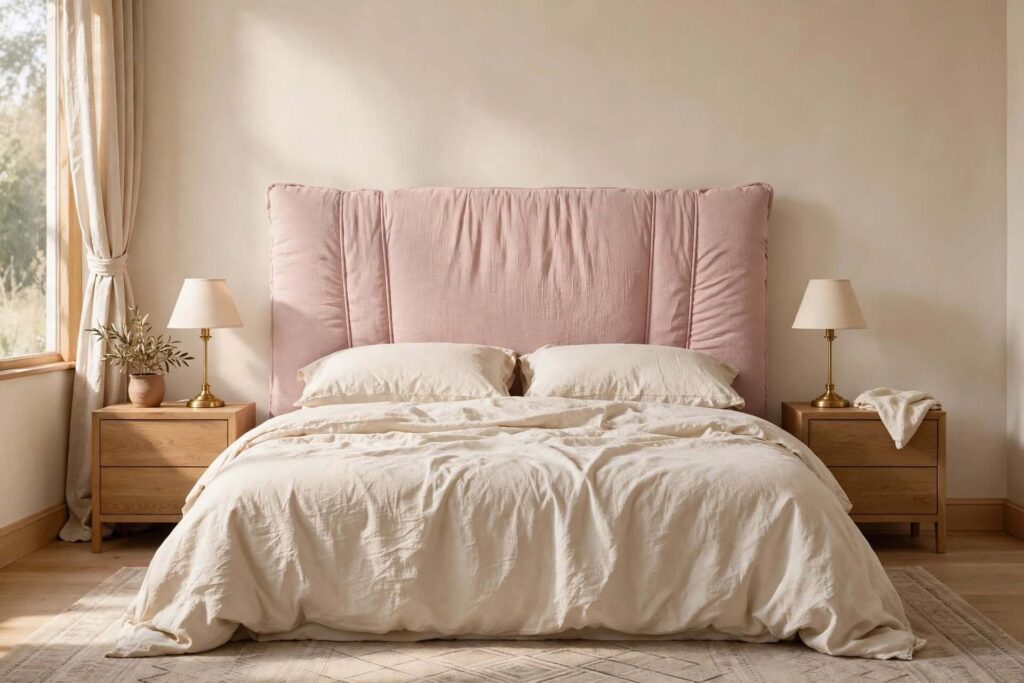
A pink upholstered headboard can introduce color without committing the entire room to a pink scheme. Choose velvet for a richer look, linen for something relaxed, or a textured fabric for added depth. Keep the walls neutral and repeat the headboard color in one or two small accessories. This creates a clear focal point while allowing existing furniture to remain in place.
8. Make a Small Bedroom Feel Airy With Pale Pink

Pale pink can work surprisingly well in a small bedroom when the rest of the palette remains light. Choose a barely-there blush for the walls, then use white or cream bedding, light wood furniture, and curtains that extend close to the ceiling. Keeping furniture visually simple prevents the room from feeling crowded. Mirrors can also bounce natural light around the space and make the pink feel softer.
Quick Win: Hang curtains slightly above the window frame and let them fall close to the floor to create a taller visual line.
9. Combine Pink With Natural Wood
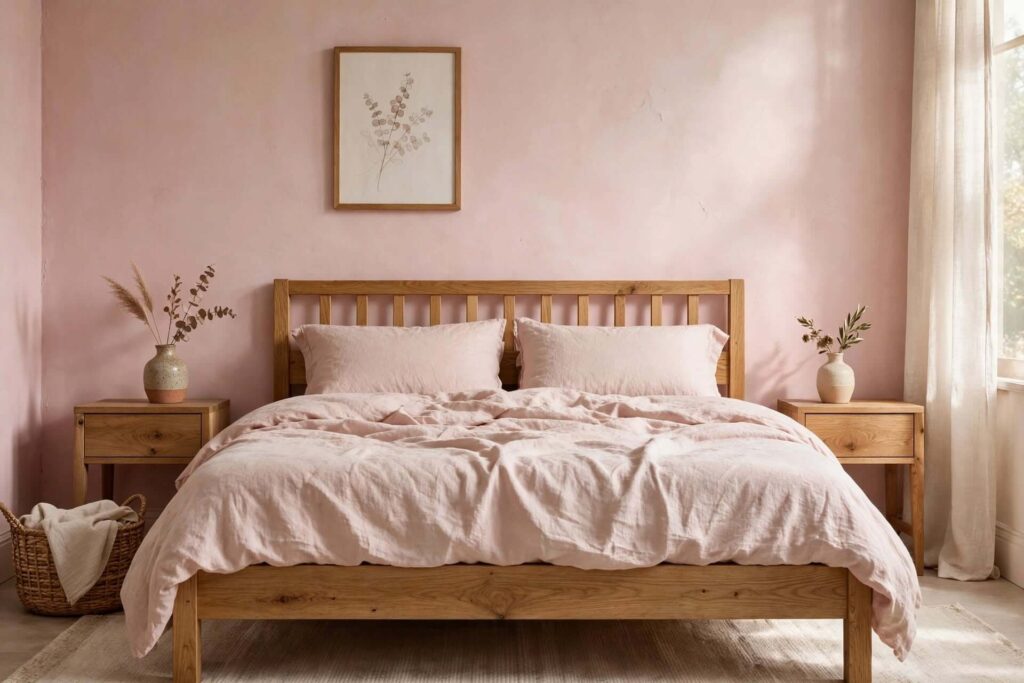
Natural wood prevents a pink bedroom from feeling too polished or one-dimensional. Pair soft pink walls or bedding with oak flooring, a wooden bed frame, woven baskets, and a simple wood nightstand. Linen and cotton textiles add softness without introducing too many additional colors. The combination feels relaxed and organic, especially when paired with warm daylight and a few handmade accessories.
10. Build a Romantic Pink Bedroom With Layered Textures

A romantic bedroom doesn’t need excessive decoration. Layer blush linen, a soft quilt, velvet cushions, flowing curtains, and warm bedside lighting to create depth. Keep the furniture elegant but simple, and choose one floral or botanical pattern rather than covering the room in prints. The trick is texture: several tactile materials make a restrained palette feel rich and inviting.
Quick Win: Layer a quilt or lightweight coverlet across the lower third of the bed for an instantly more finished look.
11. Use Pink as a Small Accent

If you are unsure about committing to pink, use it as an accent color instead. Keep the main bedroom palette cream, beige, or soft gray and introduce pink through cushions, artwork, a small bench, flowers, or a throw. This approach is inexpensive, renter-friendly, and easy to change with the seasons. It also lets you discover which pink shades you actually enjoy before making a larger decorating decision.
12. Pair Blush Pink With Soft Gray
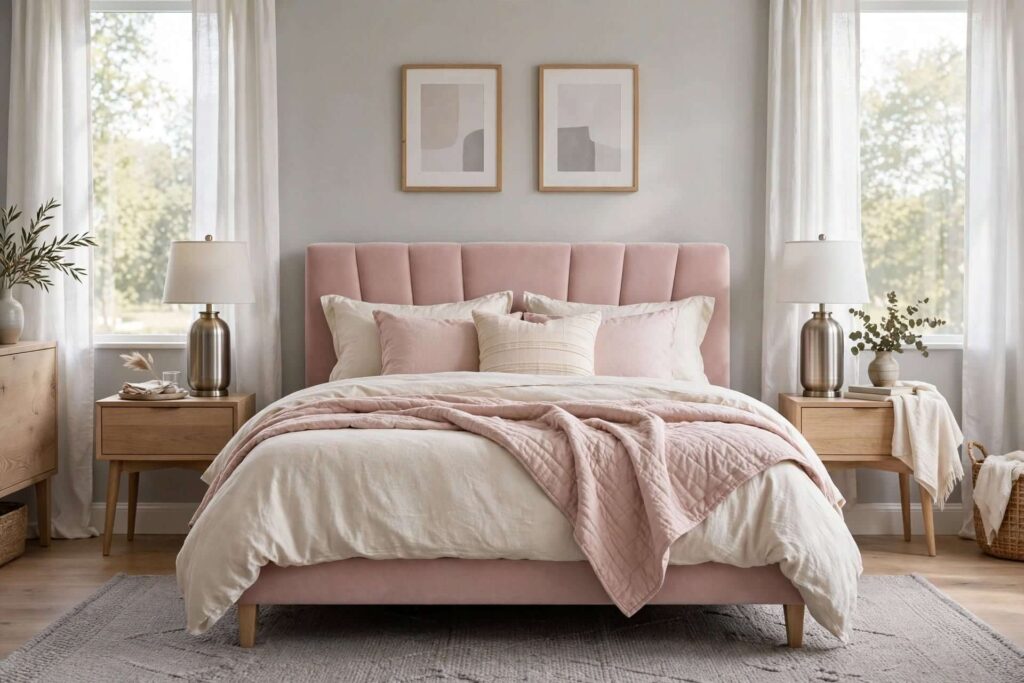
Soft gray gives blush pink a cooler, contemporary foundation. Try pale gray walls with blush bedding, or reverse the combination with a blush accent wall and gray upholstery. Add white or cream to prevent the palette from becoming flat, then introduce warm wood or brushed metal for contrast. This color combination is particularly useful for a modern bedroom that needs softness without looking overly feminine.
13. Add Pink Through Floral Wallpaper
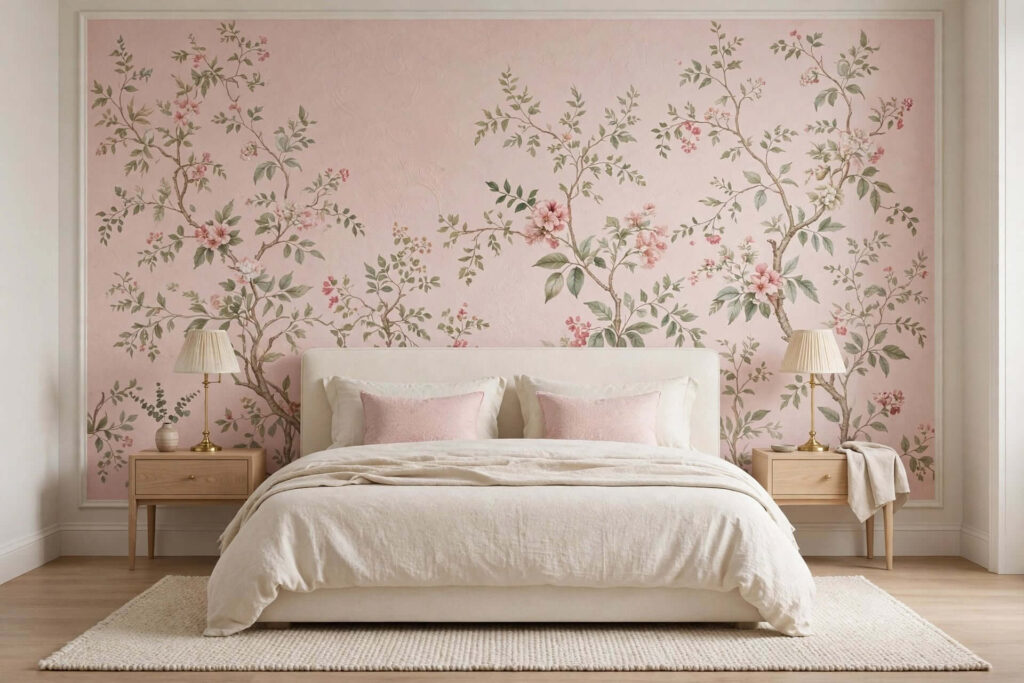
Floral wallpaper can turn pink into an intentional design feature rather than simply a paint color. Choose a pattern with a soft background and limited colors so it doesn’t overwhelm the room. Keep the furniture simple and pull one or two shades from the wallpaper into the bedding. This works especially well in bedrooms where the wall behind the bed needs a strong focal point.
14. Create a Modern Pink and Black Bedroom
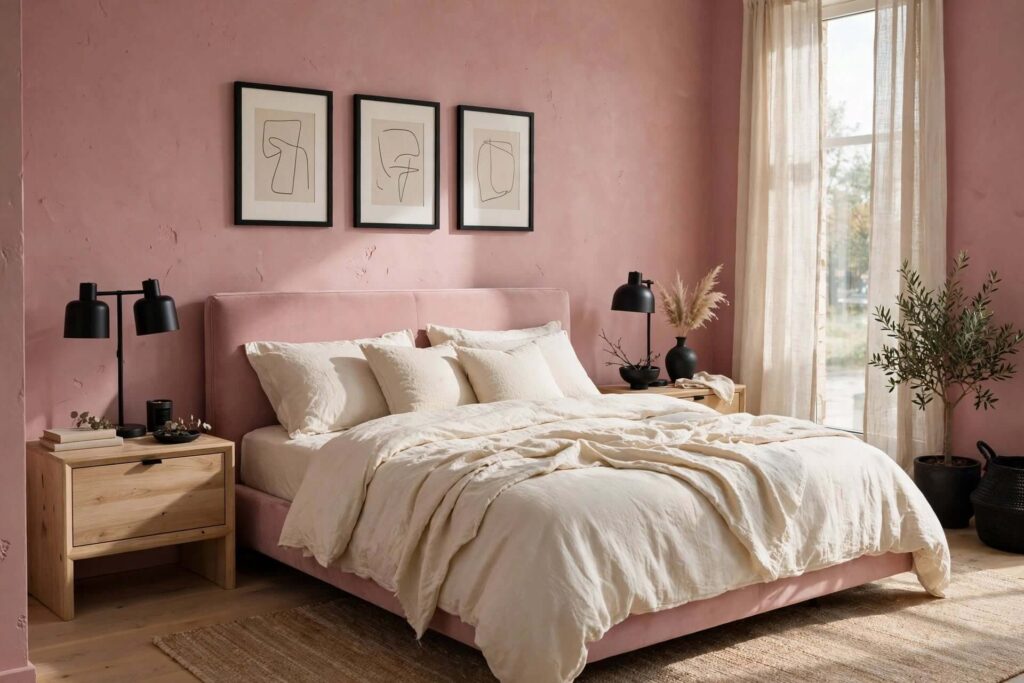
Black accents can give a pink bedroom a sharper, more contemporary edge. Use blush or dusty pink as the dominant soft color, then introduce black through slim lighting fixtures, picture frames, hardware, or a small side table. Keep the black elements limited so they define the space without overpowering it. Warm white bedding and natural wood can soften the contrast.
Quick Win: Swap ordinary picture frames or bedside hardware for matte black versions to introduce contrast without buying major furniture.
15. Bring in Pink With a Statement Rug
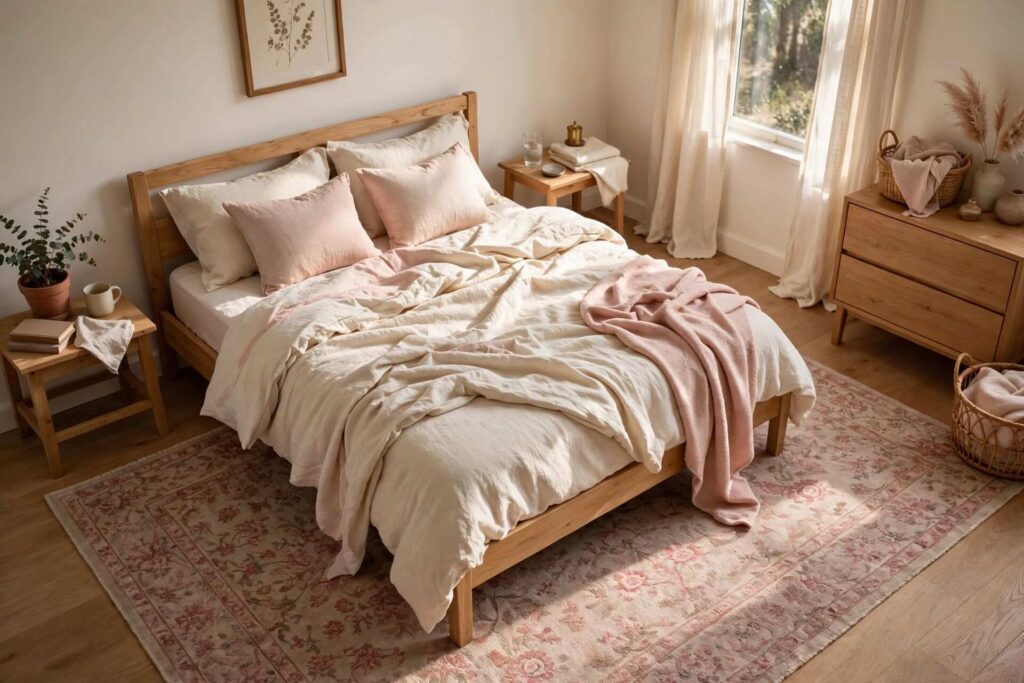
A pink area rug can anchor the room while leaving walls and large furniture neutral. Look for a faded blush, rose, or muted pink pattern rather than a highly saturated design. Position the rug far enough under the bed that the front and sides extend beyond it, creating a connected visual zone. This is a practical way to add color while protecting a rental’s walls from permanent changes.
16. Give Pink a Grown-Up Look With Brass
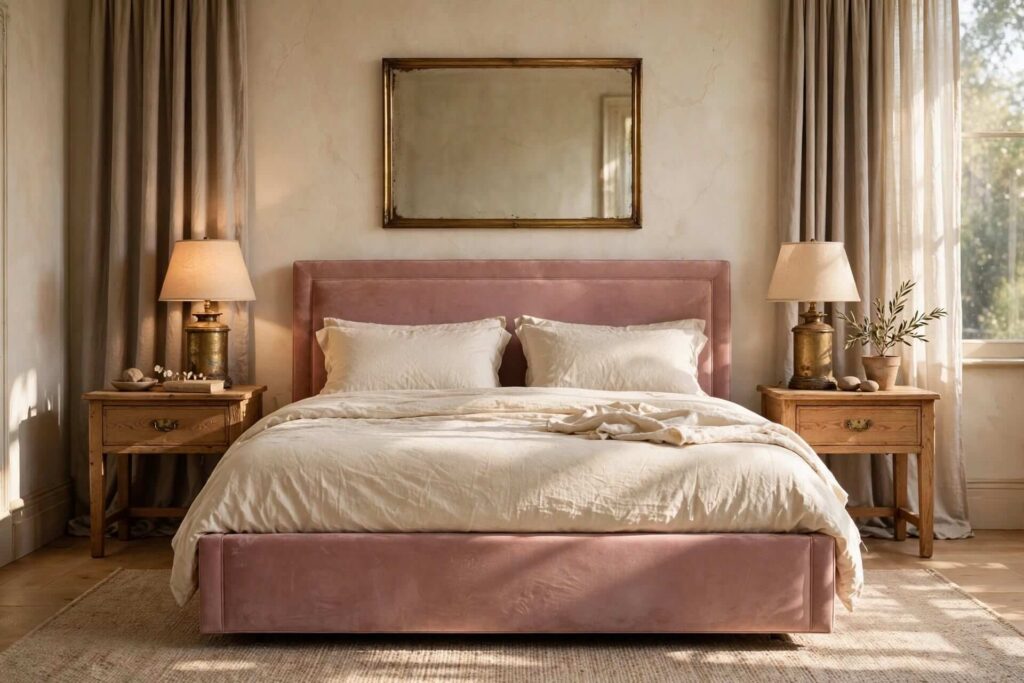
Brass accents can make a pink bedroom feel polished without adding another strong color. Use aged brass through bedside lamps, curtain hardware, mirrors, or small decorative objects, then balance the warmth with cream, taupe, or natural wood. Avoid using brass everywhere; a few repeated touches are enough to create visual cohesion. This works particularly well with dusty rose, mauve, and muted blush shades.
17. Keep It Calm With Pink, Beige, and Linen
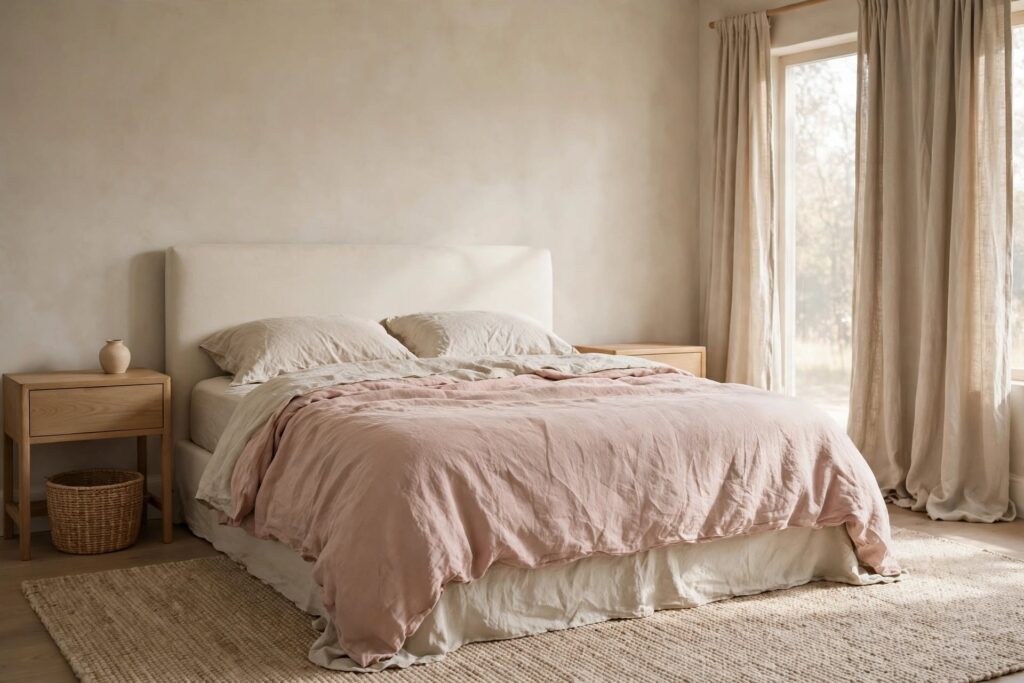
For a bedroom that feels peaceful rather than overly decorated, combine muted pink with beige and plenty of linen. Use one main pink element—such as the bedding or headboard—then let cream, oatmeal, and natural linen dominate the rest of the room. Add light wood and a small woven basket for warmth. This restrained approach creates a soft, timeless bedroom that can evolve easily as your taste changes.
Quick Win: Replace glossy or heavily patterned bedding with washed linen in blush, oatmeal, and cream for a softer, more relaxed finish.
Conclusion
The best pink bedroom doesn’t have to be completely pink. A single blush wall, layered bedding, a rosy rug, natural wood, or a few carefully chosen accents can be enough to change the atmosphere. Start with the elements you already own, choose a pink that suits your lighting and style, and build gradually. Whether your goal is cozy, modern, romantic, earthy, or understated, let the room feel like you—not like a showroom.
Frequently Asked Questions
1. What colors go well with pink in a bedroom?
Cream, beige, white, gray, natural wood, green, terracotta, and charcoal can all work with pink. The best combination depends on whether you want the room to feel soft, earthy, modern, or dramatic.
2. Is pink a good color for a bedroom?
Yes. Soft pink shades can create a calm and warm atmosphere, while deeper rose and mauve tones can add more visual depth. The overall effect depends heavily on the shade, lighting, and colors used alongside it.
3. What is the best pink for a small bedroom?
Pale blush and muted pinks are generally easier to use in small bedrooms because they keep the room feeling light. Pairing them with cream, white, light wood, and good natural lighting can help maintain an airy appearance.
4. How can I make a pink bedroom look more mature?
Balance pink with neutral colors, natural wood, charcoal, deep green, or aged brass. Limiting patterns and choosing quality-looking textures such as linen, cotton, or velvet can also give the room a more sophisticated appearance.
5. Can I have a pink bedroom without painting the walls?
Absolutely. Use pink bedding, curtains, rugs, cushions, artwork, an upholstered headboard, or smaller decorative pieces. These options are especially useful for renters.
6. Does pink work with gray bedroom furniture?
Yes. Blush and dusty pink pair naturally with soft and medium gray furniture. Add cream or warm white textiles and a little natural wood to prevent the combination from feeling too cool.
7. How do I decorate a pink bedroom on a budget?
Start with inexpensive changes such as bedding, cushions, throws, artwork, lampshades, and secondhand furniture. You can also repaint a small feature wall instead of the entire bedroom.
8. What colors should I avoid with pink?
There are no universal colors you must avoid, but combining too many highly saturated colors can make a bedroom feel visually busy. If the pink is already strong, keep larger furniture and walls relatively restrained.
9. How can I make a pink bedroom feel cozy?
Layer different textures rather than simply adding more pink. Linen bedding, a soft rug, curtains, knitted throws, warm lamps, and natural wood can make the room feel much more comfortable.
10. Is pink suitable for an adult bedroom?
Yes. Dusty rose, mauve, blush, and muted pink can look sophisticated when balanced with neutral furniture, natural materials, darker accents, or refined lighting.
11. Can pink and green work in the same bedroom?
Pink and green can create a balanced contrast, particularly when both shades are muted. Blush with olive or dusty pink with deep green tends to create a more relaxed effect than highly saturated versions.
12. Should bedroom walls and bedding be the same shade of pink?
They don’t have to match exactly. Using related shades—such as pale blush walls with deeper dusty pink bedding—can create more dimension than using one identical color everywhere.
13. What wood color works best with pink?
Light and medium natural woods are especially versatile with pink. Oak, ash, and warm walnut can all work, depending on whether you want the room to feel lighter, warmer, or more dramatic.
14. How can I avoid making a pink bedroom look too childish?
Choose muted or dusty pink instead of highly saturated bubblegum shades, then introduce adult-looking materials such as linen, wood, brass, stone, or charcoal. Simple furniture silhouettes also help keep the room sophisticated.
15. What is an easy way to test pink before decorating?
Start with removable items such as pillow covers, bedding, artwork, curtains, or a rug. Live with the color for several days under both natural and artificial lighting before making a permanent change.
Related Articles
- [Internal Link: Cozy Bedroom Ideas]
- [Internal Link: Small Bedroom Ideas]
- [Internal Link: Bedroom Color Combination Ideas]