

Choosing bedroom curtains sounds simple until you realize how much they influence the entire room. The wrong color can make your space feel darker, short panels can interrupt the visual flow, and heavy fabrics may overwhelm a small bedroom. The right window treatment, however, can soften natural light, create a sense of height, improve privacy, and make even basic furniture feel more thoughtfully styled. These bedroom curtains ideas combine attractive colors, practical fabrics, and achievable decorating techniques for different room sizes and budgets. Whether you prefer a relaxed, airy bedroom or a rich, hotel-inspired retreat, you can find a look that works with what you already own.
In This Article
- 1. Floor-to-Ceiling Curtains for an Elegant Bedroom
- 2. Sheer White Curtains for a Light, Airy Feel
- 3. Beige Linen Curtains for a Warm Neutral Bedroom
- 4. Blackout Curtains for a Calm, Sleep-Friendly Space
- 5. Sage Green Curtains for a Relaxed, Nature-Inspired Bedroom
- 6. Layered Sheer and Blackout Curtains for Flexible Lighting
- 7. Dusty Blue Curtains for a Soft, Sophisticated Look
- 8. Bold Dark Curtains for a Moody, Boutique-Hotel Bedroom
- 9. Patterned Curtains for a Bedroom with Personality
- 10. Two-Tone Curtains for a Custom, Designer Finish
- Bedroom Curtains Ideas: How to Choose the Right Ones
- Conclusion
- Frequently Asked Questions
1. Floor-to-Ceiling Curtains for an Elegant Bedroom
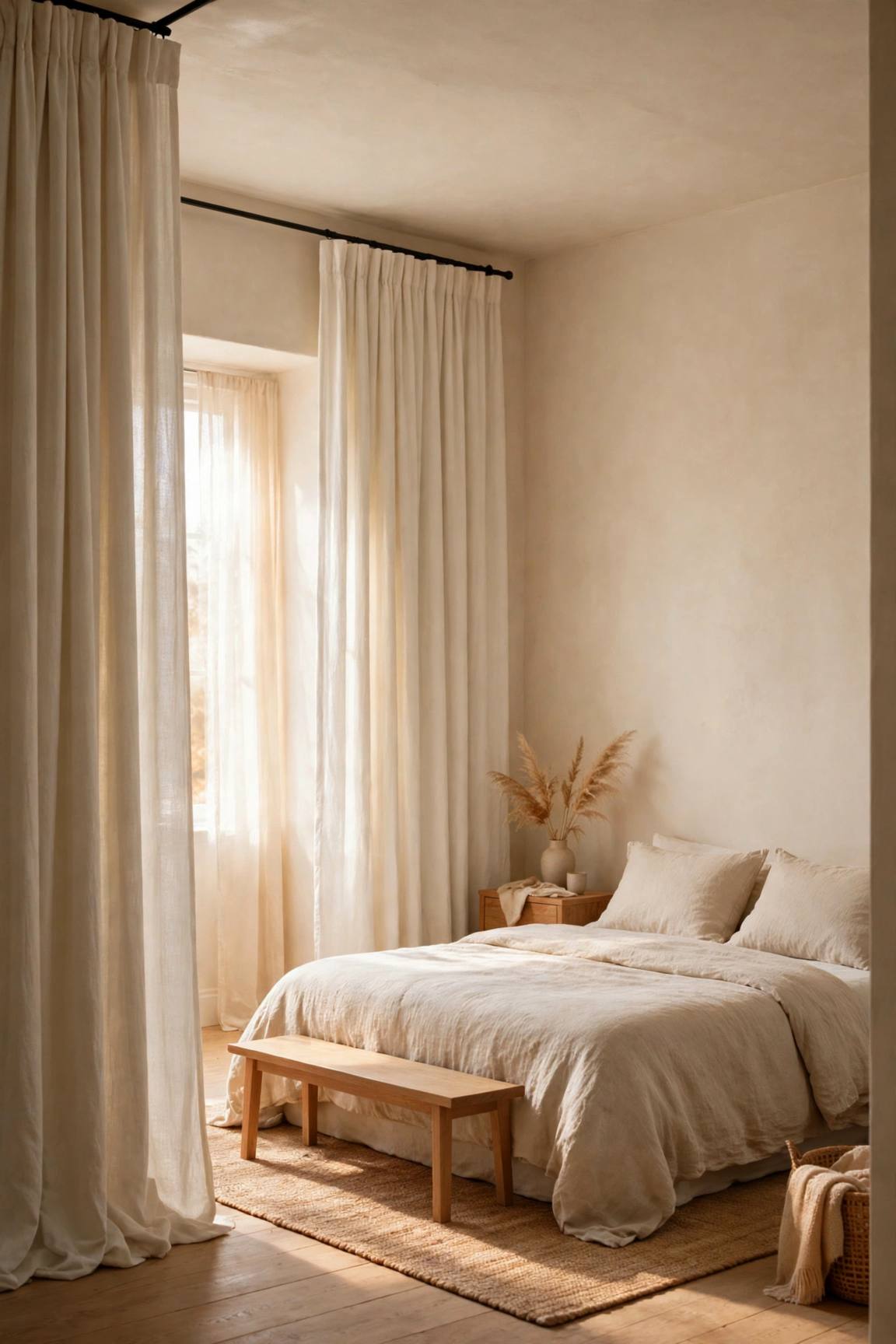
Floor-to-ceiling curtains create a graceful vertical line that makes a bedroom feel taller and more finished. Choose ivory, oatmeal, or soft greige panels that begin just below the ceiling and fall close to the floor. A slim black or brushed-brass curtain rod adds definition without distracting from the fabric. This approach works especially well in rooms with low ceilings, plain walls, or simple furniture because it adds visual height without requiring a renovation. Floor-to-ceiling panels like these are among the most elegant bedroom curtains ideas for making a small room feel taller.
Quick Win: Mount the curtain rod higher than the window frame and extend it beyond both sides. This makes the window feel wider and lets more daylight enter when the curtains are open.
2. Sheer White Curtains for a Light, Airy Feel
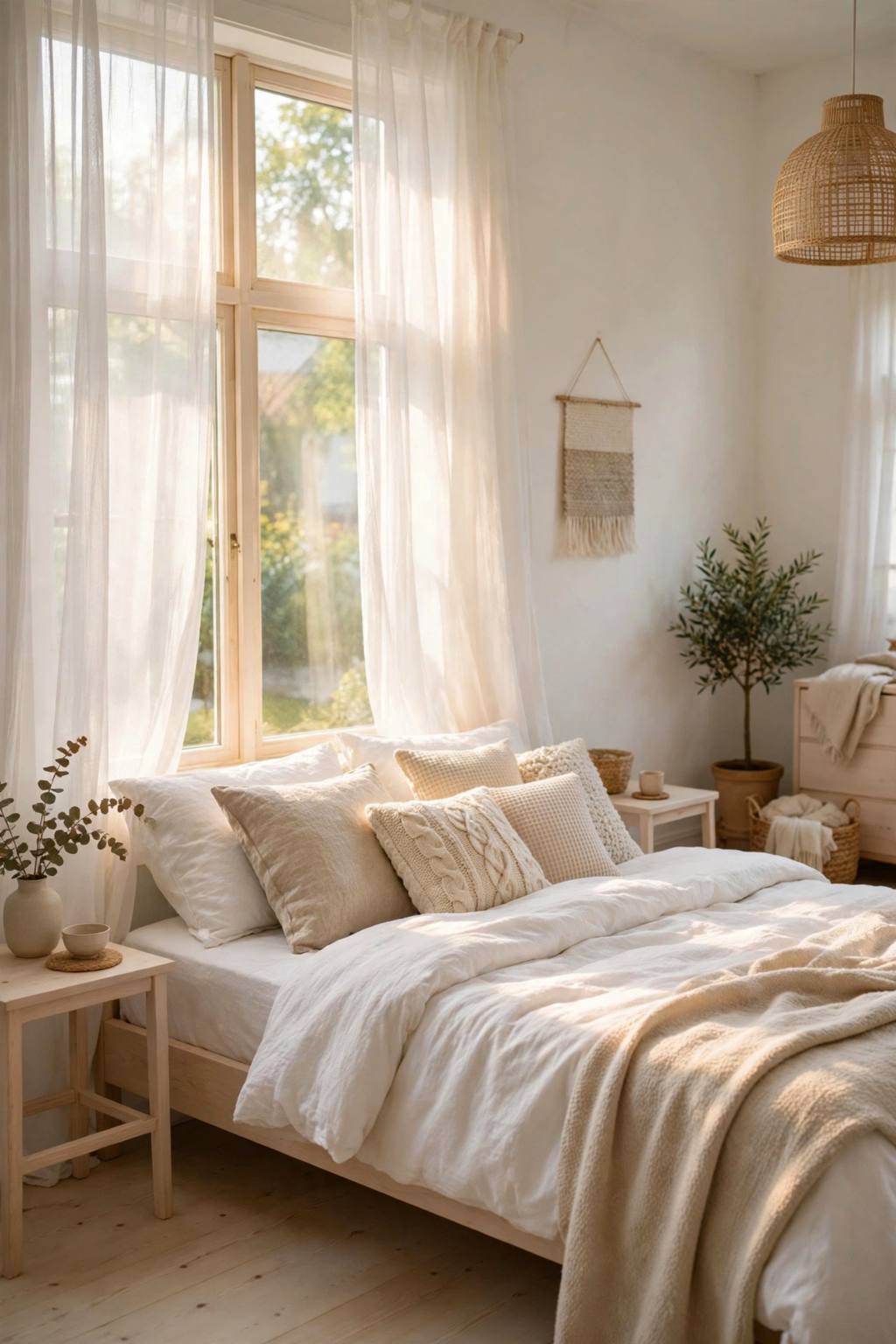
Sheer white curtains filter harsh sunlight into a soft, luminous glow while keeping the bedroom feeling open. Pair them with white bedding, pale timber furniture, and a few textured cushions for a relaxed, Scandinavian-inspired look. Lightweight voile works particularly well in smaller bedrooms where thick fabric might feel visually heavy. Because sheers offer limited privacy after dark, consider adding discreet roller blinds or a second curtain layer if your window faces neighboring homes. Sheer panels are one of the simplest bedroom curtains ideas for brightening a bedroom without losing privacy.
3. Beige Linen Curtains for a Warm Neutral Bedroom

Natural beige linen curtains bring subtle texture and warmth to a neutral bedroom without introducing a strong color contrast. Their relaxed folds pair beautifully with creamy walls, oak nightstands, woven baskets, and cotton bedding. For a cohesive palette, choose curtains one or two shades deeper than the wall color rather than trying to match everything exactly. Linen blends are often a practical alternative to pure linen, offering a similar soft appearance with easier maintenance and a more accessible price. Beige linen is one of the most versatile bedroom curtains ideas for a warm, neutral bedroom.
Quick Win: That one repeated touch ties the window into the rest of the room, without everything looking too matched-up.
4. Blackout Curtains for a Calm, Sleep-Friendly Space

Blackout curtains are useful when streetlights, early sunshine, or outside activity disturb your sleep. Choose lined panels in charcoal, warm taupe, deep olive, or muted navy to complement your bedding and wall color. For the best light control, look for a sufficiently wide curtain, a close-fitting installation, and a wraparound rod or suitable side returns to reduce light gaps. Blackout fabric can look just as refined as decorative curtains, particularly when its lining is concealed behind a textured outer layer. Blackout panels are among the most practical bedroom curtains ideas for a calm, sleep-friendly space.
Quick Win: If you already love your existing curtains, check whether a separate blackout lining can be attached instead of replacing the entire set.
5. Sage Green Curtains for a Relaxed, Nature-Inspired Bedroom

Sage green curtains introduce a gentle touch of color while maintaining the calm atmosphere many people want in a bedroom. They look especially inviting with warm-white walls, natural wood, cream bedding, and understated botanical accents. Choose muted sage rather than a highly saturated green if you want the room to remain restful and easy to update. This palette suits modern, cottage-inspired, and organic interiors, and it can bring character to a rental bedroom without requiring permanent changes. Sage green is one of the gentlest bedroom curtains ideas for a relaxed, nature-inspired bedroom.
6. Layered Sheer and Blackout Curtains for Flexible Lighting
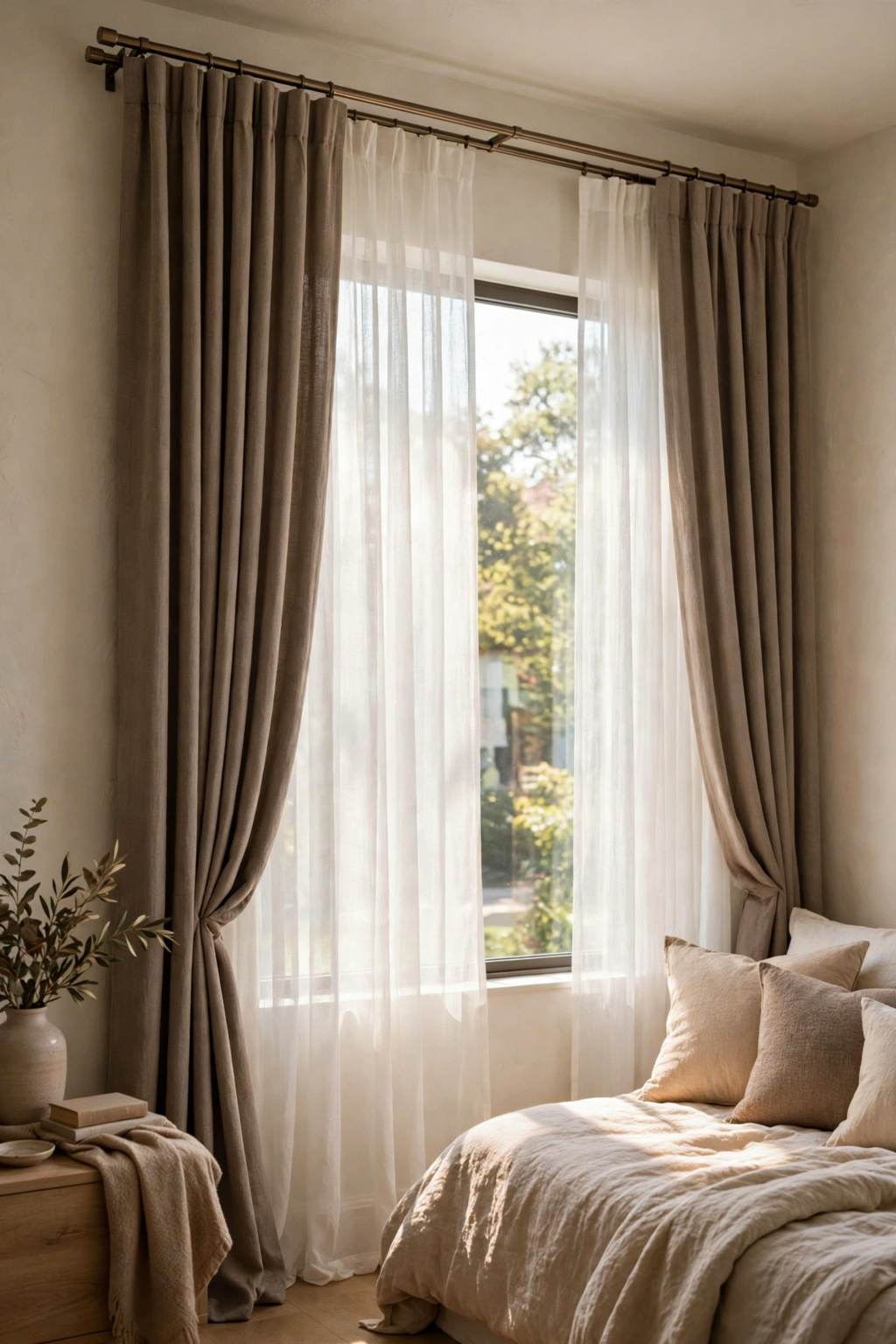
Layering sheer curtains beneath heavier drapes gives you control over daylight, privacy, and nighttime darkness. Use white or ivory sheers closest to the window, then add outer panels in taupe, stone, muted blue, or another color that complements the bedding. A double curtain track keeps both layers easy to operate and creates a tailored finish. This combination is especially useful for bedrooms facing busy streets or bright neighboring properties, where a single curtain fabric may not meet every need. Layering is one of the most flexible bedroom curtains ideas for controlling light and privacy through the day.
Quick Win: Keep the inner layer light and the outer layer slightly deeper in tone. The contrast adds depth while allowing the curtains to work together rather than compete.
7. Dusty Blue Curtains for a Soft, Sophisticated Look

Dusty blue curtains offer a subtle alternative to beige and white, adding color without overwhelming the bedroom. Ivory bedding and light oak furniture keep it calm, with simple nickel or brass hardware finishing the look. If the room receives limited natural light, choose a pale blue with a slightly warm undertone instead of a very dark navy. This look suits both contemporary bedrooms and traditional spaces that need a fresher color palette. Dusty blue is one of the softest bedroom curtains ideas for a sophisticated bedroom.
8. Bold Dark Curtains for a Moody, Boutique-Hotel Bedroom

Deep charcoal, forest green, or midnight blue curtains create a dramatic frame around the window and make a bedroom feel more intimate. Balance the darker fabric with lighter bedding, warm bedside lighting, and natural materials such as walnut or oak. Rich curtains are especially effective in larger bedrooms or spaces with generous daylight, but they can also work in smaller rooms when the remaining palette stays restrained. Choose a fabric with a soft matte finish to keep the effect refined rather than overly formal. Bold dark panels are among the most dramatic bedroom curtains ideas for a boutique-hotel feel.
Quick Win: Repeat the dark curtain color in just one or two accents, such as a bedside lamp base or cushion trim, and leave the larger surfaces lighter for balance.
9. Patterned Curtains for a Bedroom with Personality

Patterned curtains add personality without requiring wallpaper, painted feature walls, or a room full of accessories. Consider delicate botanical prints, fine stripes, or small geometric designs in two or three colors that already appear in your bedroom. If the bedding is patterned too, vary the scale: tiny motifs on the curtains can work with larger, simpler patterns on cushions. This approach suits cottage-style rooms, classic interiors, and bedrooms that need a focal point without introducing bulky furniture. Patterned panels are among the liveliest bedroom curtains ideas for a bedroom with personality.
10. Two-Tone Curtains for a Custom, Designer Finish
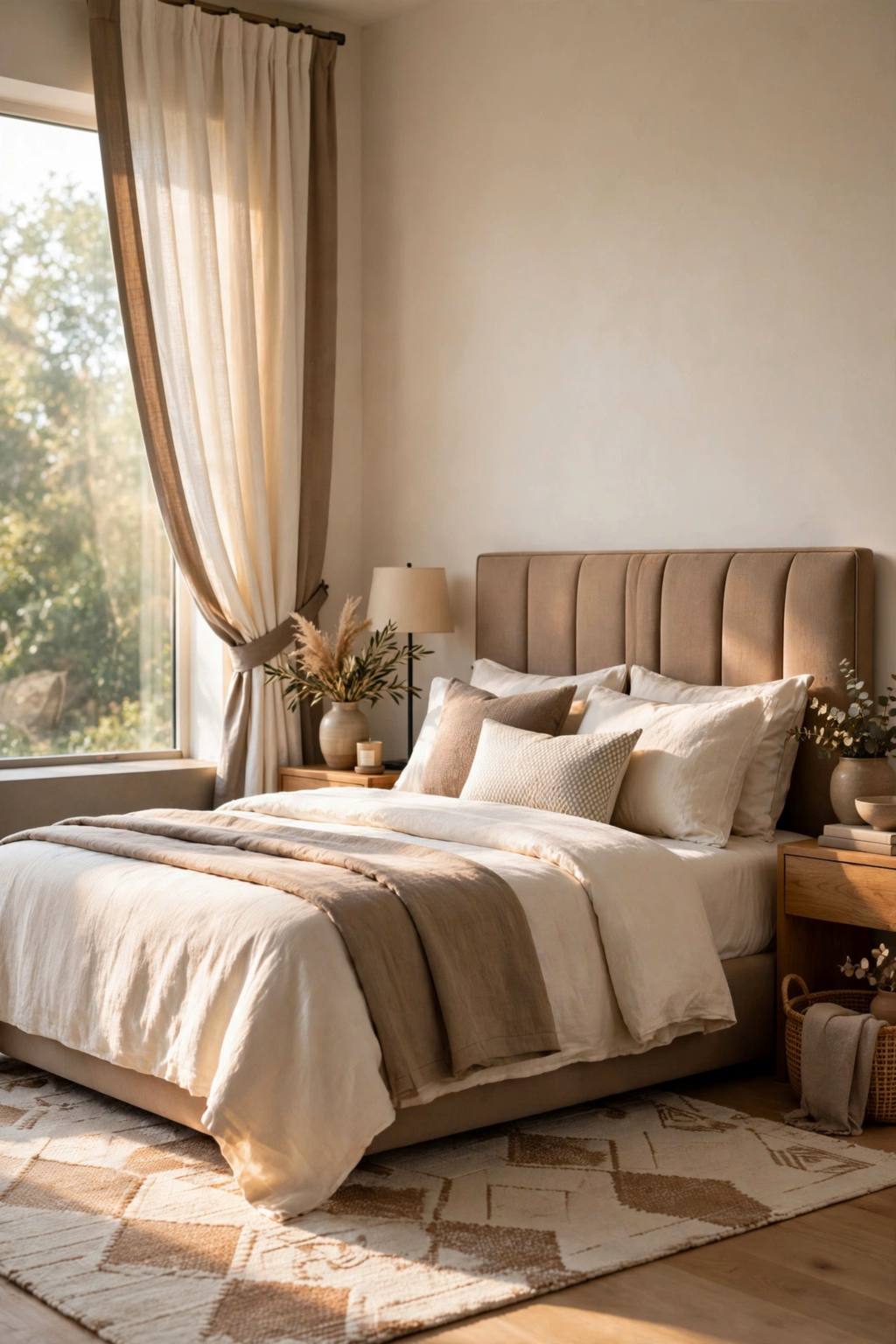
Two-tone curtains combine a lighter main fabric with a contrasting border, lower panel, or coordinating outer edge. Try ivory with warm taupe, pale gray with dusty blue, or cream with muted olive for a subtle custom look. The contrast gives plain curtains more definition and can tie together different colors in your bedding and furniture. If ready-made options are limited, a simple contrasting fabric border added by a tailor can achieve a similar effect without the cost of fully custom window treatments. Two-tone panels are among the most polished bedroom curtains ideas for a custom, designer finish.
Quick Win: Pick the darker tone from something the room already has — the rug, the headboard, or a cushion. This makes the design feel intentional instead of like an unrelated accent.
Bedroom Curtains Ideas: How to Choose the Right Ones
Before choosing a fabric or color, think about how you use your bedroom. If you need a darker sleeping environment, prioritize blackout lining. If your room feels small or dim, lightweight sheers and pale colors can keep it feeling open. For a more finished appearance, pay attention to curtain length, fullness, and hardware as much as the fabric itself.
| Bedroom need | Curtain style to consider |
|---|---|
| A taller-looking room | Floor-to-ceiling panels |
| More natural light | Sheer white curtains |
| A warm, neutral palette | Beige linen curtains |
| Better light control | Blackout curtains |
| A gentle touch of color | Sage green or dusty blue |
| Flexible privacy and light | Layered curtains |
| A dramatic atmosphere | Dark, rich curtains |
| Extra personality | Patterned or two-tone curtains |
Conclusion
The right bedroom curtains can change how your entire room looks and feels without replacing furniture or undertaking a major makeover. Start with the atmosphere you want, whether that means soft morning light, a cozy sleeping space, or an elegant hotel-inspired finish. Then choose fabrics, colors, and lengths that complement your existing decor. You don’t need to recreate an entire look to achieve a noticeable transformation. A thoughtful curtain choice can be enough to bring your bedroom together. The right choice among these bedroom curtains ideas can change how your entire room looks and feels without replacing furniture.
Frequently Asked Questions
It comes down to what you need most. Blackout panels suit darker sleep, sheers suit soft daylight and an open feel, and layering the two gives you both whenever you want them.
Full-length curtains generally create a more polished, elegant appearance. Shorter curtains can work in certain practical situations, such as windows above radiators or furniture, but floor-length panels are a versatile choice for most bedrooms.
Ivory, beige, greige, sage green, and dusty blue all work well. Let your wall color, bedding, flooring, and how much daylight the room gets decide the final shade.
Sheer curtains provide daytime privacy when outdoor light is brighter than indoor light, but they usually offer little privacy at night with interior lights on. Pair them with blinds or opaque curtains when privacy is important.
Not necessarily. Dark, bulky curtains can feel heavy in a compact room, but well-fitted blackout curtains in a light neutral shade can look streamlined. Hanging them high and extending the rod beyond the window can also improve proportions.
Most people fit the rod a few inches above the frame, or nearer the ceiling where the room allows. Ceiling height and any nearby cornices or beams decide what looks right.
Curtains should generally finish just above the floor or lightly meet it for a neat appearance. Extra-long panels that puddle on the floor can create a romantic look but may collect more dust and require additional maintenance.
Yes. Linen and linen-blend curtains offer natural texture and a relaxed, timeless appearance. They work well with neutral bedding, wooden furniture, and layered textiles, although unlined linen may not provide enough darkness or privacy on its own.
Choose a fabric with a natural-looking texture, use a suitable curtain rod, and ensure the panels are wide enough to create generous folds. Hanging them close to the ceiling and choosing the correct length also makes a noticeable difference.
Absolutely. A double track or double rod lets you operate the layers independently. You can use the sheers during the day for filtered light and close the opaque curtains at night for privacy and darkness.
Light-colored curtains in ivory, soft beige, or pale gray can help maintain an airy appearance. Full-length panels hung high can make the room feel taller, while simple fabrics avoid adding unnecessary visual clutter.
Patterned curtains are a useful way to introduce personality, especially when the rest of the room is relatively simple. Botanical prints, fine stripes, and subtle geometric patterns can complement both contemporary and traditional bedrooms.
Look for a shared undertone or repeat one color from your bedding in the curtains. You can coordinate without matching exactly—for example, ivory bedding with sage curtains or beige bedding with dusty blue panels.