

You can have the right furniture, the right rug, the right light — and the bedroom still feels unfinished. Nine times out of ten, it’s the bed. No focal point, nothing for the eye to land on. That’s where sage bedding earns its keep: softness, a bit of colour, a calmer feeling, all without painting the walls green or starting over. The trick isn’t the bedding itself, though. It’s what you put next to it — the colours, the textures, the materials that make it look deliberate instead of just… matched. Creamy neutrals, warm wood, a moody accent here, relaxed linen there — one bedding choice can genuinely change the whole atmosphere. And every combination below is easy to bend around your room, your style, your budget. Keep scrolling.
In This Article
- Sage Green Bedding with Creamy White Layers
- Sage Green and Beige Bedding for a Warm Retreat
- Sage Green Linen Bedding for a Relaxed Look
- Sage Green Bedding with Natural Wood
- Layered Sage Green Bedding with Textured Throws
- Sage Green Bedding with Terracotta Accents
- Sage Green Bedding in a Small Bedroom
- Sage Green Bedding with Dark Wood Furniture
- Sage Green Bedding with Botanical Details
- Sage Green Bedding with Soft Gray Accents
- Sage Green Bedding with a Cream Canopy Bed
- Sage Green Bedding with Warm Brass Lighting
- Sage Bedding with Navy Accents
- Sage Green Bedding with Vintage-Inspired Decor
- Sage Green Bedding for a Minimalist Bedroom
- Sage Green Bedding with Blush and Soft Pink
- Sage Bedding with an Earthy Neutral Palette
- Buying and Caring for Sage Bedding
- Linen vs Cotton vs Bamboo
- Frequently Asked Questions
1. Sage Green Bedding with Creamy White Layers
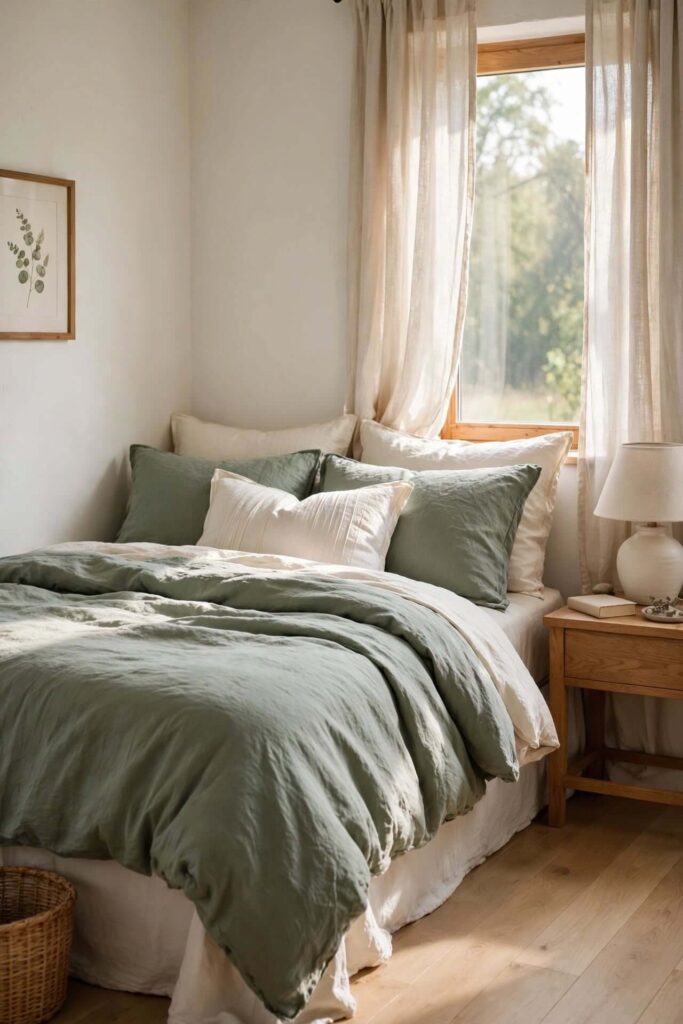
Start simple. Creamy white sheets and pillowcases next to sage, and the room feels fresh — not stark, not washed out. Cream has a warm undertone, and that warmth takes the edge off the green; it sits beautifully with natural wood, too. Then stop. One textured lumbar pillow, or an ivory throw folded loosely at the foot — that’s plenty. Piling on accessories is how a calm bed turns cluttered. And if your bedroom is on the small side, this is the pairing to reach for first: all those pale colours keep the room feeling open, while the sage gives the bed enough contrast to anchor it.
Quick Win: Swap bright-white accessories for warm ivory or cream. It’s a small change, but sage looks noticeably softer — and a lot more expensive — against warm white than against stark white.
2. Sage Green and Beige Bedding for a Warm Retreat
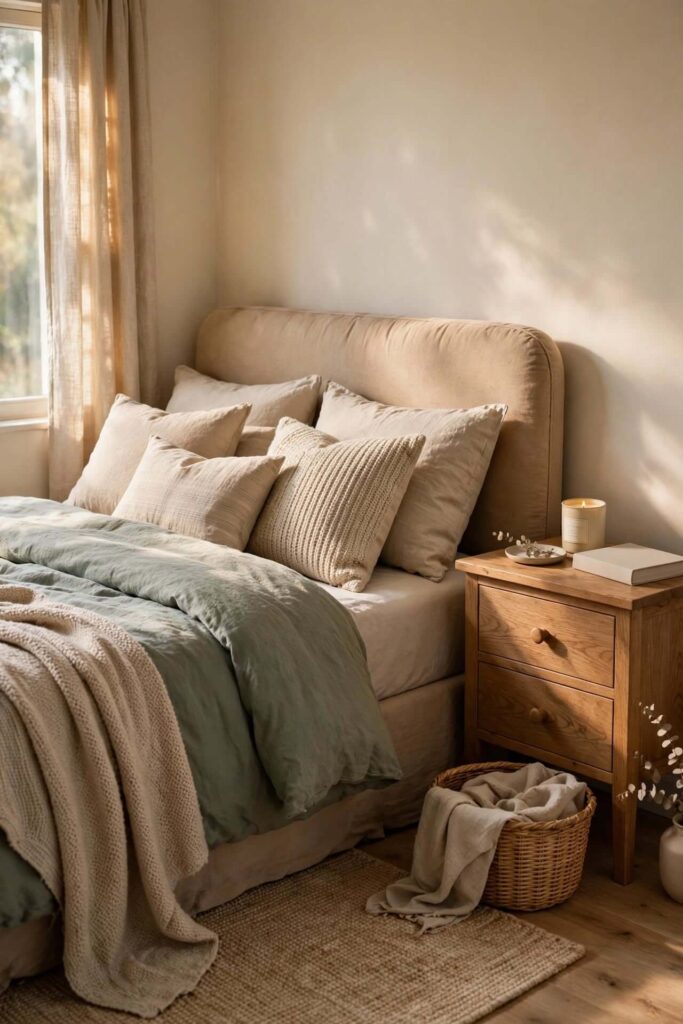
Want the room warmer? Lean into beige, sand, and oatmeal. A beige upholstered headboard does a lot of quiet work here — it sits between the green and the neutrals and ties them together. Woven baskets and natural wood add the texture. Nothing shouty, nothing too colourful: the whole thing just feels grounded. It shines in rooms that already have warm lighting, wood floors, or neutral furniture — if that’s your bedroom, you’re halfway there. One rule, though: keep the accessories restrained. The bedding is the star; everything else is supporting cast.
3. Sage Green Linen Bedding for a Relaxed Look
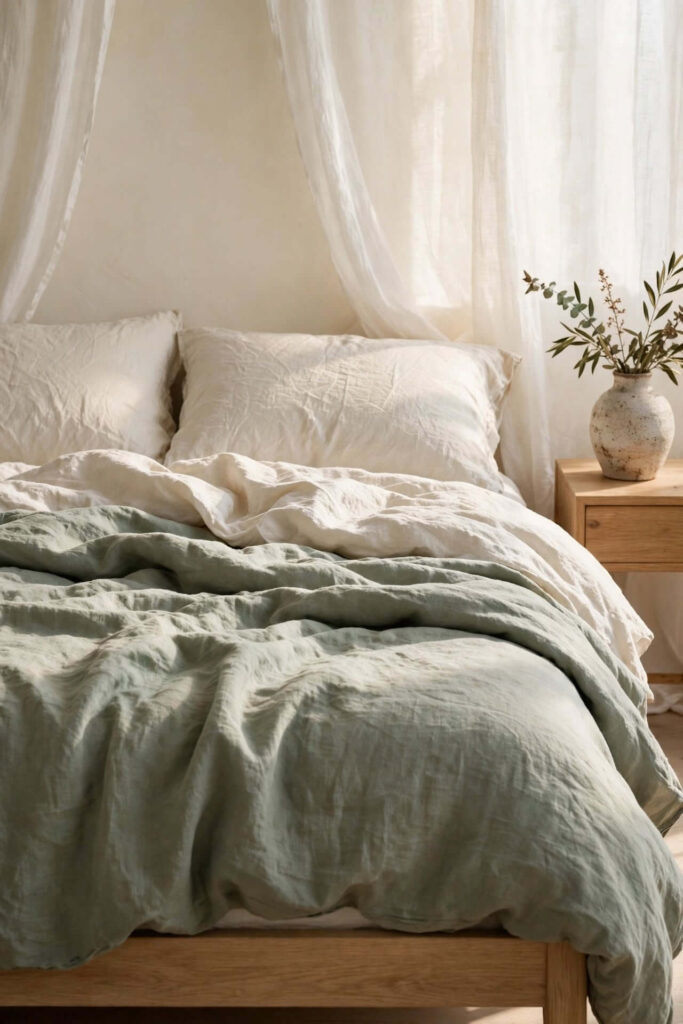
Linen and sage were made for each other. The slightly rumpled texture stops the colour from looking too formal — too “show home”. Go for washed sage linen duvet covers, simple ivory sheets, a few relaxed pillows, light wood furniture. And here’s the best part: you don’t have to make the bed perfectly. Crisp corners? Forget them. Those casual folds are the whole point. If you want a bedroom that feels calm and breathable and properly lived-in — not staged — this is the one.
Quick Win: Leave the duvet a little rumpled. Don’t smooth every fold — linen’s texture does the decorating for you.
4. Sage Green Bedding with Natural Wood
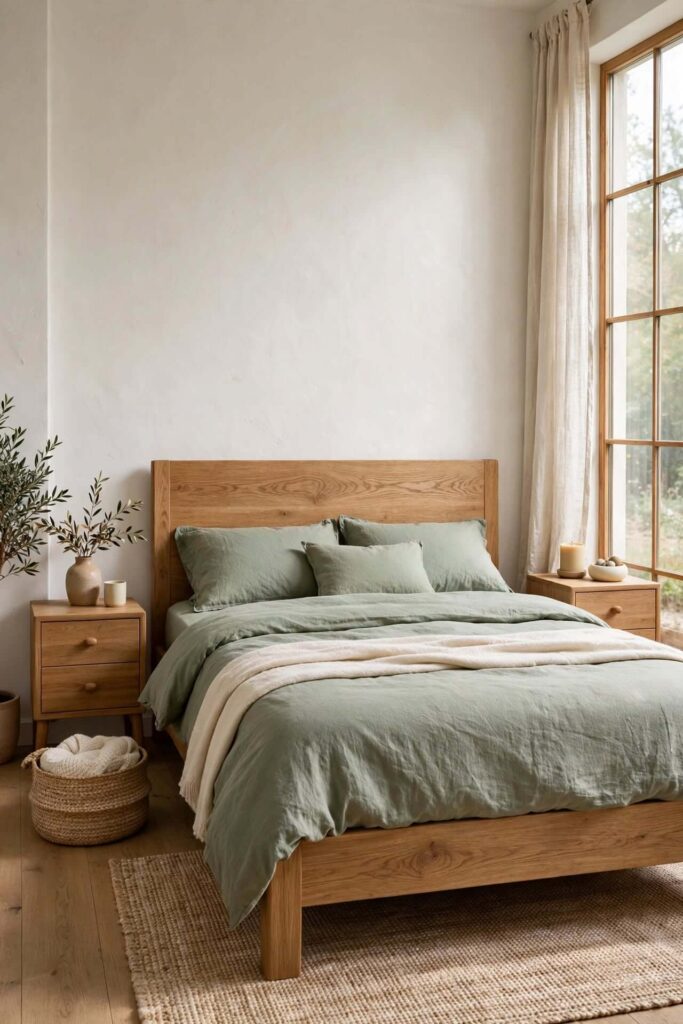
Wood pulls the earthy side out of sage. Together they feel organic, timeless — like the room has always looked this way. Try a medium-oak bed frame or nightstands, sage bedding, warm white walls, and one or two handmade ceramic pieces. That’s the whole recipe. Stick to medium and light wood tones: they add warmth without fighting the green for attention. And if your taste runs Scandinavian, organic modern, or relaxed farmhouse, this pairing will feel right at home.
5. Layered Sage Green Bedding with Textured Throws
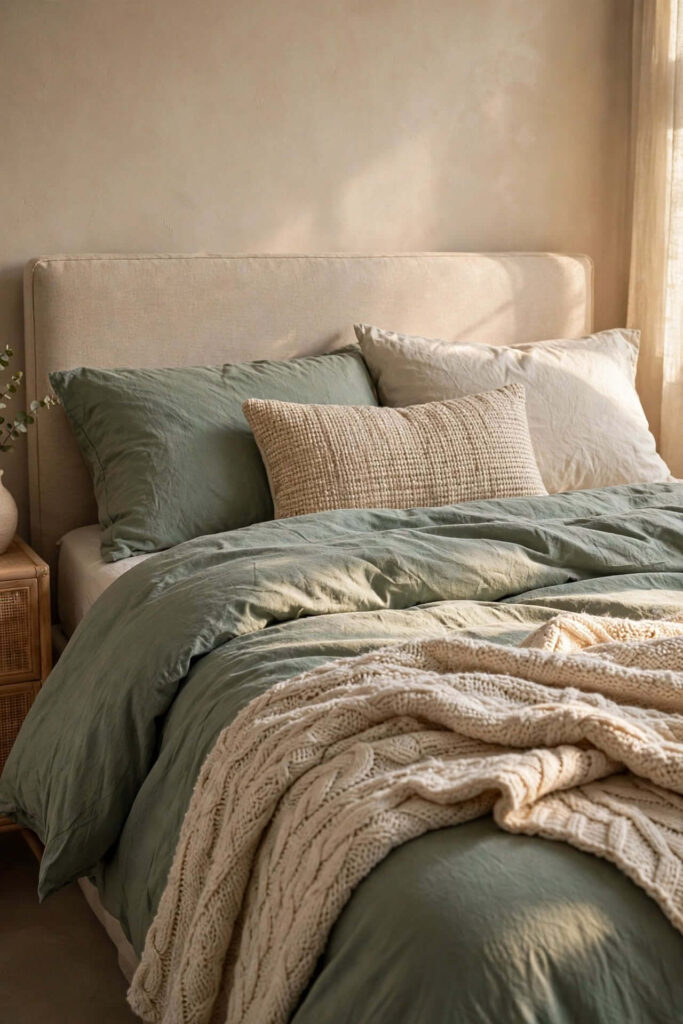
A plain sage duvet can feel a bit… plain. The fix isn’t more colour — it’s more texture. Throw a chunky cream knit across the bottom of the bed. Add one woven cushion. A pair of smooth cotton pillows. That’s it. Soft green base, tactile layers on top: suddenly the bed has dimension, and the palette hasn’t budged. Honestly, this is the cheapest way to make affordable bedding look like someone styled it on purpose.
Quick Win: Before you buy a single new pillow, add one chunky textured throw at the foot of the bed. One layer. You’ll see the difference straight away.
6. Sage Green Bedding with Terracotta Accents
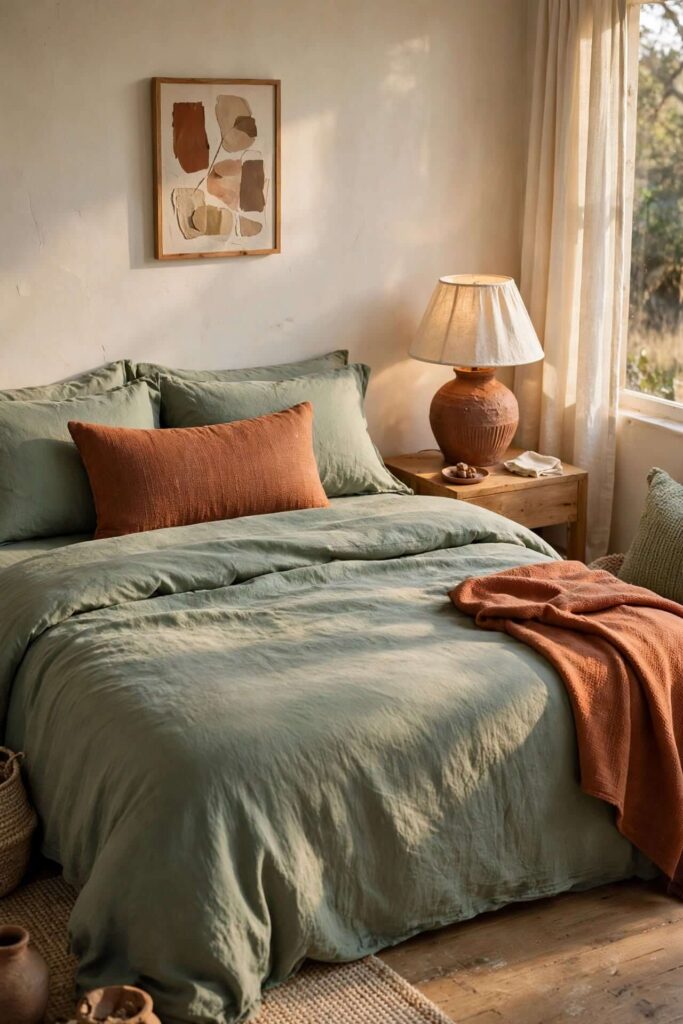
Sage on its own can run cool. Terracotta fixes that — in small doses. A rust-coloured lumbar pillow. A clay ceramic lamp. One piece of muted terracotta artwork. Any one of those brings warmth to the green without turning the room loud. The key word is accent: let terracotta play second fiddle, or the bedroom stops feeling restful. In a room with natural wood, cream walls, and warm evening light? Even better — that’s where this pairing really comes alive.
7. Sage Green Bedding in a Small Bedroom
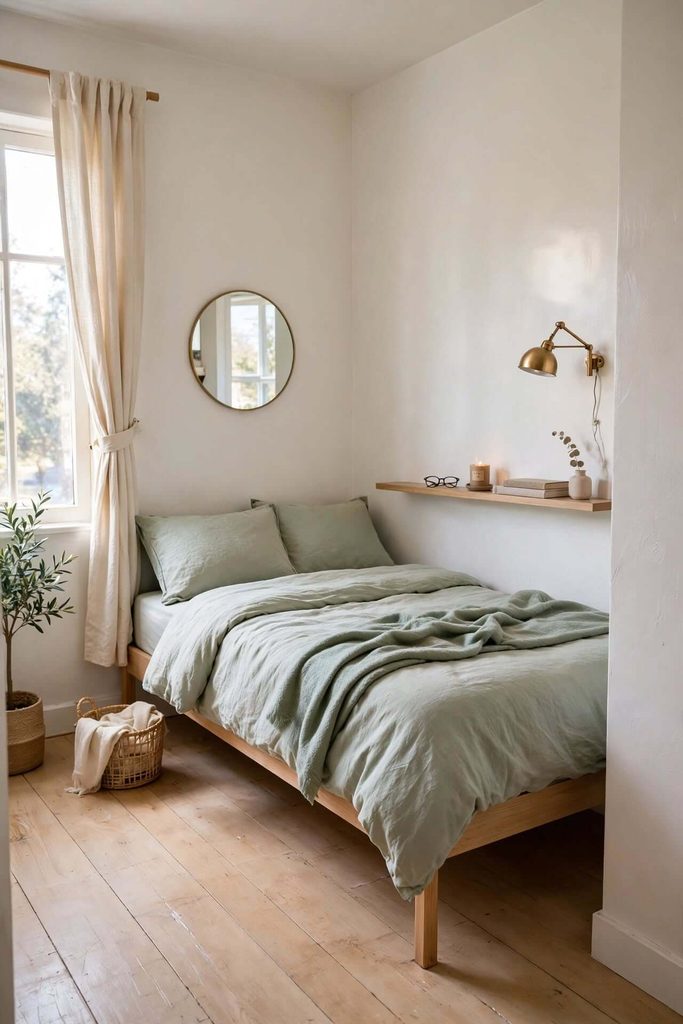
Worried sage will make a small bedroom feel darker? It doesn’t have to. Pick a lighter shade of sage, keep the walls warm white, and go for bedding in a solid finish or a simple low-contrast pattern — nothing busy.
Then be ruthless about floor space: slim bedside tables, wall-mounted lighting. And a mirror placed where it catches natural light does more for a small room than almost anything else. Put it together and a compact bedroom gets real personality — without feeling overwhelmed by it.
8. Sage Green Bedding with Dark Wood Furniture
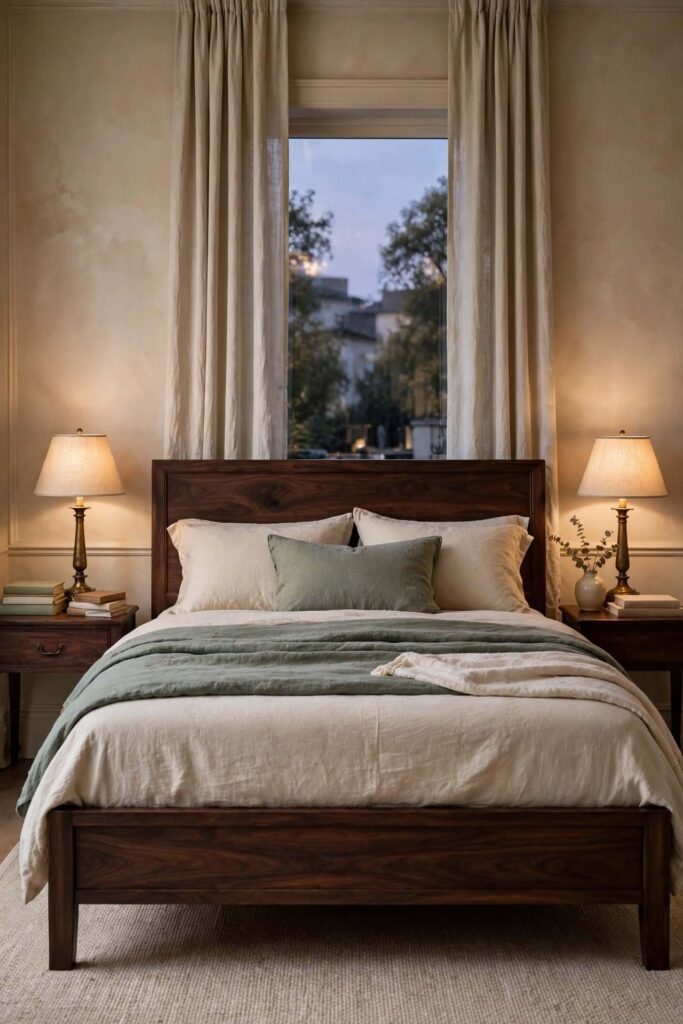
Dark walnut. Espresso. Against sage, that furniture looks richer — the contrast does the work. The risk is heaviness, so balance it: cream sheets, warm neutral walls, a lighter rug. Brass or aged-metal lighting adds one small highlight, just enough, without tipping into flashy. Traditional bedroom? Transitional? Or you just like a room that feels mature and collected, like it’s been put together over years rather than a weekend? This is your palette.
9. Sage Green Bedding with Botanical Details

Sage is a nature colour, so lean into it — gently. A leafy plant beside the bed. A botanical print on the wall. One small floral cushion. Any of those pulls out the green’s natural character without turning the room into a theme park. The trick is restraint: keep the plants and patterns subtle, especially if the bedding already has texture of its own. And the materials around it? Rattan, oak, linen — anything natural just clicks here.
10. Sage Green Bedding with Soft Gray Accents
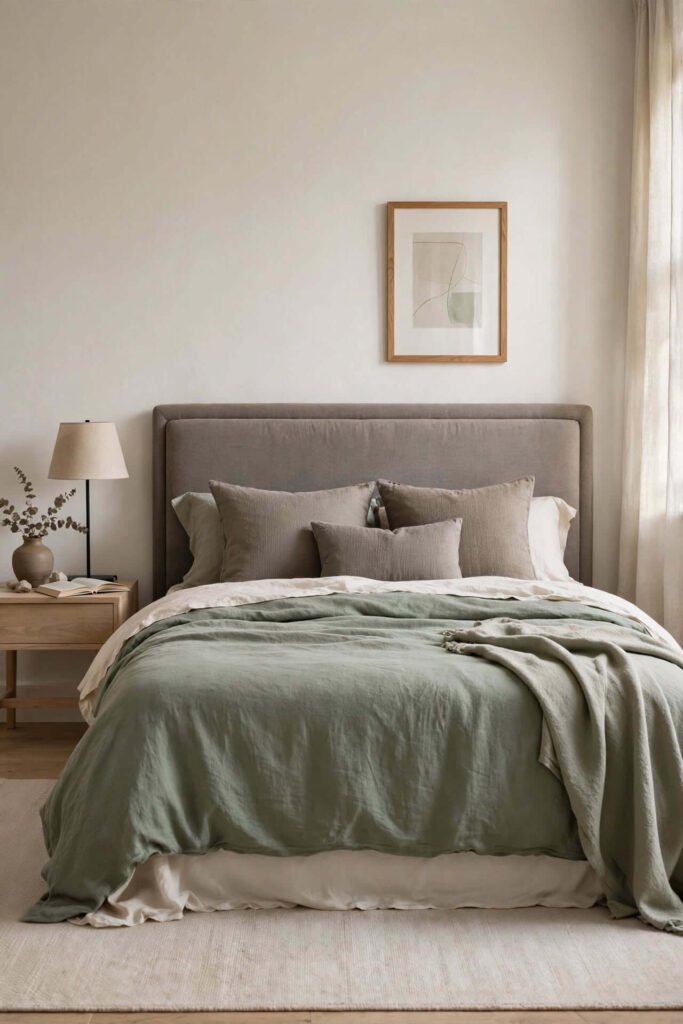
Gray and sage can look very now — but only the right gray. Warm gray, mushroom tones, yes. Cold blue-gray? That fights the green and the room goes flat and chilly. Try a gray upholstered headboard, taupe-gray cushions, warm white sheets. And get some natural wood in there somewhere, or the whole palette can feel a bit… grey. Literally. Already got gray furniture or flooring? Then this is the practical route — you’re working with what’s there, not starting over.
Quick Win: Don’t replace gray furniture you already own. Sage bedding and warm cream textiles will soften it — a fraction of the cost of new furniture.
11. Sage Green Bedding with a Cream Canopy Bed
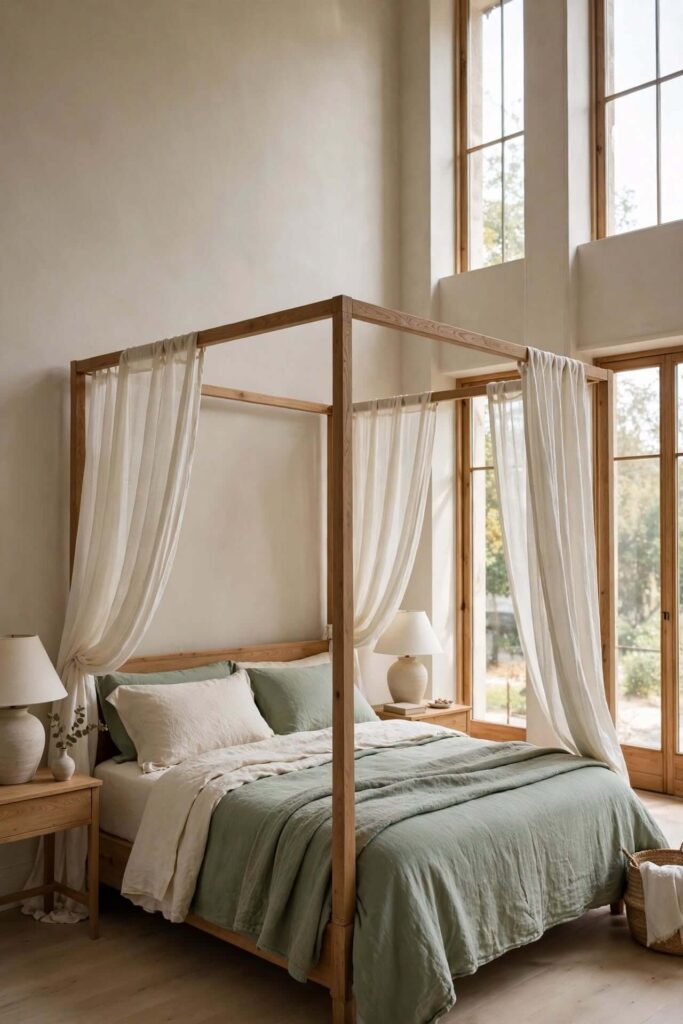
A canopy bed changes everything. Suddenly the sage has a romantic, almost architectural setting — the bed becomes the room. Keep the frame simple: black, natural wood, or light metal. If you use canopy fabric at all, keep it understated. Cream curtains or loose linen panels soften the structure nicely, and the sage still stays the centrepiece. It needs room, though — tall ceilings, or at least enough vertical space for the bed to breathe. That’s when this idea earns its keep.
12. Sage Green Bedding with Warm Brass Lighting
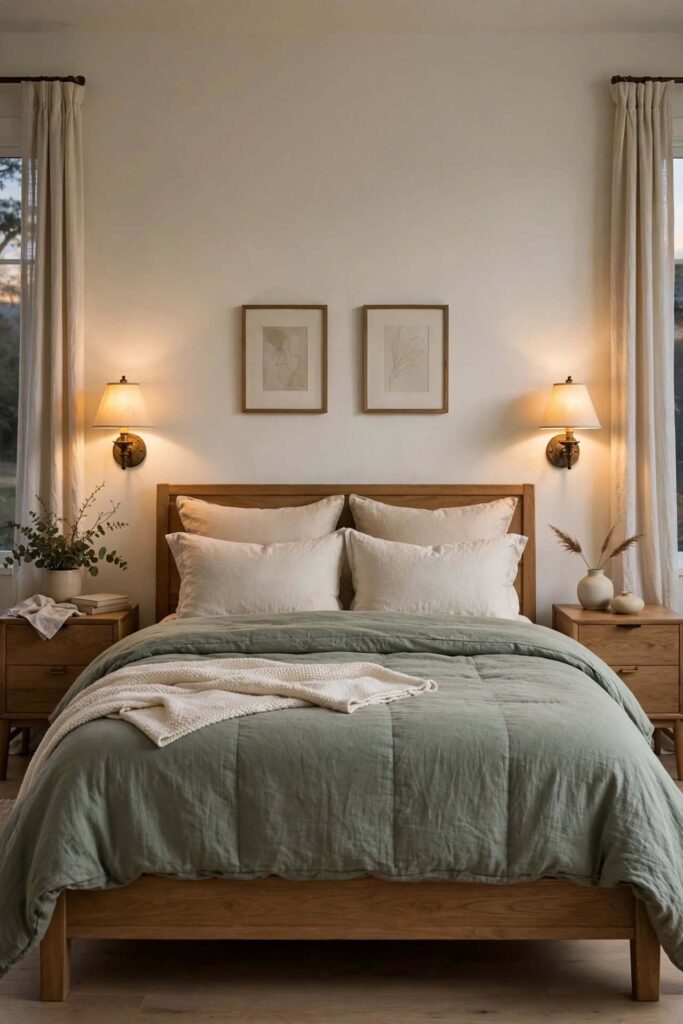
Brass is the jewellery of this look. Warm brass lighting gives sage a subtle polished quality — a little glow, nothing formal. Go for aged or brushed brass, not the shiny, highly reflective kind; the softer finish is what makes it work. Pair it with creamy bedding layers, medium wood, maybe a small framed artwork above the bed. And in the evening? The warm metal catches the light and balances out sage’s cooler undertones. It’s a small thing that changes the whole mood after dark.
13. Sage Bedding with Navy Accents

Want drama? Navy. But a little goes a long way — one cushion, one throw, a detail in the artwork, an upholstered chair. That’s enough. Any more and the navy starts competing with the sage instead of deepening it.
Then balance the darker colours out: warm ivory sheets, natural wood, or the bedroom gets visually heavy fast. Big bedroom, plenty of natural light — that’s where this one really pays off.
14. Sage Green Bedding with Vintage-Inspired Decor
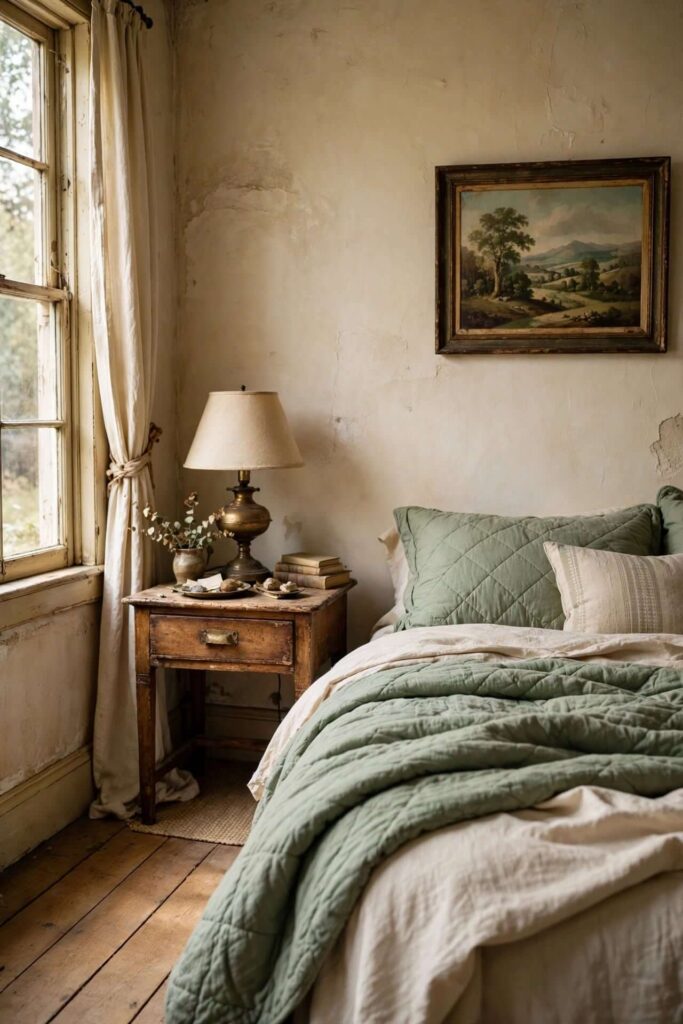
Vintage pieces make sage feel collected — like the room came together over time, not in one shopping trip. An antique-style wooden bedside table. An aged brass lamp. A framed landscape print. Slightly traditional bedding layers. But don’t make everything look old. One or two vintage elements mixed with modern basics is the sweet spot — that’s what keeps it fresh. The result feels personal. A room someone actually lives in, not a period set.
Quick Win: One vintage-style bedside lamp or framed print. You don’t need to redo the room — a single older-looking piece gives modern bedding a whole lot more character.
15. Sage Green Bedding for a Minimalist Bedroom

Minimalist doesn’t mean colourless. A solid sage duvet can be the one thing in the room that has something to say — while everything else stays quiet. Clean-lined furniture. One bedside lamp. Simple cream sheets. Maybe one piece of artwork, if that. The real key is the empty space: leave negative space around the bed, and the green reads as intentional. Fill that space with stuff, and it just looks like another object competing for attention.
16. Sage Green Bedding with Blush and Soft Pink
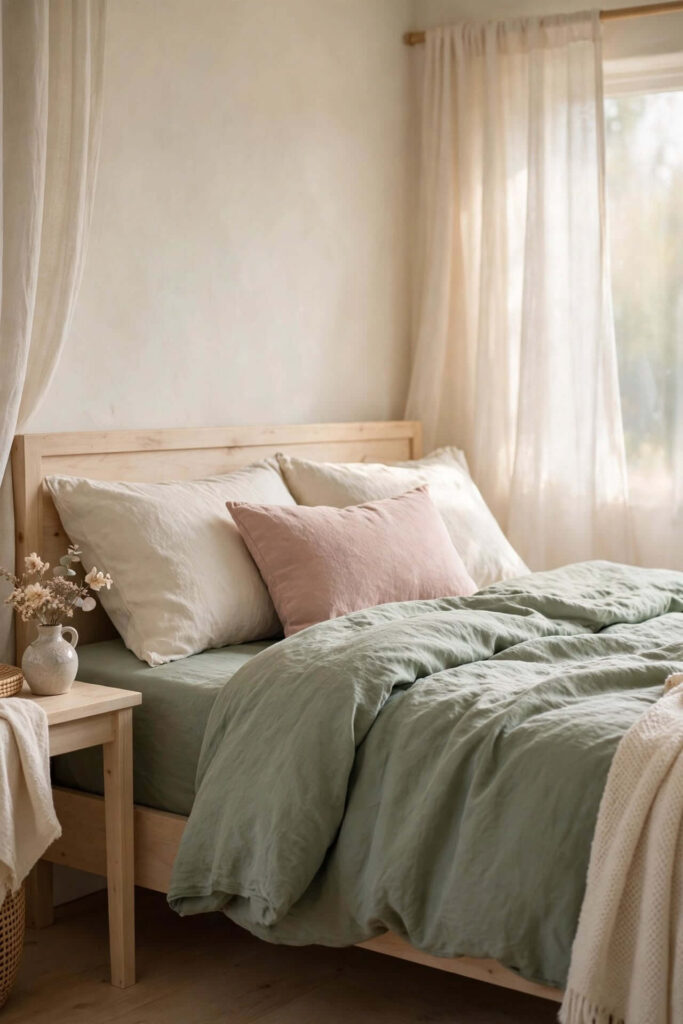
Softer? More feminine? Then reach for muted blush — not bright pink, never bright pink. A dusty-rose cushion. One small floral accent. That adds warmth while the green keeps its calm. Around it, stay neutral: cream, beige, pale wood. They let the blush and sage do the talking. It’s a gentle combination, and it stays gentle — the room never tips over into sweet.
17. Sage Bedding with an Earthy Neutral Palette
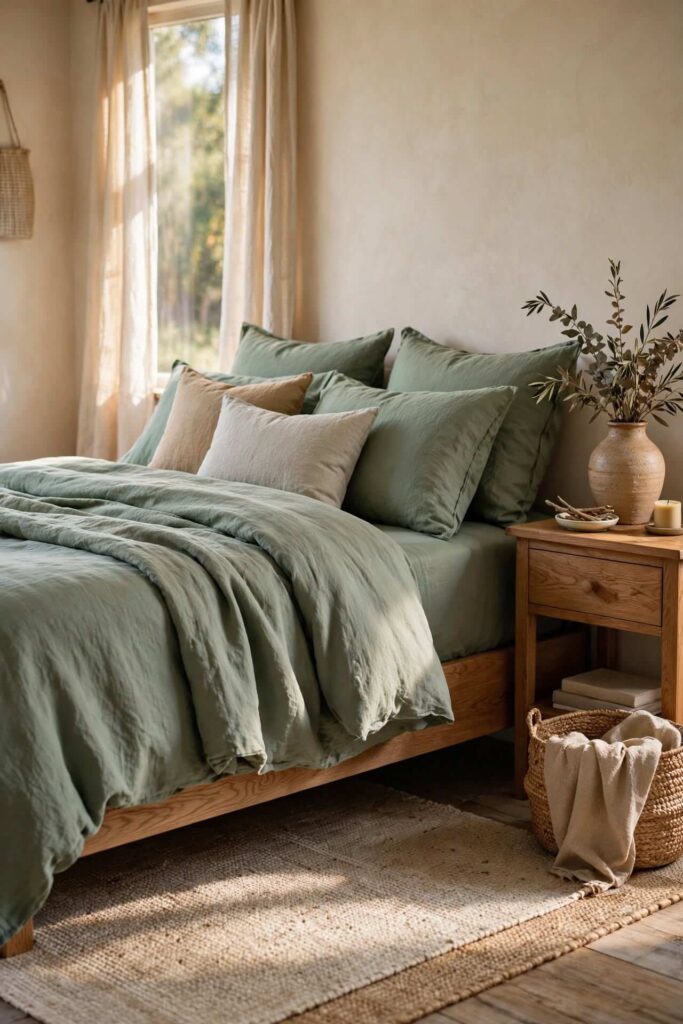
This one’s about a feeling more than a look. Clay. Oatmeal. Warm white. Tan. Natural wood. Surround the green with those, and the room turns into a proper retreat. And don’t decorate your way there — let the materials do it. Linen, woven fibres, unfinished wood, ceramic, cotton: that’s where the visual interest comes from. Relaxed, timeless, and — here’s the practical bit — it won’t date. Bedding that evolves with your decor instead of chasing a trend that’ll be gone by next year.
Quick Win: Pick three supporting neutrals — cream, tan, natural wood, say — and repeat them around the room. That repetition is what makes the sage feel connected to the whole space, not just the bed.
Buying and Caring for Sage Bedding
When you’re buying, check the material first and the colour second. Two sets in the exact same shade can feel completely different on the bed — it’s the fabric that decides that, not the dye. Look for a duvet set with a matching flat sheet and pillowcases, so the colour stays consistent across the whole bed. And check the return policy before you order. Sage is a chameleon: it can look greener or greyer depending on the light in your room, and you won’t know until it’s actually on the bed.
Washing matters more than most people realise. Linen goes in cold water, gentle cycle, then air-dry — or tumble-dry on low if you must. High heat is the enemy here: it makes linen stiff and can fade the colour. Cotton is easier — warm water does the job. And skip fabric softener on linen altogether; it coats the fibres and kills the absorbency. Stains? Treat them quickly with a mild detergent. Bleach is a bad idea — it can yellow the green.
Thread count only really tells you something about cotton. A 300–500 thread count percale or sateen feels smooth without trapping heat; anything above 600 is usually marketing, not comfort. Linen works differently — it’s measured by weight, so look for around 150–200 GSM if you want bedding that drapes well. As for what you’ll pay for a queen set: cotton $60–$180, linen $120–$300, bamboo $80–$200. Department stores, home-goods shops, online bedding retailers — they all carry sage in those ranges.
Linen vs Cotton vs Bamboo
A quick side-by-side of the three materials you’ll see most often:
| Material | Feel | Best for | Care | Typical queen-set price |
|---|---|---|---|---|
| Linen | Airy, textured, softens with every wash | Warm sleepers, relaxed looks | Cold wash, air-dry or low heat | $120–$300 |
| Cotton | Smooth, crisp, breathable | Everyday use, hot sleepers | Warm wash, tumble-dry low | $60–$180 |
| Bamboo | Silky, cool, drapes well | Sensitive skin, warm rooms | Cold wash, gentle cycle | $80–$200 |
Conclusion
Sage is an easy place to start. A calmer bedroom, a warmer one, a more considered one — and you don’t need a complete redesign to get there. Keep it minimal with cream and wood. Add depth with linen and texture. Or go richer: navy, terracotta, brass. Your call. Just don’t try to copy an entire room off Pinterest. Pick the colours, the materials, the details that fit the furniture you already have, the space you’ve got, your personality, your budget. That’s what makes it yours.
Frequently Asked Questions
Yes. It’s muted, it’s earthy, and it plays nicely with almost everything understated — warm neutrals, natural wood, cream, beige. That’s exactly why it works so well in a bedroom.
Plenty of them: cream, ivory, beige, tan, warm white, natural wood, terracotta, muted blush, navy, warm gray. Which one you pick comes down to the feeling you want — light, earthy, dramatic, or romantic.
Not necessarily. Go for a lighter shade of sage, pair it with warm white walls and pale furniture, and let in as much natural light as you can — the room will stay bright and airy.
Cream, ivory, white, beige, light taupe — all easy wins. And if bright white feels too stark against the muted green, warm ivory is the one to reach for.
Absolutely. Lighter shade of sage, pale walls, simple furniture, minimal accessories — keep everything around the bed light and the room keeps its sense of openness.
Light and medium natural woods are the most versatile — they just work. Walnut and darker woods can work too, as long as you balance them with cream textiles and a lighter rug or floor.
Don’t buy more accessories — add texture and layers instead. Linen, good-looking neutral pillows, a textured throw, natural wood, warm lighting: that’s what makes a simple sage set feel refined.
Yes. Solid sage, clean-lined furniture, minimal accessories, warm white walls, contemporary lighting — that’s the modern version, and it works.
Yes — as long as it’s the right gray. Warm gray, mushroom, taupe-gray all pair well; very cool blue-gray is the one to avoid. A bit of cream and natural wood helps tie the colours together.
Cream, ivory, beige, oatmeal, soft natural linen — all safe, all versatile. Want more drama? Deeper neutral curtains work too, as long as the room gets plenty of natural light.
Keep the sage on the bed and let everything else stay neutral. Cream bedding layers, a beige rug, natural wood, warm white walls — that’s what stops the green from taking over the room.
Yes. Aged wood, brass, traditional artwork, vintage-inspired accessories — sage sits naturally with all of them. Mix the older-looking pieces with simple modern textiles and the result stays balanced.
Yes. In a muted shade, sage behaves almost like a soft neutral itself. Pair it with cream, beige, tan, and natural wood and you get a calm, earthy bedroom — without leaning entirely on white or gray.
Linen and cotton are both solid choices — it depends on the look you want. Linen is relaxed, naturally textured. Cotton is smoother, more structured. Neither is wrong.