


Choosing a coffee table seems simple until you realize how much it affects the look and functionality of your living room. The wrong shape can make a small space feel cramped, while a table without useful storage can leave everyday essentials scattered across the room. The good news is that coffee tables come in many styles, materials, and configurations, making it easier to find one that suits your furniture and lifestyle. From timeless wooden designs to space-saving nesting tables, these 10 coffee table types will help you compare practical options and discover a design that feels right for your home.
In This Article
- 1. Classic Wooden Coffee Tables
- 2. Modern Glass Coffee Tables
- 3. Round Coffee Tables for Softer Layouts
- 4. Coffee Tables with Hidden Storage
- 5. Nesting Coffee Tables for Flexible Spaces
- 6. Marble Coffee Tables for a Refined Look
- 7. Industrial Coffee Tables with Metal Frames
- 8. Upholstered Coffee Tables and Ottomans
- 9. Sculptural Coffee Tables as Statement Pieces
- 10. Concrete and Stone-Look Coffee Tables
- Conclusion
- Frequently Asked Questions
1. Classic Wooden Coffee Tables

Wooden coffee table types are a timeless choice because they bring warmth, texture, and natural character into a living room. Choose medium oak for a Scandinavian-inspired space, walnut for a richer traditional look, or reclaimed wood for a relaxed farmhouse interior. A rectangular wooden table works especially well in front of a long sofa, while rounded corners soften the arrangement. Pair the wood with linen upholstery and a simple ceramic vase to create a balanced, inviting look.
Quick Win: If your living room feels too cool or plain, introduce a wood coffee table with a finish that complements your existing flooring rather than matching it exactly.
2. Modern Glass Coffee Tables

A glass coffee table is ideal when you want your living room to feel more open without sacrificing style. Its transparent surface allows the rug and flooring to remain visible, making it particularly useful in small apartments or rooms with bulky seating. Choose clear glass with slim black metal legs for a contemporary look, or a rounded glass top for a softer finish. Keep accessories minimal so the table remains visually light and easy to maintain.
3. Round Coffee Tables for Softer Layouts
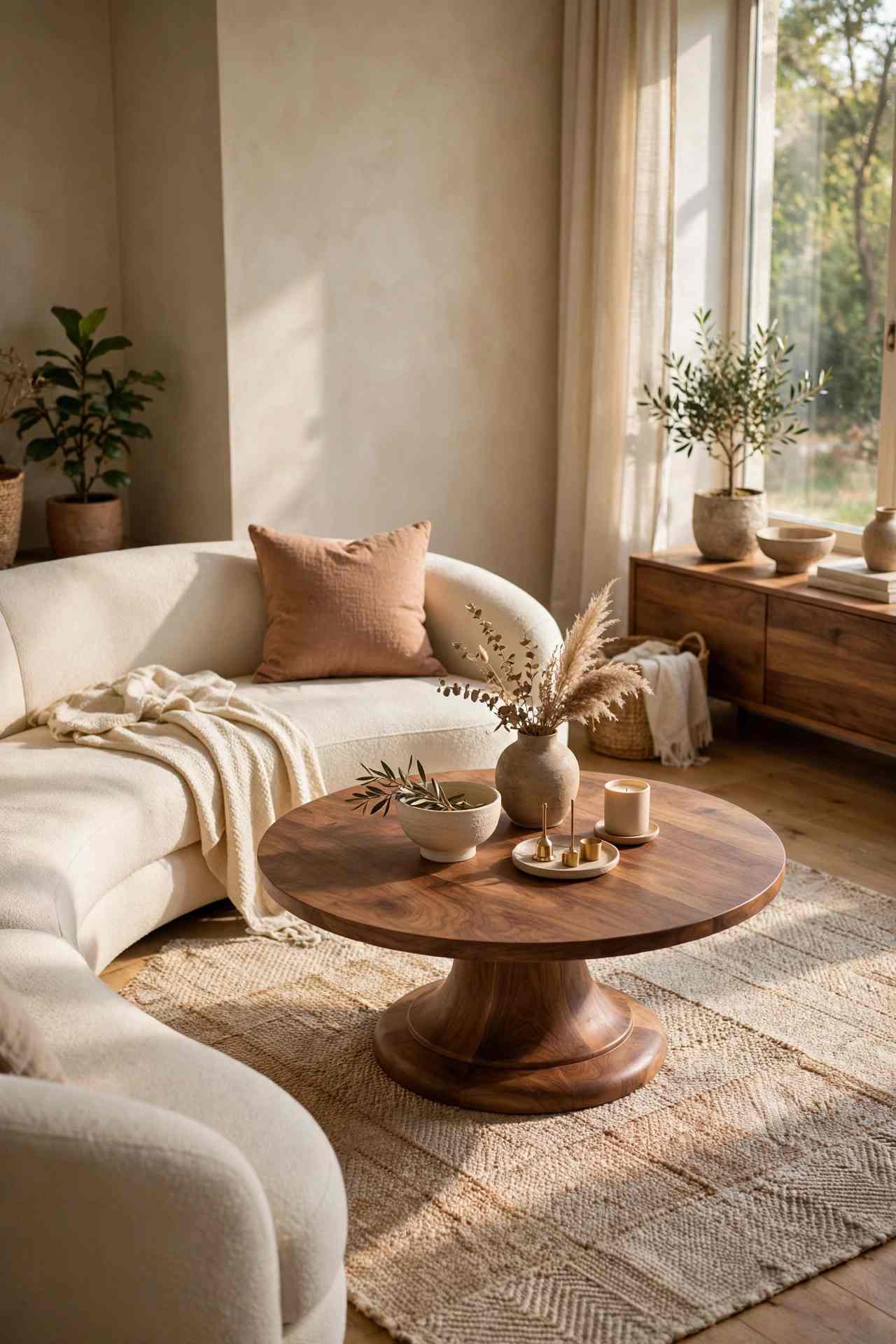
Round coffee table types introduce softer lines that balance square sofas, angular cabinets, and rectangular rugs. Their curved edges also make movement around the seating area easier, especially in family rooms or compact spaces. A walnut table adds depth to a neutral interior, while a light oak version suits airy, minimalist decor. Position it centrally and leave enough room to walk comfortably around it. For the best result, choose a diameter that suits the scale of your sofa rather than the largest table available.
Quick Win: In a narrow living room, consider a round coffee table instead of a rectangular one to reduce the feeling of sharp, crowded corners.
4. Coffee Tables with Hidden Storage

Storage coffee tables help keep remote controls, magazines, chargers, and everyday clutter out of sight without adding another cabinet to the room. Look for lift-top designs when you need a convenient surface for working or eating from the sofa, or choose a table with concealed drawers for smaller items. Wood finishes blend naturally into most interiors, while simple hardware keeps the overall look refined. This type is particularly practical for apartments, multipurpose living rooms, and homes where storage space is limited.
Quick Win: Before buying, measure the items you want to store and check the internal compartment dimensions—not just the table’s external size.
5. Nesting Coffee Tables for Flexible Spaces

Nesting coffee table types offer two surfaces that can be separated when guests arrive and tucked together when floor space is needed. This makes them an excellent choice for small living rooms, studio apartments, and flexible seating arrangements. Try combining a larger wood-topped table with a smaller black metal design for subtle contrast. You can also move the smaller table beside an armchair when an extra surface is useful. Choose pieces with different heights so they slide together easily without looking awkward.
6. Marble Coffee Tables for a Refined Look
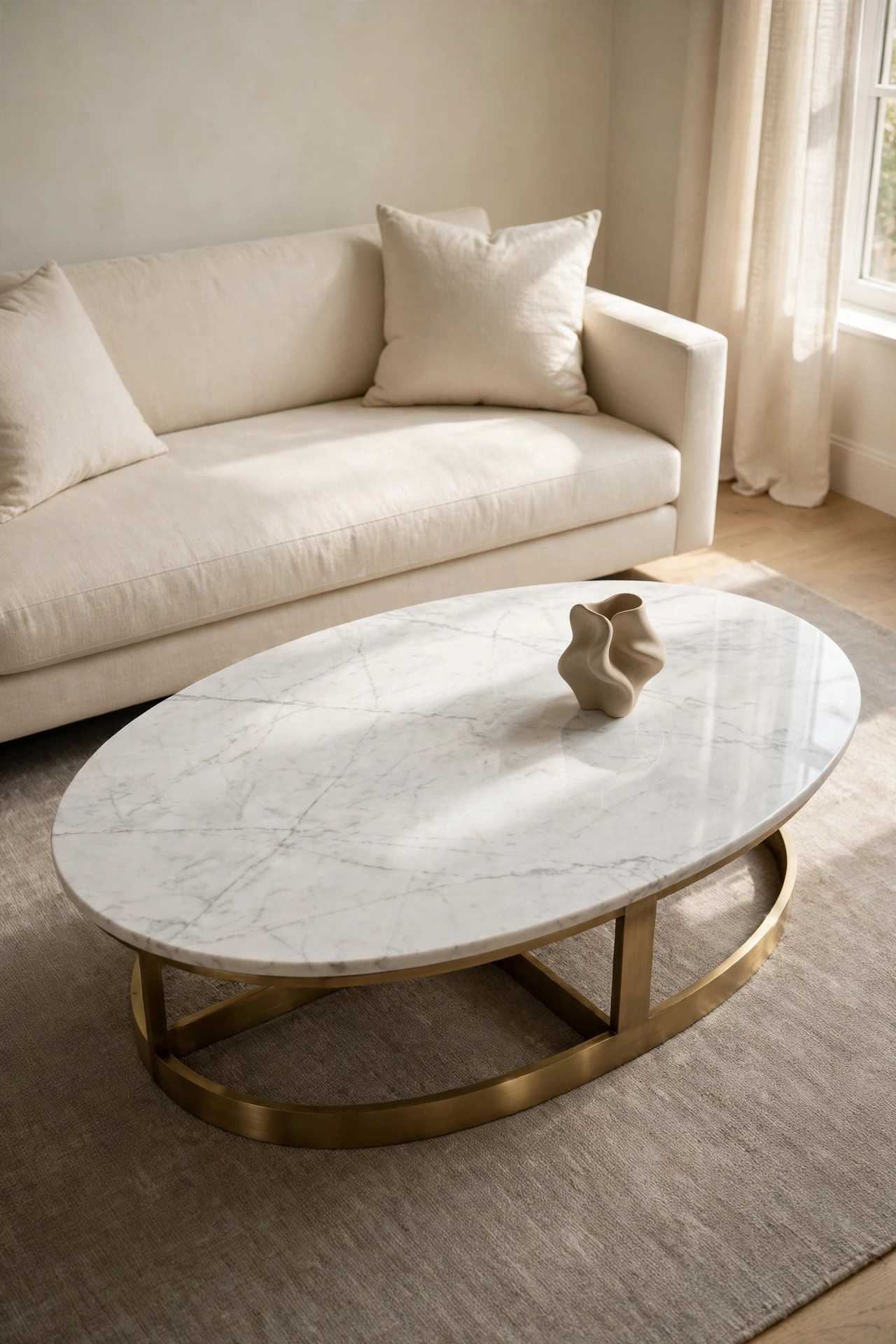
Marble coffee table types bring a refined, architectural quality to living rooms, particularly when paired with understated furniture. A white marble top with delicate gray veining works beautifully with cream upholstery and brushed brass details, while darker stone creates a more dramatic focal point. Because the material already has visual interest, keep decorative objects simple and avoid overcrowding the surface. If genuine marble exceeds your budget, consider a well-finished stone-look alternative with a realistic pattern and durable top.
Quick Win: Repeat one detail from the table, such as a brass finish or warm neutral tone, in a lamp or picture frame to make the room feel coordinated.
7. Industrial Coffee Tables with Metal Frames

Industrial coffee table types combine sturdy metal frames with materials such as reclaimed wood, dark timber, or concrete-look surfaces. They work particularly well in loft apartments, contemporary spaces, and living rooms that need a little visual contrast. A black steel frame anchors lighter upholstery, while a weathered wood top adds texture and character. Balance the harder finishes with a soft rug, woven cushions, or linen curtains so the room feels comfortable rather than overly industrial.
8. Upholstered Coffee Tables and Ottomans
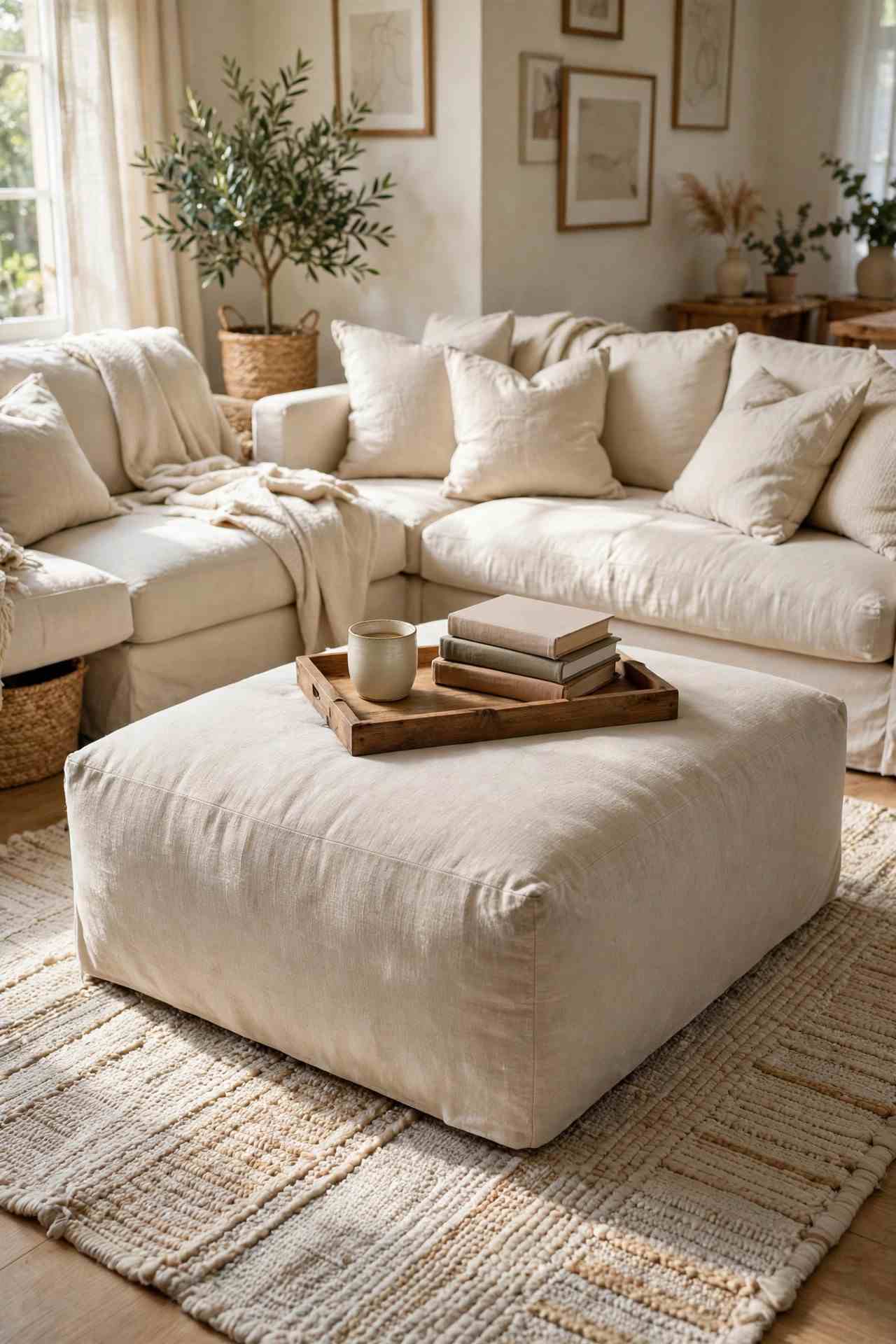
An upholstered ottoman can serve as a softer alternative to a traditional coffee table, especially in family rooms where comfort matters. Choose a durable fabric in oatmeal, warm gray, or muted brown, and add a stable tray for drinks, books, or decorative objects. The padded surface creates a relaxed atmosphere and can double as extra seating when needed. This design works particularly well with deep sofas and cozy, layered interiors, although stain-resistant upholstery is worth considering in busy households.
Quick Win: Use a wide, flat-bottomed tray to create a stable surface for everyday items while preserving the ottoman’s soft, comfortable feel.
9. Sculptural Coffee Tables as Statement Pieces
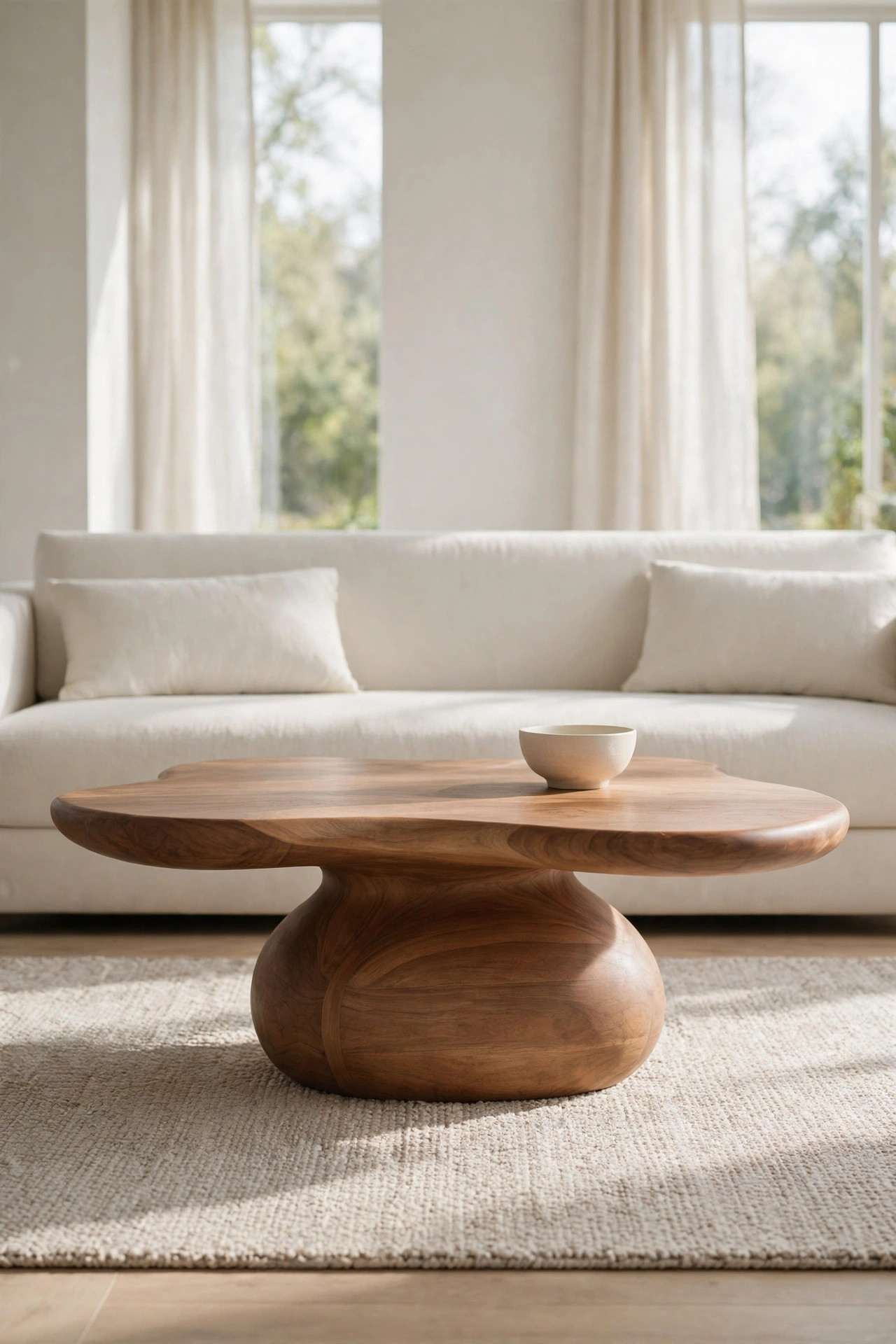
Sculptural coffee table types function as both furniture and visual artwork. Designs with rounded pedestal bases, unusual silhouettes, or chunky geometric forms can give a simple living room a stronger identity without requiring lots of accessories. Choose a finish that contrasts gently with the sofa, such as dark walnut against pale upholstery or a soft stone finish against richer colors. Because the table itself becomes the focal point, keep nearby decor restrained and allow its shape to stand out.
10. Concrete and Stone-Look Coffee Tables
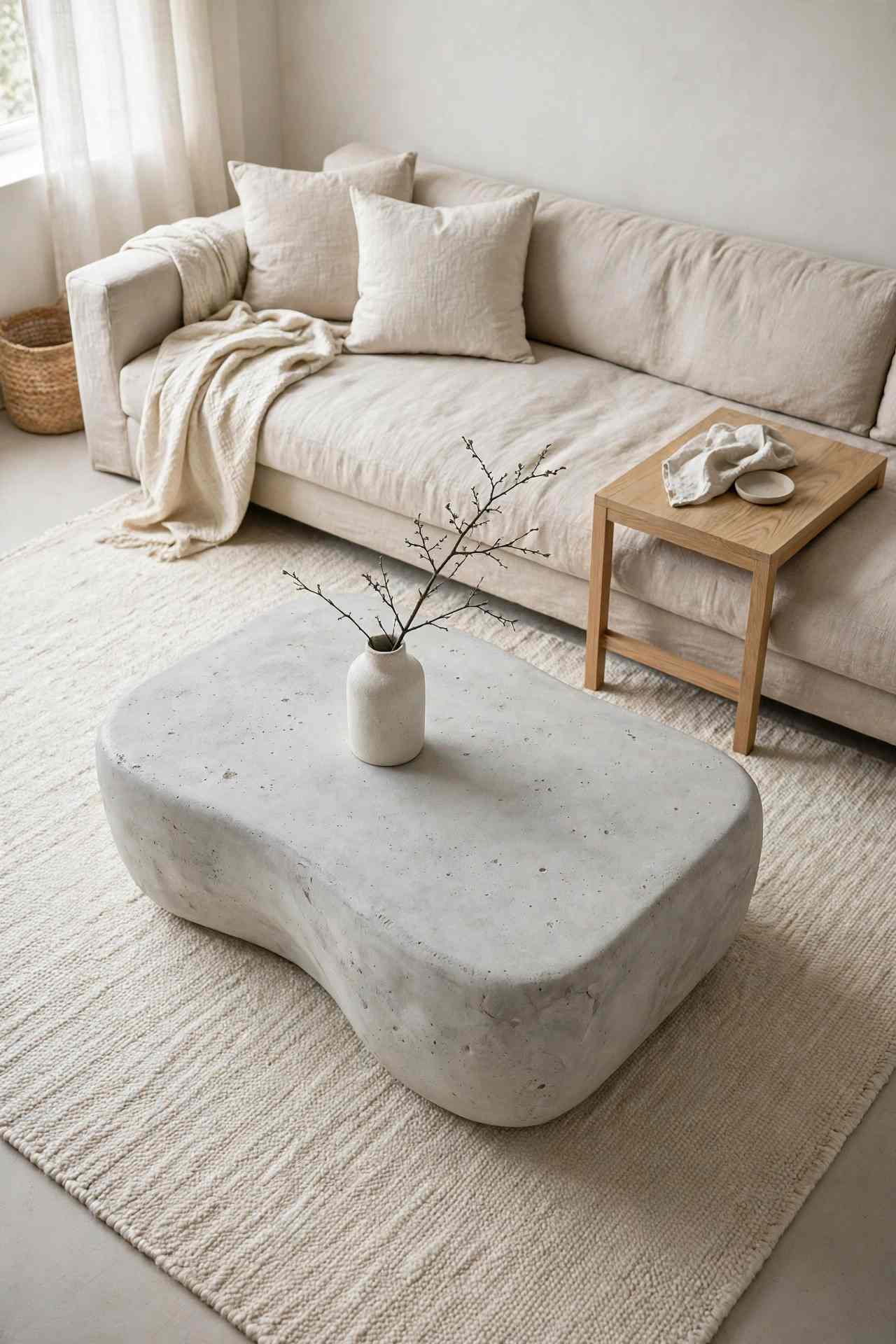
Concrete and stone-look coffee table types introduce a grounded, contemporary feel through their solid appearance and subtle surface texture. A pale gray finish pairs well with warm white walls, natural linen, and light oak, while darker stone-look designs create contrast in minimalist interiors. Their substantial shapes work best when the room has enough open space around them. Before choosing one, check the actual weight, floor protection, and care requirements, particularly if the table is made from solid stone or concrete.
Conclusion
With so many coffee table types to choose from, the right one can make your living room feel more cohesive, comfortable, and functional without requiring a complete makeover. Start by considering your sofa size, available floor space, storage needs, and preferred materials. Then choose a design that complements the furniture you already own and reflects your personal style. You don’t need to follow every trend; one thoughtful furniture choice can transform the way your living room looks and works.
Frequently Asked Questions
The main coffee table types include wooden, glass, round, storage, nesting, marble, industrial, upholstered, sculptural, and concrete or stone-look designs. Each offers a different combination of appearance, practicality, and space efficiency.
Round and nesting coffee tables are often excellent choices for small living rooms. Their compact shapes and flexible arrangements can make movement easier without overwhelming the seating area.
Wood is a versatile option for warmth and durability, while glass creates a lighter visual appearance. Marble, metal, and concrete-look finishes suit different design preferences, so consider maintenance, weight, and daily use before deciding.
As a general guideline, choose a table around two-thirds the length of your sofa. Leave approximately 14–18 inches between the sofa and table where possible, adjusting the spacing to suit your room and walking routes.
Neither shape is universally better. Round tables soften angular furniture and can improve circulation, while rectangular designs provide more surface area along longer sofas.
Glass coffee tables can work well in modern homes, but they show fingerprints, dust, and smudges more readily than some other materials. Choose tempered glass where available and consider household safety needs before purchasing.
Lift-top tables, drawer-equipped designs, and models with enclosed compartments offer useful storage. Select one based on what you need to keep nearby, such as remotes, magazines, blankets, or charging accessories.
Yes. Combining materials such as wood and metal or marble and brass can add depth to a living room. Repeat one or two finishes elsewhere in the space to keep the overall look cohesive.
Natural oak, walnut, black, white, and muted stone shades all complement neutral upholstery. Choose a contrasting finish if you want the table to stand out, or a similar tone for a more understated arrangement.
Start with one tray, a small stack of books, and a single decorative object such as a ceramic vase. Leave enough empty surface for everyday use, particularly if the table also serves as a dining or work area.
Nesting tables are useful when you occasionally need extra surface space but want to keep the room open most of the time. They are especially practical for apartments, compact living rooms, and homes that regularly host guests.
Look for ceramic, engineered-stone, or quality marble-look surfaces. These can provide a similar visual effect at different price points, although durability and care requirements depend on the specific material.
Yes. An upholstered ottoman can provide a comfortable surface, extra seating, and a softer appearance. Add a stable tray when you need somewhere to place drinks or other items.
Minimalist wooden tables, glass designs, sculptural forms, and simple stone-look tables all complement modern interiors. Focus on clean lines, well-chosen materials, and proportions that suit your sofa.
Use coasters, felt pads, and suitable trays to protect the surface during everyday use. Follow the manufacturer’s cleaning recommendations, particularly for natural stone, glass, and delicate wood finishes.