

A living room can have comfortable seating and thoughtful decor yet still feel unfinished when the coffee table lacks warmth or the right proportions. A solid wood round coffee table offers a simple way to bring natural character into the space while softening the straight lines of sofas, cabinets, and shelving. Its curved shape can also make conversation areas feel more relaxed and improve movement around the furniture. From rustic oak finishes to sculptural modern designs, the right table can suit almost any decorating style. Below, you’ll find eight different woods, shapes, and styling combinations — pick the one that fits your room and your budget, and make it your own.
In This Article
- 1. Natural Oak Round Coffee Table for a Timeless Look
- 2. Rustic Round Wood Coffee Table With a Farmhouse Feel
- 3. Modern Sculptural Coffee Table With a Pedestal Base
- 4. Dark Walnut Round Coffee Table for Elegant Contrast
- 5. Mid-Century Round Coffee Table With Tapered Legs
- 6. Small Solid Wood Round Coffee Table for Compact Living Rooms
- 7. Solid Wood Round Coffee Table With a Lower Shelf
- 8. Minimalist Round Coffee Table With a Light Natural Finish
- How to Choose the Right Solid Wood Round Coffee Table
- Conclusion
- Frequently Asked Questions
1. Natural Oak Round Coffee Table for a Timeless Look

A natural oak round coffee table brings warmth without making a living room feel heavy. Its pale golden grain pairs beautifully with cream upholstery, off-white walls, woven baskets, and linen curtains. Choose a solid oak design with a smooth, rounded edge and sturdy legs for a timeless look that works in Scandinavian, transitional, and contemporary interiors. Keep the tabletop relatively simple with a ceramic vase and two stacked books to let the wood’s natural character stand out.
Quick Win: Echo that same oak in one small detail — a picture frame, a side table, a shelf edge — and the room will feel pulled together without everything matching.
2. Rustic Round Wood Coffee Table With a Farmhouse Feel
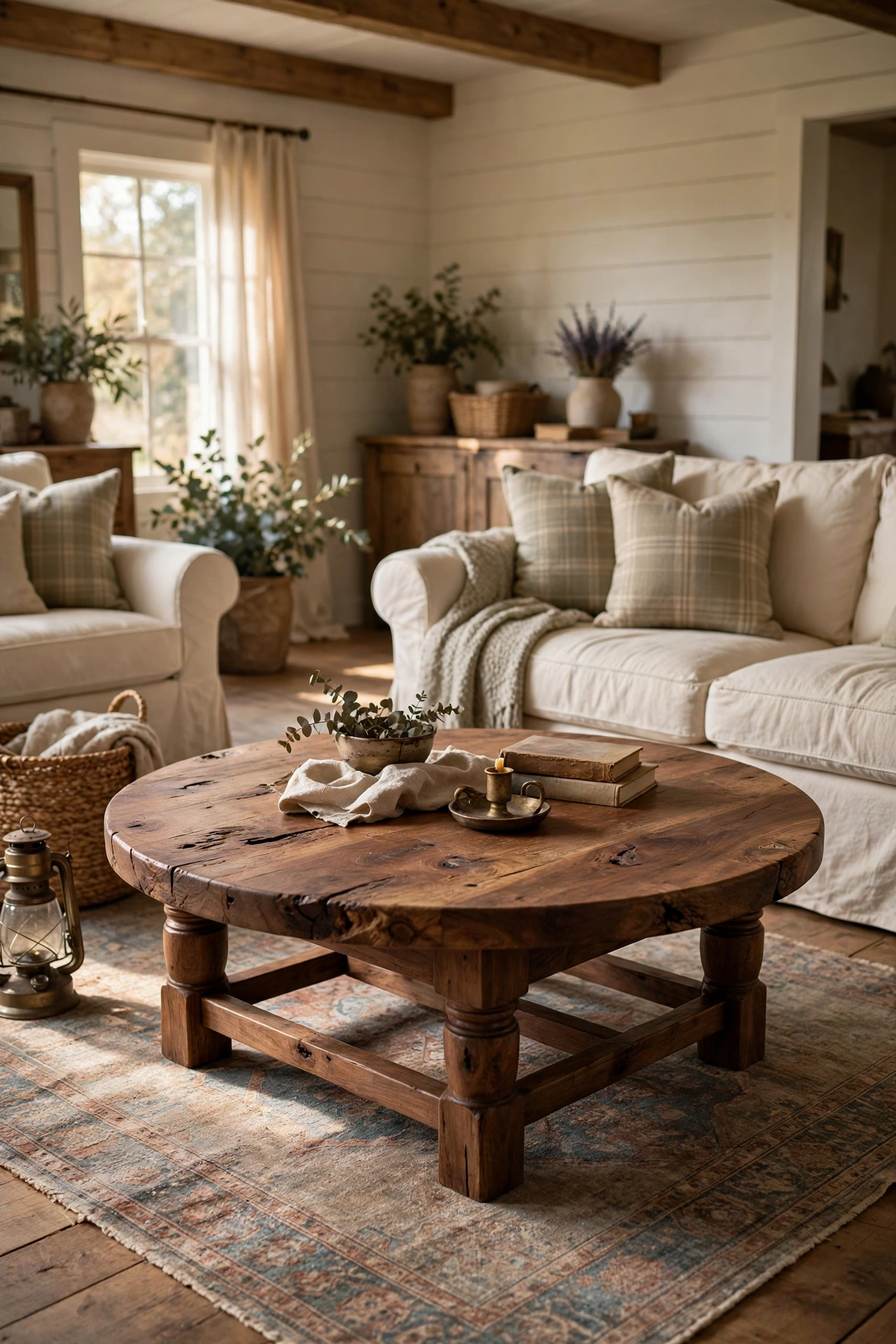
For a relaxed farmhouse living room, choose a rustic round wood coffee table with visible grain, subtle knots, and a warm brown finish. Chunkier legs or a thick tabletop give the piece a grounded appearance, especially beside slipcovered sofas and distressed wood furniture. Balance its substantial shape with soft textiles, aged-metal accents, and a vintage-inspired rug. The goal is to celebrate the wood’s character rather than make everything look perfectly matched.
Quick Win: Add a small woven tray and a matte ceramic pitcher to introduce texture while keeping everyday items organized.
3. Modern Sculptural Coffee Table With a Pedestal Base

A sculptural pedestal table makes a solid wood round coffee table feel like a design feature rather than just a practical surface. Look for a substantial circular top supported by a rounded column or architectural base in oak, walnut, or another solid hardwood. The uninterrupted silhouette works especially well with curved sofas, low-profile seating, and restrained decor. Because the base already adds visual interest, keep accessories minimal and leave enough tabletop visible to appreciate the shape.
4. Dark Walnut Round Coffee Table for Elegant Contrast
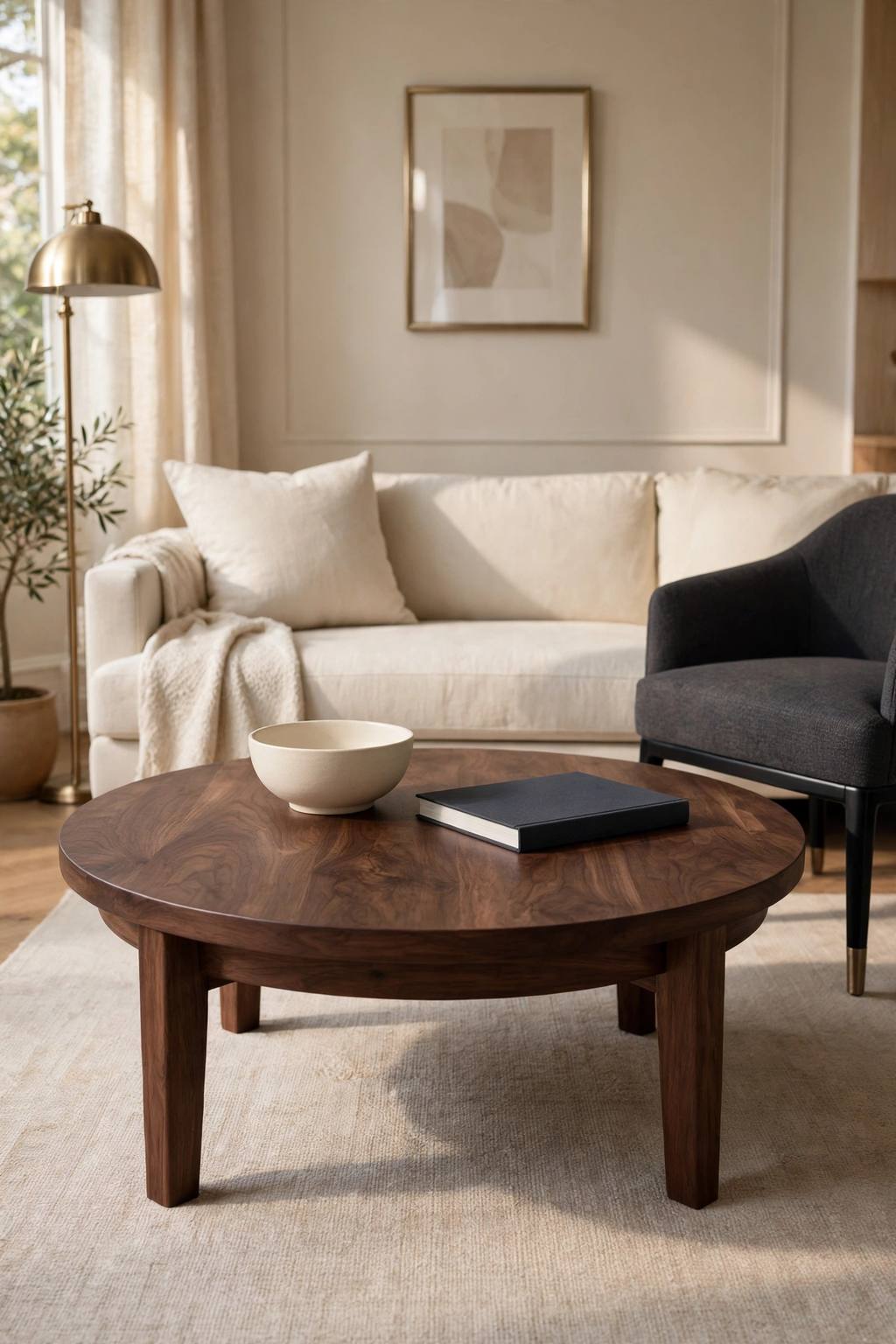
A dark walnut round coffee table creates a rich focal point in a room filled with lighter colors. Its deep brown tones look particularly appealing against ivory sofas, pale walls, and beige rugs, while black metal accents or muted brass details add depth. Choose a finish that highlights the wood grain rather than concealing it beneath a glossy coating. This approach suits modern classic, mid-century, and sophisticated neutral interiors, especially when the rest of the furniture feels visually light.
Quick Win: Repeat the walnut shade in one picture frame or a small side table, then use lighter textiles to prevent the seating area from feeling too dark.
5. Mid-Century Round Coffee Table With Tapered Legs

For a lighter, more retro-inspired look, try a mid-century round coffee table made from solid walnut or oak with slim tapered legs. The elevated base allows more of the rug to remain visible, helping compact living rooms feel open. Pair it with a low sofa, warm rust or mustard cushions, a simple geometric rug, and a few vintage-inspired accessories. The key is to mix old-school character with clean contemporary pieces instead of turning the room into a themed display.
6. Small Solid Wood Round Coffee Table for Compact Living Rooms
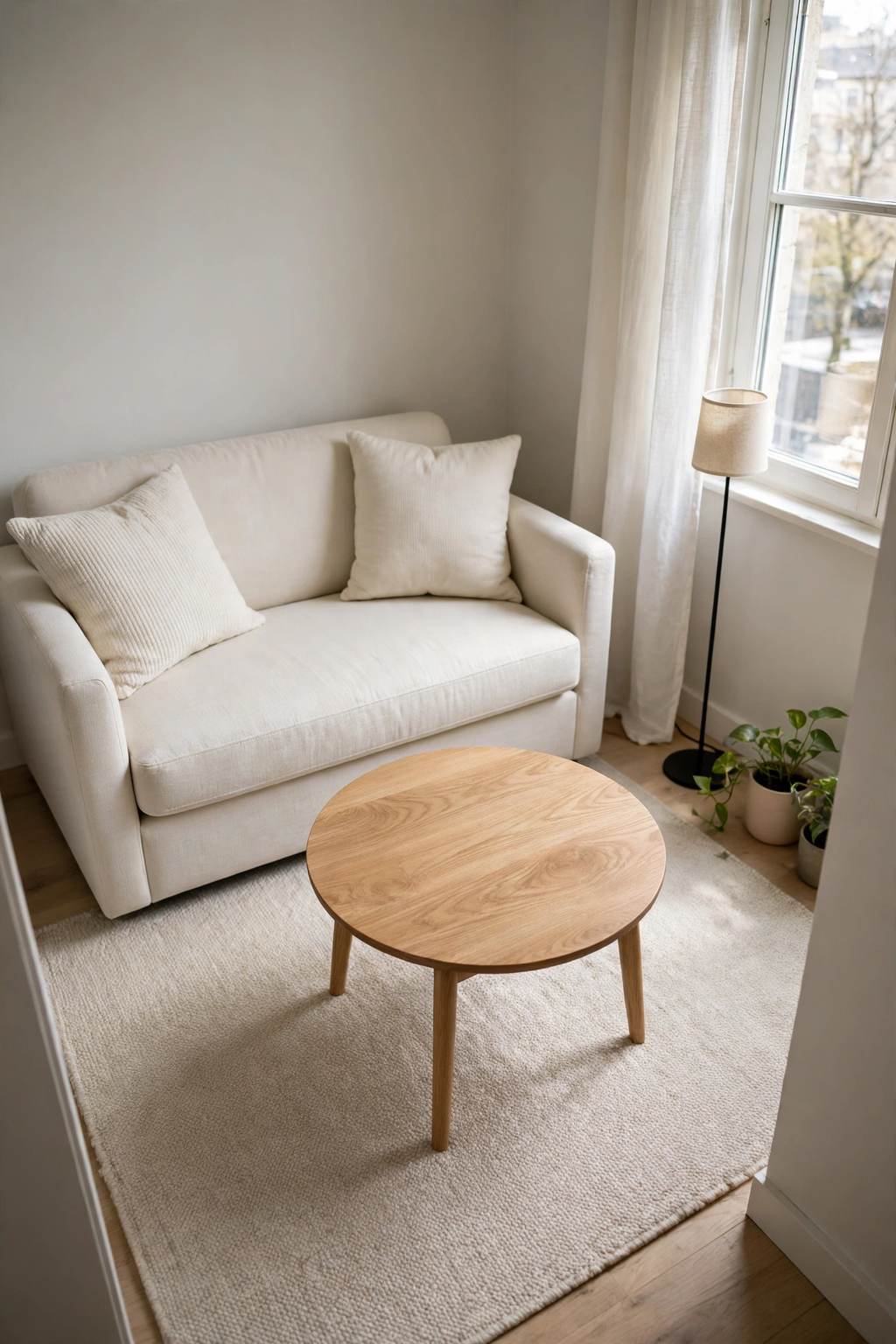
Tight on space? A smaller round table still gives you somewhere to set a coffee down, without the seating area feeling squeezed. Choose slim legs, a modest tabletop, and a finish that complements your sofa or flooring. The curved outline avoids bulky corners and can make walking around the table feel more comfortable. Before buying, measure the available space and aim for approximately 14–18 inches between the table and surrounding seating, adjusting for your room and circulation needs.
Quick Win: Use one low-profile centerpiece instead of several small accessories to preserve usable surface area and maintain an airy appearance.
7. Solid Wood Round Coffee Table With a Lower Shelf

Want storage without a bulky cabinet? A round table with a lower shelf keeps books and baskets close at hand and still looks light. The top can hold drinks and decorative accents, while the lower level keeps books, magazines, or a small woven basket within reach. Oak suits bright, relaxed interiors, while walnut gives the design a richer appearance. This style is especially useful for family living rooms and apartments where extra storage is welcome but a large rectangular cabinet would feel too bulky.
8. Minimalist Round Coffee Table With a Light Natural Finish
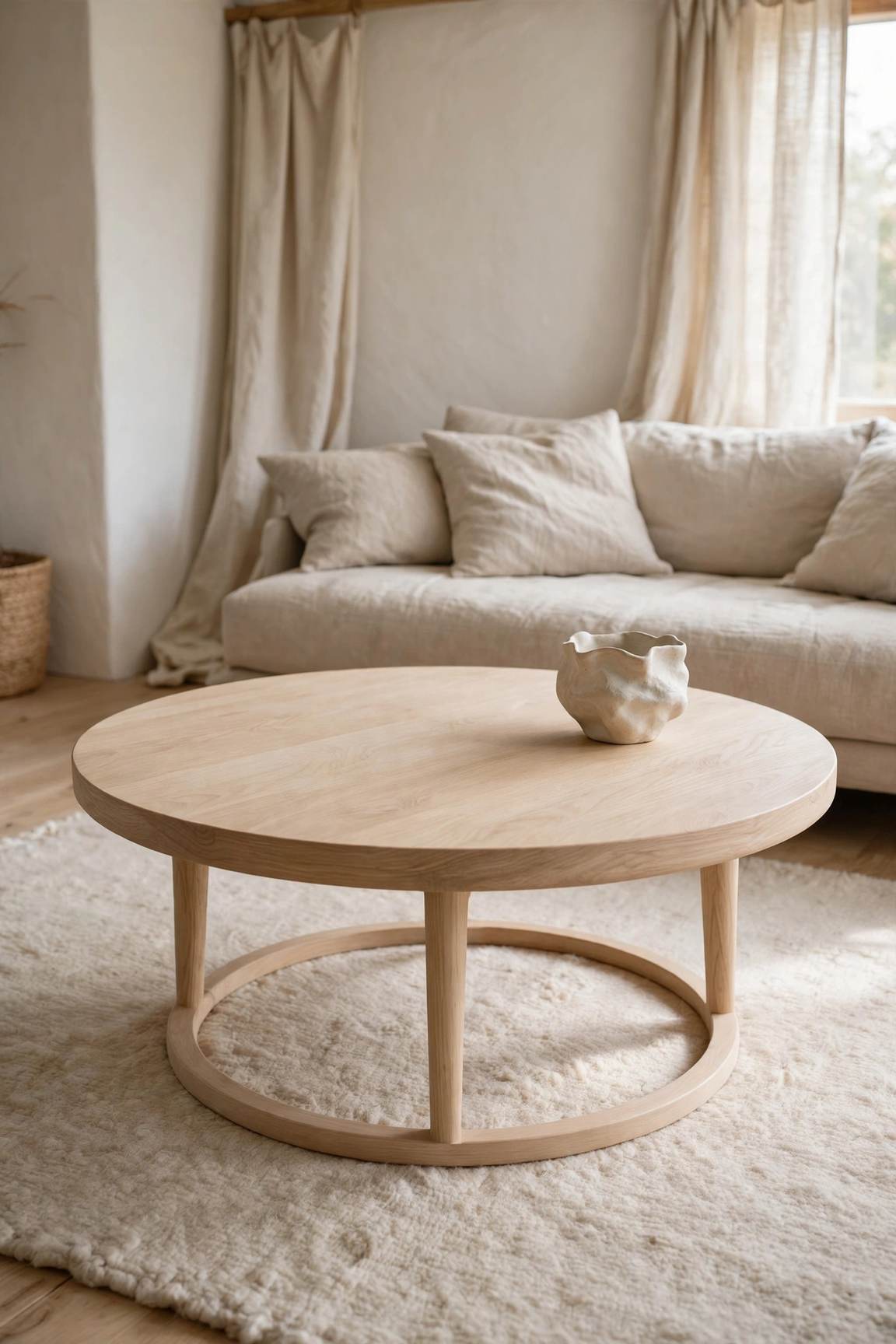
A minimalist solid wood round coffee table is ideal if you prefer a calm room without lots of decorative details. Choose a light natural finish, a clean silhouette, and a base that feels proportionate to the tabletop. Pair it with warm-white walls, a beige sofa, subtle textured cushions, and a simple wool rug. Rather than filling the surface, let the grain provide the visual interest. This restrained approach works particularly well in Scandinavian, Japandi, and modern organic interiors.
Quick Win: Leave most of the tabletop empty and add just one sculptural ceramic object for an intentional, uncluttered finish.
How to Choose the Right Solid Wood Round Coffee Table
Before choosing a design, consider the size of your seating area, the wood’s natural color, and how you use the table every day.
- Measure the room: Check the tabletop diameter and available walking space before purchasing.
- Choose the wood tone: Light oak feels airy, while walnut creates deeper contrast and a richer mood.
- Check construction: Look for clearly specified solid-wood components and ask whether the top, legs, and base are solid wood or engineered materials.
- Consider the finish: Matte or satin finishes emphasize natural character; protective finishes can make everyday cleaning easier.
- Think about daily use: A lower shelf is useful for storage, while a simple pedestal design offers a cleaner silhouette.
A well-chosen table should work with your existing furniture instead of forcing you to redesign the entire room.
Conclusion
A solid wood round coffee table can add warmth, soften a living room’s layout, and give everyday furniture a more considered appearance. Whether you prefer rustic oak, deep walnut, a sculptural pedestal, or a simple minimalist design, focus on the shape and finish that complement your existing space. You don’t need to recreate an entire room to achieve the look. Start with a suitable table, add a few thoughtful accents, and explore related living room ideas for more inspiration.
Frequently Asked Questions
Yes. Its natural grain adds warmth, and its rounded shape can make a seating area feel more relaxed. It works with traditional, modern, rustic, and minimalist interiors.
Go with a hardwood — oak, walnut, or maple all hold up well. Oak keeps things light and flexible; walnut brings deeper colour and a stronger grain pattern.
Choose a diameter that suits your sofa and available floor space. As a starting point, many living rooms work well with tables around 30–40 inches wide, but compact rooms may need smaller options.
Start with roughly a forearm-and-a-half of space — about 14 to 18 inches. That’s enough to walk past comfortably while still reaching your drink without standing up.
They can be. The absence of sharp corners can improve movement around furniture, while a smaller tabletop and slim legs help preserve an open appearance.
Start with a tray, a small vase, or a stack of books. Vary the heights and textures, but leave enough open surface for drinks, remotes, and everyday use.
Absolutely. It pairs particularly well with L-shaped sectionals because its curved outline softens the sofa’s angular shape. Choose a diameter that remains easy to reach from the main seats.
Not necessarily. Different wood tones can create a layered, collected appearance. Aim for complementary undertones and use a rug to create visual separation when the finishes are very similar.
Use coasters, wipe spills promptly, and follow the manufacturer’s care instructions. Avoid leaving damp objects on the surface, especially if the finish offers limited moisture protection.
Both can work well. Oak typically has a lighter appearance and a pronounced grain, while walnut offers deeper brown tones. Your room’s lighting, flooring, and existing furniture can help determine which looks more harmonious.
Prices vary depending on wood species, dimensions, construction, craftsmanship, and finish. Compare the quality of the materials and joinery rather than judging value by appearance alone.
Yes. Solid wood pairs nicely with black metal, brushed brass, and other understated finishes. Repeating one metal finish elsewhere in the room can help the combination feel intentional.
A larger rectangular rug can anchor the whole seating arrangement, while a round rug emphasizes the table’s curved shape. Choose a rug that accommodates the main seating pieces rather than selecting one based on the table alone.
Yes. A clean silhouette, restrained detailing, and a natural or matte finish suit modern spaces particularly well. Pair the table with simple upholstery and uncluttered accessories.
Check the product specifications and ask which components are solid wood. Some tables combine a solid-wood top with veneer, engineered panels, or other materials in the base, so verify the construction rather than relying on the product title alone.