
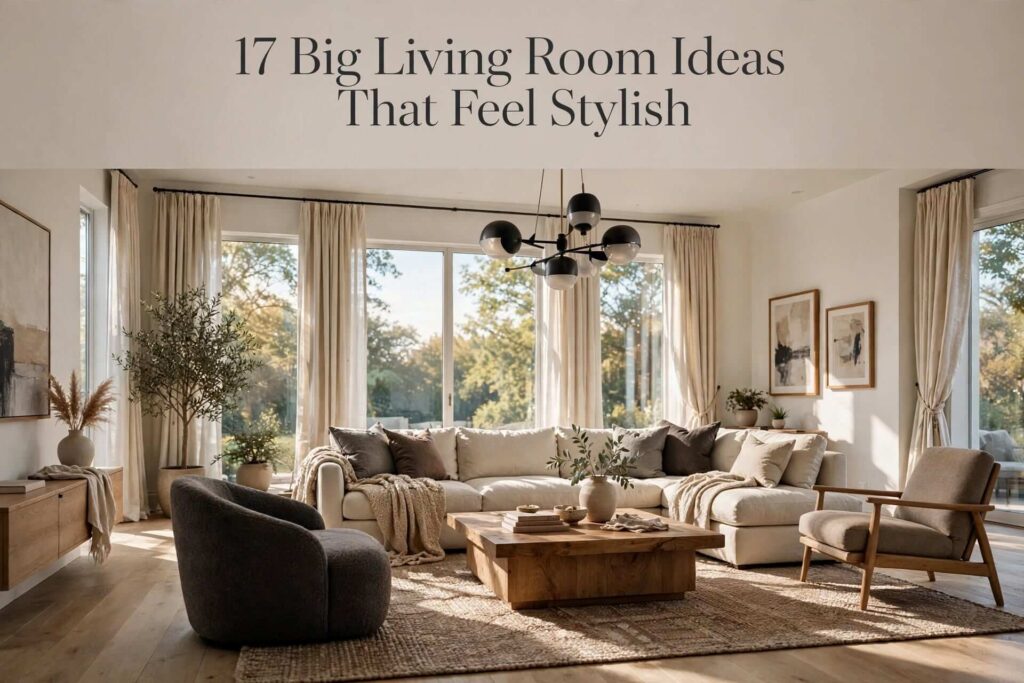
Large living rooms can look impressive, but decorating all that open space without making it feel empty or disconnected can be surprisingly difficult. Too little furniture leaves awkward gaps, while too much can make the room feel crowded and visually heavy. The key is to give the space structure without losing its sense of openness. From oversized sectionals and layered rugs to conversation zones, statement lighting, and warm architectural details, these big living room ideas show how to make a spacious room feel intentional, comfortable, and beautifully lived-in.
1. Create Two Comfortable Conversation Zones
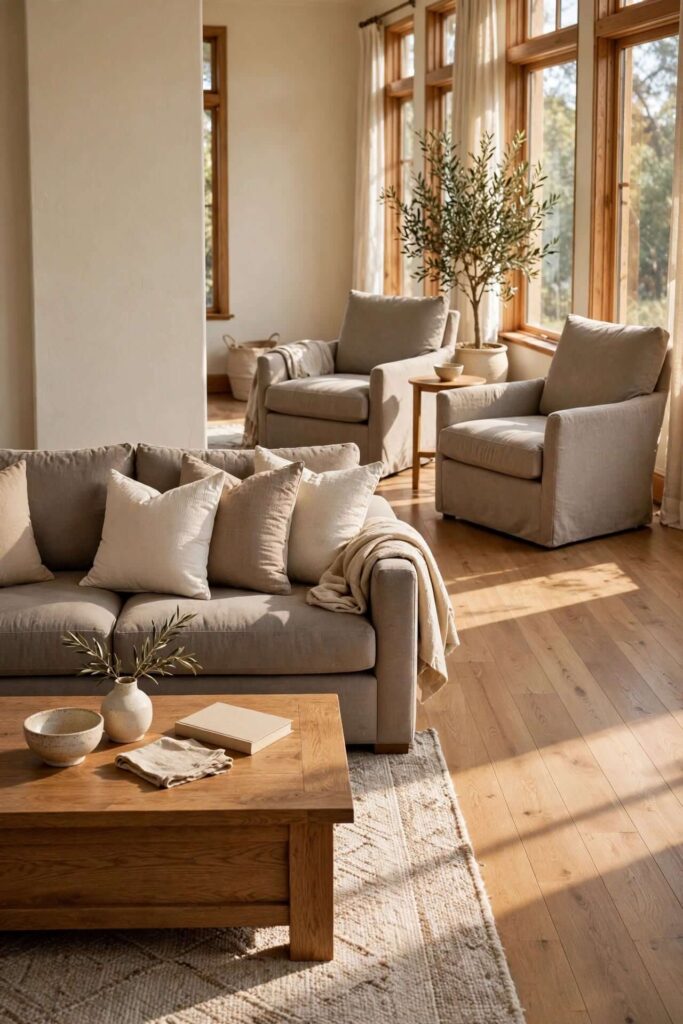
A large living room often feels empty when every piece of furniture is pushed against the walls. Instead, divide the space into two connected conversation areas. Place a generous sofa and coffee table around one rug, then add two lounge chairs or a smaller loveseat nearby. Keep the furniture visually related through similar wood tones, upholstery colors, or cushions. This approach makes a huge room feel more intimate while preserving an open pathway between zones.
Quick Win: Pull seating several inches away from the walls and angle chairs slightly toward the main sofa. Even this small adjustment can make a large room feel more thoughtfully arranged.
2. Anchor the Room With an Oversized Sectional
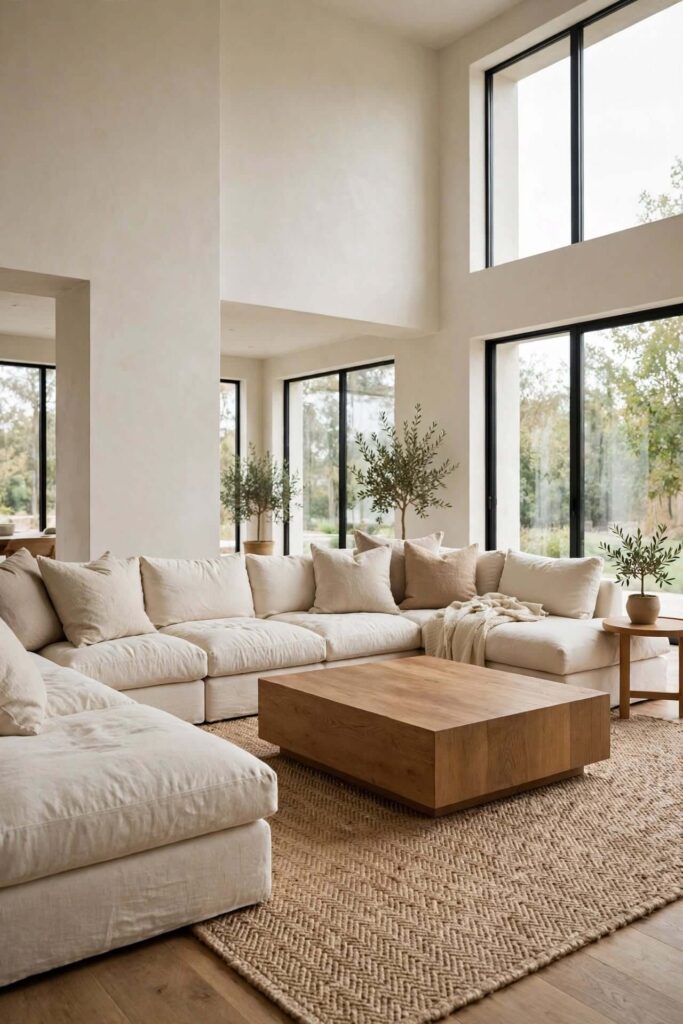
An oversized sectional can give a big living room the visual weight it needs. Choose a deep L-shaped or U-shaped design and position it around a large rug rather than leaving it floating in the middle of the room. Cream, warm gray, camel, or muted olive upholstery works especially well because it provides scale without feeling harsh. Add a substantial coffee table and a few large cushions to keep the arrangement comfortable rather than cavernous.
3. Use a Large Rug to Define the Seating Area
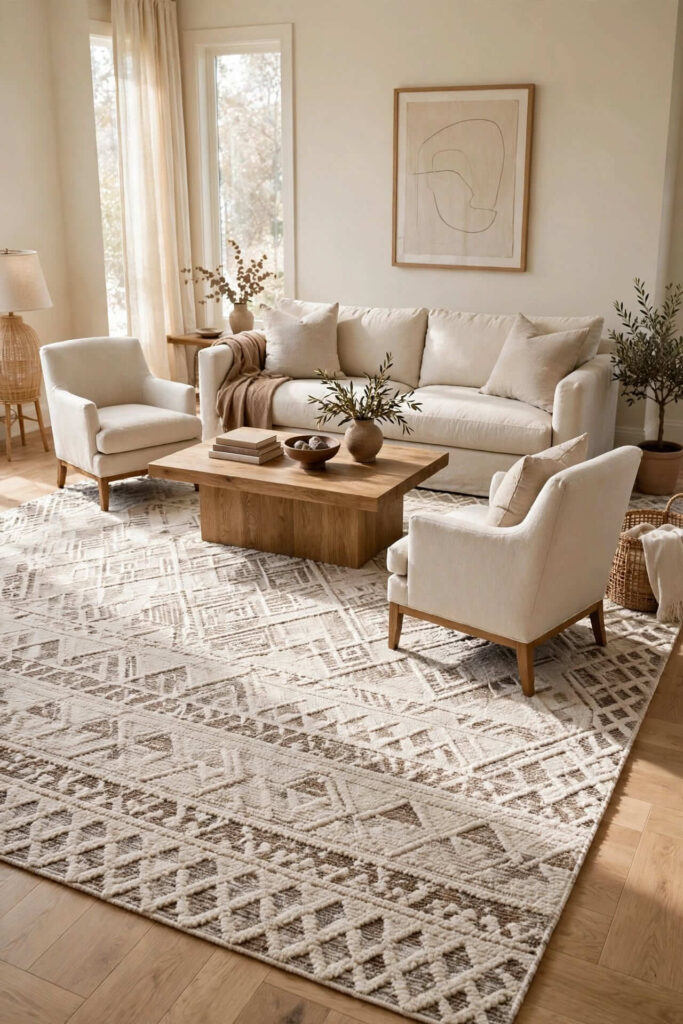
One of the easiest ways to make a spacious room feel cohesive is to use a rug large enough for the furniture. A tiny rug can visually shrink the seating arrangement and leave too much disconnected floor around it. Choose a rug that extends beneath the front legs of the major seating pieces, or go larger when the room allows. A textured wool, jute, or softly patterned rug can add warmth while visually grouping the furniture together.
Quick Win: If replacing your rug is not practical, layer a smaller patterned rug over a larger neutral base to create more visual weight without buying an enormous statement piece.
4. Add a Statement Fireplace as the Focal Point
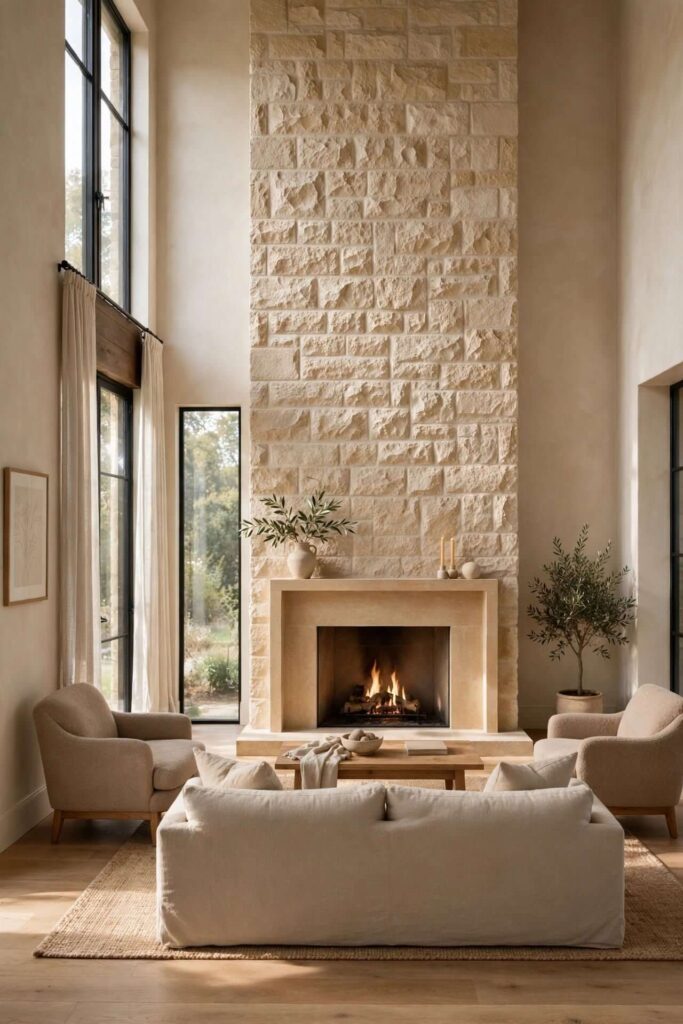
A large living room benefits from a strong architectural focal point, and a fireplace can provide one instantly. Consider a floor-to-ceiling stone surround, simple plaster finish, or dark tiled fireplace wall. Arrange the seating toward it without forcing every chair into a rigid symmetrical formation. Keep the mantel styling restrained so the fireplace remains the star. This works particularly well in rooms with high ceilings or wide expanses of blank wall.
5. Make High Ceilings Feel Warmer With Tall Curtains
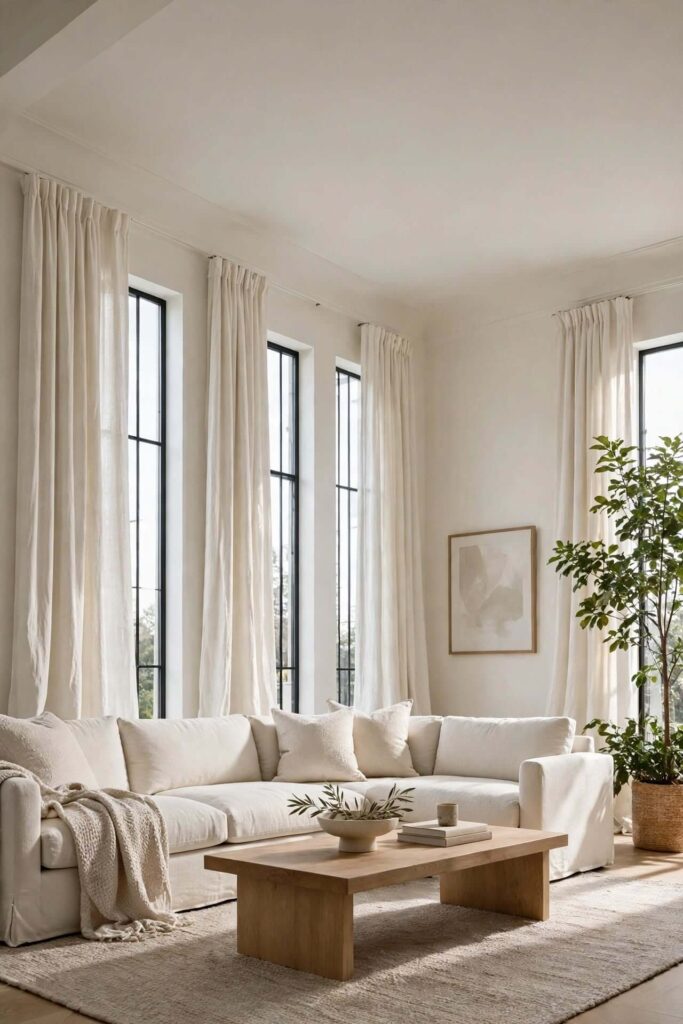
High ceilings can make a big living room feel grand, but they can also emphasize its emptiness. Floor-to-ceiling curtains help soften the vertical scale and make the room feel more finished. Hang the curtain rod close to the ceiling rather than directly above the window, then let the panels fall all the way to the floor. Linen or linen-look curtains in ivory, oatmeal, or warm beige create an airy effect without adding visual heaviness.
6. Build a Cozy Reading Corner
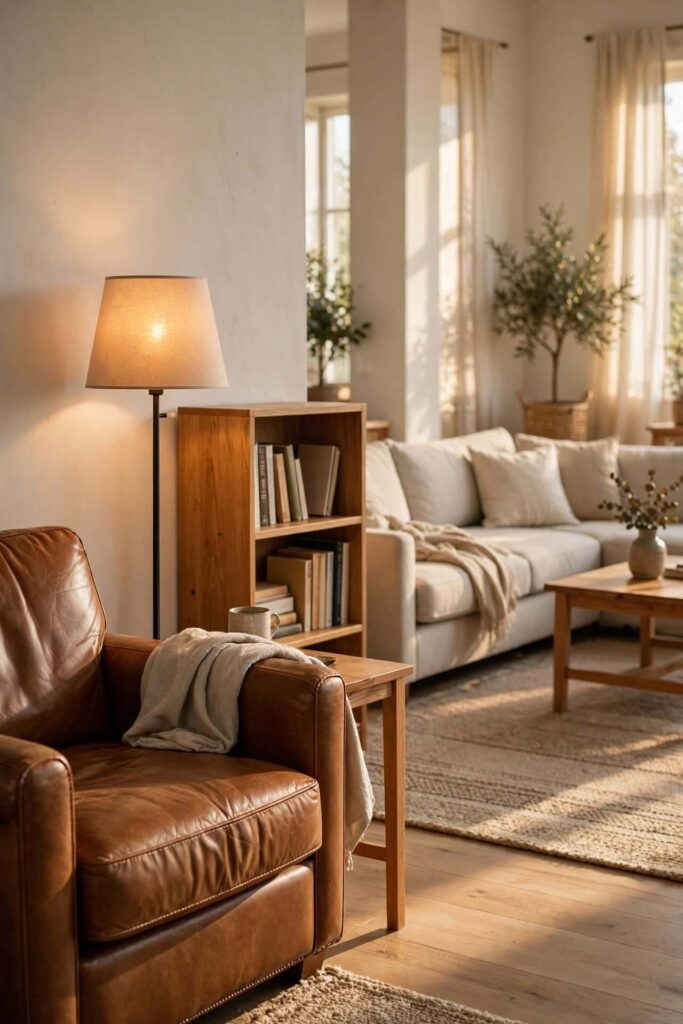
A large room does not have to be devoted entirely to entertaining. Use an unused corner to create a quiet reading area with a comfortable armchair, floor lamp, small side table, and compact bookcase. Choose materials that relate to the main seating area so the corner feels intentional rather than forgotten. A leather chair, woven ottoman, or warm wood shelving can introduce contrast while giving the oversized room another useful purpose.
Quick Win: A comfortable chair and a good floor lamp may be all you need. Add a small basket for blankets to make the corner feel finished without filling it with furniture.
7. Use Oversized Artwork to Fill Blank Walls
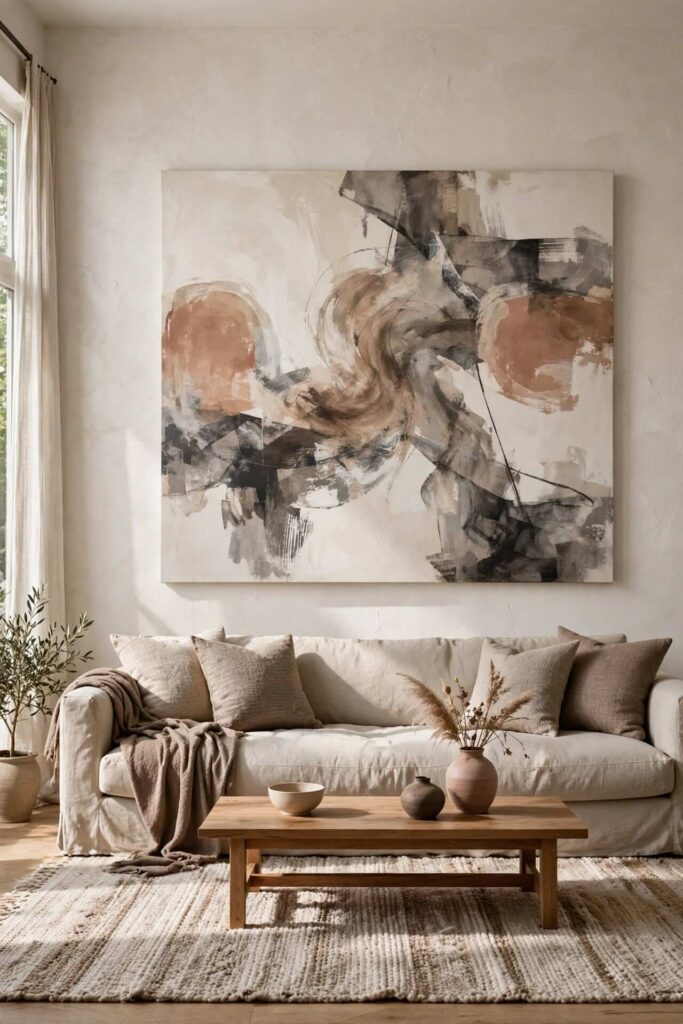
Huge walls often need artwork with enough scale to hold their own. Instead of scattering lots of small frames across a large surface, try one oversized painting or a balanced set of two or three large pieces. Abstract art in earthy tones can work beautifully with neutral furniture, while photography or graphic artwork can add contrast. Leave enough breathing room around the artwork so it looks deliberate rather than like a collection squeezed onto the wall.
8. Warm Up the Space With Natural Wood
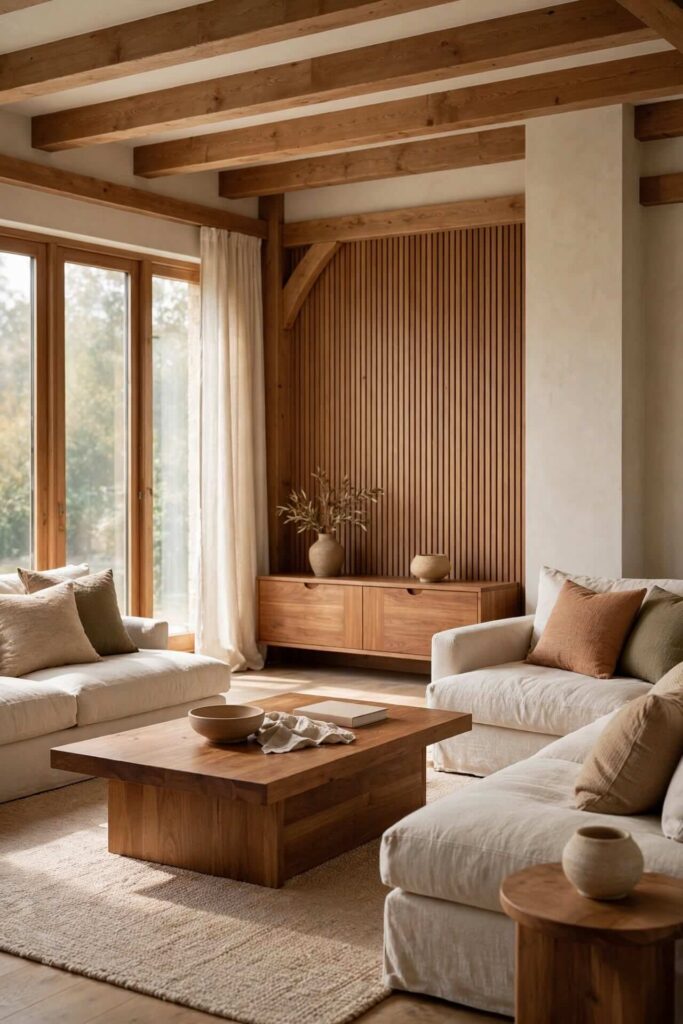
Large rooms can sometimes feel visually cold when they contain too many pale surfaces. Natural wood introduces warmth and helps balance all that openness. Try a substantial oak coffee table, timber media console, wooden shelving, or exposed ceiling beams. Medium and warm wood tones work particularly well with cream upholstery and earthy textiles. The trick is to repeat the wood tone in several places so it feels like part of the room’s design rather than a single isolated feature.
Quick Win: Add two or three smaller wooden elements—such as a tray, side table, and picture frame—to repeat an existing wood tone without replacing your main furniture.
9. Create a Dramatic Media Wall
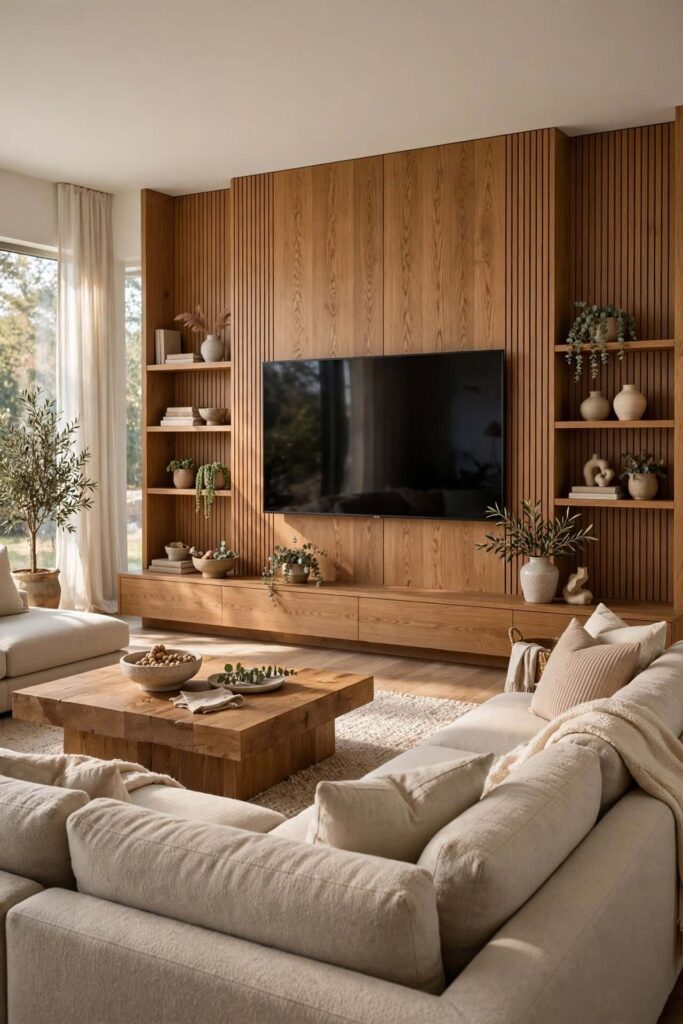
A large media wall can visually occupy a broad expanse without requiring lots of decorative objects. Consider a combination of built-in shelving, wood paneling, plaster, or large-format stone around the television. Keep the shelves selectively styled rather than filling every compartment. In a spacious living room, a low, wide media console often looks more proportional than a narrow cabinet. Balance the technology with books, ceramics, greenery, and warm materials.
10. Layer Lighting at Different Heights
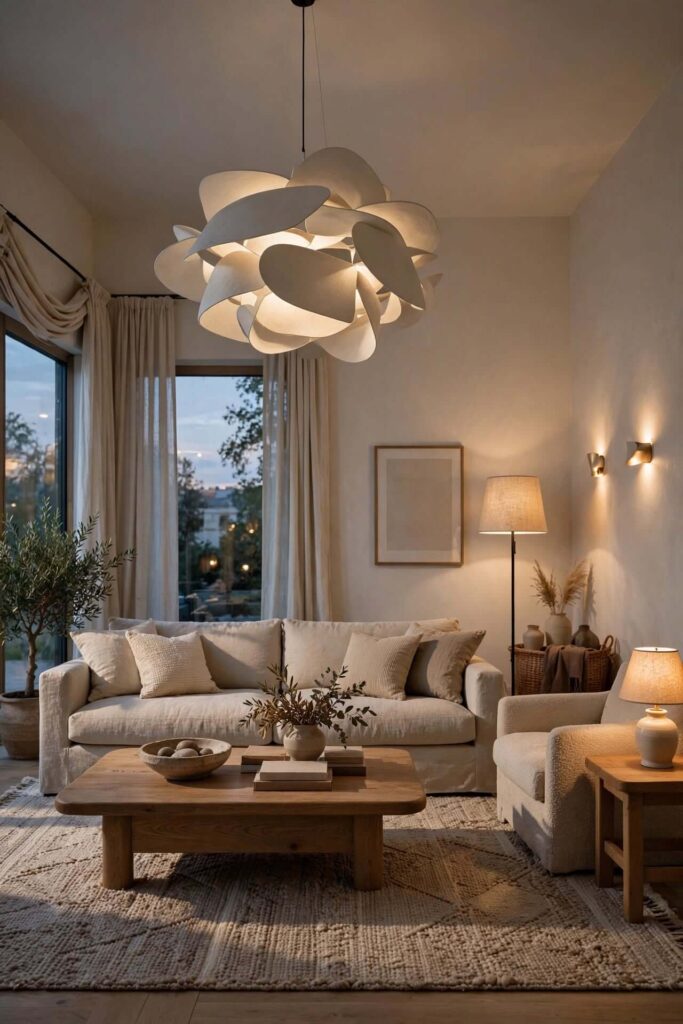
A single ceiling fixture rarely provides enough atmosphere for a very large living room. Layer lighting at several heights using a statement pendant, floor lamps, table lamps, wall sconces, and concealed accent lighting. This creates pools of light that make different areas feel connected without illuminating the entire room evenly. Warm white bulbs and fabric shades are especially effective when you want a spacious room to feel softer and more intimate in the evening.
11. Balance a Large Room With a Round Coffee Table
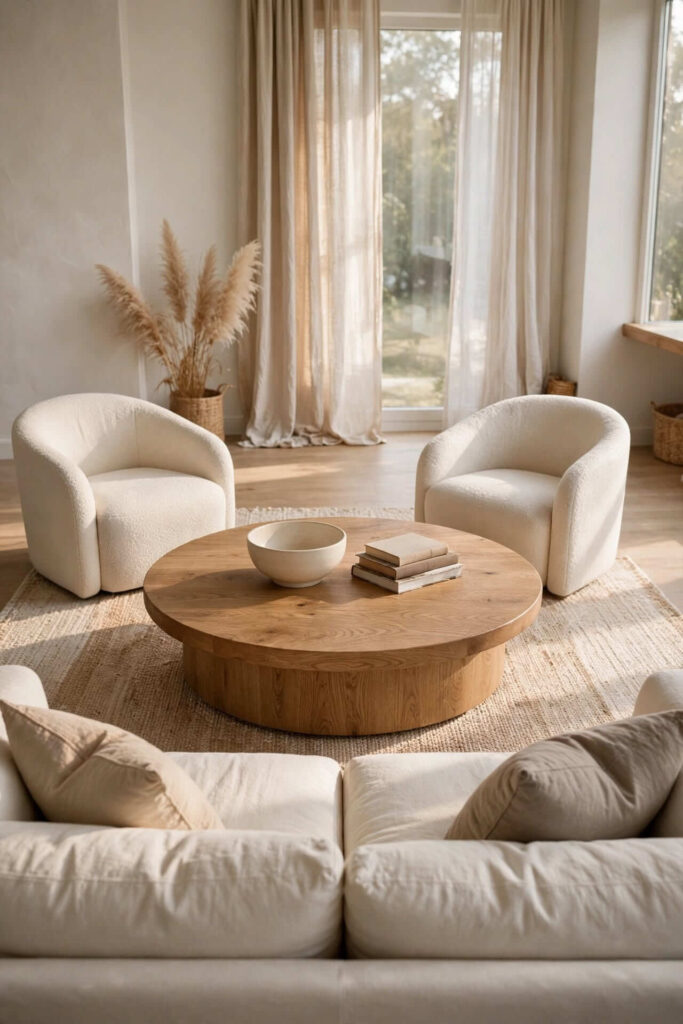
Large rectangular furniture can make a spacious living room feel overly linear. A substantial round coffee table introduces softer movement and creates a natural center for conversation. Choose a table with enough diameter to suit the surrounding seating—wood, stone, or a combination of both can work beautifully. The rounded shape is especially useful when several seating pieces face different directions because it keeps circulation around the table comfortable.
12. Introduce a Deep, Earthy Color Palette
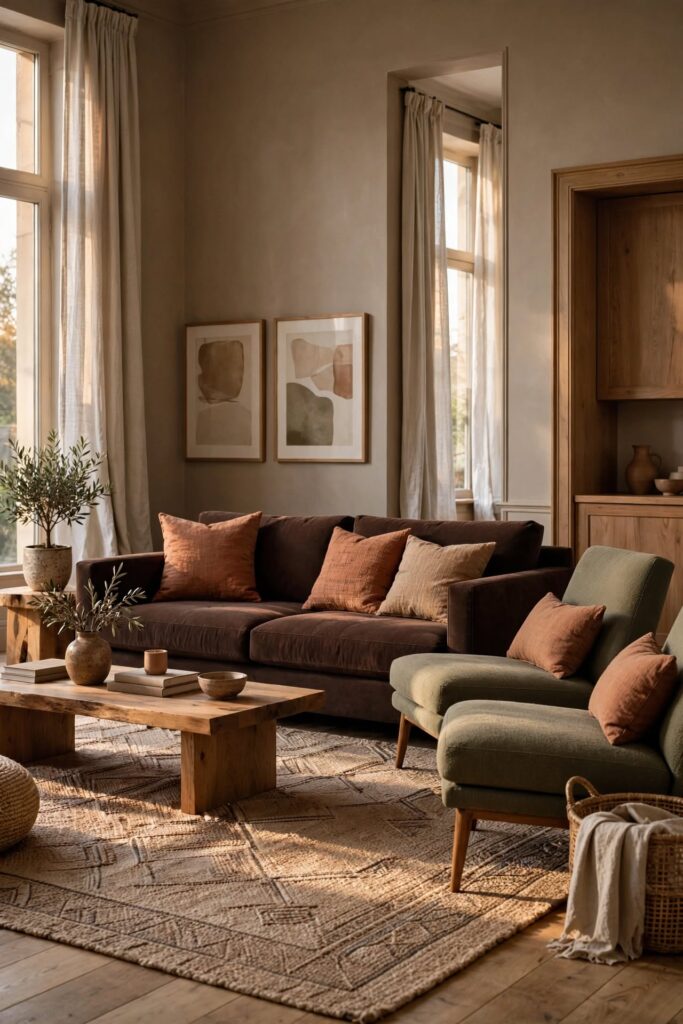
A big room can handle deeper colors without feeling overwhelmed, especially when they are balanced with lighter materials. Consider warm taupe walls, chocolate brown upholstery, olive green accents, or muted terracotta details. Rather than using one dark color everywhere, layer several earthy shades across furniture, textiles, artwork, and accessories. This creates depth and makes a large space feel more enveloping while still maintaining a sophisticated look.
Quick Win: Start with one deeper accent color in cushions, a throw, or artwork. Repeat it in two or three places before committing to darker walls or furniture.
13. Use Built-In Shelving to Give the Room Structure
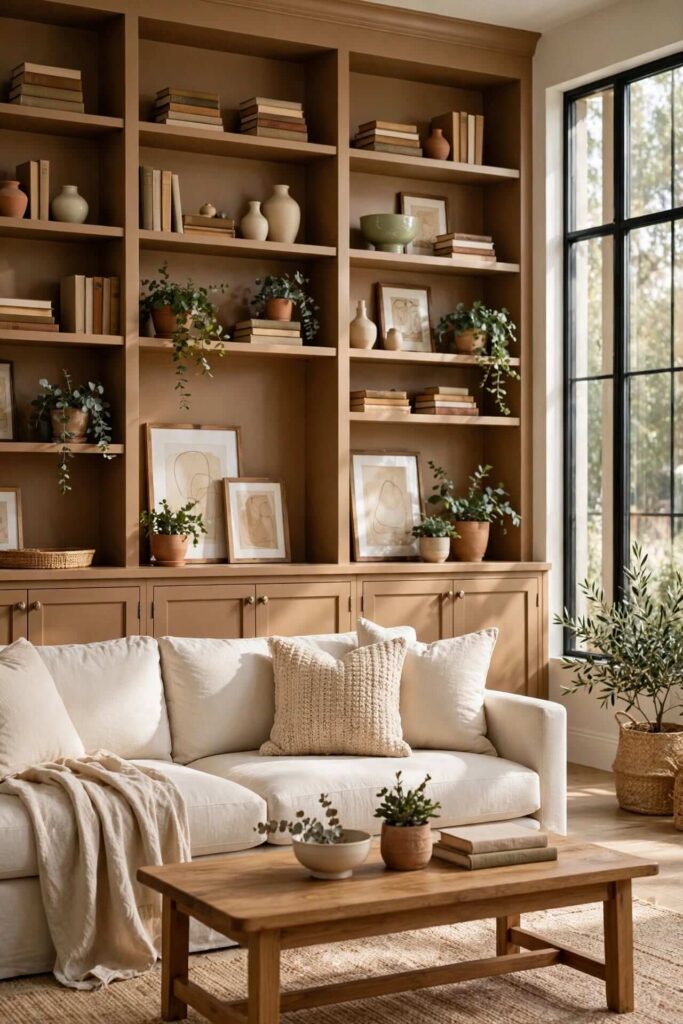
Built-ins can solve two problems at once: they provide storage and visually occupy large stretches of wall. Floor-to-ceiling shelving can frame a fireplace, television, or doorway while giving the room a more architectural feel. Mix books, ceramics, framed artwork, and a few meaningful objects rather than filling every shelf. Closed lower cabinets are useful for hiding everyday clutter, which helps a large living room remain calm and organized.
14. Add a Large Indoor Plant for Scale
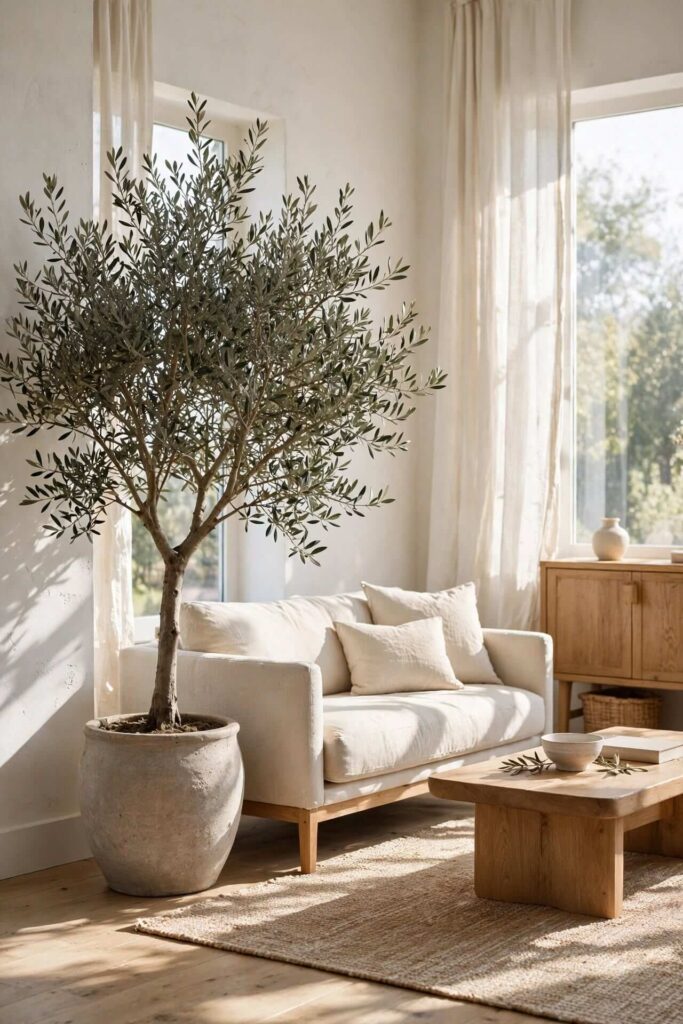
Tall greenery can make a spacious living room feel more connected to nature while filling an otherwise awkward vertical area. A mature fiddle-leaf fig, olive tree, rubber plant, or similar large indoor plant can work beside a sofa, window, or empty corner. Use a substantial ceramic or woven planter so the plant does not look undersized. Keep the rest of the greenery restrained; one well-placed statement plant often has more impact than many small pots.
15. Make a Large Room Cozy With Layered Textures
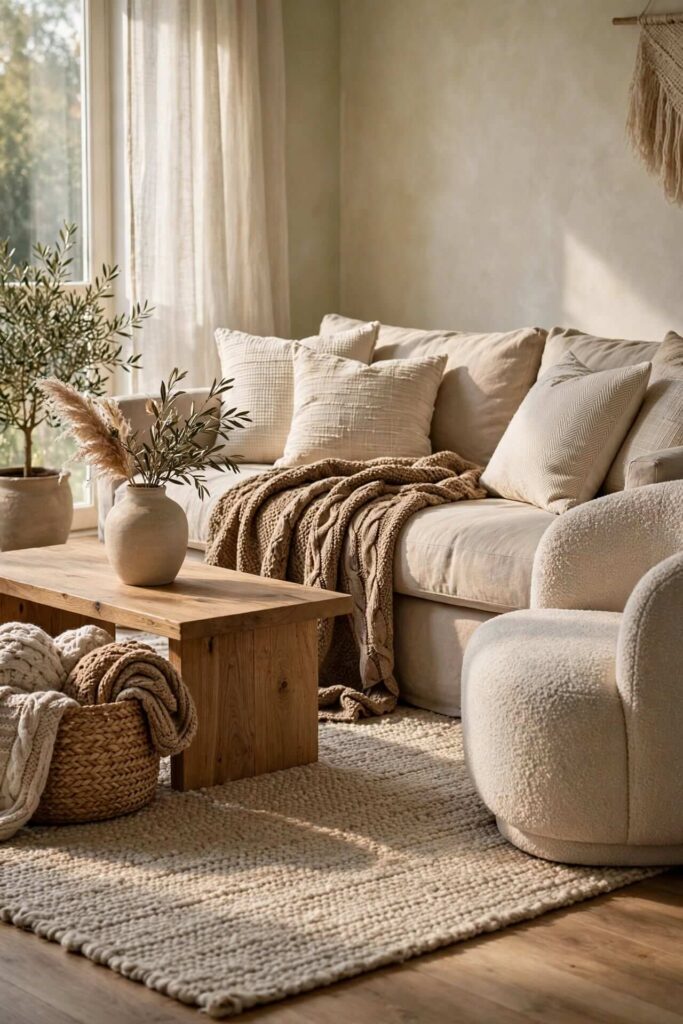
When a big living room feels too open, texture can create visual warmth without adding more furniture. Combine linen upholstery, wool rugs, knitted throws, boucle accents, woven baskets, timber, and matte ceramics. Keep the color palette relatively controlled so the room feels layered rather than busy. Texture is particularly effective in neutral living rooms because it gives the eye something to explore while maintaining a calm overall appearance.
Quick Win: Add one chunky throw, two textured cushions, and a woven basket near your existing seating. These small changes can make a neutral room feel noticeably warmer.
16. Use a Long Sofa to Emphasize the Room’s Architecture
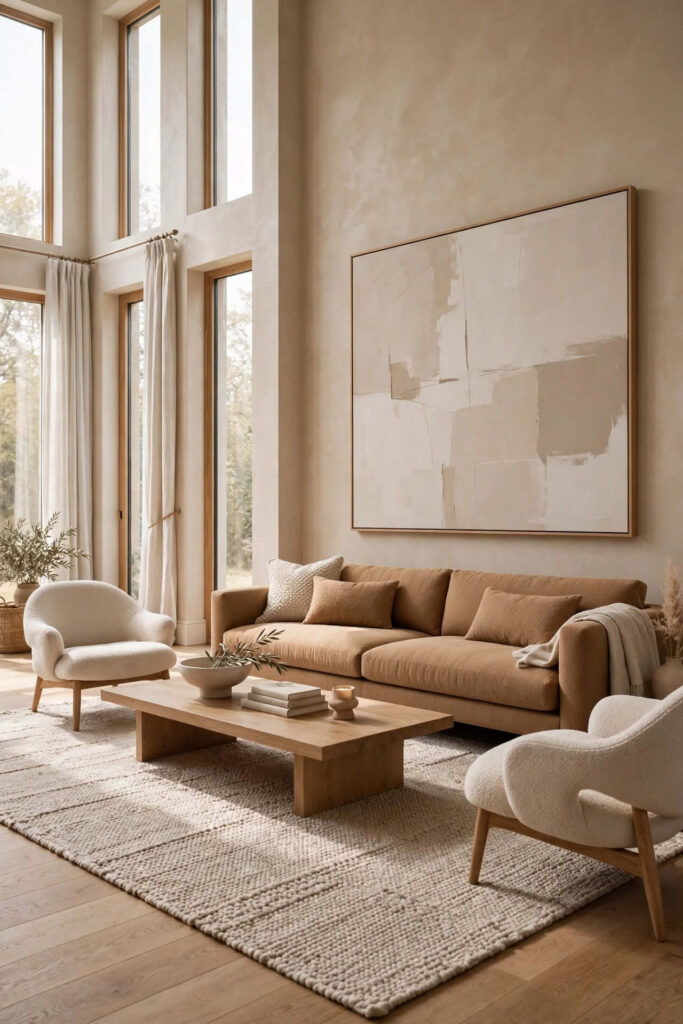
A long, low-profile sofa can work beautifully in a wide living room because it follows the room’s horizontal proportions. Position it along the longest wall and balance it with a large artwork, console, or pair of accent chairs. Avoid choosing a sofa that is too small for the wall—it can make the surrounding space feel unintentionally empty. A simple silhouette in cream, gray, camel, or muted brown keeps the arrangement sophisticated.
17. Combine Modern Furniture With Vintage Accents
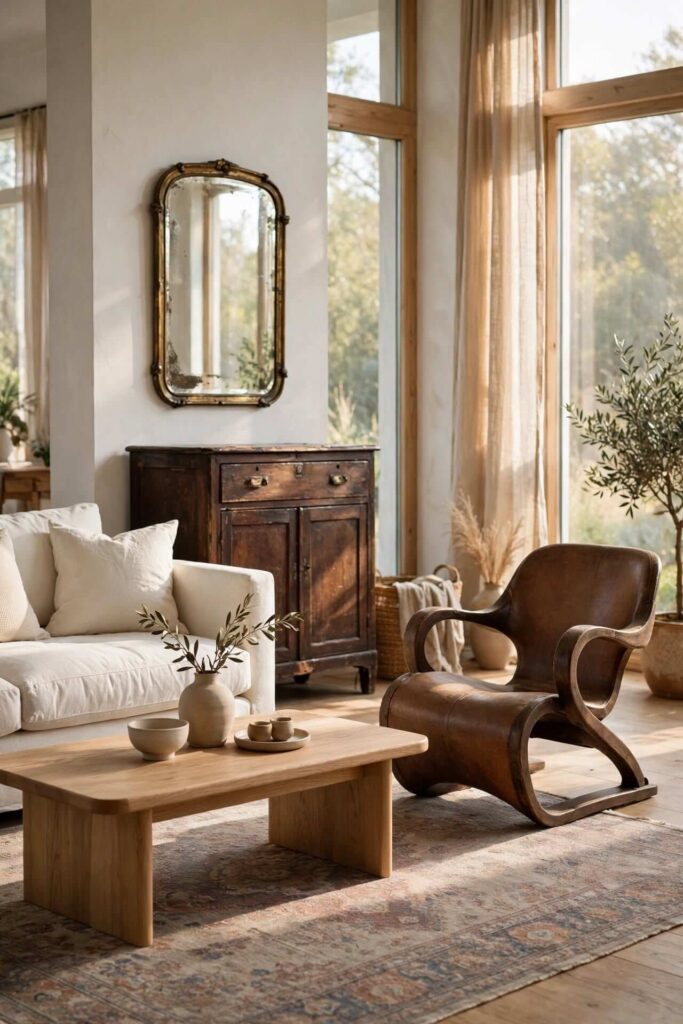
A spacious living room has enough visual room to mix periods and styles without everything competing for attention. Pair a clean-lined modern sofa with a vintage wooden cabinet, antique-style mirror, traditional rug, or sculptural secondhand chair. The contrast gives the room personality and prevents a large space from feeling like a showroom. Repeat one or two colors across old and new pieces to make the combination feel collected rather than random.
Quick Win: Keep your main furniture simple and introduce character through one vintage mirror, cabinet, lamp, or chair. One distinctive piece can change the entire atmosphere.
Conclusion
A big living room gives you plenty of room to experiment, but the goal is not to fill every empty corner. Focus instead on scale, comfortable furniture groupings, strong focal points, layered lighting, and materials that make the space feel warm and intentional. You can borrow one idea or combine several to suit your home’s architecture, personality, and budget. The most inviting large rooms balance openness with enough texture, seating, and character to make people want to stay.
Frequently Asked Questions
1. How do I make a big living room feel cozy?
Use furniture with enough scale, large rugs, layered lighting, curtains, and plenty of soft textures. Creating smaller conversation zones can also make a spacious room feel more intimate.
2. What furniture works best in a large living room?
Large sectionals, long sofas, substantial coffee tables, lounge chairs, ottomans, and properly scaled consoles can work well. The furniture should be proportional to the room rather than leaving large areas visually empty.
3. Should furniture be against the walls in a big living room?
Not necessarily. Pulling furniture inward can create better conversation areas and improve circulation. Large rooms often benefit from furniture arrangements that float away from the walls.
4. What size rug should I use in a large living room?
Choose a rug large enough to visually connect the main seating pieces. Ideally, at least the front legs of sofas and chairs should sit on the rug, although a larger rug can create an even stronger unified arrangement.
5. How can I decorate a large living room on a budget?
Start with layout rather than buying everything new. Rearrange existing furniture, add a large rug gradually, introduce curtains, use plants, layer affordable textiles, and create one strong focal point.
6. What colors work well in a big living room?
Warm neutrals, earthy browns, olive green, muted terracotta, cream, taupe, charcoal, and soft beige can all work well. Large rooms also give you more freedom to experiment with deeper accent colors.
7. How do I fill a large blank living room wall?
Consider oversized artwork, built-in shelving, a fireplace, a large mirror, wood paneling, or a wide media console. Choose pieces with enough scale so the wall does not make the rest of the room feel undersized.
8. How can I make a large living room feel less empty?
Use properly scaled furniture and divide the room into functional zones. Rugs, lighting, artwork, plants, and architectural features can help visually occupy space without creating clutter.
9. Are large sectionals good for big living rooms?
Yes, an oversized sectional can provide useful scale and create a strong seating anchor. Make sure there is still enough room for comfortable circulation around it.
10. How can I make a large living room feel luxurious?
Focus on proportion and material quality rather than simply adding expensive accessories. Large artwork, substantial lighting, natural stone, quality textiles, wood, curtains, and carefully spaced furniture can create a refined appearance.
11. What lighting is best for a large living room?
Layer several types of lighting rather than relying on one ceiling fixture. Combine overhead lighting with floor lamps, table lamps, wall sconces, and accent lighting to create different levels of illumination.
12. Can a large living room have more than one seating area?
Absolutely. Two or more seating zones can make a very large room more functional. Keep them visually connected through similar colors, materials, rugs, or furniture styles.
13. How do I decorate a large living room with high ceilings?
Use tall curtains, large artwork, substantial lighting, floor-to-ceiling shelving, or architectural features to work with the vertical space. Oversized elements usually look more proportional than many small decorations.
14. How can renters decorate a large living room?
Focus on removable elements such as rugs, curtains, lamps, artwork, freestanding shelving, plants, and furniture arrangement. These can dramatically change the atmosphere without permanent alterations.
15. What is the biggest mistake when decorating a large living room?
Using furniture that is too small for the room is a common problem. Small pieces surrounded by large areas of empty floor can make the space feel disconnected, so prioritize scale and grouping.
Related Articles
- [Internal Link: Small Living Room Ideas]
- [Internal Link: Cozy Living Room Ideas]
- [Internal Link: Neutral Living Room Decor Ideas]
- [Internal Link: Living Room Color Combination Ideas