Moving into an apartment can leave you with a space that feels functional but not quite like you. Plain walls, standard finishes, limited storage, and unfamiliar layouts can make decorating feel harder than it should. The good news is that you don’t need a complete makeover to create a welcoming apartment. A few intentional changes in color, lighting, furniture placement, texture, and accessories can completely shift the atmosphere. These Appian Way Apartments ideas focus on realistic ways to make your rooms feel warmer, more polished, and personal without overwhelming the space. From soft neutral layers to clever storage and balcony styling, there are plenty of details worth saving for your next decorating project.
1. Create a Warm Neutral Living Room
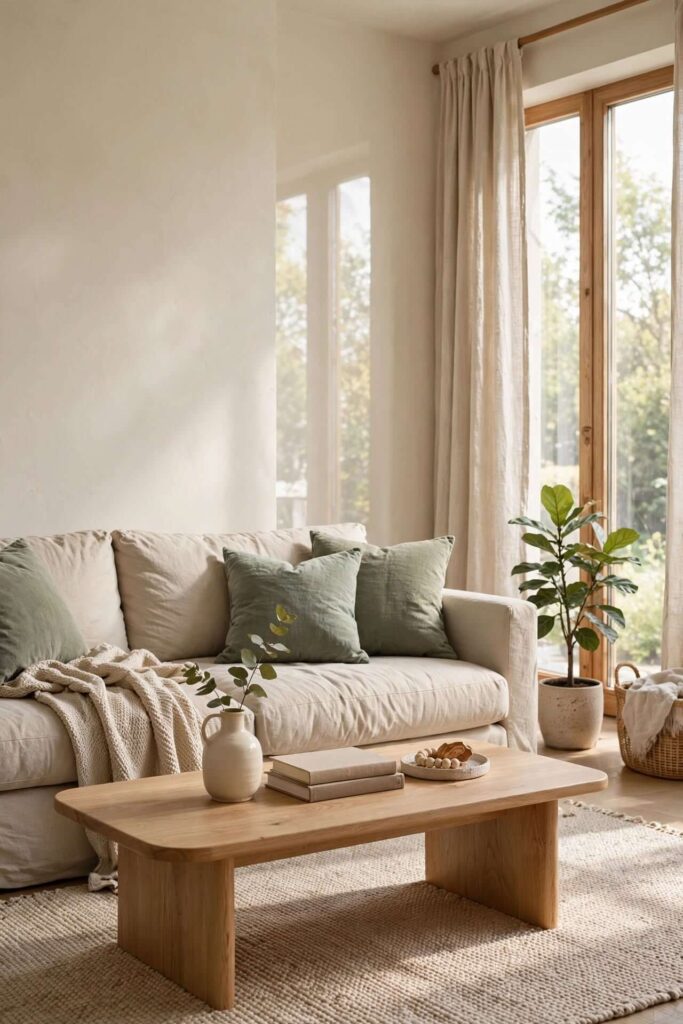
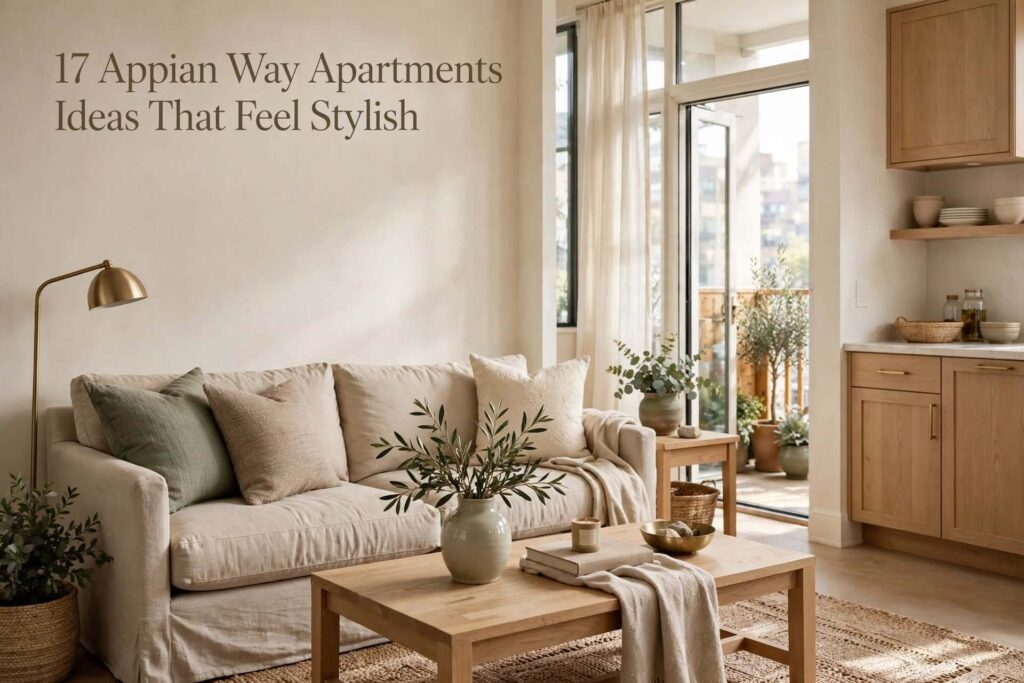
A warm neutral palette gives an apartment an instantly calm and polished foundation. Try combining creamy white walls with a taupe or oatmeal sofa, light wood furniture, and a textured beige rug. Instead of making everything match, introduce slightly different shades and materials to create depth. Linen curtains, ceramic accessories, and a few muted green plants can keep the room feeling fresh. This approach works particularly well when you want your apartment to look sophisticated without feeling overly formal.
Quick Win: Replace two or three heavily patterned cushions with textured cream, tan, or muted green covers for an inexpensive refresh.
2. Use Light Wood to Add Warmth
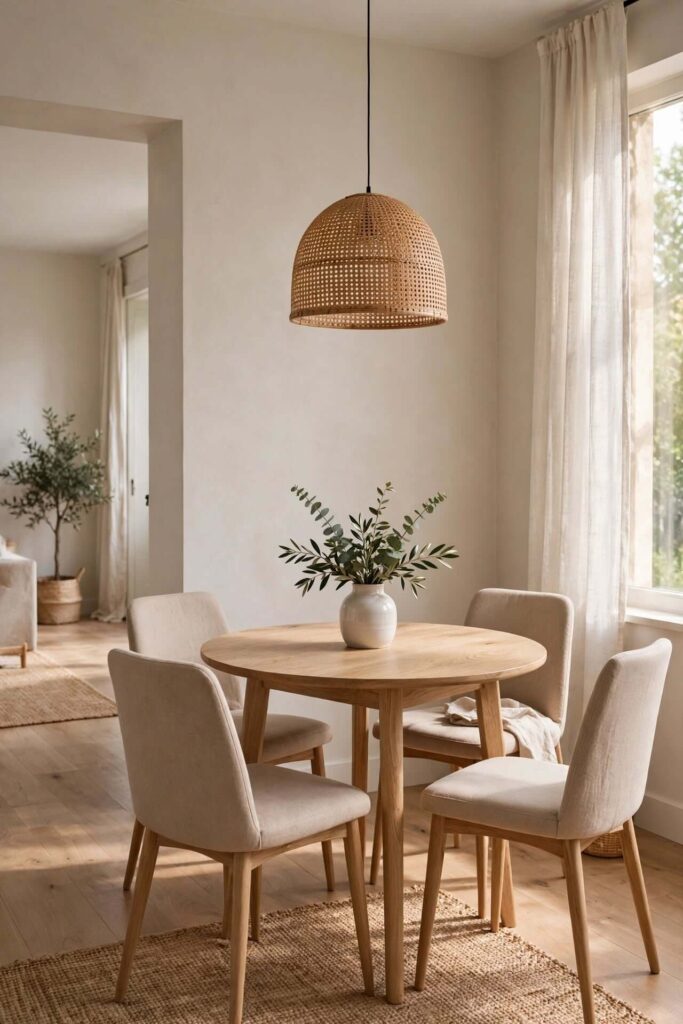
Light wood furniture can prevent an apartment from feeling cold or overly contemporary. Choose an oak-toned coffee table, slim console, dining chairs, or floating shelves to introduce natural warmth. Pair the wood with ivory upholstery and soft textiles rather than lots of gray. The trick here is repetition: using the same wood tone in several places makes the apartment feel intentionally designed rather than randomly furnished.
3. Make the Sofa the Visual Anchor
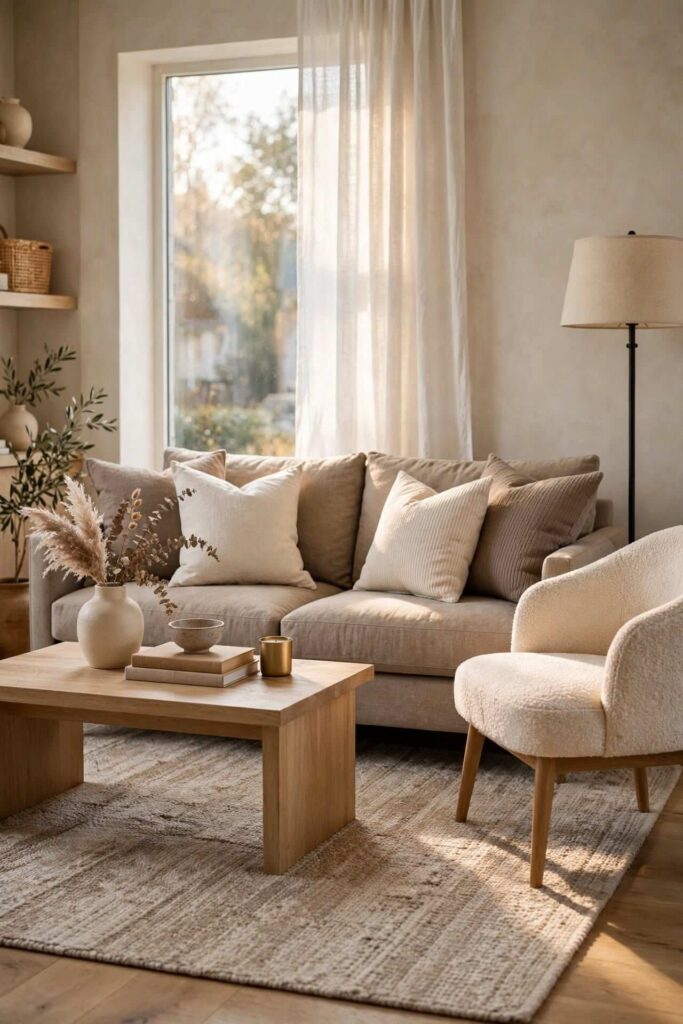
If the living room feels scattered, start with the sofa. Position it so it clearly defines the seating zone, then build around it with a rug, coffee table, accent chair, and floor lamp. A neutral sofa gives you flexibility to change colors seasonally through pillows and throws. For a more elevated look, choose cushions in two or three complementary textures rather than filling the sofa with too many patterns.
4. Add a Soft Layered Lighting Scheme
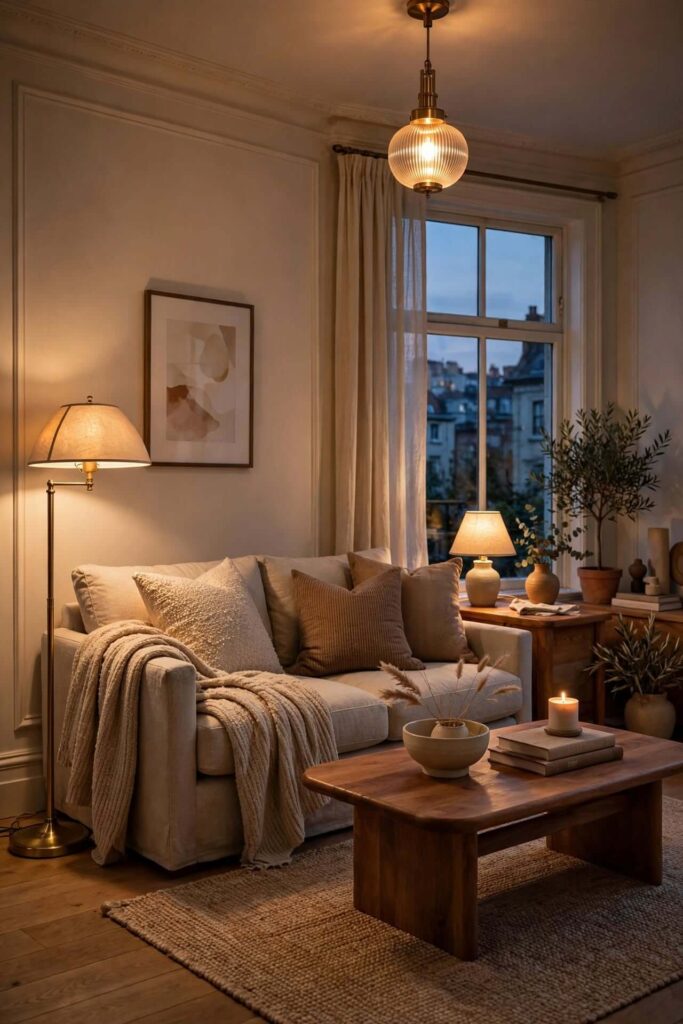
One ceiling fixture rarely creates the warm atmosphere people want at home. Combine overhead lighting with a floor lamp, table lamp, or small wall light to create multiple levels of illumination. Warm-white bulbs help living areas feel more relaxed in the evening. A fabric-shaded lamp beside a sofa is particularly useful because it adds both practical reading light and a softer glow.
Quick Win: Switch cool-white bulbs to warm-white bulbs in your living room and bedroom before buying any new decor.
5. Style the Dining Area with a Compact Table

A dining area doesn’t need to dominate an apartment. A round or compact rectangular table can provide comfortable seating while preserving walking space. Pair a light wood table with upholstered or simple wooden chairs and hang one visually interesting pendant above it. Keep the tabletop relatively open, using just a small vase, bowl, or candle so the area remains functional.
6. Turn the Balcony into a Mini Retreat

If your apartment includes a balcony, treat it like another room rather than leaving it empty. A compact bistro table, two weather-resistant chairs, an outdoor rug, and a few planters can create a relaxing morning or evening corner. Choose furniture that fits comfortably without blocking the doorway. For a softer atmosphere, add a small lantern or weather-safe string lights.
7. Bring in Greenery for a Fresh Feeling
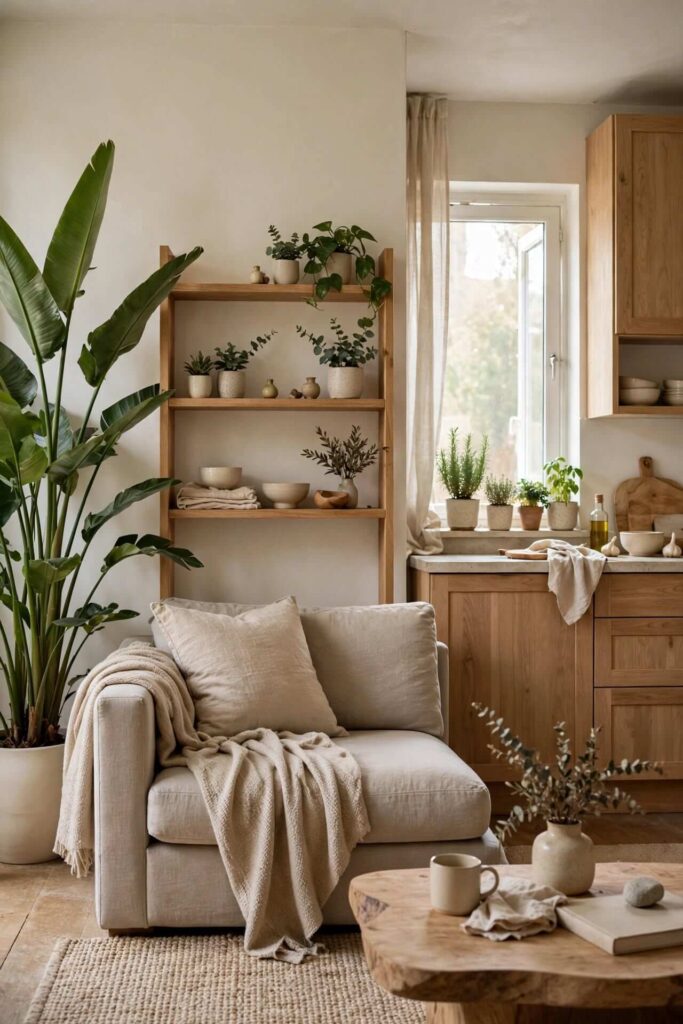
Plants can make a standard apartment feel considerably more personal. Use a tall plant beside an empty living-room corner, smaller plants on shelves, and herbs near the kitchen window if light allows. Vary the heights instead of lining several identical pots together. Natural greenery works especially well with cream, beige, oak, and charcoal because it adds color without making the palette busy.
8. Create a Cozy Bedroom with Soft Layers
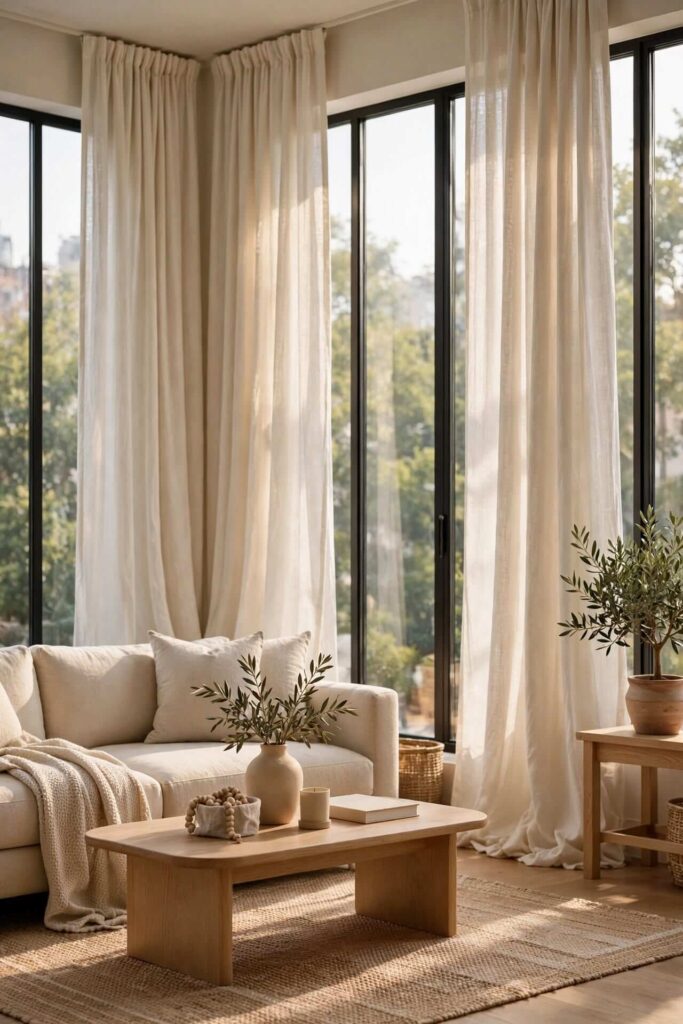
Bedrooms benefit from simplicity. Start with crisp bedding in ivory, warm white, or muted beige, then add a quilt or textured throw at the foot of the bed. Two larger pillows at the back can make the bed feel more substantial without requiring excessive decoration. Keep bedside surfaces functional with a lamp, book, and one small decorative object. The result feels restful rather than staged.
Quick Win: Add one textured throw blanket across the bottom third of the bed to create an instant layered look.
9. Use Curtains to Soften the Windows
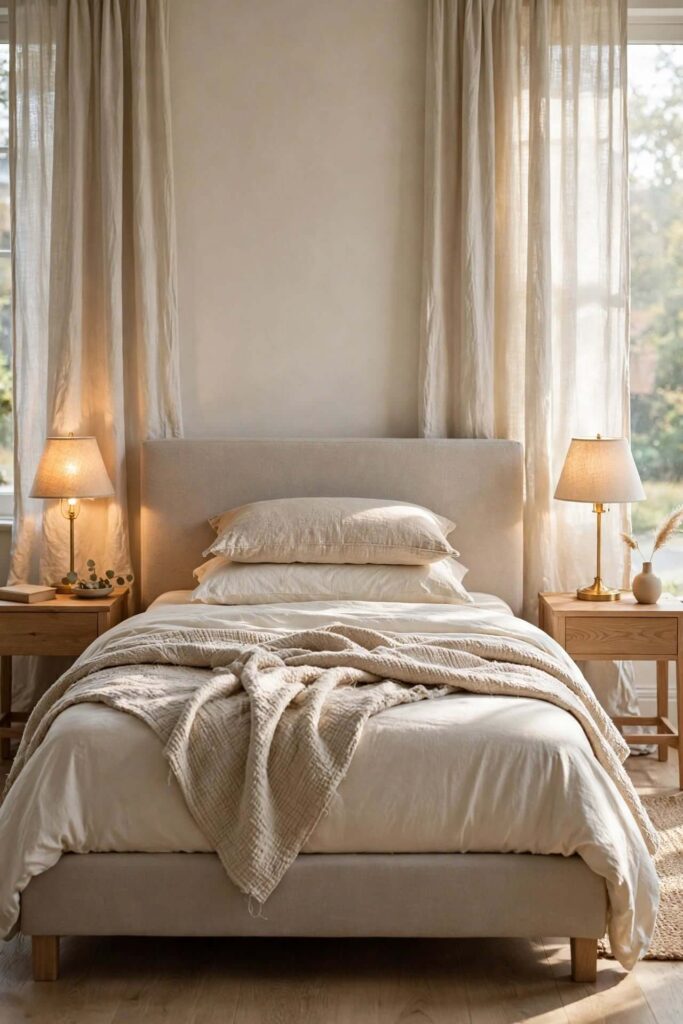
Window treatments can dramatically change how an apartment feels. Floor-length curtains in linen or linen-look fabric create softness and make windows appear taller when mounted close to the ceiling. Choose warm white, ivory, or light oatmeal for maximum flexibility. Let the fabric just kiss the floor rather than bunching heavily, especially if the room already has limited visual space.
10. Make a Small Entryway Feel Intentional
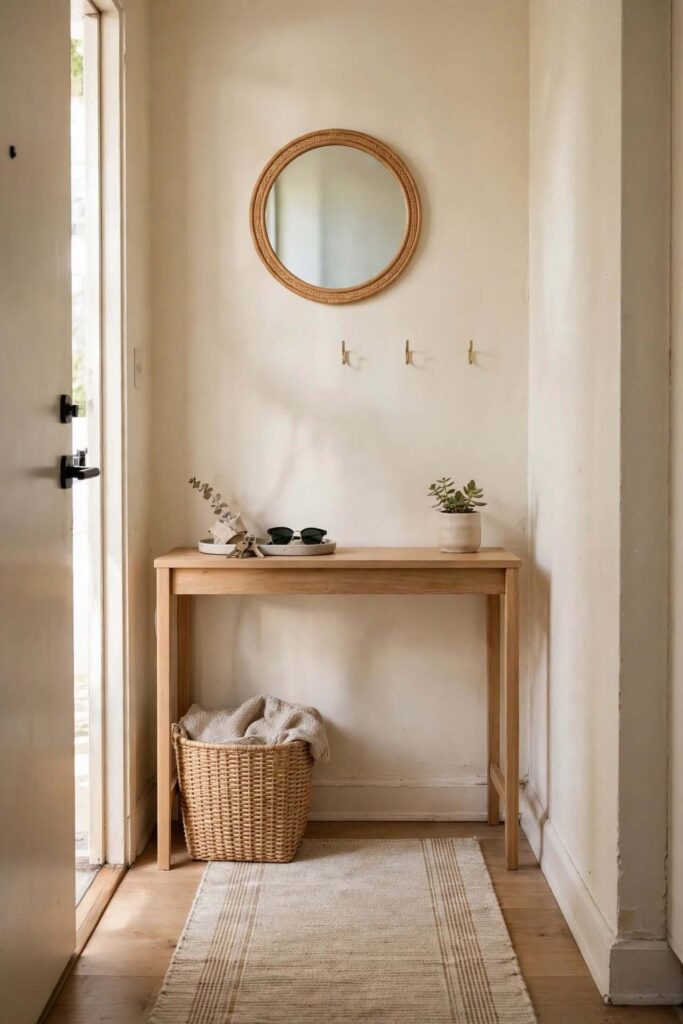
Even a narrow apartment entry can become useful with a slim console, wall hooks, mirror, and small basket. A round mirror can visually soften the area while reflecting light, and a narrow tray provides a dedicated place for keys. If floor space is limited, use floating shelves or wall-mounted hooks instead of bulky furniture. This small zone can set the tone for the entire apartment.
11. Add Personality with One Large Artwork
Instead of filling every wall with small decorations, choose one larger artwork as a focal point. Abstract landscapes, botanical prints, architectural photography, or muted color artwork can work beautifully with neutral apartment interiors. Match one or two colors from the artwork to your cushions or accessories so the room feels connected. Leaving some wall space empty also keeps the apartment from feeling visually crowded.
12. Use Mirrors to Open Up the Space

A strategically placed mirror can make an apartment feel brighter and more spacious by reflecting natural light. Try a large vertical mirror opposite or near a window, depending on the layout. Choose a simple wood, black, or aged-brass frame that relates to existing finishes. Avoid covering every available wall with mirrors; one well-positioned piece usually has more impact than several small ones.
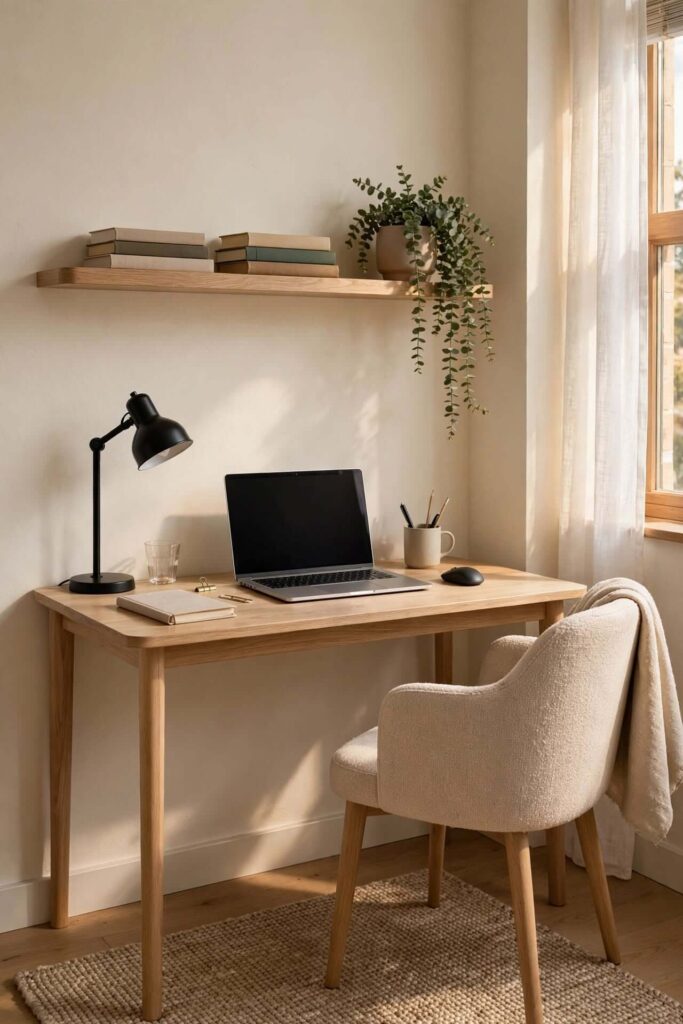
13. Create a Functional Home Office Corner
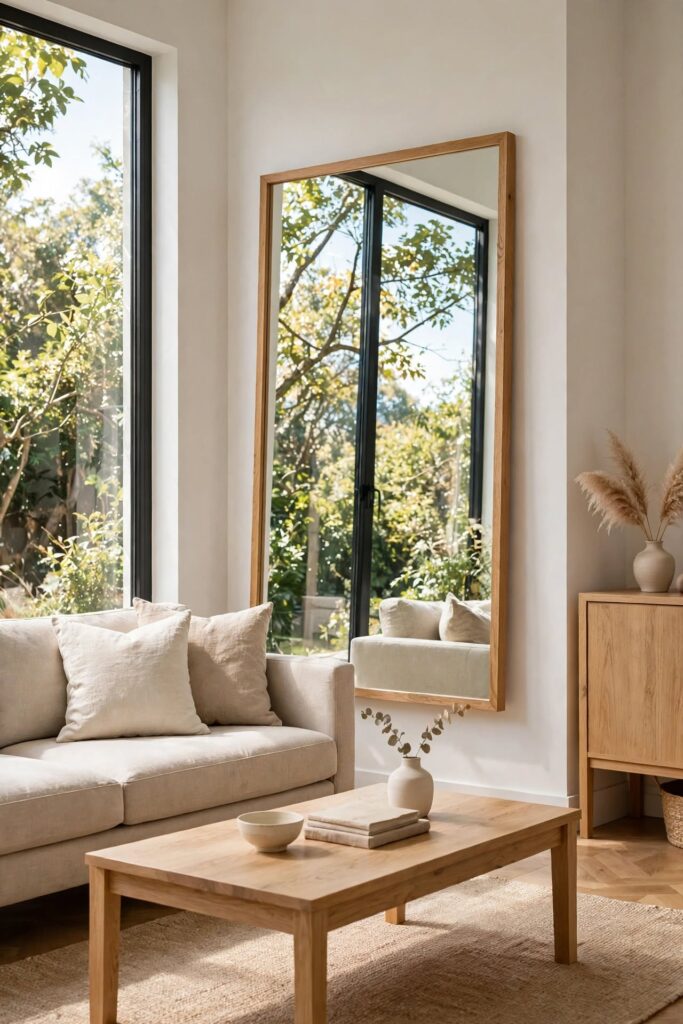
You don’t need a separate room to build an attractive workspace. A slim desk against an unused wall can become a practical home office when paired with a comfortable chair, task lamp, wall shelf, and small plant. Keep cables organized and limit desk accessories to essentials. A cohesive palette of light wood, cream, black, and greenery can help the workspace blend naturally with the rest of the apartment.
Quick Win: Use a decorative box or cable-management tray to hide chargers and cords so the desk immediately looks cleaner.
14. Make the Kitchen Feel More Personal
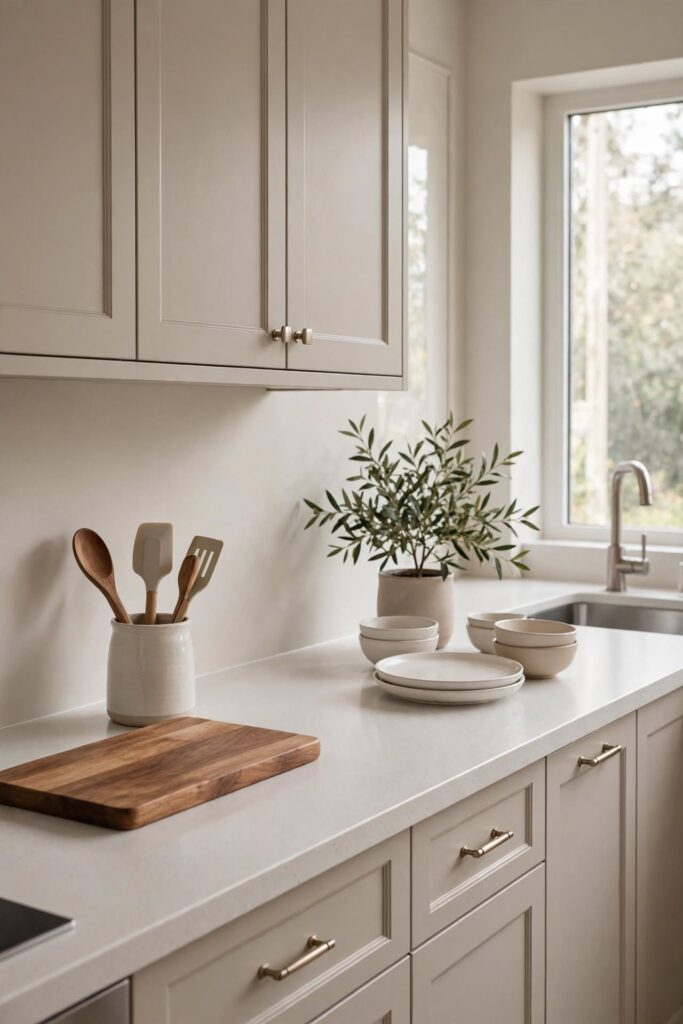
Apartment kitchens can feel generic, but small styling choices can make them feel connected to the rest of the home. Display a wooden cutting board, a ceramic utensil holder, a few everyday dishes, and a small plant without covering valuable workspace. If the kitchen has neutral cabinetry, introduce warmth through wood, woven textures, and brushed-metal accessories rather than adding too many colors.
15. Layer Texture Instead of Adding More Color
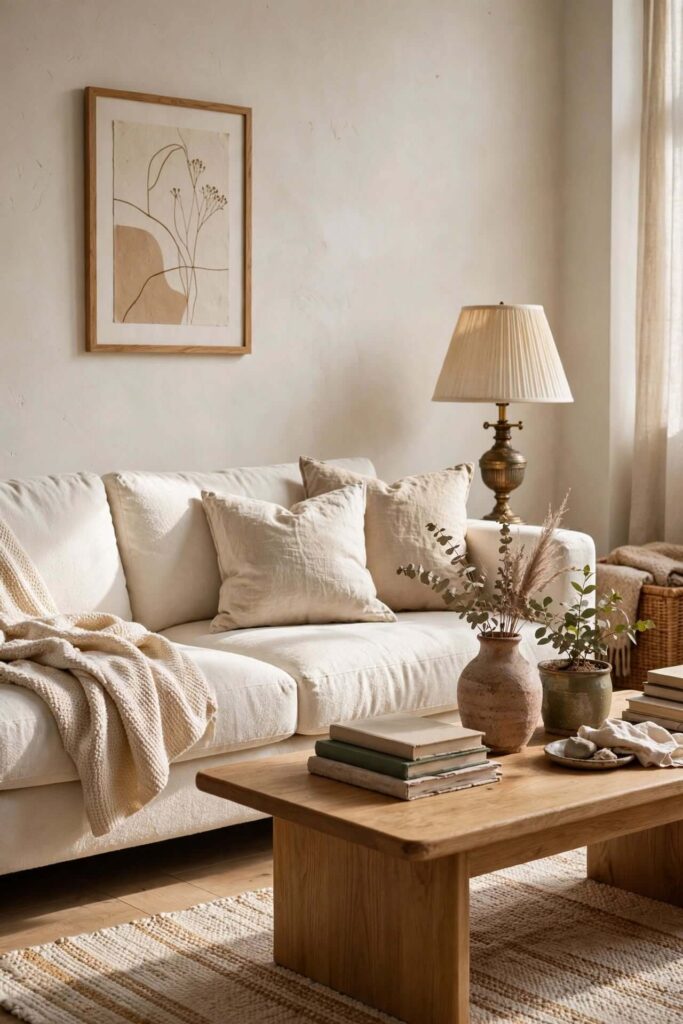
If you prefer neutral interiors, texture can provide the visual interest that color normally creates. Combine a woven rug, linen curtains, boucle or cotton cushions, smooth ceramic accessories, and natural wood. Keep the colors within a narrow range of ivory, beige, taupe, and warm brown. This creates an apartment that feels rich and layered without becoming visually overwhelming
16. Use Smart Storage Without Losing Style
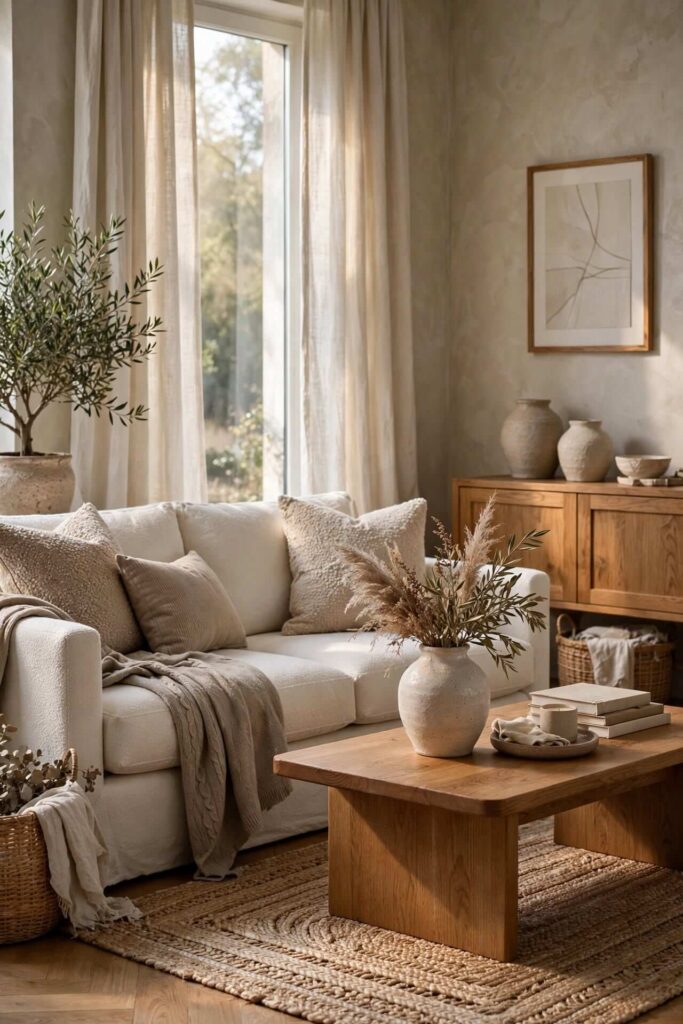
Storage should solve a problem without making the apartment look crowded. Choose furniture with hidden compartments, woven baskets under consoles, slim shelving, or an ottoman that doubles as storage. Keep frequently used items accessible while hiding visual clutter behind doors or inside baskets. The goal is not to remove everything from sight but to give everyday belongings a deliberate home.
Quick Win: Place matching baskets on an open shelf to instantly make miscellaneous items look more organized and intentional.
17. Mix Modern Pieces with Personal Details
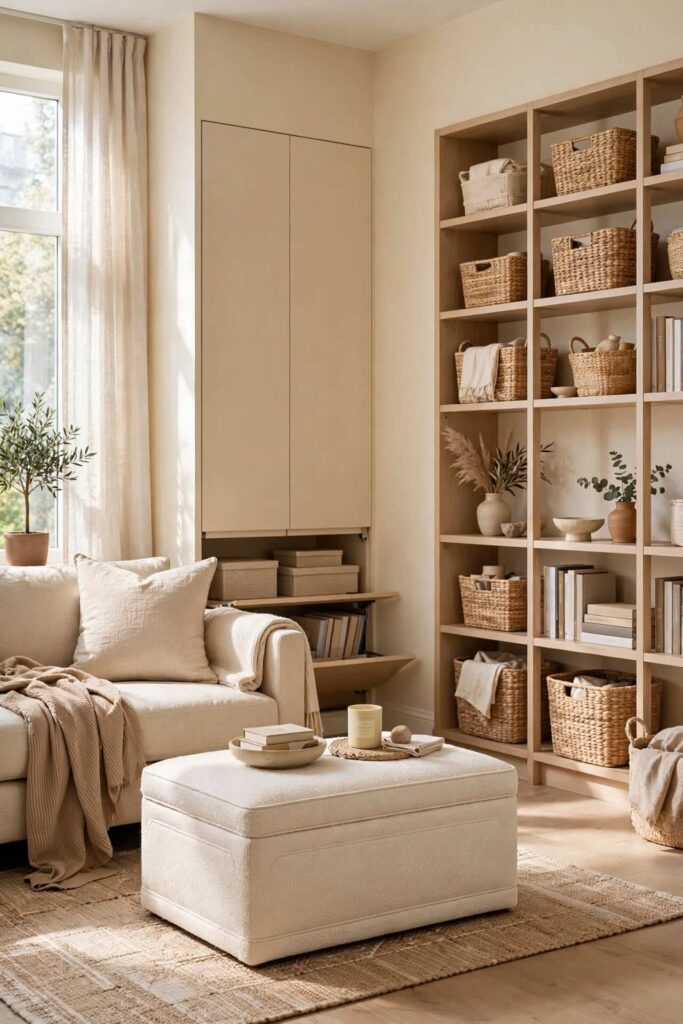
The most inviting apartment interiors rarely look as though everything was purchased together. Mix contemporary furniture with personal objects such as framed photographs, handmade ceramics, travel finds, books, or a vintage-style lamp. Keep the larger furniture pieces relatively simple, then let smaller objects reveal personality. This approach creates a home that feels collected over time rather than decorated in a single afternoon.
Conclusion
Your Appian Way apartment doesn’t need a dramatic renovation to feel like home. Start with the elements that will make the biggest everyday difference—comfortable furniture, warm lighting, layered textures, useful storage, greenery, and a few personal pieces. You can build the look gradually rather than buying everything at once. Choose the ideas that suit your floor plan, lifestyle, personality, and budget, then let the apartment evolve naturally as you live in it.
Frequently Asked Questions
1. How can I make an Appian Way apartment feel more like home?
Start with textiles, lighting, artwork, plants, and personal accessories. These elements can change the atmosphere without requiring permanent alterations.
2. What colors work well in an apartment?
Warm neutrals such as ivory, beige, taupe, soft brown, and muted green are versatile choices. They can make rooms feel cohesive while leaving plenty of flexibility for colorful accessories.
3. How can I decorate an apartment without making it feel cluttered?
Use fewer but more intentional pieces. Choose furniture with storage, leave some surfaces open, and avoid filling every wall or shelf.
4. What is the easiest way to make an apartment feel cozier?
Lighting and textiles usually provide the quickest transformation. Add warm bulbs, a soft rug, curtains, cushions, and a throw blanket.
5. How can I make a small apartment appear larger?
Use appropriately sized furniture, keep pathways open, incorporate mirrors, and use lighter colors. Curtains mounted higher can also create a stronger sense of vertical height.
6. Are plants good for apartment decorating?
Yes. Plants introduce natural color and texture while making a room feel more lived-in. Choose varieties according to the amount of natural light available.
7. How can I decorate an apartment on a budget?
Prioritize high-impact changes such as lamps, curtains, rugs, cushion covers, artwork, and plants. You can also refresh existing furniture instead of replacing everything.
8. How should I style an apartment balcony?
Keep the furniture proportional to the available space. A small table, two chairs, outdoor rug, planters, and a lantern can create a comfortable balcony retreat.
9. What type of furniture works best in apartments?
Pieces with appropriate scale and multiple functions are particularly useful. Storage ottomans, slim consoles, nesting tables, and compact dining furniture can save valuable floor space.
10. How do I make a rental apartment look expensive?
Focus on cohesion rather than expensive items. Matching wood tones, quality-looking curtains, warm lighting, restrained accessories, and layered textures can create a more refined appearance.
11. How can I personalize a neutral apartment?
Introduce artwork, books, photographs, ceramics, plants, and objects that reflect your interests. Personal details prevent a neutral room from feeling generic.
12. Should all rooms in an apartment match?
They don’t need to match exactly. Repeating a few colors, materials, or finishes throughout the apartment can create continuity while allowing each room to have its own character.
13. What should I avoid when decorating an apartment?
Avoid oversized furniture, excessive accessories, blocked walkways, and too many competing colors. A little breathing room often makes an apartment feel considerably more polished.