
Finding the right apartment is only part of creating a home you actually enjoy coming back to. Even a well-designed apartment can feel flat, temporary, or overly generic once your furniture and everyday belongings move in. The goal is to add warmth and personality without fighting the layout or making the space feel crowded. These Grand Park Apartments decorating ideas focus on practical changes that can make an apartment feel more collected, comfortable, and distinctly yours—from smarter furniture placement to layered lighting, soft textures, clever storage, and renter-friendly character.
1. Start With a Warm Neutral Foundation
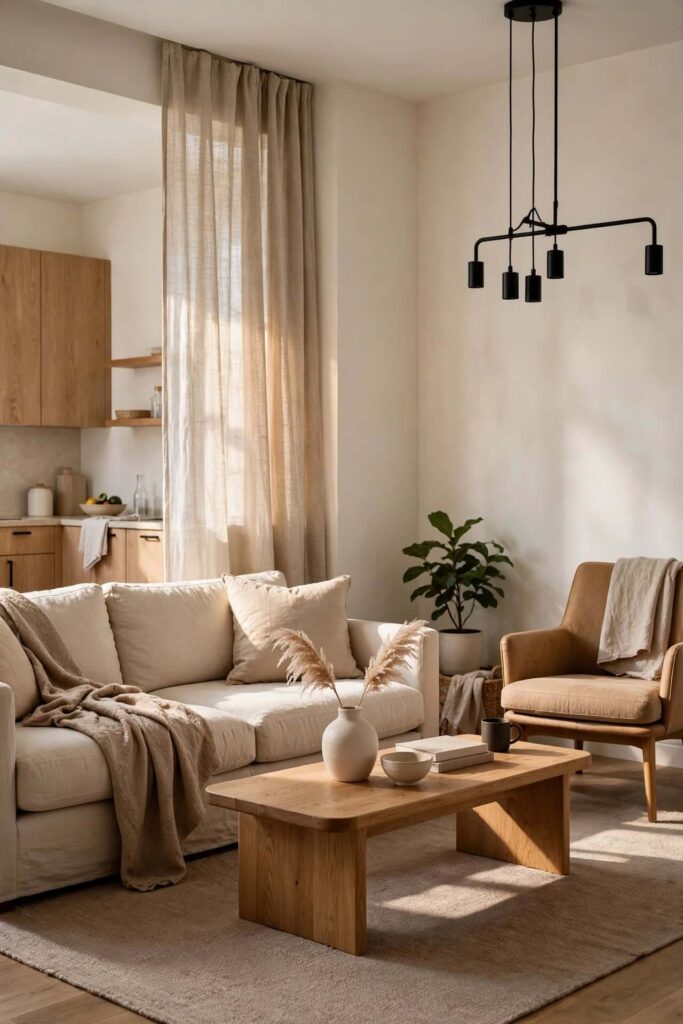
A warm neutral palette gives an apartment an instantly calmer and more cohesive appearance. Try creamy white or soft greige walls with beige upholstery, natural oak, warm taupe textiles, and small touches of black for contrast. The trick is to layer several related neutrals instead of choosing everything in exactly the same shade. This approach works particularly well when you want your apartment to feel bright, sophisticated, and easy to personalize as your style changes.
Quick Win: Replace two or three cool-toned accessories with cream, camel, or warm beige pieces. The room can feel noticeably softer without changing the major furniture.
2. Define an Open Living Area With a Rug
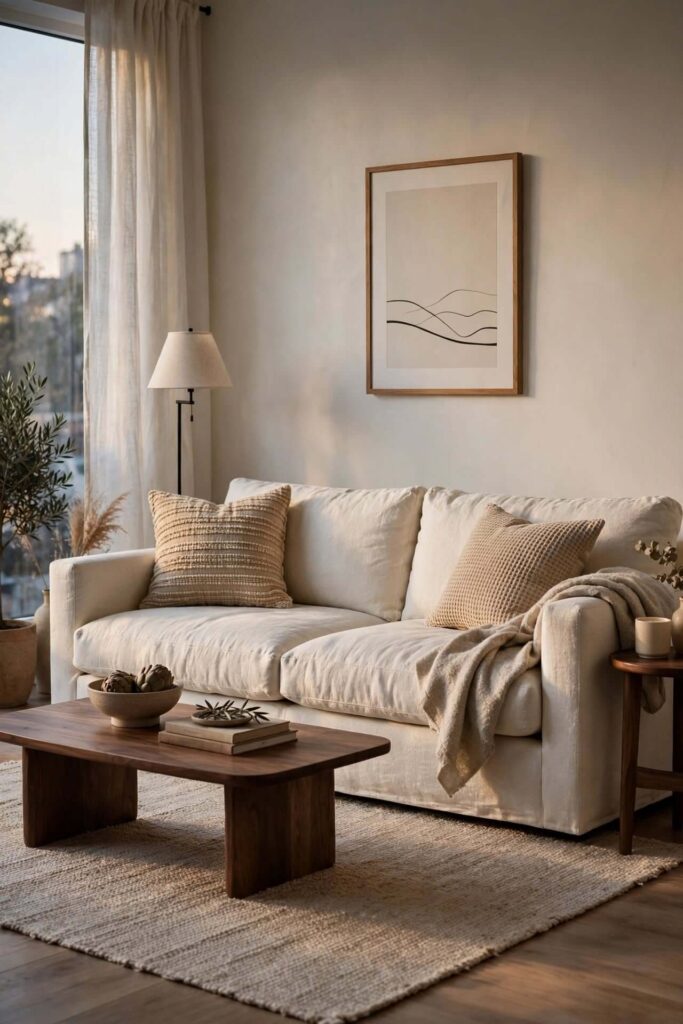
Open apartment layouts can sometimes make furniture appear disconnected. A large area rug helps visually anchor the seating arrangement and creates a clear living zone without requiring walls or partitions. Choose a rug large enough for at least the front legs of the sofa and chairs to sit on it. A softly patterned beige, ivory, or muted geometric rug can add dimension while keeping the room flexible for different decorating styles.
3. Bring in Medium-Toned Wood for Warmth
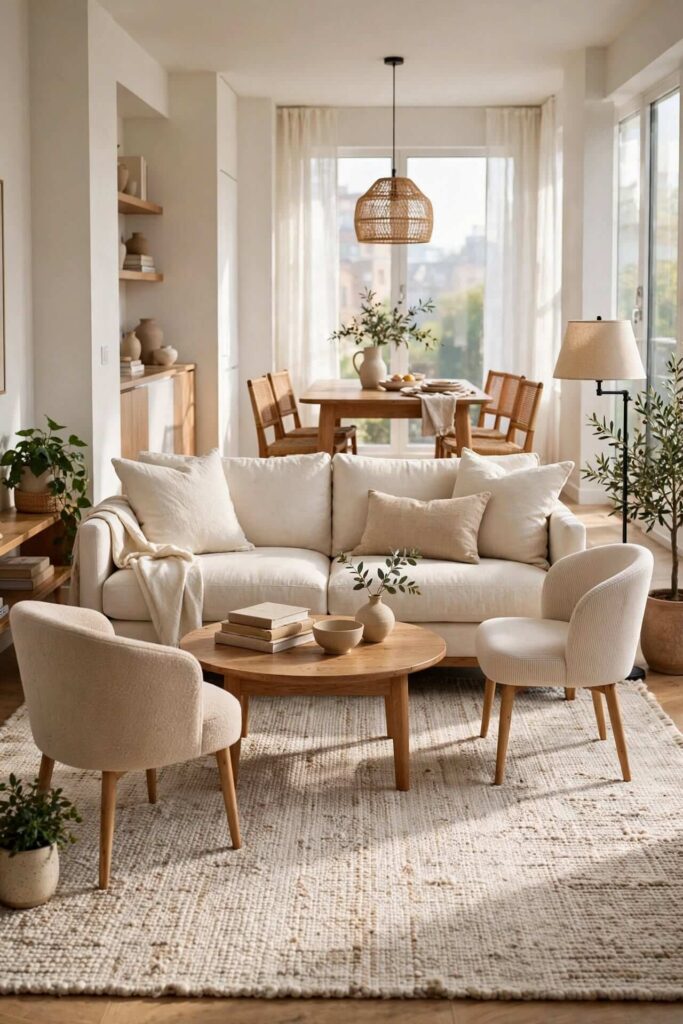
Modern apartments can benefit from the grounding effect of natural wood. Medium oak or walnut furniture adds warmth against pale walls and contemporary finishes without making the room feel heavy. Consider a wood coffee table, console, dining table, or floating shelf rather than replacing every piece. Pair the wood with linen, woven baskets, and soft upholstery for a relaxed look that feels more collected than overly coordinated.
4. Make the Sofa the Comfortable Focal Point
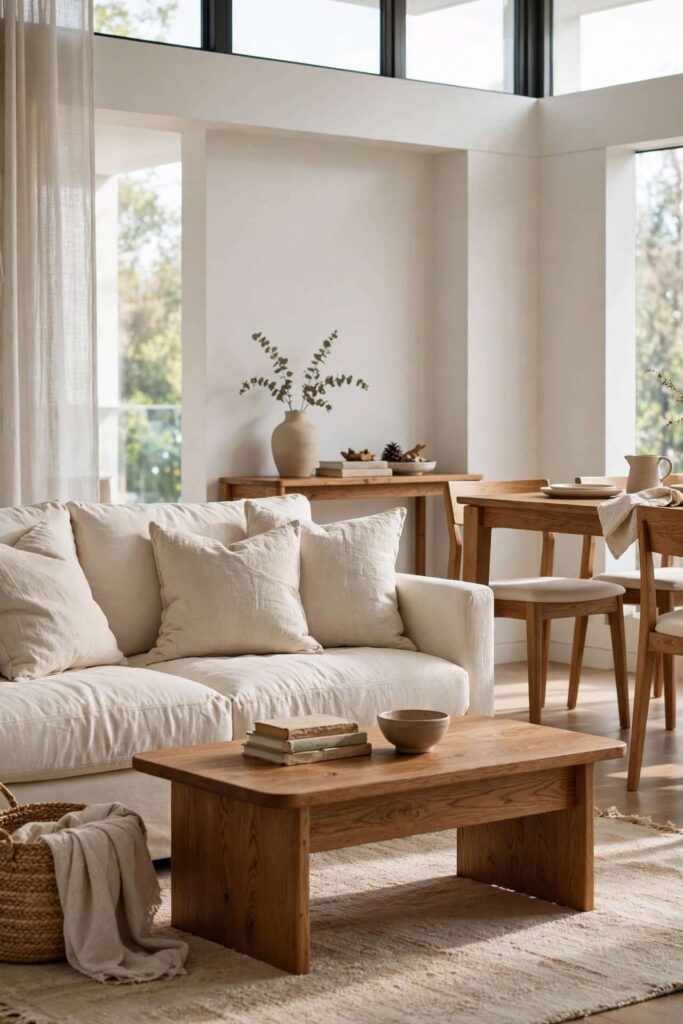
A sofa often determines how an apartment living room feels, so make it a deliberate focal point rather than simply pushing it against the nearest wall. A comfortable cream, oatmeal, muted gray, or warm brown sofa can become the visual anchor. Add two contrasting cushions and one relaxed throw rather than filling every seat with pillows. This creates an inviting space while leaving enough breathing room around the furniture.
5. Use Black Accents for Modern Contrast
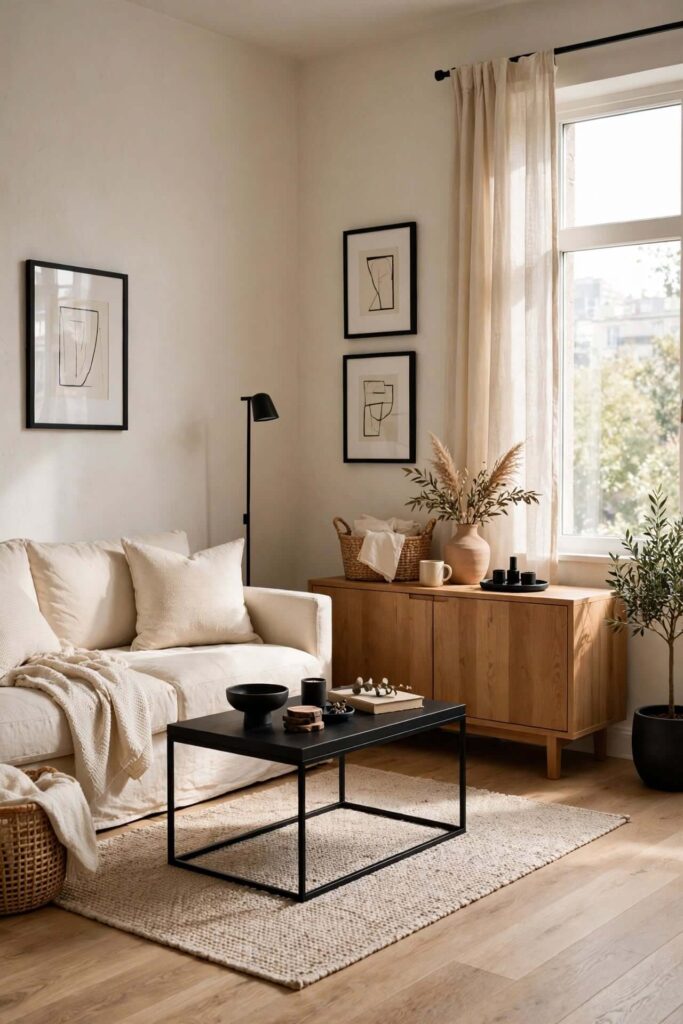
Quick Win: Pull the sofa slightly away from the wall if the floor plan allows it. Even a small amount of space behind it can make the furniture arrangement feel more intentional.
If a neutral apartment feels too soft, introduce a few carefully chosen black details. A black-framed mirror, slim floor lamp, curtain rod, coffee table legs, or picture frames can provide definition without overwhelming the room. Keep the accents relatively small and repeat them throughout the space so they feel intentional. This is especially useful for creating a modern apartment interior while keeping warm neutrals as the dominant palette.
6. Layer Lighting Instead of Relying on One Fixture
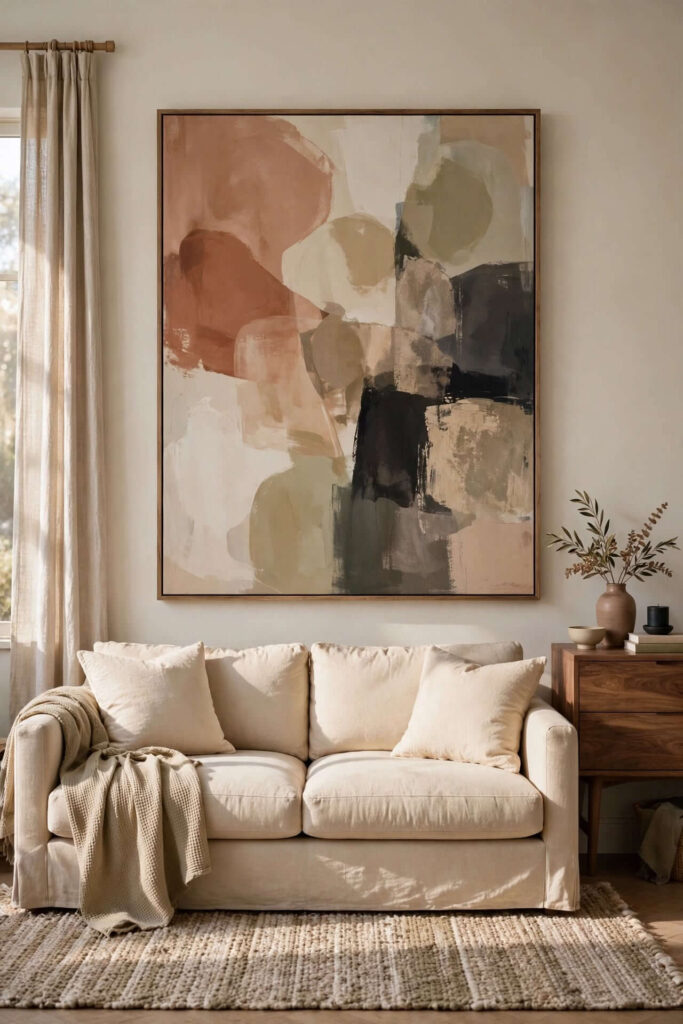
Good apartment lighting should change with the time of day. Combine a ceiling fixture with a floor lamp, table lamp, and small accent light where possible. Warm-white bulbs can make beige, wood, and cream materials feel richer in the evening. The goal is not to make every corner equally bright; instead, create several pools of light that make the apartment feel relaxed and dimensional.
Quick Win: Add one warm-glow table or floor lamp beside the sofa. It can transform the evening atmosphere without changing any furniture.
7. Create a Calm Apartment Bedroom
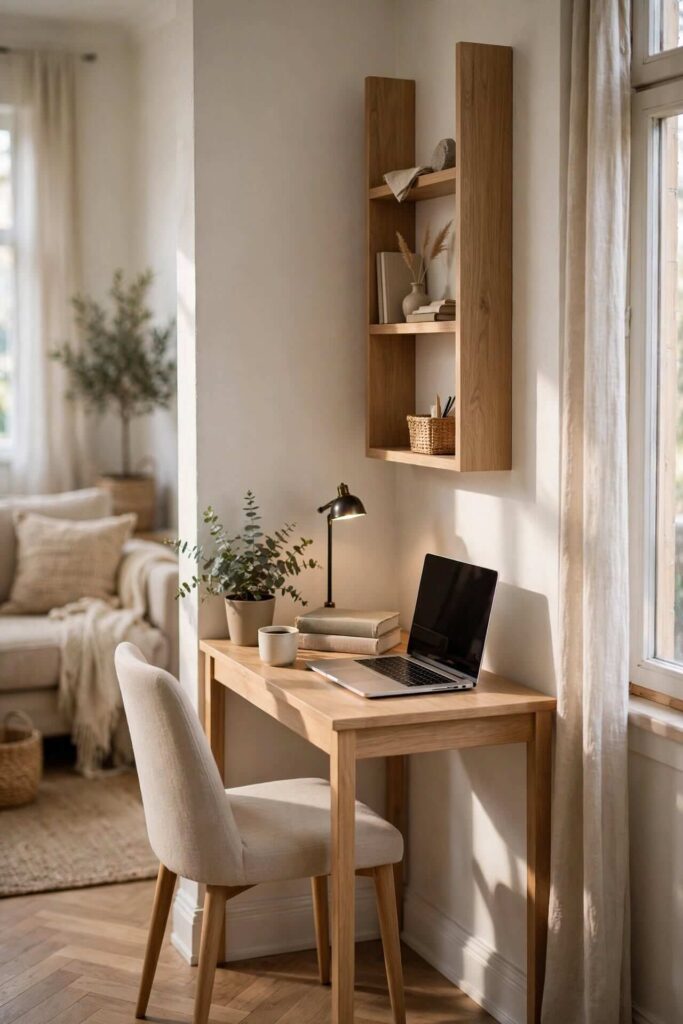
A bedroom should feel visually quieter than the living room. Use a restrained palette of warm white, oatmeal, muted brown, and soft sage, then add texture through bedding, a woven bench, curtains, and a small rug. A simple upholstered or wood headboard gives the bed a stronger focal point. Keep bedside surfaces relatively clear so the room feels restful rather than visually busy.
8. Turn a Small Corner Into a Home Office
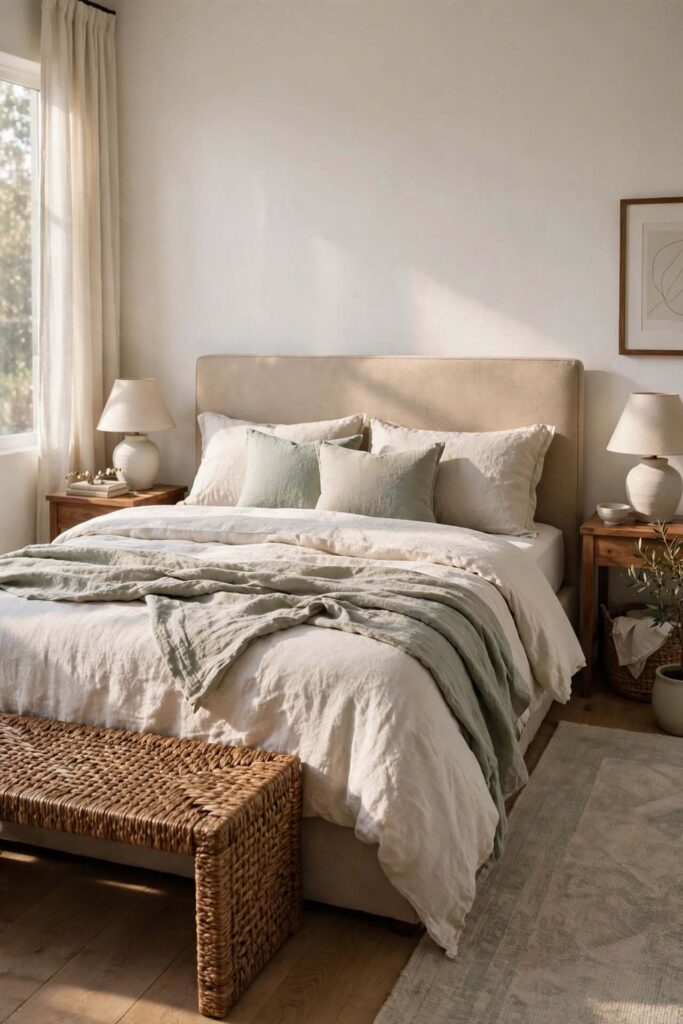
An unused apartment corner can become a practical work-from-home zone without taking over the room. Choose a slim desk with drawers or a wall-mounted surface, then add a comfortable compact chair and a small task lamp. Keep the palette consistent with the surrounding room so the workspace feels integrated rather than visually separate. A vertical shelf can provide storage while using very little floor space.
9. Add Personality With Large-Scale Artwork
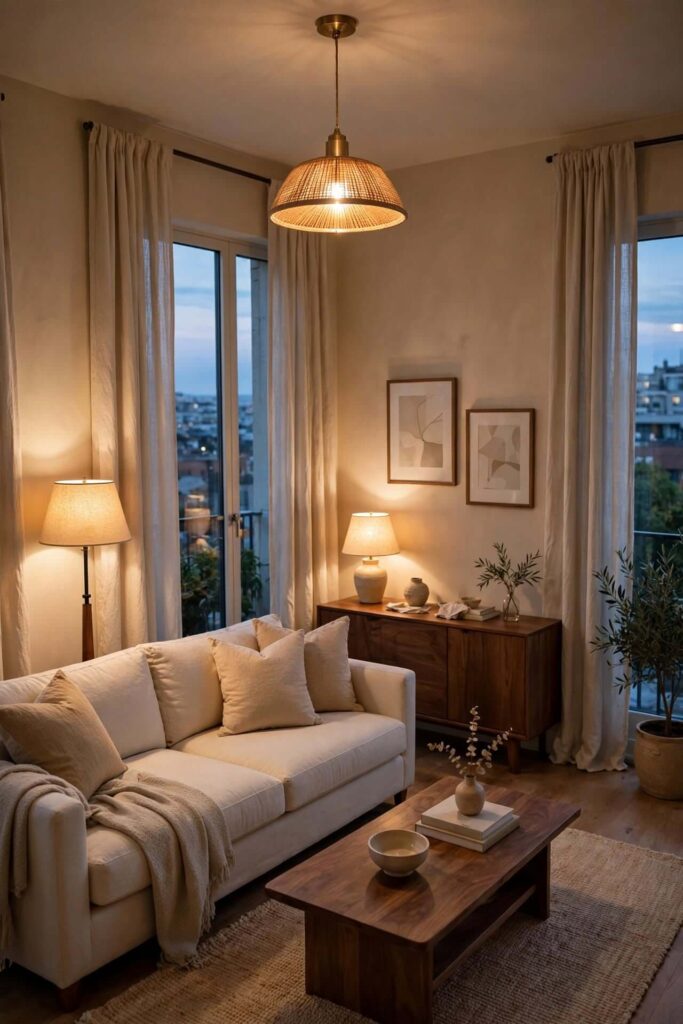
Large artwork can make an apartment feel finished without requiring dozens of small decorative pieces. Choose one oversized abstract, landscape, botanical, or architectural print that connects to your existing palette. Instead of matching every color exactly, let the artwork introduce one or two subtle accent shades. A large piece above a sofa, console, or bed can create a strong focal point while keeping the rest of the room relatively simple.
10. Use Mirrors to Reflect Natural Light

A strategically placed mirror can make an apartment feel brighter and more open. Position one opposite or near a window where it can reflect daylight rather than simply filling an empty wall. Choose a large simple frame in black, brass, wood, or natural materials depending on your style. The mirror should support the room’s architecture rather than becoming an isolated decorative object.
Quick Win: Try moving an existing mirror closer to a window before buying a new one. The change in reflected daylight may be more noticeable than expected.
11. Give the Dining Area a Defined Identity
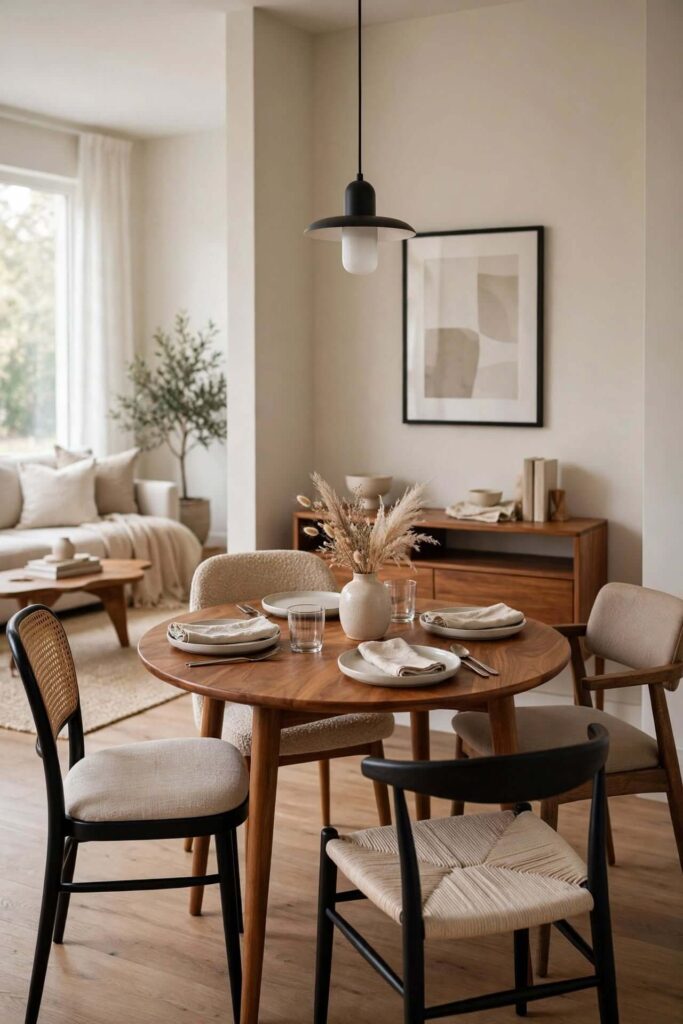
Even a compact dining area deserves some visual definition. A round dining table can work particularly well in tighter spaces because it improves circulation around chairs. Pair it with upholstered or wood seating, a simple pendant light, and one piece of artwork nearby. Keeping the dining palette connected to the living area creates continuity while allowing the zone to feel purposeful.
12. Add Texture With Curtains and Soft Furnishings

When an apartment feels visually cold, texture can make a bigger difference than adding more decoration. Floor-length linen or linen-look curtains soften windows, while a woven rug, boucle cushion, knitted throw, or textured upholstery introduces depth. Keep the colors relatively restrained and allow the materials to create the visual interest. This works especially well in contemporary apartments with simple architectural finishes.
13. Create Hidden Storage That Looks Decorative
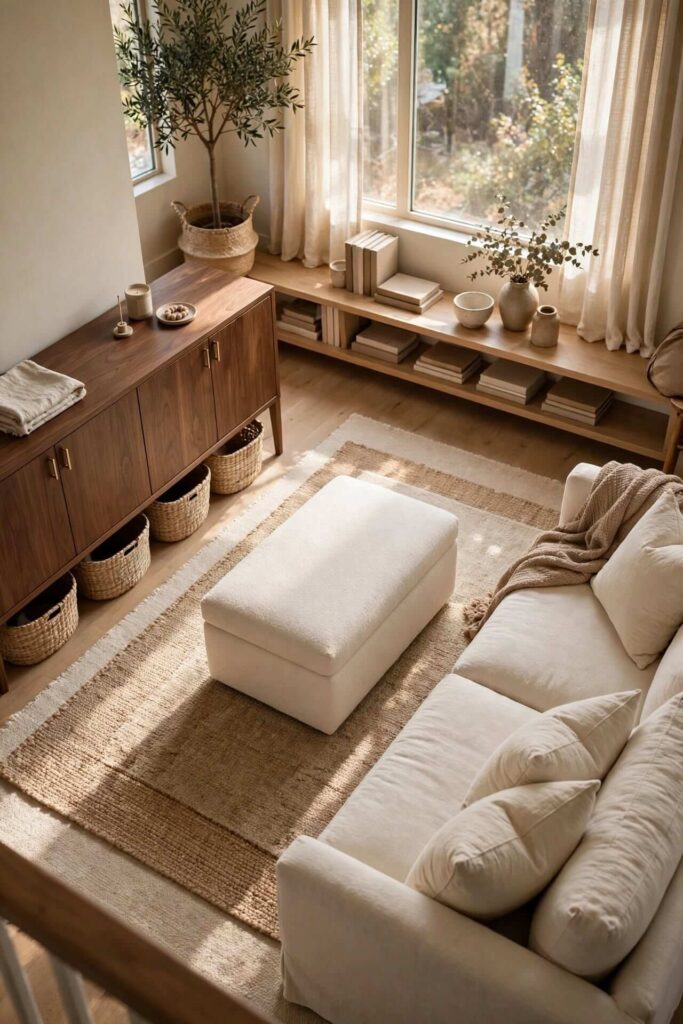
Storage does not have to make an apartment feel utilitarian. Choose attractive baskets, closed cabinets, storage ottomans, or a slim console with drawers to hide everyday items. The best approach is to keep frequently used objects accessible while concealing visual clutter. This is especially valuable in smaller apartments where too many visible belongings can quickly make the room feel crowded.
14. Bring in Plants for a Softer, Lived-In Feel
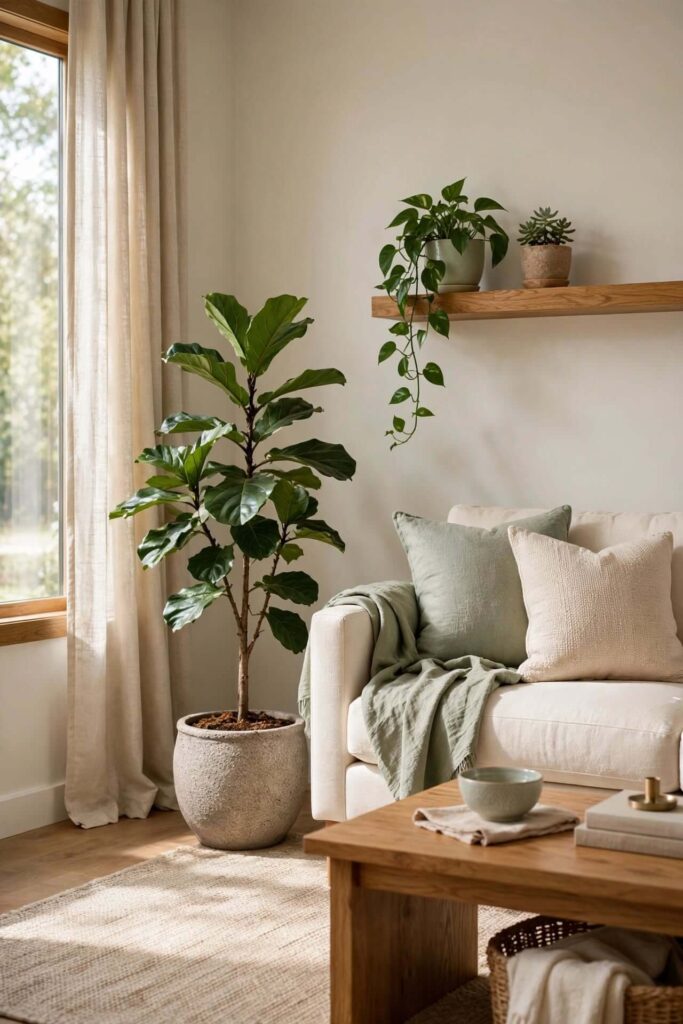
A few well-placed plants can make an apartment feel more connected to nature. Instead of filling every surface with greenery, choose one larger floor plant for an empty corner and one or two smaller plants for shelves or side tables. Use simple ceramic or woven planters that complement your furniture. This approach adds organic shape and color without making the apartment feel like a greenhouse.
Quick Win: Place one medium-to-large plant beside a sofa or near a bright window. An otherwise empty corner can immediately feel more intentional.
15. Mix Modern Pieces With Vintage-Looking Accents

An apartment can feel more personal when contemporary furniture is balanced with pieces that have a little visual history. Try pairing a streamlined sofa with a vintage-style mirror, aged brass lamp, traditional rug, or weathered wood stool. The contrast prevents a newer apartment from feeling too uniform. You don’t need expensive antiques; one character-filled piece can change the mood of the entire room.
16. Make a Balcony or Window Area Feel Useful
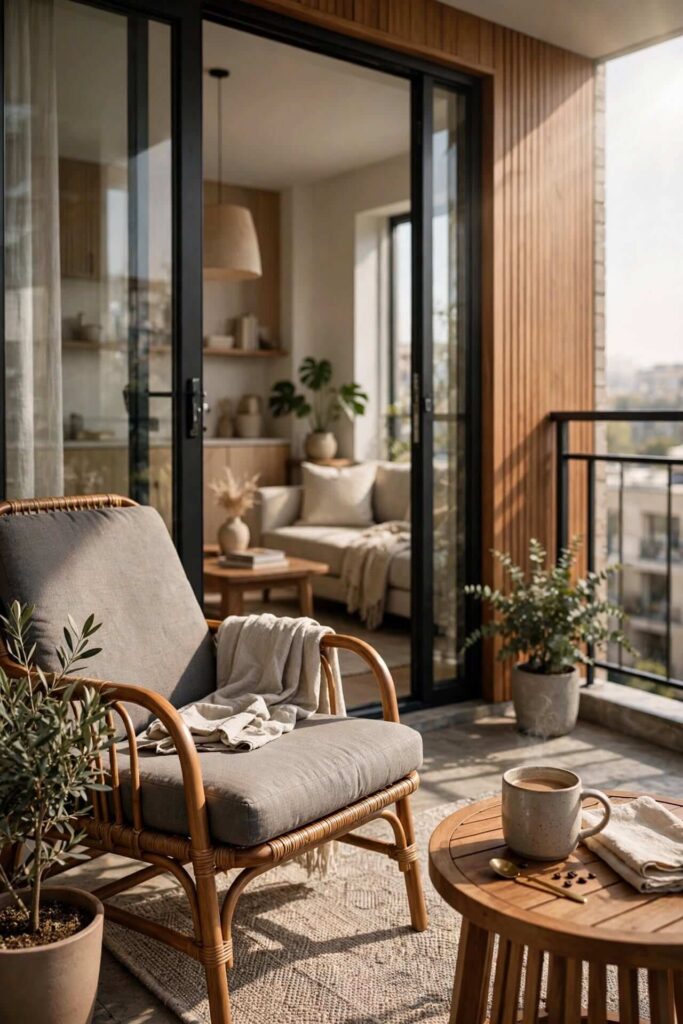
If your apartment has a balcony or a naturally bright window area, treat it as an extension of your living space. A compact chair, small round table, outdoor-safe rug, and a few plants can turn an overlooked area into a morning coffee spot. Keep the furniture appropriately scaled so circulation remains comfortable. Even a tiny outdoor zone can become one of the most enjoyable parts of an apartment.
17. Finish With a Personal Collection, Not Clutter

The final layer should make the apartment feel like someone actually lives there. Display a few meaningful books, ceramics, photographs, travel objects, or handmade pieces rather than filling every shelf. Group objects in small arrangements with empty space around them. This makes the apartment feel collected over time and gives neutral interiors the personality they often need.
Quick Win: Remove a few decorative objects rather than adding more. Then return only the pieces that have meaning or work especially well with the room.
Conclusion
Your Grand Park Apartments home does not need an expensive overhaul to feel personal and polished. Start with the pieces that affect the room most—your layout, lighting, rug, sofa, colors, and storage—then add texture and meaningful details gradually. You also don’t need to copy one decorating style from beginning to end. Choose the ideas that suit your floor plan, lifestyle, personality, and budget, and let the apartment evolve into a space that genuinely feels like yours.
Frequently Asked Questions
1. How can I make a Grand Park apartment feel more like home?
Start with furniture placement, warm lighting, layered textiles, and a few personal objects. These changes can make an apartment feel more established without requiring major renovations.
2. What colors work well in apartment interiors?
Warm white, cream, beige, greige, soft sage, muted brown, and natural wood are versatile choices. Small amounts of black, brass, olive, or terracotta can provide contrast.
3. How do I decorate a small apartment without making it feel crowded?
Prioritize appropriately scaled furniture and keep clear walking paths. Use multifunctional storage, mirrors, vertical shelving, and fewer but larger decorative pieces.
4. What type of rug works best in an apartment living room?
Choose a rug large enough to visually connect the seating area. Neutral textured rugs are particularly versatile, while subtle patterns can hide everyday wear.
5. How can I make an apartment look more expensive?
Focus on proportion, lighting, curtains, cohesive colors, and natural-looking materials. A few high-impact pieces usually create a more refined result than lots of inexpensive accessories.
6. How can renters personalize an apartment?
Use removable artwork solutions, freestanding furniture, rugs, lamps, curtains, plants, mirrors, and decorative accessories. These additions can provide personality without permanent alterations.
7. How do I make an apartment feel warmer?
Introduce warm-toned wood, layered lighting, textured fabrics, rugs, and earthy accent colors. Even one or two of these changes can soften a contemporary apartment.
8. Should apartment furniture match?
Furniture does not need to match exactly. Instead, repeat a few elements such as wood tone, metal finish, fabric color, or accent shade to create visual connection.
9. How can I decorate an open-plan apartment?
Use rugs, lighting, furniture orientation, and artwork to visually define separate zones. The living, dining, and work areas can have individual functions while sharing a cohesive palette.
10. What lighting is best for apartment living rooms?
A combination of overhead, floor, and table lighting gives you more flexibility. Warm-white lighting generally creates a softer evening atmosphere than very cool bulbs.
11. How can I add personality without creating clutter?
Choose meaningful objects and display them selectively. Leave some empty space between accessories so individual pieces have room to stand out.
12. Are plants good for apartment decor?
Yes. Plants add organic shapes, natural color, and visual softness. Choose varieties and locations that suit the available natural light and your maintenance routine.
13. How can I make an apartment bedroom feel cozy?
Layer bedding, curtains, rugs, and soft lighting. Keep bedside surfaces simple and use warm neutrals or muted colors for a calmer atmosphere.
14. Can modern and vintage decor work together?
Absolutely. A modern sofa paired with a vintage-style mirror, traditional rug, aged-brass lamp, or weathered wood accent can create more character than using one style exclusively.
15. What should I avoid when decorating an apartment?
Avoid furniture that is too large for the room, excessive small accessories, poor lighting, and layouts that block natural walking paths. Always consider scale and circulation before adding more decor.
Related Articles
- [Internal Link: Small Apartment Living Room Ideas]
- [Internal Link: Cozy Apartment Decorating Ideas]