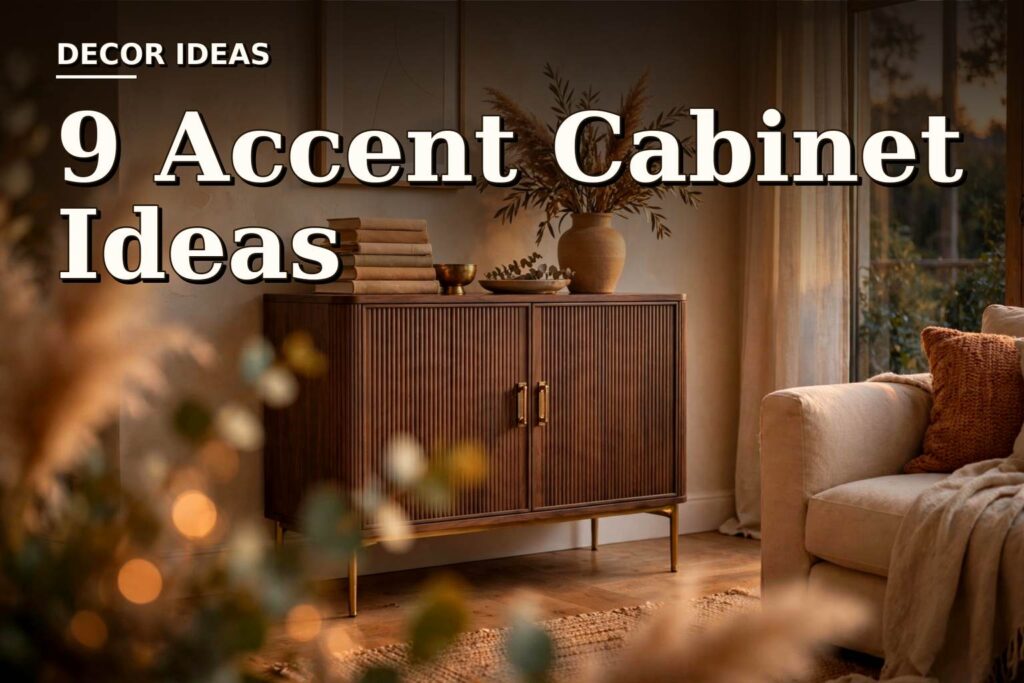
An empty corner, a plain living room wall, or a space that feels like it’s missing something can be surprisingly difficult to decorate. Instead of adding another sofa or scattering small accessories around, a single well-picked accent cabinet may be exactly what the room is missing. Accent cabinets combine useful storage with personality, bringing color, texture, and character into rooms that otherwise feel unfinished. From rich natural wood to deep green finishes and vintage-inspired details, the right design can make an ordinary corner feel intentional. The nine ideas below show how to add a stylish focal point that also keeps everyday living organized, comfortable, and personal.
In This Article
- 1. Deep Green Accent Cabinets for a Rich, Sophisticated Look
- 2. Natural Wood Accent Cabinets for Warmth
- 3. Small Accent Cabinets for Awkward Corners
- 4. Vintage Accent Cabinets With Timeless Character
- 5. Black Accent Cabinets for Modern Contrast
- 6. Fluted Accent Cabinets for Subtle Texture
- 7. Accent Cabinets With Glass Doors for Display
- 8. Two-Tone Accent Cabinets for a Custom Look
- 9. Accent Cabinets Styled as Entryway Storage
- How to Style an Accent Cabinet Without Cluttering It
- Conclusion
- Frequently Asked Questions
- Related Articles
1. Deep Green Accent Cabinets for a Rich, Sophisticated Look
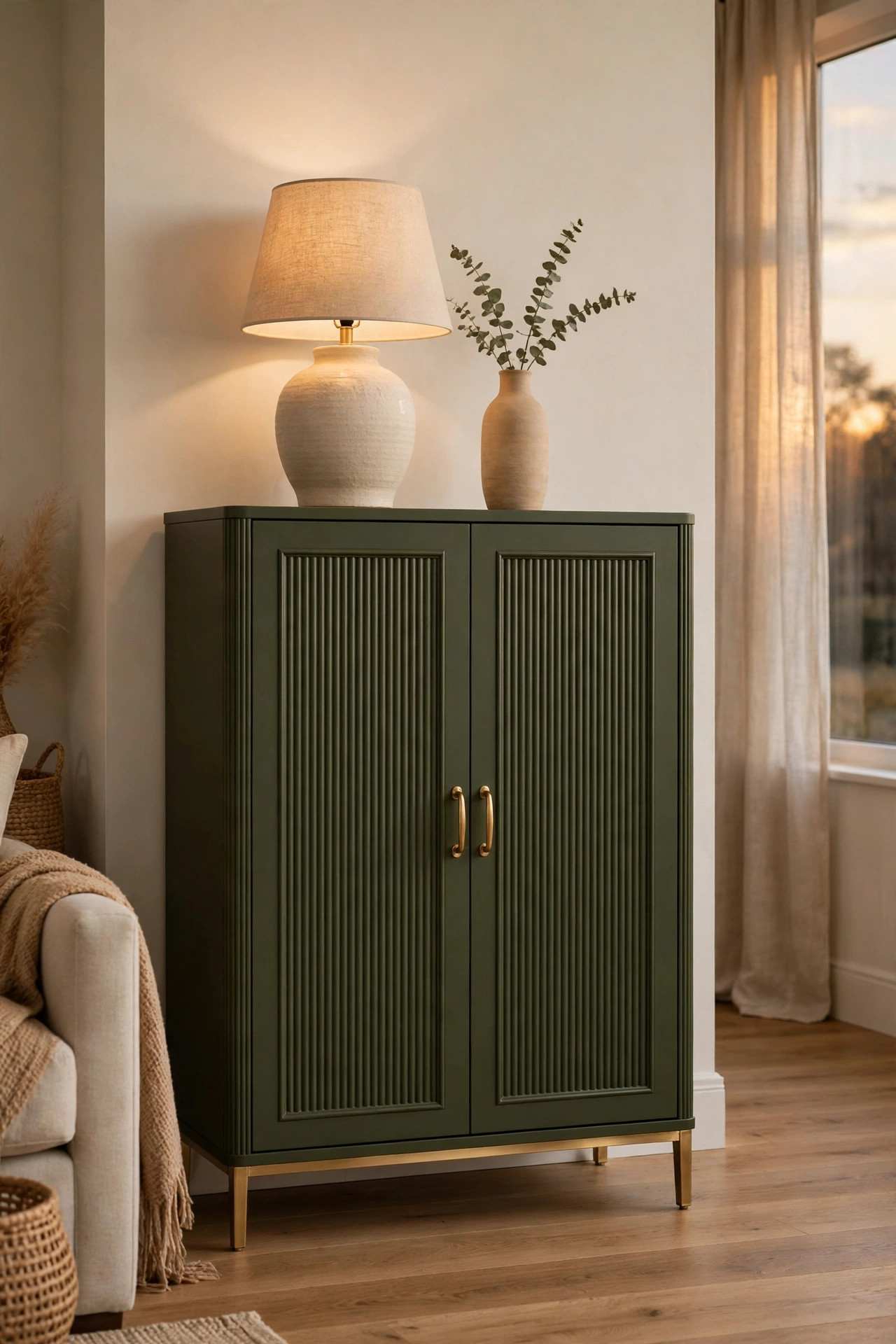
A cabinet in deep green brings color into a room gently, and it sings against creamy walls, pale oak, and warm brass fittings. Choose an olive, forest, or muted sage finish with clean lines or fluted doors for extra texture. A ceramic lamp and one simple vase create a polished display above the cabinet. Living rooms, entryways, and calm neutral schemes gain a clear centre of attention from this look.
Quick Win: Give a cabinet you already own a coat of olive-green paint and new brass knobs — a fresh look with no new purchase.
2. Natural Wood Accent Cabinets for Warmth

Cabinets in natural wood lend modern homes a warm, organic character. Oak creates a light, relaxed atmosphere, while walnut adds depth and a more refined appearance. Set it against white walls with linen textures and a handmade ceramic bowl, and the grain becomes the star. Favour plain shapes where the wood texture shows, instead of high-gloss finishes that hide it. They fit Scandinavian, contemporary, and modern farmhouse rooms, pairing timeless style with storage that stays out of sight.
3. Small Accent Cabinets for Awkward Corners

A compact accent cabinet turns a forgotten corner into a spot that both looks good and works hard. Pick a slim cabinet with drawers or doors: daily essentials disappear inside it while the floor stays free. Hang a round mirror above to soften the setup, and let a small lamp bring evening warmth. Leave most of the top empty so the corner never feels squeezed. Apartments, slim hallways, and tight living rooms benefit most from this approach.
Quick Win: Check the cabinet’s width and how far its doors swing before you buy, especially beside a doorway or sofa.
4. Vintage Accent Cabinets With Timeless Character
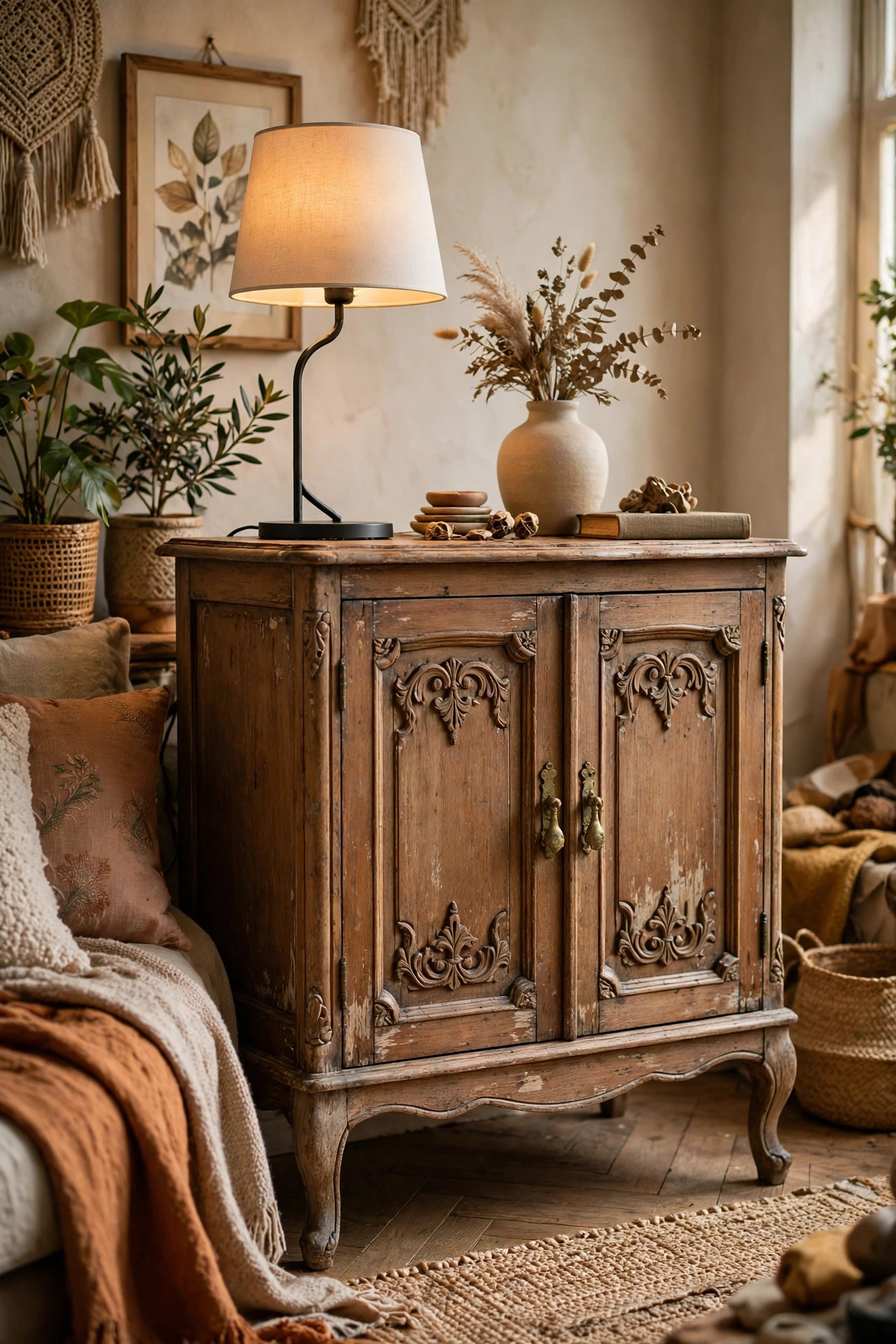
A vintage accent cabinet brings a kind of character new furniture rarely manages. Seek out curved legs, carved detail, aged brass pulls, or a softly weathered surface. Pair the traditional shape with a modern lamp, a framed print, or a plain ceramic vase, and the whole display reads as collected, not dated. A vintage cabinet works beautifully in eclectic, traditional, and transitional rooms, especially when surrounding furniture has clean, uncomplicated lines.
Quick Win: If an antique cabinet looks tired, clean it carefully and replace mismatched hardware before considering a full refinishing project.
5. Black Accent Cabinets for Modern Contrast
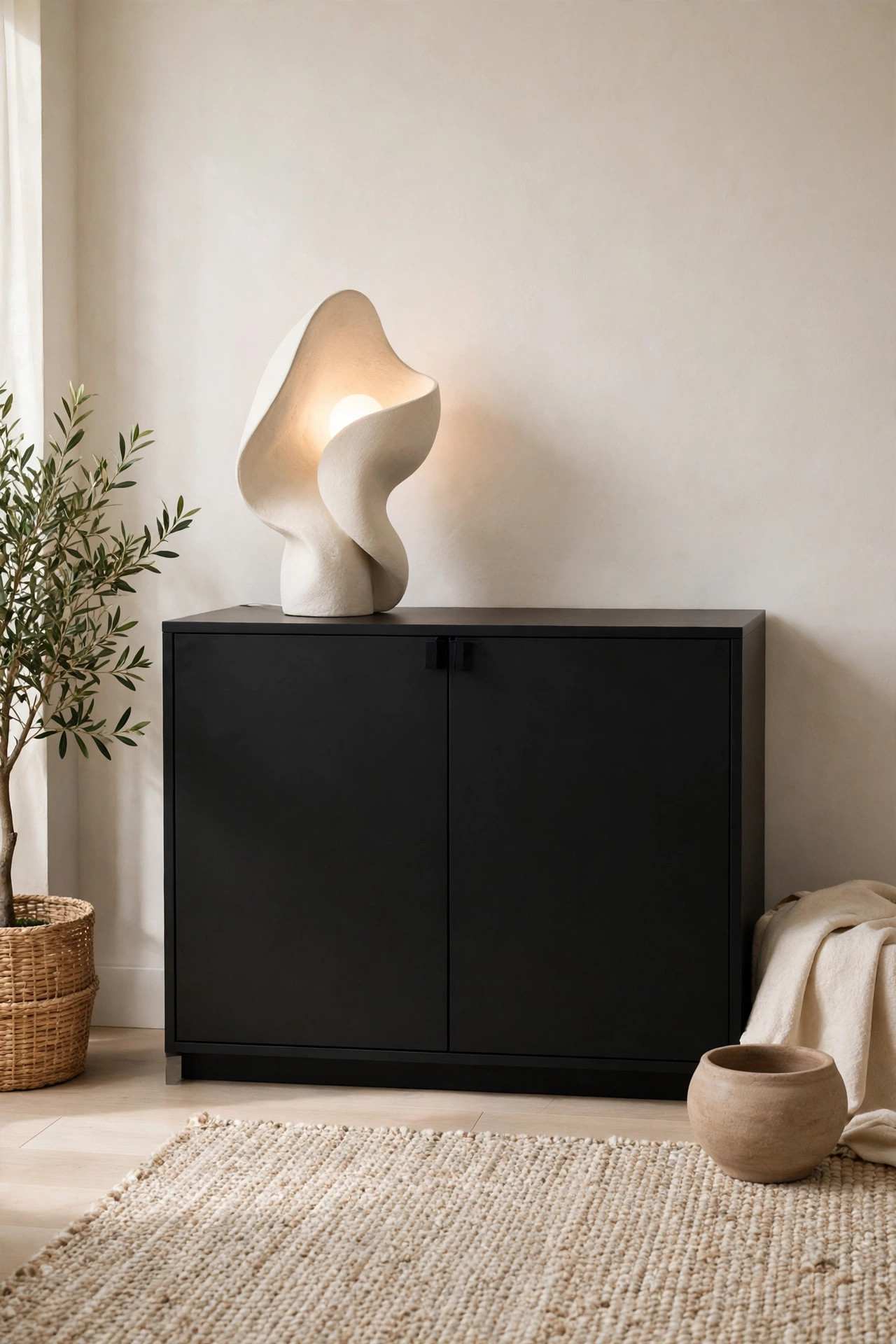
A matte black accent cabinet gives a room a crisp focal point and makes lighter furnishings feel more defined. Combine it with warm white walls, pale wood flooring, and a textured rug to keep the space from feeling too dark. Minimal hardware and a sculptural lamp help the cabinet look intentional rather than bulky. This design suits modern, industrial, and contemporary interiors, particularly spaces that already feature black picture frames, lighting, or window details.
6. Fluted Accent Cabinets for Subtle Texture
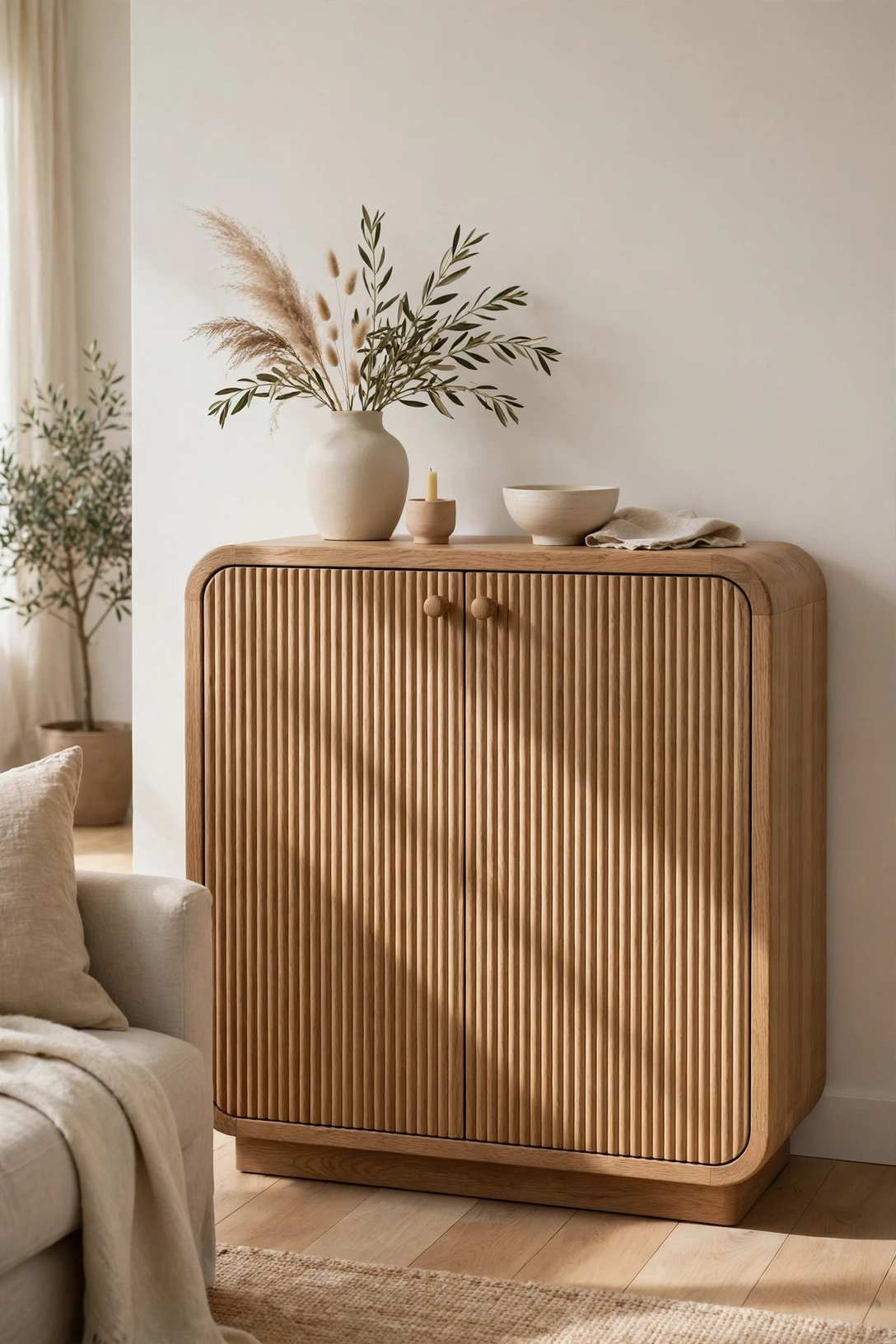
With fluted fronts, the interest comes from texture rather than strong colour. The vertical grooves throw gentle shadows that give a plain cabinet an architectural quality, and rounded edges take the edge off a modern room. Choose natural oak for an airy look, walnut for richness, or a muted painted finish for a little more personality. Since the doors carry plenty of detail on their own, keep everything around them quiet. This style works particularly well in contemporary homes with plain walls and understated furnishings.
Quick Win: On a tight budget, price up ready-made fluted fronts first — custom joinery costs far more.
7. Accent Cabinets With Glass Doors for Display
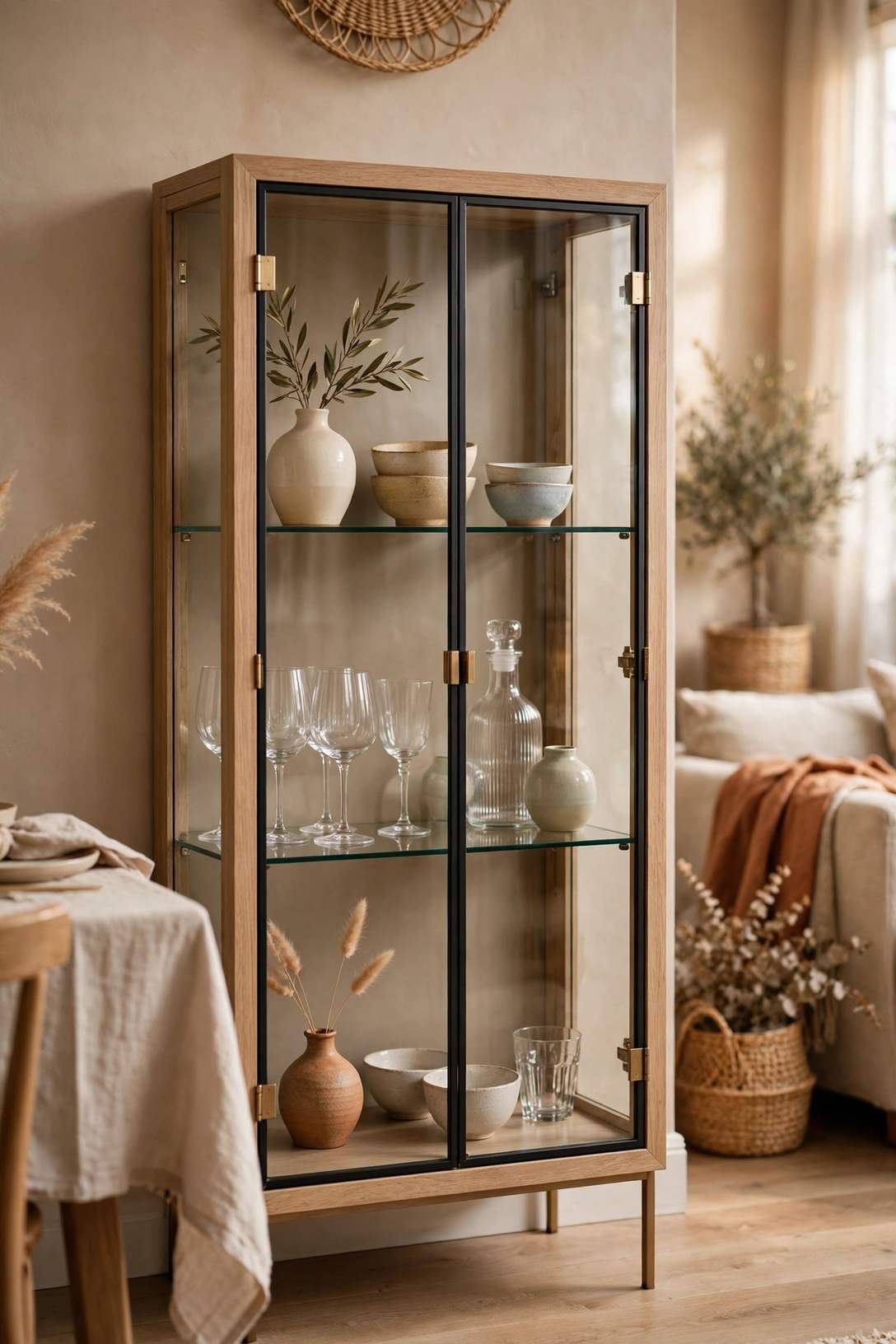
Glass-front accent cabinets offer a way to display favorite objects while keeping them organized. Arrange ceramics, glassware, small books, or treasured collectibles on adjustable shelves, with breathing room around every group. Clear glass creates a lighter appearance, while ribbed or reeded glass provides a softer view of the contents. Place the cabinet in a dining room, living room, or entryway where it can be appreciated without blocking circulation. Remember that visible storage looks best when the contents are edited regularly.
8. Two-Tone Accent Cabinets for a Custom Look

A two-tone cabinet mixes two finishes, which instantly makes it feel more personal. Try natural oak with muted sage doors, walnut with warm cream panels, or a black base with a lighter wood top. That contrast adds depth, with no need for an elaborate shape or pricey decoration. To tie the room together, pick up one of the cabinet’s colours in a nearby cushion, picture, or vase. This idea is particularly useful if your room already mixes wood furniture with painted pieces and needs a stronger visual connection.
Quick Win: Repeat the cabinet’s second colour in just one or two small accessories — don’t bring in a whole new palette.
9. Accent Cabinets Styled as Entryway Storage
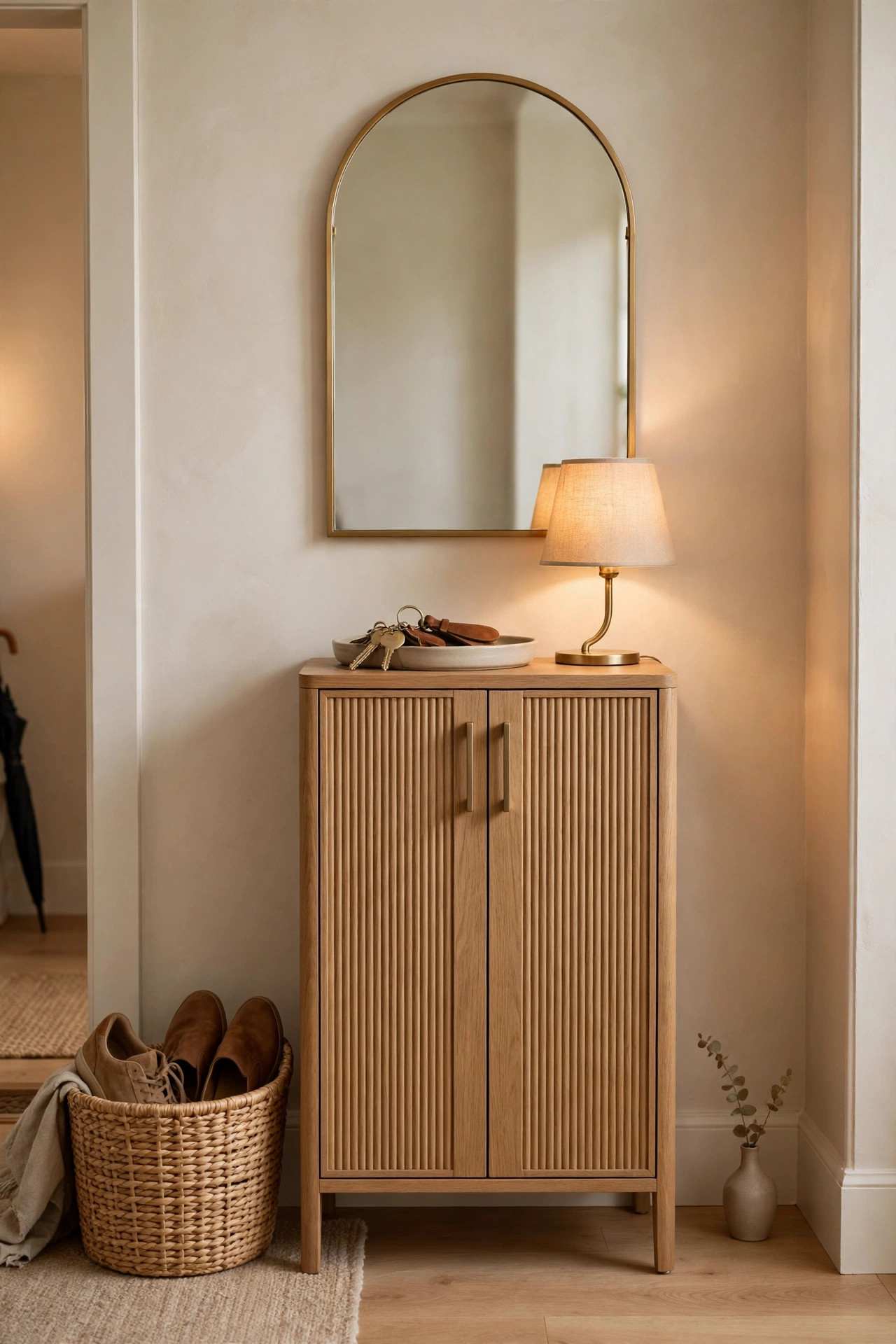
In an entryway, an accent cabinet finishes the space and gives keys, mail, bags, and daily bits a proper place to live. Go slim with closed storage, hang a mirror above to bounce light around, and you get a handy last look before heading out. A shallow tray gathers the small essentials, and a basket alongside can take shoes or extras when room allows. Busy households get an attractive entrance this way, with none of the everyday practicality lost.
Quick Win: Keep keys and sunglasses in a small tray on top, and let the drawers swallow everything else.
How to Style an Accent Cabinet Without Cluttering It
Styling an accent cabinet well takes just a handful of well-chosen pieces. Begin with something tall — a table lamp or a vase — then add a smaller piece, like a ceramic bowl or a short pile of books. Vary the heights to create a relaxed arrangement, and leave some empty space so the cabinet remains the focal point.
Consider the surrounding wall, too. A picture, a mirror, or a plain wall sconce ties the cabinet into the room so it never stands apart. In a tight space, style lightly and skip any accessory that blocks a door or drawer.
Conclusion
The right accent cabinet pulls storage, personality, and style together — no full room makeover required. Whatever you lean toward — natural wood, bold black, vintage detail, or colourful modern design — pick a piece that sits happily with your furniture and your daily routine. Begin with a single cabinet and a few considered accessories instead of redoing a whole room in one go. Little deliberate changes go a long way toward a home that feels pulled together and welcoming.
Frequently Asked Questions
It is a storage piece chosen as much for looks as for use, adding character to a room. It may feature distinctive colors, materials, hardware, or architectural details that make it stand out from ordinary storage furniture.
Living room walls, entryways, dining rooms, bedrooms, and spare corners all suit one. Choose a position that offers convenient access without obstructing doorways or walkways.
It comes down to the decor you already have. Natural wood and cream work well in neutral rooms, while deep green, navy, and black can create a stronger focal point.
Yes. Go compact or narrow, with handy hidden storage and a design that looks light. Skip anything oversized that blocks movement or crowds the room.
Pick two or three objects at different heights — a lamp, a vase, a short stack of books. Keep gaps between them and the display stays balanced, not cluttered.
An exact match with everything else is unnecessary. Matching wood tones, hardware finishes, or colours loosely tends to build a more natural, layered room.
Yes. Contemporary rooms suit clean shapes, natural materials, textured doors, and quiet hardware. The most adaptable designs pair visual interest with genuinely useful storage.
Solid wood, wood veneer, engineered wood, metal, and glass are all common options. Weigh up durability, build quality, upkeep, and budget before settling on a material.
Subject to condition, repainting, new hardware, a refreshed finish, or fresh styling around it can all work. Look over the current surface and build first, then pick a paint or refinishing approach.
Never pick a cabinet until you have measured the space and checked the doors can open freely. Think too about depth, how much it holds, visual weight, and whether the finish suits the room.
Absolutely. It stores accessories, books, or linens and still works as a decorative focal point. Size and height should sit comfortably with the furniture around it.
The two terms do overlap, yet sideboards tend to run longer and serve dining or living rooms. Accent cabinet covers decorative storage pieces of many sizes and styles.
They are useful for displaying attractive items while keeping them protected from some dust. Contents stay on show, though, so a regular tidy and clean keeps the look neat.
Simple hardware, a few quality-looking pieces on top, and a clear surround do the trick. A carefully selected finish and good proportions often matter more than the price.
No, although wall placement is common. Some designs can work as room dividers or behind a sofa, provided they have an appropriate finished back and do not obstruct circulation.