

A living room can have comfortable seating, beautiful rugs, and carefully chosen accessories yet still feel as though something is missing. In many living rooms, the coffee table is what ties the whole seating area together. Stone coffee tables offer a distinctive solution, adding natural texture, sculptural shapes, and a sense of permanence without requiring a complete room makeover. From softly textured travertine to dramatic dark marble, the right design can make a space feel warmer, more modern, or effortlessly luxurious. What matters most is picking a stone, shape, and finish that sit well with the furniture you already own. These 10 ideas will help you find a look that feels considered, inviting, and practical for everyday living.
In This Article
- 1. Sculptural Travertine Coffee Tables
- 2. Elegant White Marble Coffee Tables
- 3. Round Stone Coffee Tables for Small Living Rooms
- 4. Bold Black Marble Coffee Tables
- 5. Oval Stone Coffee Tables With Soft Edges
- 6. Stone and Wood Coffee Tables for Natural Warmth
- 7. Waterfall Stone Coffee Tables
- 8. Green Marble Coffee Tables for a Statement Look
- 9. Low-Profile Stone Coffee Tables for Contemporary Spaces
- 10. Nesting Stone Coffee Tables for Flexible Living Rooms
- How to Style Stone Coffee Tables Without Overdoing It
- Conclusion
- Frequently Asked Questions
1. Sculptural Travertine Coffee Tables
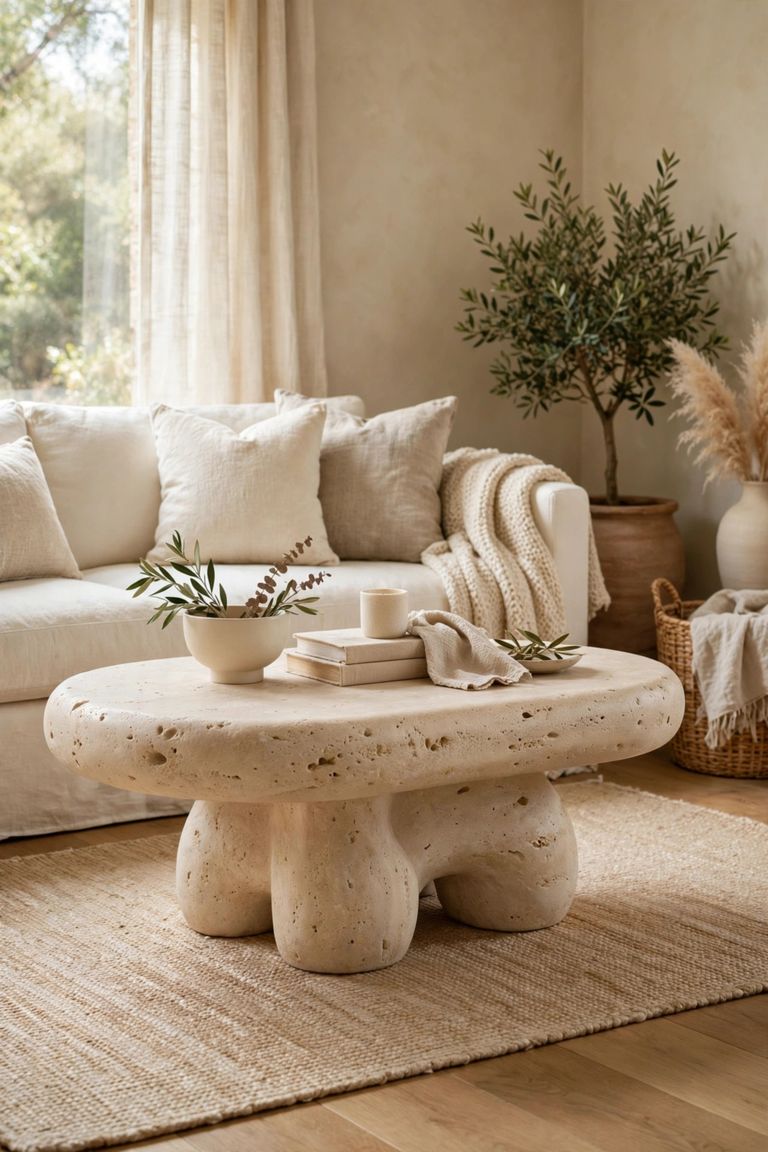
Travertine coffee tables bring a soft, architectural quality to a living room. Their creamy beige tones, natural pores, and subtle variations work beautifully with ivory upholstery, oak flooring, and textured linen. Choose a chunky oval top with rounded pedestal legs for a sculptural centerpiece that feels substantial without looking overly formal. This design is particularly effective in organic modern interiors, where natural materials create visual interest without relying on bold colors.
Quick Win: Style the table with one handmade ceramic bowl and a small stack of neutral books. Leave the rest of the surface open to appreciate the stone’s natural texture.
2. Elegant White Marble Coffee Tables
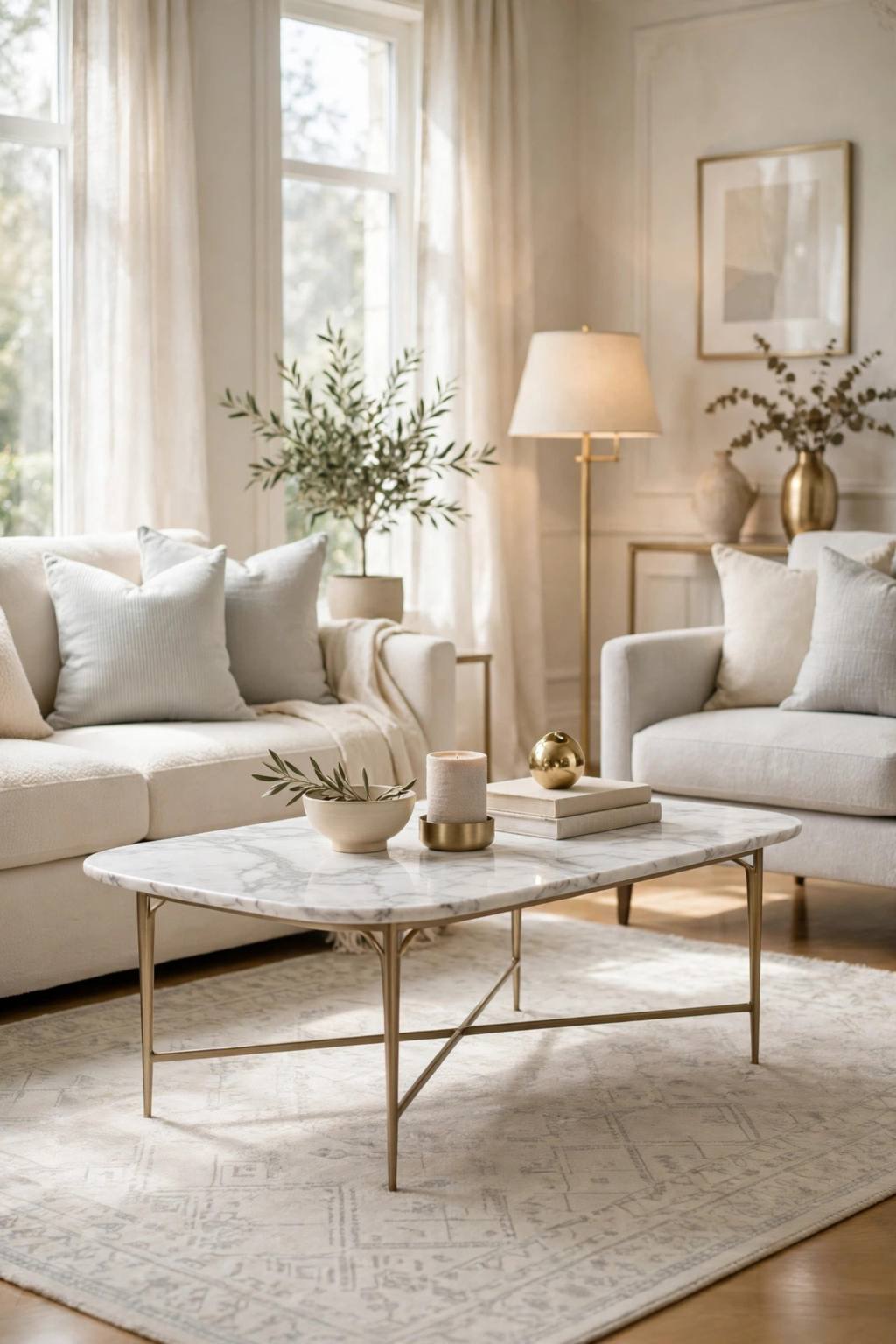
White marble is an excellent choice when you want a living room to feel polished and luminous. Delicate gray veining creates movement across the surface, while a slim silhouette keeps the design from feeling heavy. Pair it with cream or light-gray seating, brushed brass accents, and a softly patterned rug. If your room already contains several decorative textures, choose understated veining rather than a dramatic pattern so the table becomes a refined focal point instead of competing with everything around it.
Quick Win: Repeat one or two colors from the marble veining in your cushions or artwork to make the entire room feel connected.
3. Round Stone Coffee Tables for Small Living Rooms

In a compact living room, a round stone table can make moving around the seating area much simpler. The curved outline softens a room full of straight sofa lines and boxy furniture, and the stone itself brings character without needing extra decoration. Look for a compact pedestal design or a small round table with a visually light base. Before you buy, make sure there is enough walking space between the table and the seats — this matters even more in apartments where space is tight.
Quick Win: Use painter’s tape to outline the tabletop’s planned diameter on your floor. Walk around it before purchasing to check whether the shape fits your daily routine.
4. Bold Black Marble Coffee Tables
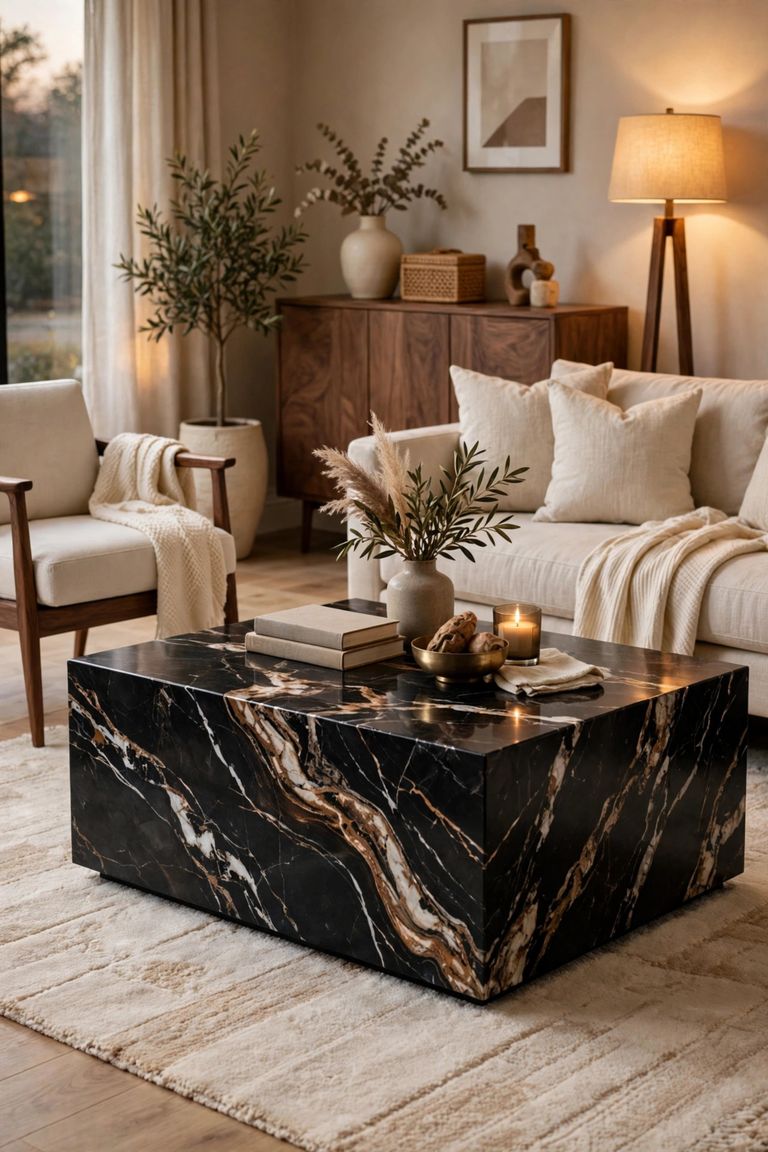
Black marble adds depth and contrast, which suits contemporary, industrial, and refined transitional rooms alike. White or bronze-toned veining gives the surface visual movement, while walnut furniture and warm lighting prevent the room from feeling cold. Soften the dark centerpiece with pale upholstery, light walls, or a cream-colored rug. In a larger living room, a substantial rectangular design can anchor the seating arrangement and give understated furniture a stronger presence.
Quick Win: If a full black marble table feels too dramatic, look for a smaller black stone design and balance it with lighter accessories.
5. Oval Stone Coffee Tables With Soft Edges
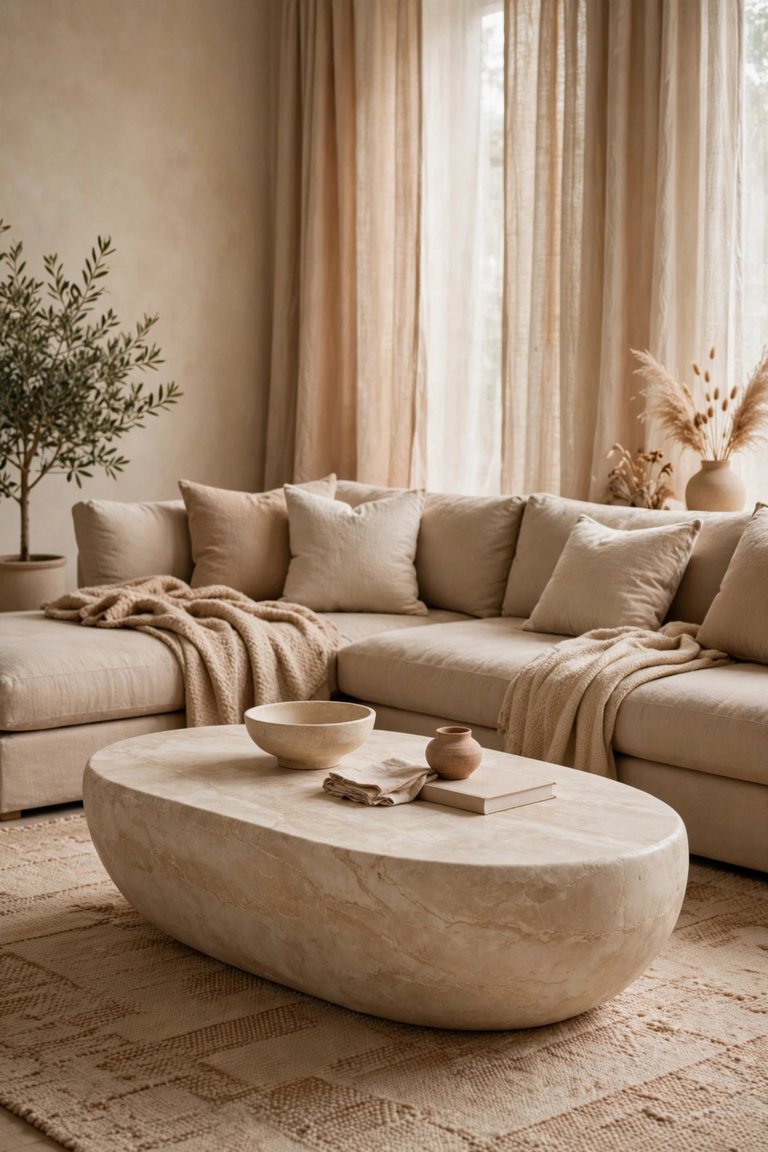
Oval stone coffee tables combine the visual presence of a large centerpiece with a softer outline than a traditional rectangular table. Their elongated shape works especially well in front of long sofas and sectional seating, creating a continuous surface without sharp corners at either end. Choose beige limestone or softly veined marble for a calm palette, then repeat its undertones in the rug or curtains. An oval shape also helps in rooms where people often walk between the sofa and nearby furniture.
The trick is to match the table’s length to the sofa rather than choosing the largest model that fits the room.
6. Stone and Wood Coffee Tables for Natural Warmth

Stone and wood coffee tables offer a balanced alternative to an entirely stone design. A limestone or travertine top provides a grounded, tactile surface, while an oak or walnut base introduces warmth and a more relaxed character. This combination works beautifully with Scandinavian, farmhouse-inspired, and organic modern interiors. For a cohesive result, match the wood undertone to existing furniture rather than trying to make every wood finish identical. A natural woven rug and linen upholstery help bridge the two materials.
Quick Win: If your room already has warm wooden furniture, choose a stone top with cream, sand, or honey undertones instead of a cool blue-gray finish.
7. Waterfall Stone Coffee Tables
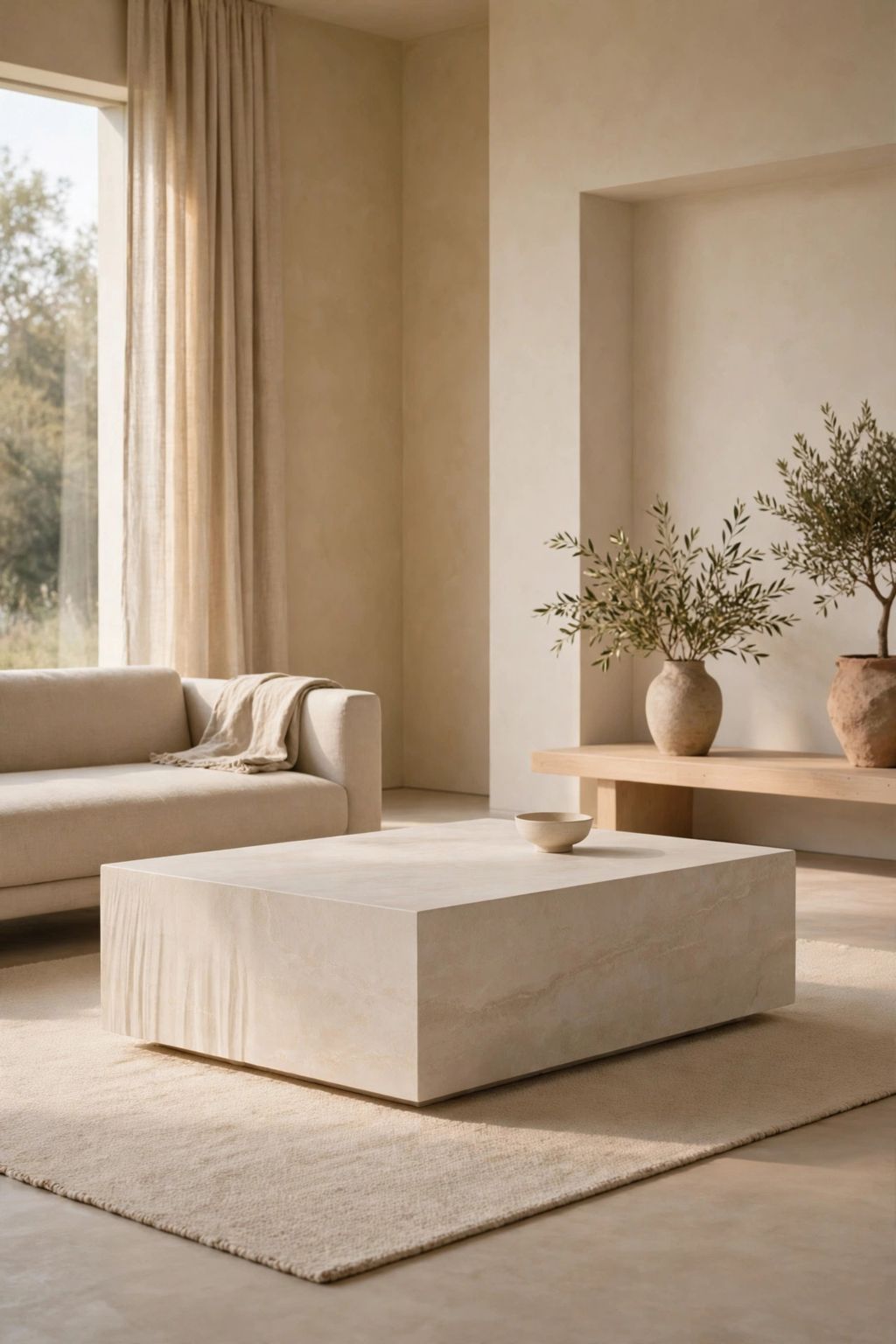
A waterfall stone coffee table has a top that continues down the sides, creating a solid, monolithic appearance. This architectural style works especially well in minimalist interiors, where a few well-chosen forms have more impact than numerous accessories. A pale limestone or honed marble finish keeps the look quiet, and a thicker slab gives the table a more sculptural feel. Because these tables can be visually heavy, give them breathing room and avoid surrounding them with bulky chairs or oversized decorative objects.
Quick Win: Keep nearby furniture visually simple so the table’s continuous lines become the main feature of the seating area.
8. Green Marble Coffee Tables for a Statement Look

Green marble offers a richer alternative to familiar white and beige stone. Its emerald, forest, or olive tones create a distinctive focal point that pairs naturally with walnut, cream upholstery, brass details, and botanical artwork. For a restrained look, let the table provide most of the color and keep surrounding textiles relatively quiet. If your living room already uses earthy shades, choose a muted green stone that complements those tones rather than introducing an unrelated accent color.
This is an especially useful choice for adding personality to a neutral room without repainting the walls or replacing the sofa.
9. Low-Profile Stone Coffee Tables for Contemporary Spaces
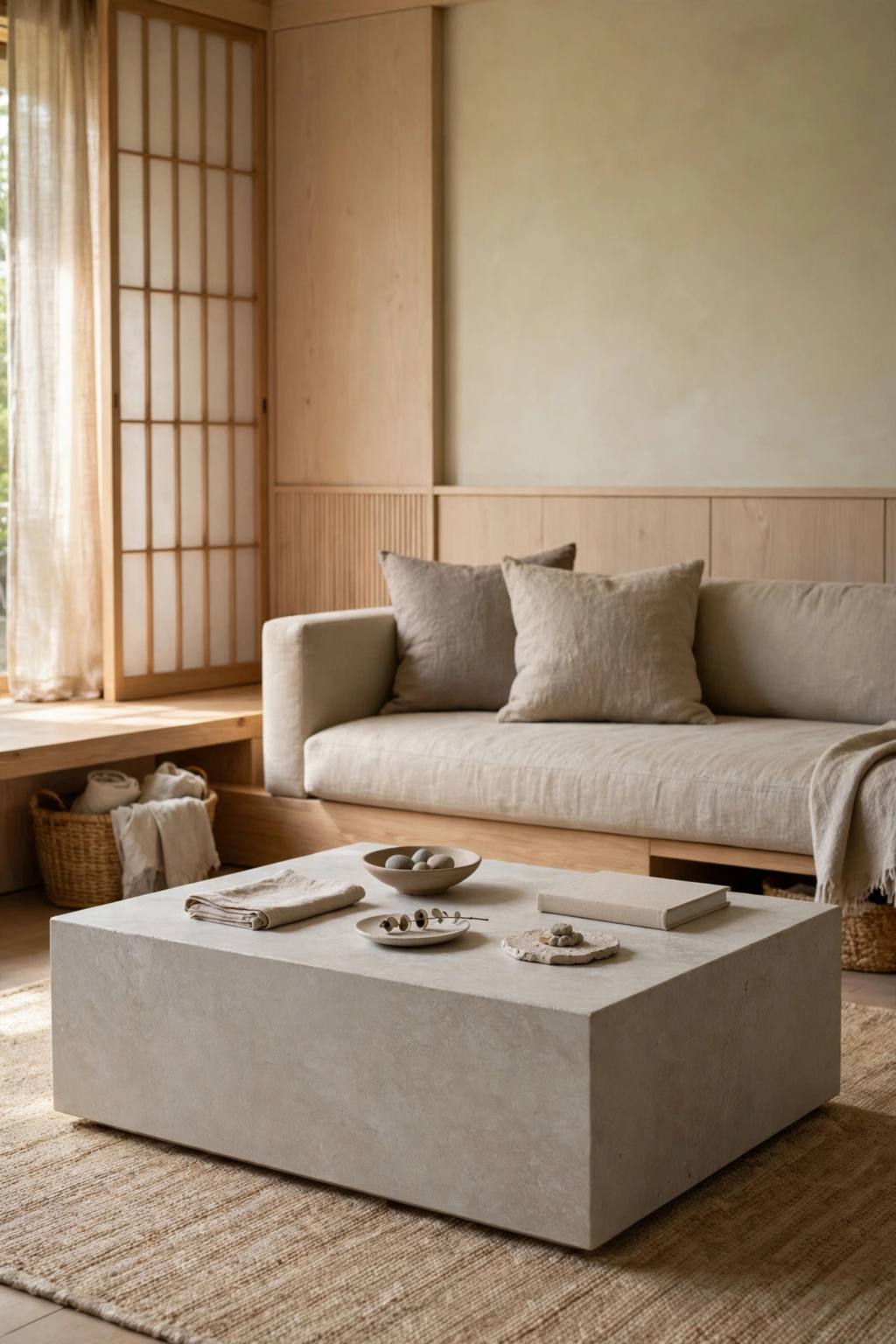
Low-profile stone coffee tables create a relaxed, grounded appearance that suits contemporary, Japandi, and minimalist living rooms. Their wide, low shape pairs well with low sofas and broad seating, which keeps the room feeling calm and visually open. Choose a simple rectangular or softly rounded design in honed limestone or travertine, and keep tabletop accessories low so they do not interrupt the sightline. Before choosing a particularly low model, check that its height remains comfortable for reaching drinks and everyday essentials from your sofa.
Quick Win: Arrange a shallow tray and one low ceramic vessel on the table instead of tall decorations that interrupt the clean silhouette.
10. Nesting Stone Coffee Tables for Flexible Living Rooms

Nesting stone coffee tables provide flexibility without sacrificing a considered look. A larger table can hold everyday essentials, while a smaller companion can slide underneath and move beside a chair when guests arrive. Choose complementary stone finishes or matching tables in different sizes to create a cohesive arrangement. This setup works especially well in apartments, multipurpose rooms, and homes where the seating plan keeps changing. Check the weight of each piece before buying, since solid stone can be cumbersome to move.
Quick Win: Keep the smaller table tucked away during everyday use and pull it out only when you need an extra surface for drinks or snacks.
How to Style Stone Coffee Tables Without Overdoing It
Stone already provides plenty of visual interest, so the most successful styling usually feels edited rather than crowded. Start with one practical item, such as a small tray, then add a contrasting texture through a ceramic bowl, a book, or a simple branch arrangement.
A few principles make the process easier:
- Balance the finish: Pair polished marble with softer fabrics, or combine textured travertine with smooth ceramics.
- Consider proportions: Keep accessories low enough that people can see and converse across the table.
- Leave open space: An uncluttered surface allows the stone’s natural patterns to remain visible.
- Protect the material: Use coasters and follow the care instructions for the specific stone and finish.
- Coordinate, don’t match everything: Echo one color from the table in a cushion, artwork, or nearby accessory.
The goal is a coffee table that looks intentional while still functioning comfortably in everyday life.
Conclusion
The right stone coffee table can change the character of your living room without requiring a full redesign. No matter whether you love travertine’s quiet texture, black marble’s drama, or the warmth of stone mixed with wood, pick the piece that fits your furniture and your everyday habits. Start with one design that suits your space, keep the styling thoughtful, and let natural materials do the rest.
Frequently Asked Questions
Yes. Stone coffee tables offer distinctive natural patterns, durable surfaces, and a substantial visual presence. It comes down to the stone type, the finish, how much upkeep you accept, and how your living room gets used.
Marble is popular for its veining and refined appearance, while travertine offers softer colors and a porous, textured finish. Granite is generally more resistant to everyday wear, and limestone provides a subtle, natural look but can require extra care.
Travertine still suits organic modern, contemporary, and minimalist rooms very well. Its warm, earthy tones and textured surface sit nicely next to natural wood, linen, and similar materials.
Marble needs more attention than most manufactured surfaces, since acidic liquids can scratch or etch it. Wipe up spills promptly, use coasters, and follow the manufacturer’s recommendations for sealing and cleaning.
Scratch resistance varies by material and finish. Marble and softer stones can scratch, while polished finishes may make some marks more noticeable; use protective pads and avoid dragging heavy objects across the surface.
Yes, provided the dimensions and shape suit the layout. Round, oval, or compact pedestal tables can improve movement around seating, while a visually simple design helps prevent the room from feeling crowded.
Cream, beige, gray, taupe, and warm white work with most natural stone finishes. For more contrast, pair black marble with light upholstery or green marble with cream fabric and walnut accents.
Keep the styling simple with a ceramic bowl, a couple of books, or a low vase. Natural linen, warm wood, and restrained earthy colors complement travertine without competing with its surface texture.
Many solid-stone tables are considerably heavier than wood or glass alternatives. Check the product’s weight, assembly requirements, floor suitability, and delivery arrangements before purchasing, especially for apartments or upper floors.
Neither is universally better. Stone creates a more sculptural, substantial appearance, while wood generally feels warmer and may be easier to move; your lifestyle, budget, and maintenance preferences should guide the decision.
Yes, definitely. Pair the stone with soft upholstery, a wool rug, relaxed linen cushions, and warm lighting. Those softer touches offset the solid surface and keep the room feeling welcoming instead of formal.
Use coasters, placemats where appropriate, and felt pads beneath accessories. Avoid harsh or acidic cleaners, and confirm whether your particular stone needs sealing because care requirements vary by material.
They can be worthwhile if you value natural variation, a distinctive design, and long-term use. Compare the stone type, construction, finish, craftsmanship, and maintenance needs rather than judging quality by appearance or price alone.
Yes, but keep the combination intentional. For example, pair a honed travertine coffee table with a polished marble accessory in complementary tones, and use wood or textiles to connect the different textures.
Avoid choosing a table solely for its appearance without checking its dimensions, weight, edge profile, and care requirements. A table that dominates the seating area or demands more care than you want to give will probably not be right for your home.