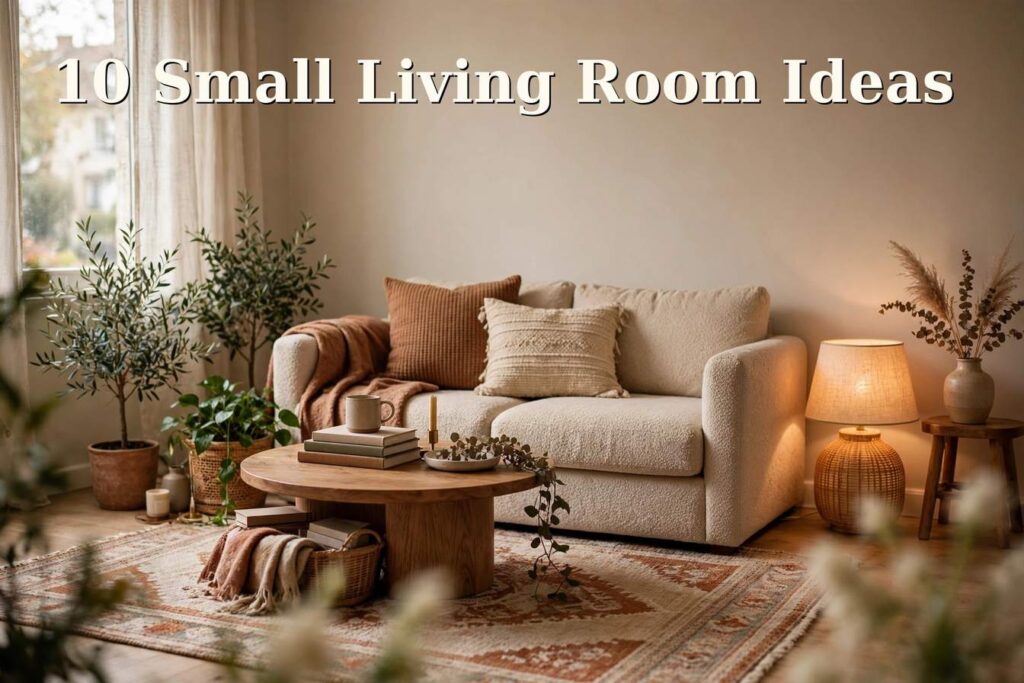
A small apartment living room can quickly feel cramped when the sofa takes up too much space, storage spills into every corner, or the furniture arrangement blocks natural light. The challenge is creating a room that feels welcoming and stylish without sacrificing the everyday comforts you need. The good news is that you don’t need a bigger apartment or an expensive makeover to make a noticeable difference. The right furniture proportions, thoughtful color choices, and a few clever decorating tricks can transform even an awkward layout into a cozy retreat. These small living room ideas for apartments offer realistic inspiration for making your space feel more open, organized, and distinctly yours.
In This Article
- 1. Choose a Compact Sofa With Visible Legs
- 2. Use a Light Neutral Color Palette
- 3. Try a Round Coffee Table to Improve Flow
- 4. Make the Most of Vertical Wall Space
- 5. Create a Cozy Corner With an Accent Chair
- 6. Add a Large Rug to Define the Seating Area
- 7. Choose Furniture With Hidden Storage
- 8. Hang Curtains High to Make the Ceiling Feel Taller
- 9. Use Mirrors to Reflect Natural Light
- 10. Use a Slim Media Unit and Wall-Mounted TV
- Conclusion
- Frequently Asked Questions
- Related Articles
1. Choose a Compact Sofa With Visible Legs
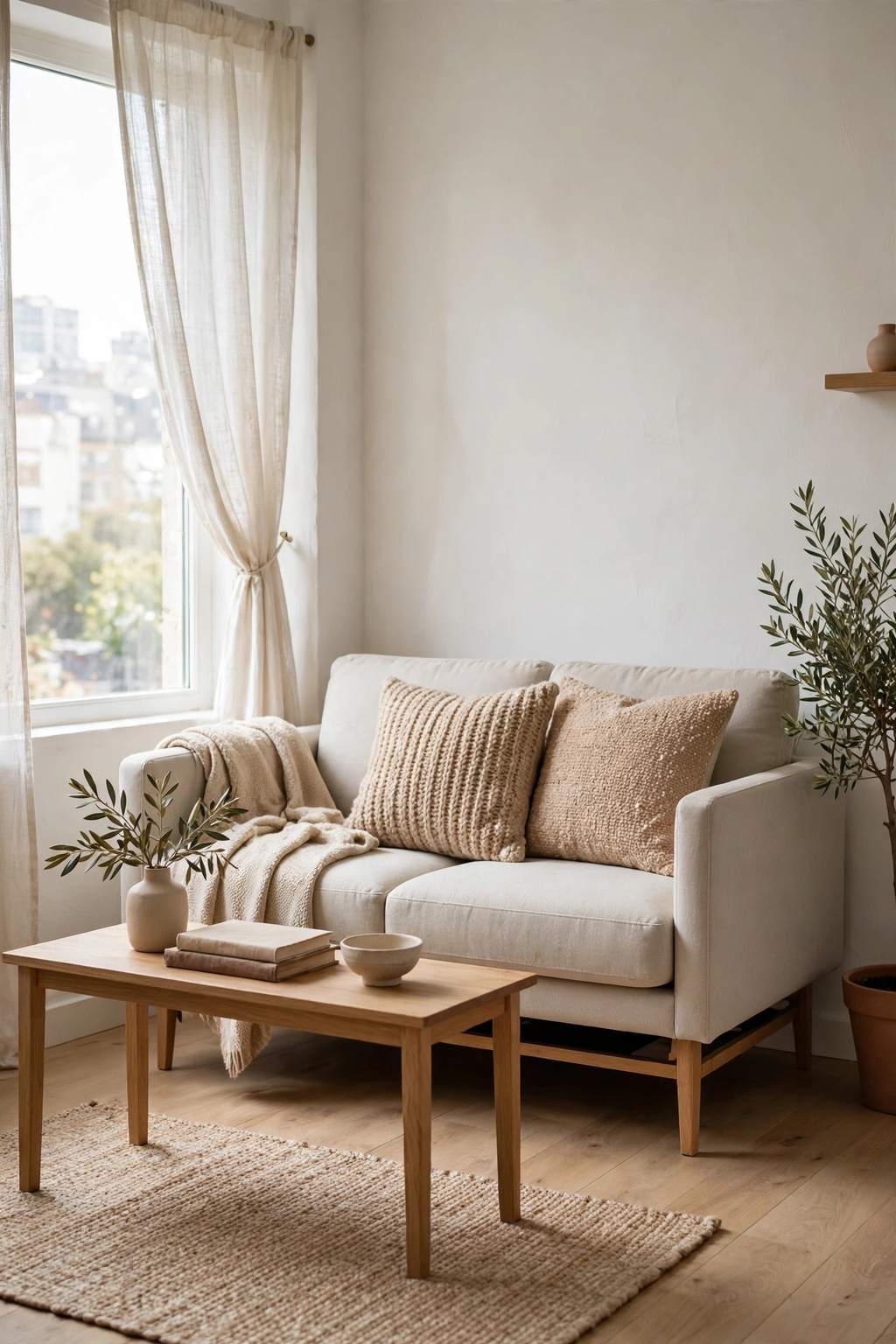
A compact sofa with exposed wooden or slim metal legs creates a lighter visual footprint than a bulky, floor-length design. Choose a two-seat loveseat in ivory, oatmeal, or soft gray, then pair it with a narrow coffee table to preserve walking space. The visible floor beneath the sofa helps the room feel less crowded, while textured cushions add warmth without introducing too many colors. This layout works particularly well in studio apartments and narrow living rooms where every inch matters. Of all the small living room ideas for apartments here, a compact sofa is the easiest place to start.
Quick Win: Pull the sofa a few inches away from the wall if the layout allows, and remove oversized cushions that make the seating feel unnecessarily bulky.
2. Use a Light Neutral Color Palette
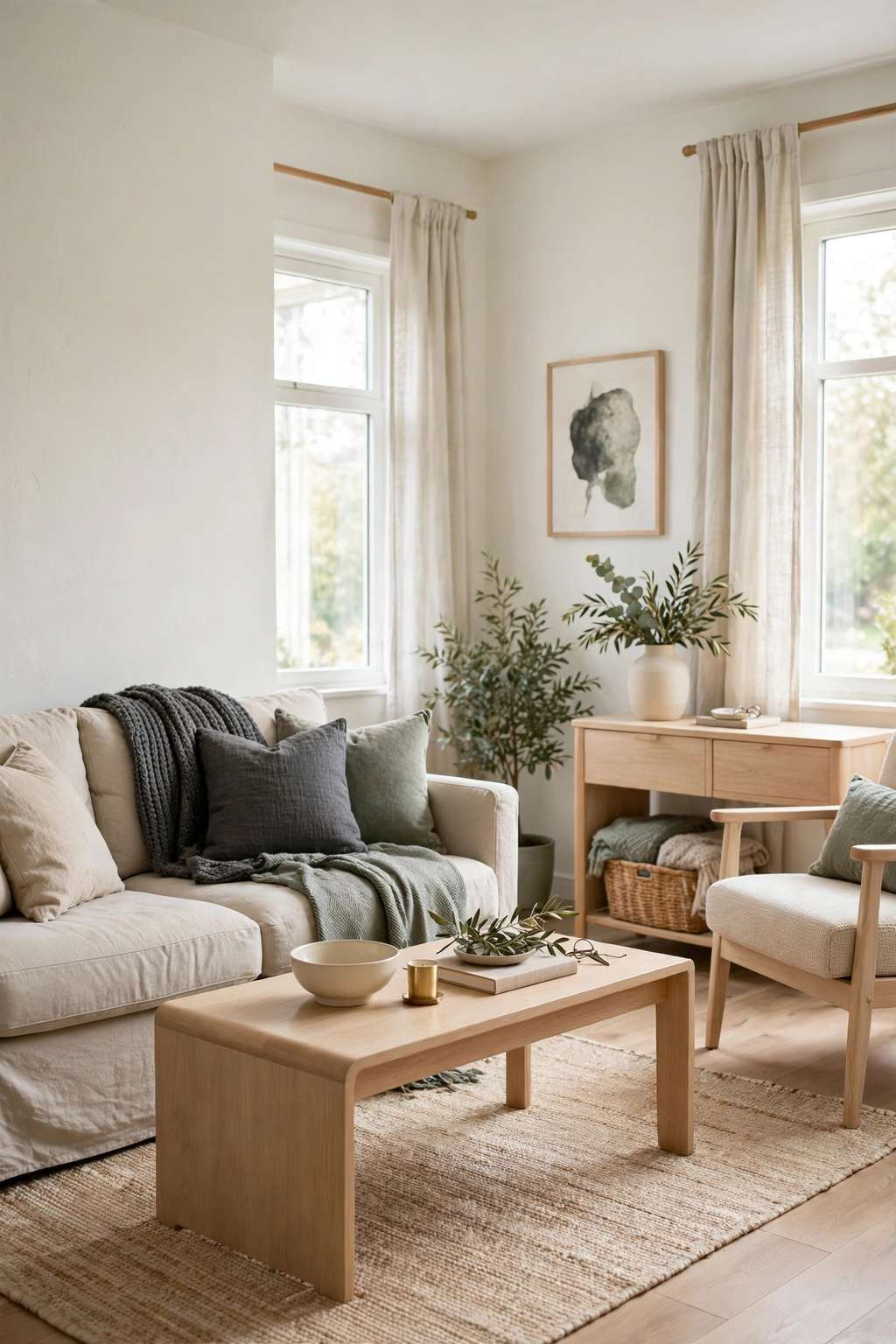
Creamy white walls, beige upholstery, pale oak furniture, and soft linen curtains create a bright, cohesive backdrop for a small apartment living room. These shades reflect natural light and reduce strong visual breaks, helping the space feel more open. Add subtle contrast through textured throws, warm wood, and a few charcoal or muted green accents so the room doesn’t look flat. This approach suits renters and homeowners who want a timeless design that is easy to update seasonally. These small living room ideas for apartments work especially well in a light, neutral palette.
Quick Win: Repeat two or three colors throughout your cushions, rug, and accessories instead of introducing a different shade in every corner.
3. Try a Round Coffee Table to Improve Flow
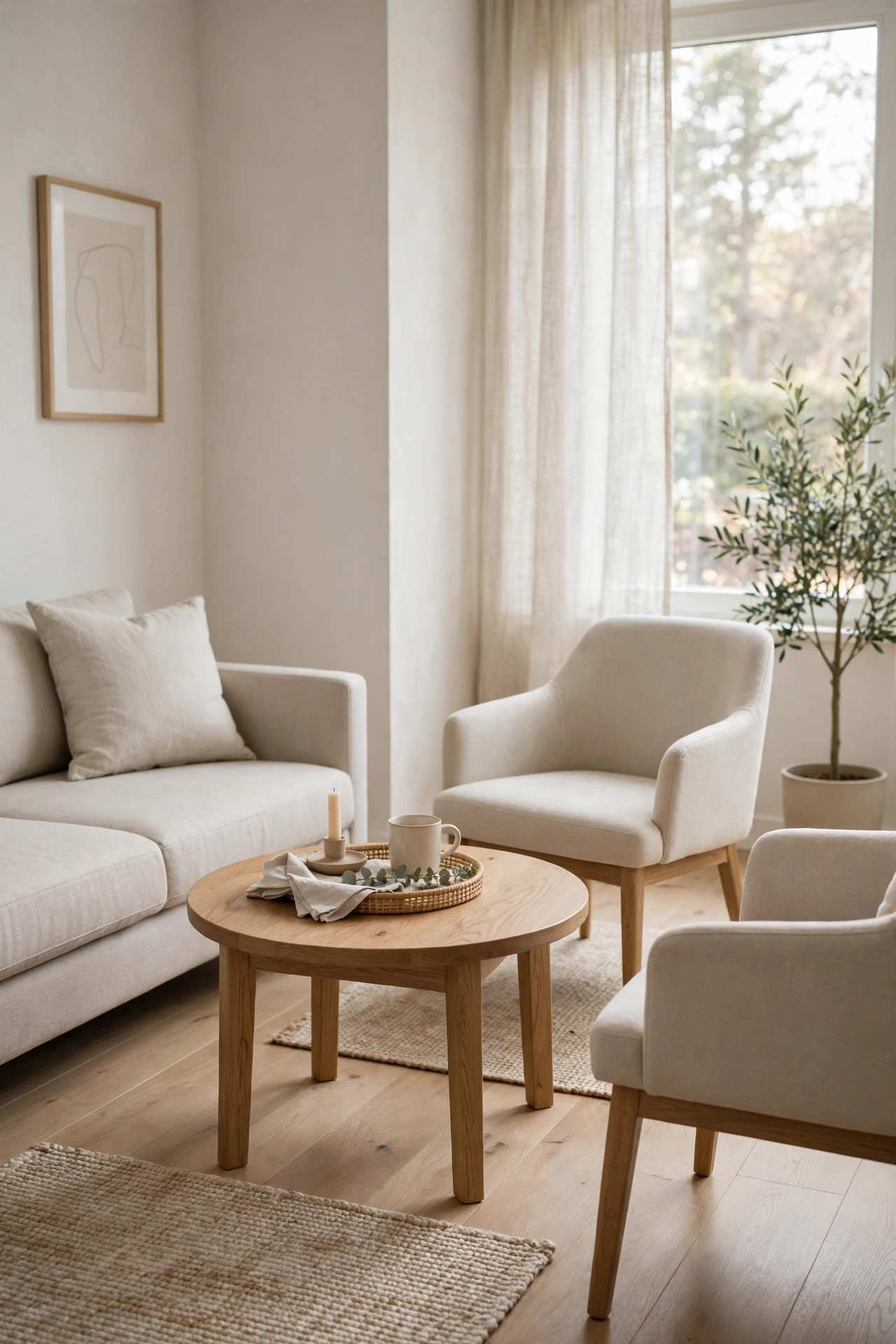
Sharp corners can make a tight seating area feel harder to navigate, especially when the coffee table sits close to the sofa.For a calmer color scheme, check out our guide on light blue couch living room ideas. A round coffee table creates a softer silhouette and makes it easier to move around the room. Choose a compact oak table, a nesting pair, or a small upholstered ottoman with a tray on top. Keep enough space for comfortable movement between furniture pieces, and avoid selecting a table so large that it dominates the seating area. A round table is one of the simplest small living room ideas for apartments to improve flow.
Quick Win: If your current coffee table feels oversized, try a smaller round table or move it slightly off-center to open the main walking path.
4. Make the Most of Vertical Wall Space
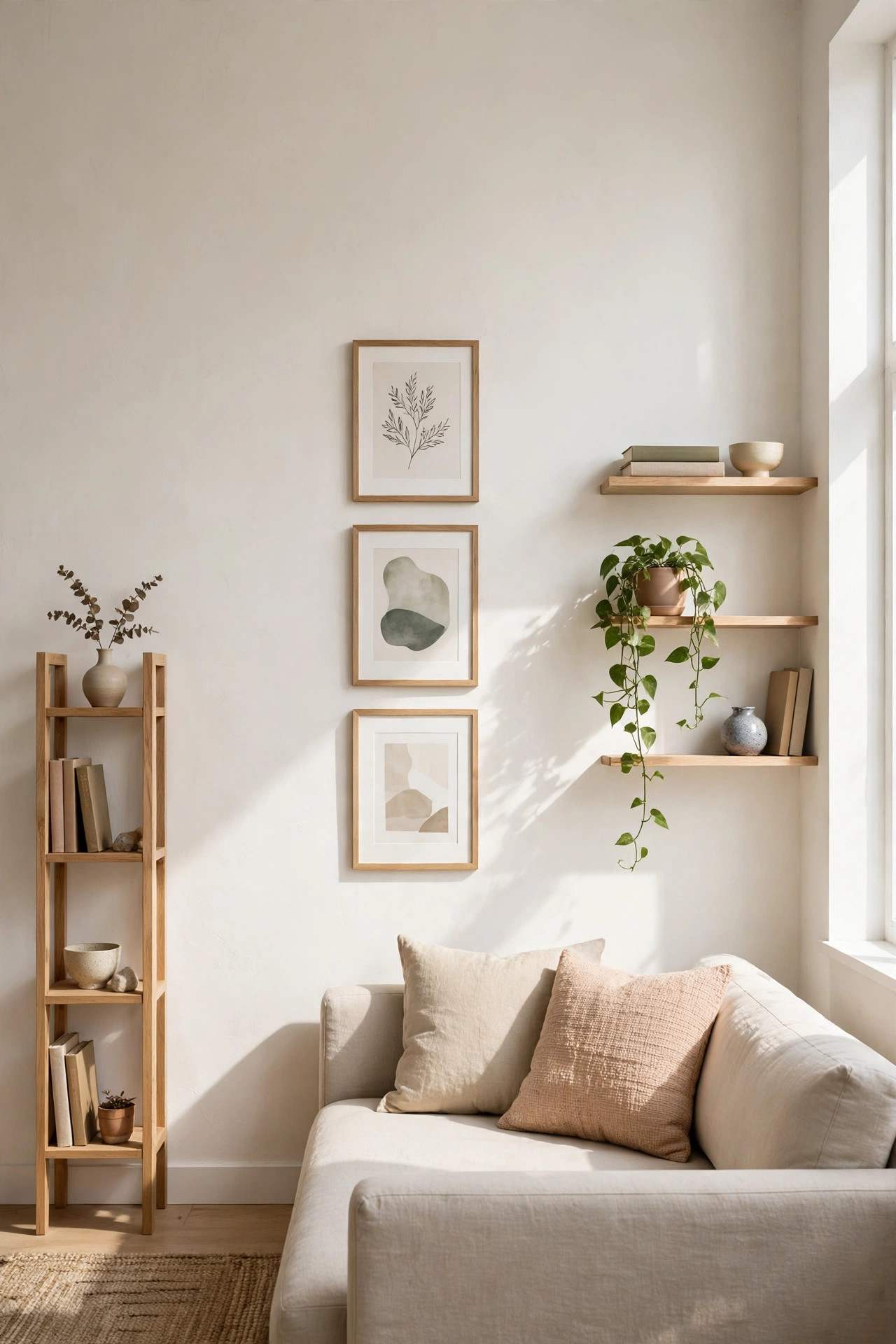
When floor space is limited, look upward. Slim floating shelves, vertically arranged artwork, and a narrow bookcase can add personality without taking up much room. Style shelves with a few books, small ceramics, and one trailing plant, leaving plenty of empty space around each object. A vertical arrangement also draws the eye upward, making the ceiling feel taller. This idea is especially useful in rental apartments, where removable shelves or carefully positioned wall art can provide character without a major renovation. These small living room ideas for apartments work best when you use height as well as floor space.
Quick Win: Arrange two or three framed prints vertically above a sofa to create height without adding another piece of furniture.
5. Create a Cozy Corner With an Accent Chair
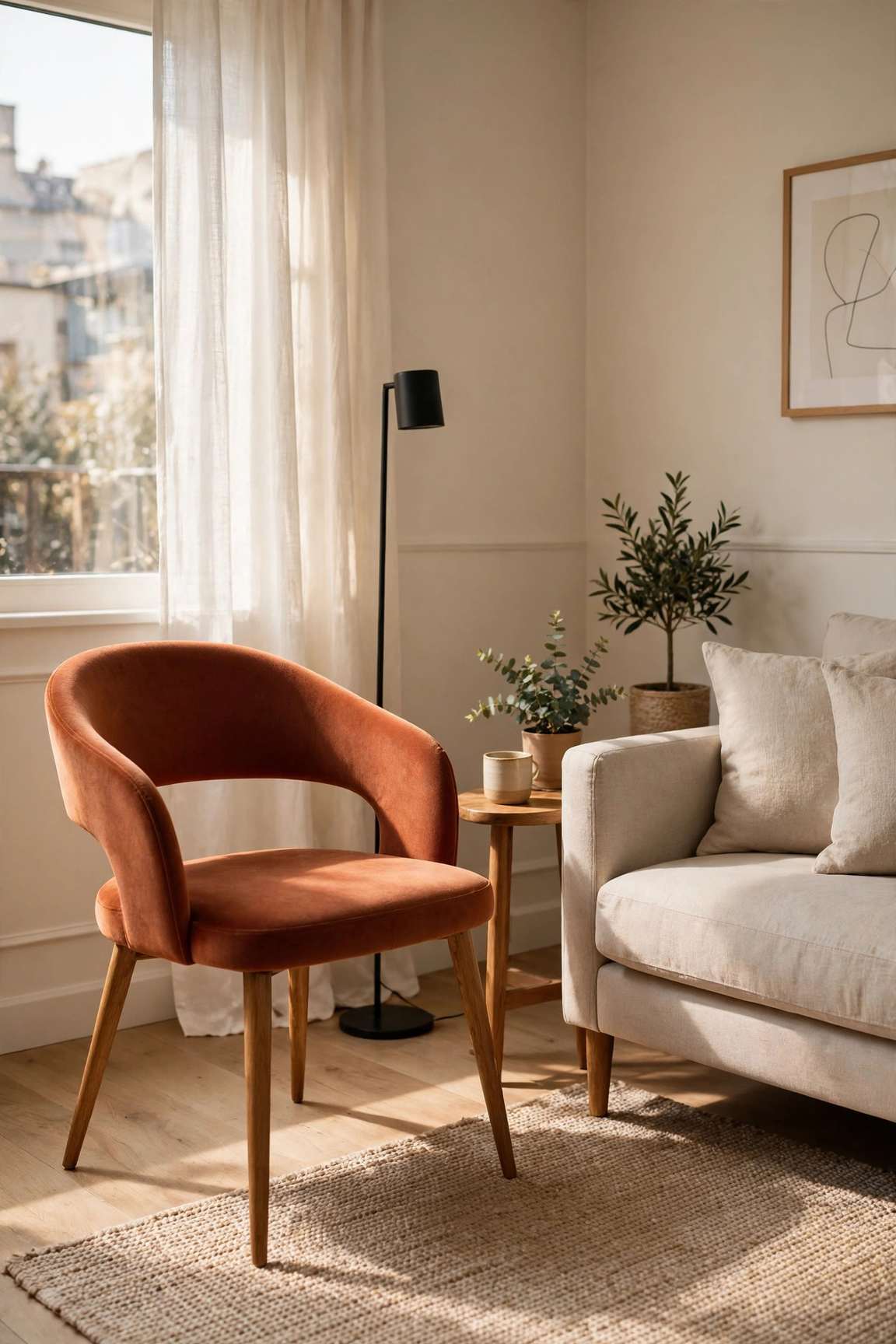
A small accent chair can make an apartment living room feel more complete without requiring a full matching furniture set. Try a rust, olive, or muted blue chair in an unused corner, paired with a slim floor lamp and a compact side table. Curved silhouettes soften a boxy room, while a different upholstery color adds depth to a neutral sofa. Choose an armless or open-frame design if space is tight, and keep the chair angled toward the main seating area to maintain a connected layout. It is one of the most practical small living room ideas for apartments with a reading corner.
This is a particularly practical solution for apartments where the living room doubles as a reading nook or a place to entertain guests.
6. Add a Large Rug to Define the Seating Area
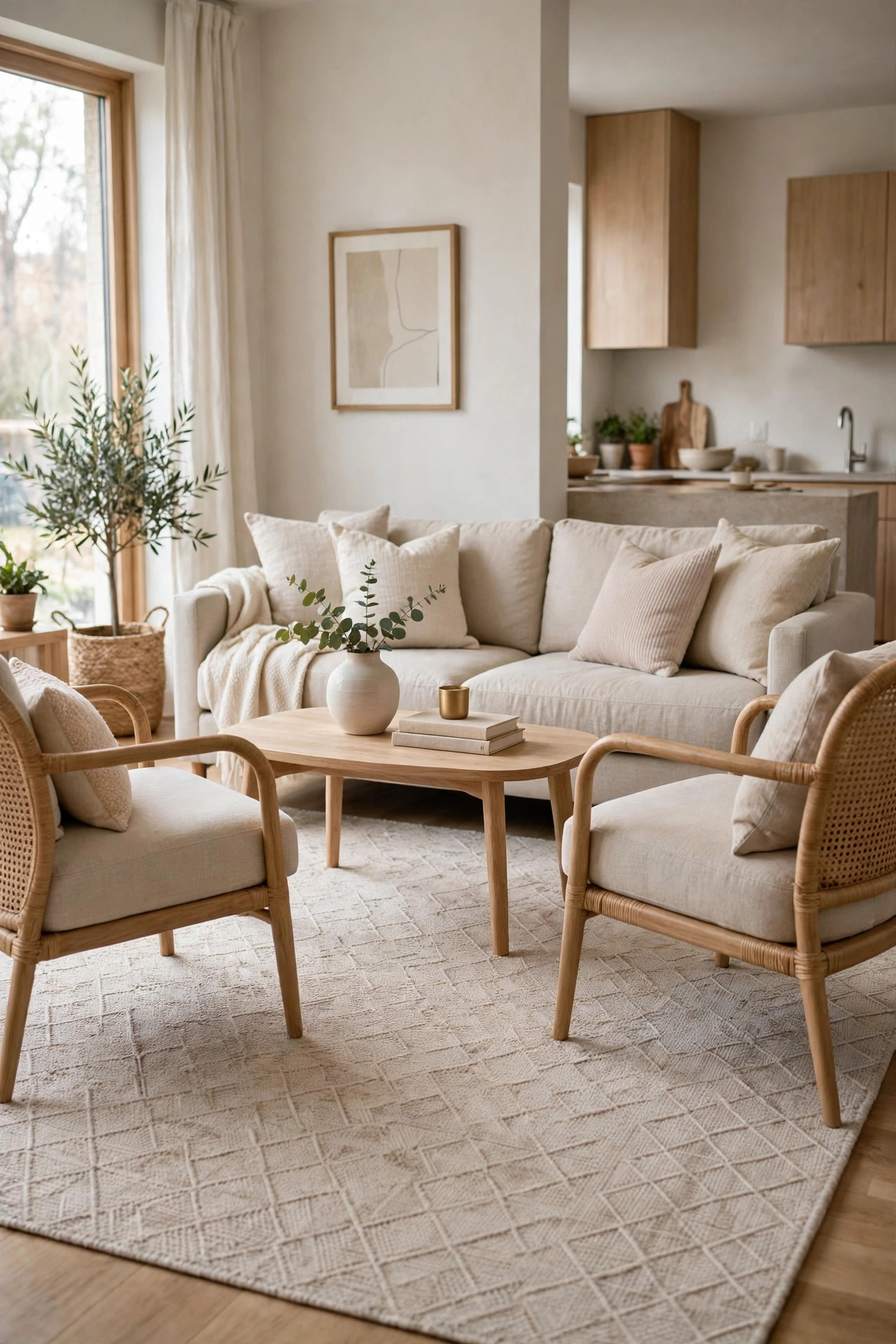
A well-sized rug helps separate the living area from a dining space, entryway, or kitchen in an open-plan apartment. Instead of using a tiny rug that floats in the middle of the room, choose one large enough for at least the front legs of the sofa and chairs to rest on it. A subtle stripe, low-contrast geometric pattern, or textured wool-look finish adds interest without overwhelming the space. The result feels more intentional and visually connected, even when the apartment has no clear architectural boundaries. These small living room ideas for apartments help define the seating area without a wall.
Quick Win: Use painter’s tape to outline your intended rug size on the floor before buying one. This makes it easier to judge proportions and walking space.
7. Choose Furniture With Hidden Storage
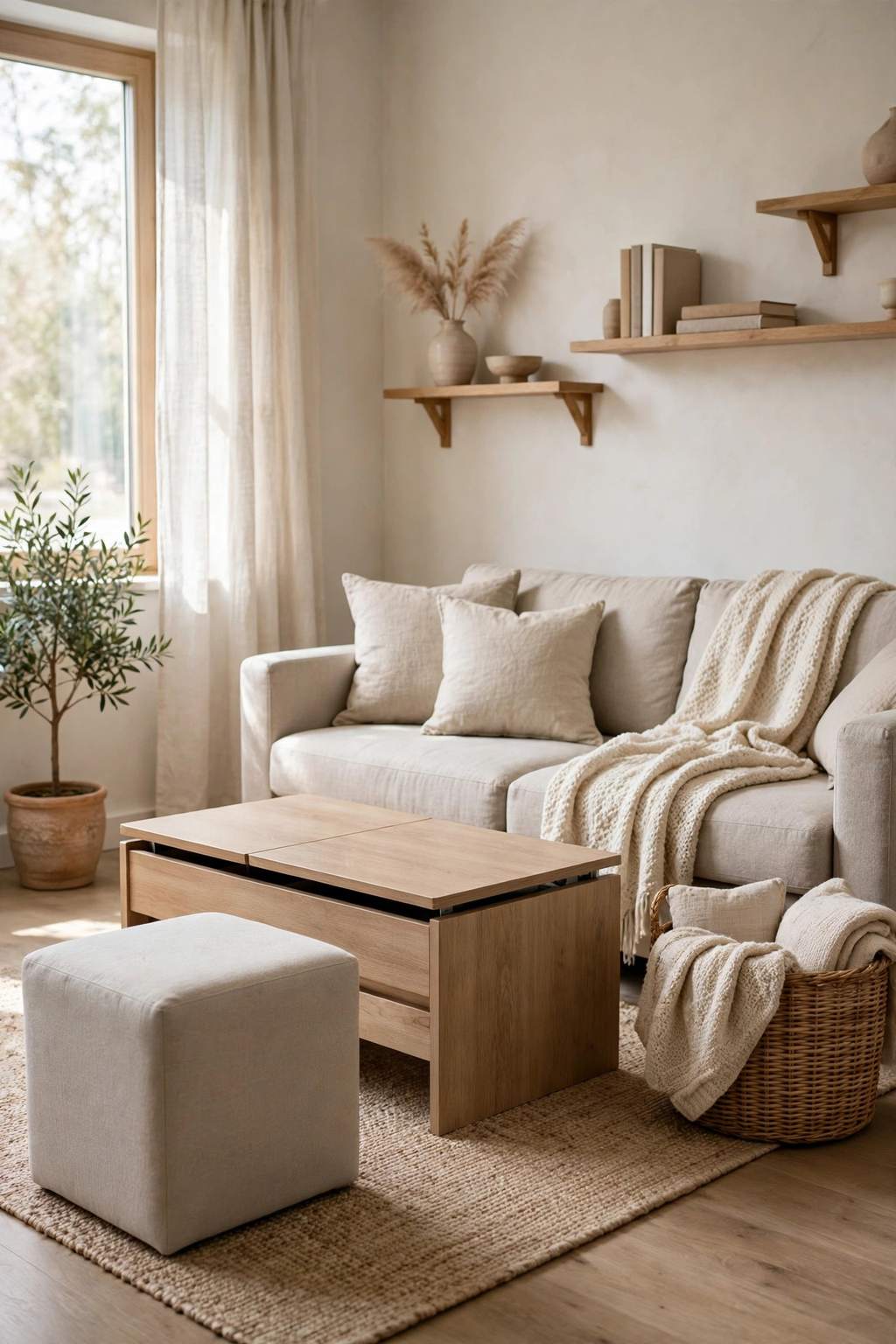
Storage furniture helps a small living room stay tidy without filling it with extra cabinets. A lift-top coffee table can hold remotes and magazines, while an upholstered storage ottoman hides blankets and spare cushions. For a softer, more relaxed look, use one or two woven baskets beside the sofa rather than scattering storage containers around the room. Choose furniture that serves a clear purpose and matches the room’s existing finishes. This approach works especially well for studio apartments where the living room also needs to accommodate everyday essentials. These small living room ideas for apartments keep storage useful without adding bulky cabinets.
Quick Win: Keep a storage basket beside the sofa for throws, chargers, and frequently used items so surfaces remain clear at the end of the day.
8. Hang Curtains High to Make the Ceiling Feel Taller
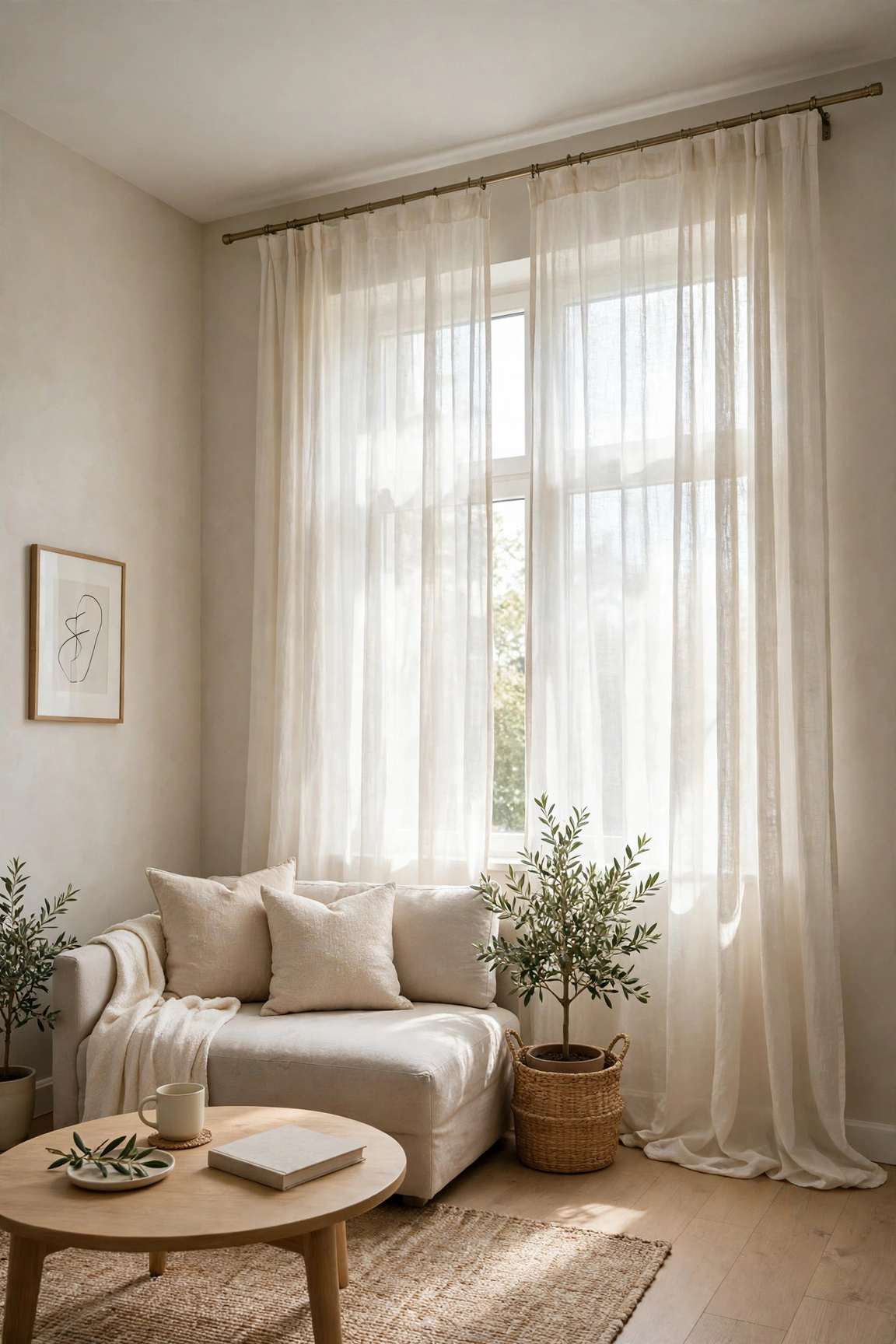
Curtain placement can change how tall a room appears. Mount the curtain rod closer to the ceiling rather than directly above the window frame, then choose panels that fall close to the floor. Sheer ivory or warm-white fabric allows daylight to filter through while giving the room a softer finish. If privacy is important, layer sheer panels with simple lined curtains. This technique is useful in apartments with low ceilings or modest windows, where a little visual height can make the entire room feel more spacious. These small living room ideas for apartments use height to make the ceiling feel taller.
Quick Win: Extend the curtain rod beyond both sides of the window so the panels can sit clear of the glass when open, allowing more daylight into the room.
9. Use Mirrors to Reflect Natural Light
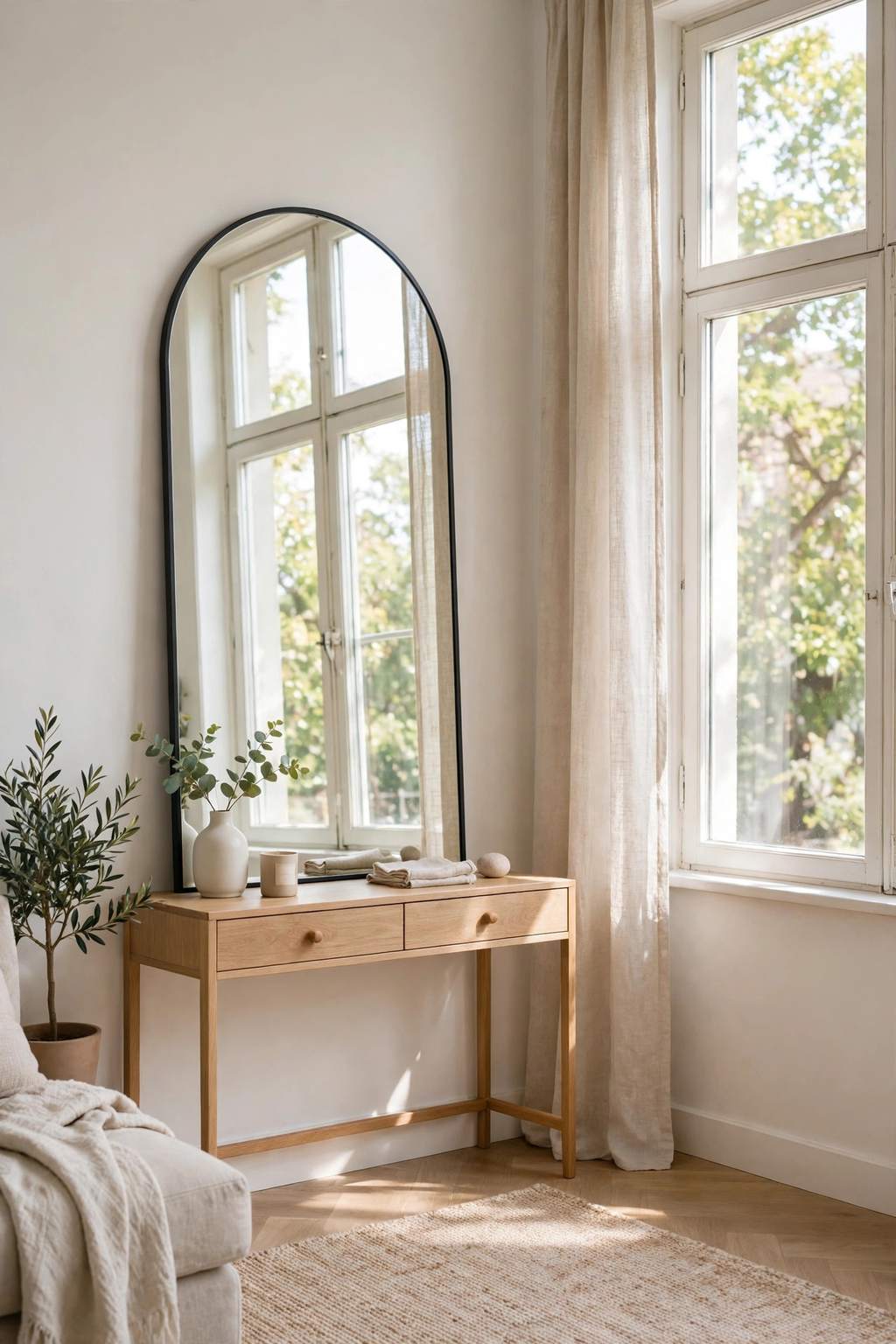
A strategically placed mirror can make a compact living room feel brighter by reflecting window light and creating a sense of depth. A tall arched mirror beside a window or a wide mirror above a slim console can work particularly well. Keep the surrounding decor simple so the reflection adds visual space rather than duplicating clutter. Mirrors are also useful in apartments with limited natural light, although their effect depends on what they reflect. Position one to capture a pleasant view or a bright section of the room. It is one of the easiest small living room ideas for apartments to add light.
Quick Win: Before hanging a mirror, stand where it will go and check what it reflects. Aim for a window, artwork, or uncluttered area rather than a crowded shelf.
10. Use a Slim Media Unit and Wall-Mounted TV
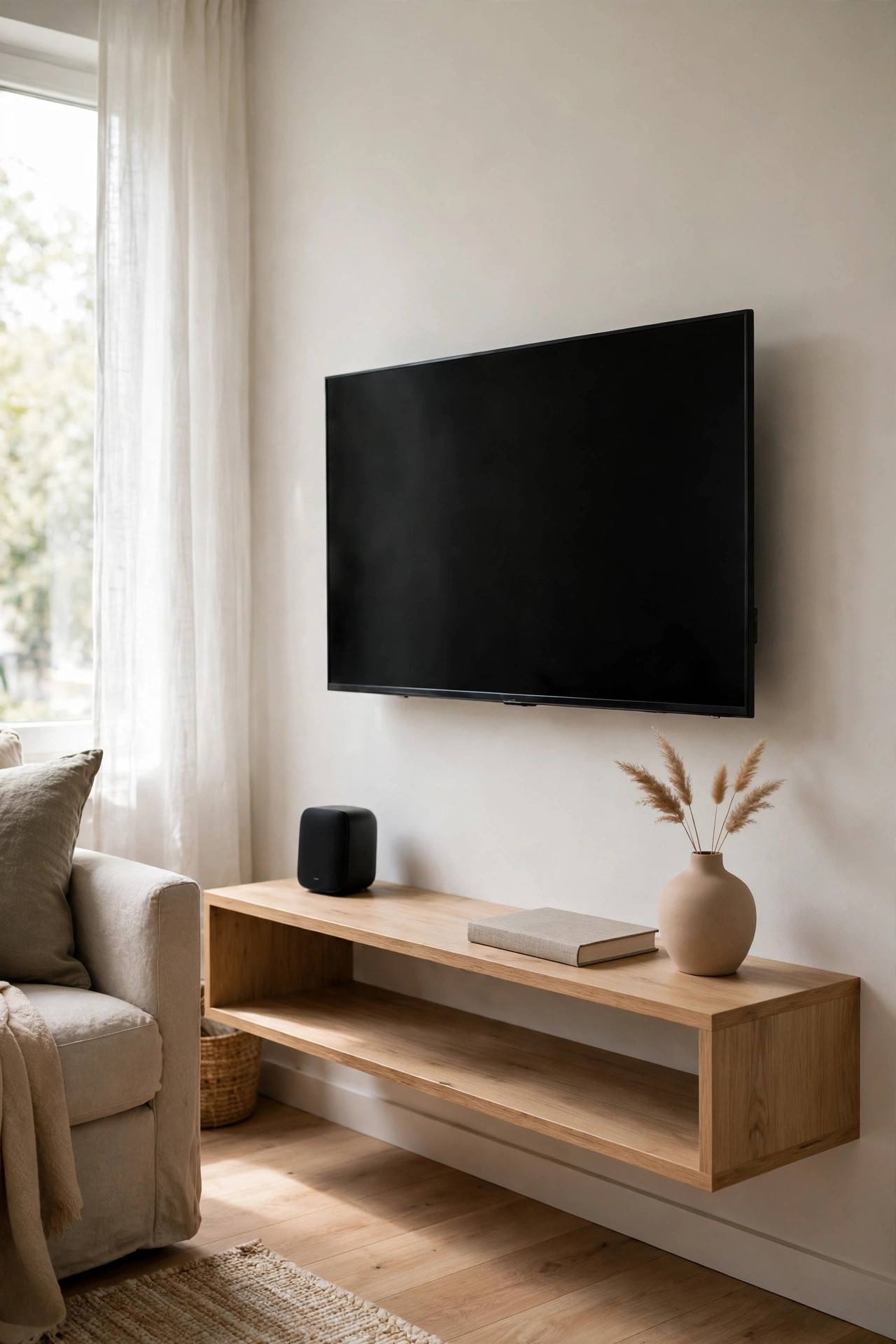
A deep entertainment cabinet can consume valuable floor space in a compact living room. A wall-mounted television paired with a shallow floating media unit creates a streamlined look and leaves more visible flooring underneath. Use the unit for a few essentials, such as a small speaker, a book, or a ceramic object, rather than filling every inch. Conceal cables where practical and check that the television is positioned at a comfortable viewing height. This arrangement is ideal for apartments where the living room also serves as the main entertainment area. It is one of the most practical small living room ideas for apartments with a compact layout.
Quick Win: Measure the depth of your existing media furniture and compare it with a slimmer alternative before replacing anything. Even a modest reduction can improve circulation.
Conclusion: Small Living Room Ideas for Apartments Worth Trying First
A small apartment living room can feel open, inviting, and full of personality when each design choice has a purpose. Start with the pieces that make the biggest difference, such as sofa size, furniture placement, lighting, and storage. Then bring in the colors, textures, and accessories that reflect your personal style. You don’t need to recreate all ten ideas at once. Choose a few that suit your layout and budget, and build a room that feels comfortable to live in every day.
Frequently Asked Questions
Use light colors, appropriately sized furniture, mirrors, and curtains mounted close to the ceiling. Keeping walkways clear and reducing visual clutter also helps the room feel more open.
A compact two-seat sofa or apartment-sized loveseat is often a good choice. Look for slim arms, raised legs, and proportions that leave enough space for a coffee table and comfortable movement.
Warm white, cream, light greige, and soft sage are versatile choices. You can introduce deeper shades through cushions, artwork, or an accent chair without making the entire room feel dark.
Start by identifying the main walking paths and the room’s focal point, such as a window or television. Place the sofa first, then arrange smaller pieces around it without blocking doors or natural light.
Yes, provided the sectional fits the room’s dimensions and doesn’t obstruct circulation. Measure the full length, depth, and chaise extension before purchasing, and compare it with a compact sofa and separate ottoman.
Round, nesting, and slim rectangular coffee tables are practical options. Choose one that provides enough surface space for everyday use without making the area between the sofa and other furniture difficult to navigate.
Choose multifunctional pieces such as storage ottomans, lift-top coffee tables, floating shelves, and narrow cabinets. Keep frequently used items accessible and store less attractive essentials behind closed doors.
Use removable wall hooks, freestanding mirrors, portable lighting, rugs, and cushions to personalize the room without permanent changes. Check your lease before drilling into walls or making other alterations.
Absolutely. Dark green, navy, charcoal, and chocolate brown can add depth and character when used thoughtfully. Balance them with lighter upholstery, reflective surfaces, and adequate lighting to keep the room comfortable.
Focus on cohesive colors, well-fitting curtains, layered lighting, and a few quality-looking textures. Rearranging existing furniture, hiding cables, and editing unnecessary accessories can make a noticeable difference without a large investment.
Ideally, the rug should extend beneath at least the front legs of the sofa and nearby chairs. This visually connects the seating arrangement and helps define the living area in an open-plan apartment.
Use shallow furniture, keep the main walkway unobstructed, and consider a sofa positioned along the longer wall when the layout permits. Mirrors, vertical artwork, and a carefully sized rug can also improve the room’s proportions.
Combine ambient lighting with task and accent lighting instead of relying on one overhead fixture. Floor lamps, table lamps, and wall lights create a more layered atmosphere without requiring additional floor space for bulky furniture.
Create subtle zones with a rug, consistent finishes, and a clearly defined seating arrangement. Repeat a few colors between the kitchen and living room to make the open-plan apartment feel connected rather than crowded.
Avoid oversized furniture, undersized rugs, blocked windows, excessive accessories, and furniture that interrupts walking paths. Measure before buying and prioritize pieces that meet your actual seating, storage, and everyday living needs.