
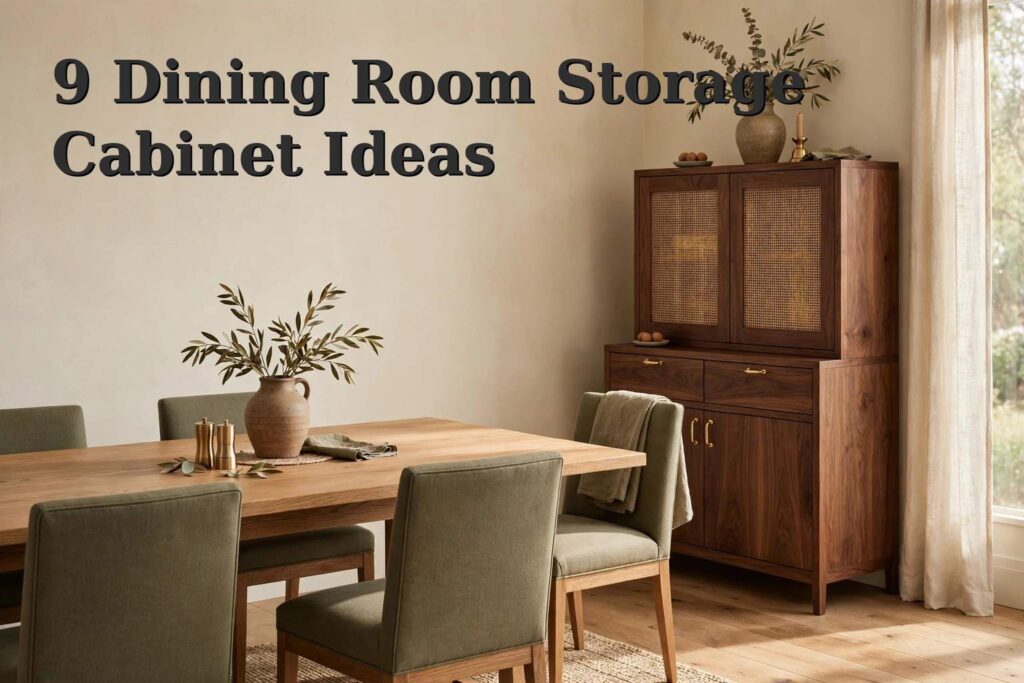
A dining room can look cluttered surprisingly quickly when serving dishes, table linens, glassware, and everyday essentials have nowhere to go. The right dining room storage cabinet solves that problem while making the space feel more considered and inviting. But choosing one isn’t just about finding extra shelves; the size, finish, shape, and styling can completely change how your dining area looks.
From sleek modern sideboards to character-filled vintage hutches, these ideas show how to combine practical storage with a polished interior. Whether you’re decorating a compact apartment or a spacious family dining room, there’s an approach that can make organization feel like part of the design. A well-chosen dining room storage cabinet keeps everyday essentials close at hand without adding visual clutter.
In This Article
- 1. Choose a Warm Wood Dining Room Storage Cabinet
- 2. Add a Sleek Modern Dining Room Sideboard
- 3. Display Dinnerware in a Glass-Front Cabinet
- 4. Make a Small Dining Room Work with a Compact Cabinet
- 5. Bring Character with a Vintage Dining Room Hutch
- 6. Create a Refined Look with a Fluted Cabinet
- 7. Use a Two-Tone Cabinet for Visual Contrast
- 8. Add a Dining Room Cabinet with Built-In Wine Storage
- 9. Extend Storage with a Cabinet and Open Shelving
- Conclusion
- Frequently Asked Questions
- Related Articles
1. Choose a Warm Wood Dining Room Storage Cabinet
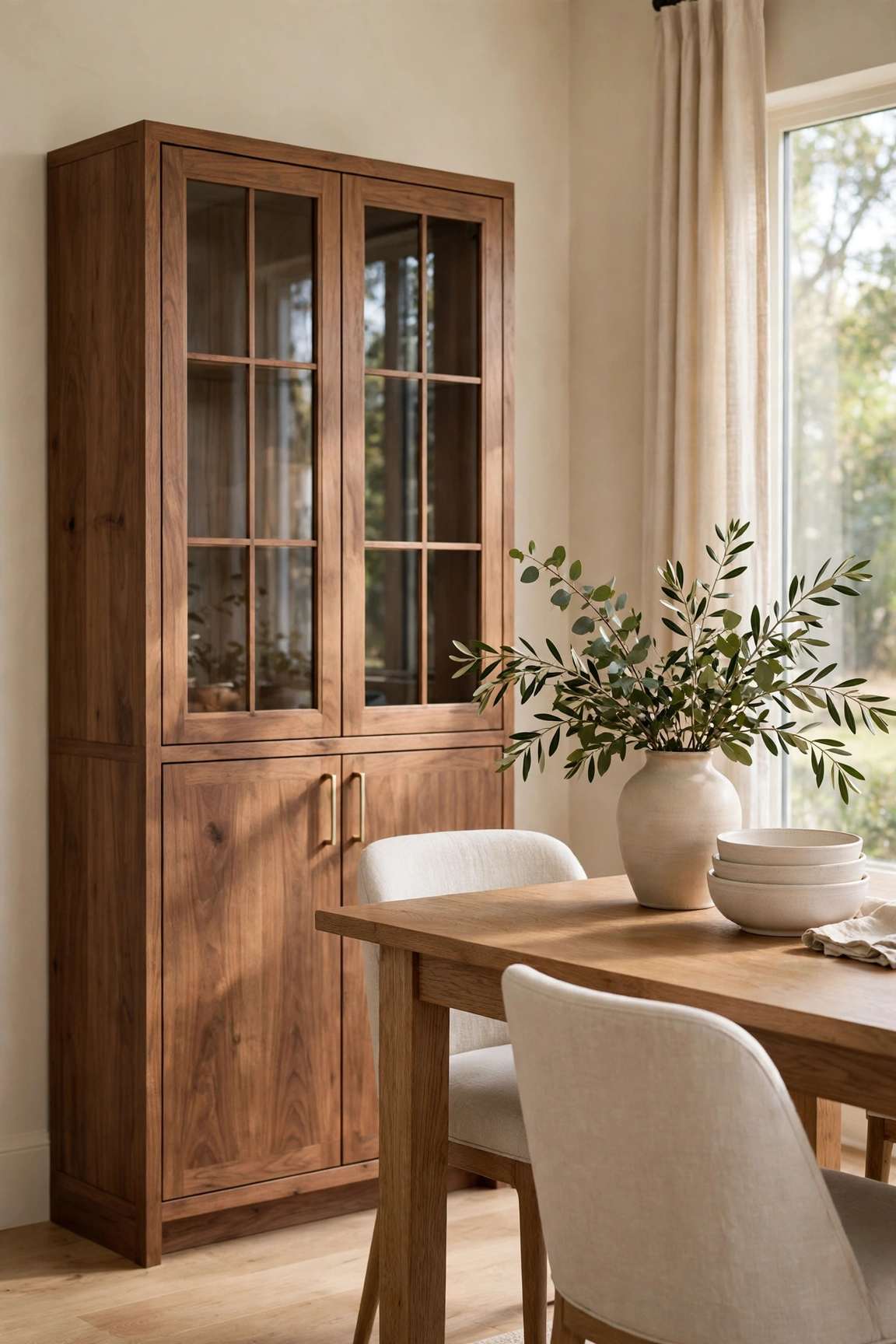
A walnut or medium-oak dining room storage cabinet adds natural warmth and makes a dining space feel grounded. Pair it with creamy walls, linen dining chairs, and simple ceramic accessories to create a relaxed, timeless look. Choose a cabinet with closed doors for table linens and serving dishes, plus drawers for smaller essentials. A low, elongated sideboard works particularly well along an empty dining room wall without making the furniture feel too imposing.
Quick Win: Style the cabinet with one ceramic vase, a small stack of books, and a framed artwork leaning against the wall for an effortlessly collected look.
2. Add a Sleek Modern Dining Room Sideboard

For a contemporary dining room, choose a long, low storage cabinet with flat-front doors and minimal hardware. Matte black, charcoal, or warm greige finishes create a streamlined appearance, especially when paired with a simple dining table and sculptural pendant lighting. Keep the cabinet top relatively clear so its clean silhouette stands out. This style suits modern apartments and open-plan homes where too many decorative details can make the dining area feel visually busy.
3. Display Dinnerware in a Glass-Front Cabinet
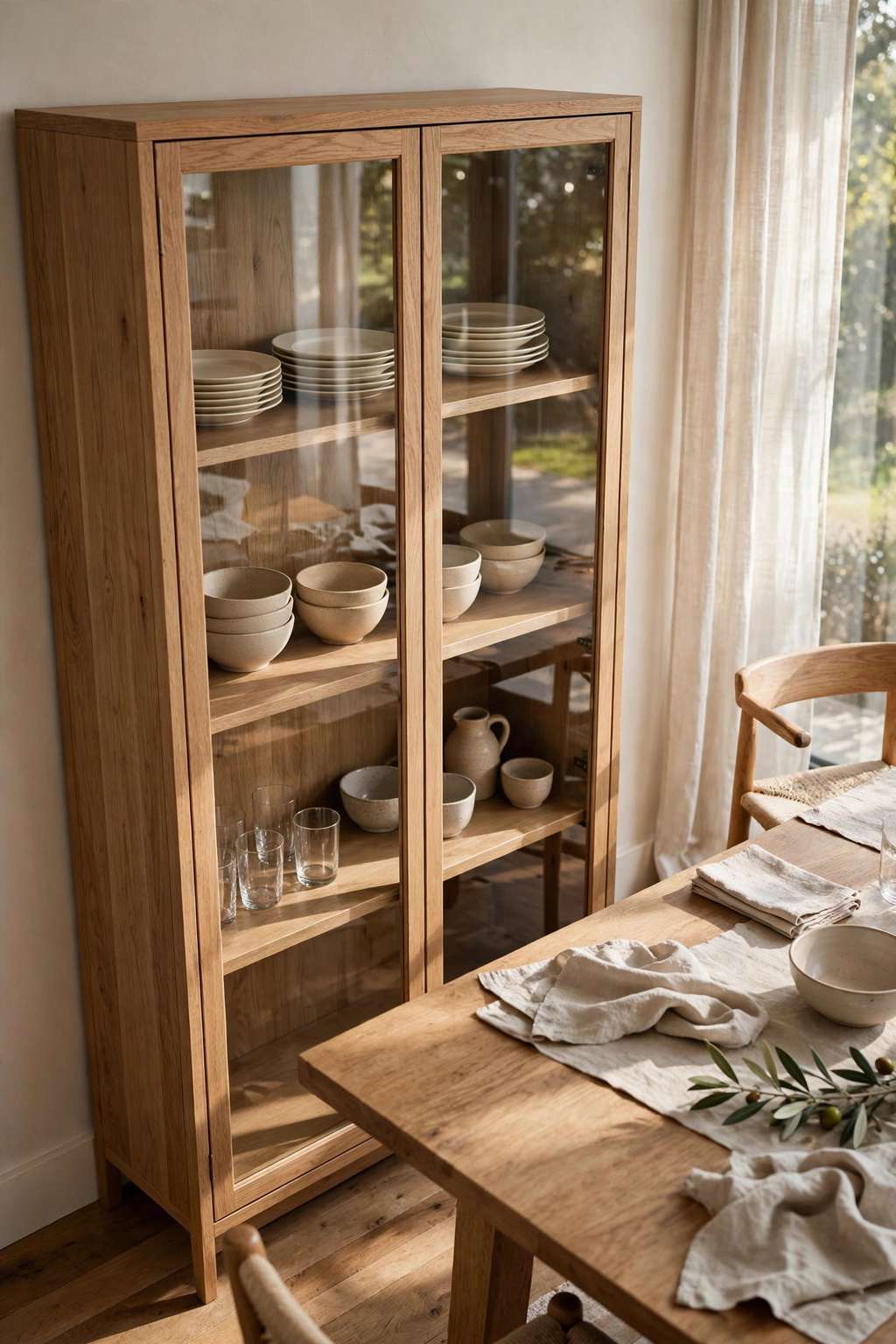
A glass-front dining room cabinet gives everyday dinnerware a decorative role without leaving everything exposed. Look for clear glass doors, slim wood framing, and adjustable shelves that accommodate plates, bowls, and drinking glasses. Group similar pieces together and leave some breathing room between stacks to avoid a crowded appearance. This option works especially well for people who enjoy collecting ceramics or want a lighter alternative to a large, solid-front cabinet.
Quick Win: Arrange dinnerware by color and size, keeping frequently used pieces on the middle shelves for easy access.
4. Make a Small Dining Room Work with a Compact Cabinet
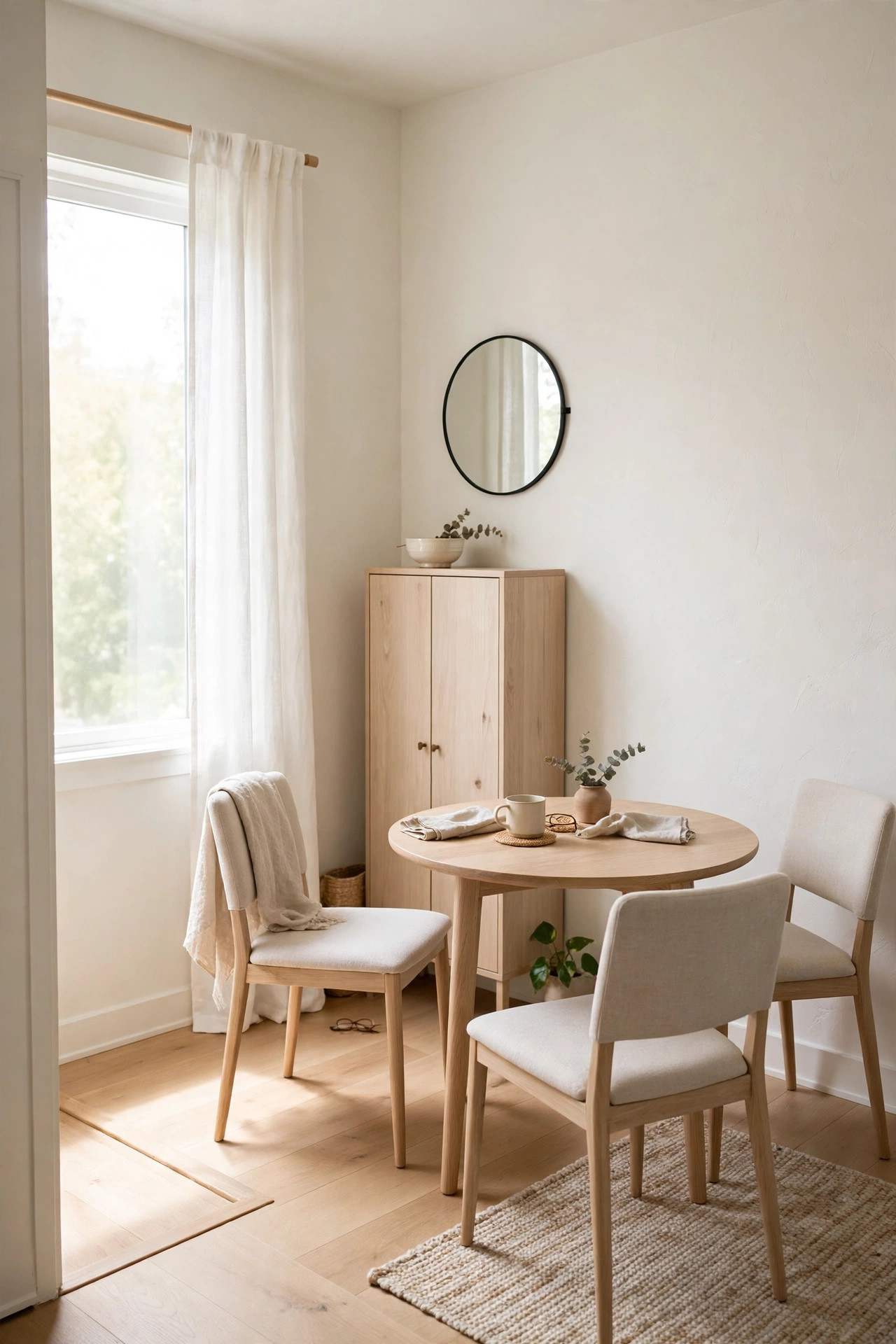
In a small dining area, a cabinet with a narrow depth and a compact footprint can provide useful storage without obstructing movement. Choose a light oak, soft white, or pale greige finish to keep the furniture from visually overwhelming the room. Position it against a wall near the dining table, and measure door swings and walking paths before buying. Adjustable shelves help maximize the interior while keeping tableware, placemats, and napkins organized. A slim dining room storage cabinet is often the best fit here, giving you real storage without crowding the table.
Quick Win: Measure the available wall width, cabinet depth, and clearance around dining chairs before shopping. A few centimeters can make a noticeable difference in a tight layout.
5. Bring Character with a Vintage Dining Room Hutch
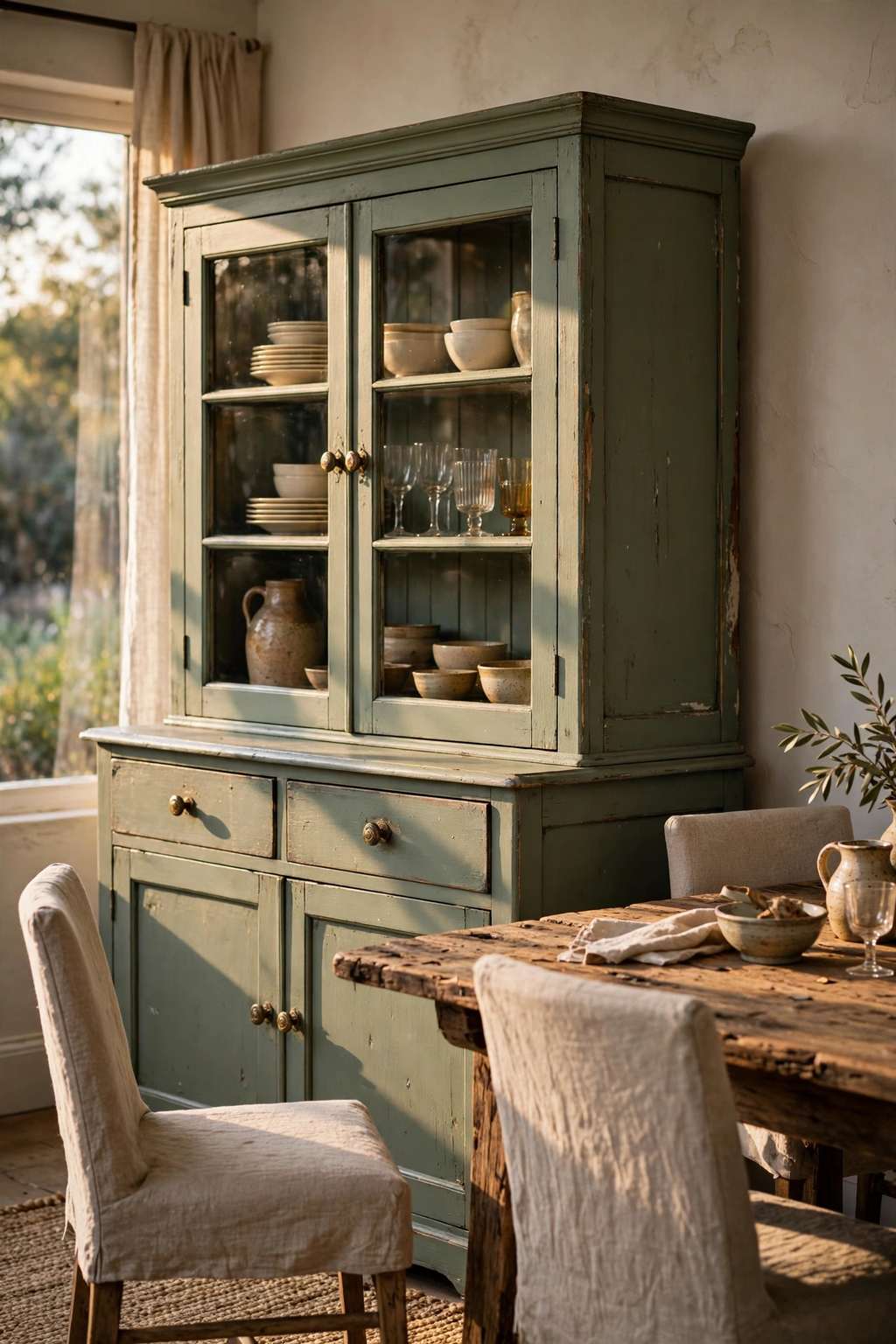
A vintage hutch brings personality to a dining room that feels too new or uniform. Look for gently aged wood, painted sage green, muted blue, or a warm cream finish, with a combination of drawers and display shelves. Use the lower section for linens and serving pieces, then reserve the upper shelves for plates, glassware, and a few treasured objects. The contrast between an older cabinet and simpler contemporary furniture creates a layered, collected look.
6. Create a Refined Look with a Fluted Cabinet

Fluted cabinet doors add texture and architectural interest without relying on bold colors or ornate decoration. A natural-oak finish feels warm and contemporary, while dark walnut creates a richer, more dramatic effect. Pair the cabinet with a rounded mirror, a sculptural vase, or a simple artwork to complement the vertical detailing. This style is particularly effective in modern dining rooms that need a distinctive focal point without adding visual clutter.
7. Use a Two-Tone Cabinet for Visual Contrast
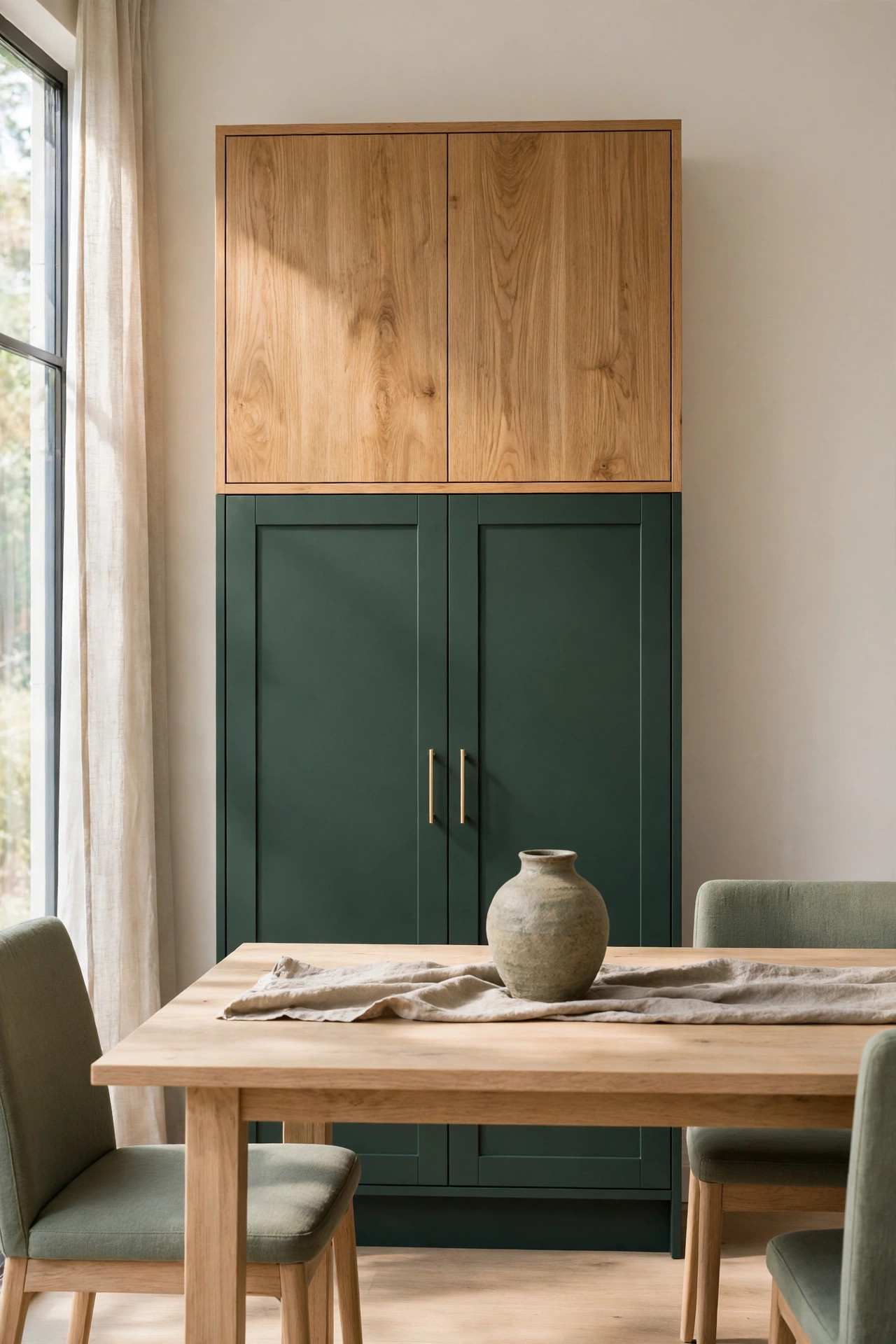
A two-tone dining room cabinet makes a stronger statement while keeping the palette controlled. Try natural wood paired with deep forest green, warm white with walnut, or charcoal with pale oak. The darker finish can ground the room, while the lighter section prevents the overall look from feeling heavy. Repeat one of the cabinet colors in your dining chairs, artwork, or table accessories to create a coordinated appearance without matching every piece.
8. Add a Dining Room Cabinet with Built-In Wine Storage
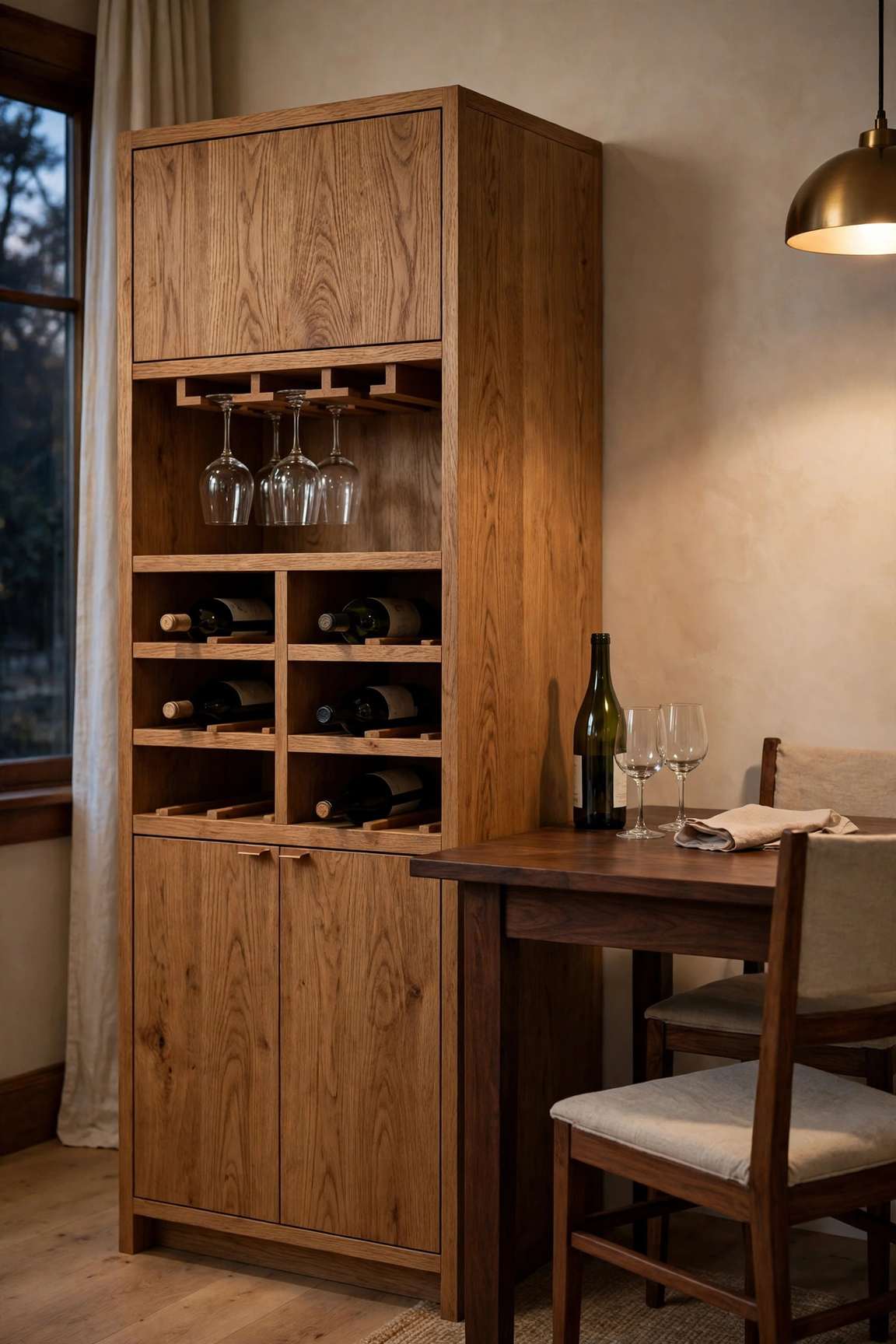
If you regularly host dinners, a storage cabinet with dedicated bottle cubbies and glassware shelves can make entertaining more organized. Look for a design that combines enclosed cupboards with a small open section for bottles or stemware. Keep the display intentional rather than filling every compartment. A warm wood finish, subtle metal details, and soft pendant lighting help the cabinet feel like a natural part of the dining room rather than a separate bar unit.
Quick Win: Group wine glasses together and store serving tools in a nearby drawer so everything you need for hosting stays in one place.
9. Extend Storage with a Cabinet and Open Shelving
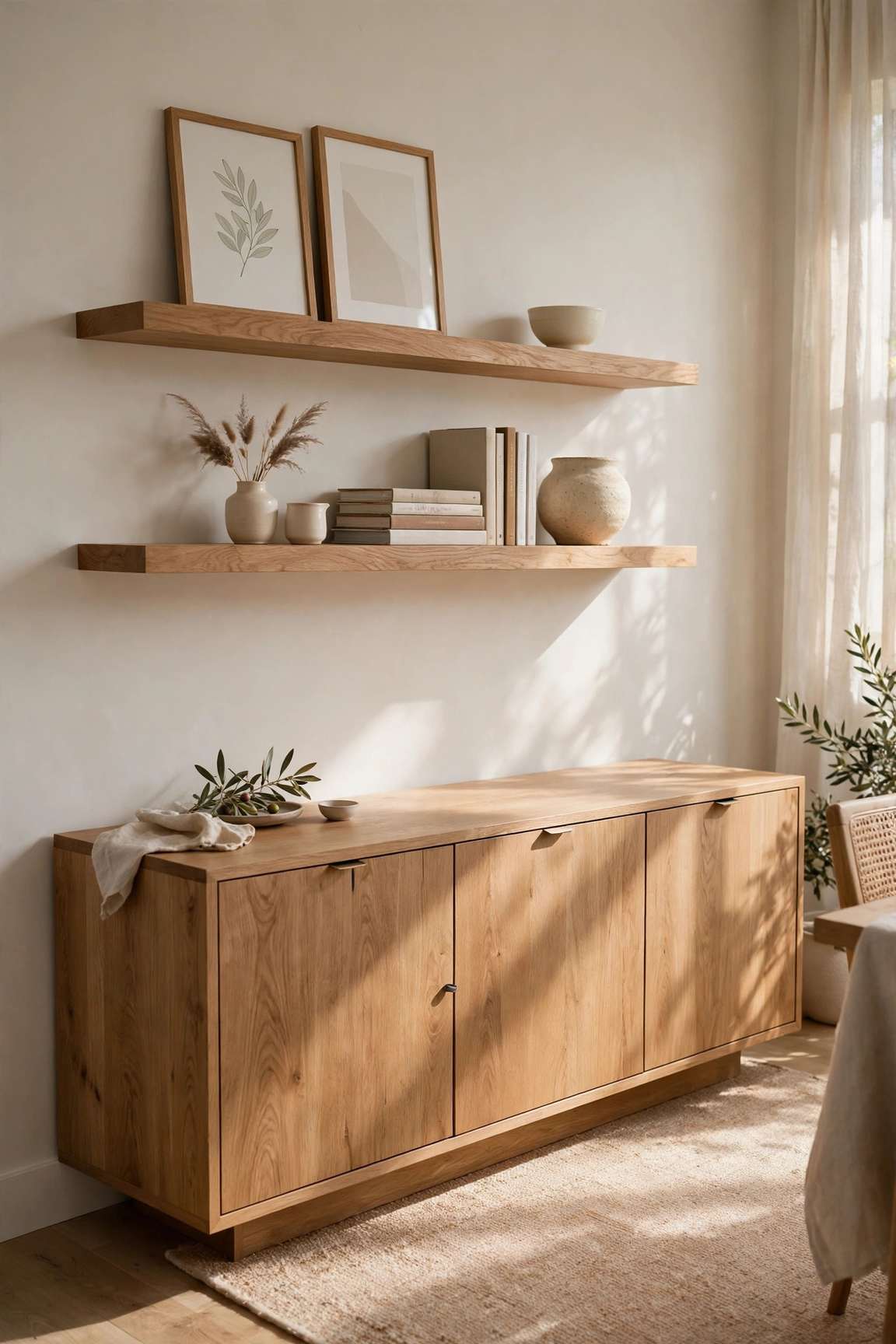
Combining a closed storage cabinet with a few floating shelves creates a useful balance between concealed storage and display space. Keep table linens, serving pieces, and less attractive essentials behind cabinet doors, then use the shelves for ceramics, framed artwork, and a small collection of books. Choose shelves that complement the cabinet finish and leave enough space above the surface for everyday use. This arrangement works particularly well when a dining room has a large, empty wall that needs purpose.
Quick Win: Before installing shelves, lay out the objects on a table to test the spacing and arrangement. This helps you avoid unnecessary holes and overcrowded displays.
Conclusion
The right dining room storage cabinet can make everyday organization easier while giving your dining area a more finished appearance. Start with the storage you genuinely need, then choose a cabinet style that complements your existing table, chairs, and wall colors. You don’t need to redesign the entire room to create a noticeable change. A thoughtful finish, practical layout, and a few carefully chosen accessories can make the space feel more welcoming and distinctly yours.
Frequently Asked Questions
A sideboard is a versatile choice because it offers concealed storage and a surface for serving dishes or decor. A hutch works well if you also want to display dinnerware.
Store plates, serving bowls, table linens, placemats, cutlery, candles, and entertaining accessories. Keep frequently used items within easy reach and reserve higher shelves for occasional-use pieces.
The terms are often used interchangeably for low dining room storage furniture. Traditionally, buffets are associated with serving food, while sideboards are used for both storage and display.
Look for a compact cabinet with a shallow depth, practical shelves, and a finish that complements your walls. Measure the space and check chair clearance before purchasing.
No. Coordinating wood undertones or repeating a color can create cohesion without matching everything exactly. Contrasting finishes can also make the room feel more layered and individual.
Start with one larger object, such as a ceramic vase or lamp, and add one or two smaller pieces. Leave some empty space so the surface stays functional and visually balanced.
Yes, especially for dinnerware and glassware you want to access regularly. However, glass doors reveal the contents, so consistent arrangement and occasional cleaning help maintain their appearance.
Natural oak, walnut, warm white, charcoal, sage green, and deep forest green are versatile choices. Select a shade that works with the room’s lighting, flooring, and existing furniture.
Allow enough room for cabinet doors and drawers to open fully without hitting chairs or other furniture. As a practical starting point, aim for roughly 30–36 inches of clear circulation space where the layout permits, adjusting to your room’s needs.
Absolutely. A vintage cabinet can add warmth and character to a contemporary space. Keep nearby furniture relatively simple so the older piece remains a deliberate focal point.
Choose simple hardware, style the top sparingly, and coordinate the cabinet with quality-looking textiles and lighting. Replacing basic knobs can also make a noticeable difference.
Open shelving is useful for displaying attractive dinnerware, but it requires more frequent dusting and tidier arrangements. Closed cabinets are better for hiding clutter and storing less frequently used essentials.
Yes. Choose a cabinet with a sturdy, easy-to-clean surface and storage for cups, glasses, and accessories. Make sure any electrical appliances can be used safely with suitable outlets and clearance.
Solid wood and quality wood veneer offer attractive finishes, while well-made engineered wood can be a more affordable option. Check construction quality, door alignment, shelf strength, and hardware before buying.
Group similar objects together, limit decorative accessories, and keep everyday items inside cupboards or drawers. Leave visible gaps between displayed pieces to make the arrangement feel intentional.