

A dining area can feel cramped when chairs crowd the table, yet an ordinary dining set may lack the warmth and character you want. A dining table with bench seating offers a practical alternative, creating a more relaxed setting for family meals, casual breakfasts, and entertaining friends. The right combination can make a small dining room feel more open or give a spacious kitchen that inviting, collected look. From rustic farmhouse furniture to sleek contemporary designs, these eight ideas show how to choose the right materials, arrange seating comfortably, and style your table so it feels intentional rather than crowded.
In This Article
- 1. Warm Oak Dining Table With a Matching Bench
- 2. Farmhouse Dining Table With a Rustic Bench
- 3. A Space-Saving Dining Table With Bench for Small Rooms
- 4. Modern Black Dining Table With a Wood Bench
- 5. Upholstered Bench Seating for Extra Comfort
- 6. Built-In Dining Bench in a Cozy Breakfast Nook
- 7. Round Dining Table With a Curved Bench
- 8. Extendable Dining Table With a Flexible Bench
- How to Style a Dining Table With Bench Seating
- Conclusion
- Frequently Asked Questions
- Related Articles
1. Warm Oak Dining Table With a Matching Bench

A matching oak dining table and bench create a cohesive look without making the room feel overly formal. The natural grain brings warmth, while cream walls, soft linen cushions, and a simple ceramic vase keep the setting fresh. Position the bench along one side of the table and use individual chairs on the opposite side for a balanced arrangement. This combination works particularly well in Scandinavian, contemporary, and neutral dining rooms where natural materials take center stage. A dining table with bench in matching oak keeps the look calm and unified.
Quick Win: Add two oatmeal-colored seat cushions and a small vase of seasonal greenery to soften the wood without hiding its texture.
2. Farmhouse Dining Table With a Rustic Bench
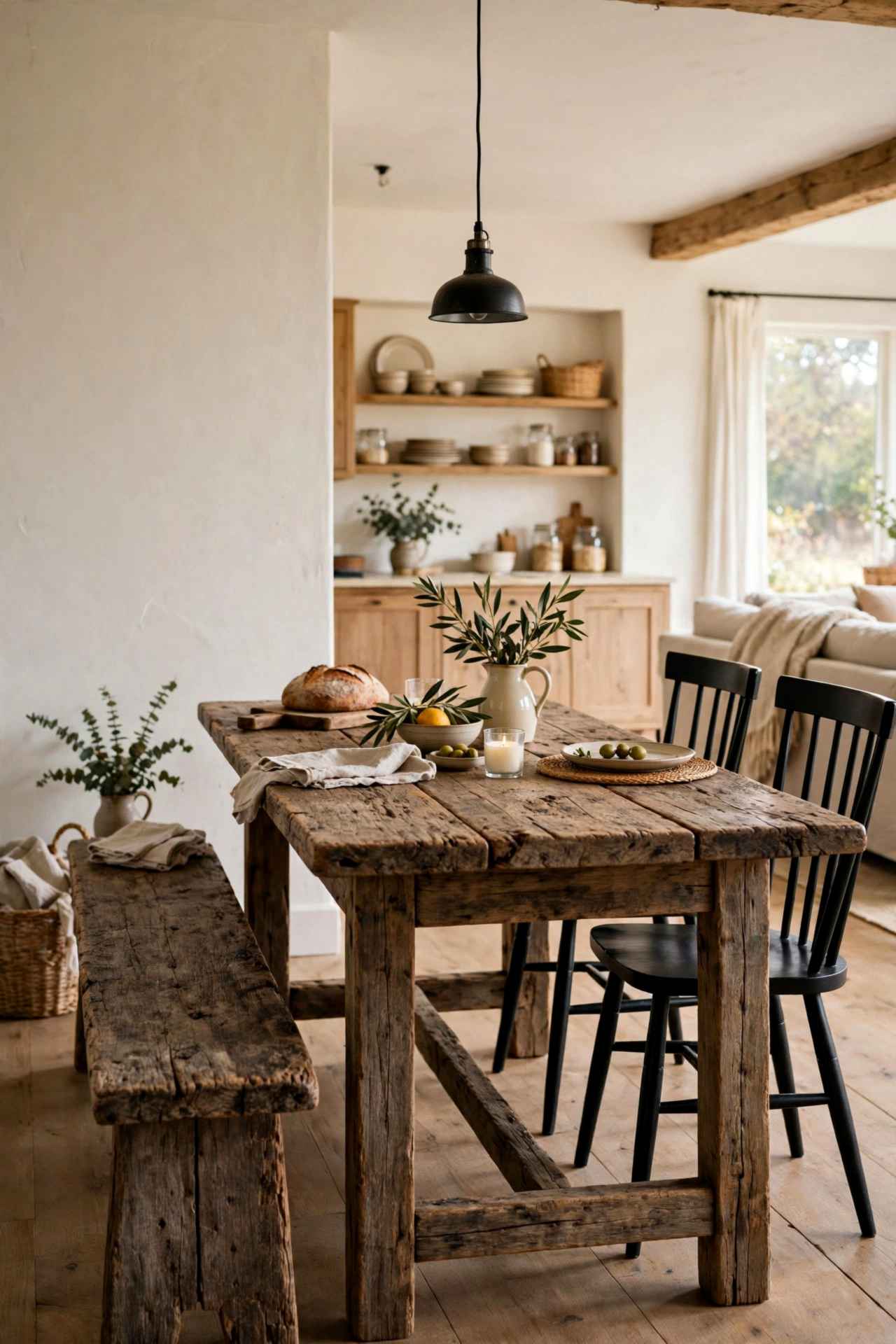
For a relaxed country-inspired dining room, choose a substantial timber table with a slightly weathered finish and a sturdy matching bench. Pair it with black spindle-back chairs, warm white walls, and a simple metal or woven pendant light. The mix of rugged wood and refined details keeps the space from looking too rustic. This style is especially appealing in open-plan kitchens, farmhouse homes, and family dining areas that need durable everyday furniture.
Quick Win: If replacing the furniture isn’t an option, try a reclaimed-wood bench with your existing dining table for a similar farmhouse effect.
3. A Space-Saving Dining Table With Bench for Small Rooms

When every inch matters, a narrow dining table and a bench that slides completely underneath can free up valuable floor space. Choose slim legs, a light wood finish, and chairs with a small footprint to keep the arrangement visually open. A wall mirror or a simple pendant can add depth without introducing clutter. This arrangement suits apartments, narrow dining rooms, and kitchen corners where bulky pieces would otherwise block movement. A dining table with bench that tucks away completely is ideal for a small apartment.
Quick Win: Measure the table’s full depth and the bench’s tucked-in position before buying, ensuring the walkway stays clear when the dining area isn’t in use.
4. Modern Black Dining Table With a Wood Bench

A matte-black dining table paired with a walnut or natural oak bench creates contrast that feels modern but not cold. Let the darker table ground the room, then balance it with warm wood, off-white walls, and understated lighting. Black metal legs or a streamlined pedestal base reinforce the contemporary look without adding visual bulk. This combination suits modern apartments, industrial-inspired interiors, and homes that need a stronger focal point without relying on bold wall colors.
Quick Win: Repeat black in just two or three small details, such as a pendant light, picture frame, or cabinet handle, to make the furniture feel connected to the rest of the room.
5. Upholstered Bench Seating for Extra Comfort
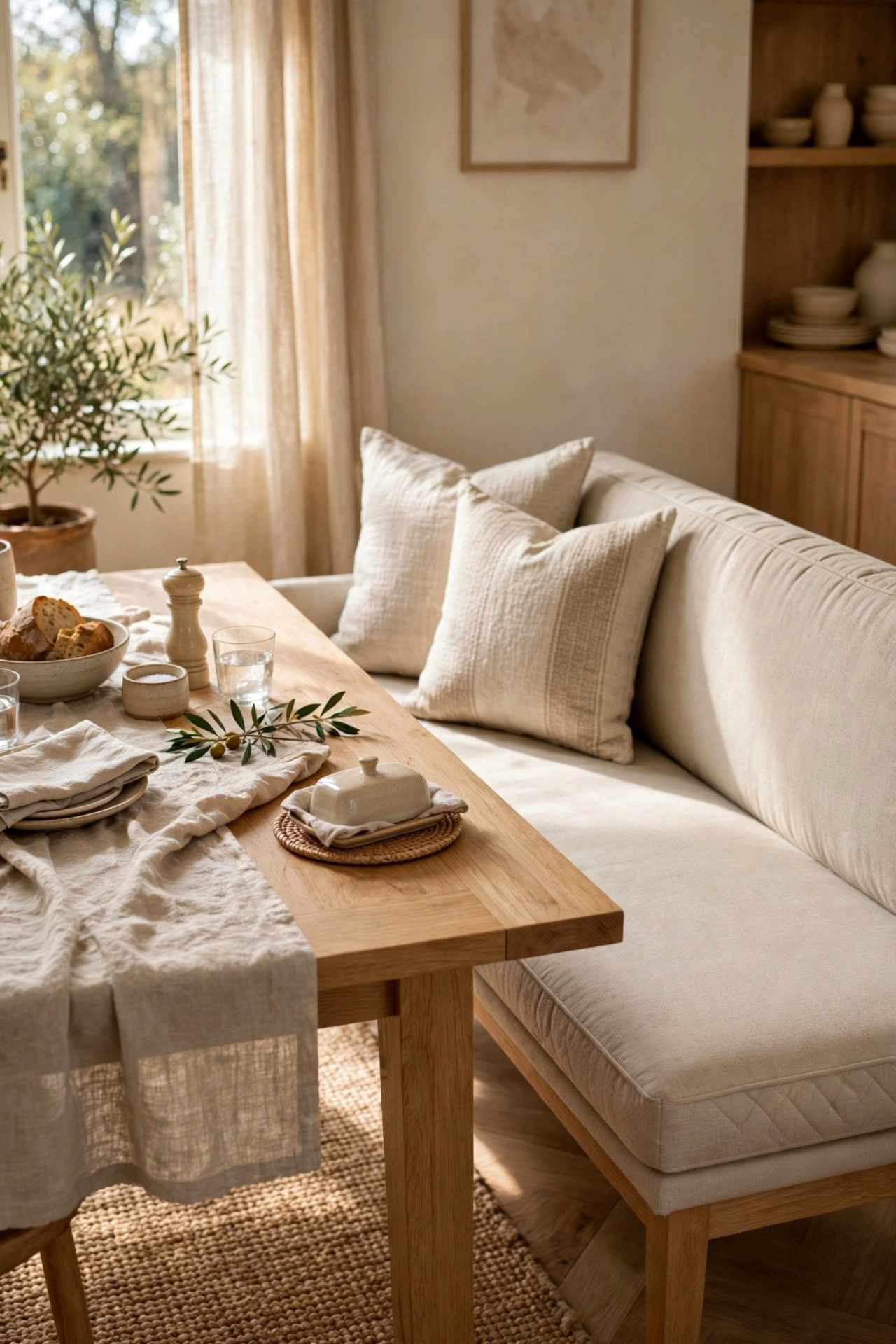
If your dining area doubles as a place for long conversations, homework, or weekend brunch, an upholstered bench makes the arrangement feel softer and more comfortable. Choose a performance fabric in oatmeal, taupe, or muted olive, and pair it with a wood table to keep the look grounded. A padded bench can also introduce texture without requiring extra decorative accessories. It works especially well in family dining rooms and open-plan spaces where comfort matters as much as appearance. A dining table with bench seating in washable fabric is the practical choice for everyday family meals.
Quick Win: For a busy household, choose removable, washable covers or a stain-resistant fabric rather than delicate upholstery that requires frequent professional cleaning.
6. Built-In Dining Bench in a Cozy Breakfast Nook

A built-in bench turns an unused corner into a purposeful dining spot, particularly when it wraps around two walls or sits beneath a window. Add fitted seat cushions, one or two patterned pillows, and a round pedestal table that allows easier movement around the seating. If storage is important, consider drawers or lift-up seats beneath the bench. This design makes excellent use of awkward kitchen corners and creates an intimate breakfast nook without filling the room with separate chairs.
Quick Win: Before installing a permanent bench, test the seating depth and table distance with temporary furniture to make sure everyone can sit down and get up comfortably.
7. Round Dining Table With a Curved Bench
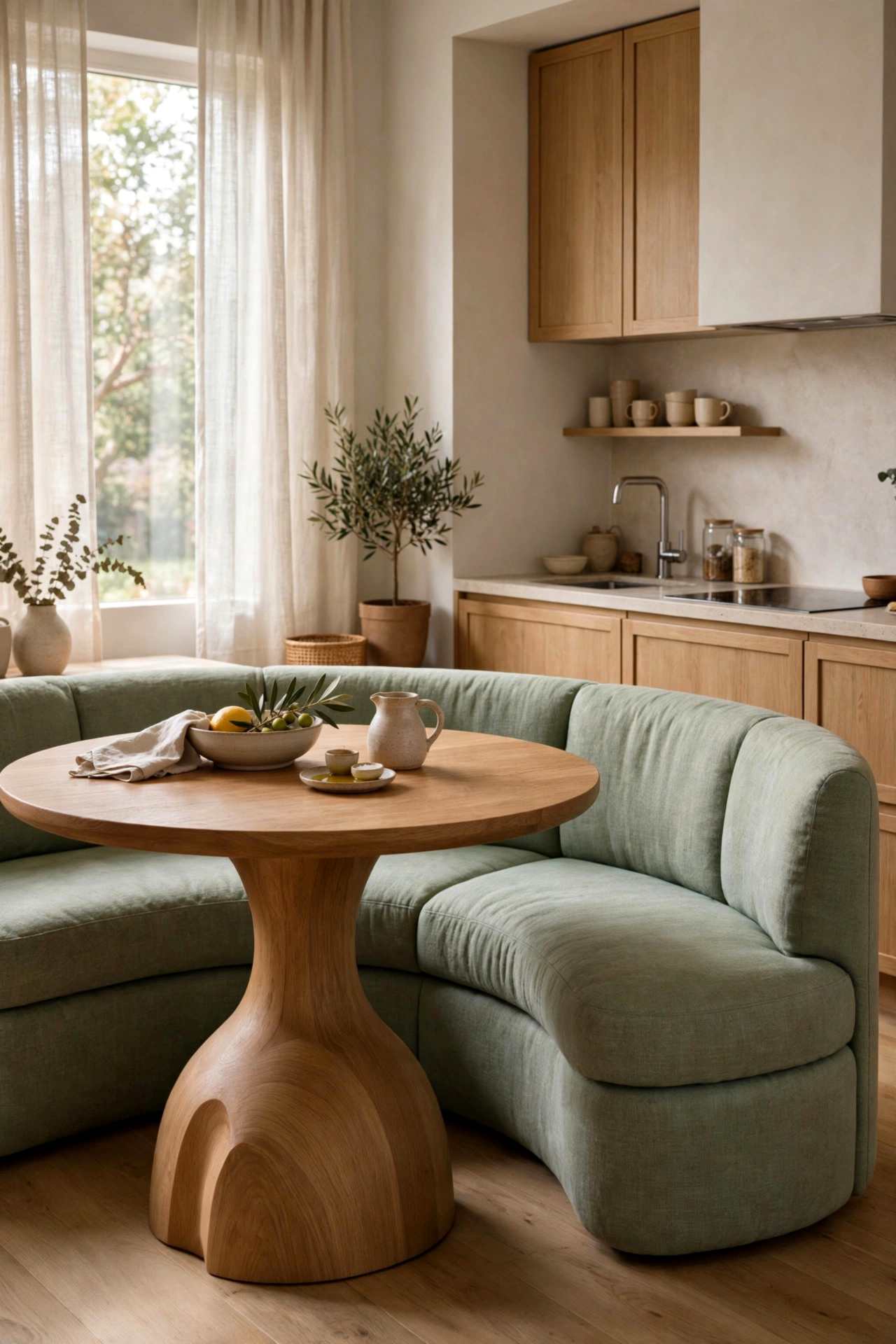
A round dining table paired with a curved bench creates a softer silhouette than a traditional rectangular set. The rounded edges help a compact dining area feel less rigid, while a central pedestal leaves more legroom than a table with four corner legs. Sage green, warm beige, or muted rust upholstery brings character to the space while keeping it calm. This arrangement is particularly effective in breakfast nooks and compact open-plan kitchens, although the bench curve and table diameter must be matched carefully.
Quick Win: Use a pedestal table with a stable base and check the bench’s curve against the tabletop diameter before purchasing either piece separately.
8. Extendable Dining Table With a Flexible Bench
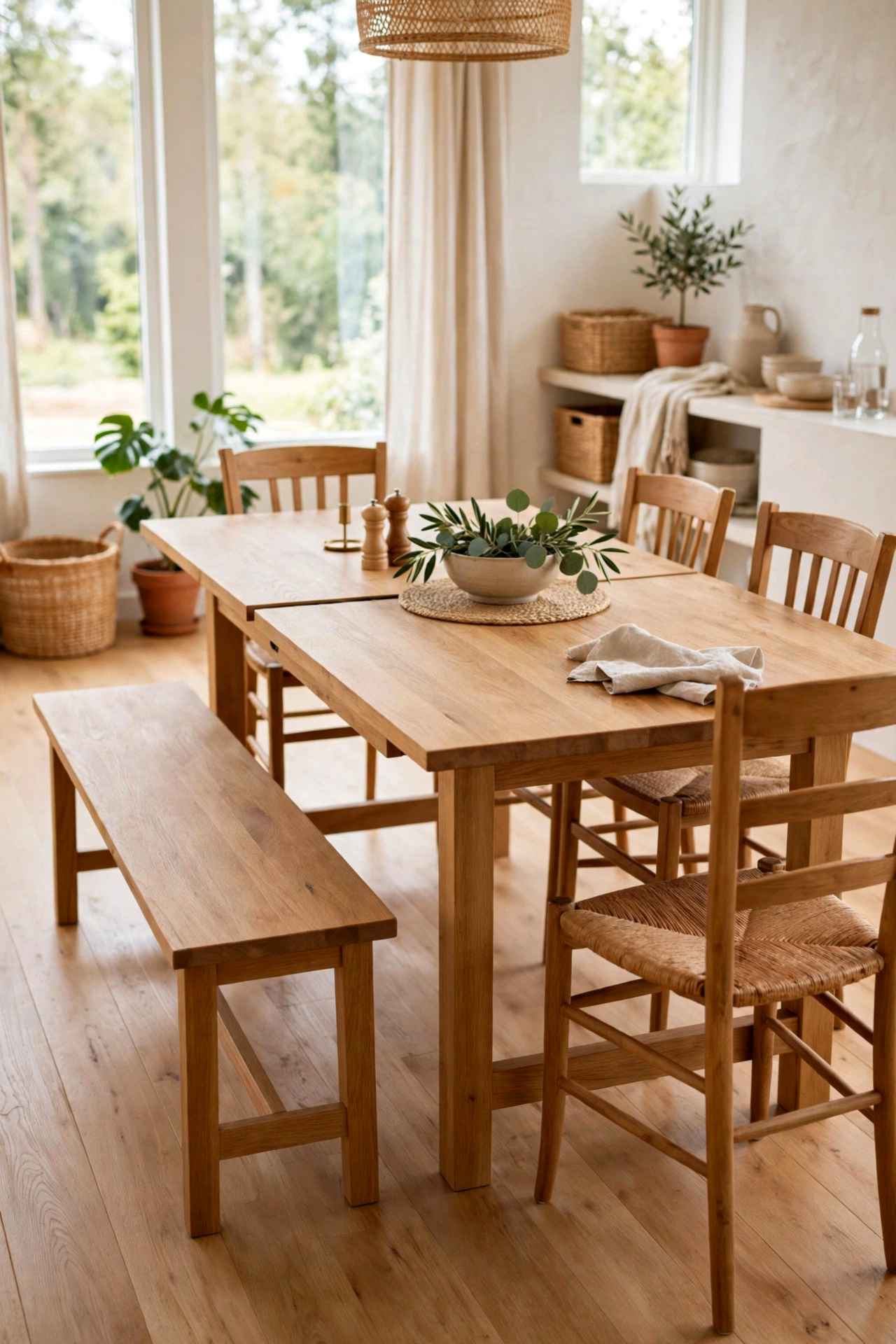
An extendable dining table paired with a movable bench gives you flexibility for everyday meals and larger gatherings. Keep the bench against the wall or tucked under the table during the week, then reposition it when guests arrive. A natural wood finish makes the furniture easy to coordinate with existing chairs, cabinets, and flooring. This setup is ideal for growing families and homes that regularly host visitors but don’t have room for a permanently oversized dining set.
Quick Win: Check that the bench can accommodate the table’s extended length and that additional chairs still leave enough space for people to move around comfortably.
How to Style a Dining Table With Bench Seating
A few thoughtful details can make your dining table and bench feel like a complete design rather than a collection of furniture. Keep these principles in mind as you put your space together: A dining table with bench looks best when the bench echoes the table’s finish and the chairs add a second texture.
- Balance materials: Combine wood with linen, woven textures, ceramic accents, or metal finishes.
- Choose the right rug: Make sure the rug extends well beyond the table and chairs so nothing catches on its edges when you move seats.
- Layer the lighting: A pendant centered over the table creates a focal point and helps define the dining zone.
- Keep the tabletop practical: A low vase, a small bowl, or a compact centerpiece adds character without getting in the way of meals.
- Prioritize clearance: Allow enough room to pull out chairs, slide out the bench, and walk behind seated guests.
Conclusion
A dining table with bench seating can make your dining room feel more welcoming, functional, and thoughtfully designed. Whether you prefer rustic farmhouse wood, modern black finishes, a built-in breakfast nook, or a comfortable upholstered bench, the best choice is one that fits your everyday routine. Start with the layout and materials you love, then add a few personal touches that make the space feel like home. You don’t need to change everything to create a dining area worth gathering around.
Frequently Asked Questions
Yes, bench seating can accommodate multiple people along one side and often tucks neatly underneath the table. It is especially useful in compact dining rooms and informal family spaces.
Choose a bench that fits comfortably beneath the table and leaves enough room for people to sit without bumping into table legs. As a starting point, a bench around 10–12 inches shorter than the tabletop often works well, but the ideal size depends on the table’s leg placement and seating needs.
Neither option is universally better. Benches can save space and create a relaxed look, while individual chairs generally offer more back support and make it easier for people to get in and out independently.
Yes, particularly when it slides fully under the table. A slim bench can reduce visual clutter and improve circulation, provided the table and surrounding walkways are appropriately sized.
The seat heights should be reasonably compatible with the table and comfortable for the people using them. Many dining seats are approximately 17–19 inches high, but check the table’s apron clearance and the thickness of any cushions before buying.
Absolutely. A wooden bench with upholstered chairs, for example, creates a layered look without requiring a matching furniture set. Repeat one material, color, or finish to make the combination feel intentional.
Rectangular tables are often the easiest to pair with straight benches, while round tables can work with curved or semicircular seating. The table’s base and leg placement are just as important as its shape.
It can be, especially when it uses durable, stain-resistant fabric and removable covers. Families with young children may prefer wipeable upholstery or a wooden bench with washable cushions.
Aim for approximately 36 inches of clearance around the dining area where possible, with more space in busy walkways. Measure the bench when pulled out, not just when it is tucked under the table.
Natural oak creates a light, Scandinavian feel, walnut adds depth, and reclaimed wood brings rustic character. Choose a finish that complements your flooring and cabinetry rather than trying to match every wood surface exactly.
Yes. Built-in benches can include drawers, lift-up seats, or hinged compartments for table linens and other dining essentials. Make sure the storage remains accessible without requiring you to move the entire dining arrangement.
Costs vary depending on the materials, dimensions, upholstery, and whether the bench is custom-made. A freestanding bench is usually easier to install and relocate, while built-in seating can make better use of an awkward corner.
Choose a low-pile, durable rug that allows chairs and the bench to move smoothly. A pattern can disguise everyday marks, while a neutral textured rug creates a quieter foundation for statement furniture.
Yes. A freestanding bench requires no permanent installation and can move with you. A compact table-and-bench set is a practical option for rental kitchens, apartments, and temporary dining spaces.
They remain a versatile option because they combine flexible seating with a range of interior styles. Natural wood, upholstered seating, and clean-lined silhouettes are particularly easy to incorporate into both contemporary and traditional homes.