
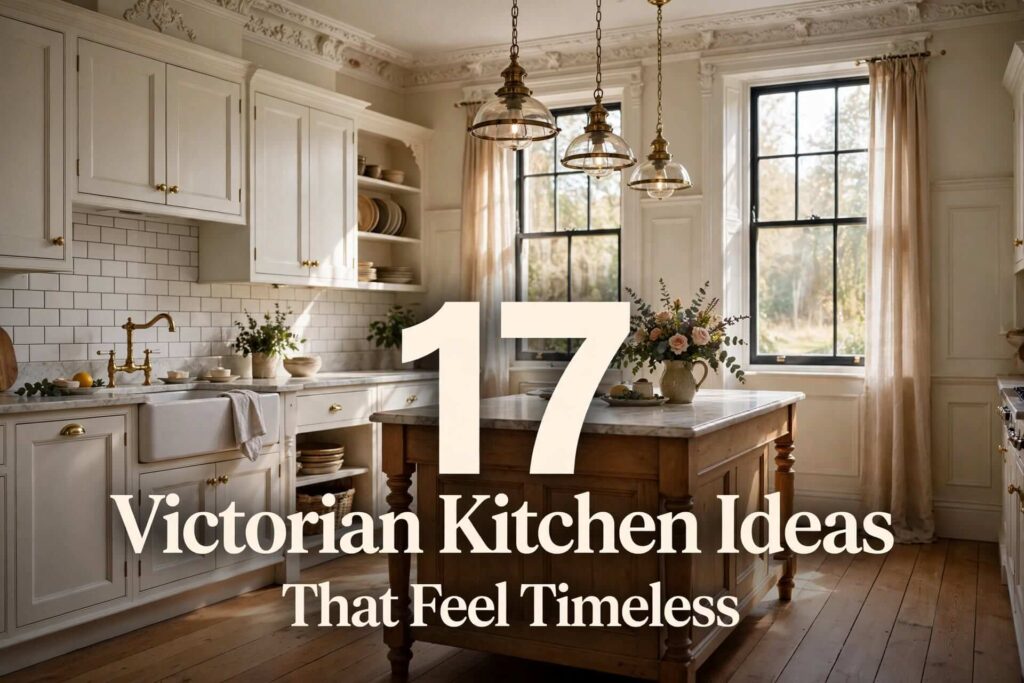
A Victorian kitchen can easily lose its character when modern finishes overpower the room’s original details. The challenge is creating a space that feels historically inspired without turning it into a museum. The best Victorian kitchens balance ornate craftsmanship with practical modern living, using rich colors, natural materials, traditional cabinetry, and carefully chosen vintage touches. You do not need a completely historic house to achieve the look, either. A few architectural details, period-inspired fixtures, or classic materials can transform an ordinary kitchen into something much more distinctive. These Victorian kitchen ideas show how to build that character gradually while keeping the space comfortable and functional.
In This Article
- Deep Green Victorian Cabinetry
- Classic Cream and Warm White Palette
- Victorian Kitchen With Dark Wood Details
- A Traditional Butler Sink
- Patterned Victorian Floor Tiles
- A Freestanding Victorian Kitchen Dresser
- Aged Brass Hardware and Fixtures
- Victorian Kitchen With Open Shelving
- Victorian Kitchen With a Classic Range Cooker
- Decorative Wall Paneling
- Muted Blue Victorian Kitchen
- Vintage-Inspired Lighting
- Marble and Natural Stone Countertops
- A Victorian Farmhouse Kitchen Mix
- Victorian Kitchen With a Cozy Breakfast Nook
- Victorian Details in a Modern Kitchen
- A Layered Victorian Kitchen With Collected Character
- Frequently Asked Questions
1. Deep Green Victorian Cabinetry
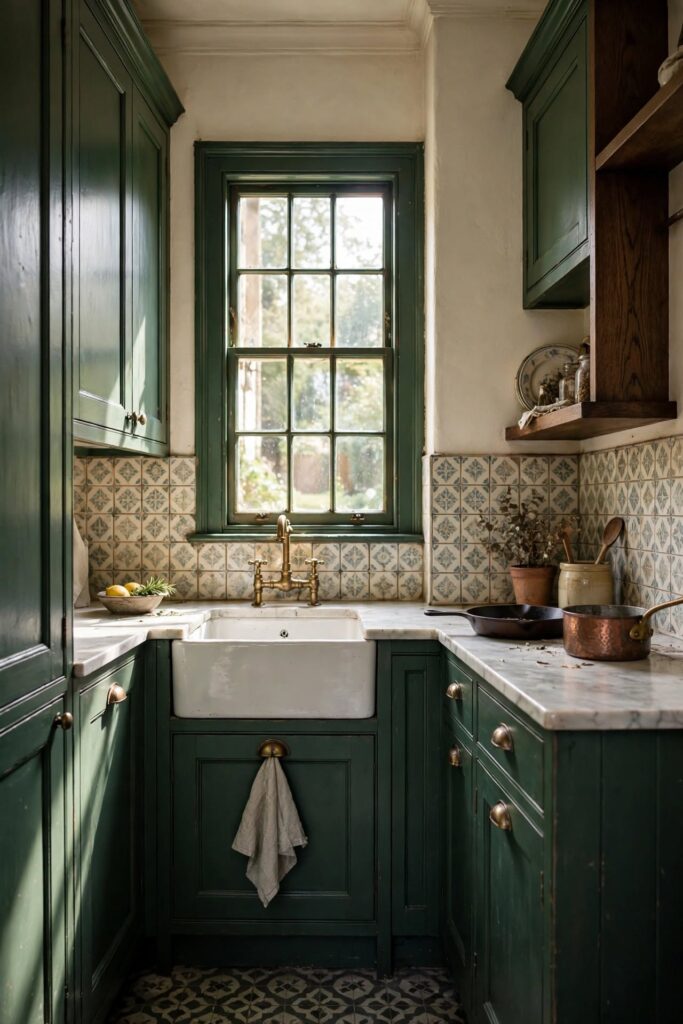
Deep green cabinetry instantly gives a Victorian kitchen a grounded, traditional character. Choose muted forest, bottle, or heritage green rather than an overly bright shade, then pair it with cream walls, natural wood, and aged brass hardware. Shaker or framed cabinets work particularly well because their simple structure allows the color and hardware to carry the period feeling. This approach suits both large kitchens and compact spaces where you want strong character without adding excessive decoration.
Quick Win: Replace ordinary cabinet handles with aged brass knobs or cup pulls. This small change can make existing cabinetry feel much more period-inspired.
2. Classic Cream and Warm White Palette
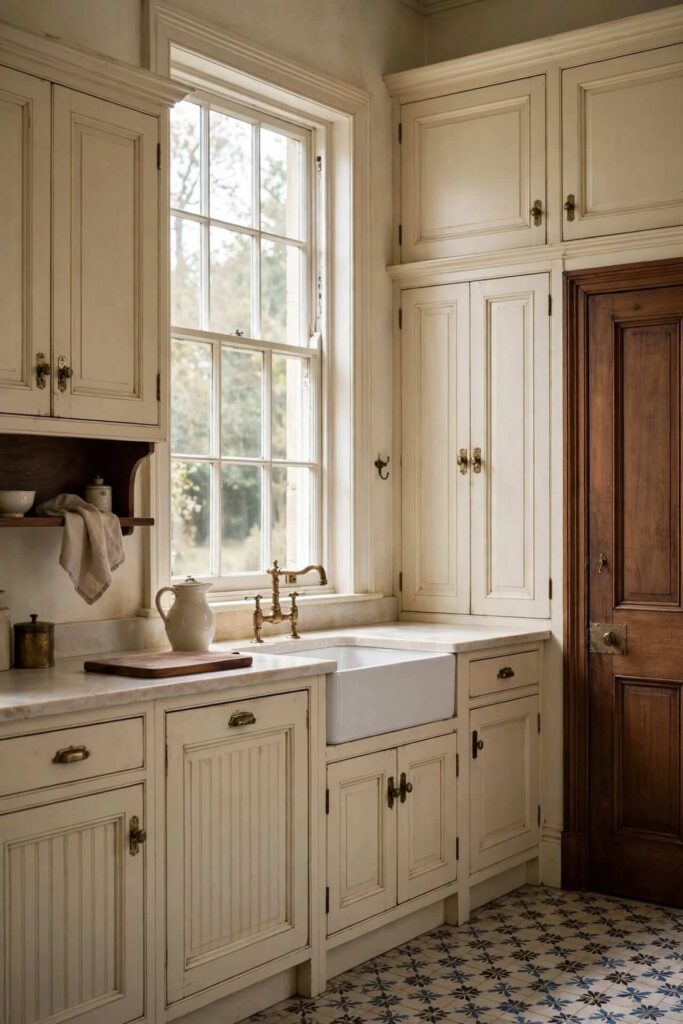
A cream-based color palette creates a softer interpretation of Victorian kitchen design while keeping the room bright. Combine warm ivory cabinetry with creamy walls, natural stone counters, and darker wood accents for contrast. Avoid stark white wherever possible because warmer undertones tend to feel more compatible with traditional architecture. This palette is particularly useful if your kitchen receives limited daylight or if you want Victorian details to remain the visual focus rather than the color scheme.
3. Victorian Kitchen With Dark Wood Details

Dark wood adds richness and visual depth to a Victorian kitchen, especially when used on islands, shelving, doors, or furniture rather than throughout the entire room. Walnut, oak, or stained pine can introduce the handcrafted feeling associated with traditional interiors. Pair dark timber with lighter walls and countertops so the room remains balanced. A freestanding wooden dresser or antique-style pantry cabinet can also provide useful storage while becoming a strong focal point.
Quick Win: Add one substantial wooden piece, such as a vintage-style dresser or open shelving unit, instead of replacing all your cabinetry.
4. A Traditional Butler Sink
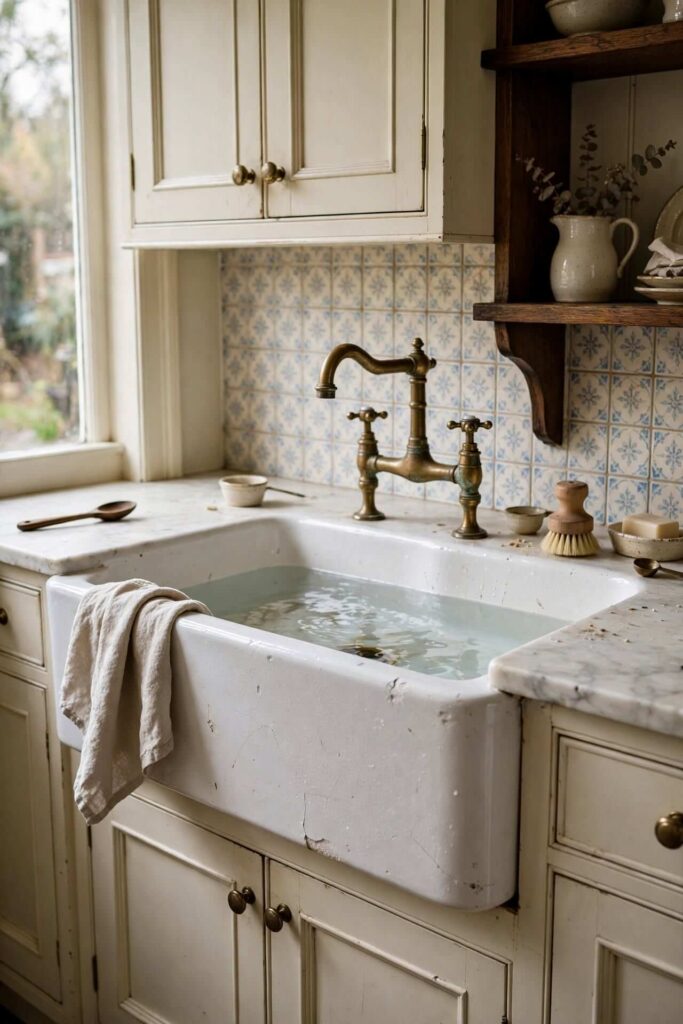
A large ceramic butler sink is one of the easiest ways to introduce a classic period feel. Its substantial shape works beautifully with marble, soapstone, wood, or painted cabinetry. For a convincing Victorian kitchen, choose a simple white ceramic design with an exposed front rather than an overly contemporary sink profile. Pair it with an aged brass or traditional bridge faucet for a cohesive look. It is both decorative and genuinely practical for everyday cooking.
5. Patterned Victorian Floor Tiles
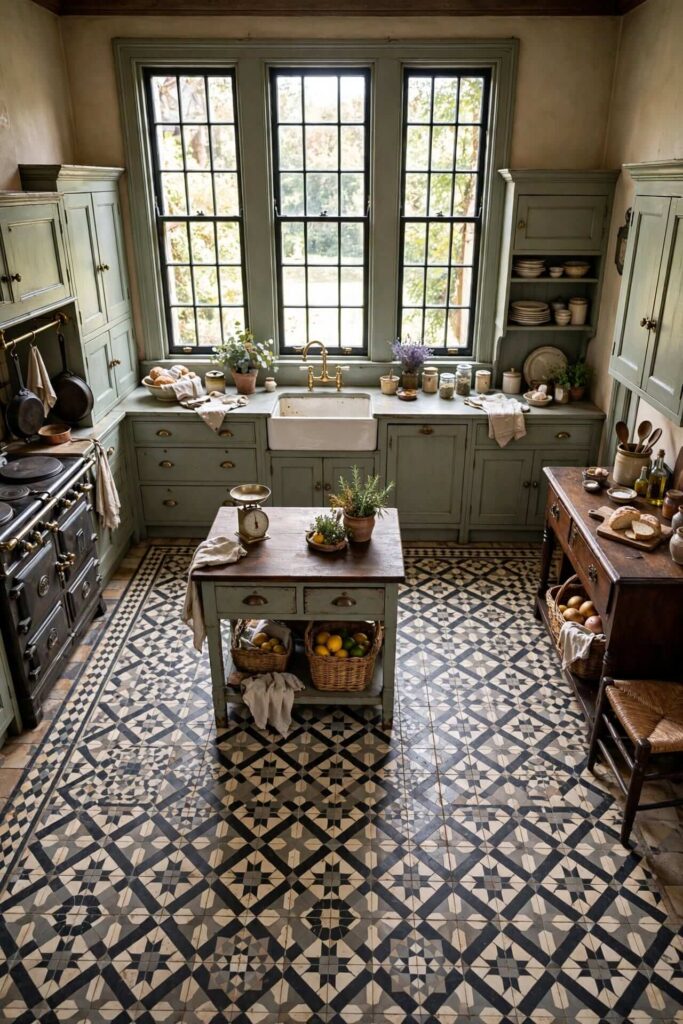
Flooring can establish the historical atmosphere before you add much decoration. Patterned encaustic, geometric, or black-and-white ceramic tiles work especially well in Victorian-inspired kitchens. Keep the wall and cabinet colors relatively restrained so the floor becomes a deliberate architectural feature rather than visual noise. In a small kitchen, use a smaller-scale pattern to maintain proportion. If authentic tile replacement is impractical, look for modern porcelain alternatives with convincing traditional patterns.
Quick Win: If replacing the entire floor is not practical, use a washable patterned runner with a traditional geometric design to introduce the visual effect.
6. A Freestanding Victorian Kitchen Dresser

A freestanding dresser can make a modern kitchen feel more collected and historically layered. Choose painted wood with glass-front doors, open shelving, or traditional molding, then use it for crockery, serving pieces, cookbooks, or everyday ceramics. The furniture-style silhouette adds softness compared with a wall of fitted cabinets. It is also a useful option for renters or homeowners who want Victorian character without committing to a full kitchen renovation.
7. Aged Brass Hardware and Fixtures
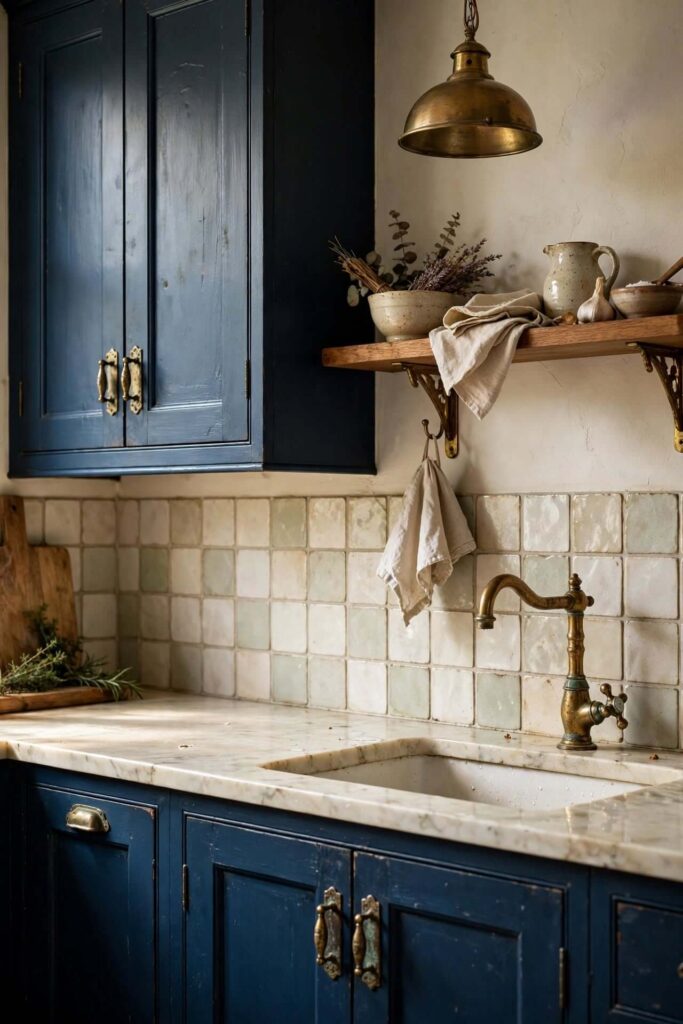
Small metal details can dramatically influence the atmosphere of a Victorian kitchen. Aged brass works particularly well with deep green, navy, cream, brown, and muted blue cabinetry. Use the finish consistently across cabinet pulls, faucets, light fixtures, and perhaps a few shelf brackets. The goal is not to make every metal surface look antique, but to create a softly aged appearance that feels more connected to traditional materials.
8. Victorian Kitchen With Open Shelving
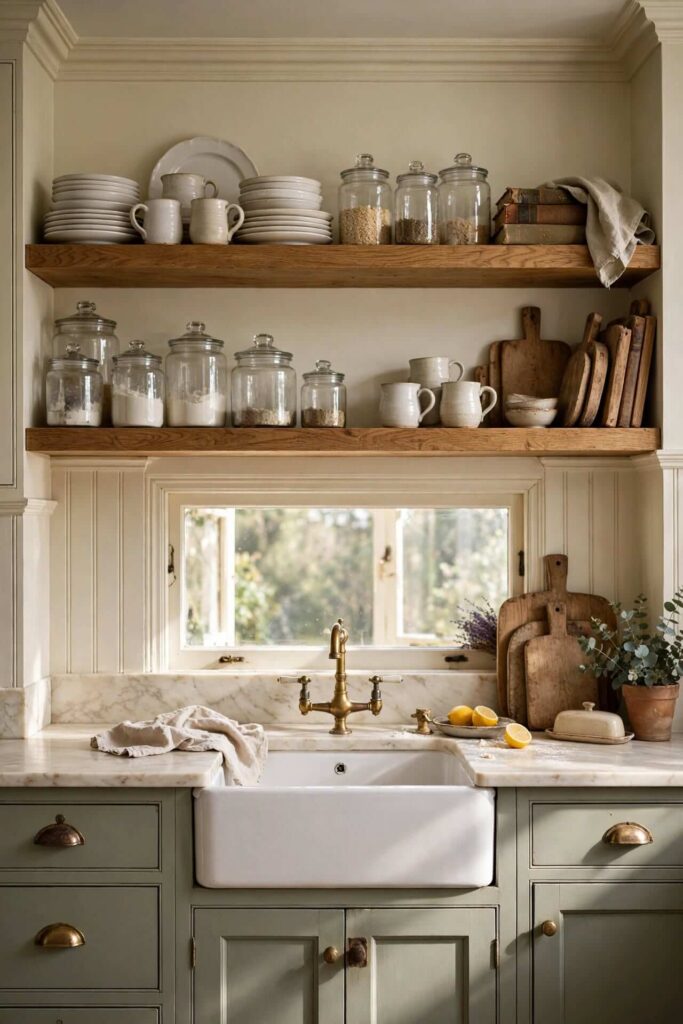
Open shelving can make a traditional kitchen feel lighter while giving you an opportunity to display attractive everyday pieces. Use thick natural wood shelves supported by simple brass or painted brackets, then style them with white ceramics, glass jars, wooden boards, and a few cookbooks. Avoid filling every inch. Victorian-inspired rooms benefit from a sense of restraint, allowing the shelves to look collected rather than staged.
Quick Win: Remove half the items from existing open shelves and group the remaining pieces by material and color for a calmer, more intentional display.
9. Victorian Kitchen With a Classic Range Cooker
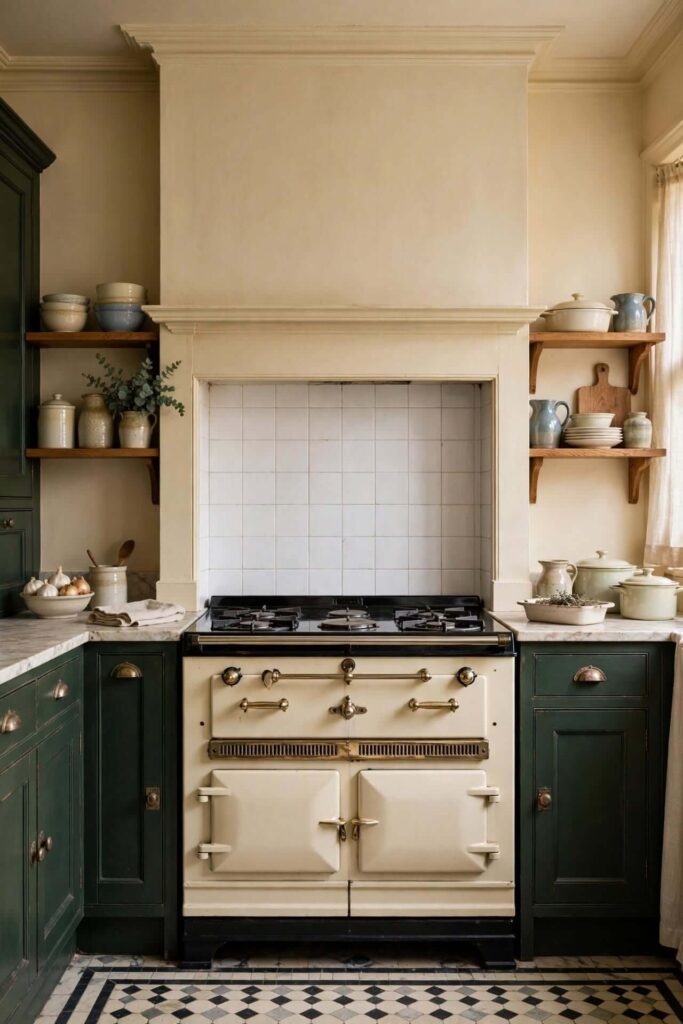
A substantial range cooker can become the visual anchor of a Victorian kitchen. Choose a traditional-looking model with simple controls and a finish that complements the cabinetry rather than competing with it. Frame the cooker with a tiled backsplash, simple shelving, or a shallow mantel-style surround if the architecture allows. This creates a strong cooking zone while giving the room the substantial, hardworking character associated with older kitchens.
10. Decorative Wall Paneling
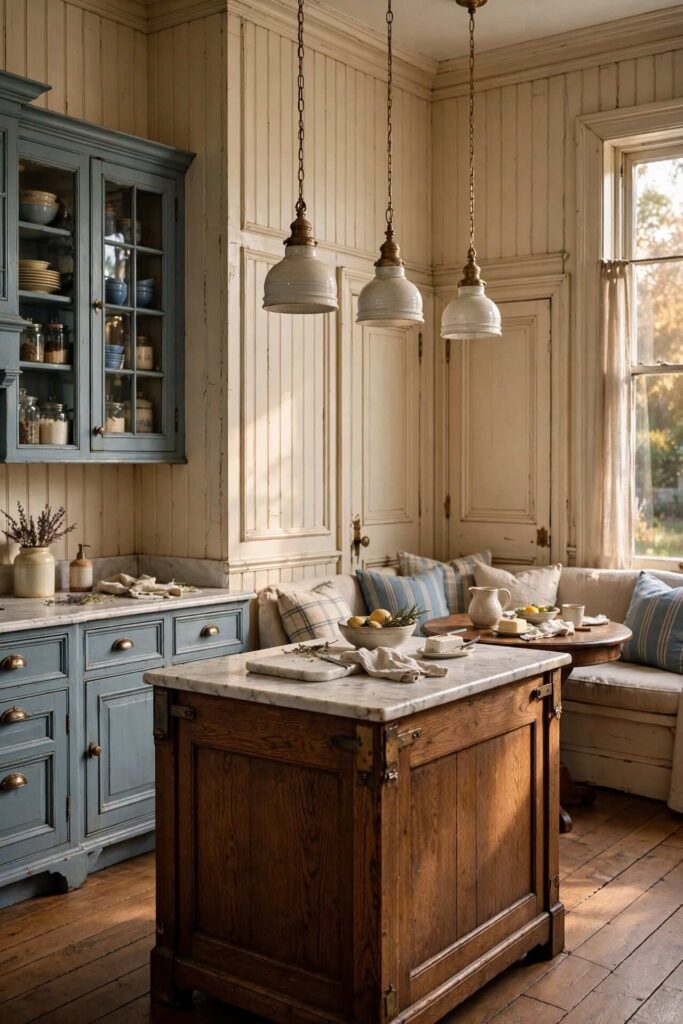
Wall paneling can bring architectural depth to a Victorian kitchen, especially in newer homes lacking original period features. Use simple vertical paneling, tongue-and-groove boards, or traditional molding painted in a warm neutral or muted color. Keep the treatment below eye level if you want the room to feel more open. Paneling works particularly well behind a dining nook, on an island wall, or around a freestanding dresser.
11. Muted Blue Victorian Kitchen
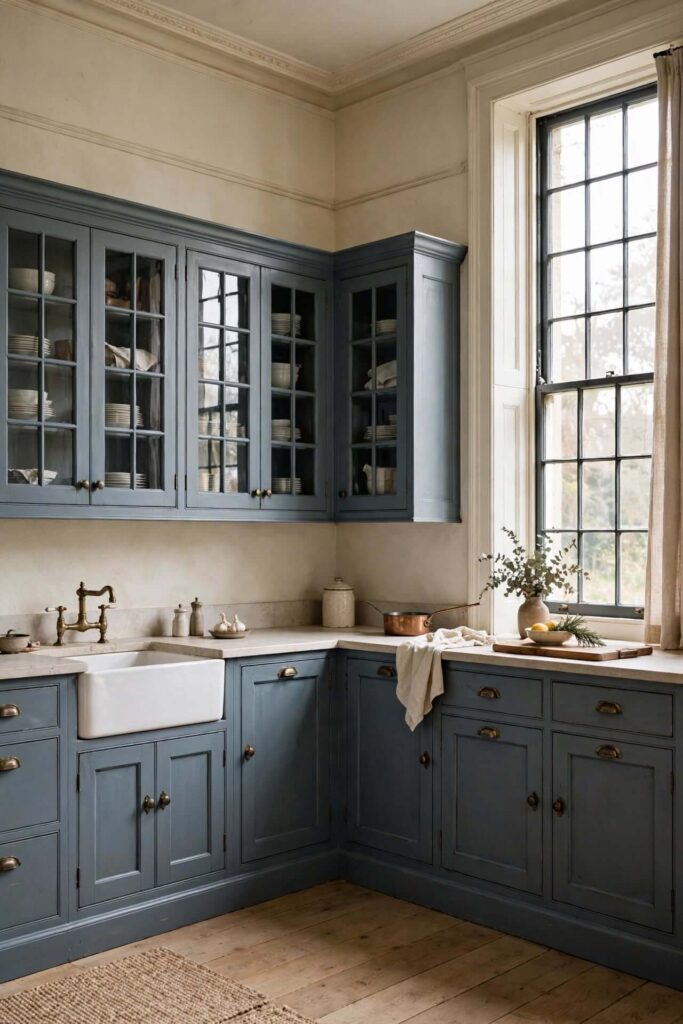
Muted blue gives Victorian kitchen design a cooler, more relaxed character while remaining traditional. Consider dusty blue, slate blue, or blue-gray cabinetry with warm cream walls and aged brass hardware. Add natural wood or stone to prevent the palette from feeling cold. This combination works especially well in kitchens with good natural light because the blue can change subtly throughout the day.
12. Vintage-Inspired Lighting
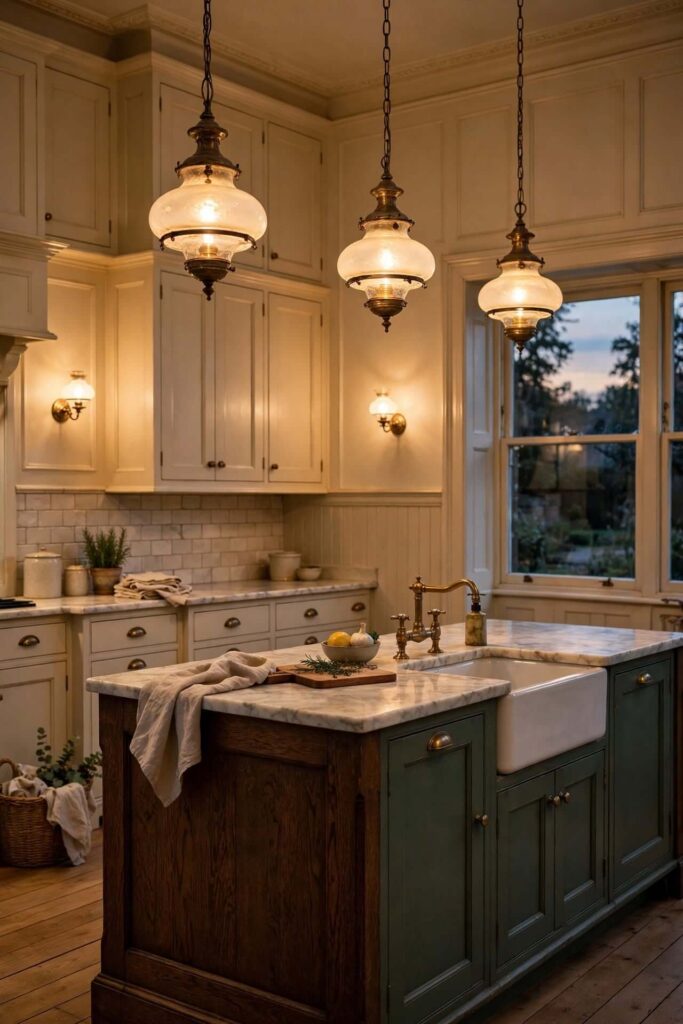
Lighting should reinforce the architecture rather than simply illuminate the workspace. Opal glass pendants, aged brass wall sconces, traditional lantern-style fixtures, and simple ceramic shades can all work beautifully in a Victorian kitchen. Place practical task lighting above work surfaces while using decorative fixtures over an island or dining area. Warm bulbs help soften hard surfaces and make the room feel welcoming in the evening.
Quick Win: Replace one contemporary pendant with an opal-glass or aged-brass fixture to introduce an immediate period-inspired detail.
13. Marble and Natural Stone Countertops
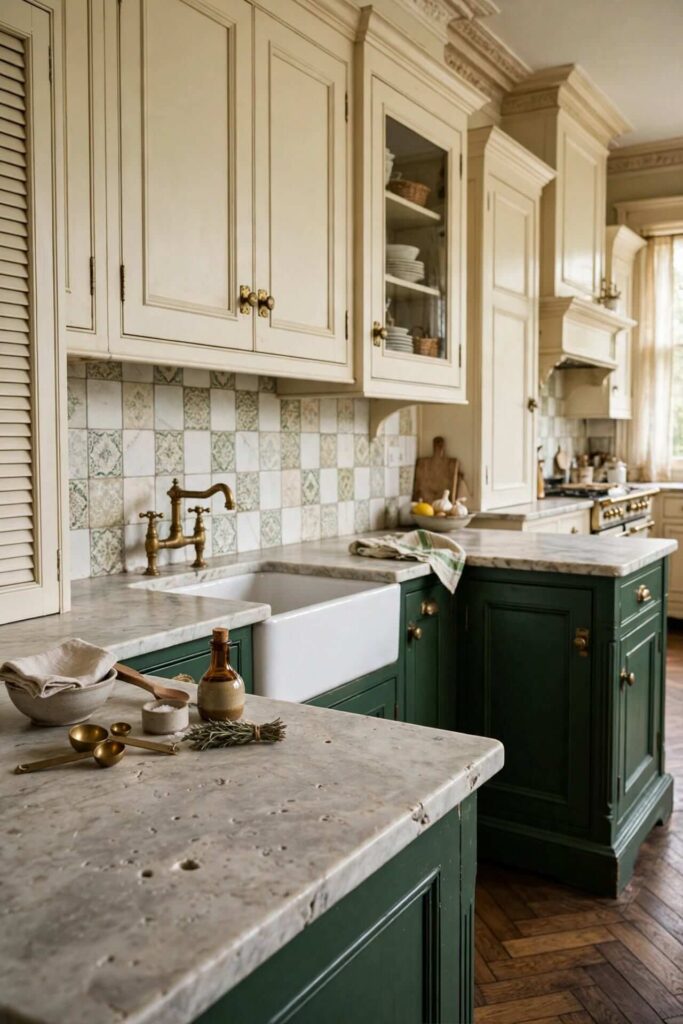
Natural stone helps bridge the gap between Victorian character and modern functionality. White marble with subtle veining creates a refined surface, while soapstone and limestone offer deeper or more understated alternatives. Combine stone with painted cabinetry and aged metals rather than pairing it with too many glossy finishes. A slightly honed surface can feel more authentic and forgiving than an ultra-polished countertop.
14. A Victorian Farmhouse Kitchen Mix
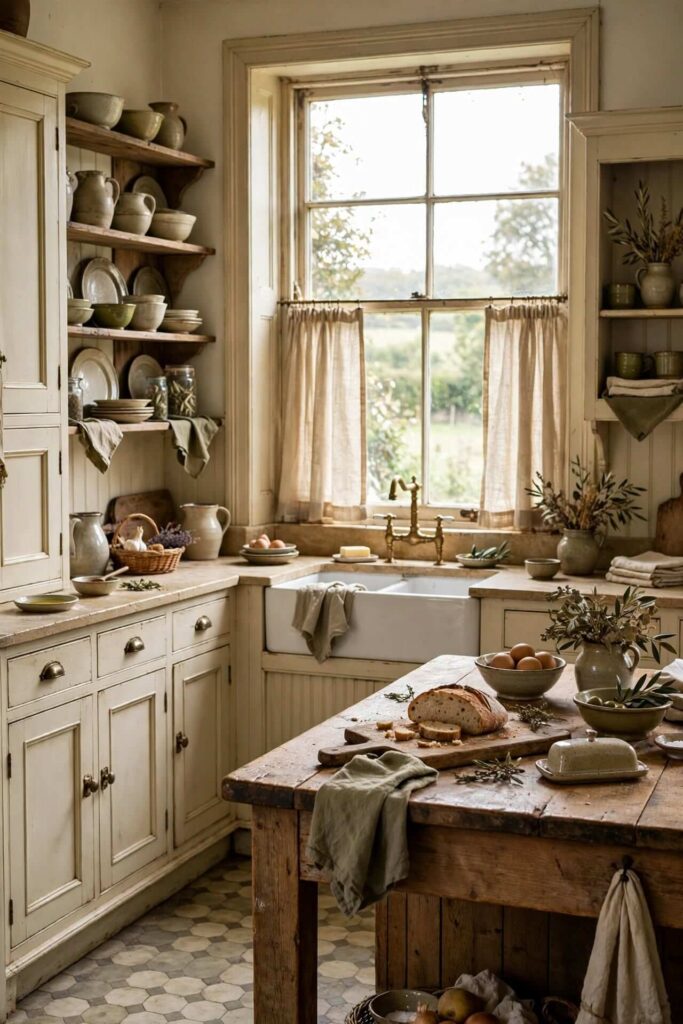
For a relaxed interpretation, combine Victorian architectural details with farmhouse materials. Think painted cabinetry, exposed or reclaimed wood, ceramic sinks, simple linen curtains, open shelving, and traditional hardware. The important part is balance: avoid making every element rustic. A few refined touches, such as marble or brass, keep the room connected to Victorian design while making it feel comfortable enough for everyday family life.
Quick Win: Add a linen café curtain or relaxed Roman blind to a kitchen window for an inexpensive layer of traditional farmhouse character.
15. Victorian Kitchen With a Cozy Breakfast Nook
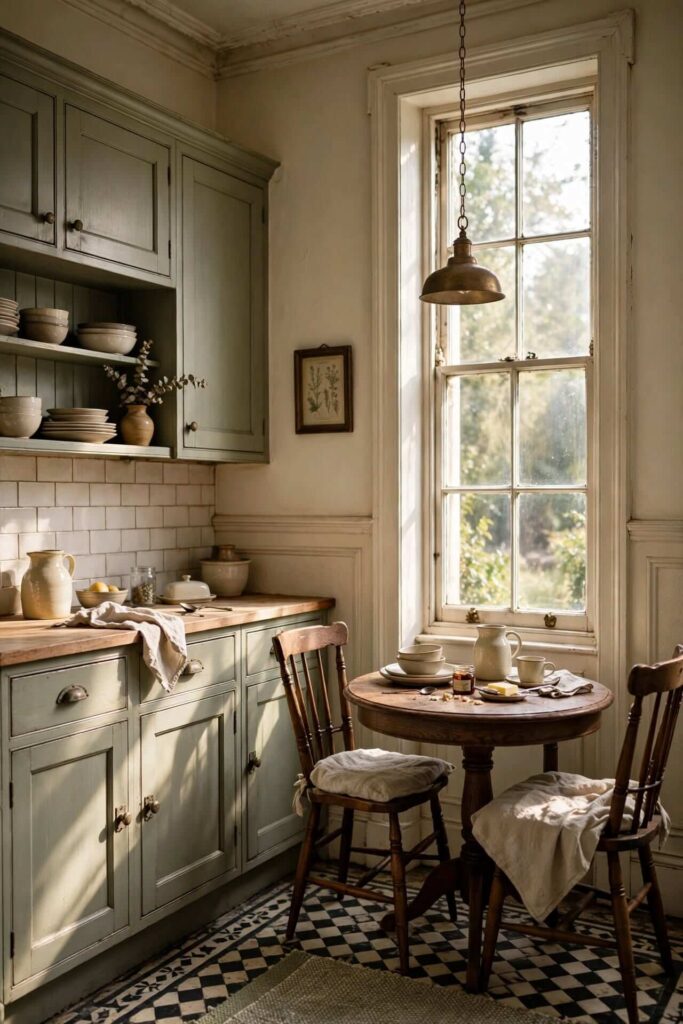
A small breakfast nook can make a Victorian kitchen feel more intimate and useful. Position a compact round wooden table or built-in bench near a window, then add a simple pendant, linen cushions, and traditional artwork. This works particularly well in larger kitchens where an empty corner feels disconnected. In a smaller room, a wall-mounted drop-leaf table can provide the same function without consuming valuable floor space.
16. Victorian Details in a Modern Kitchen
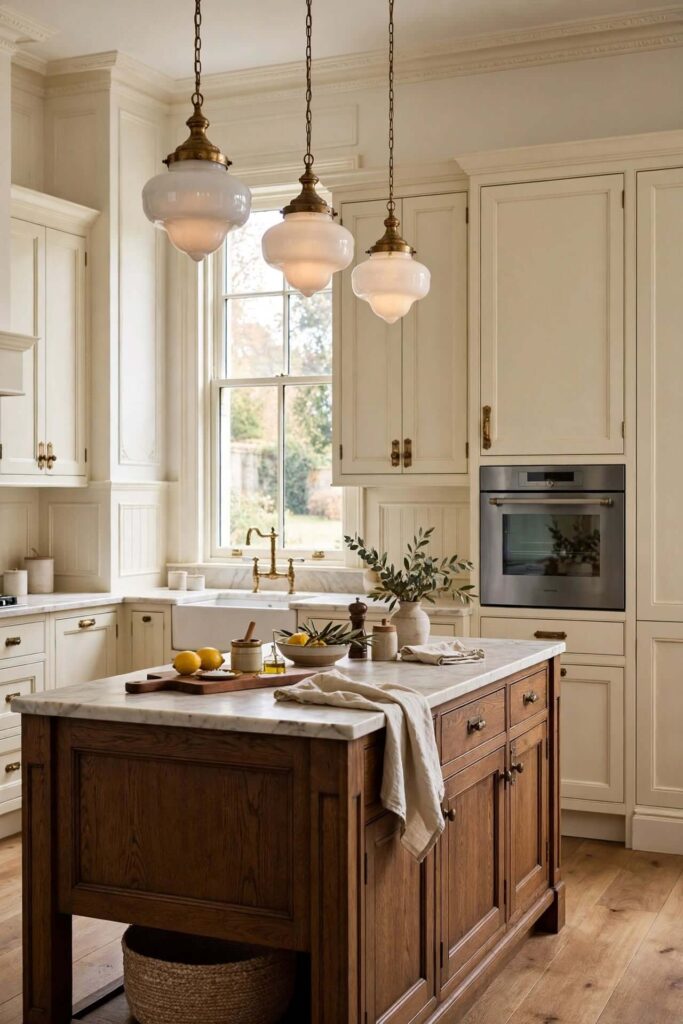
You do not need a historic building to create a Victorian-inspired kitchen. Introduce selected period details into a modern layout, such as framed cabinet doors, brass hardware, marble counters, traditional faucets, paneling, and vintage-style lighting. Keep the appliances integrated and the layout practical so the kitchen remains easy to use. This approach is especially effective in newer homes where a fully historic treatment might feel disconnected from the architecture.
17. A Layered Victorian Kitchen With Collected Character
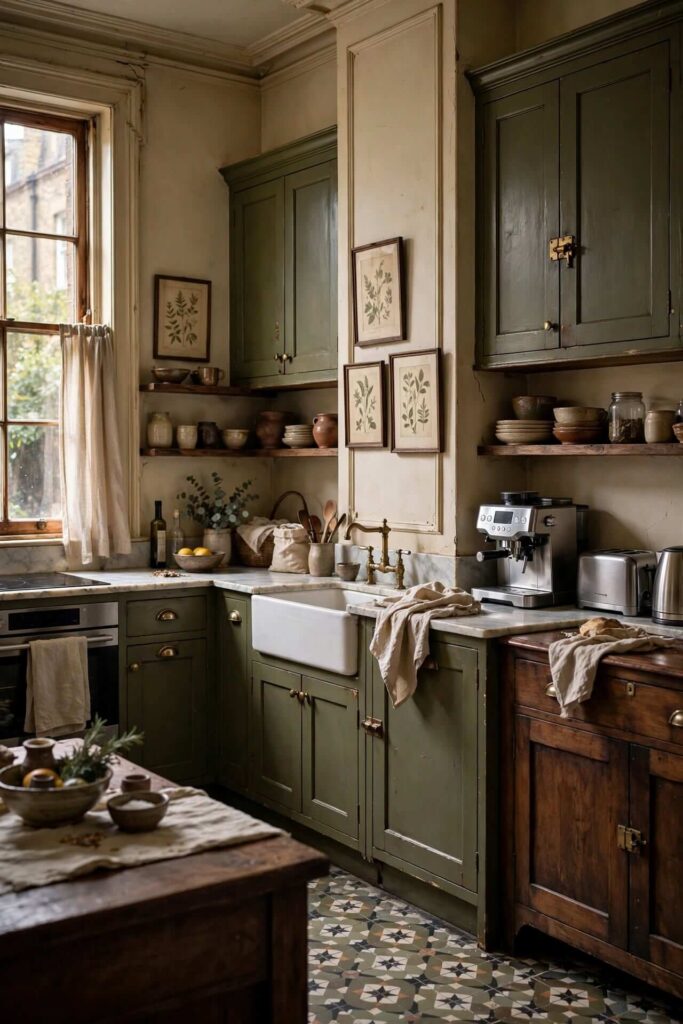
The most convincing Victorian kitchens rarely look like they were decorated in one afternoon. Layer the room gradually with traditional cabinetry, antique-style furniture, ceramics, artwork, brass details, textiles, and natural wood. Mix older-looking pieces with modern necessities so the kitchen feels genuinely lived in. The trick is to repeat a few materials and colors throughout the room while allowing individual objects to retain their own character.
Conclusion
A Victorian kitchen does not have to be completely authentic to capture the warmth and craftsmanship of the style. Start with the elements that make the biggest visual difference, such as traditional cabinetry, aged brass, natural stone, dark wood, patterned flooring, or period-inspired lighting. Then layer in details that suit your home rather than copying an entire historical room. Whether you are renovating a period property or updating a modern kitchen, a thoughtful mix of old and new can create a space that feels timeless, personal, and practical.
Frequently Asked Questions
Deep green, muted blue, burgundy, warm cream, charcoal, brown, and earthy neutrals work especially well. Pair darker colors with warm whites, natural wood, or stone to maintain balance.
Focus on a few strong period-inspired details rather than changing everything. Framed cabinetry, aged brass hardware, traditional faucets, marble, wall paneling, vintage-style lighting, and ceramic sinks can make a major difference.
Traditional Victorian interiors often used rich, darker colors, but a Victorian-inspired kitchen does not have to be dark. Warm cream walls, reflective stone, light cabinetry, and generous natural lighting can create a brighter interpretation.
Framed cabinets with simple Shaker-style or more traditional paneling work well. Painted wood cabinetry is particularly versatile because it can accommodate both authentic and contemporary interpretations.
Yes. Aged or antique brass is particularly compatible with Victorian-inspired interiors because its softer patina works naturally with painted wood, marble, ceramic, and traditional architectural details.
Patterned ceramic or encaustic tiles, traditional geometric designs, natural stone, and dark or medium-toned timber can all work. Choose the flooring according to the room’s size and existing architecture.
Absolutely. You can introduce the style gradually through hardware, lighting, open shelving, vintage-style ceramics, curtains, and a freestanding piece of furniture. These changes can create character without requiring a complete renovation.
A white ceramic butler or farmhouse sink is a classic choice. Pair it with a traditional bridge-style faucet in aged brass or another understated traditional finish.
Yes. Use a restrained palette, traditional hardware, open shelving, and one or two strong architectural details. Keeping the cabinetry visually consistent can prevent a small kitchen from feeling overcrowded.
Choose appliances with simple profiles and integrate them into cabinetry whenever possible. Keep the visible decorative elements traditional while allowing the functional equipment to remain modern.
Opal-glass pendants, ceramic shades, traditional sconces, and aged-brass fixtures are strong choices. Combine decorative lighting with practical task lighting over counters and cooking areas.
Yes. Focus on removable or easily reversible details such as cabinet hardware, textiles, artwork, freestanding furniture, lighting where permitted, and decorative shelving. A traditional runner can also introduce Victorian character without permanent changes.
No. A mixture of traditional-looking pieces and modern necessities generally feels more practical and natural. The goal is to create visual continuity rather than make every item look historically authentic.
Natural wood, marble, limestone, ceramic, brass, painted timber, glass, and traditional patterned tiles are particularly useful. Combining several of these materials creates depth and craftsmanship.
Overloading the room with decorative details can make it feel theatrical rather than authentic. Choose a few strong period elements and give them enough space to stand out.