
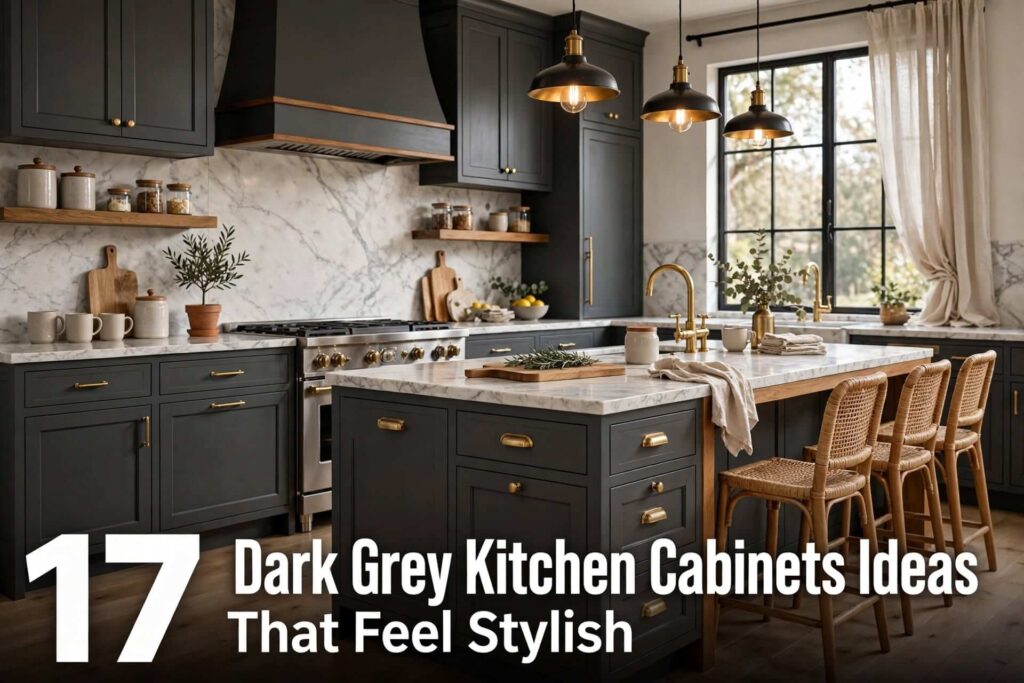
Discover 17 inspiring dark grey kitchen cabinets ideas that bring depth, sophistication, and warmth to modern kitchen spaces. From natural wood and elegant brass hardware to marble backsplashes, creamy countertops, soft lighting, and two-tone designs, these ideas showcase versatile ways to style dark cabinetry. Explore balanced color combinations, practical decorating details, and timeless design elements that make a kitchen feel polished yet inviting. Whether your style is modern, classic, farmhouse, or contemporary, these dark grey kitchen ideas offer beautiful and practical inspiration for creating a stylish, comfortable, and Pinterest-worthy kitchen.
In This Article
- Pair Dark Grey Cabinets With Warm White Walls
- Add Natural Wood for a Warmer Look
- Use Brass Hardware for a Refined Finish
- Create Contrast With a Light Marble Backsplash
- Try Dark Grey Shaker Cabinets
- Combine Dark Grey Cabinets With Creamy Countertops
- Make a Dark Grey Island the Focal Point
- Add Greenery for a Softer Kitchen
- Go Modern With Matte Charcoal Cabinets
- Layer Dark Grey With Soft Beige
- Use Black Accents to Deepen the Palette
- Brighten the Look With Glass-Front Cabinets
- Add Open Shelving Between Dark Cabinets
- Warm Up Dark Grey With Copper and Terracotta
- Use Two-Tone Dark Grey and White Cabinets
- Let Natural Light Do the Work
- Finish the Look With Warm Layered Lighting
- Frequently Asked Questions
1. Pair Dark Grey Cabinets With Warm White Walls
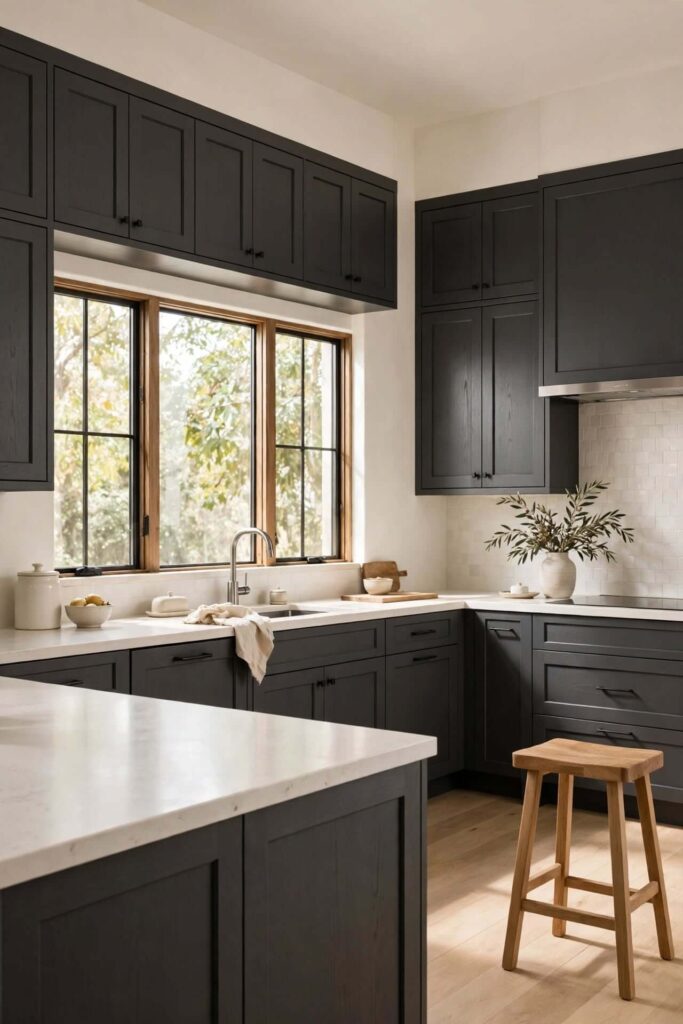
Dark grey kitchen cabinets can feel dramatic without making the room gloomy when they’re balanced with warm white walls. Choose a creamy white rather than a stark blue-white, then add pale countertops and simple backsplash tile to reflect light. Light oak flooring or a small wooden stool can soften the contrast even further. This combination works particularly well in kitchens with limited natural light because the lighter surroundings keep the charcoal cabinetry grounded rather than overwhelming.
Quick Win: Replace cool-white bulbs with warm-white lighting and add one or two light wood accessories to make existing dark cabinets feel softer.
2. Add Natural Wood for a Warmer Look
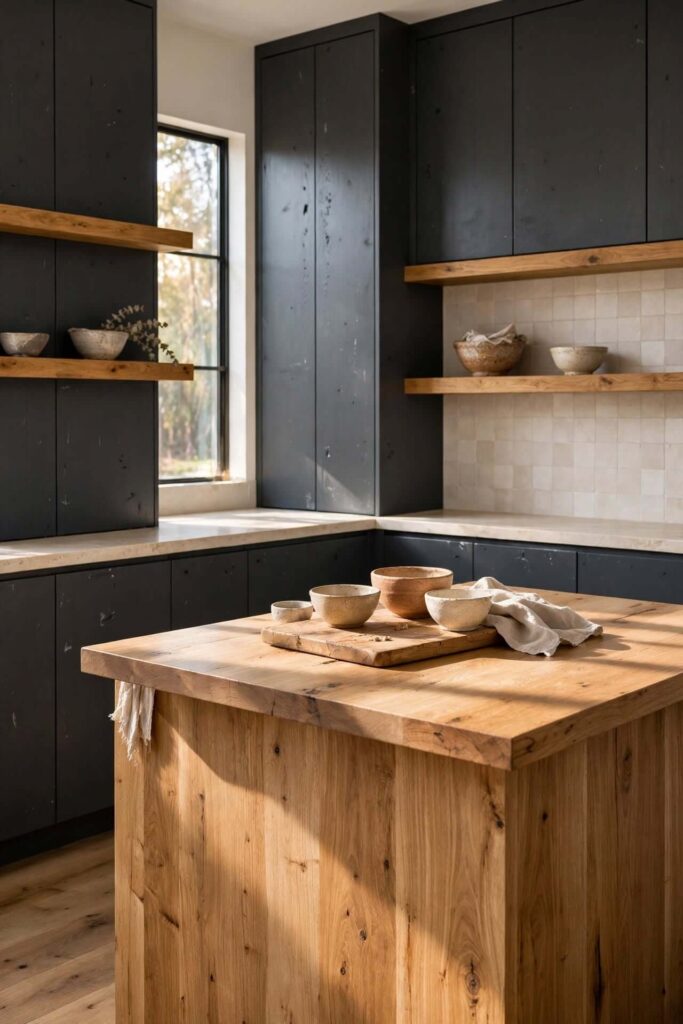
If dark grey cabinets feel too cool, natural wood is one of the easiest ways to bring warmth into the kitchen. Try a pale oak island, wood open shelving, or even a butcher-block accent instead of changing the cabinetry. The combination of charcoal grey and honey-toned wood creates contrast while keeping the room relaxed. Keep the rest of the palette simple with cream walls, neutral counters, and understated hardware so the materials remain the focus. Dark grey kitchen cabinets pair naturally with oak or walnut, which softens their cool edge.
3. Use Brass Hardware for a Refined Finish
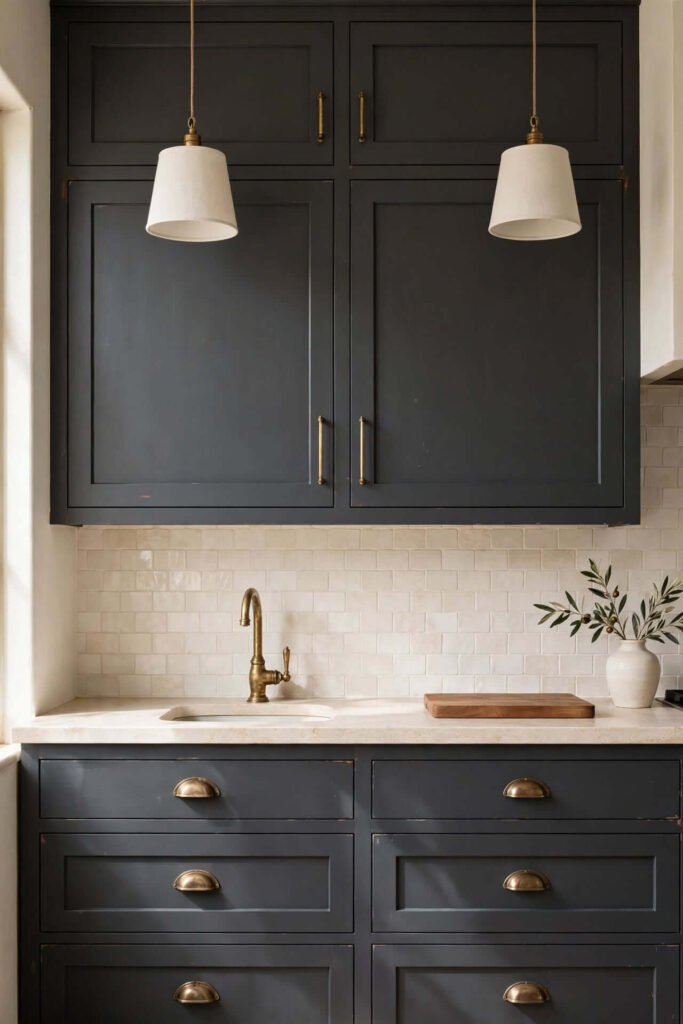
Brass hardware can give dark grey kitchen cabinets a polished look without making them feel overly formal. Choose slim brass pulls for drawers and slightly longer handles for tall doors to create consistency. Aged or brushed brass usually feels softer than highly polished finishes, especially alongside charcoal cabinetry. Repeat the metal subtly through a faucet or pendant lights, but avoid using brass on every surface. A little repetition is enough to make the kitchen feel thoughtfully coordinated.
4. Create Contrast With a Light Marble Backsplash

A pale marble backsplash can transform dark grey kitchen cabinets into a sophisticated focal point. Look for white or creamy stone with soft grey veining that connects the backsplash visually to the cabinetry. Extending the material from the countertop up the wall can create a more seamless appearance, while simple cabinet hardware keeps the design from becoming too busy. This approach works especially well when you want a dark kitchen to feel brighter and more open.
Quick Win: If replacing the backsplash isn’t practical, use a removable stone-look backsplash for a similar visual contrast without a major renovation.
5. Try Dark Grey Shaker Cabinets
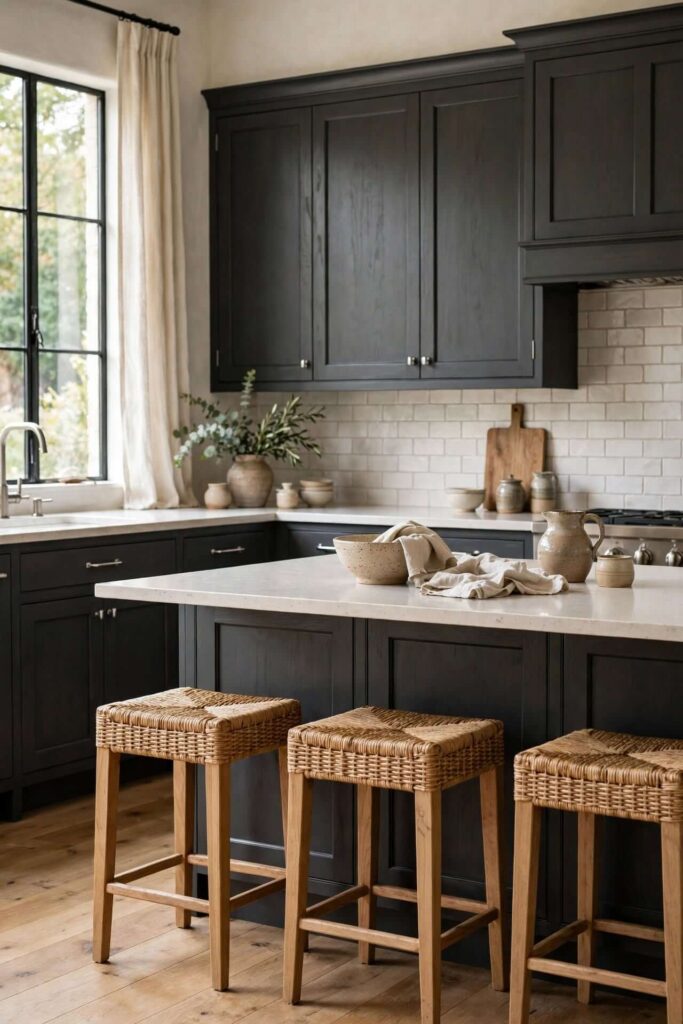
Shaker-style doors give dark grey cabinetry a timeless architectural detail that works across traditional, transitional, and modern kitchens. The recessed panels prevent the darker color from looking like a flat block, while simple hardware keeps the overall look current. Pair them with quartz counters, subway tile, or natural stone depending on your preferred style. For a relaxed finish, add woven stools, wood accents, and warm lighting rather than filling the room with decorative accessories.
6. Combine Dark Grey Cabinets With Creamy Countertops
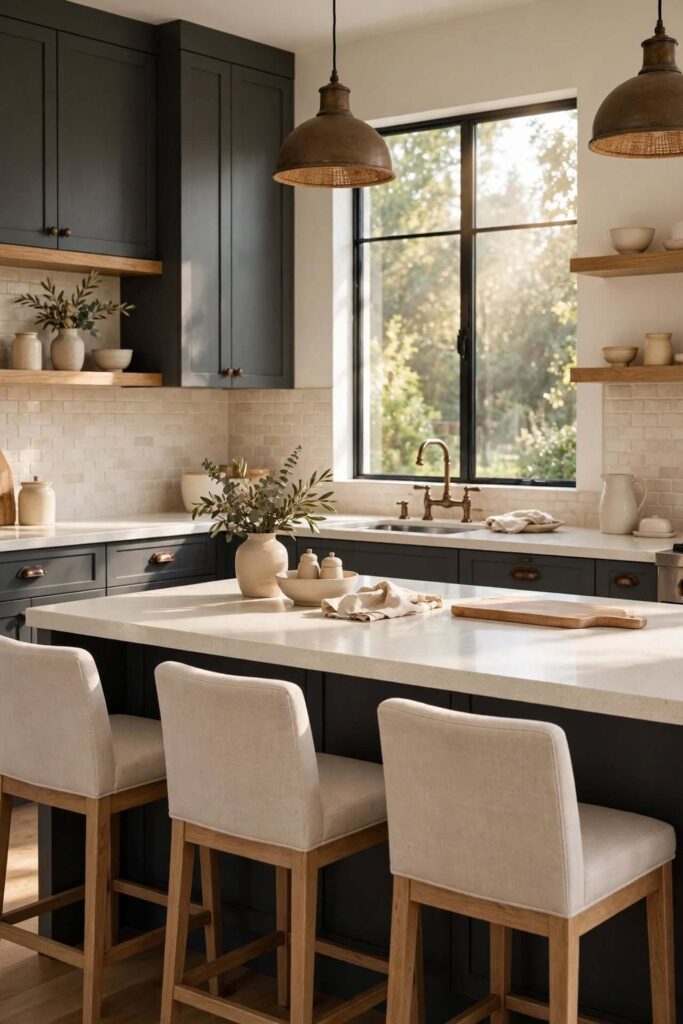
Cream-colored countertops can make dark grey cabinetry feel warmer and more approachable than bright white surfaces. Quartz, limestone-look surfaces, or creamy solid materials all work well. The key is choosing a countertop with a warm undertone rather than something icy or blue-toned. Add natural wood accessories and warm metal hardware to reinforce the palette. This is an especially useful approach for homeowners who want a dramatic cabinet color without creating a cold-looking kitchen. Dark grey kitchen cabinets with creamy quartz or marble counters feel bright rather than heavy.
7. Make a Dark Grey Island the Focal Point
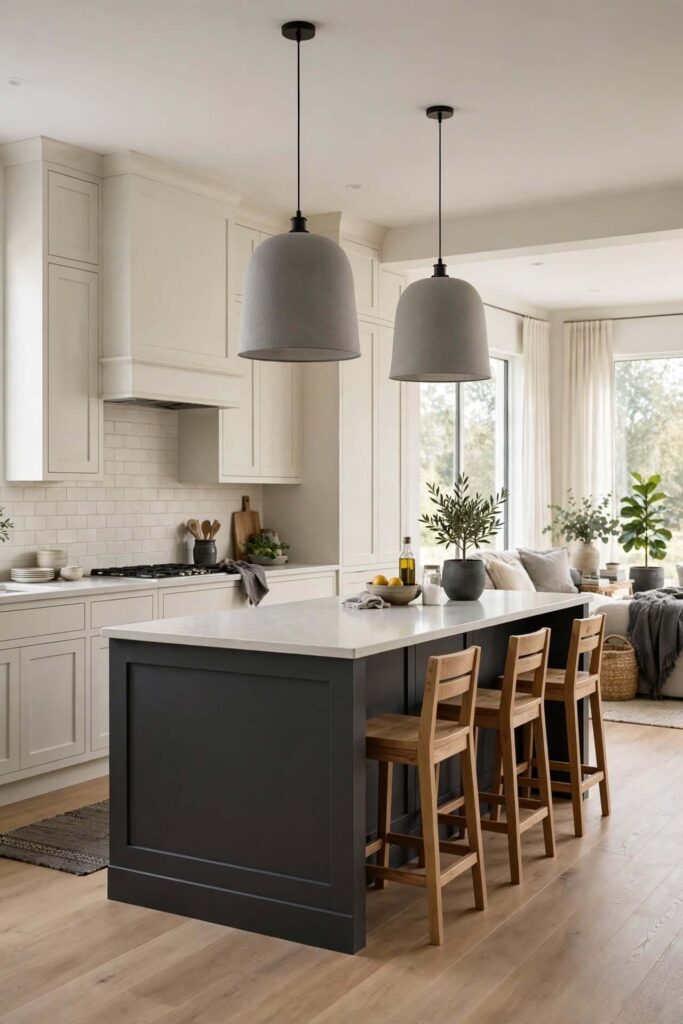
You don’t have to use dark grey on every cabinet. A dark grey kitchen island can act as a strong focal point while the surrounding cabinetry stays white, cream, or light wood. This approach is useful in open-plan kitchens where you want the island to visually anchor the space. Add contrasting stools and pendant lights above it, then repeat a small amount of grey elsewhere so the island feels connected rather than isolated.
Quick Win: Paint only the island base dark grey if you’re updating an existing kitchen and want a dramatic change without repainting every cabinet.
8. Add Greenery for a Softer Kitchen

Plants can soften the strong visual weight of dark grey kitchen cabinets while bringing a natural layer into the room. A trailing plant on an open shelf, fresh herbs near a window, or a medium potted plant on an island can be enough. Terracotta, natural wood, and creamy ceramics complement the charcoal backdrop particularly well. Keep greenery intentional rather than filling every available surface, especially in smaller kitchens where visual clutter can quickly build up.
9. Go Modern With Matte Charcoal Cabinets
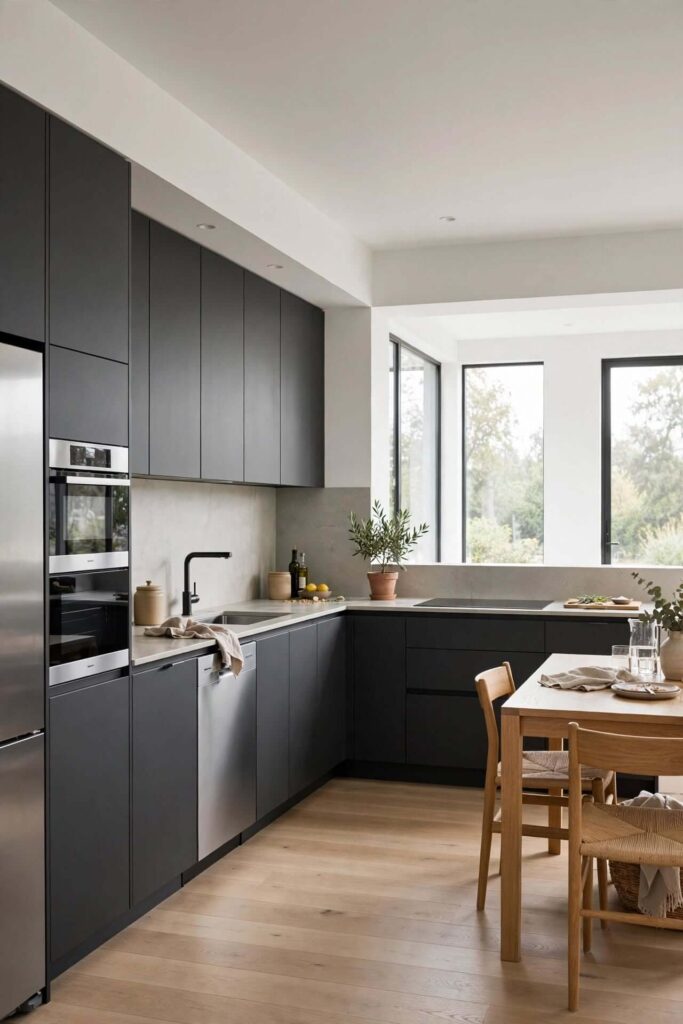
For a contemporary kitchen, choose flat-panel dark charcoal cabinets with a matte finish. The lack of ornate detailing lets the color and architecture take center stage. Pair them with a simple stone countertop, integrated appliances, minimal hardware, and a restrained backsplash. A single warm material—such as oak flooring or a wood dining table—keeps the room from feeling too industrial. This look is particularly effective in open-plan homes with clean architectural lines.
10. Layer Dark Grey With Soft Beige
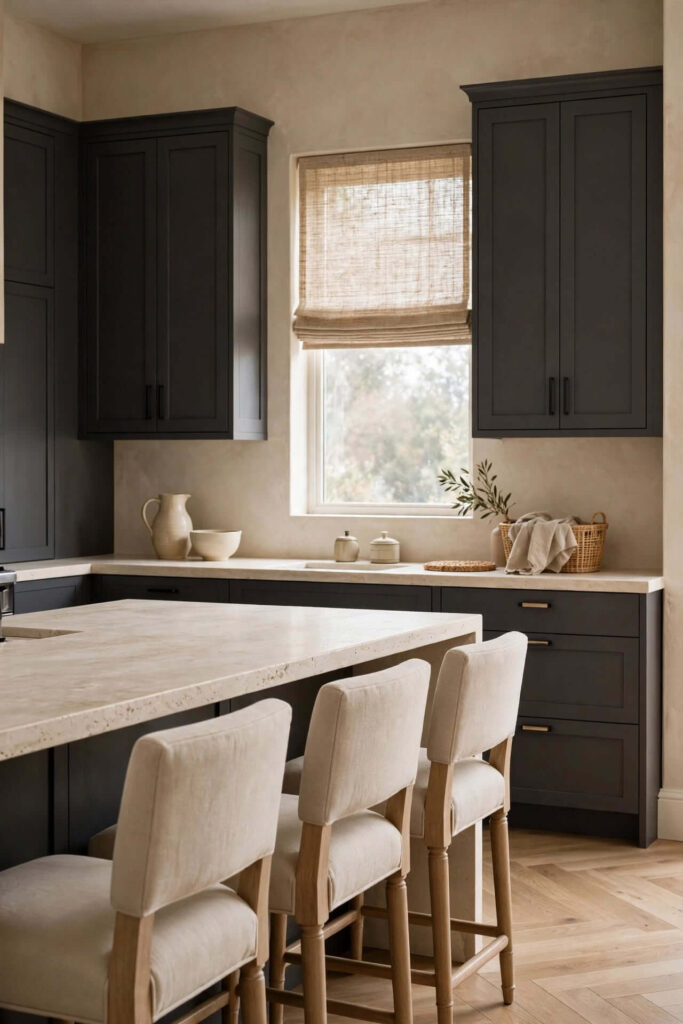
Beige and dark grey make a balanced combination because the warm neutrality of beige prevents charcoal cabinetry from dominating the room. Use beige through walls, Roman shades, upholstered stools, rugs, or subtle backsplash tile. Keep the cabinet color rich and consistent, then add one natural material such as oak or rattan for another layer of warmth. This palette is ideal if you like sophisticated neutrals but want something more characterful than an all-white kitchen. Dark grey kitchen cabinets layered with soft beige keep the palette calm and cohesive.
11. Use Black Accents to Deepen the Palette
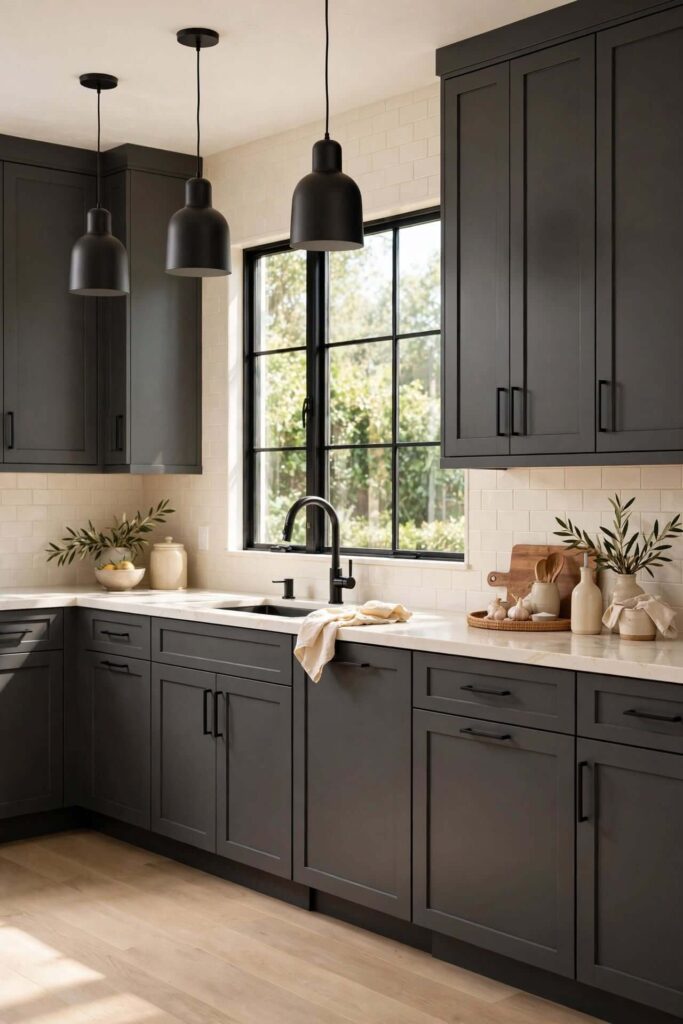
If you want dark grey cabinets to feel more contemporary, introduce a few carefully chosen black elements. Black pendant lights, window frames, faucets, or stools can create a sharper visual outline around the softer charcoal cabinetry. Keep the countertop and walls light enough to maintain contrast. The goal isn’t to make everything dark; it’s to use black as punctuation so the grey cabinetry looks intentional and architectural.
Quick Win: Add one black faucet or a pair of black pendant lights before changing larger elements. Small high-contrast details can noticeably sharpen the design.
12. Brighten the Look With Glass-Front Cabinets

Glass-front upper cabinets can break up a long stretch of dark grey cabinetry and provide a lighter visual moment. Use clear or lightly textured glass and display only a small collection of attractive everyday pieces. Cream ceramics, glassware, and light wood bowls work beautifully against charcoal interiors. Keep the lower cabinets solid for visual weight and practical storage. This approach is particularly useful for kitchens where a full wall of dark cabinetry feels visually heavy.
13. Add Open Shelving Between Dark Cabinets
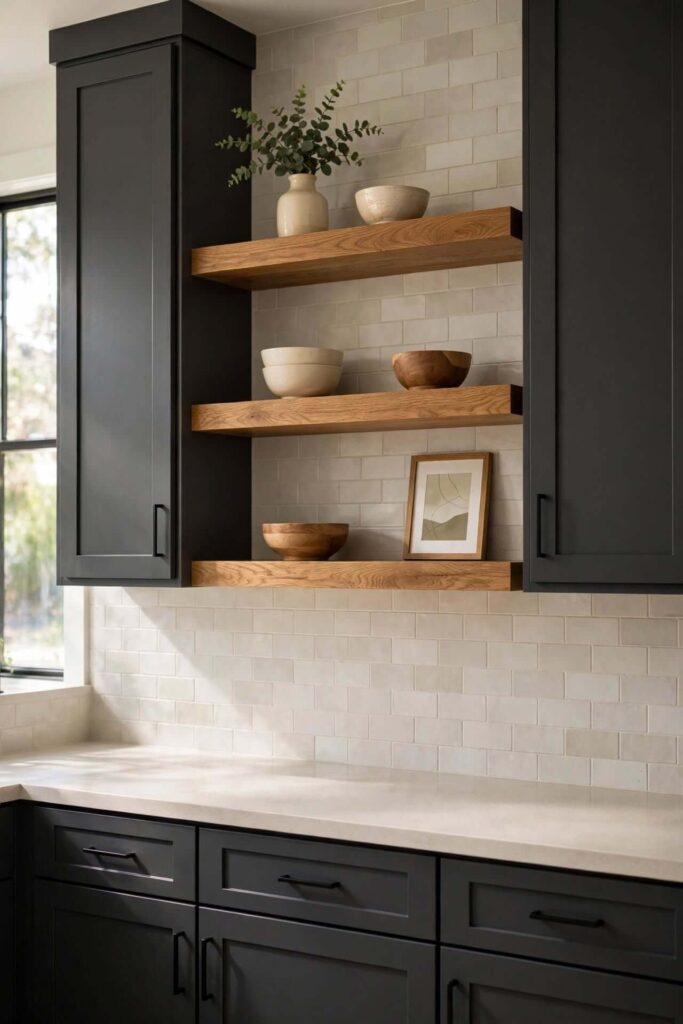
Open shelving introduces breathing room between dark grey cabinets while giving you space for practical everyday items. Choose natural oak for warmth or painted shelves for a more seamless look. Keep the shelves lightly styled with bowls, mugs, a plant, and perhaps one framed print. The trick is leaving some empty space so the shelves don’t become another visual wall. This works especially well when the kitchen needs storage without looking overly built-in.
14. Warm Up Dark Grey With Copper and Terracotta
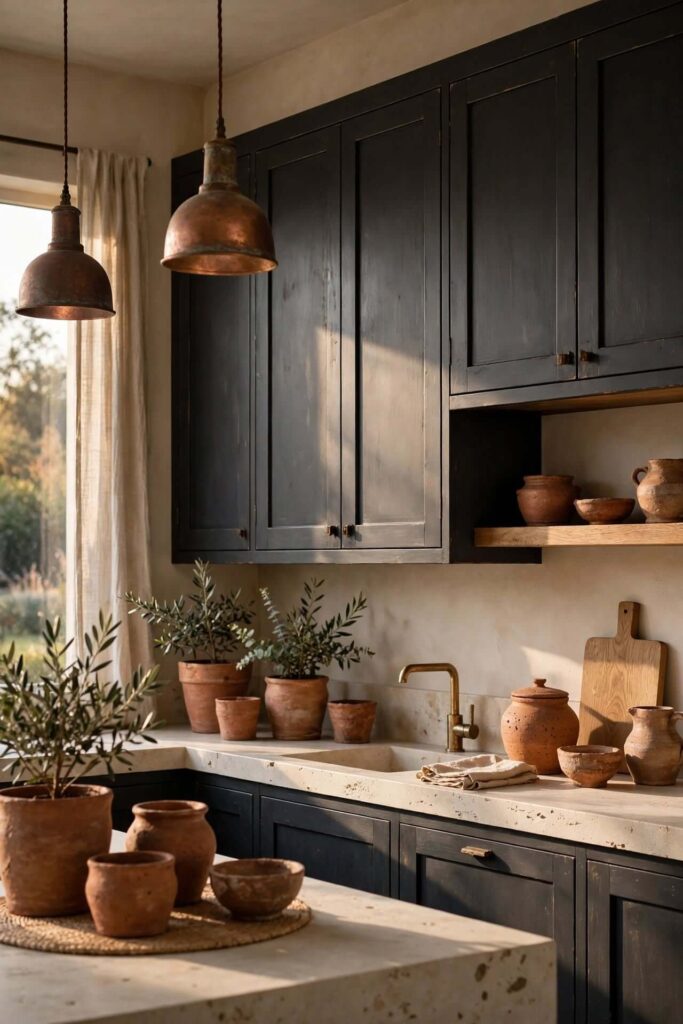
Copper and terracotta accents can give charcoal cabinetry an earthy, collected quality. Try terracotta planters, copper-toned lighting, handmade pottery, or a warm clay backsplash detail. These colors work particularly well with dark grey because they introduce warmth without competing with the cabinetry. Keep the countertop neutral and use natural wood where possible. The result feels more relaxed and characterful than a strictly monochromatic grey kitchen.
Quick Win: Add two terracotta planters or warm ceramic vessels to your countertop for an inexpensive way to shift the mood of dark cabinetry.
15. Use Two-Tone Dark Grey and White Cabinets
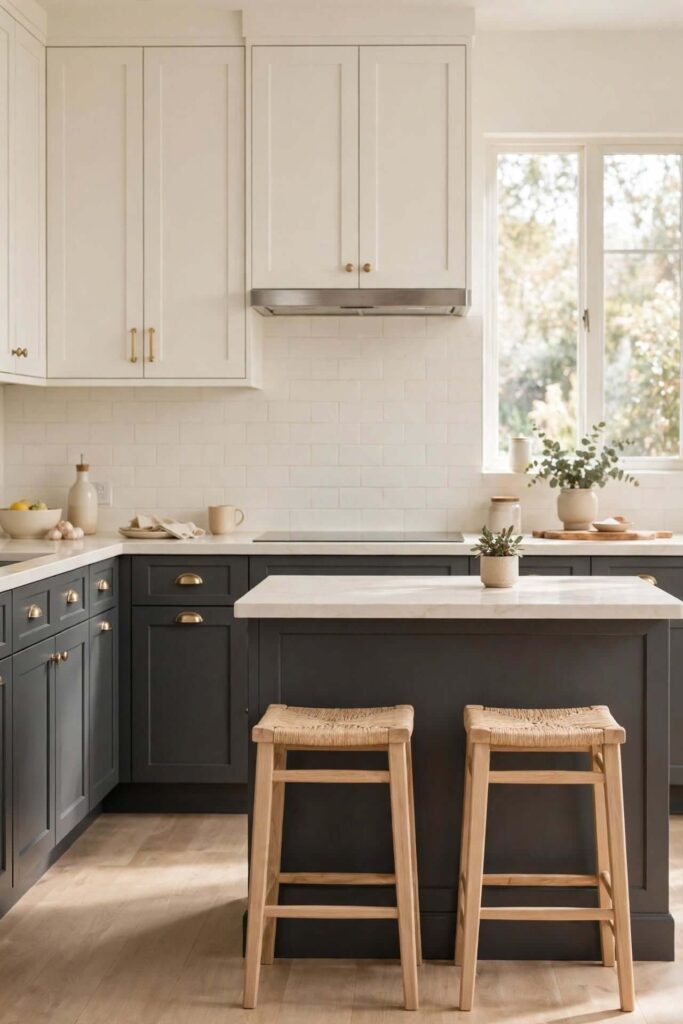
Two-tone cabinetry lets you enjoy the richness of dark grey without covering the entire kitchen in a dark color. Try dark grey on the lower cabinets with white uppers, or reverse the arrangement if the ceiling is high and the room receives plenty of natural light. Keep the countertop consistent across both zones to visually connect them. This is a practical choice for smaller kitchens where an all-dark cabinet scheme may feel too heavy. Dark grey kitchen cabinets in a two-tone scheme give you drama without darkening the whole room.
16. Let Natural Light Do the Work
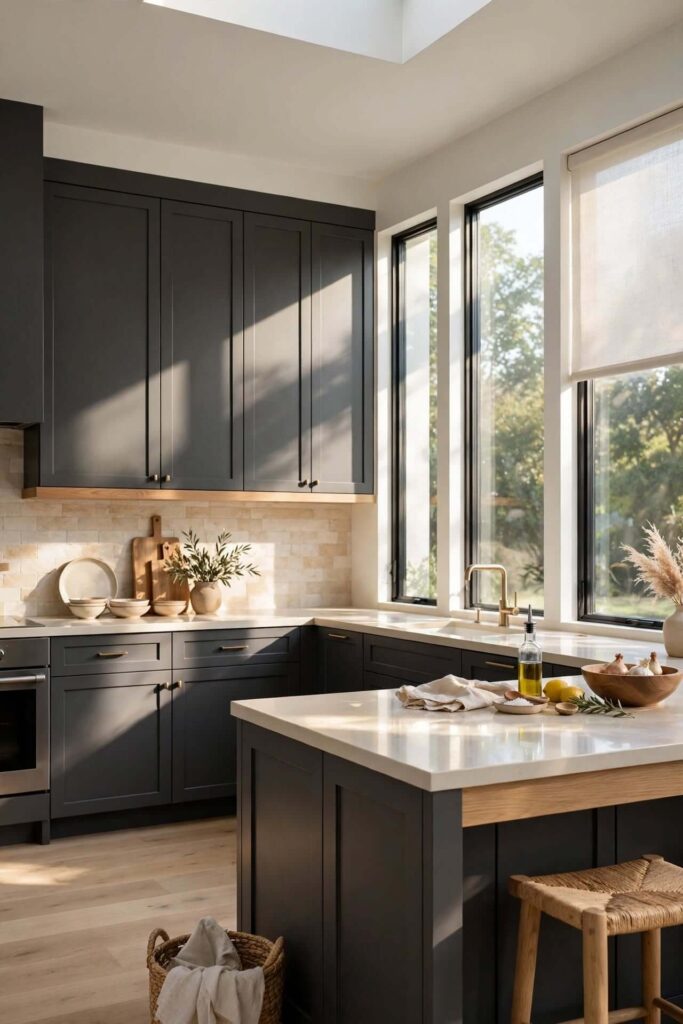
Dark grey cabinets look dramatically different depending on the light around them. If your kitchen has large windows or skylights, let that natural illumination become part of the design. Keep window treatments light and uncluttered, use reflective pale countertops, and avoid blocking the brightest areas with tall decor. In a naturally bright kitchen, even very deep charcoal cabinets can feel sophisticated and calm rather than heavy.
17. Finish the Look With Warm Layered Lighting
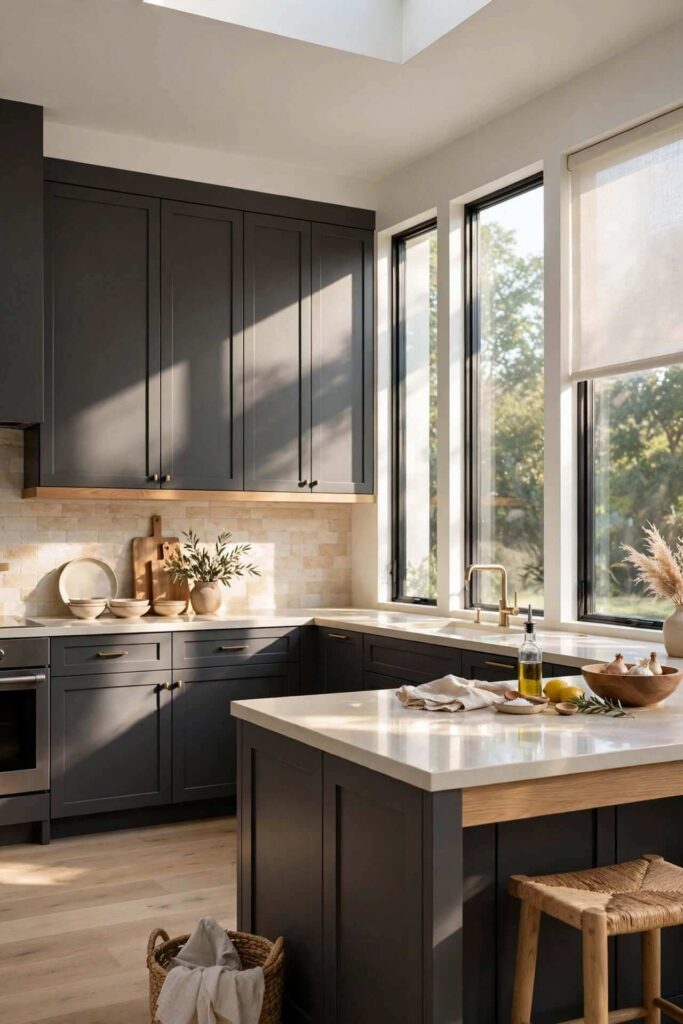
Good lighting can make or break a dark grey kitchen. Combine ceiling lighting with under-cabinet strips and one decorative pendant over an island or dining area. Warm lighting helps charcoal cabinets appear richer and more inviting, while under-cabinet illumination makes work surfaces practical after sunset. Avoid relying on one bright overhead fixture. Several softer light sources create depth and let the dark cabinetry remain dramatic without making the room feel flat. Dark grey kitchen cabinets look their best under warm layered lighting, so plan the lights before you paint.
Quick Win: Install warm LED under-cabinet lighting. It can instantly add depth to dark grey cabinetry and make evening kitchen tasks more comfortable.
Conclusion
Dark grey kitchen cabinets give you plenty of room to create a kitchen that feels sophisticated without becoming cold or overly formal. Balance their depth with warm whites, natural wood, soft beige, greenery, brass, or plenty of natural light. You don’t need to recreate an entire look from one photo either. Pick the combinations that suit your kitchen’s size, architecture, lifestyle, and budget, then build the room around those elements gradually.
Frequently Asked Questions
Yes. Dark grey remains a versatile cabinet color because it works with modern, transitional, farmhouse, and classic kitchen styles. Its success largely depends on the surrounding colors, lighting, and materials.
Warm white, cream, beige, natural wood, muted green, brass, terracotta, and soft marble tones all pair well with dark grey. The best choice depends on whether you want the kitchen to feel warmer, brighter, earthy, or more contemporary.
They can make a poorly lit kitchen feel visually heavier, but they don’t automatically make a room look smaller. Light countertops, reflective backsplashes, good lighting, and lighter walls can balance the darker cabinetry.
Cream, white, light grey, marble-look, and warm beige countertops are versatile choices. Natural stone or quartz with subtle veining can also add visual interest without competing with the cabinets.
Yes. In a small kitchen, consider using dark grey on lower cabinets while keeping upper cabinets, walls, or countertops light. This creates contrast while maintaining a more open visual effect.
Brass, brushed nickel, black, bronze, and chrome can all work. Aged brass adds warmth, black creates a modern contrast, and brushed nickel provides a quieter transitional look.
Like most dark cabinetry, they can show fingerprints and dust more clearly than some lighter finishes. Matte finishes can help reduce visible reflections, while regular gentle cleaning keeps the surfaces looking consistent.
Absolutely. Natural oak, walnut, and other warm wood tones can soften the cooler appearance of grey cabinetry. Wood works particularly well through islands, shelving, flooring, stools, or small accessories.
Matte finishes generally create a softer, more contemporary appearance and reduce glare. Glossy finishes reflect more light and can work well in modern kitchens, particularly when the room has limited natural brightness.
White marble, creamy subway tile, pale stone, warm beige tile, and simple neutral backsplashes are all useful options. Choose a backsplash that provides enough contrast while complementing your countertop.
Yes. Brass adds warmth and visual contrast against charcoal cabinetry. Brushed or aged brass is particularly useful when you want a softer, less formal appearance.
Introduce warm wood, beige textiles, terracotta, copper, greenery, or warm lighting. You don’t need to change the cabinets themselves to make the overall kitchen feel more inviting.
They can work beautifully in a modern farmhouse kitchen when combined with shaker doors, natural wood, warm white surfaces, simple hardware, and traditional lighting. Avoid making every element dark if you want to retain the airy farmhouse character.
Using too many dark surfaces without enough contrast can make the room feel visually heavy. Balance the cabinets with lighter countertops, walls, backsplashes, flooring, or strong natural and artificial lighting.