
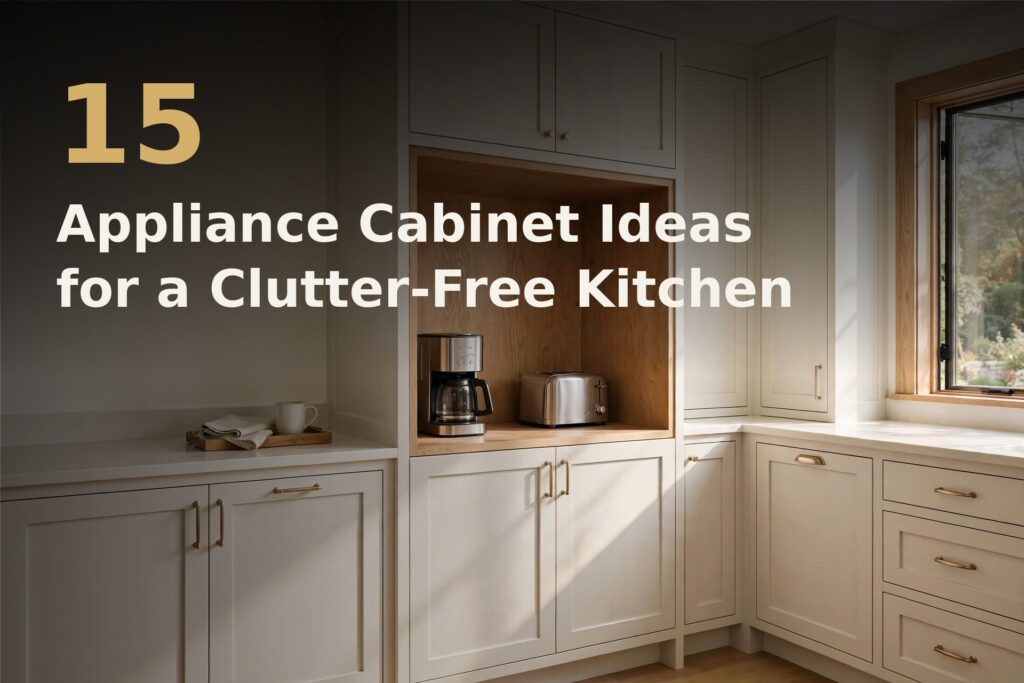
A kitchen can look beautifully styled and still feel messy when the toaster, coffee maker, blender, and air fryer compete for precious counter space. The right appliance cabinet can change that without requiring a complete kitchen renovation. Whether you have a compact apartment kitchen, a spacious family kitchen, or a rental where permanent changes aren't possible, there are clever ways to make everyday appliances easier to access and less visible. From sleek cabinets that conceal everything behind closed doors to charming coffee stations and custom pull-out storage, these ideas will help you find a solution that looks intentional, works with your routine, and makes your kitchen feel calmer.
In This Article
- 1. A Hidden Appliance Garage Behind Cabinet Doors
- 2. A Floor-to-Ceiling Appliance Storage Cabinet
- 3. A Warm Oak Appliance Cabinet for Natural Texture
- 4. A Pocket-Door Appliance Cabinet for a Seamless Look
- 5. A Dedicated Coffee and Breakfast Appliance Station
- 6. A Small-Kitchen Appliance Cabinet With Vertical Storage
- 7. A Pull-Out Appliance Cabinet for Easy Access
- 8. A Built-In Appliance Cabinet With an Open Working Niche
- 9. A Glass-Front Appliance Cabinet for Display-Worthy Pieces
- 10. A Budget-Friendly Freestanding Appliance Cabinet
- 11. A Kitchen Island Appliance Cabinet With Hidden Storage
- 12. A Corner Appliance Cabinet That Uses Awkward Space
- 13. A Dark Appliance Cabinet for Sophisticated Contrast
- 14. A Minimalist Appliance Cabinet With Handleless Doors
- 15. A Custom Appliance Cabinet With Adjustable Shelves and Drawers
- How to Choose the Right Appliance Cabinet for Your Kitchen
- Conclusion
- Frequently Asked Questions
1. A Hidden Appliance Garage Behind Cabinet Doors
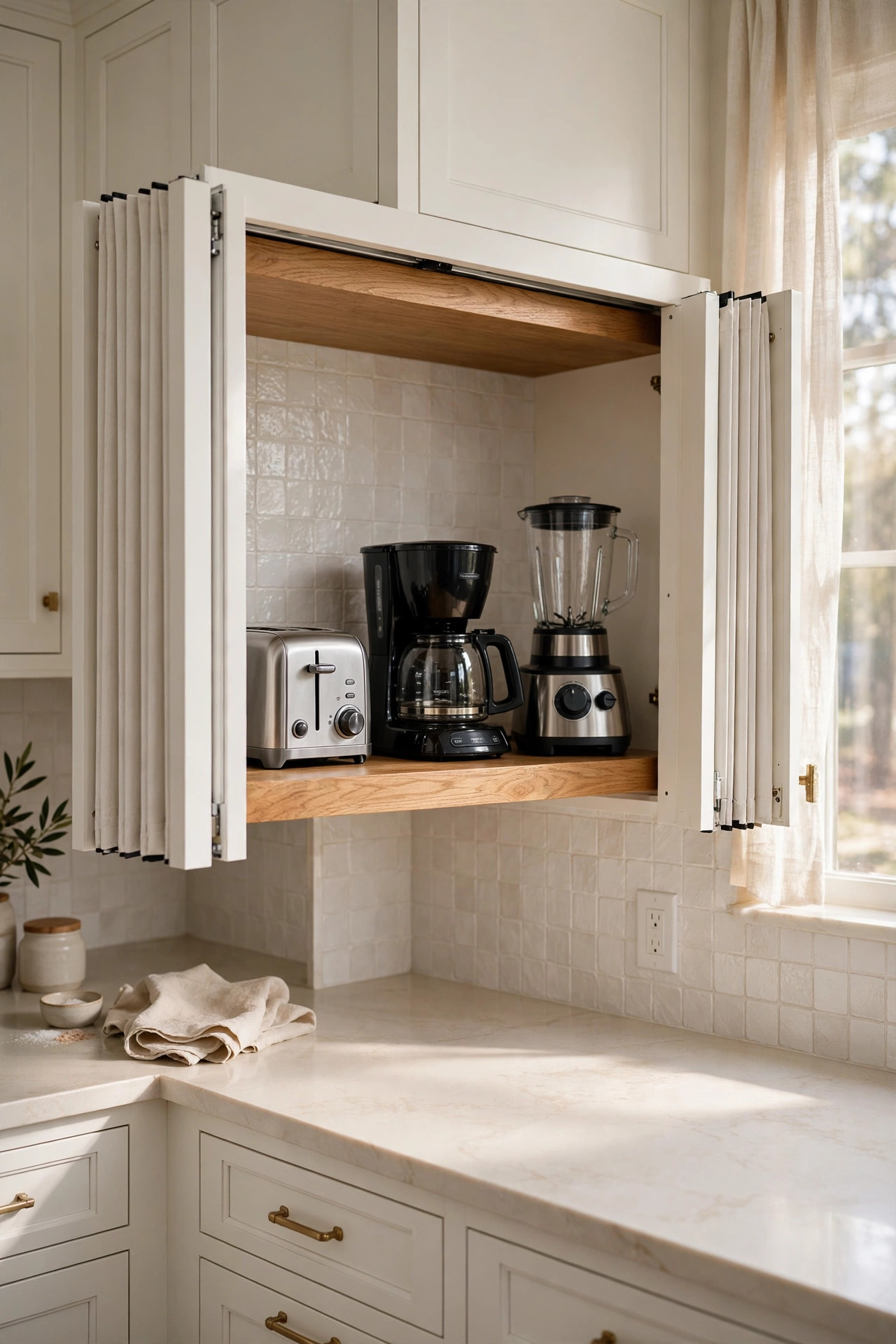
An appliance garage is one of the most practical ways to keep a kitchen looking tidy without sacrificing convenience. Create a dedicated countertop-height cabinet with doors that lift, slide, or fold away to reveal your coffee maker, toaster, and blender. White cabinetry keeps the exterior seamless, while a warm oak interior adds contrast and character. Include an accessible outlet and enough clearance for each appliance. This design works especially well in busy family kitchens where everyday essentials need to stay within reach.
Quick Win: If you already have a deep countertop, add a matching cabinet or a purpose-built appliance garage at one end to conceal smaller appliances without changing the entire kitchen.
2. A Floor-to-Ceiling Appliance Storage Cabinet
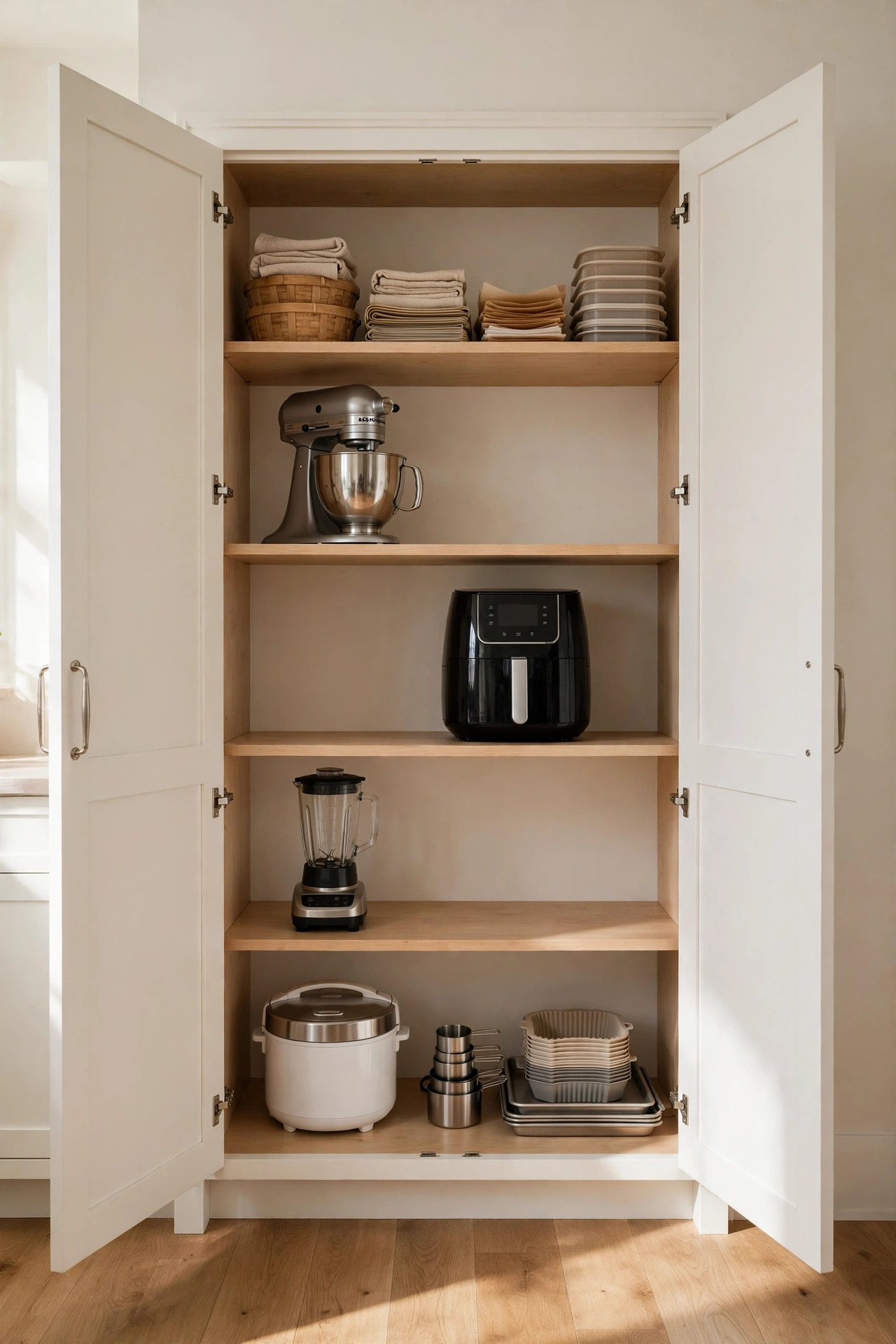
When countertop clutter keeps returning, a tall appliance storage cabinet can provide a more permanent solution. Dedicate one section of a floor-to-ceiling pantry to the air fryer, stand mixer, rice cooker, and other appliances you use regularly. Adjustable shelves let you accommodate different heights, while closed doors maintain a clean exterior. For a cohesive look, match the cabinet fronts to your existing kitchen cabinetry and use pull-out shelves for heavier equipment. This arrangement is particularly useful in kitchens with limited counter space but room for vertical storage.
3. A Warm Oak Appliance Cabinet for Natural Texture

If an all-white kitchen feels a little flat, a natural oak appliance cabinet introduces warmth without overwhelming the room. Choose light oak veneer or solid wood detailing, then pair it with creamy walls, pale stone countertops, and simple black or brushed brass hardware. An open niche can house a coffee maker and toaster, while lower drawers hold filters, cords, and accessories. The visible grain creates depth, making the storage feel like a considered architectural feature rather than an ordinary utility cupboard.
Quick Win: Add a wood-lined tray and one matching wooden shelf inside an existing white cabinet to introduce the same warm, custom look on a smaller budget.
4. A Pocket-Door Appliance Cabinet for a Seamless Look
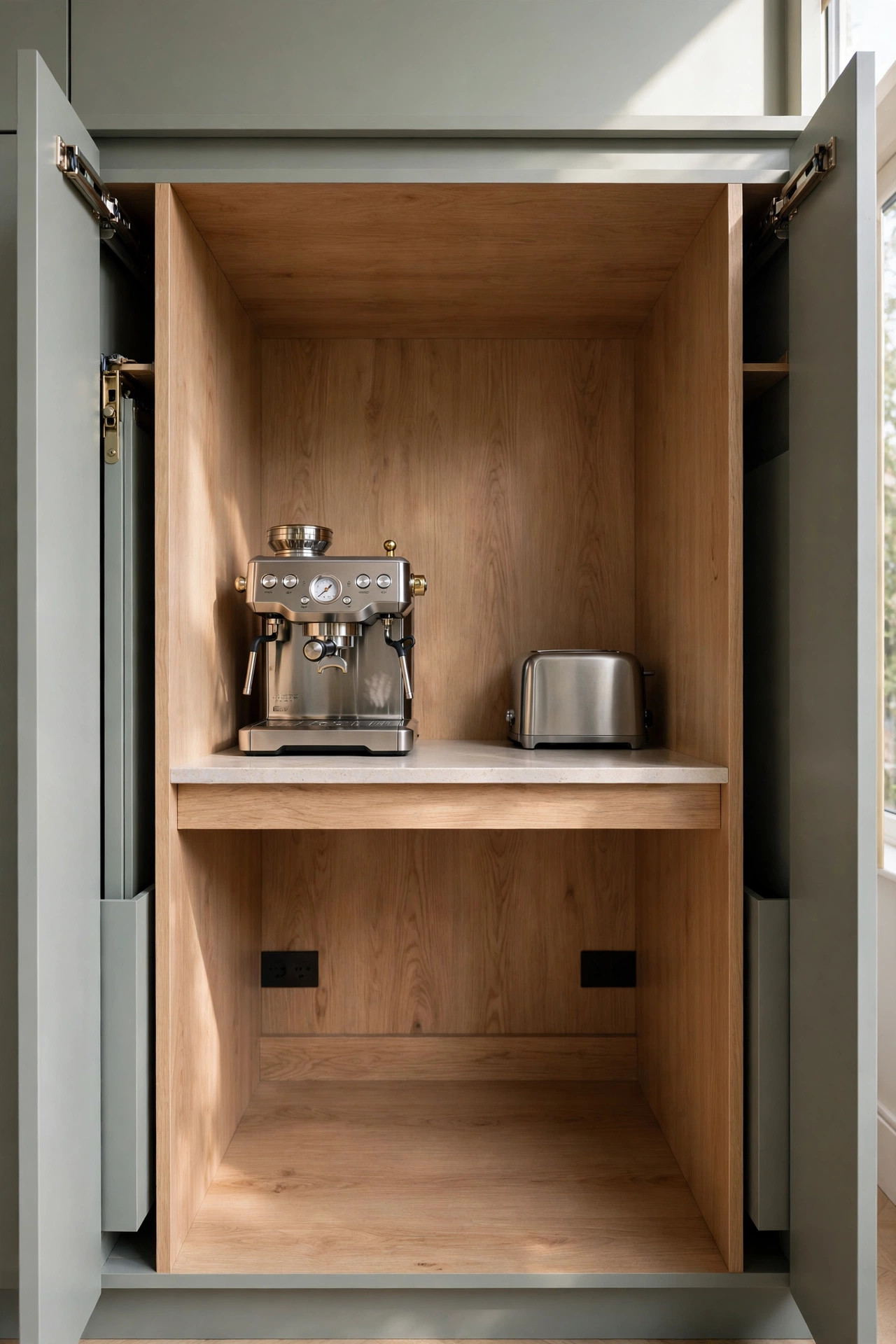
Pocket-door cabinets are a smart choice when you want appliances accessible during breakfast but completely hidden afterward. The doors slide back into the cabinet sides instead of swinging into the kitchen, leaving the work area unobstructed. This is especially helpful in narrow kitchens or where an island sits close to the main counter. Choose flush cabinet fronts for a streamlined appearance, and plan for adequate depth, ventilation, and safe access to power before installing the mechanism.
5. A Dedicated Coffee and Breakfast Appliance Station
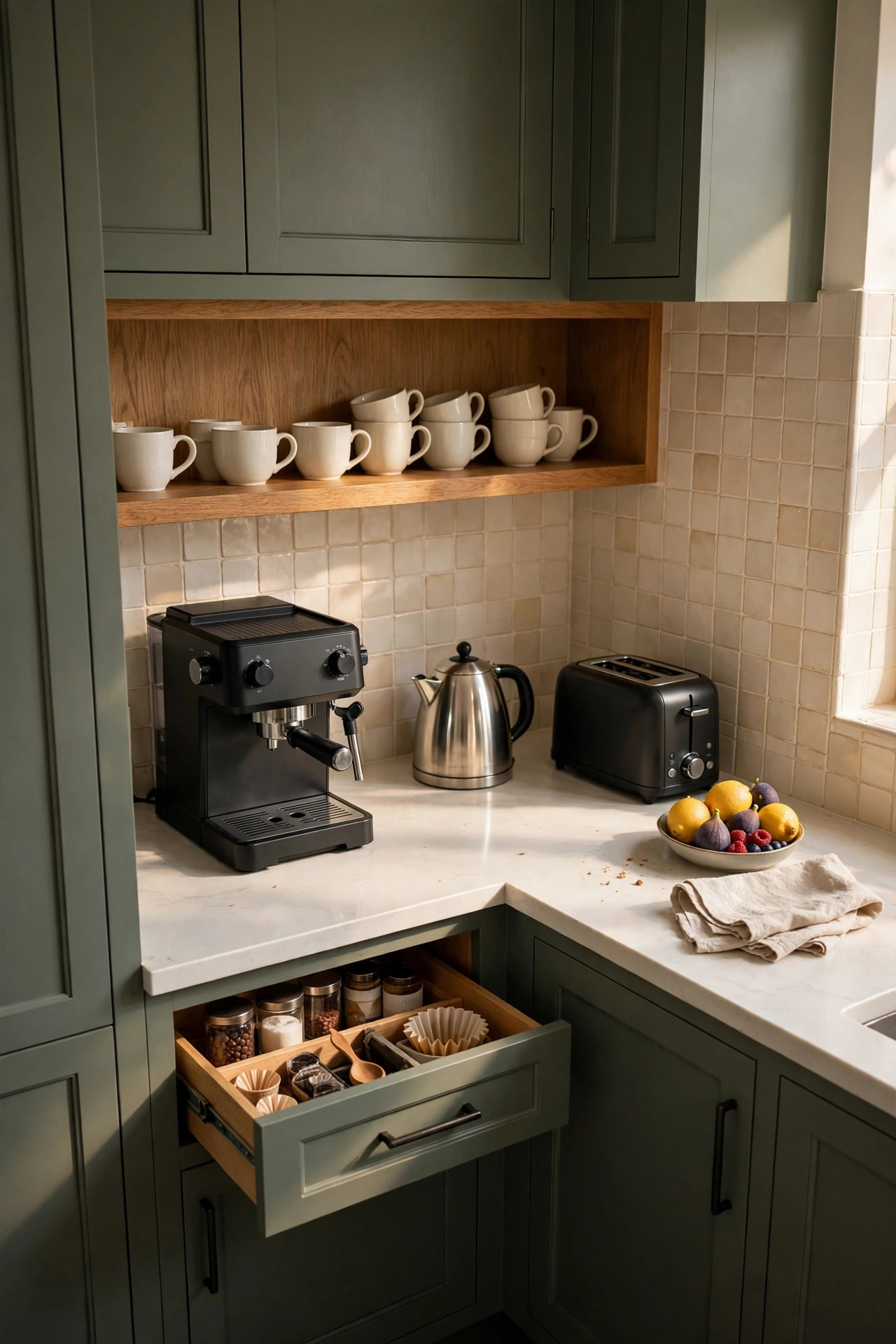
Turn a frequently used corner of your kitchen into a dedicated breakfast station with an appliance cabinet designed around your morning routine. Keep the coffee machine, kettle, and toaster together, with drawers underneath for tea bags, coffee beans, bread knives, and napkins. A contrasting backsplash or oak-lined niche helps distinguish the area from the rest of the cabinetry. If several people share the kitchen, this arrangement keeps breakfast essentials together and frees the main preparation counter for cooking.
Quick Win: Group your coffee maker, mugs, and daily coffee supplies on one tray or shelf before investing in new cabinetry. This reveals how much space a dedicated station actually needs.
6. A Small-Kitchen Appliance Cabinet With Vertical Storage
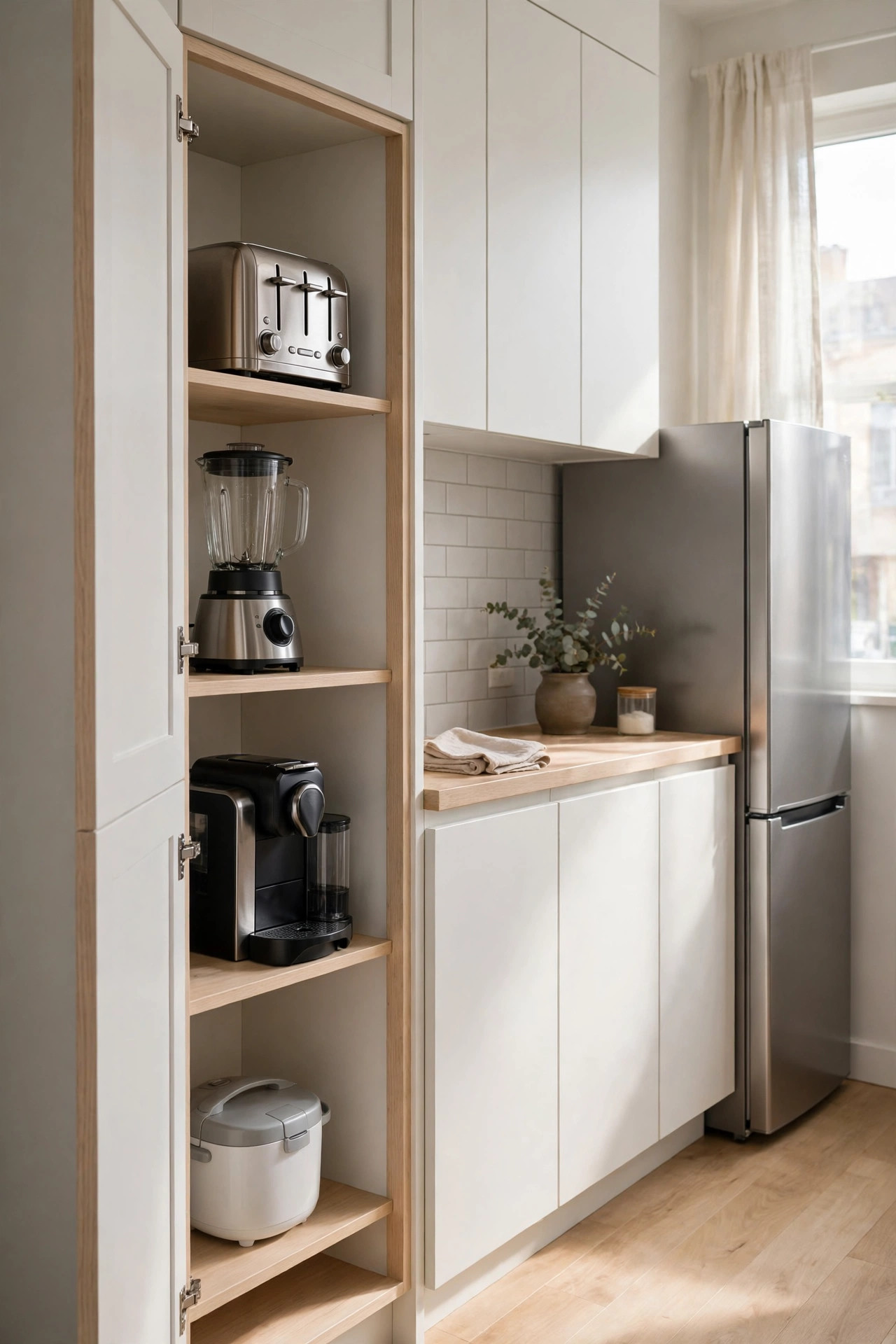
In a small kitchen, every inch matters, so a narrow vertical appliance cabinet can be more useful than a wide, shallow cupboard. Look for a slim pantry section beside the refrigerator or at the end of a cabinet run, then arrange appliances on adjustable shelves according to their height and weight. Store the most-used items between waist and shoulder level and reserve upper shelves for occasional-use equipment. Light cabinet fronts and minimal hardware help the storage blend into a compact kitchen without making it feel crowded.
7. A Pull-Out Appliance Cabinet for Easy Access

Heavy appliances can be awkward to lift from deep cupboards, particularly stand mixers, pressure cookers, and large blenders. A pull-out appliance shelf brings the equipment toward you instead of forcing you to reach into the back of a cabinet. Choose sturdy, weight-rated hardware and a shelf wide enough to support the appliance securely. Keep frequently used equipment on the most accessible level, and check that cords cannot snag when the shelf moves. This practical solution is especially helpful for homeowners who want better ergonomics without leaving appliances on display.
Quick Win: Add a sturdy pull-out organizer to a suitable existing base cabinet, but verify its load rating, internal dimensions, and clearance before purchasing.
8. A Built-In Appliance Cabinet With an Open Working Niche
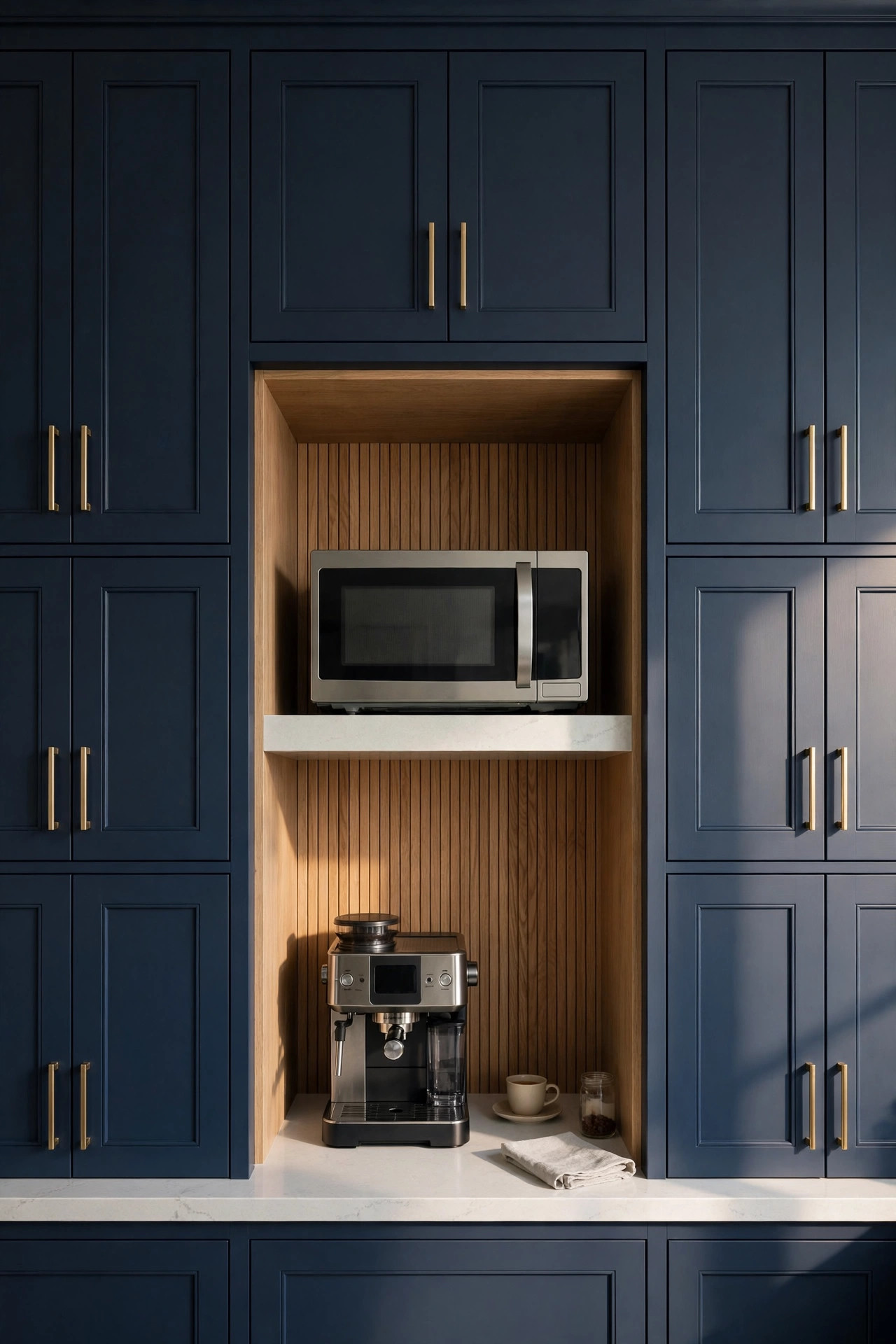
An open working niche gives you the convenience of a dedicated appliance area without needing to open cabinet doors every time you make coffee or prepare a snack. Integrate the niche into a bank of cabinetry, using the same countertop material inside and outside to create a continuous look. A contrasting backsplash adds depth, while concealed storage below keeps accessories out of sight. This approach works well for appliances used throughout the day, provided the niche has appropriate ventilation and safe electrical access.
9. A Glass-Front Appliance Cabinet for Display-Worthy Pieces
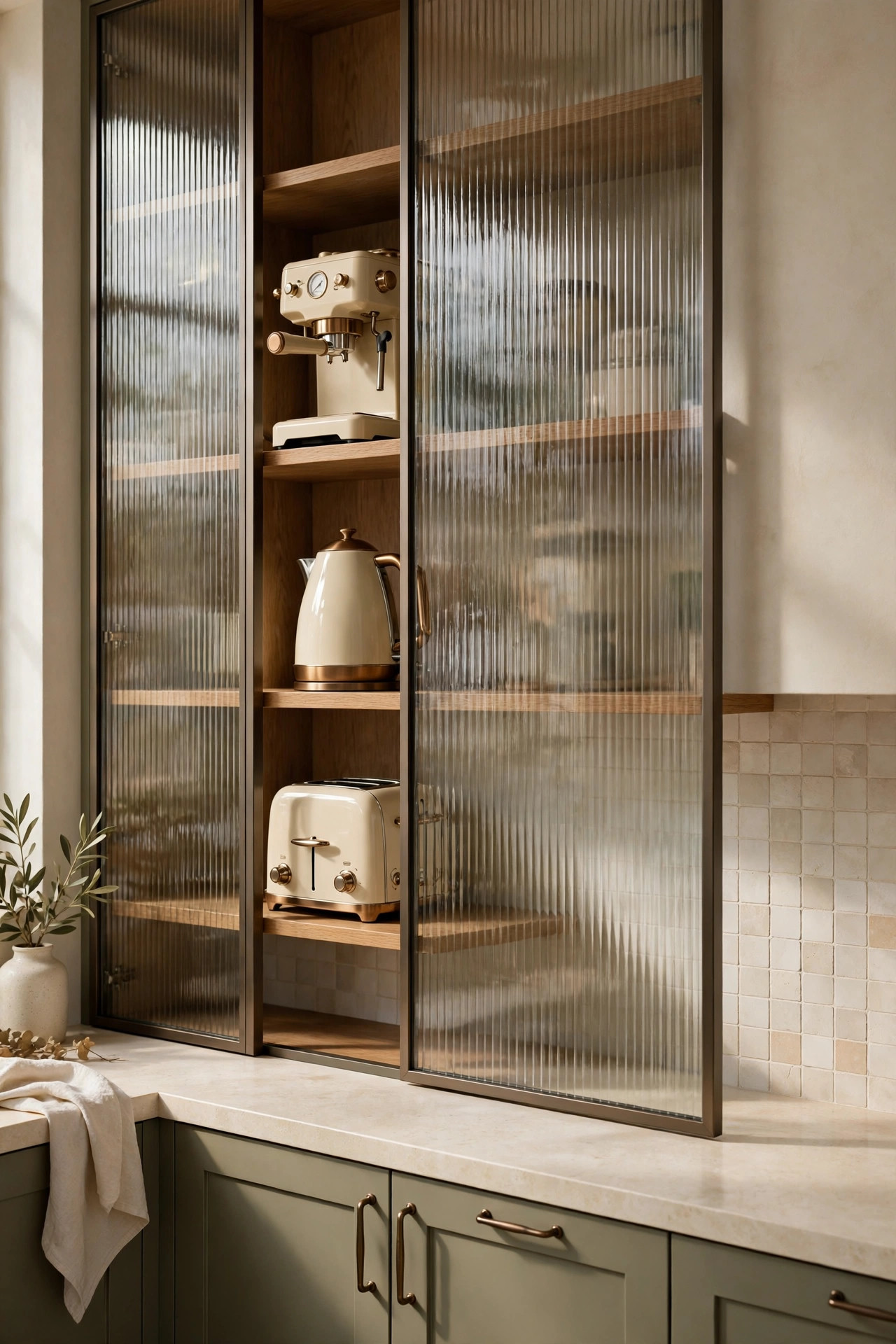
Not every appliance needs to disappear completely. A glass-front appliance cabinet can add visual interest when your coffee maker, kettle, or mixer has a coordinated finish worth showing. Choose reeded or lightly frosted glass to soften the view of stored items, and use interior lighting sparingly to make the cabinet feel considered rather than busy. Keep cords, packaging, and accessories in closed drawers below. This style suits kitchens that lean traditional, transitional, or modern vintage, particularly when glass-front cabinets already appear elsewhere.
10. A Budget-Friendly Freestanding Appliance Cabinet

You don't need custom joinery to create a dedicated appliance storage area. A freestanding kitchen cabinet with adjustable shelves and doors can conceal everyday equipment while giving renters flexibility to move it later. Choose a finish that complements your existing cabinets, or use a natural wood cupboard to introduce warmth into a plain rental kitchen. Measure the appliances and available floor space before buying, and secure tall furniture against tipping according to the manufacturer's instructions. A flat top can also provide extra workspace if it is designed for that purpose.
Quick Win: Refresh a sound secondhand cupboard with cabinet paint and new hardware, then add shelf organizers to separate appliances from accessories.
11. A Kitchen Island Appliance Cabinet With Hidden Storage

If your kitchen island has deep base cabinetry, use part of it to store appliances you want nearby but not permanently on the counter. Wide drawers or cabinet doors can accommodate blenders, food processors, and compact cooking appliances, keeping the main kitchen run less crowded. Plan storage around the island's usable depth, and make sure doors and drawers do not interfere with seating or walkways. This idea is particularly useful in open-plan homes, where clutter on the island can be visible from the living and dining areas.
12. A Corner Appliance Cabinet That Uses Awkward Space
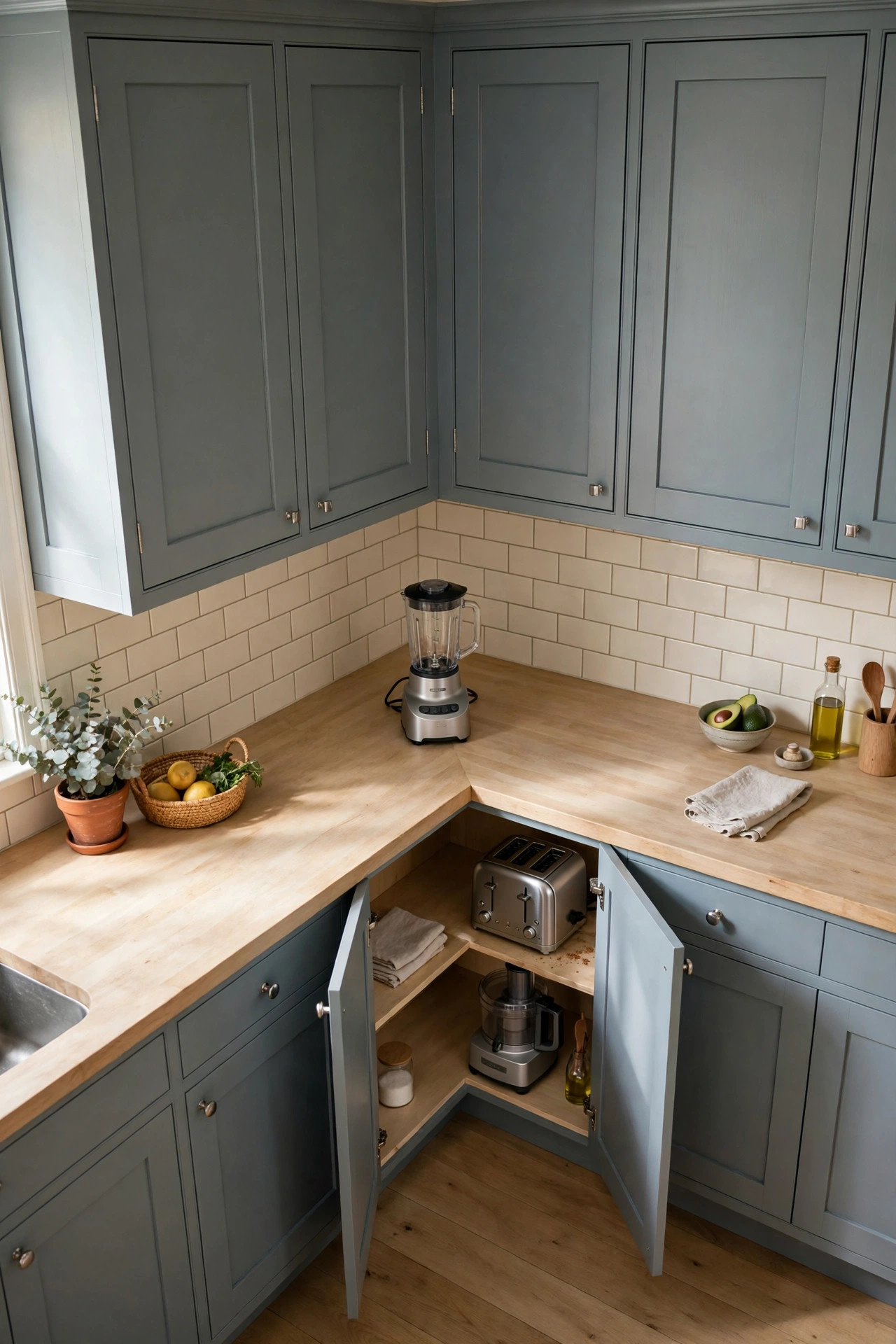
Awkward kitchen corners often become dumping grounds for appliances that don't fit anywhere else. A thoughtfully designed corner appliance cabinet can turn that neglected area into useful storage. Depending on the layout, use a corner cupboard with accessible shelving, a suitable rotating organizer, or an angled countertop niche for a coffee maker or toaster. Keep the most frequently used appliances toward the front, and avoid deep arrangements that require moving several items just to reach one. This solution can be particularly valuable in L-shaped kitchens.
Quick Win: Remove rarely used items from your corner cupboard first, then group the remaining appliances on a stable, easy-to-clean shelf so everything is visible and reachable.
13. A Dark Appliance Cabinet for Sophisticated Contrast
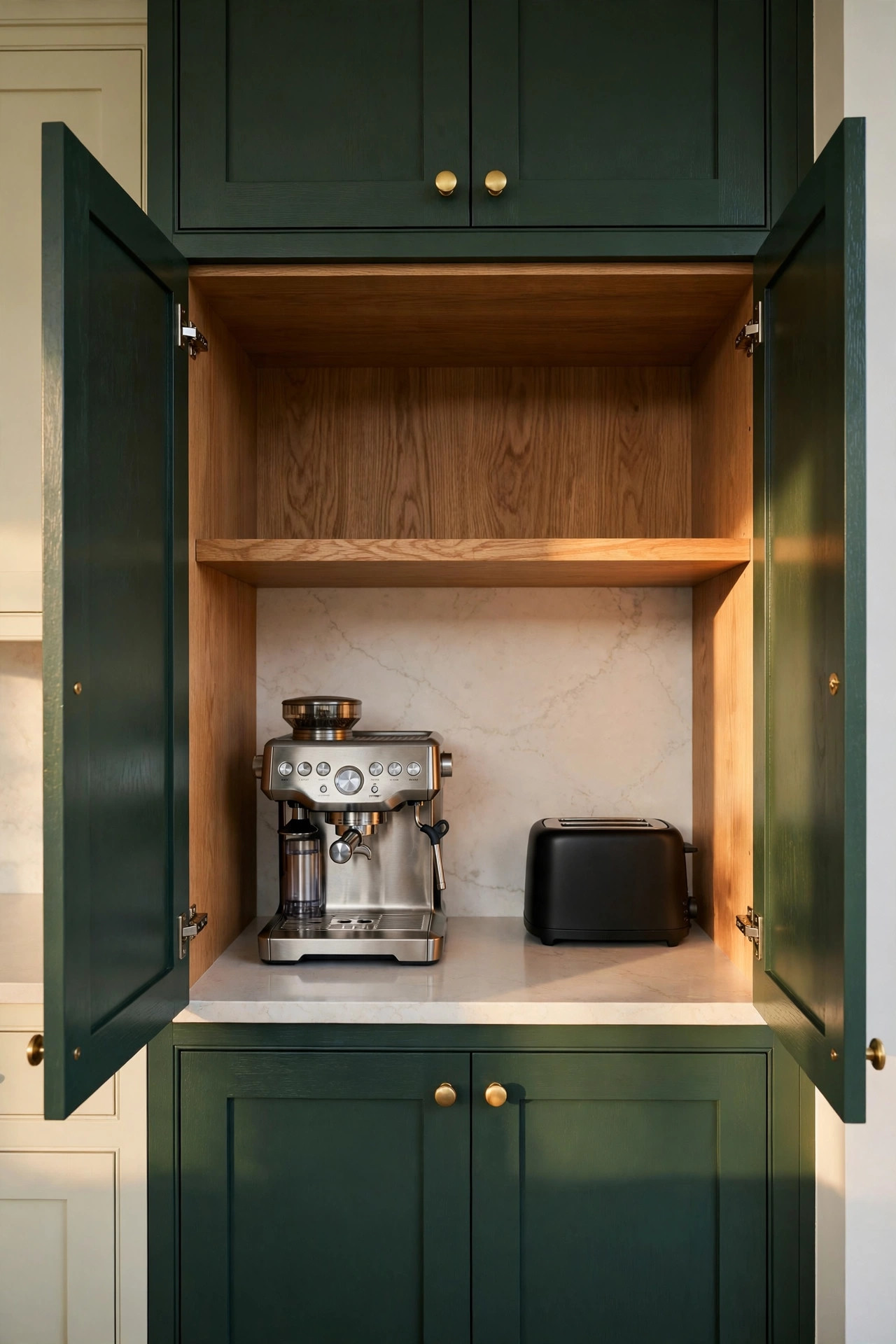
A dark appliance cabinet can make practical storage feel like a deliberate design feature. Deep forest green, charcoal, or inky navy cabinetry pairs especially well with warm oak interiors, pale stone counters, and aged brass or brushed bronze hardware. Keep the surrounding surfaces lighter if you want the cabinet to stand out without making the kitchen feel heavy. An enclosed niche also helps hide appliance cords and mismatched finishes. This look works beautifully in kitchens with traditional detailing or contemporary cabinetry that needs a little more depth.
14. A Minimalist Appliance Cabinet With Handleless Doors

For a clean, contemporary kitchen, choose an appliance cabinet with flat-panel doors and discreet integrated pulls or suitable push-to-open hardware. Matching the cabinet finish to the surrounding kitchen makes the storage nearly disappear, leaving the backsplash, countertop, and architectural lines to stand out. Inside, use adjustable shelves and dedicated accessory compartments to keep everything orderly. This is an excellent option for modern apartments and open-plan homes where visual simplicity matters just as much as storage capacity.
Quick Win: Replace mismatched countertop containers with one coordinated storage tray and clear away unused appliances to create a more streamlined look before considering new cabinetry.
15. A Custom Appliance Cabinet With Adjustable Shelves and Drawers

When you own appliances in several sizes, a custom cabinet that combines adjustable shelves, deep drawers, and pull-out trays offers the most flexibility. Store bulky equipment on reinforced lower shelves, smaller appliances at comfortable heights, and accessories in shallow drawers with dividers. Leave enough room to remove each item without rearranging the rest. A combination of closed doors and practical interior organizers keeps the kitchen visually calm while allowing the storage to adapt as your needs change. It's a worthwhile approach for a long-term kitchen renovation.
How to Choose the Right Appliance Cabinet for Your Kitchen
Before choosing a design, consider how often you use each appliance, how much space you have, and whether you want everything concealed or only selected items.
- For small kitchens: Prioritize vertical cabinets, slim pantry units, and pull-out shelves.
- For busy households: Choose an appliance garage or a dedicated breakfast station for everyday essentials.
- For a luxury look: Consider pocket doors, natural oak interiors, integrated lighting, and seamless cabinet fronts.
- For renters: A freestanding cabinet offers useful storage without permanent joinery.
- For bulky appliances: Check shelf dimensions, load capacity, door clearance, and ease of access before committing.
One important detail: appliances that produce heat or steam need suitable clearance and ventilation. Follow the appliance manufacturer's instructions, use electrical outlets appropriate for the equipment, and avoid operating appliances inside an enclosed cabinet unless the manufacturer explicitly permits it. Plan for safe cord routing and keep ventilation openings unobstructed.
Conclusion
A well-planned appliance cabinet can make your kitchen feel calmer, more spacious, and easier to use every day. You don't need custom cabinetry or a complete renovation to achieve that change. Start with the appliances that create the most clutter, then choose a storage solution that suits your layout, decorating style, and budget. Whether you prefer warm oak, sleek handleless doors, or a practical freestanding cupboard, even one thoughtful change can make your kitchen feel more intentional.
Frequently Asked Questions
An appliance cabinet is a dedicated storage area designed for kitchen appliances such as toasters, blenders, coffee makers, and stand mixers. It may have closed doors, open shelves, pull-out trays, or a built-in countertop niche.
An appliance cabinet is a broad storage solution that can accommodate multiple appliances and accessories. An appliance garage is typically a countertop-level compartment designed to conceal frequently used appliances behind sliding, folding, or lifting doors.
Yes. Tall cabinets, narrow pantry units, and vertical storage can free up valuable counter space. Adjustable shelves help you make the most of limited room without sacrificing accessibility.
The ideal depth depends on the appliance and the manufacturer's clearance requirements. Measure the appliance, including its handles and any space needed for cords, ventilation, and safe operation, before choosing cabinet dimensions.
Yes, provided the cabinet has appropriate ventilation, electrical access, and sufficient clearance. If you want to operate the coffee maker inside the cabinet, check its instructions and ensure steam can escape safely.
Common choices include toasters, blenders, coffee makers, food processors, stand mixers, rice cookers, and air fryers. Store frequently used items in easily accessible locations and reserve higher shelves for lighter, occasional-use equipment.
Costs vary considerably depending on the size, materials, hardware, and installation requirements. Repurposing an existing cupboard or choosing a freestanding storage unit is generally less expensive than installing custom cabinetry with specialized doors.
Absolutely. You can convert a suitable existing cupboard, add a freestanding pantry, or install a purpose-built cabinet within an existing counter run. Check available dimensions, electrical requirements, and ventilation before making modifications.
White, warm ivory, light oak, and soft greige create a subtle, integrated appearance. Deep green, navy, and charcoal can make an appliance cabinet a distinctive design feature, especially when paired with lighter counters and warm wood interiors.
They can be especially useful for heavy appliances that are difficult to lift from deep cupboards. Choose hardware rated for the appliance's weight and ensure the shelf extends safely without catching cords or obstructing walkways.
Plan for appropriately located outlets and use manufacturer-approved cord management solutions. Keep cords away from hot surfaces, moving hardware, and areas where they could become pinched; avoid extension cords unless the appliance manufacturer permits them.
Yes. Shaker doors suit traditional and transitional kitchens, flat-panel fronts work well in contemporary spaces, and natural oak brings warmth to Scandinavian or organic modern interiors. Matching the existing cabinet finish is an easy way to create a cohesive result.
Closed doors are best for reducing visible clutter and creating a streamlined appearance. Open shelves provide quicker access and can display attractive appliances, but they require more consistent organization and regular dusting.
Group appliances by use, such as baking, breakfast preparation, and everyday cooking. Use adjustable shelves for different heights, stable pull-out trays for heavy equipment, and divided drawers for attachments, accessories, and manuals.
Yes. Integrated storage remains a practical way to keep kitchens organized while maintaining a cohesive appearance. The most successful design balances concealed storage with convenient access, suitable ventilation, and the needs of your household.