
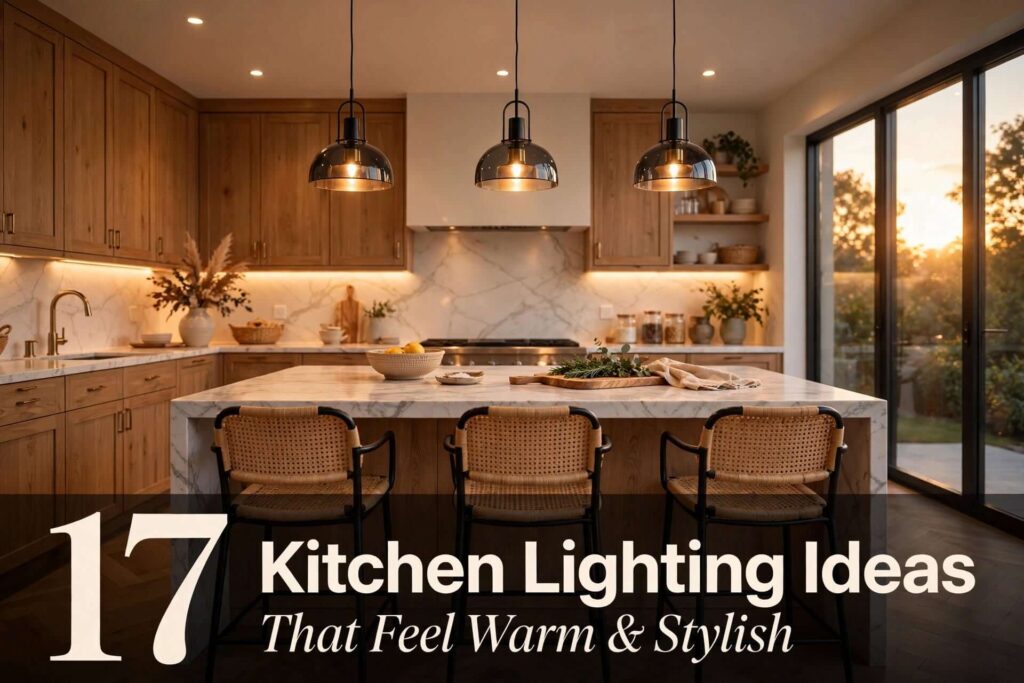
A kitchen can have beautiful cabinets and countertops yet still feel flat, dim, or uncomfortable when the lighting is an afterthought. The wrong fixture can create harsh shadows over the island, leave work surfaces too dark, or make an otherwise warm kitchen feel cold. The good news is that you rarely need to replace the entire room to change its atmosphere. Layering different types of light—ambient, task, and accent—can make a kitchen feel brighter, more welcoming, and more intentional. These kitchen lighting ideas range from simple under-cabinet upgrades to statement fixtures that completely change the room’s personality.
In This Article
- Hang Statement Pendants Over the Kitchen Island
- Layer Warm Under-Cabinet Lighting
- Use Oversized Pendant Lights for a Designer Look
- Add Recessed Ceiling Lights for Even Illumination
- Try Glass Pendants for an Airy Kitchen
- Highlight the Backsplash With Accent Lighting
- Choose Black Fixtures for Modern Contrast
- Bring Warmth With Brass Lighting
- Install Linear Lighting Over a Long Island
- Add Wall Sconces Near Open Shelving
- Use a Warm Chandelier in an Eat-In Kitchen
- Use Layered Lighting in a Small Kitchen
- Try Woven Pendants for a Natural Look
- Light the Kitchen Sink Area Properly
- Use Track Lighting for Flexible Illumination
- Create a Cozy Evening Kitchen With Dimmers
- Mix Decorative and Functional Lighting
- Frequently Asked Questions
1. Hang Statement Pendants Over the Kitchen Island
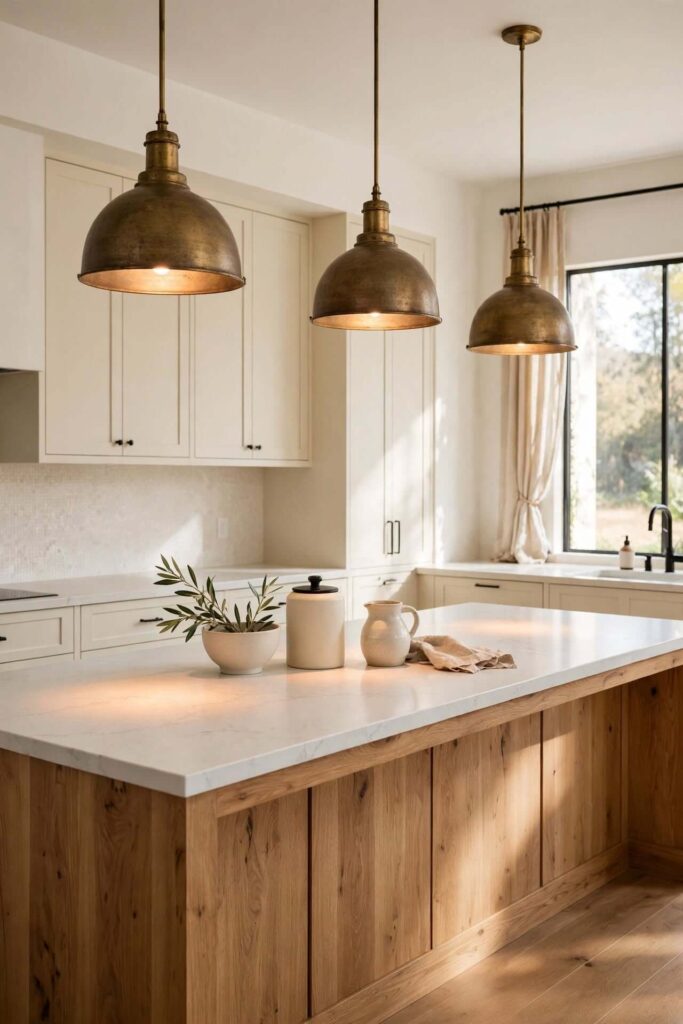
A row of statement pendants is one of the most striking kitchen lighting ideas and can turn an ordinary kitchen island into the room’s visual anchor. Choose two or three fixtures with enough scale to balance the island without overwhelming it. Aged brass, matte black, ribbed glass, or woven shades can each create a different mood. Hang them at a comfortable height so they illuminate the countertop without blocking conversation across the island. This approach works particularly well in open-plan kitchens where the island needs a defined focal point.
Quick Win: If your island already feels visually busy, choose simple globe or cylinder pendants in one finish instead of adding heavily decorative fixtures.
2. Layer Warm Under-Cabinet Lighting
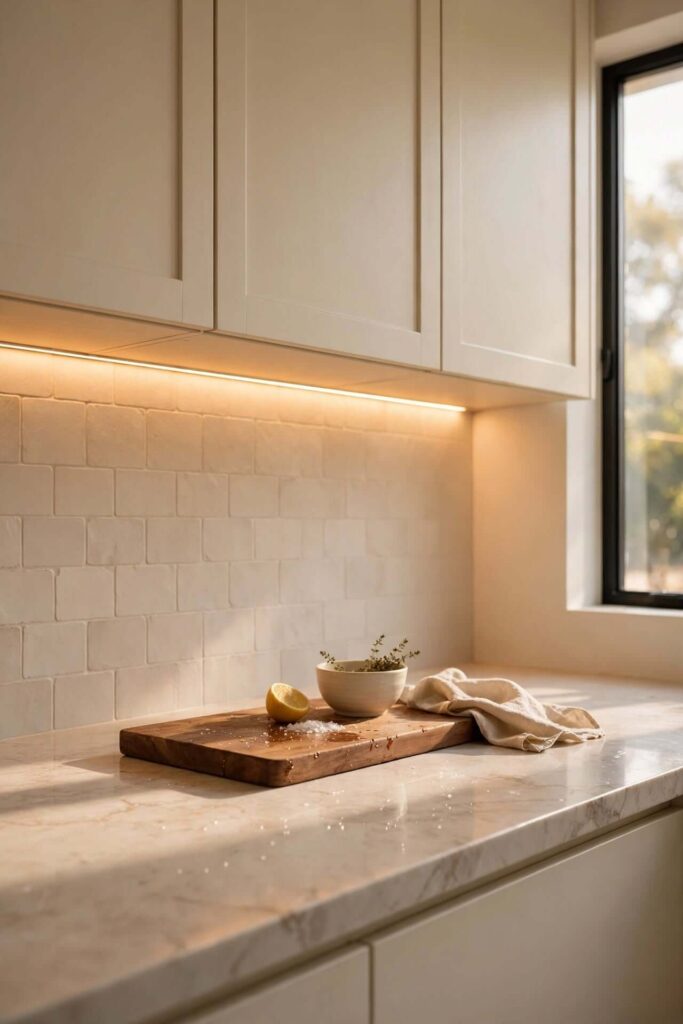
Under-cabinet lighting is one of the simplest kitchen lighting ideas to make a kitchen feel more functional and inviting. LED strips or slim puck lights can illuminate countertops that overhead fixtures often leave in shadow. Warm white light works especially well with cream, beige, wood, and natural stone finishes, while a slightly cooler neutral white can suit contemporary kitchens. Because the fixtures remain mostly hidden, the result feels polished without visually adding clutter.
3. Use Oversized Pendant Lights for a Designer Look
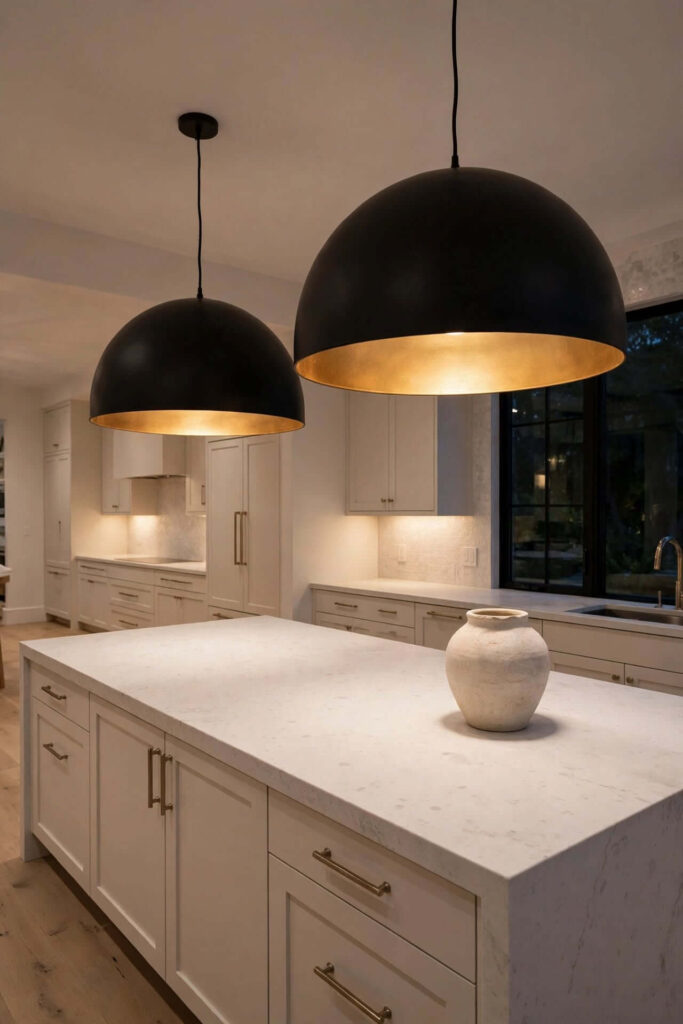
Oversized pendant lighting ideas can give a kitchen the visual confidence of a professionally designed space. Instead of choosing several tiny fixtures, try one or two larger shades above a spacious island or peninsula. Dome-shaped metal fixtures, sculptural glass, and linen-style shades can all work depending on the room. Keep the surrounding decor relatively restrained so the lighting remains the focal point. This is especially effective in kitchens with simple cabinetry that needs a stronger architectural feature.
Quick Win: When choosing an oversized fixture, measure the island first and leave enough visual breathing room around the fixture so it feels intentional rather than cramped.
4. Add Recessed Ceiling Lights for Even Illumination
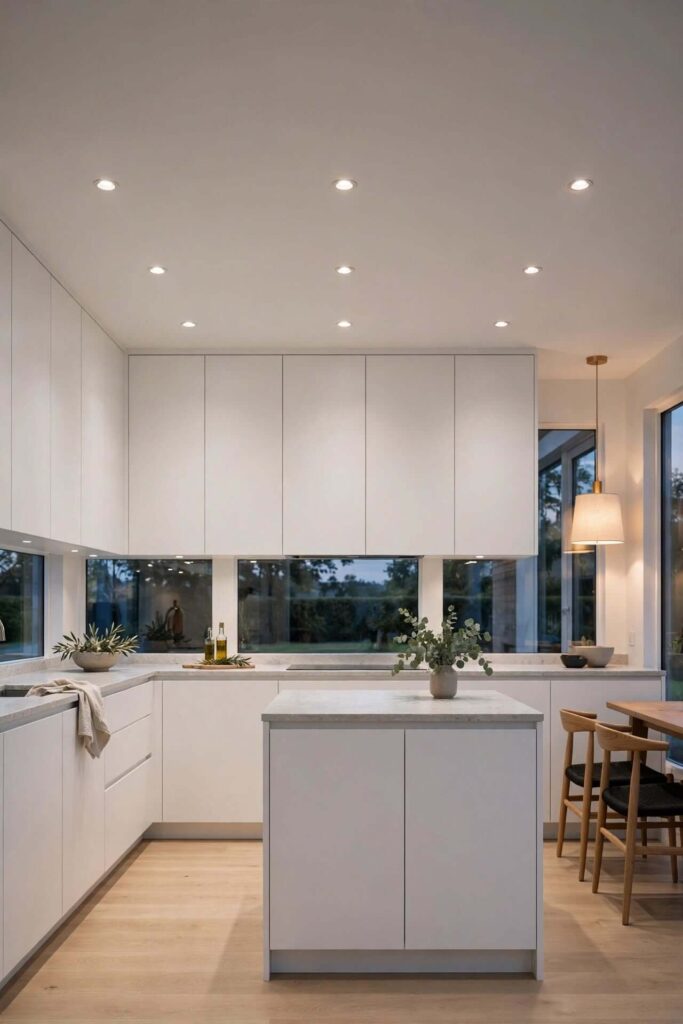
Recessed ceiling lights are one of the most practical kitchen lighting ideas when you want consistent brightness without adding visually heavy fixtures. Position them strategically around preparation areas, walkways, and the sink rather than placing every light in a rigid grid. Dimmable versions give you more control, allowing brighter illumination while cooking and softer light during dinner. They are particularly helpful in contemporary kitchens with clean lines, low visual clutter, or limited ceiling height.
5. Try Glass Pendants for an Airy Kitchen
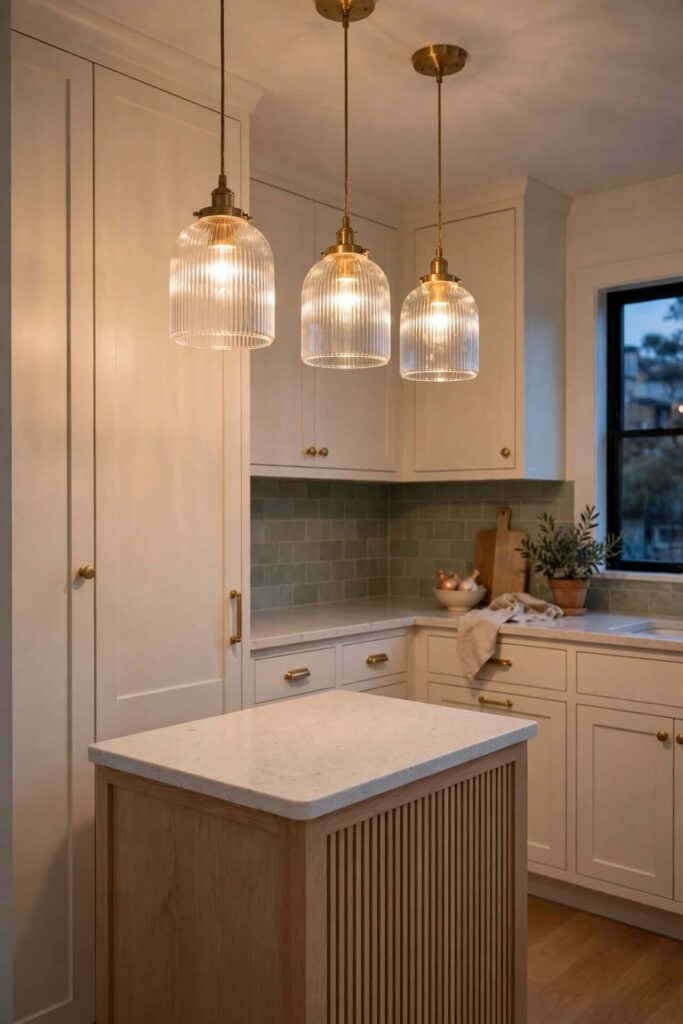
Clear or lightly tinted glass pendants are a smart option when you want decorative lighting without making the kitchen feel visually crowded. Because the shades allow the eye to travel through them, they work particularly well above compact islands or in kitchens with upper cabinets. Pair clear glass with brass for a classic look, black hardware for a modern edge, or aged metal for a more collected feel. The result feels bright, open, and understated.
6. Highlight the Backsplash With Accent Lighting

A backsplash can become a quiet focal point when it is illuminated correctly. Install discreet lighting beneath upper cabinets or along carefully selected architectural areas to bring out the texture and color of tile, stone, or handmade ceramic surfaces. This works especially well with textured backsplashes where grazing light reveals subtle variations. Keep the light soft rather than overly bright so the material remains interesting without making the kitchen feel theatrical.
7. Choose Black Fixtures for Modern Contrast
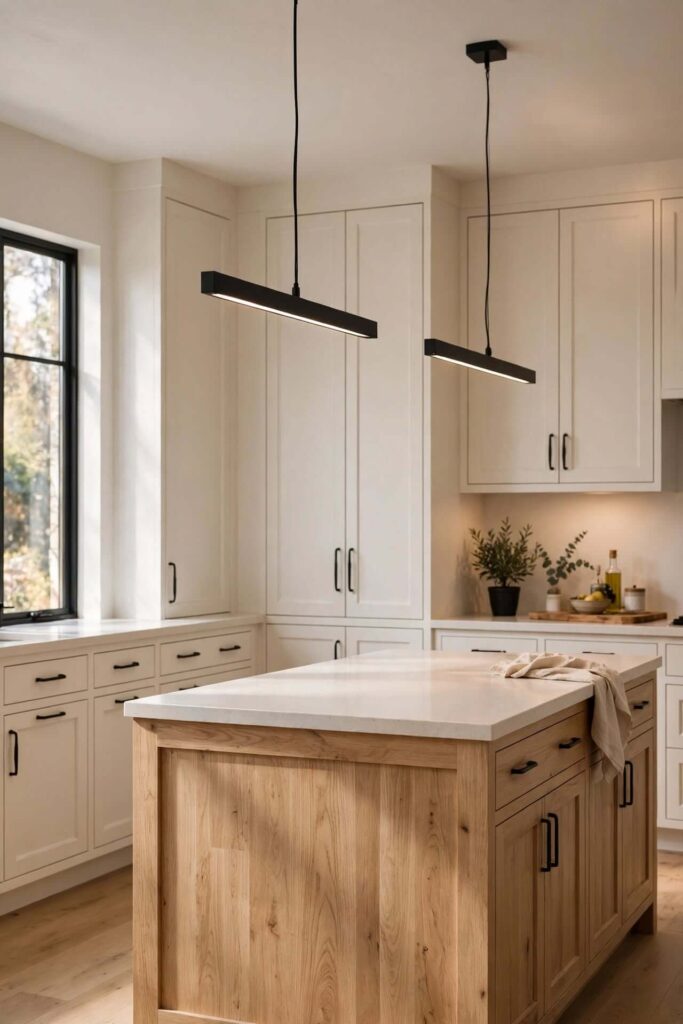
Black kitchen lighting ideas create crisp contrast against pale cabinetry and can give a neutral room more definition. Try matte-black pendants over a white or light-wood island, then repeat the finish subtly through cabinet handles or window hardware. The trick is to avoid using black everywhere. A few carefully repeated details are enough to make the lighting feel connected to the rest of the kitchen.
Quick Win: If you already have black cabinet hardware, matching the lighting finish can instantly make the kitchen look more coordinated without changing the cabinetry.
8. Bring Warmth With Brass Lighting

Brass kitchen lighting ideas can make a kitchen feel warmer without requiring a major color change. Look for brushed, antique, or aged brass rather than highly reflective polished finishes if you want a softer appearance. Brass pendants pair naturally with creamy cabinets, walnut, oak, marble, and warm neutral paint. Repeat the finish in small amounts through cabinet hardware or a faucet to create visual continuity without making the room feel overly matched.
9. Install Linear Lighting Over a Long Island
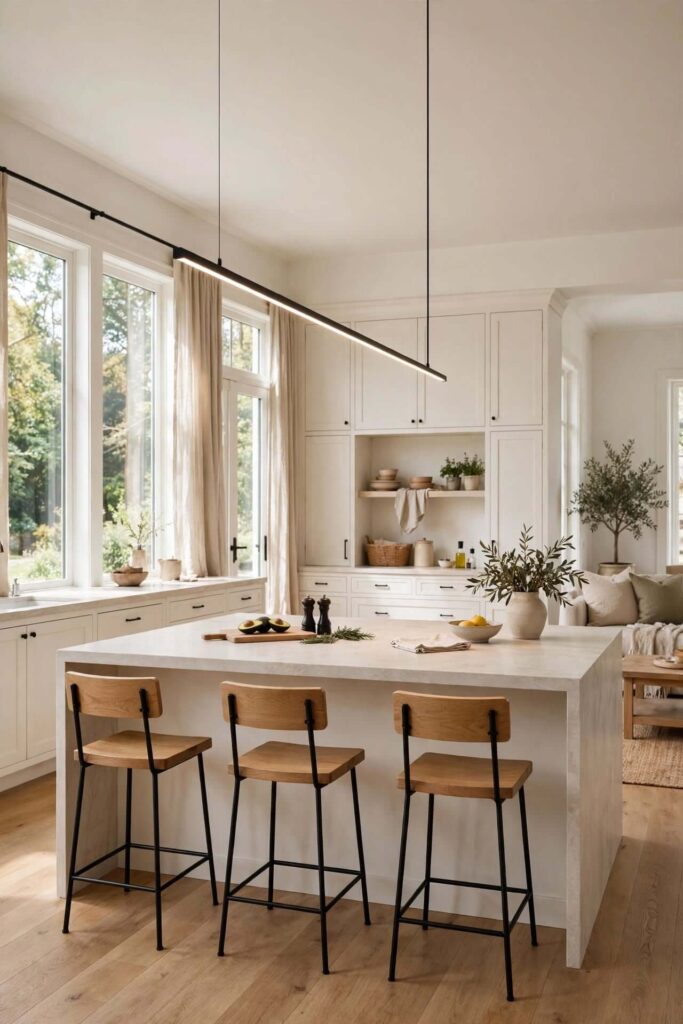
Long kitchen islands often look better with kitchen lighting ideas that follow their horizontal proportions. A linear pendant or elongated fixture distributes light across the entire countertop instead of concentrating brightness in one small area. Choose a slim design for a minimalist kitchen or a more sculptural frame for a contemporary statement. This approach is particularly useful for large islands used for cooking, homework, casual meals, and entertaining.
10. Add Wall Sconces Near Open Shelving
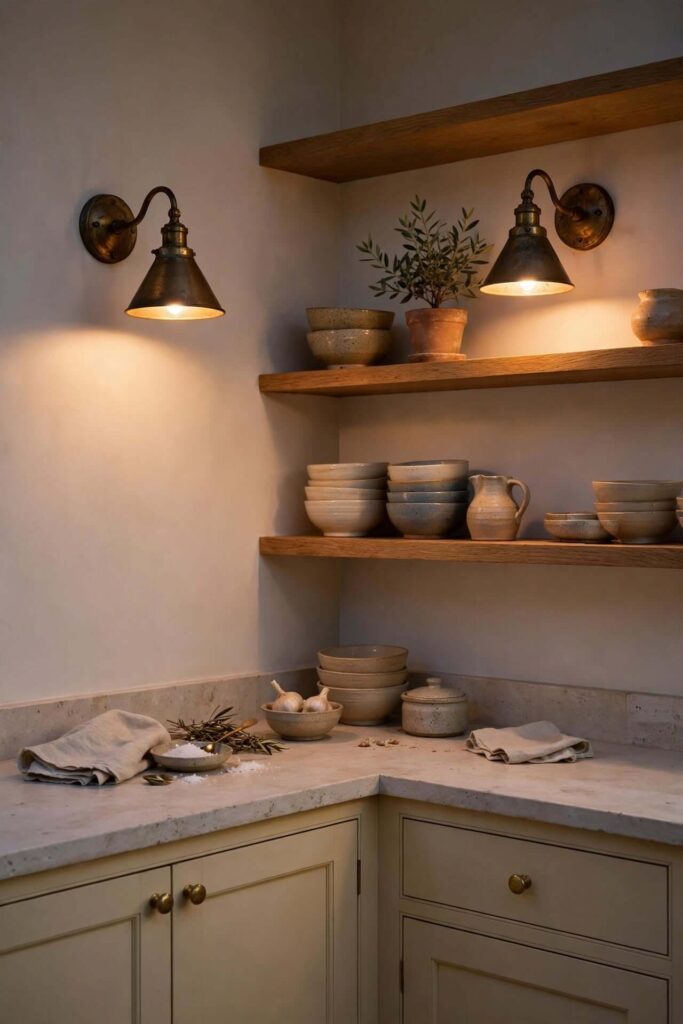
Wall sconces are one of the most charming kitchen lighting ideas and can introduce personality where traditional ceiling fixtures feel predictable. Place a pair beside open shelving, near a coffee station, or around a sink area where the wall itself can become part of the lighting design. Choose adjustable sconces when task lighting matters, or decorative shades when the goal is atmosphere. This works especially well in kitchens with open shelving because the light can highlight both the architecture and the objects displayed there.
Quick Win: Use sconces with visible cords only when you want a deliberately casual look; otherwise, hardwired fixtures create a cleaner finish.
11. Use a Warm Chandelier in an Eat-In Kitchen
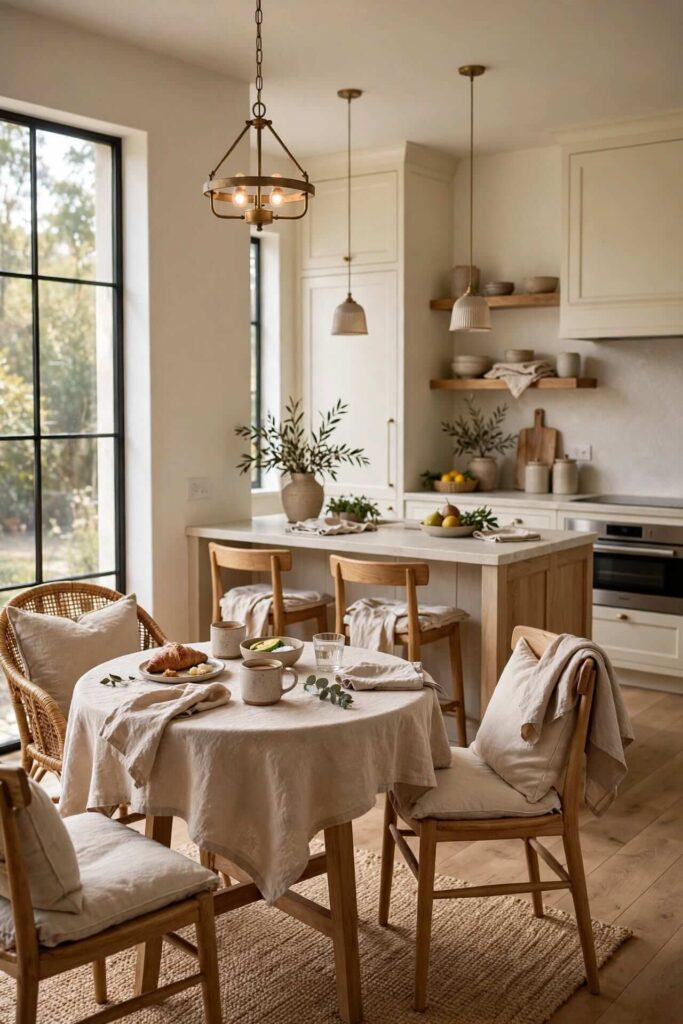
A chandelier does not have to belong only in a dining room. In a kitchen with a breakfast table or dedicated dining corner, a small chandelier can create a welcoming transition between cooking and dining zones. Choose a fixture that complements the kitchen rather than competing with island lighting. Natural materials, aged metal, or simple glass forms can make the eating area feel intentional while adding a softer layer of illumination.
12. Use Layered Lighting in a Small Kitchen
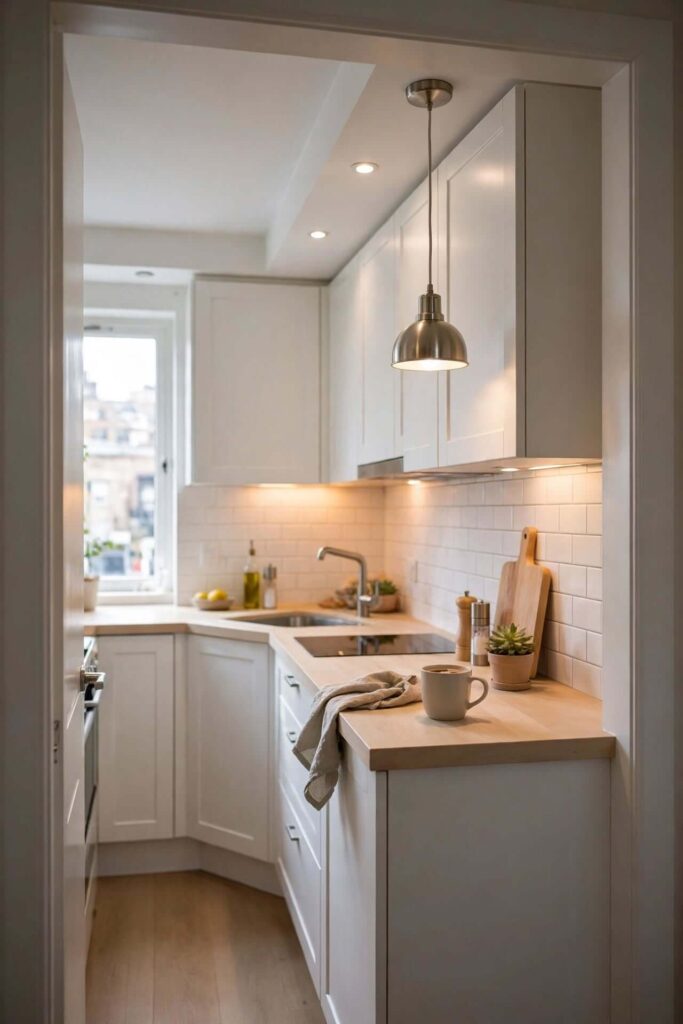
Small kitchens benefit from multiple low-profile light sources rather than one extremely bright fixture. Combine recessed ceiling lights with under-cabinet LEDs and one compact pendant over a breakfast bar or small peninsula. Keeping the fixtures visually simple helps the room feel open while different lighting levels add depth. This approach is particularly useful when every countertop area needs to perform several functions.
13. Try Woven Pendants for a Natural Look
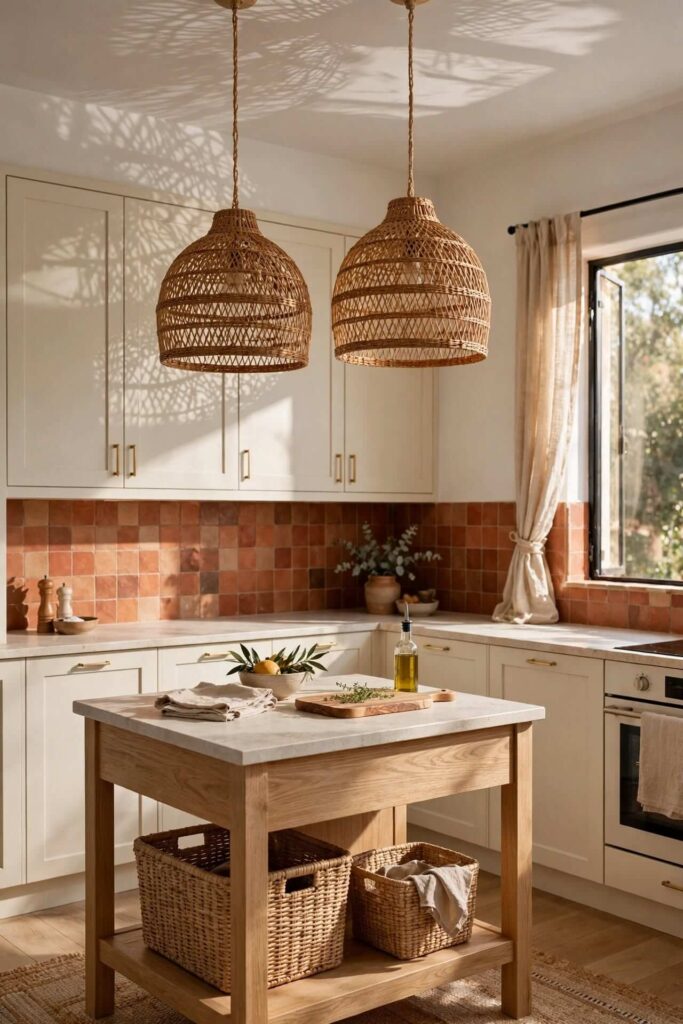
Woven pendant shades bring texture into kitchens dominated by hard surfaces such as stone, tile, glass, and cabinetry. Rattan, cane, bamboo, or natural-fiber shades soften the space and work beautifully with white, cream, terracotta, olive, and wood tones. The open weave also creates subtle shadow patterns when the fixture is illuminated. Use one large woven pendant for a relaxed kitchen or a pair above a smaller island.
Quick Win: Repeat the natural material once elsewhere—a wood stool, woven basket, or cane accent is enough to make the pendant feel connected to the room.
14. Light the Kitchen Sink Area Properly
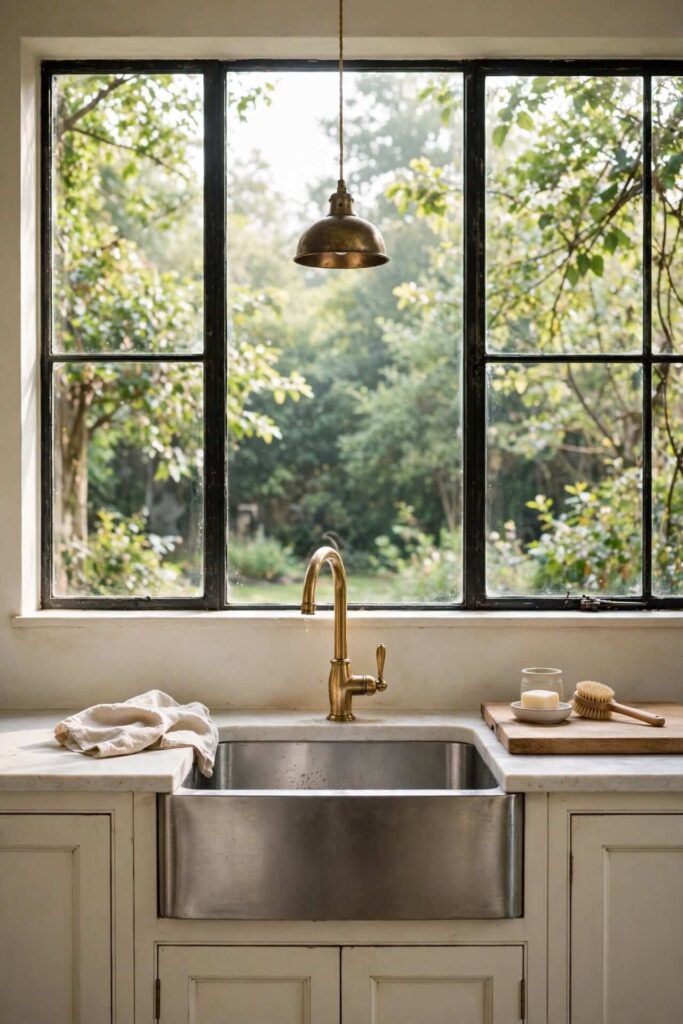
The sink is one of the busiest areas in a kitchen, so it deserves more than whatever light happens to reach it. A small pendant, recessed light, or adjustable wall fixture can provide focused illumination while adding a decorative touch. If the sink sits beneath a window, choose a fixture that complements rather than blocks the view. Keep the light bright enough for cleaning and food preparation but comfortable enough for everyday use.
15. Use Track Lighting for Flexible Illumination
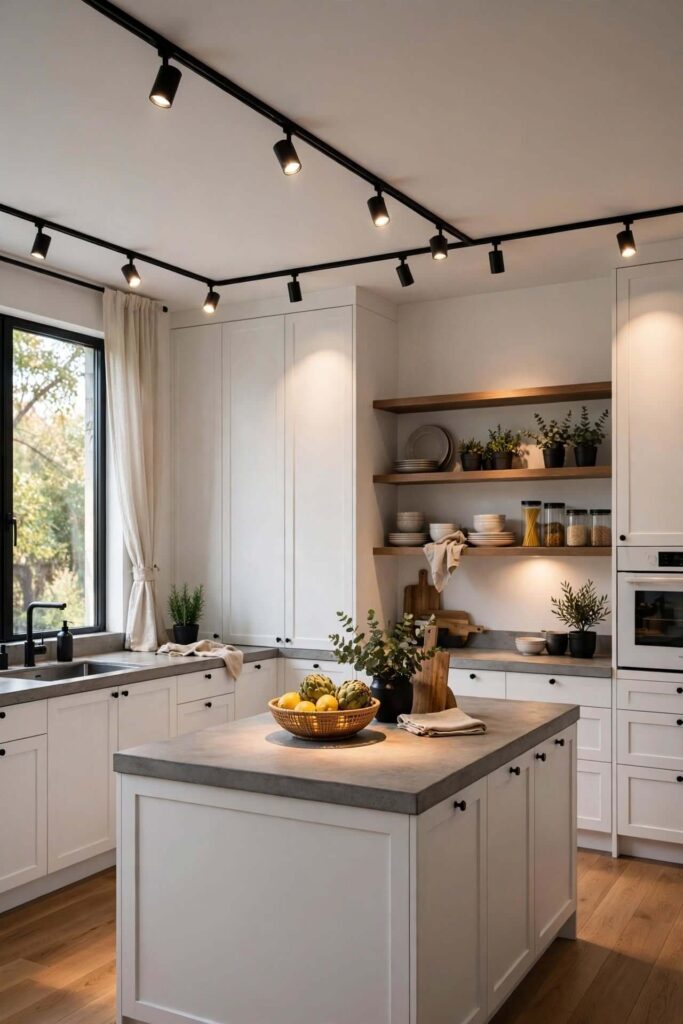
Track lighting can be surprisingly useful when a kitchen needs flexible illumination or when recessed lighting is not practical. Adjustable heads can be directed toward countertops, shelving, artwork, or a dining area. Choose a slim black or white track for a contemporary kitchen, or a more decorative metal system for an industrial-inspired space. It is especially helpful in remodeled kitchens where existing electrical points limit fixture placement.
16. Create a Cozy Evening Kitchen With Dimmers
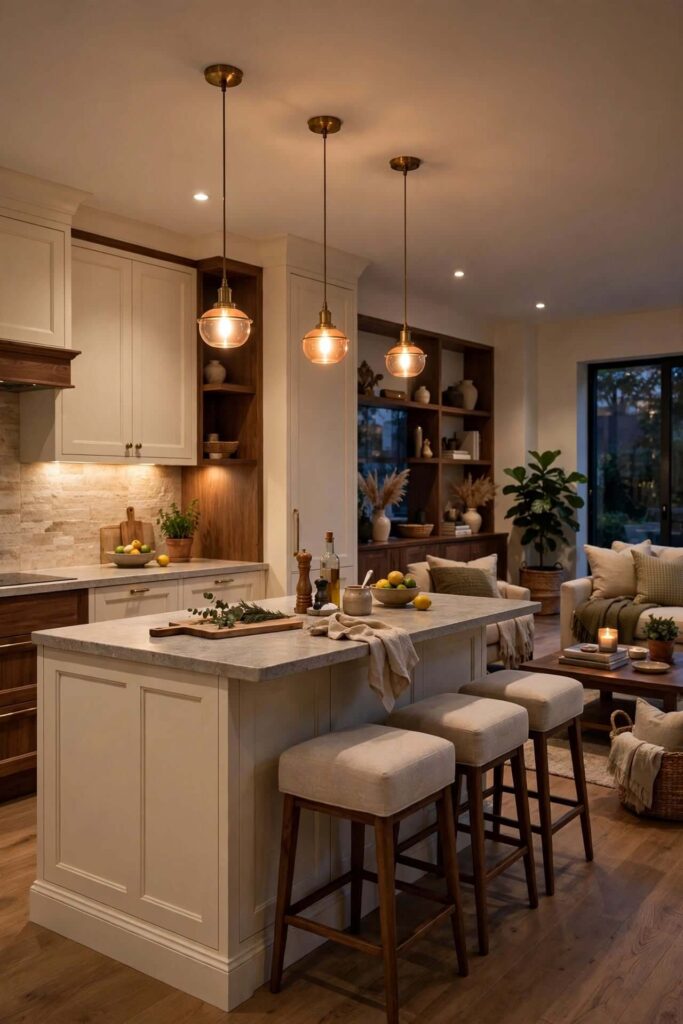
Even the best kitchen lighting ideas can feel too intense when every fixture is operating at full brightness. Dimmers let you shift from practical cooking light to a softer evening atmosphere without changing the fixtures. Combine dimmable pendants, recessed lights, and under-cabinet lighting so each layer can be adjusted independently. This is especially effective in open-plan homes where the kitchen remains visible after cooking and becomes part of the evening living space.
17. Mix Decorative and Functional Lighting
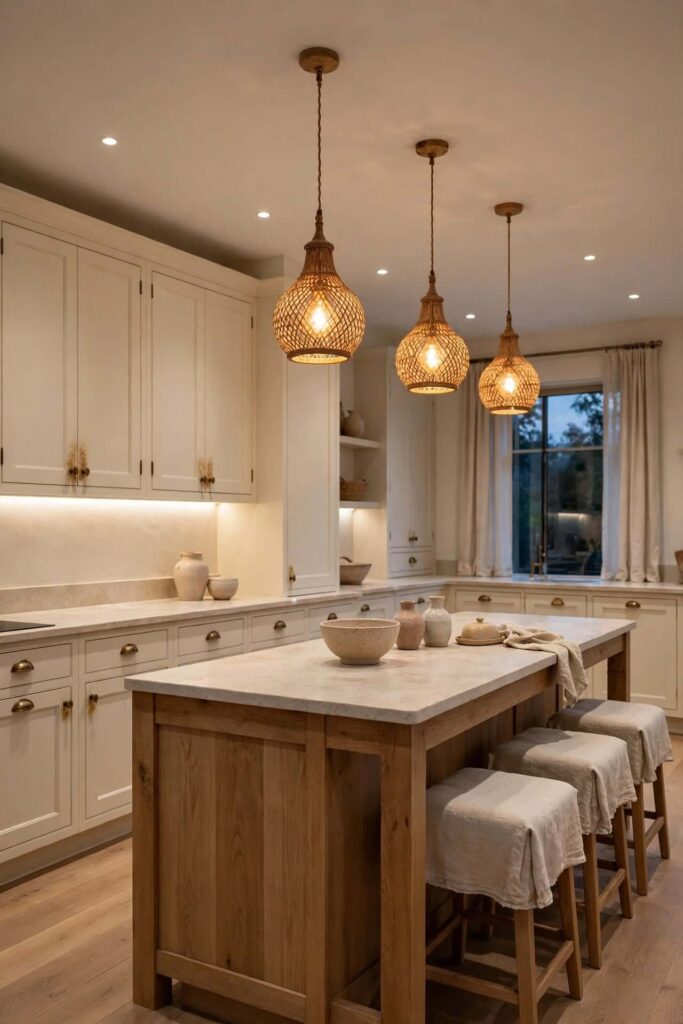
The most successful kitchen lighting ideas rarely depend on one type of fixture. Combine decorative pendants for personality, recessed or ceiling lights for general illumination, and under-cabinet lighting for practical tasks. The key is balance: decorative fixtures should establish the room’s style while functional lighting quietly handles the work. This layered approach can make a basic kitchen feel more thoughtful without requiring a complete renovation.
Quick Win: Before buying anything, divide your kitchen into three zones—general, task, and accent lighting. This makes it much easier to identify where additional light is actually needed.
Conclusion
The right kitchen lighting ideas can change far more than visibility—it can shape how the entire room feels throughout the day. You don’t need to recreate every idea here; even one well-chosen pendant, a strip of under-cabinet lighting, or a dimmer can make a noticeable difference. Start with the areas that need better function, then add decorative layers that reflect your style. With thoughtful placement and warm, balanced illumination, your kitchen can feel both practical and inviting.
Frequently Asked Questions About Kitchen Lighting Ideas
A layered approach is usually the most useful, combining ambient, task, and accent lighting. This provides general brightness while giving work areas and decorative features their own illumination.
Two or three pendants often work well over a medium or large island, depending on the island’s length and the fixture size. Larger pendants may require fewer fixtures.
Warm to neutral white lighting is generally comfortable for kitchens. Around 2700K–3000K creates a warm atmosphere, while around 3500K can provide a slightly crisper appearance for task areas.
Yes, particularly if your countertops are shadowed by upper cabinets. Under-cabinet lighting improves visibility for food preparation while also adding a soft layer of evening illumination.
Low-profile fixtures, glass pendants, recessed lighting, and well-placed under-cabinet lights can help a small kitchen feel more open. Avoid oversized fixtures that visually crowd the ceiling unless the room can support them.
Absolutely. Mixing pendants, recessed lights, sconces, and under-cabinet lighting can create a more layered and functional design. Keep finishes or shapes visually connected so the combination feels intentional.
They do not have to match exactly, but repeating a finish can create cohesion. For example, brass pendants can connect naturally with brass cabinet pulls or a brass faucet.
Flush mounts, semi-flush fixtures, recessed lights, and slim track lighting are practical choices. They provide illumination without taking up much vertical space.
A common starting point is roughly 30–36 inches above the countertop, although the ideal height depends on the fixture, ceiling height, island use, and sightlines. The lights should illuminate the island without obstructing conversation.
Warm lighting can make kitchens feel comfortable and welcoming, particularly in the evening. It works especially well with wood, cream cabinetry, brass, beige, and other warm finishes.
Yes. Battery-powered or removable LED options can provide task lighting without permanent electrical work. Look for slim fixtures designed for easy installation and removal.
Using only one overhead light is a common problem because it can leave work surfaces dark and create harsh shadows. Layering several light sources usually produces a more comfortable result.
Dimmable lighting is useful because kitchens serve different purposes throughout the day. Brighter settings help with cooking, while lower settings create a softer atmosphere when the kitchen becomes part of an evening gathering space.


