

A bedroom can feel unfinished even when the furniture is right, especially when the bed lacks a strong visual focal point. Sage green bedding offers an easy way to bring softness, color, and a more restful feeling without committing to green walls or replacing your entire room. The challenge is choosing the right supporting colors, textures, and materials so the bedding feels intentional rather than overly matched. From creamy neutrals and warm wood to moody accents and relaxed linen, these ideas show how one bedding choice can completely change the atmosphere. Keep scrolling for combinations that are easy to adapt to different bedroom sizes, styles, and budgets.
1. Sage Green Bedding with Creamy White Layers
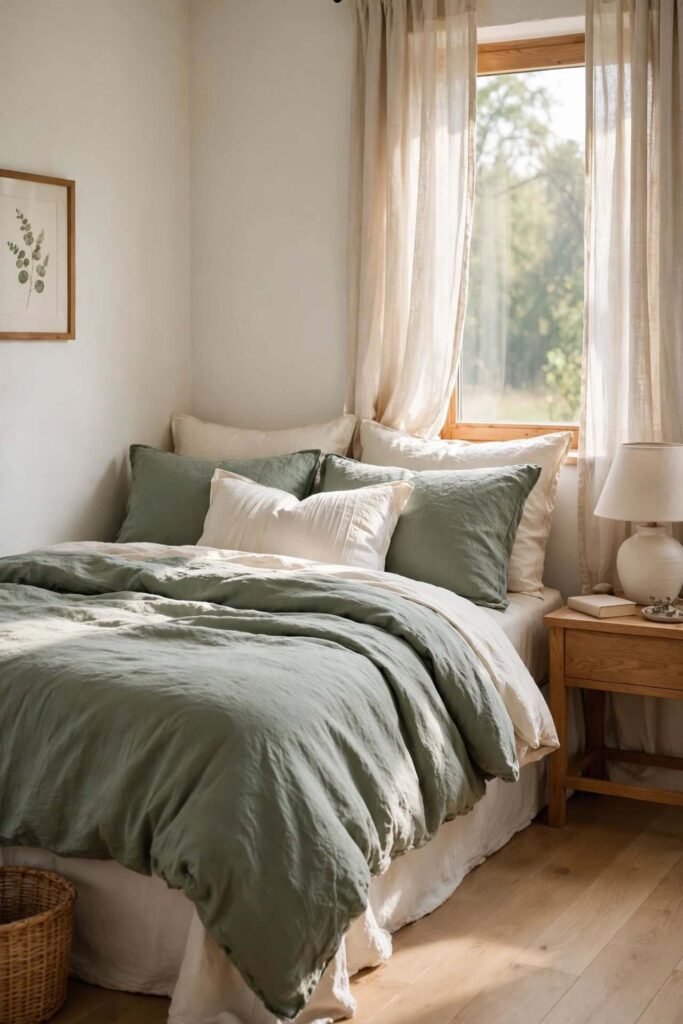
Pair sage green bedding with creamy white sheets and pillowcases for a bedroom that feels fresh without becoming stark. The warm undertone of cream softens the green and works particularly well with natural wood furniture. Add one textured lumbar pillow or a loosely folded ivory throw rather than filling the bed with too many accessories. This combination is especially useful for small bedrooms because the pale surrounding colors keep the space visually open while the sage bedding adds enough contrast to anchor the bed.
Quick Win: Swap bright-white bedding accessories for warm ivory or cream. The subtle change can make sage green feel considerably softer and more sophisticated.
2. Sage Green and Beige Bedding for a Warm Retreat
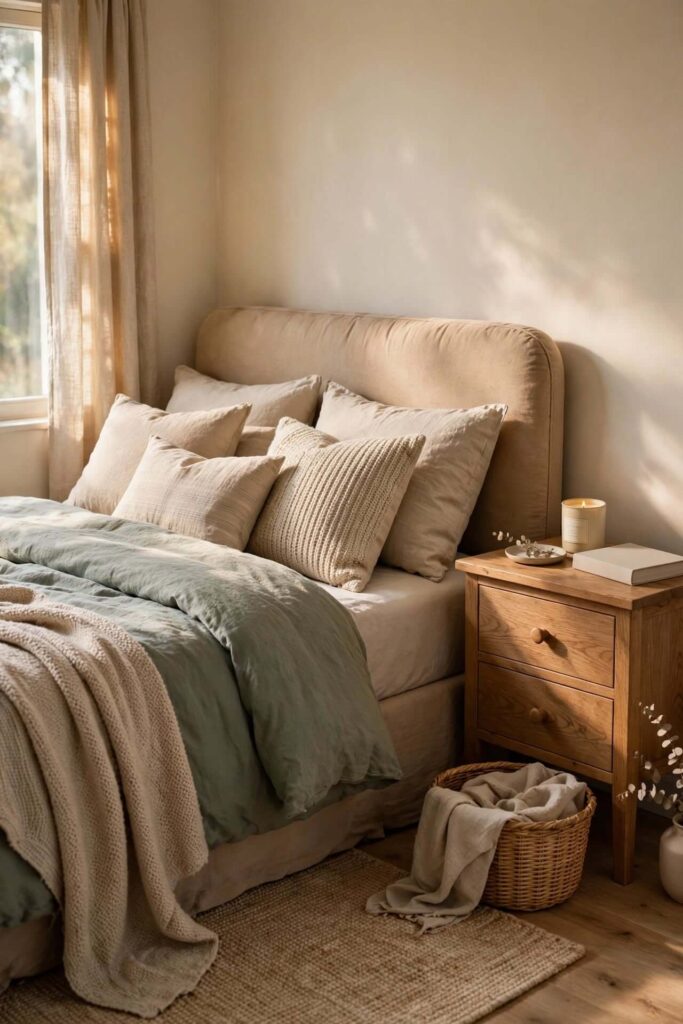
For a warmer bedroom, combine sage green bedding with beige, sand, and oatmeal tones. A beige upholstered headboard can bridge the two colors beautifully, while woven baskets and natural wood introduce additional texture. The result feels grounded rather than overly colorful. This palette works particularly well in bedrooms with warm lighting, wood floors, or existing neutral furniture. Keep the accessories restrained so the bedding remains the main visual feature.
3. Sage Green Linen Bedding for a Relaxed Look
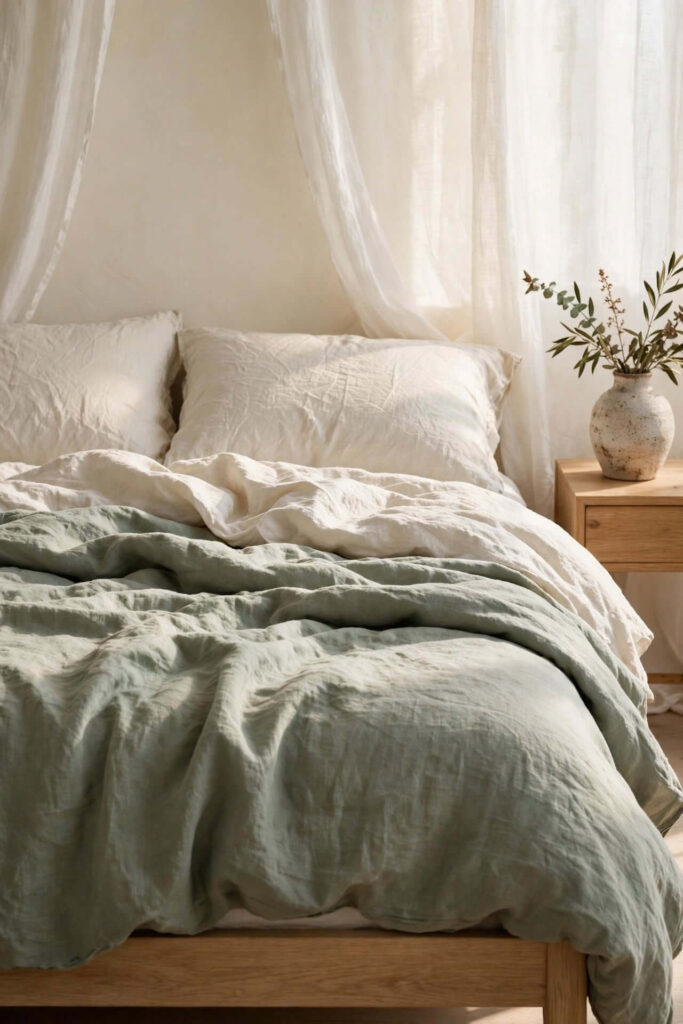
Linen is a natural partner for sage green because its slightly rumpled texture prevents the color from looking too formal. Choose washed sage linen duvet covers and pair them with simple ivory sheets, a few relaxed pillows, and light wood furniture. Don’t worry about perfectly crisp corners—the casual folds are part of the appeal. This approach is ideal for anyone who wants a bedroom that feels calm, breathable, and comfortably lived-in.
Quick Win: Let the duvet remain slightly rumpled instead of smoothing every fold. Natural linen texture adds character without requiring extra decor.
4. Sage Green Bedding with Natural Wood
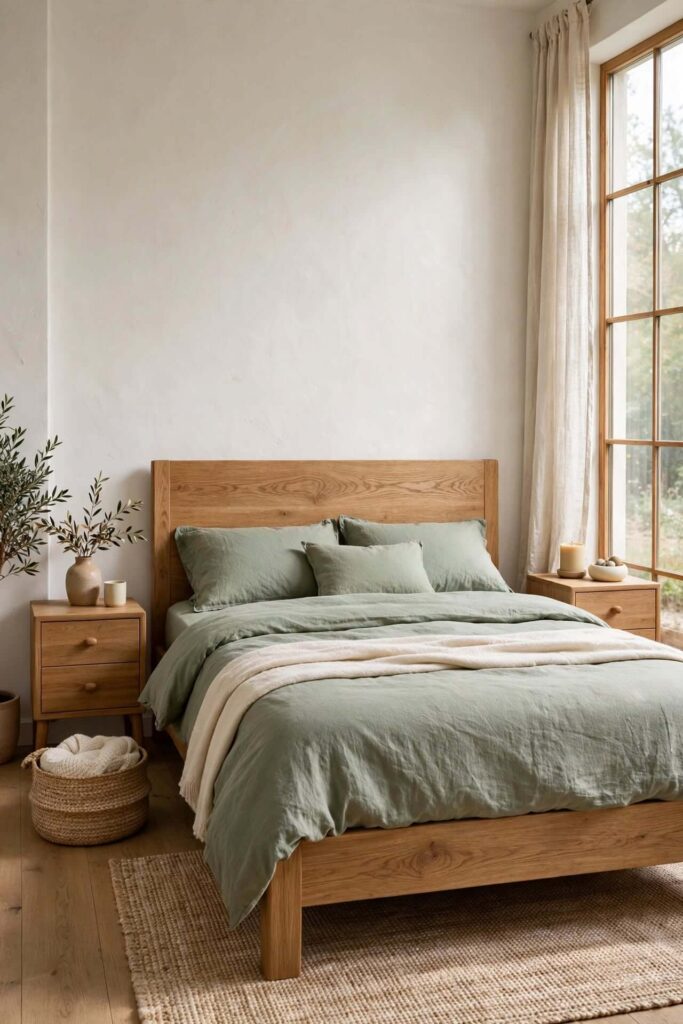
Natural wood brings out the earthy character of sage green, making the combination feel organic and timeless. Try a medium-oak bed frame or nightstands with sage bedding, warm white walls, and one or two handmade ceramic accessories. Medium and light wood tones work especially well because they add warmth without competing with the green. This is a smart choice for bedrooms inspired by Scandinavian, organic modern, or relaxed farmhouse interiors.
5. Layered Sage Green Bedding with Textured Throws
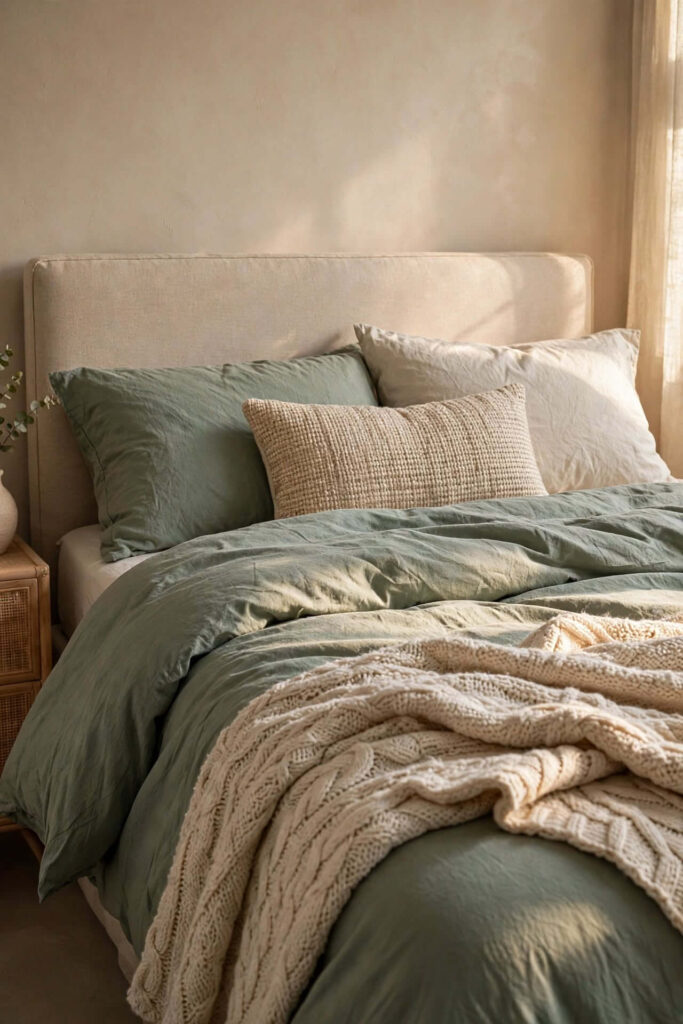
If a plain sage duvet feels too simple, build depth through texture instead of adding more colors. Layer a chunky cream knit throw across the bottom of the bed, then add one woven cushion and a pair of smooth cotton pillows. The contrast between the soft green base and tactile accessories gives the bed dimension while keeping the palette controlled. It’s an easy technique for making affordable bedding look more thoughtfully styled.
Quick Win: Add just one chunky textured throw at the foot of the bed before buying new decorative pillows. One tactile layer can make a noticeable difference.
6. Sage Green Bedding with Terracotta Accents
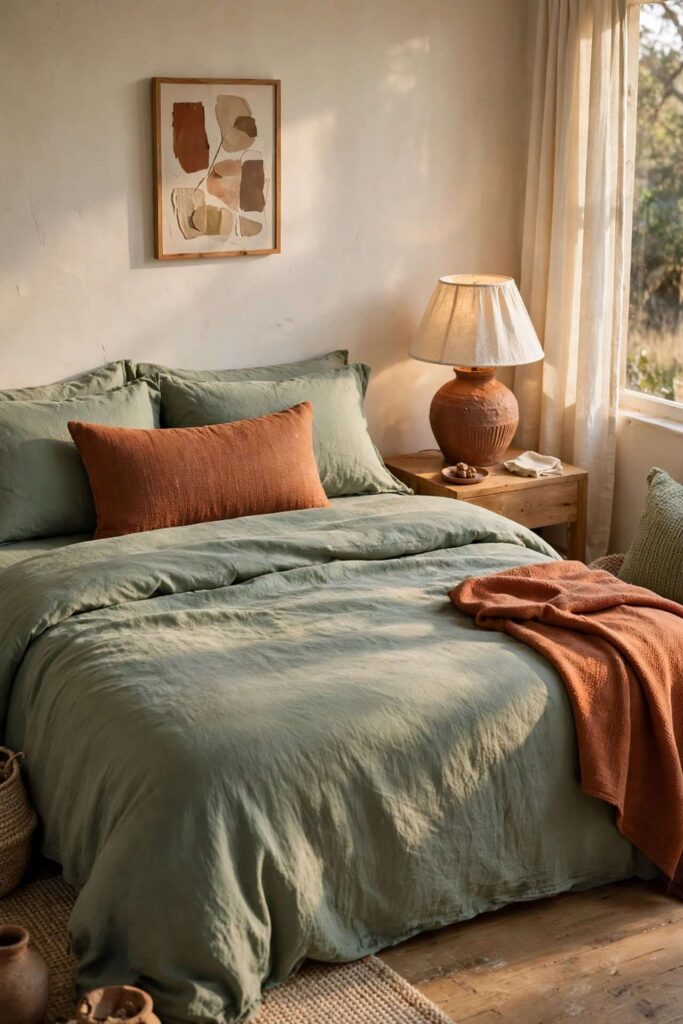
For a more expressive bedroom, introduce small touches of terracotta alongside sage green. A rust-colored lumbar pillow, clay ceramic lamp, or muted terracotta artwork can bring warmth to the otherwise cool-green bedding. Keep terracotta as an accent rather than an equal color so the bedroom remains restful. The pairing is especially appealing in rooms with natural wood, cream walls, and warm evening lighting.
7. Sage Green Bedding in a Small Bedroom
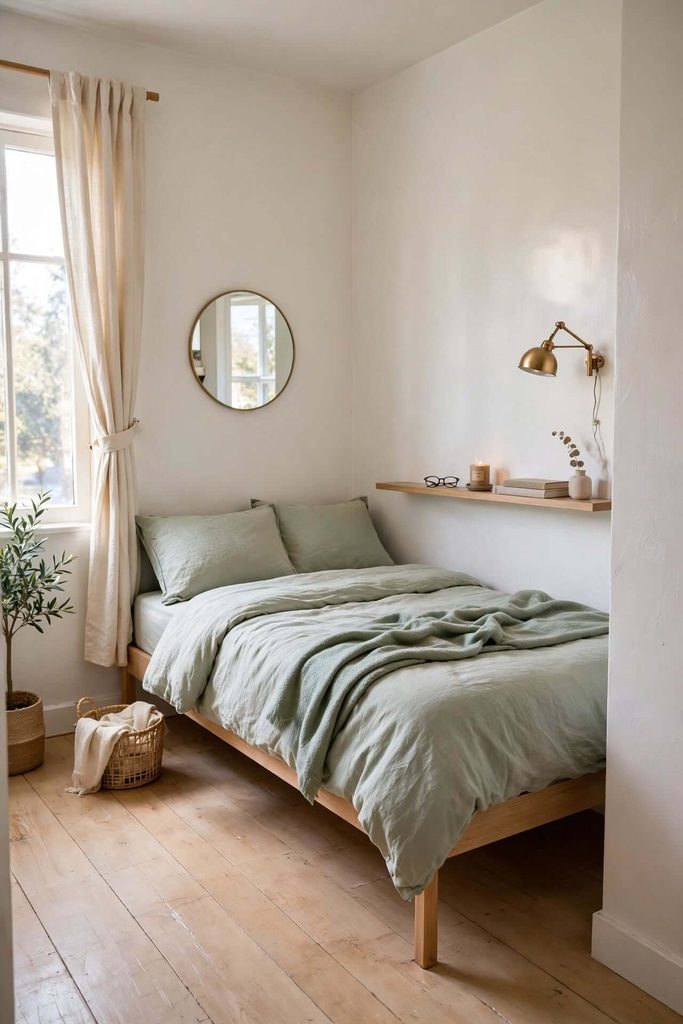
Sage green doesn’t have to make a small bedroom feel darker. Choose a lighter sage shade, keep the walls warm white, and use bedding with a simple low-contrast pattern or solid finish. Slim bedside tables and wall-mounted lighting can preserve floor space. A mirror positioned where it catches natural light can also help the room feel more open. This combination gives a compact bedroom personality without visually overwhelming it.
8. Sage Green Bedding with Dark Wood Furniture
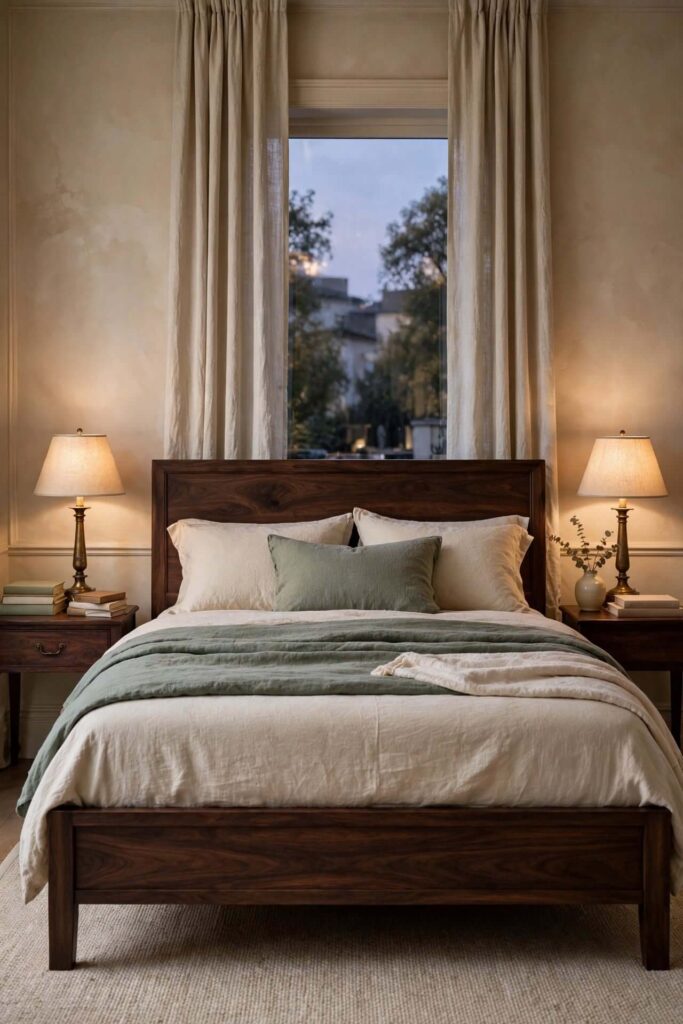
Dark walnut or espresso furniture creates a richer contrast with sage green bedding. To keep the combination from becoming too heavy, introduce cream sheets, warm neutral walls, and a lighter rug. Brass or aged-metal lighting can provide a small highlight without making the room feel flashy. This palette suits traditional bedrooms, transitional spaces, and anyone who prefers a more mature, collected atmosphere.
9. Sage Green Bedding with Botanical Details

Bring out the natural character of sage by pairing it with restrained botanical details. A leafy plant beside the bed, botanical artwork, or a small floral cushion can reinforce the connection to nature without turning the room into a themed space. Keep the plants and patterns subtle, especially if your bedding already has visual texture. This look works beautifully with rattan, oak, linen, and other natural materials.
10. Sage Green Bedding with Soft Gray Accents
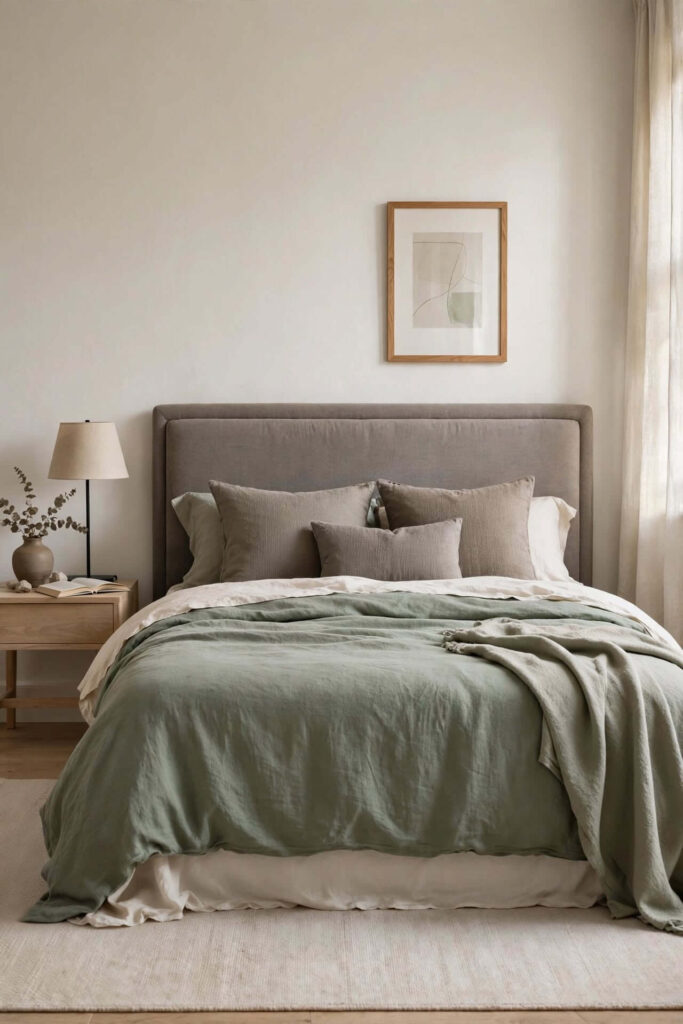
Gray can make sage green feel more contemporary, especially when you choose warm or mushroom-toned gray rather than a cold blue-gray. Try a gray upholstered headboard, taupe-gray cushions, and warm white sheets. Add natural wood somewhere in the room to keep the palette from feeling flat. This combination is a practical option if your bedroom already contains gray furniture or flooring.
Quick Win: If you already own gray furniture, don’t replace it. Add sage green bedding and warm cream textiles to soften the existing palette.
11. Sage Green Bedding with a Cream Canopy Bed
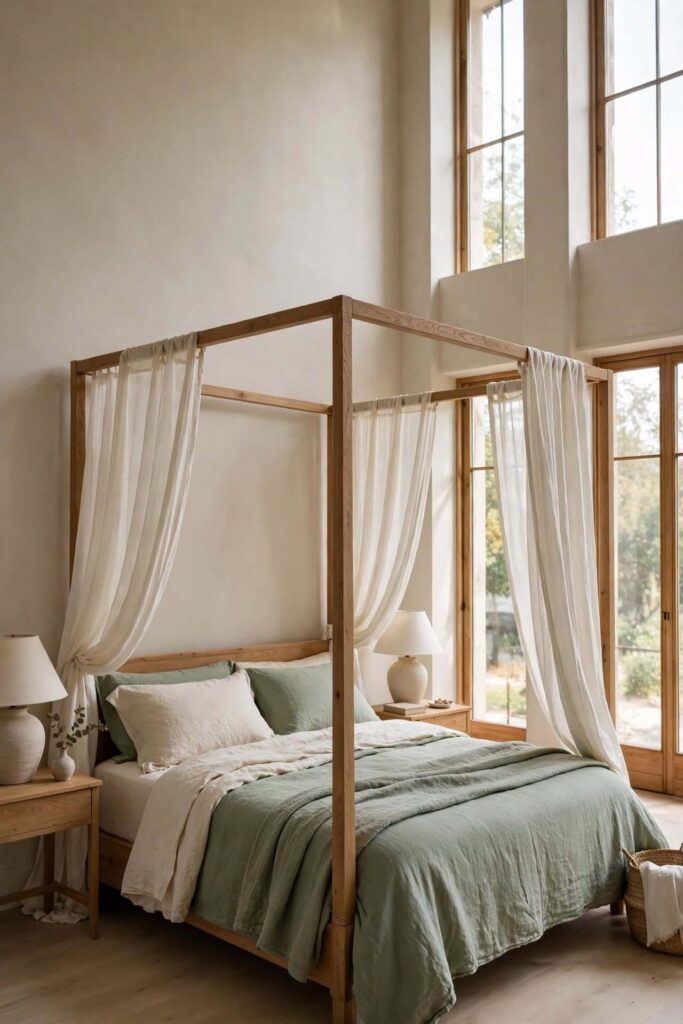
A canopy bed gives sage green bedding a more romantic and architectural setting. Choose a simple black, natural wood, or light-metal frame and keep the canopy fabric understated if you use one. Cream curtains or loose linen panels can soften the structure while allowing the sage bedding to remain the centerpiece. This idea works especially well in bedrooms with tall ceilings or enough vertical space for the bed to breathe.
12. Sage Green Bedding with Warm Brass Lighting
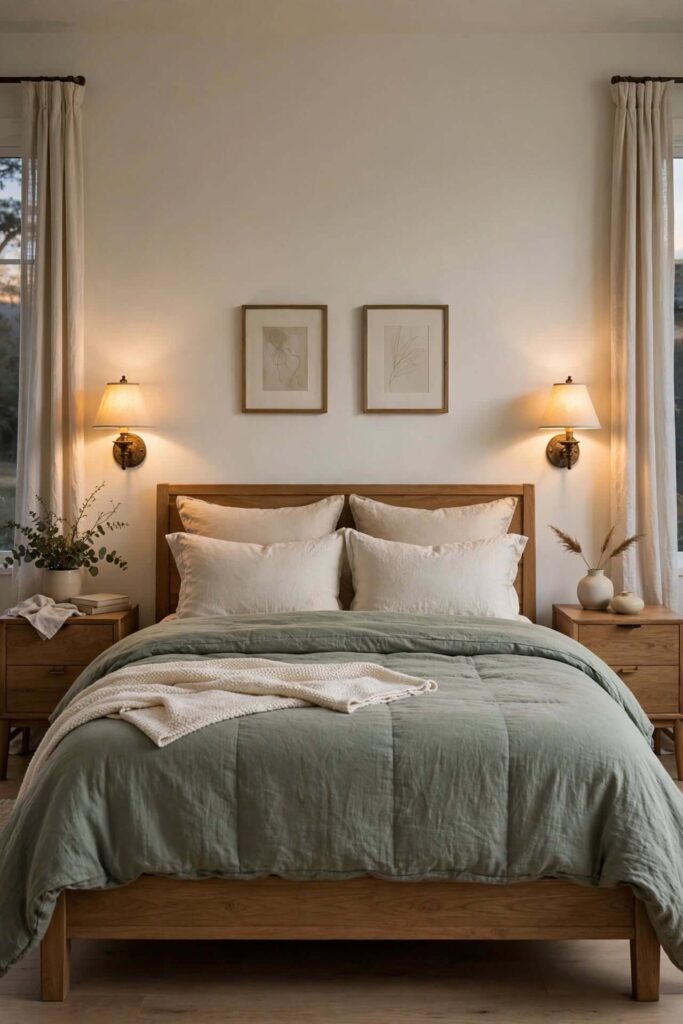
Warm brass lighting can give sage bedding a subtle polished quality without making the bedroom feel formal. Look for aged brass or brushed brass rather than highly reflective finishes. Pair the lighting with creamy bedding layers, medium wood, and perhaps a small framed artwork above the bed. The warm metal catches evening light beautifully and balances sage’s cooler undertones.
13. Sage Green Bedding with Navy Accents

For a deeper, more dramatic interpretation, add small navy accents to sage green bedding. Navy works best when used sparingly—a single cushion, throw, artwork detail, or upholstered chair can be enough. Balance the darker colors with warm ivory sheets and natural wood so the bedroom doesn’t become visually heavy. This approach is particularly effective in larger bedrooms with plenty of natural light.
14. Sage Green Bedding with Vintage-Inspired Decor
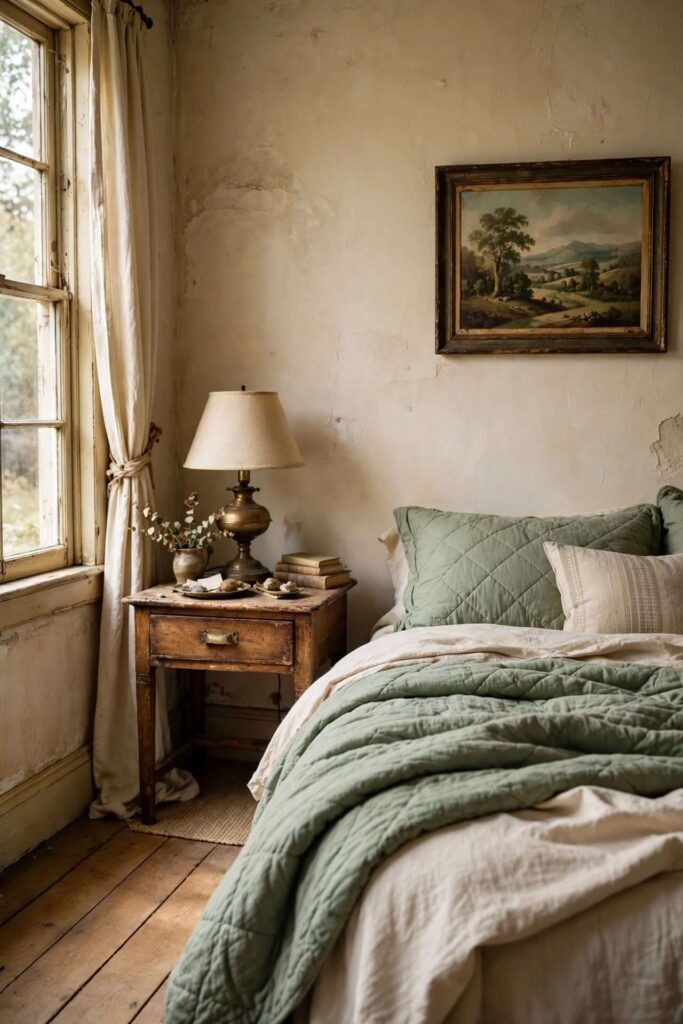
Sage green bedding can feel beautifully collected when paired with vintage-inspired pieces. Try an antique-style wooden bedside table, an aged brass lamp, a framed landscape print, and slightly traditional bedding layers. Avoid making every piece look old; mixing one or two vintage elements with modern basics keeps the bedroom fresh. The result feels personal rather than like a staged period room.
Quick Win: Add one vintage-style bedside lamp or framed print instead of changing the whole bedroom. A single older-looking piece can give modern bedding more character.
15. Sage Green Bedding for a Minimalist Bedroom

Minimalism doesn’t mean your bedroom needs to be completely colorless. A solid sage green duvet can provide the visual interest while the rest of the room remains restrained. Choose clean-lined furniture, one bedside lamp, simple cream sheets, and perhaps a single piece of artwork. The key is leaving negative space around the bed so the green bedding feels intentional rather than surrounded by competing objects.
16. Sage Green Bedding with Blush and Soft Pink
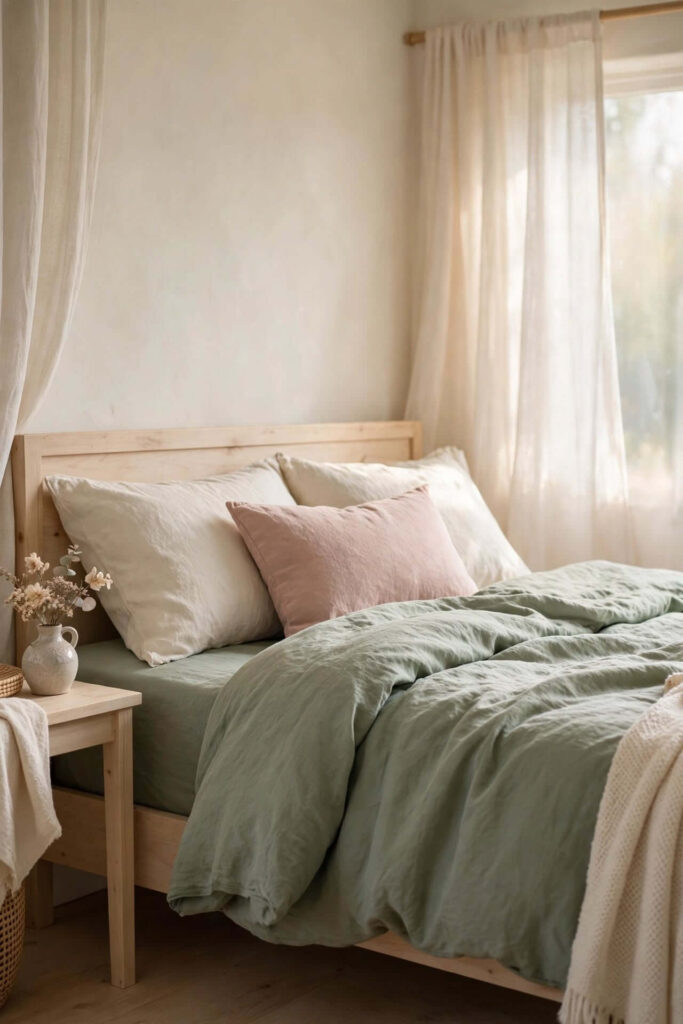
For a softer, more feminine palette, combine sage green with muted blush rather than bright pink. A dusty-rose cushion or small floral accent adds warmth while maintaining the calming quality of the green. Keep the surrounding colors neutral—cream, beige, and pale wood work particularly well. This is an easy way to introduce a gentle color combination without making the room feel overly sweet.
17. Sage Green Bedding with an Earthy Neutral Palette
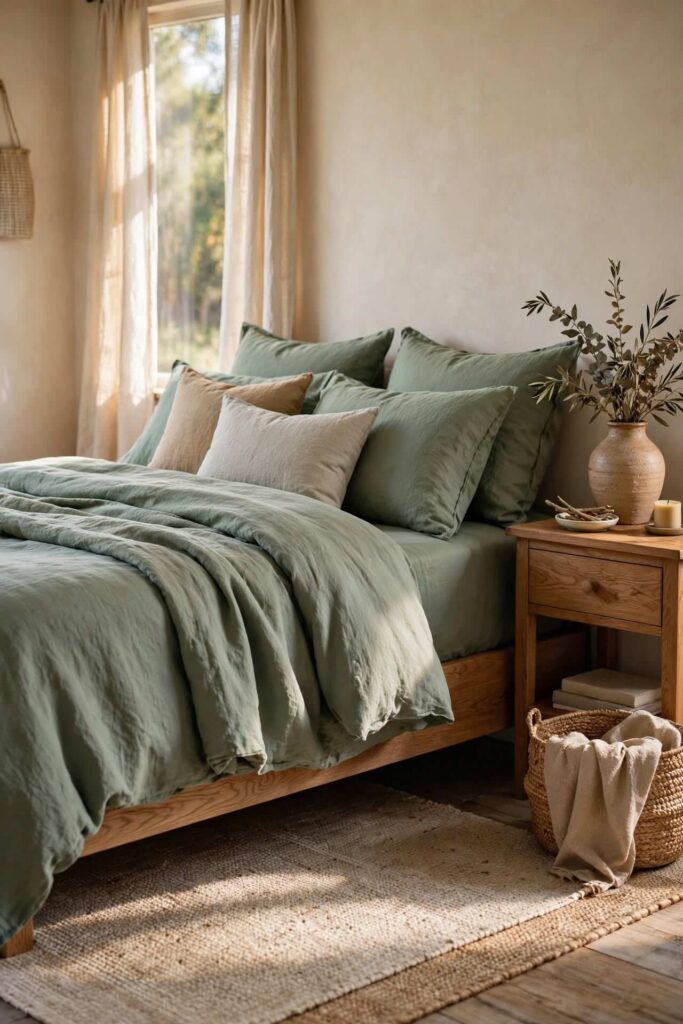
Create a calming retreat by surrounding sage green bedding with clay, oatmeal, warm white, tan, and natural wood. Instead of relying on lots of decoration, let materials provide the visual interest: linen, woven fibers, unfinished wood, ceramic, and cotton. The result feels relaxed and timeless, making it a strong choice if you want bedding that can evolve with your decor rather than follow a short-lived trend.
Quick Win: Pick three supporting neutrals—such as cream, tan, and natural wood—and repeat them subtly around the room. Repetition makes the sage bedding feel connected to the entire space.
Conclusion
Sage green bedding is an easy starting point for creating a bedroom that feels calmer, warmer, and more considered without a complete redesign. You can keep the look minimal with cream and wood, add depth through linen and texture, or introduce richer accents such as navy, terracotta, or brass. You don’t need to recreate an entire room from Pinterest—choose the colors, materials, and styling details that fit your existing furniture, space, personality, and budget.
Frequently Asked Questions
Is sage green bedding still a good choice for a bedroom?
Yes. Sage green works well as a bedroom color because its muted, earthy quality pairs easily with warm neutrals, natural wood, cream, beige, and other understated tones.
What colors go best with sage green bedding?
Cream, ivory, beige, tan, warm white, natural wood, terracotta, muted blush, navy, and warm gray can all work well with sage green. The best combination depends on whether you want the room to feel light, earthy, dramatic, or romantic.
Does sage green bedding make a bedroom look darker?
Not necessarily. A lighter sage shade combined with warm white walls, pale furniture, and plenty of natural light can keep a bedroom feeling bright and airy.
What color sheets look best with sage green bedding?
Cream, ivory, white, beige, and light taupe sheets are easy choices. Warm ivory is particularly useful when bright white feels too stark against muted sage.
Can sage green bedding work in a small bedroom?
Absolutely. Choose a lighter sage shade and combine it with pale walls, simple furniture, and minimal accessories. Keeping the surrounding palette light helps preserve a sense of openness.
What wood color goes with sage green bedding?
Light and medium natural woods are especially versatile with sage green. Walnut and darker woods can also work when balanced with cream textiles and lighter flooring or rugs.
How can I make sage green bedding look expensive?
Focus on texture and layering rather than buying lots of accessories. Linen, quality-looking neutral pillows, a textured throw, natural wood, and warm lighting can make a simple sage bedding set feel more refined.
Is sage green bedding suitable for a modern bedroom?
Yes. Use solid sage bedding with clean-lined furniture, minimal accessories, warm white walls, and contemporary lighting for a modern interpretation.
Can I use sage green bedding with gray furniture?
Yes. Warm gray, mushroom, and taupe-gray furniture generally pair more easily with sage than very cool blue-gray finishes. Adding cream and natural wood can help connect the colors.
What curtains go with sage green bedding?
Cream, ivory, beige, oatmeal, and soft natural linen curtains are versatile choices. For a more dramatic bedroom, deeper neutral curtains can also work if the room receives plenty of natural light.
How do I style sage green bedding without making the room look too green?
Use sage primarily on the bed and keep most surrounding elements neutral. Cream bedding layers, beige rugs, natural wood, and warm white walls prevent the green from dominating the room.
Can sage green bedding work with vintage furniture?
Yes. Sage pairs naturally with aged wood, brass, traditional artwork, and vintage-inspired accessories. Mixing older-looking pieces with simple modern textiles keeps the result balanced.
Is sage green bedding good for a neutral bedroom?
Yes. Sage can function almost like a soft neutral when used in a muted shade. Pairing it with cream, beige, tan, and natural wood creates a calm, earthy bedroom without relying entirely on white or gray.
What material is best for sage green bedding?
Linen and cotton are both practical choices. Linen gives the room a relaxed, naturally textured appearance, while cotton can provide a smoother and more structured look.