

A coffee setup can easily become cluttered with mugs, filters, beans, grinders, and appliances competing for attention. A glass coffee carafe offers a simple way to make the station feel more organized while also putting the coffee itself on display. Its transparent design works beautifully with modern, rustic, Scandinavian, farmhouse, and minimalist kitchens, and it can make even an everyday brewing ritual feel more intentional. The trick is choosing a carafe and surrounding it with details that complement rather than overwhelm its clean silhouette. These ideas show how to make a glass coffee carafe both a useful brewing essential and an attractive part of your kitchen. This article is about the carafe — the vessel that brews and serves the coffee. For the tray that organises everything around it, see our coffee tray ideas: https://thedecorcraftstudio.com/coffee-tray-ideas/.
In This Article
- Minimalist Glass Coffee Carafe Setup
- Warm Wood and Glass Coffee Station
- Scandinavian Glass Coffee Carafe Display
- Glass Coffee Carafe on a Dedicated Coffee Tray
- Modern Black and Glass Coffee Corner
- Farmhouse Coffee Station With Glass
- Small Apartment Coffee Carafe Setup
- Elegant Coffee Station With Brass Accents
- Glass Carafe With a Cozy Coffee Nook
- Black-and-White Coffee Station
- Rustic Glass Coffee Carafe and Ceramic Mugs
- Glass Coffee Carafe for a Pour-Over Station
- Neutral Luxury Coffee Station
- Open Shelf Coffee Carafe Display
- Simple Everyday Glass Coffee Carafe Setup
- Choosing the Right Carafe
- Frequently Asked Questions
1. Minimalist Glass Coffee Carafe Setup
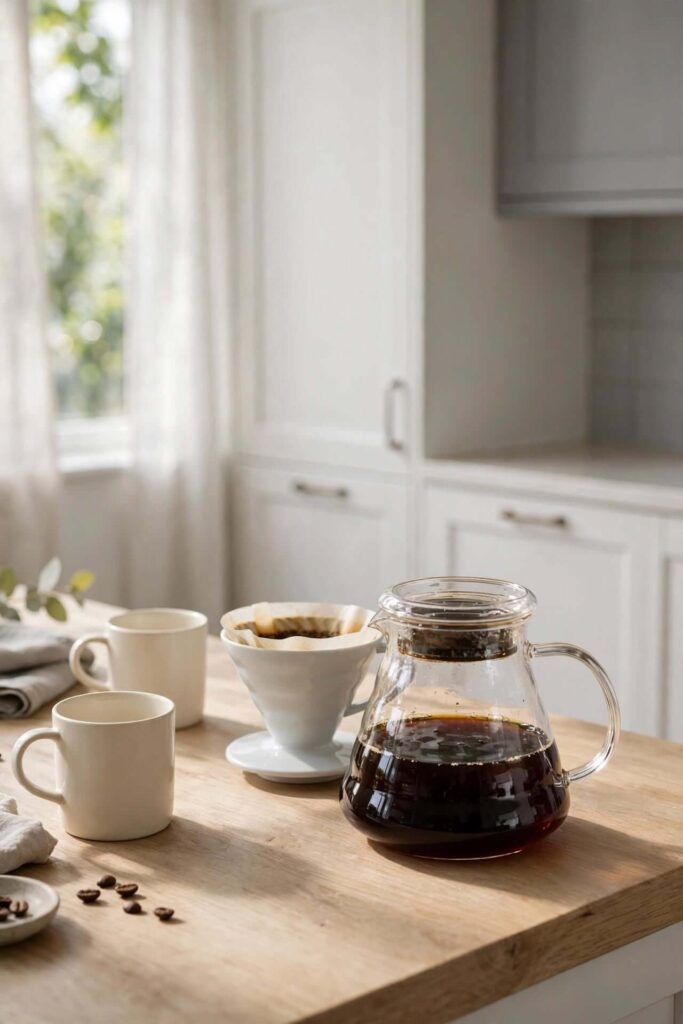
Let the glass coffee carafe become the star of a clean, minimalist coffee station. Place it beside a simple pour-over brewer, one or two neutral mugs, and a small container of coffee beans on a light countertop. White, cream, pale wood, and soft gray create a calm backdrop that lets the transparent glass and rich coffee provide visual contrast. This setup works especially well in small kitchens because keeping accessories limited prevents the counter from feeling crowded.
Quick Win: Remove anything you do not use daily and group your essentials on one small tray. The result instantly feels more intentional.
2. Warm Wood and Glass Coffee Station
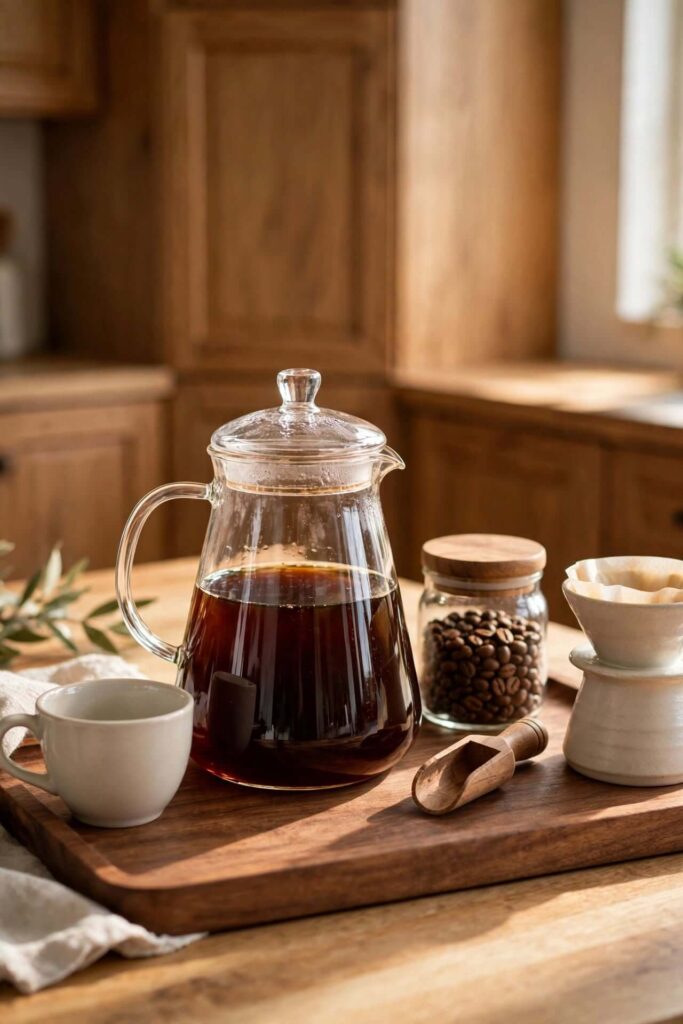
Pairing transparent glass with warm wood creates an inviting coffee corner that feels natural rather than overly styled. Display the glass coffee carafe on an oak or walnut tray with a wooden scoop, ceramic mugs, and a small jar of coffee beans. The combination of organic wood grain and reflective glass adds depth without requiring lots of decoration. It is an easy approach for kitchens that already feature wood cabinets, butcher-block counters, or warm flooring.
3. Scandinavian Glass Coffee Carafe Display
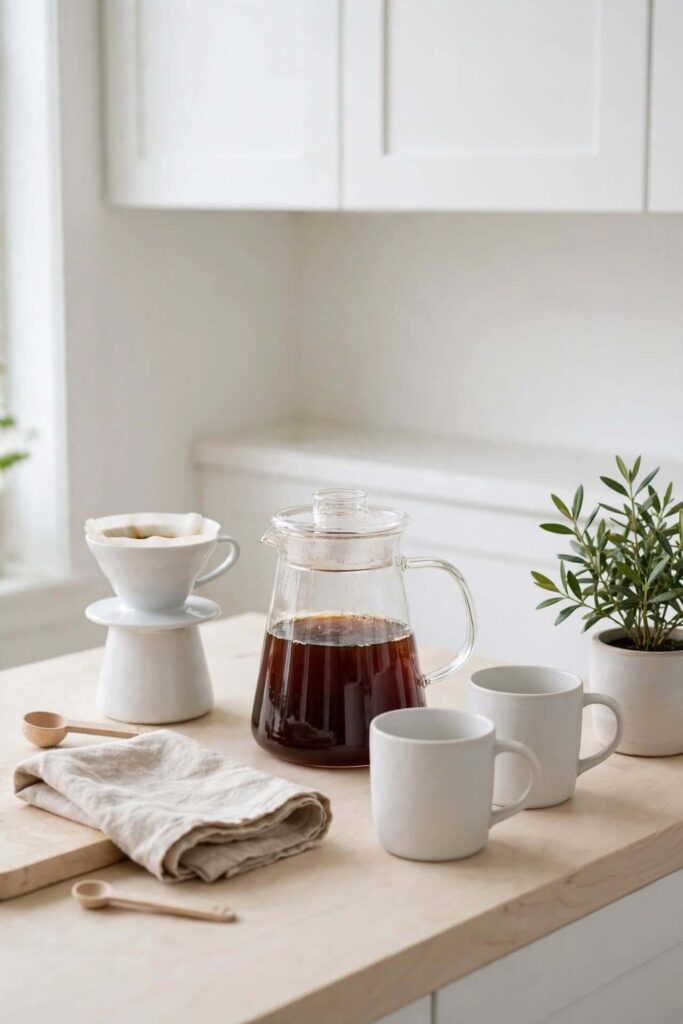
For a Scandinavian-inspired coffee corner, keep the styling light, functional, and uncluttered. Combine a clear glass coffee carafe with pale wood, white ceramics, linen, and one small leafy plant. The transparent carafe reinforces the airy quality of the space while darker coffee adds a natural visual anchor. This idea is particularly effective in bright kitchens where you want the coffee area to feel integrated rather than visually heavy.
4. Glass Coffee Carafe on a Dedicated Coffee Tray
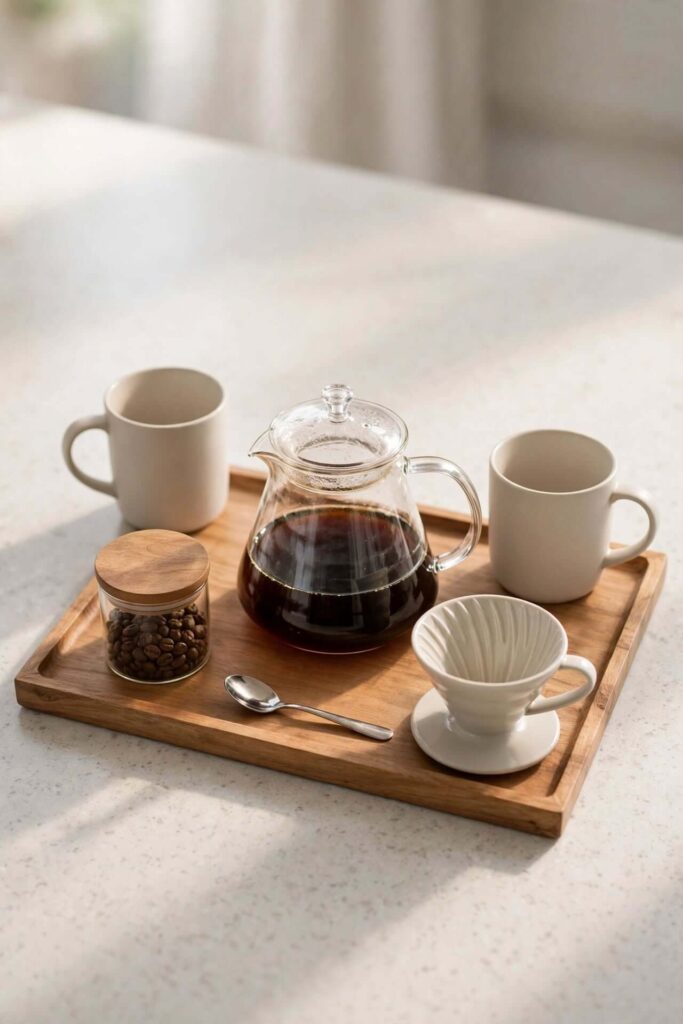
A dedicated tray turns several loose coffee essentials into one defined station. Place the glass coffee carafe in the center, then arrange mugs, coffee beans, a spoon, and your brewing tool around it. Choose a tray slightly larger than the carafe so everything has breathing room without wasting countertop space. This arrangement is ideal for renters or anyone who wants a coffee station that can be moved when the counter needs to be cleared. Keep the roles clear: the tray is the organiser, the carafe is the brewer — style the tray around the carafe, not the other way round.
5. Modern Black and Glass Coffee Corner
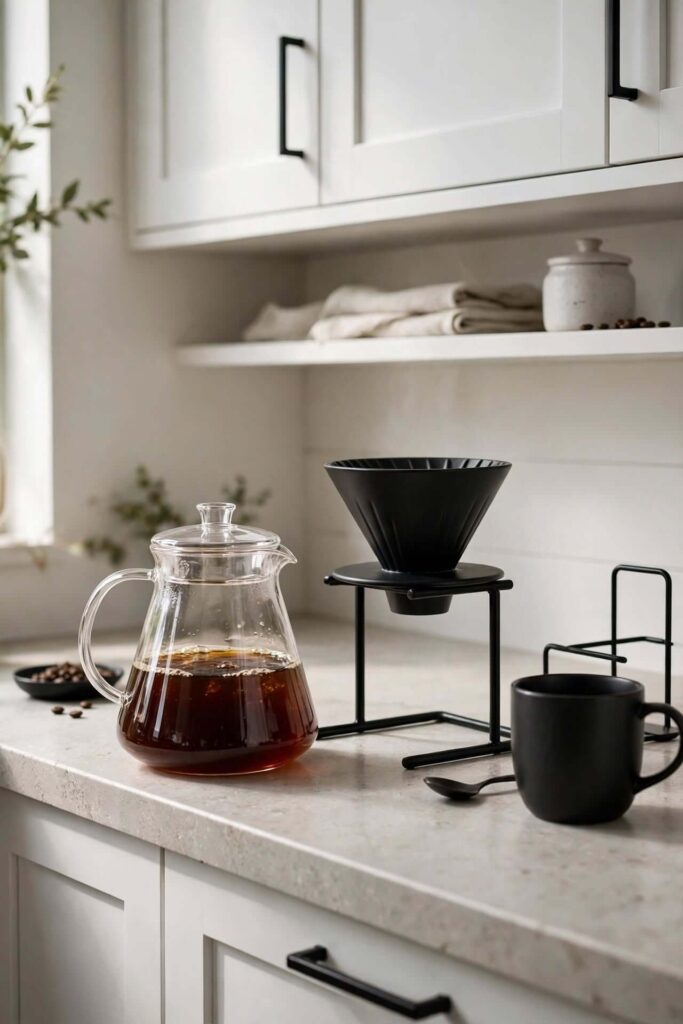
A black-and-glass combination gives the coffee station a more sophisticated, contemporary character. Use a clear carafe with a dark coffee brewer, matte black mugs, and black metal accents against a light stone or white countertop. The contrast makes the transparent carafe stand out while giving the overall setup a polished appearance. This look works particularly well in modern kitchens with black hardware, dark appliances, or charcoal cabinetry.
Quick Win: Add only one black accent at a time—such as a mug or brewer—so the setup feels refined rather than overly dark.
6. Farmhouse Coffee Station With Glass
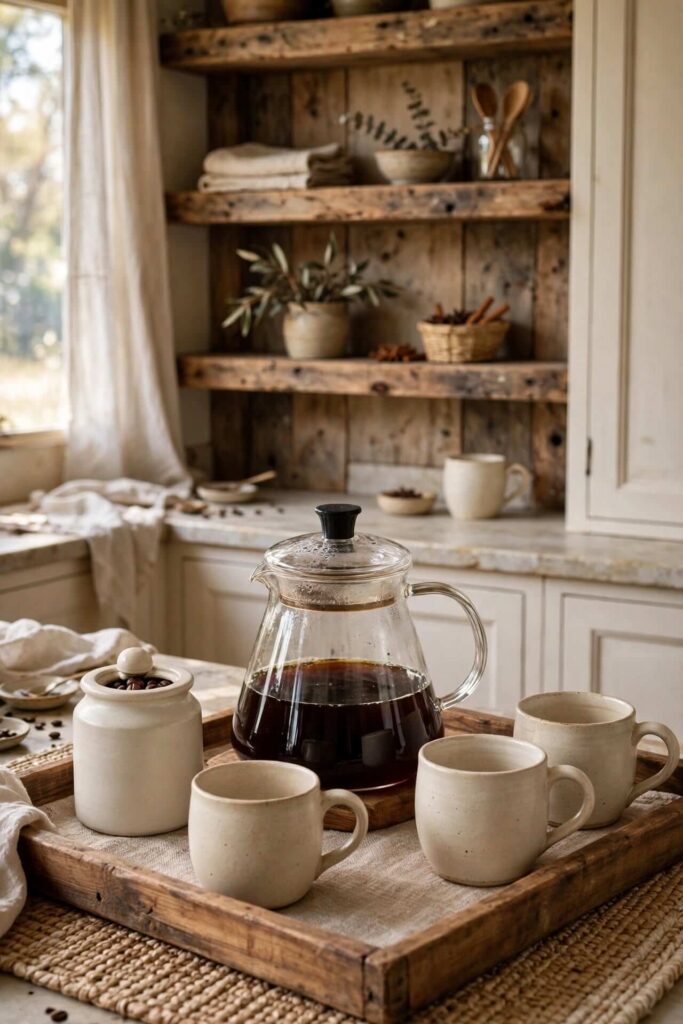
A glass coffee carafe can soften the heavier textures often found in farmhouse kitchens. Combine it with an aged wooden shelf, cream ceramic mugs, a simple stoneware container, and natural wood accessories. Instead of filling every surface, allow the clear carafe to provide a lighter visual element among the rustic materials. This approach works especially well when you want a farmhouse coffee station that feels fresh rather than overly themed.
7. Small Apartment Coffee Carafe Setup
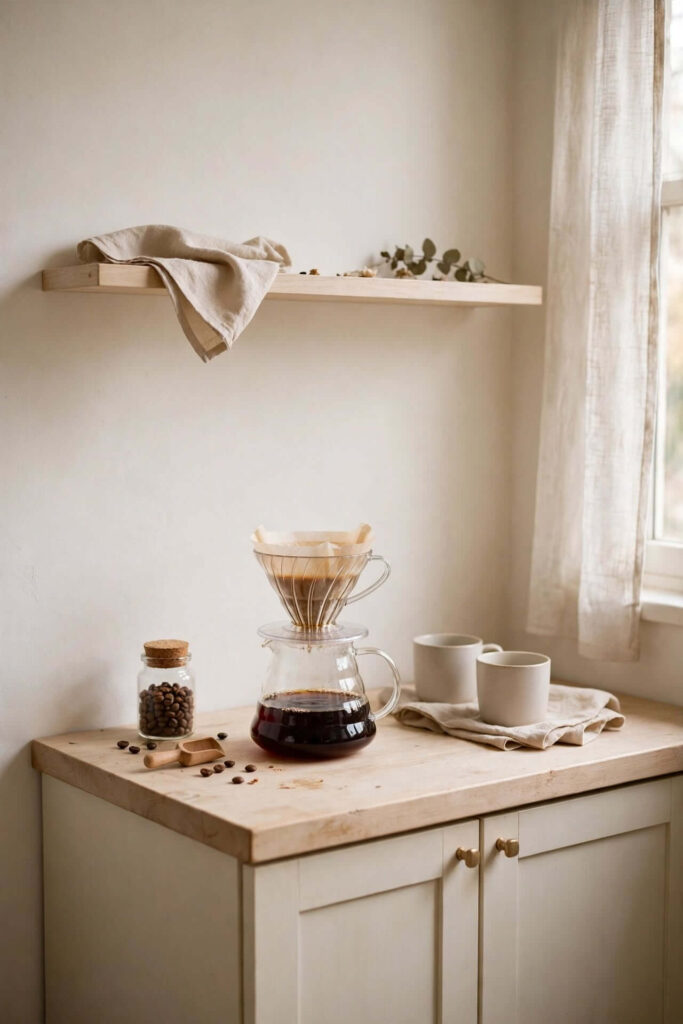
Limited counter space does not mean giving up a stylish coffee station. Choose a compact glass coffee carafe and pair it with only the essentials: a brewer, one or two mugs, and a small coffee container. Vertical shelving can hold extra supplies above the counter while keeping the work surface open. The transparent carafe is especially useful visually because it does not introduce another bulky solid shape into a small kitchen.
8. Elegant Coffee Station With Brass Accents
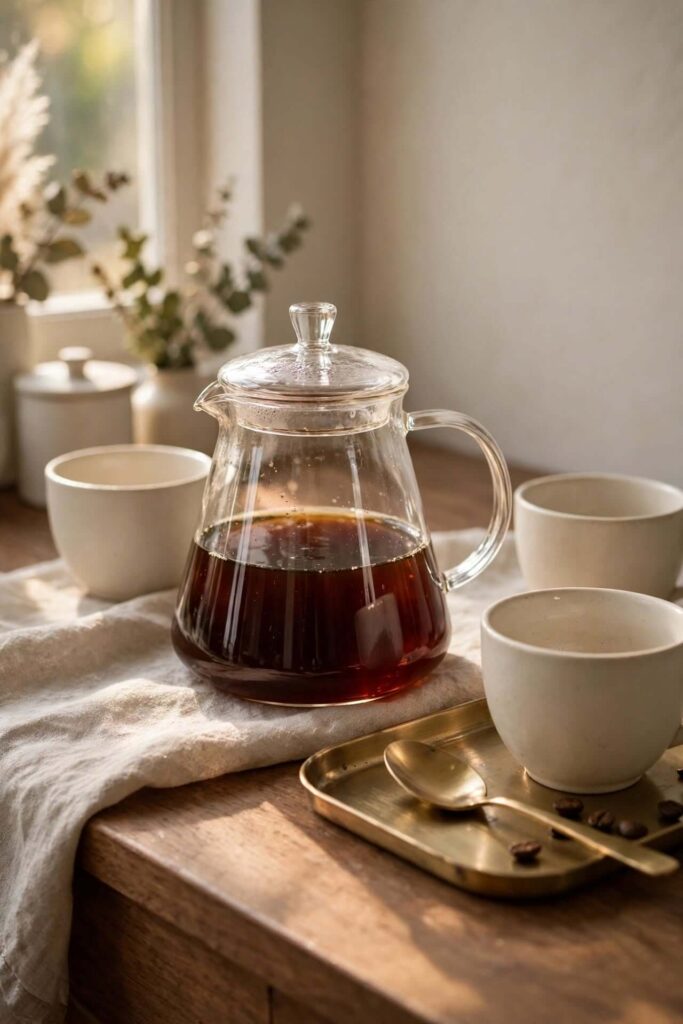
For a more elevated look, combine the simplicity of a glass coffee carafe with restrained brass details. A brass-handled spoon, small brass tray, or warm metallic coffee accessory can add polish without making the station feel formal. Pair these accents with creamy ceramics and medium-toned wood for balance. The result feels sophisticated enough for an entertaining area while remaining practical for everyday coffee.
9. Glass Carafe With a Cozy Coffee Nook
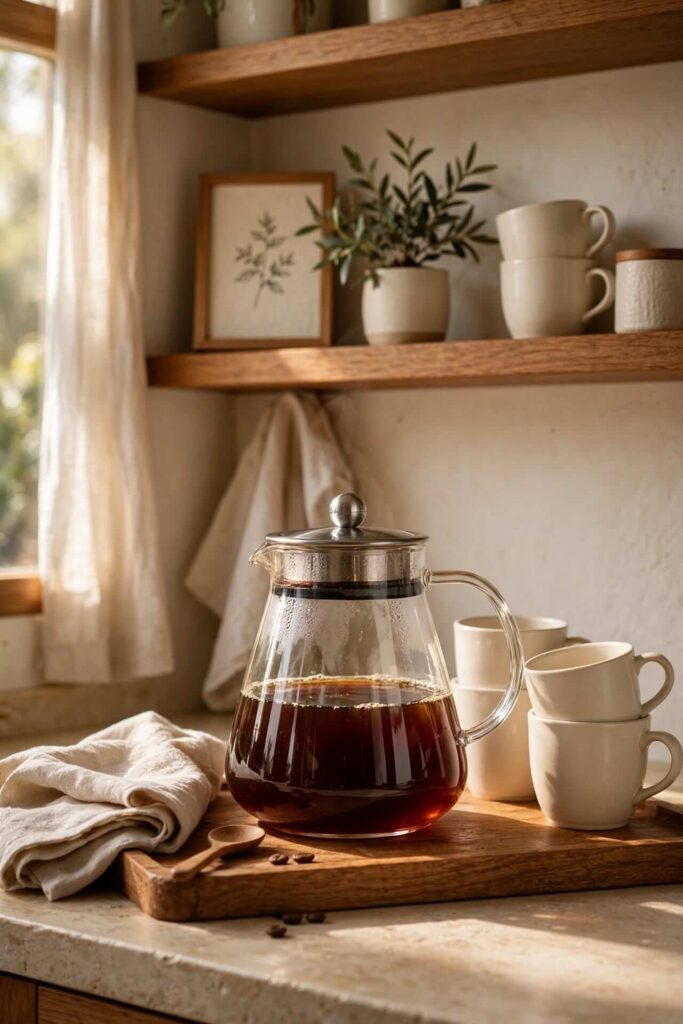
Create a dedicated coffee nook by combining the carafe with comfortable, tactile details. Place the setup near a breakfast area or kitchen corner with a small framed artwork, wooden shelf, neutral mugs, and a folded linen towel. The coffee carafe adds a practical focal point while the surrounding textures make the area feel warm and personal. This idea works particularly well for homes where morning coffee is part of a relaxing daily ritual.
10. Black-and-White Coffee Station
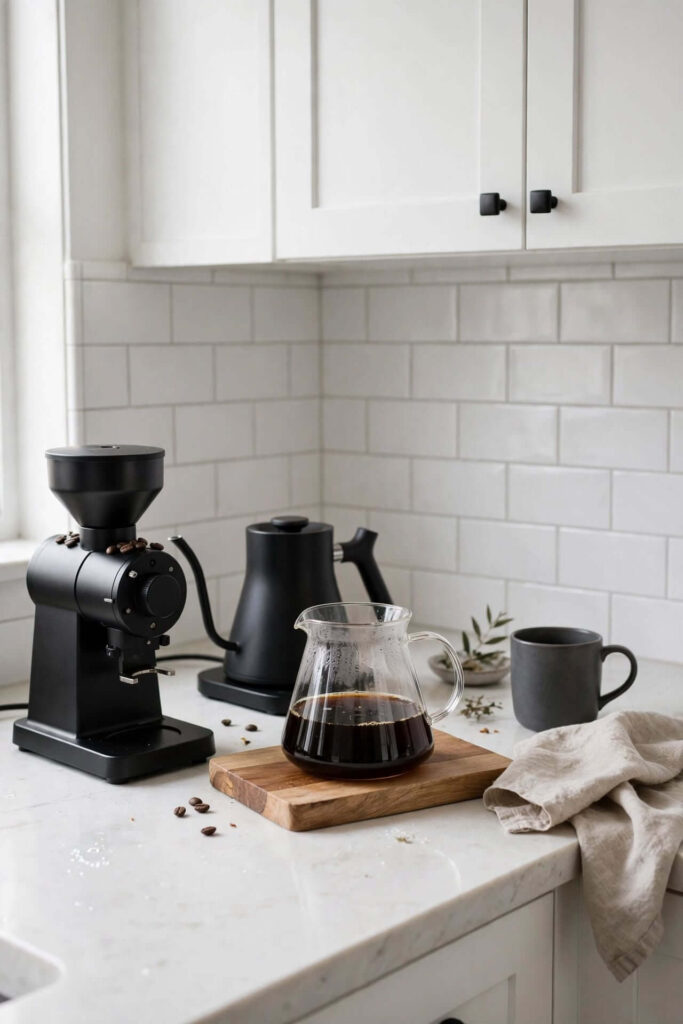
A black-and-white palette gives a glass coffee carafe a crisp, modern backdrop. Place it against white tile or cabinetry with black brewing equipment, a charcoal mug, and one small natural wood or green accent to prevent the setup from feeling too stark. The transparent glass creates an interesting visual break between the two strong tones. This style is easy to maintain because the limited palette naturally keeps the display cohesive.
Quick Win: Introduce one warm element, such as a wooden spoon or small cutting board, to soften a strictly black-and-white coffee corner.
11. Rustic Glass Coffee Carafe and Ceramic Mugs
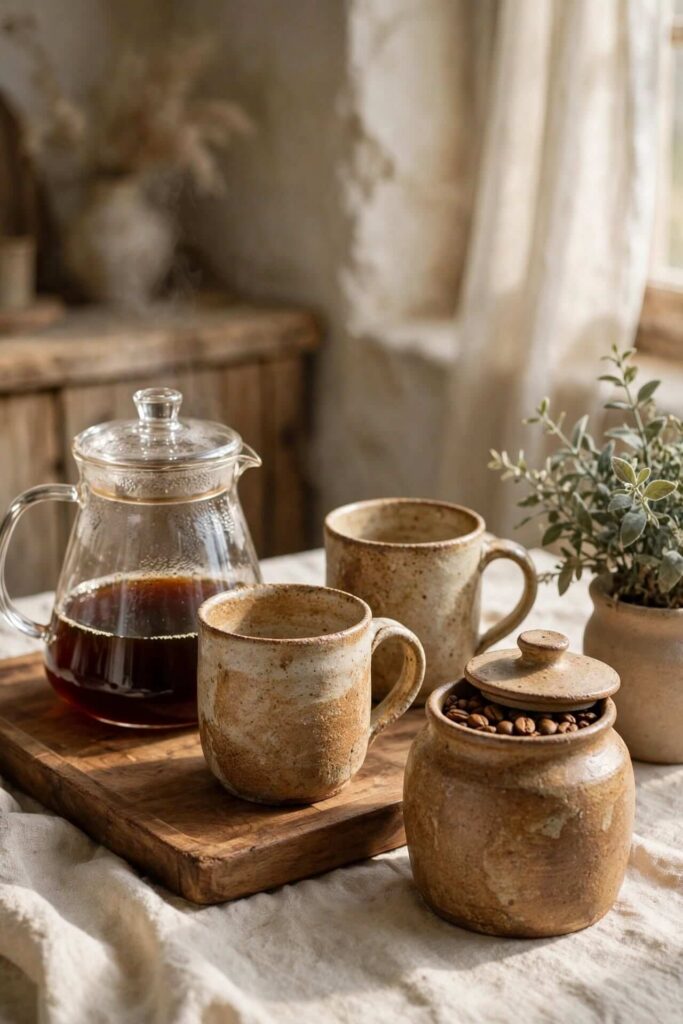
The contrast between delicate glass and handcrafted ceramics can make a coffee station feel collected over time. Choose a simple transparent carafe and pair it with slightly irregular stoneware mugs, a wooden tray, and a ceramic coffee bean jar. Earthy cream, tan, brown, and muted green tones work particularly well here. This setup suits kitchens where you want warmth and character without relying on excessive decoration.
12. Glass Coffee Carafe for a Pour-Over Station
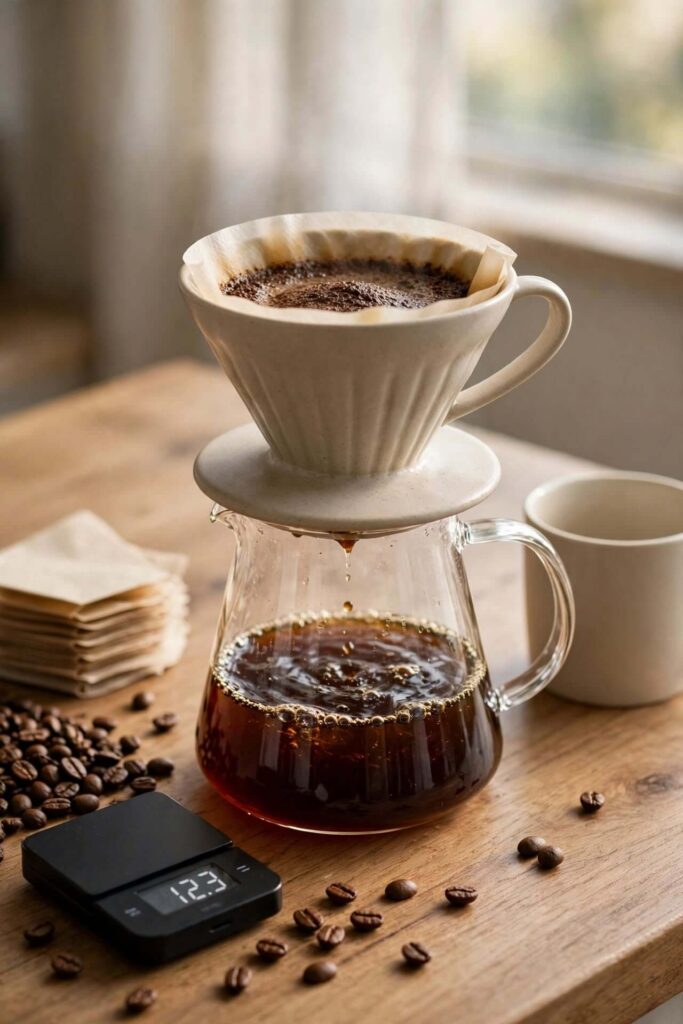
If you enjoy pour-over coffee, make the brewing process part of the visual design. Position the glass coffee carafe beneath a ceramic or glass dripper so the freshly brewed coffee becomes part of the display. Keep filters, beans, and a scale nearby but organized. A clear carafe is particularly useful here because it lets you see the coffee level while also showcasing the brewing ritual. Use a coffee-to-water ratio of about 1:15 to 1:17 — for example, 30 g of coffee to 450–500 ml of water — with a medium grind, about the texture of coarse sand. Pour in slow circles, let the coffee bloom for 30–45 seconds, and aim for a total brew time of 3–4 minutes.
13. Neutral Luxury Coffee Station
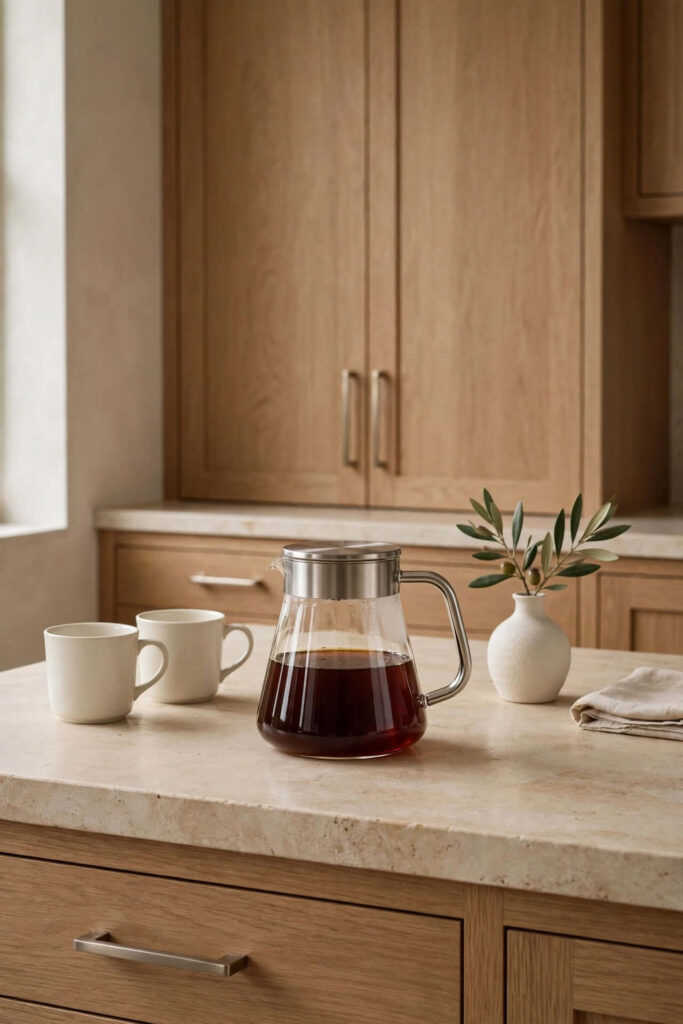
A neutral palette can make an everyday coffee corner feel surprisingly upscale. Combine a clear glass coffee carafe with ivory ceramics, beige stone, warm oak, and subtle brushed metal. Avoid filling the counter with accessories; instead, rely on material quality and proportion to create the luxurious feeling. This approach works especially well in contemporary kitchens where the coffee area needs to blend seamlessly with an understated interior.
14. Open Shelf Coffee Carafe Display
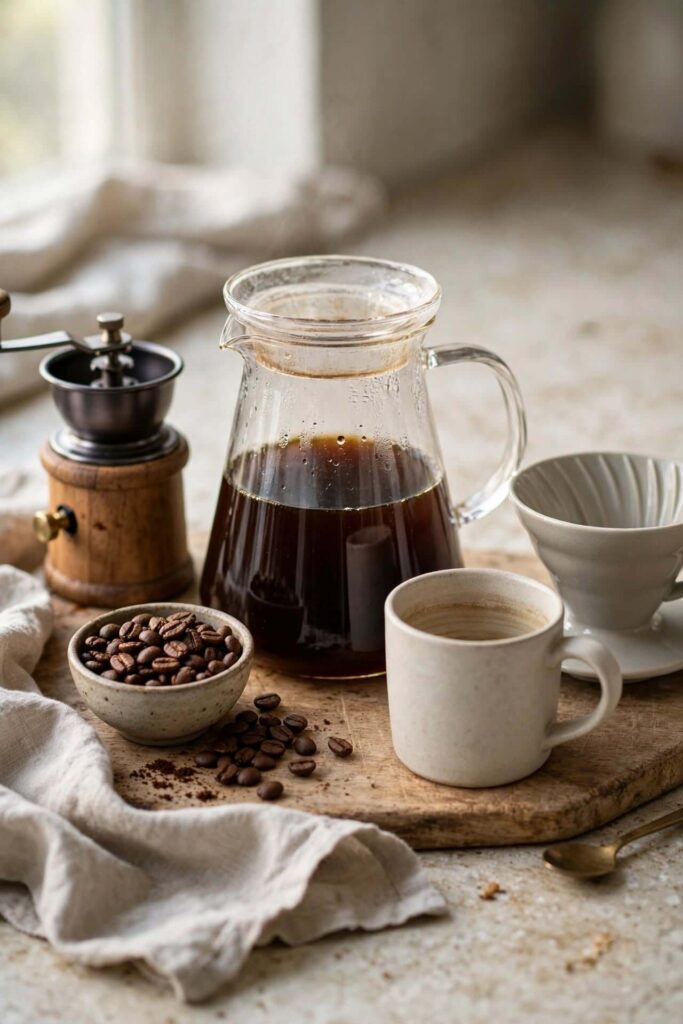
Open shelving provides a natural opportunity to turn your coffee essentials into a small kitchen vignette. Place the glass coffee carafe on the lower counter with mugs and coffee equipment, while the shelf above holds matching ceramics and a small plant. Repeating similar colors across both levels keeps the arrangement visually connected. This is a smart option for homeowners who want their coffee station to feel decorative without sacrificing accessibility.
15. Simple Everyday Glass Coffee Carafe Setup
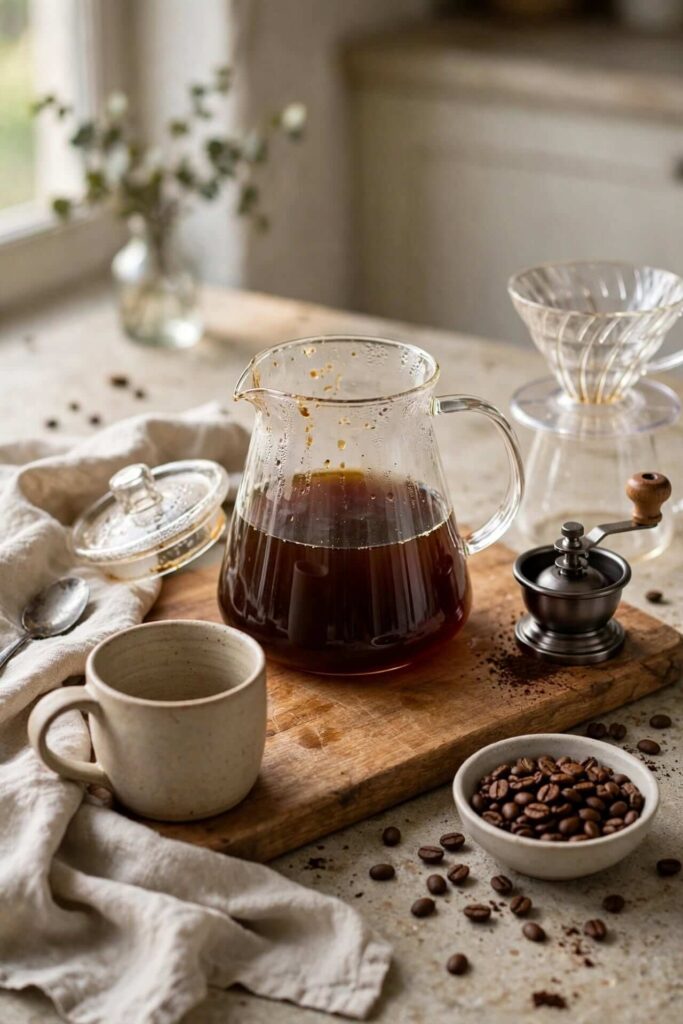
Sometimes the best coffee station is the one that looks naturally used. Keep a glass coffee carafe beside your favorite mug, grinder, coffee beans, and a small wooden board rather than creating an elaborate display. The key is giving each item enough space to breathe. This setup feels practical, approachable, and easy to maintain, making it ideal for busy households that still want a visually pleasing kitchen counter.
Quick Win: Style your everyday essentials together instead of hiding them in separate places. A small tray can instantly turn routine coffee equipment into a cohesive station.
Choosing the Right Carafe
Start with size. A 600 ml glass coffee carafe (about 20 oz) brews enough for two to three mugs and suits a one- or two-person household; a 1 L glass coffee carafe (about 34 oz) serves four to five mugs and fits a family breakfast table. Anything larger than 1.5 L is hard to pour neatly and cools faster, so it only makes sense for entertaining.
Most glass coffee carafes are made from borosilicate glass, which handles sudden temperature changes well and feels light in the hand. Cheaper soda-lime glass is heavier and more prone to cracking from heat shock, so check the manufacturer’s guidance before pouring boiling water into it.
Glass alone does not hold heat for long: a single-wall carafe keeps coffee hot for roughly 20–30 minutes. Pre-warm it with hot water before brewing, and use a warming plate or a double-wall design if coffee needs to stay hot longer. Never put a glass carafe directly on a flame or an electric coil unless the manufacturer states it is stovetop-safe — most are not.
Conclusion
A glass coffee carafe can be much more than a practical coffee server—it can become a natural focal point for a kitchen coffee station. Whether your style is minimalist, rustic, Scandinavian, modern, or warmly collected, the right combination of glass, ceramics, wood, and restrained accessories can make your setup feel intentional. You do not need to recreate every idea here. Choose the details that suit your space, brewing habits, personality, and budget, then build a coffee corner you genuinely enjoy using.
Frequently Asked Questions
A glass coffee carafe is designed to hold and serve brewed coffee. Many are also used directly with pour-over brewing systems, allowing coffee to drip into the carafe before serving.
Yes, many glass carafes are designed for regular coffee brewing and serving. However, always check the manufacturer’s temperature and heat-resistance specifications before exposing the carafe to high heat.
Keep the styling simple by pairing the carafe with complementary mugs, a coffee brewer, beans, and a small tray. Natural wood and neutral ceramics work particularly well with transparent glass.
A basic single-wall glass carafe keeps coffee hot for roughly 20–30 minutes — noticeably less than a thermal carafe. Pre-warming the carafe with hot water before brewing adds a few minutes, and a warming plate or a double-wall design holds heat longer. If coffee needs to stay hot for over an hour, brew smaller batches more often rather than leaving a full carafe standing.
Because clear glass is visually neutral, it works with almost any palette. Cream, white, black, natural wood, earthy tones, and muted greens are particularly easy to combine.
Yes. Many pour-over setups are specifically designed to brew directly into a glass carafe. Make sure the size and shape of the carafe are compatible with your brewer — a 600 ml carafe suits a one- to two-cup dripper, while a 1 L carafe suits larger brewers. Use a coffee-to-water ratio of about 1:15 to 1:17 with a medium grind.
Wash it according to the manufacturer’s instructions, paying special attention to coffee residue around the base and narrow openings. Regular cleaning helps prevent lingering coffee oils and odors.
Absolutely. Its transparent appearance can feel visually lighter than bulky opaque equipment. Choose a compact size and keep only your everyday coffee essentials on the counter.
Focus on coordination rather than quantity. Matching neutral ceramics, quality-looking natural materials, a wooden tray, restrained metal accents, and good organization can create a more elevated appearance.
Yes. Glass looks especially appealing alongside reclaimed wood, stoneware, woven textures, and warm neutral colors. The contrast prevents a rustic coffee station from looking too heavy.
Avoid overcrowding the area with too many mugs, containers, signs, and decorative accessories. Give the carafe enough negative space to remain the visual focal point.
Some are dishwasher safe while others require hand washing. Always check the specific product’s care instructions before putting it in a dishwasher.
Position it centrally on a tray or countertop and keep surrounding items visually simple. Contrasting dark coffee against a light neutral background can also naturally draw attention to the carafe.