

Choosing coffee for an espresso machine can feel surprisingly confusing. The shelves are packed with whole beans, ground coffee, light roasts, dark roasts, blends, and single-origin options—and not every bag will produce the rich, balanced shot you’re hoping for. The good news is that you don’t need an expensive or complicated coffee setup to get started. The right beans, a suitable roast, and a properly fine grind can make a dramatic difference. From classic chocolatey espresso blends to brighter single-origin beans and convenient pre-ground options, these 15 choices will help you understand what coffee for espresso machine actually means and find a style that suits your taste.
In This Article
- Classic Espresso Blend
- Medium-Dark Roast for Rich Espresso
- Medium Roast for a Balanced Cup
- Dark Roast for Bold Espresso
- Whole Beans for Maximum Freshness
- Freshly Ground Espresso Coffee
- Espresso Blend With Chocolate Notes
- Nutty Espresso Beans
- Fruity Single-Origin Espresso
- Coffee Beans for Milk-Based Drinks
- Decaf Beans for Espresso
- Fresh Local-Roaster Beans
- Pre-Ground Espresso Coffee
- Balanced Espresso Blend for Everyday Use
- Experiment With Different Coffee Origins
- Frequently Asked Questions
1. Classic Espresso Blend
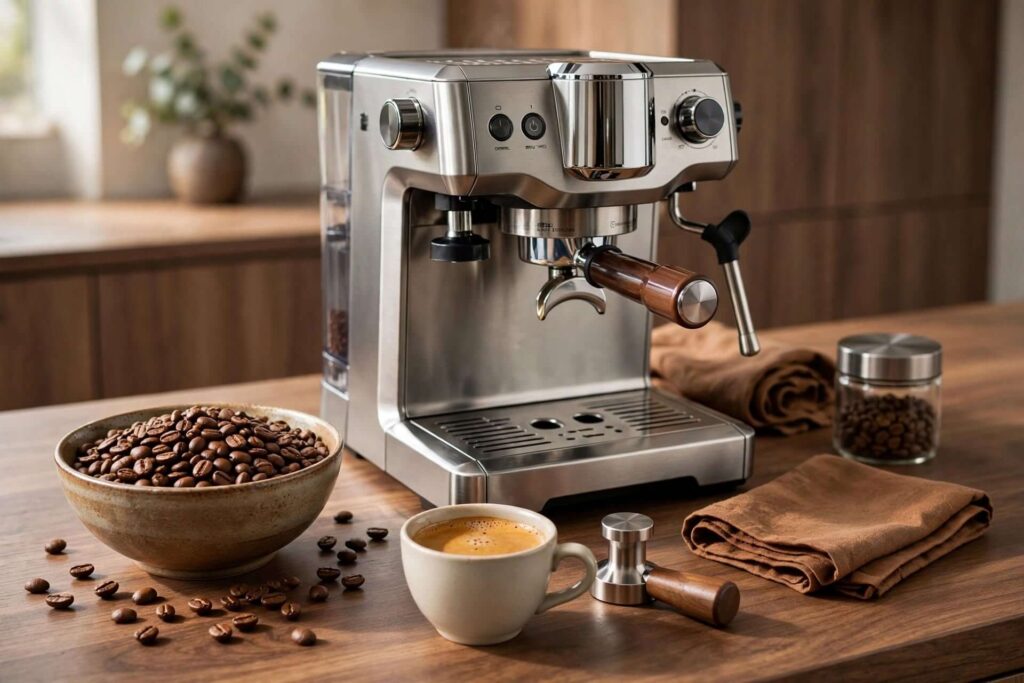
A classic espresso blend is one of the easiest places to start when choosing coffee for an espresso machine. Look for beans with tasting notes such as chocolate, caramel, nuts, or brown sugar. These flavors tend to create a full-bodied shot with pleasant sweetness and enough structure for milk drinks. A medium-dark or traditional espresso roast is especially forgiving for beginners and works well in cappuccinos, lattes, and straight espresso.
Quick Win: Start with a blend rather than an unusually bright single-origin coffee if you’re still learning to dial in your machine.
2. Medium-Dark Roast for Rich Espresso
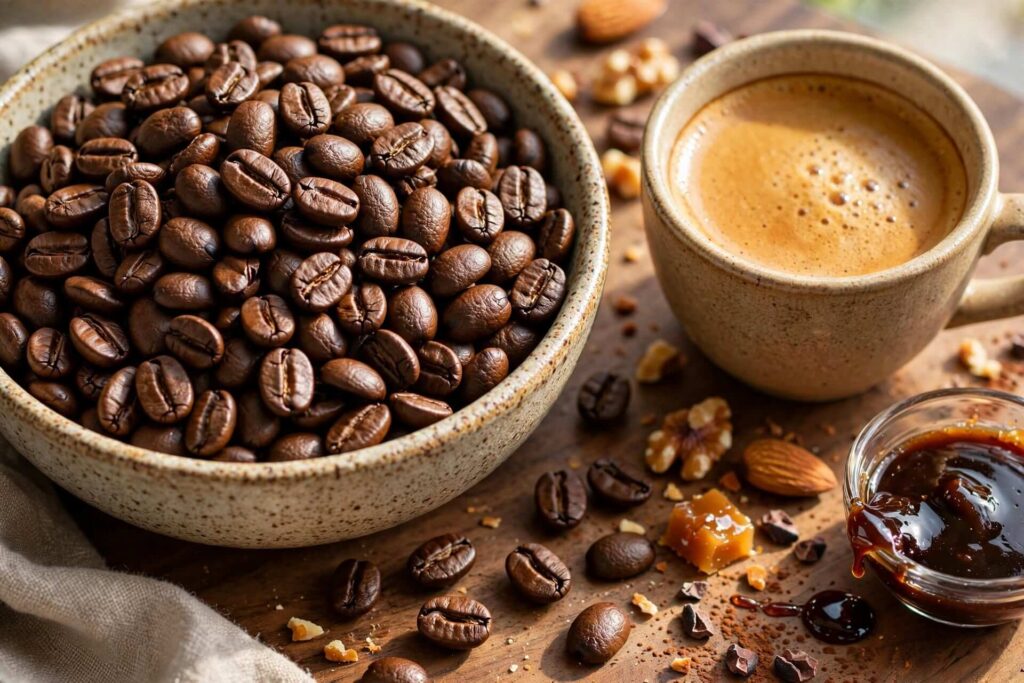
Medium-dark roast beans are a reliable choice when you want a rich, smooth espresso without the heavier smoky character associated with very dark roasting. They often produce flavors of cocoa, caramel, toasted nuts, and molasses. This roast level can be particularly enjoyable in home espresso machines because it gives you a familiar café-style profile while retaining some sweetness and complexity.
3. Medium Roast for a Balanced Cup
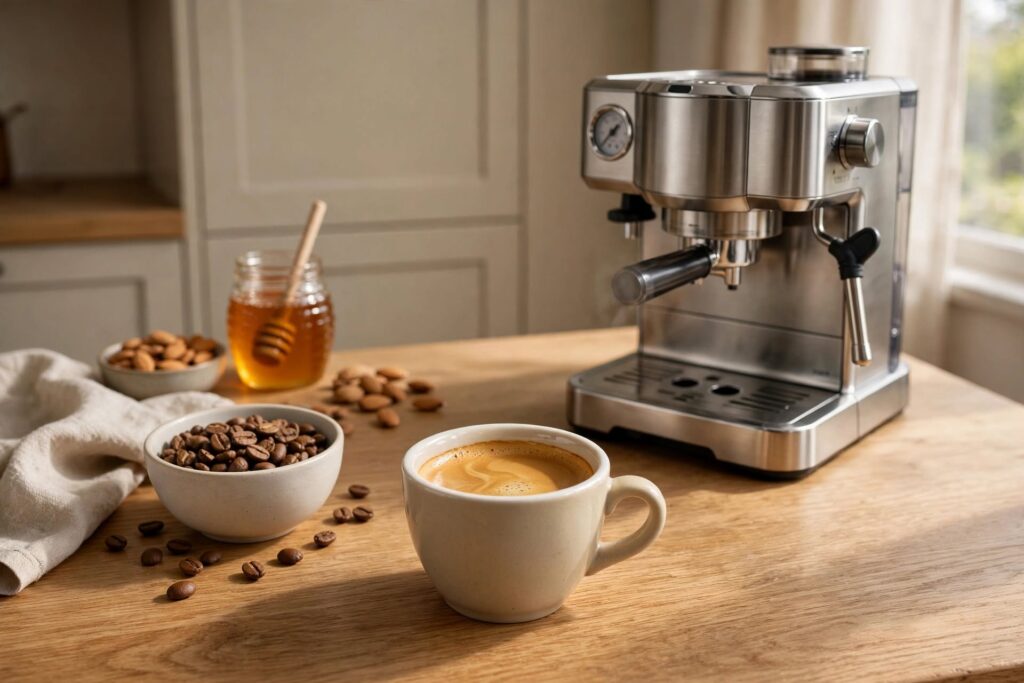
If dark coffee tastes too intense but light roast espresso seems intimidating, medium roast beans offer a useful middle ground. They can bring sweetness, acidity, and body together without pushing any single characteristic too far. Look for tasting notes such as caramel, milk chocolate, almond, stone fruit, or honey. A good medium roast can also work beautifully when you drink espresso without milk.
Quick Win: If your espresso tastes overly bitter with darker beans, trying a medium roast may give you a softer, sweeter profile.
4. Dark Roast for Bold Espresso
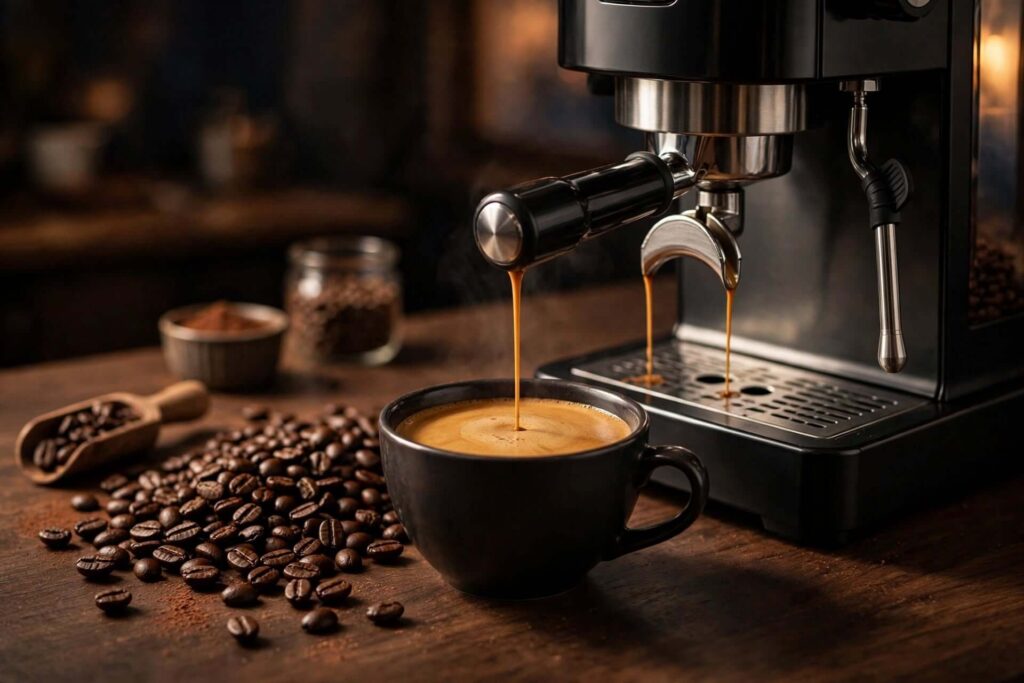
Dark roast coffee is a classic choice for people who prefer powerful, intense espresso. These beans often emphasize roasted, bittersweet, smoky, cocoa, and sometimes spicy flavors. They can produce a substantial cup that stands up well to steamed milk, making them popular for cappuccinos and traditional lattes. If you prefer a strong coffeehouse-style drink, dark roast is worth experimenting with.
5. Whole Beans for Maximum Freshness
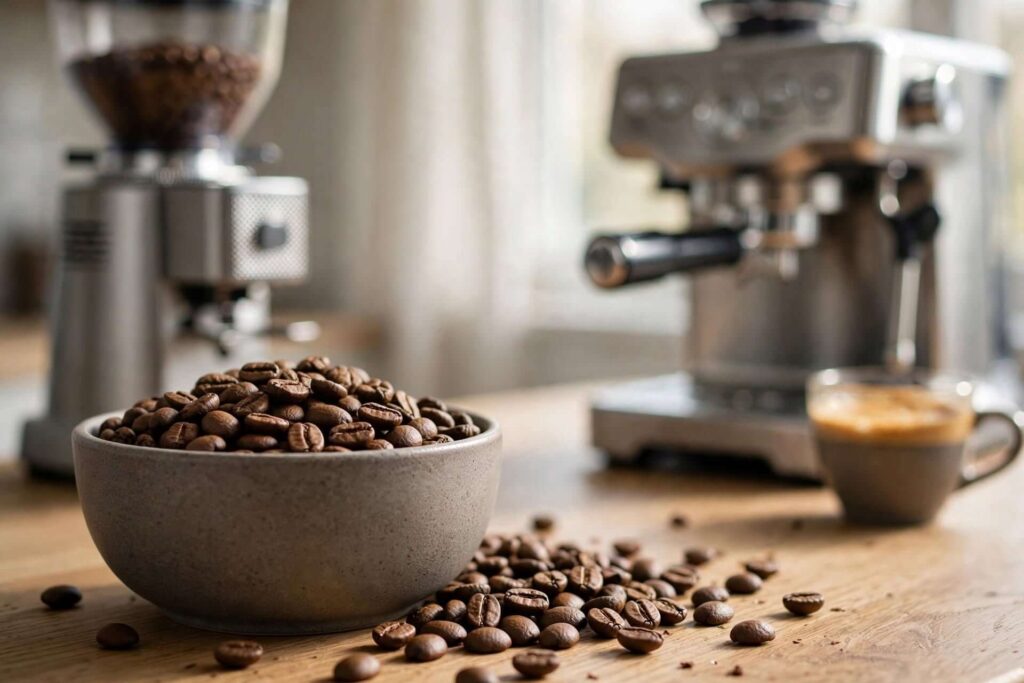
Whole beans are an excellent choice if your espresso machine setup includes a good burr grinder. Grinding immediately before brewing helps preserve the coffee’s aroma and gives you control over grind size, which is particularly important for espresso. Instead of buying a large bag, consider buying smaller quantities and storing them in an airtight container away from heat, moisture, and direct sunlight.
6. Freshly Ground Espresso Coffee
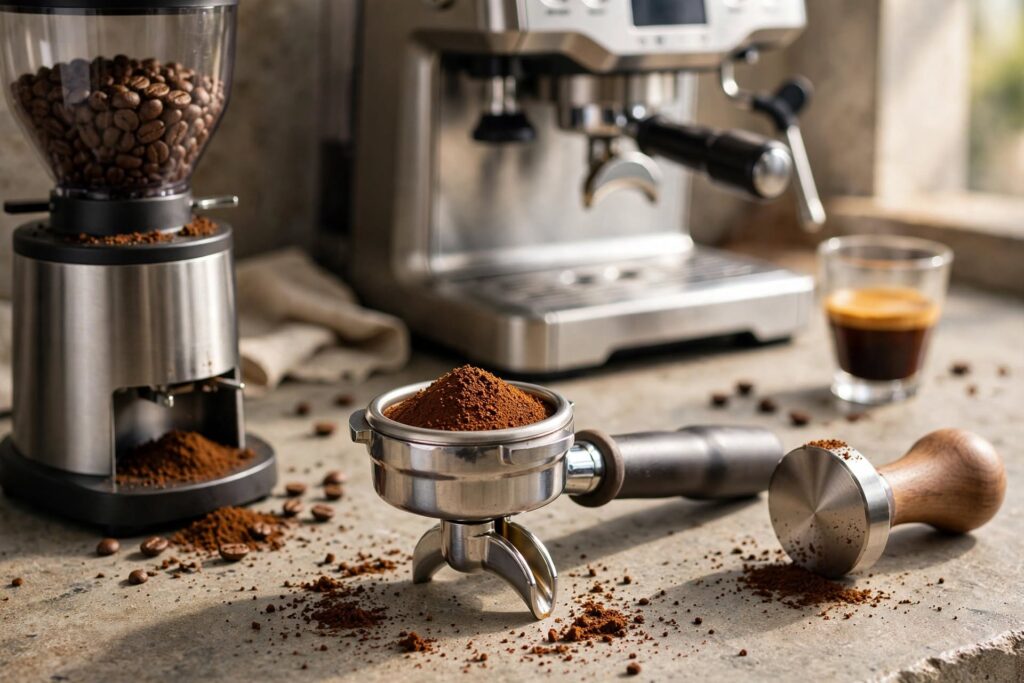
For many home machines, freshly ground coffee gives you more control than buying pre-ground coffee. Espresso generally requires a fine grind, but the exact setting depends on your machine, grinder, coffee, and brewing conditions. Freshly grinding allows you to adjust the coffee when a shot runs too quickly or slowly. The goal is not simply “fine,” but a grind that helps produce balanced extraction.
Quick Win: Make small grind adjustments rather than changing the setting dramatically. Espresso can respond noticeably to tiny changes.
7. Espresso Blend With Chocolate Notes
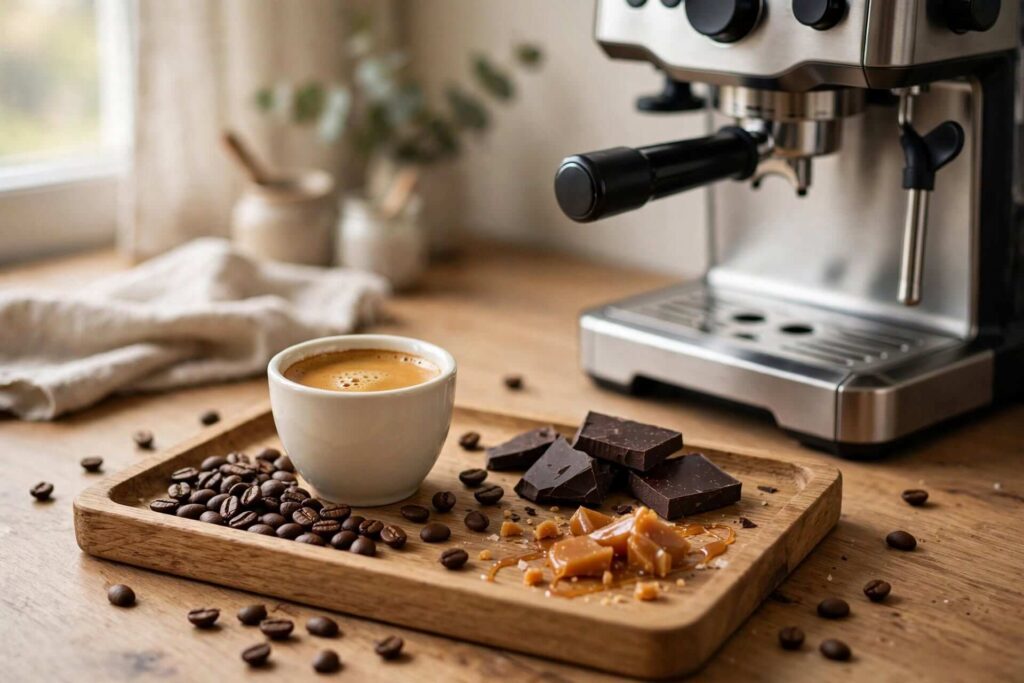
Chocolate-forward espresso beans are a great match for people who want a smooth, comforting cup rather than a strongly acidic one. Look for bags describing flavors such as dark chocolate, cocoa, caramel, fudge, or roasted nuts. These coffees can taste especially satisfying as straight espresso and pair naturally with milk, making them versatile for everyday home drinks.
8. Nutty Espresso Beans
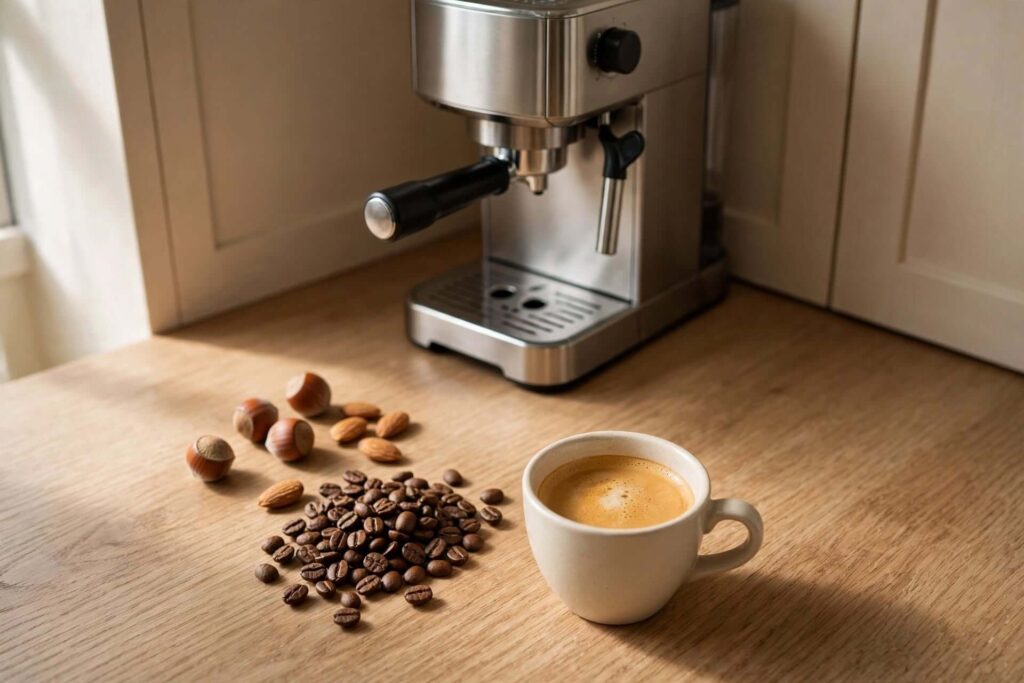
Nutty espresso profiles can be especially approachable for everyday drinking. Beans with tasting notes such as almond, hazelnut, pecan, or walnut often have a rounded character that works beautifully with milk. They can also make a straight espresso feel less sharp and more dessert-like. Choose a medium or medium-dark roast if you want the nutty flavors to remain balanced rather than overly roasted.
9. Fruity Single-Origin Espresso
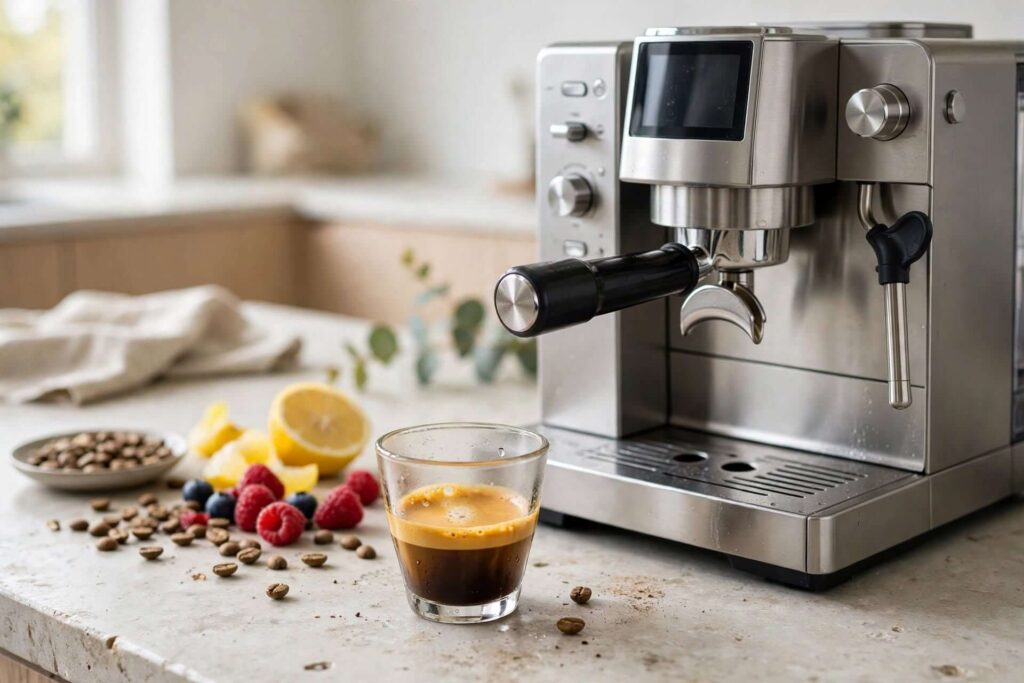
Single-origin beans can be a fascinating choice if you enjoy espresso with brighter and more distinctive flavors. Depending on origin and processing, you may notice tasting notes such as berries, citrus, stone fruit, florals, or tropical fruit. These coffees can require more dialing in than traditional blends, but they are worth exploring if you want your espresso to taste more complex and expressive.
10. Coffee Beans for Milk-Based Drinks
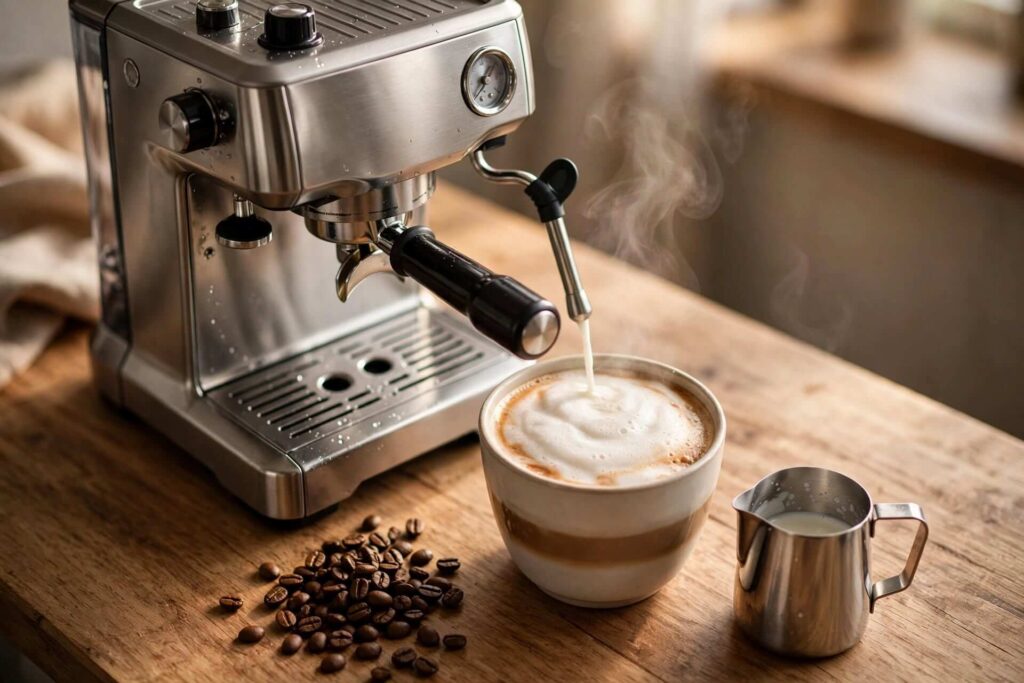
If most of your espresso becomes a latte, cappuccino, or flat white, choose beans with enough body and flavor to remain noticeable beneath steamed milk. Medium-dark blends with chocolate, caramel, nut, or toffee notes are often a practical starting point. Very delicate coffees can become difficult to taste once milk is added, so a more substantial espresso profile may suit your routine better.
Quick Win: For milk drinks, compare the espresso before and after adding milk. The right beans should still leave a recognizable coffee flavor.
11. Decaf Beans for Espresso
Decaf can work very well in an espresso machine when you want the ritual and flavor of espresso without relying on regular caffeinated coffee. Look for decaf beans specifically recommended for espresso and pay attention to roast level and tasting notes just as you would with regular coffee. A quality decaf can produce a rich, satisfying shot rather than simply being a compromise.
12. Fresh Local-Roaster Beans
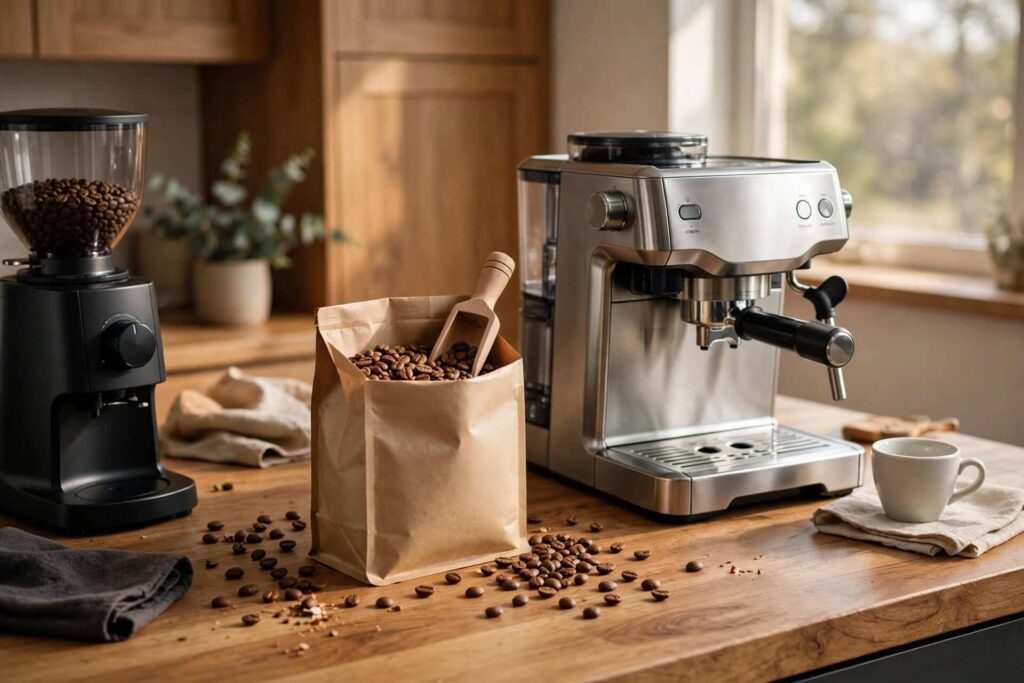
Coffee from a local roaster can be a useful way to explore espresso because many roasters provide detailed brewing recommendations. Look for beans with a roast date and guidance for espresso preparation. You can also ask the roaster which coffee works well for your preferred drink. This makes it easier to discover beans that match your machine and taste preferences without blindly choosing from a supermarket shelf.
13. Pre-Ground Espresso Coffee
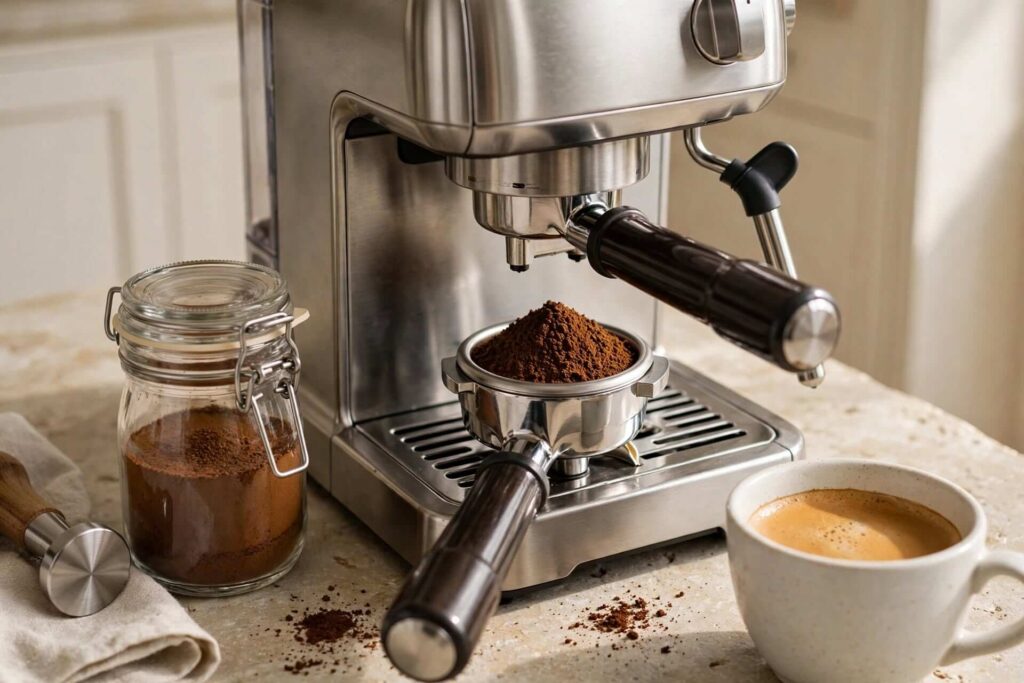
Pre-ground coffee can be convenient if you don’t own a grinder or simply want a quicker morning routine. Choose coffee specifically ground for espresso rather than a general-purpose grind. Keep in mind that pre-ground coffee gives you less control over freshness and grind adjustment than whole beans. For occasional espresso drinking, however, it can be a practical and straightforward option.
Quick Win: Buy smaller quantities of pre-ground espresso coffee so you can finish it while its aroma and flavor are still enjoyable.
14. Balanced Espresso Blend for Everyday Use
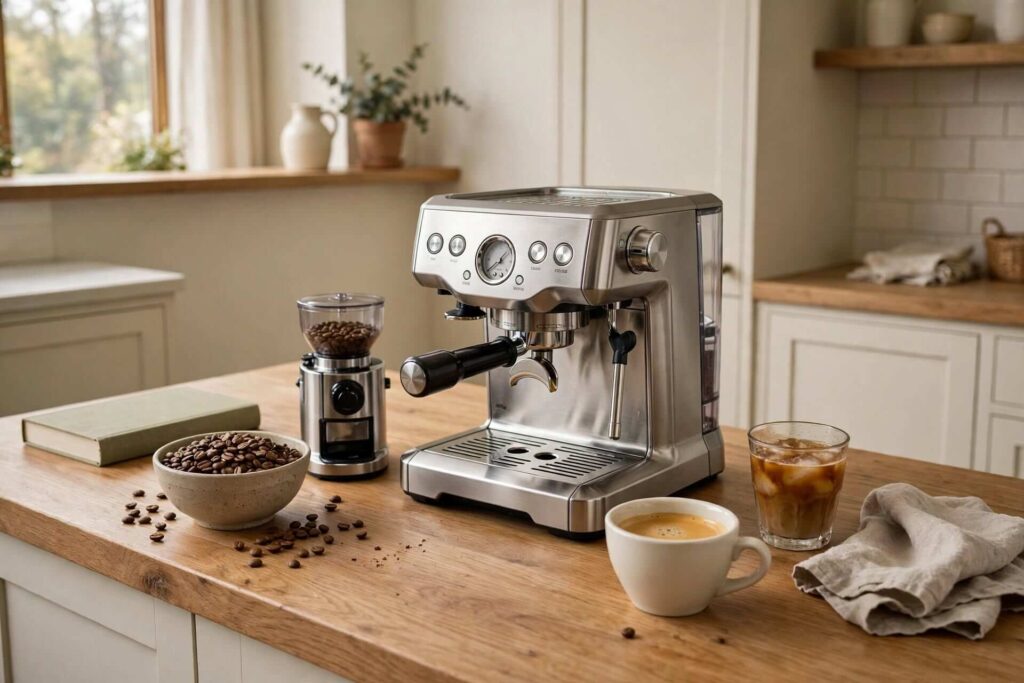
Sometimes the best coffee is simply one you enjoy drinking every day. A balanced blend can combine several bean origins to create consistent sweetness, body, and acidity. Look for descriptions such as caramel, cocoa, nuts, or dried fruit if you want versatility. This type of coffee can work across espresso, americanos, cappuccinos, and lattes without forcing you to keep separate beans for every drink.
15. Experiment With Different Coffee Origins
Once you understand your machine, experimenting with different origins can make espresso much more interesting. Try coffees from different growing regions and compare their flavor profiles rather than assuming one origin is automatically better. Keep notes about the beans, roast level, grind setting, and taste. Over time, you’ll develop a much clearer idea of what coffee for espresso machine suits your palate.
Conclusion
Finding the right coffee for an espresso machine is less about discovering one universally “best” bean and more about matching the coffee to your taste, machine, grinder, and favorite drinks. Start with a balanced espresso blend or medium-dark roast if you want an approachable baseline, then experiment with different roast levels, origins, and flavor profiles. Once you learn how your coffee responds to grind size and brewing, choosing beans becomes much easier—and far more enjoyable.
Frequently Asked Questions
There isn’t one coffee that works best for everyone. Espresso blends, medium-dark roasts, and balanced medium roasts are practical starting points, while lighter single-origin coffees can offer more distinctive flavors.
Yes. Coffee beans don’t have to be labeled specifically as “espresso” to work in an espresso machine. What matters most is choosing beans you enjoy and grinding them appropriately for espresso.
No special species or type of coffee bean is required. “Espresso” generally refers to the brewing method, although coffees sold as espresso blends are often roasted and formulated with espresso preparation in mind.
Whole beans are generally preferable if you have a good grinder because you can grind immediately before brewing and adjust the grind size. Pre-ground espresso coffee is more convenient but gives you less control.
Medium, medium-dark, and dark roasts can all work. Medium-dark is a popular starting point because it can offer a balance of sweetness, body, and roast character.
Yes. Dark roast can produce bold, intense espresso with roasted, cocoa, or bittersweet flavors. It can also work particularly well in milk-based drinks.
Yes, but light roasts can be less forgiving and may require more careful dialing in. They can produce brighter, fruitier, and more acidic espresso than traditional darker profiles.
Espresso generally requires a fine grind, but the exact setting varies between grinders and coffees. Adjust the grind based on how quickly the shot flows and how balanced it tastes.
“Espresso roast” isn’t a standardized roast category. It is usually a marketing or roasting term for coffee intended to perform well as espresso, and its actual roast level can vary between roasters.
Yes. Decaf beans can be brewed as espresso just like caffeinated beans. Look for a decaf that is suitable for espresso and adjust your grind and recipe as needed.
Beans with chocolate, caramel, nut, or other full-bodied flavors often work well in lattes because their flavor can remain noticeable through the milk. Medium-dark blends are a practical starting point.
Keep beans in an airtight container in a cool, dry place away from direct sunlight, heat, and moisture. Avoid repeatedly exposing the entire supply to air.
Yes. Supermarket coffee can work, especially if it is reasonably fresh and suitable for your preferred brewing method. Checking the roast date and choosing whole beans can help when freshness matters.
Try different roast levels and flavor profiles while changing as few other variables as possible. Keep simple notes about each coffee’s taste, grind setting, and brewing results so you can identify patterns.
Bitter espresso can have several causes, including over-extraction, an unsuitable grind setting, very dark roasting, or brewing variables. Adjust one variable at a time rather than changing everything simultaneously.