

Finding the right pairing of couches with tables can be surprisingly tricky. A coffee table might look great on its own but feel too bulky in a small living room, while a delicate side table can disappear beside a large sectional. The secret is choosing pieces that complement your sofa’s shape, color, and proportions while making everyday living easier. Whether you love modern minimalism, warm farmhouse textures, or a relaxed contemporary look, the right combination can make your entire room feel more intentional. These 12 couches with tables ideas offer practical inspiration for creating a living room that looks pulled together without sacrificing comfort or valuable floor space.
In This Article
- 1. Pair a Neutral Couch With a Warm Wooden Coffee Table
- 2. Choose a Round Coffee Table for a Small Living Room
- 3. Style a Modern Couch With a Black Metal and Glass Table
- 4. Add a Nesting Table Set Beside a Sectional Couch
- 5. Create a Cozy Look With a Farmhouse Couch and Rustic Table
- 6. Use a Marble Coffee Table for an Elegant Living Room
- 7. Make a Small Couch Work With a C-Shaped Side Table
- 8. Pair a Colorful Couch With a Sculptural Statement Table
- 9. Mix a Leather Couch With a Warm Wood Table
- 10. Choose a Storage Coffee Table for a Family Living Room
- 11. Use Matching Side Tables for a Balanced Sofa Arrangement
- 12. Layer Coffee and Side Tables for a Complete Living Room
- Conclusion
- Frequently Asked Questions
1. Pair a Neutral Couch With a Warm Wooden Coffee Table

A cream, beige, or oatmeal couch looks especially inviting beside a natural oak coffee table. The contrast between soft upholstery and visible wood grain adds warmth without making the room feel busy. Choose a rectangular table if your sofa is long, then layer in a textured rug, two understated cushions, and a handmade ceramic vase. This combination works beautifully in Scandinavian, contemporary, and transitional interiors, particularly when you want a calm living room that still feels welcoming.
Quick Win: Repeat the table’s wood tone in a picture frame, floor lamp, or shelving to make the furniture arrangement feel coordinated.
2. Choose a Round Coffee Table for a Small Living Room
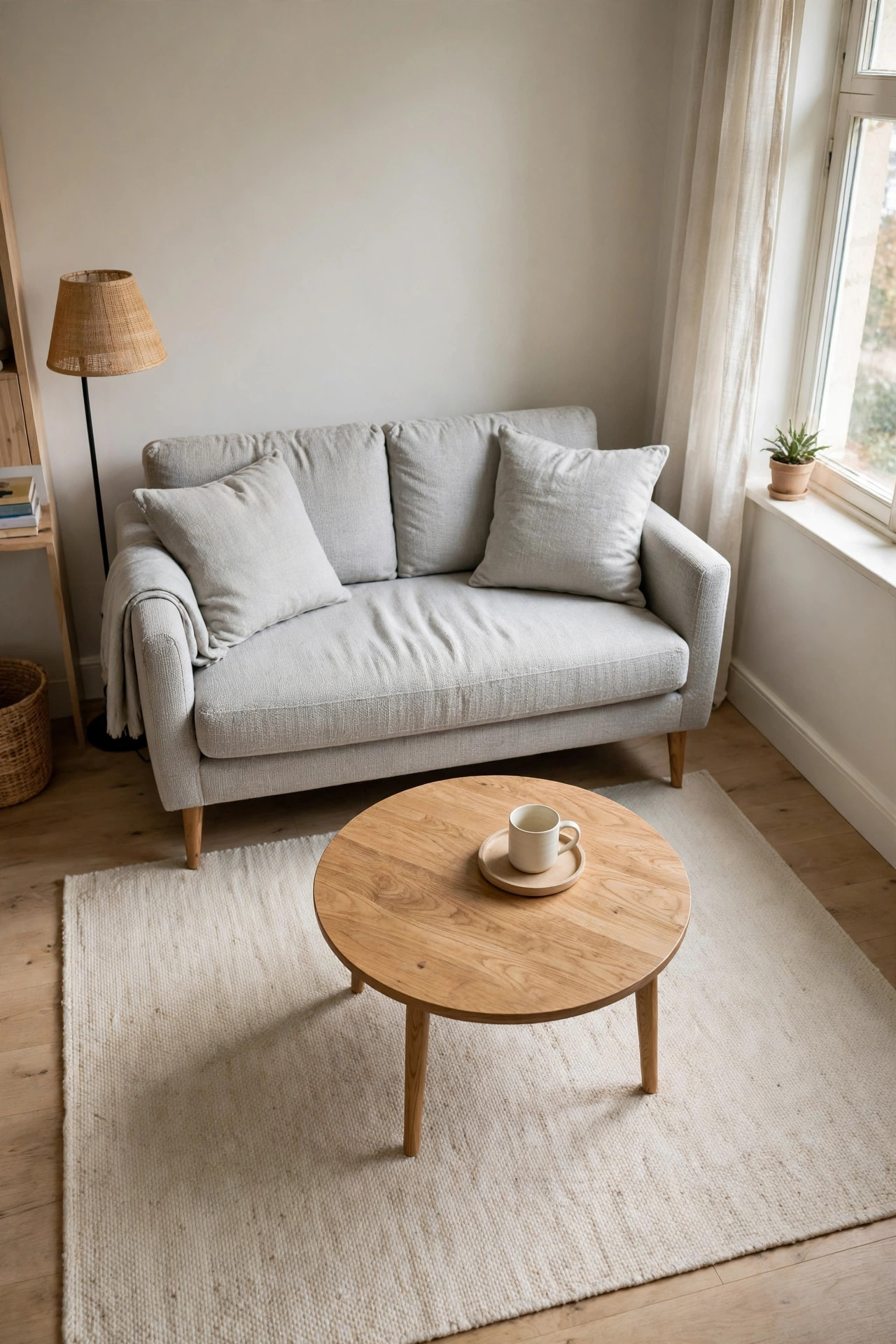
When a living room feels cramped, a round coffee table can make the seating area easier to navigate. Its curved edges soften the straight lines of a couch and remove sharp corners from busy walkways. Pair a compact oak or walnut table with a loveseat, a light-colored rug, and slim-legged furniture to keep the floor visually open. This arrangement is especially useful in apartments, narrow living rooms, and homes where the coffee table doubles as a daily landing spot.
Quick Win: Leave approximately 14–18 inches between the couch and coffee table when the layout allows, so drinks remain within reach without restricting movement.
3. Style a Modern Couch With a Black Metal and Glass Table
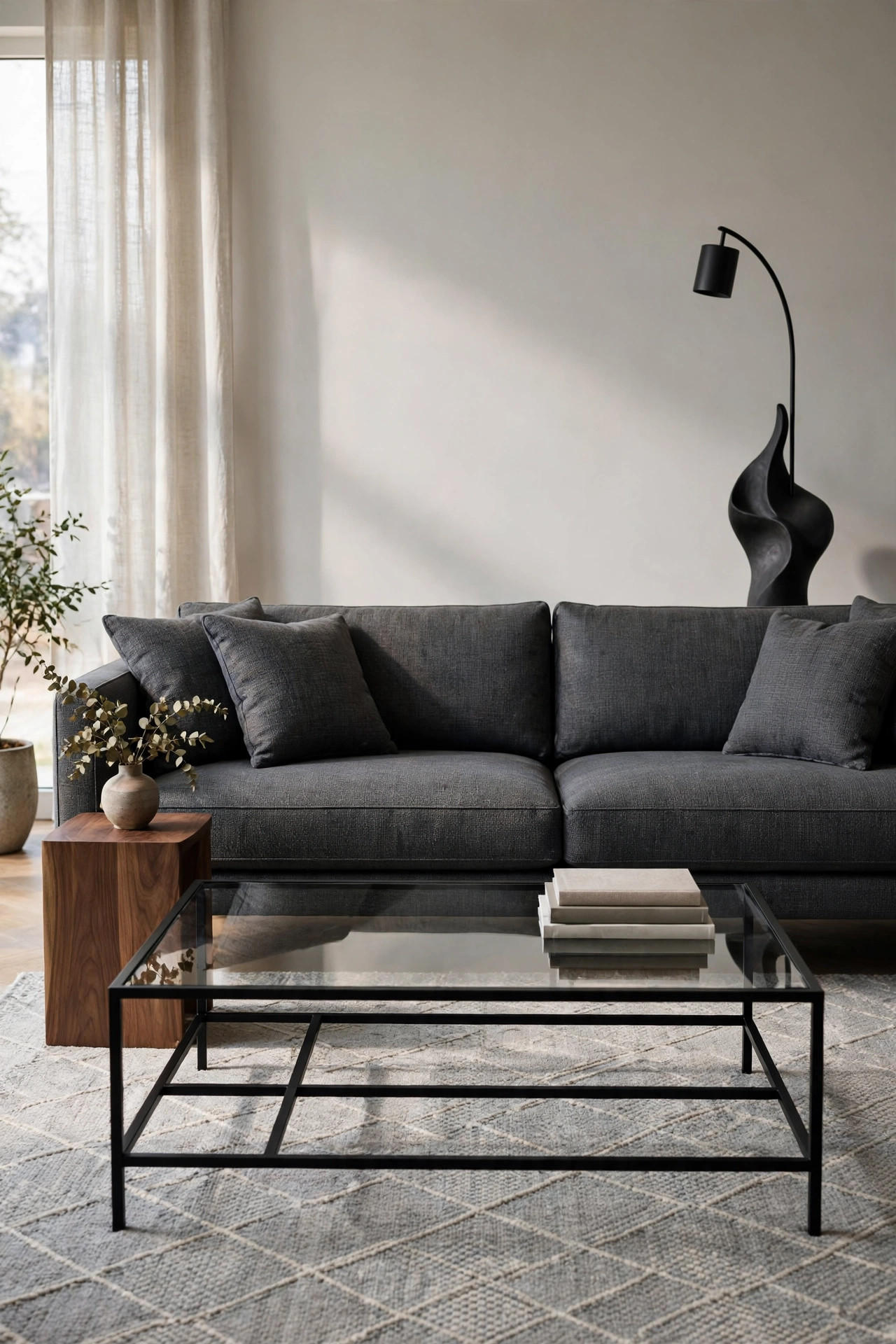
For a living room that needs a sharper, more contemporary finish, combine a charcoal or greige couch with a black metal coffee table and a clear glass top. The slim frame introduces contrast without the visual weight of a solid, bulky table, while the glass keeps the arrangement feeling open. Add a monochrome rug, one sculptural lamp, and a few warm wood accents to stop the room from feeling too cold. This look suits modern apartments and streamlined interiors.
4. Add a Nesting Table Set Beside a Sectional Couch

A large sectional needs tables that can adapt to different activities without crowding the seating area. Nesting tables offer a flexible solution: keep the smaller table tucked underneath for everyday use, then pull it out when guests arrive. Try a pair with contrasting wood and black metal finishes beside a beige or light-gray sectional. Their staggered heights add depth, and their compact footprints make them useful in multipurpose family rooms where floor space matters.
Quick Win: Place the smaller nesting table near the chaise end for a convenient spot for a cup, remote, or reading glasses.
5. Create a Cozy Look With a Farmhouse Couch and Rustic Table
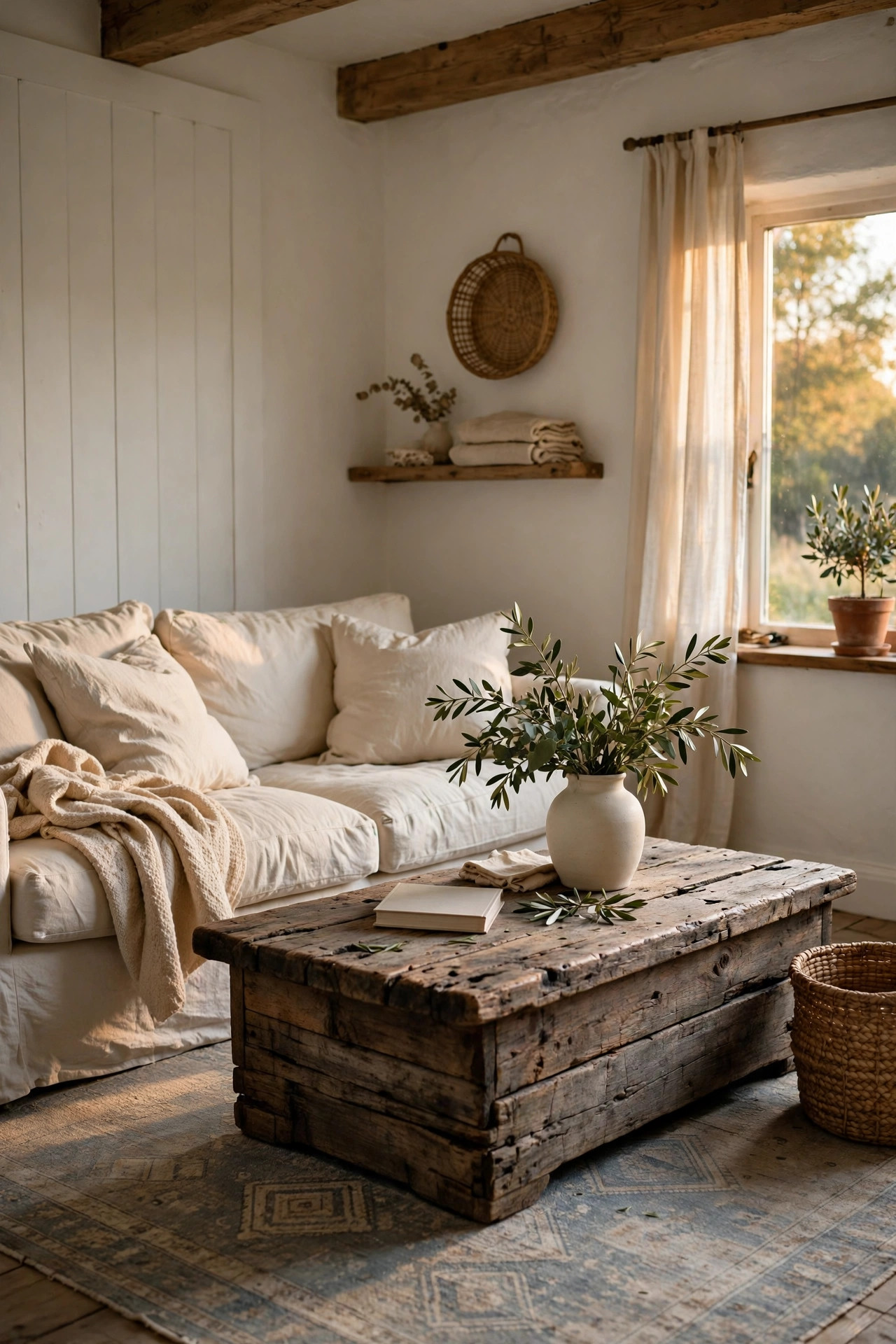
If you prefer a relaxed, collected home, a linen couch paired with a rustic wooden coffee table creates an easy farmhouse-inspired look. Choose reclaimed or distressed wood with subtle grain variation rather than an overly rough finish. Cream upholstery, a faded patterned rug, woven baskets, and a few earthy cushions bring in texture without overwhelming the space. The combination works particularly well in family living rooms and homes that mix vintage finds with comfortable everyday furniture.
6. Use a Marble Coffee Table for an Elegant Living Room

A marble coffee table can give an ordinary couch a more refined, high-end appearance. Pair a cream or taupe sofa with a white marble or marble-look top and a brushed brass or warm metal base. The combination feels balanced when the surrounding decor stays simple: think a textured ivory rug, soft neutral cushions, and one understated decorative object. For a more budget-friendly option, consider a quality marble-look surface that offers a similar visual effect without the cost or maintenance of natural stone.
Quick Win: Add one small brass accent, such as a lamp base or picture frame, to echo the table’s finish without making the room look overly coordinated.
7. Make a Small Couch Work With a C-Shaped Side Table
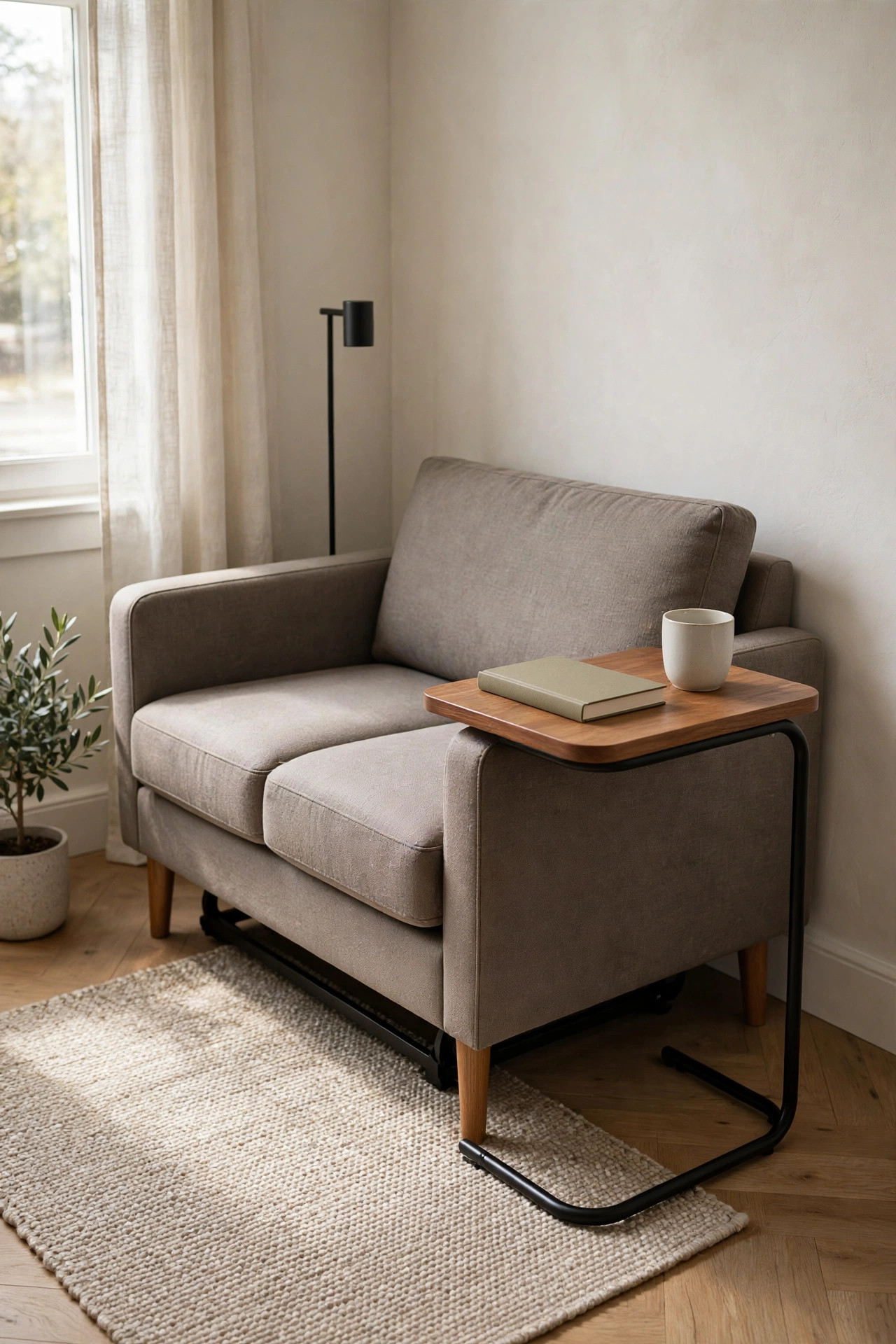
A C-shaped side table is a smart choice when your couch sits close to a wall or there is little room for a traditional coffee table. Its base slides under the sofa, allowing the tabletop to sit close to the seat for a laptop, book, or evening drink. Choose a slim black metal frame for a modern look or a warm wood finish for a softer feel. This practical design is especially helpful in studio apartments and compact reading corners.
Quick Win: Measure the clearance beneath your couch before buying so the table base can slide underneath without catching on the frame.
8. Pair a Colorful Couch With a Sculptural Statement Table
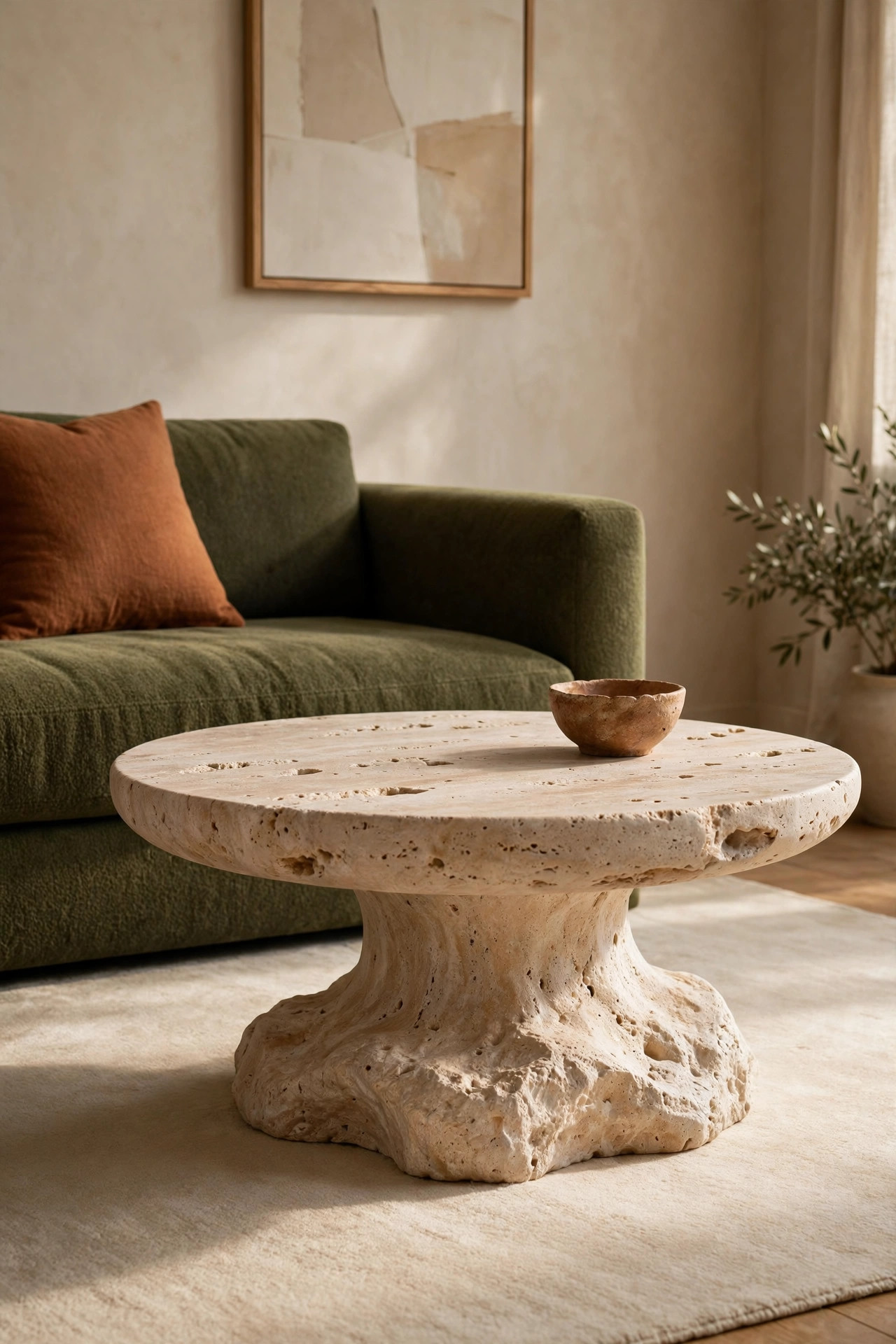
A sculptural coffee table can turn a colorful couch into the centerpiece of your living room. Try an olive-green, rust, or deep-blue sofa with a rounded travertine table, an organic wood design, or a chunky pedestal base. The contrast between expressive upholstery and the table’s distinctive silhouette creates interest without requiring lots of accessories. Keep the rug and curtains relatively understated so the furniture can stand out. This approach suits eclectic interiors and contemporary spaces that need more personality.
9. Mix a Leather Couch With a Warm Wood Table

A cognac or caramel leather couch pairs naturally with a walnut coffee table, creating a warm mid-century-inspired living room. The rich upholstery and darker wood reinforce each other’s earthy tones, while a cream rug prevents the palette from feeling too heavy. Look for a low-profile table with tapered legs, simple hardware, or a discreet lower shelf. This combination is especially effective in rooms with wood flooring, vintage accents, or a preference for furniture that develops character over time.
Quick Win: Soften the leather and wood combination with a textured ivory cushion or a light wool throw rather than adding more dark furniture.
10. Choose a Storage Coffee Table for a Family Living Room

When your living room collects remotes, magazines, toys, and everyday essentials, a storage coffee table helps keep the space tidy without adding another cabinet. Choose a lift-top design for flexible working or dining, or a model with drawers for items you want hidden but accessible. A light-gray couch and a warm wood table make a versatile pairing that suits many family homes. Check the opening mechanism, usable storage depth, and clearance before purchasing to ensure the table fits your routine.
Quick Win: Use one drawer for remotes and chargers and another for coasters or small accessories, giving everyday items a consistent home.
11. Use Matching Side Tables for a Balanced Sofa Arrangement
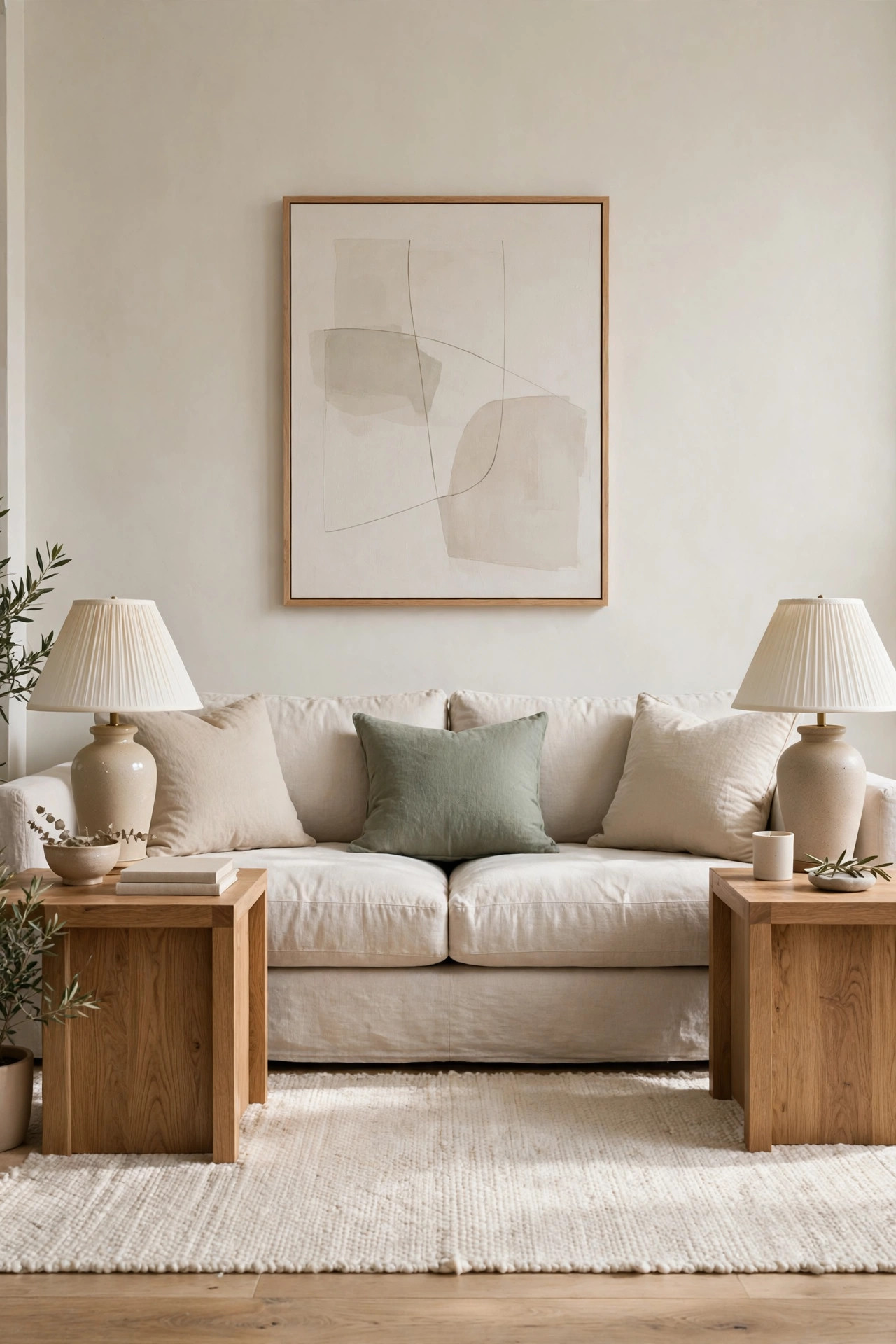
Matching side tables can make a sofa arrangement feel composed, especially when the couch is centered on a wall or beneath a large piece of artwork. Place one table at each end and top them with lamps of similar height to establish visual balance. A medium-toned wood finish adds warmth, while a neutral couch keeps the look timeless. You can still personalize the arrangement with different books or small decorative objects, making it feel thoughtful rather than overly formal.
12. Layer Coffee and Side Tables for a Complete Living Room
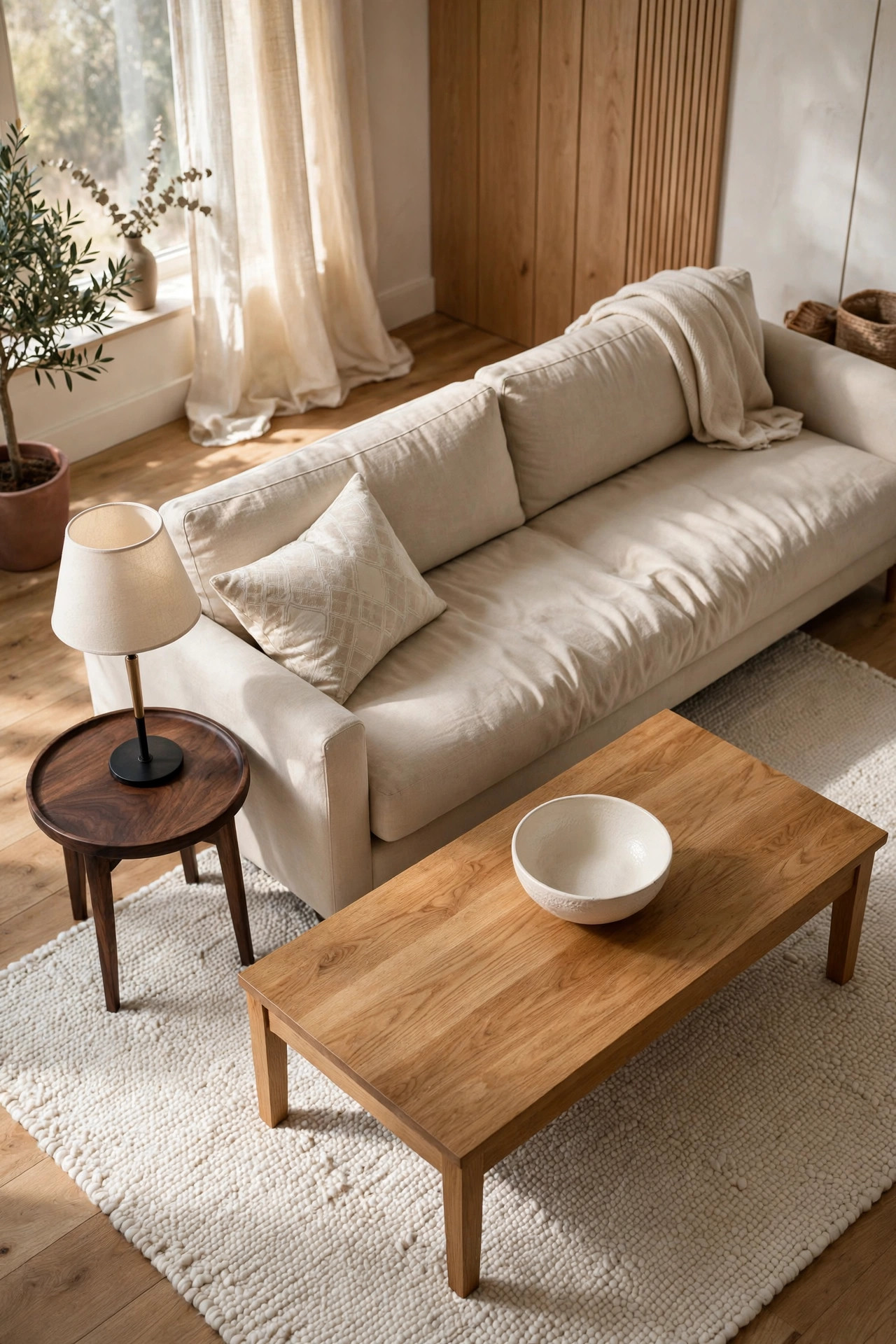
For a living room that needs both style and everyday convenience, combine a central coffee table with one smaller side table beside the couch. The coffee table anchors the seating arrangement, while the side table keeps a reading lamp, drink, or phone within easy reach. Mix shapes to avoid a furniture-set appearance: for example, pair a rectangular oak coffee table with a round dark-wood side table. This layered approach works well in medium-sized living rooms where people use the sofa for relaxing, reading, and entertaining.
Quick Win: Keep the larger table visually simple and let the side table provide a contrasting shape or finish. This creates depth without making the room feel crowded.
Conclusion
The best couches with tables combinations balance comfort, proportion, and personal style. You might prefer the warmth of natural wood, the elegance of marble, or the flexibility of a compact nesting set. Start with the size and shape of your couch, then choose tables that support how you actually use your living room. Even one thoughtful change can make the space feel more cohesive, functional, and inviting. Save your favorite ideas and explore related living room inspiration at your own pace.
Frequently Asked Questions
The best couches with tables depend on your couch’s shape, size, and style. Natural wood suits most neutral sofas, marble adds refinement, and glass or slim metal tables work well in modern rooms where visual openness matters.
A useful starting point for couches with tables is a coffee table about two-thirds the length of your sofa. Keep the height close to the sofa seat height or slightly lower, and check that there is enough space to walk comfortably around it.
For couches with tables, the coffee table generally looks and feels best when its surface is level with the seat or around 1–2 inches lower. The ideal height depends on your sofa cushions and how you use the table.
For L-shaped couches with tables, rectangular coffee tables often complement the sectional because they provide a generous surface. Round or oval tables are useful when you want softer lines or easier movement around the chaise.
For couches with tables in a small living room, round coffee tables, nesting tables, and C-shaped side tables are excellent space-saving options. Choose slim legs, lighter finishes, and compact proportions to keep the seating area from feeling crowded.
Yes. Mixing wood tones in your couches with tables arrangement adds depth and makes a room feel more collected. Aim for a shared undertone, such as warm honey oak with walnut, and repeat each tone somewhere else in the room for cohesion.
Glass tables can make couches with tables arrangements feel visually lighter because they allow more of the rug and floor to remain visible. However, they need regular cleaning and may be less suitable for households with young children if the edges or glass construction present a safety concern.
Gray couches with tables pair well with natural oak, walnut, black metal, white marble, and even muted colored finishes. Choose warm wood to soften cool gray upholstery or black and stone finishes for a more contemporary appearance.
When styling couches with tables, start with a small tray, one or two books, and a single decorative object, such as a ceramic vase. Keep enough clear surface area for everyday use, and vary the heights and textures of your accessories.
Matching couches with tables can create a coordinated, timeless look, but combining complementary pieces is also popular in contemporary interiors. Mixing materials, shapes, and finishes can make your living room feel more personal and less like a showroom.
Durable wood, quality wood veneer, and easy-clean laminate can be practical choices for everyday family use. Look for stable construction, rounded corners where appropriate, and finishes that tolerate regular cleaning.
Choose simple silhouettes, attractive proportions, and finishes that complement your existing furniture. Keep the tabletop styling restrained, add a quality-looking tray, and repeat a wood tone or metal finish elsewhere in the room.
Not necessarily. A coffee table may be sufficient for a larger seating area, while a side table can be more practical in a compact room or beside a chaise. Choose based on your available space and where you need convenient surfaces.
Approximately 14–18 inches is a useful guideline for comfortable access. Adjust the spacing to suit your room’s walking paths, the table’s shape, and the needs of anyone using the seating area.
Keep your existing couch and update the look with a movable coffee table, a compact side table, a new rug, or removable accessories. Choosing versatile furniture and avoiding permanent changes makes it easier to adapt the arrangement when you move.


