

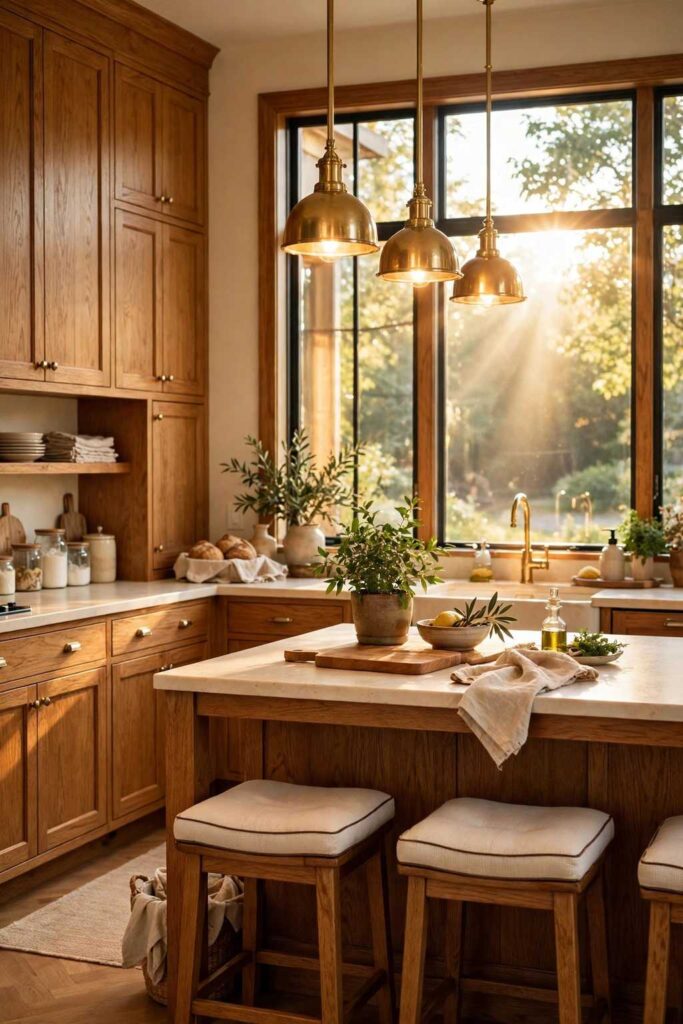
A kitchen can look stylish in photos yet feel uncomfortable when the lighting is harsh, the counters are crowded, or there is nowhere to sit and relax. The most comfortable kitchens balance good design with the little things that make everyday life easier, from warm lighting and accessible storage to inviting places for morning coffee. You don’t need a complete renovation to create that feeling, either. Thoughtful color choices, natural textures, and a more practical layout can transform the atmosphere of your space. These eight ideas offer achievable ways to create a kitchen that feels welcoming, works beautifully, and encourages everyone to linger a little longer.
In This Article
- 1. Create a Warm Kitchen With Natural Wood Cabinets
- 2. Design a Cozy Kitchen With a Breakfast Nook
- 3. Use Warm Layered Lighting for a Softer Atmosphere
- 4. Choose Soft, Earthy Colors for a Relaxed Kitchen
- 5. Keep Countertops Clear With Smart Everyday Storage
- 6. Add Comfortable Seating Around a Kitchen Island
- 7. Bring in Natural Textures for a Lived-In Feel
- 8. Make a Small Kitchen Feel Open and Easy to Use
- How to Make Your Kitchen Feel More Comfortable Every Day
- Frequently Asked Questions
1. Create a Warm Kitchen With Natural Wood Cabinets
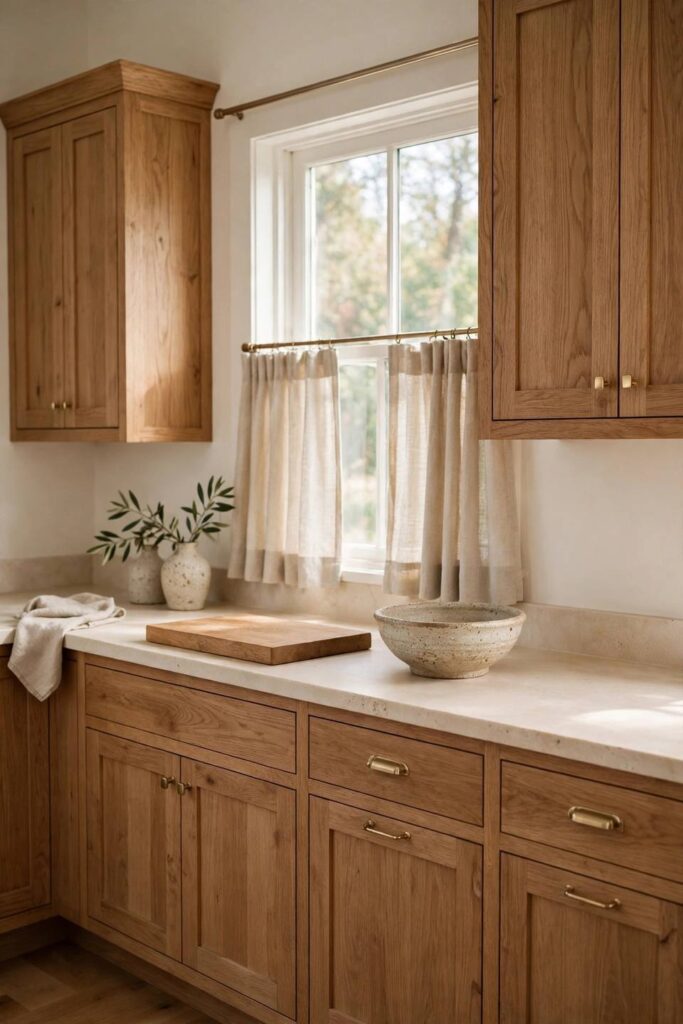
Natural wood brings an inviting, grounded quality to a kitchen that glossy white surfaces alone sometimes lack. Pair medium oak or honey-toned cabinets with warm white walls, creamy quartz countertops, and understated brass hardware for a balanced look. Linen café curtains and a handmade ceramic bowl add softness without cluttering the worktops. This approach suits both modern and traditional homes, especially spaces that need warmth without feeling dark or overly rustic.
Quick Win: Add a wooden chopping board, a small oak tray, or a pair of wooden counter stools to introduce warmth without replacing your cabinets.
2. Design a Cozy Kitchen With a Breakfast Nook

A dedicated breakfast nook makes even an ordinary kitchen feel more personal and relaxed. Place a small round table beside a window, then add a cushioned bench or two comfortable chairs in a washable neutral fabric. Round furniture encourages easy conversation and can be easier to move around in a compact layout. Finish the corner with a pendant light and a small vase of fresh flowers to create a natural gathering spot for coffee, quick meals, or casual conversations.
Quick Win: If you don’t have room for a built-in bench, use two compact chairs and a small bistro table near a window or an unused corner.
3. Use Warm Layered Lighting for a Softer Atmosphere

Lighting can change the entire mood of a kitchen, particularly after sunset. Combine recessed ceiling lights with pendants over an island and under-cabinet lighting to brighten work surfaces without making the whole room feel harsh. Warm-white bulbs around 2700–3000K generally create a relaxed atmosphere, while focused task lighting keeps food preparation practical. Dimmers offer extra flexibility when a kitchen transitions from busy meal preparation to a quieter dinner with family.
Quick Win: Install plug-in or rechargeable under-cabinet lights if you want a renter-friendly improvement without rewiring the kitchen.
4. Choose Soft, Earthy Colors for a Relaxed Kitchen
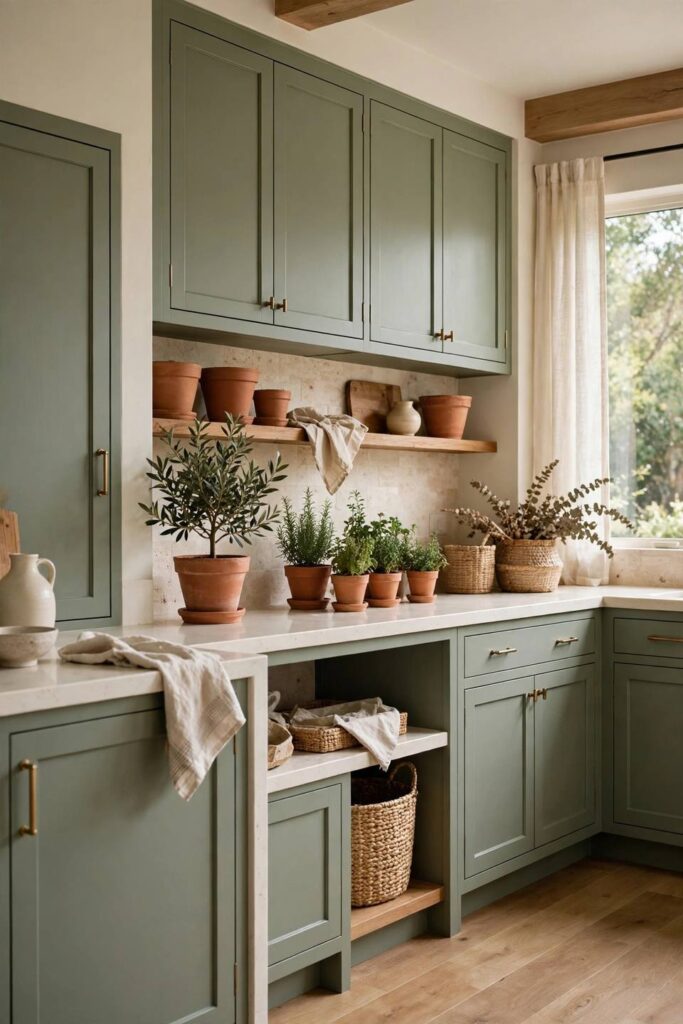
Color helps determine whether a kitchen feels lively, calm, or cold. Muted sage green, dusty olive, warm taupe, and creamy white create a soothing palette that feels connected to nature. Use one main color for the cabinets or walls, then balance it with lighter countertops and natural wood accents. A few terracotta pots or woven textures can introduce subtle contrast without overwhelming the room. These comfortable kitchen colors work especially well in homes where the kitchen opens into a living or dining area.
Quick Win: Before repainting the cabinets, introduce your chosen palette through tea towels, a runner, ceramic containers, or a small piece of artwork.
5. Keep Countertops Clear With Smart Everyday Storage
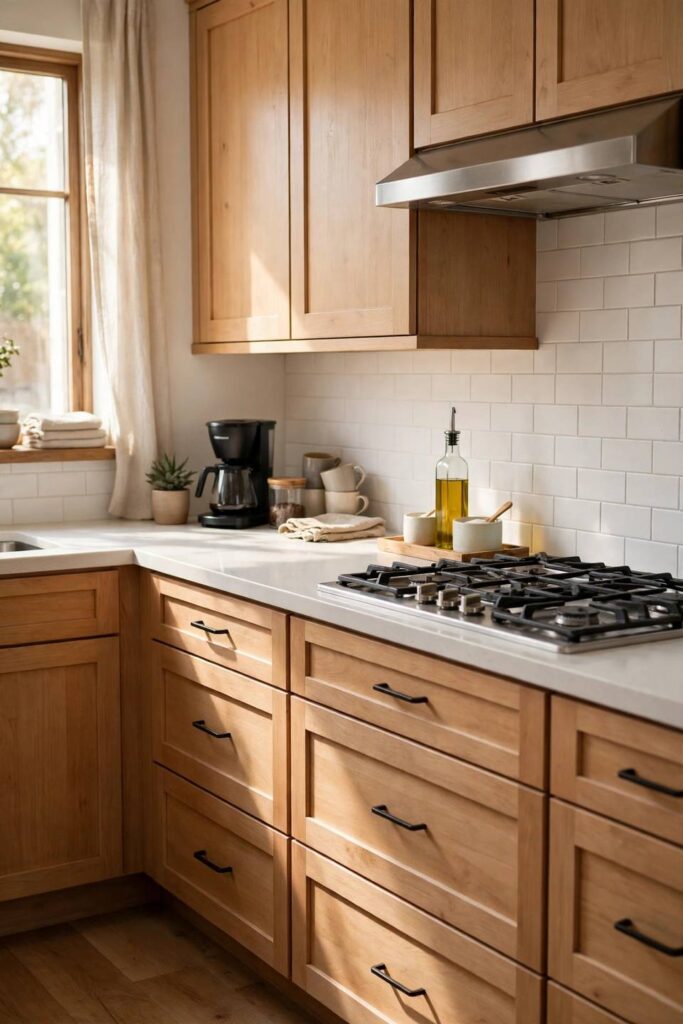
A comfortable kitchen should make everyday tasks easier, not leave you searching through crowded drawers. Store frequently used cooking tools near the stove, keep mugs close to the coffee station, and use deep drawers for pots and pans. A tray can group cooking oil and salt beside the hob, while closed cabinets hide less attractive essentials. The goal isn’t to remove every personal detail; it’s to give frequently used items a sensible home so preparation and cleanup feel less stressful.
Quick Win: Clear one countertop section and designate it for a single activity, such as making coffee or preparing breakfast. Keep only the essentials there.
6. Add Comfortable Seating Around a Kitchen Island
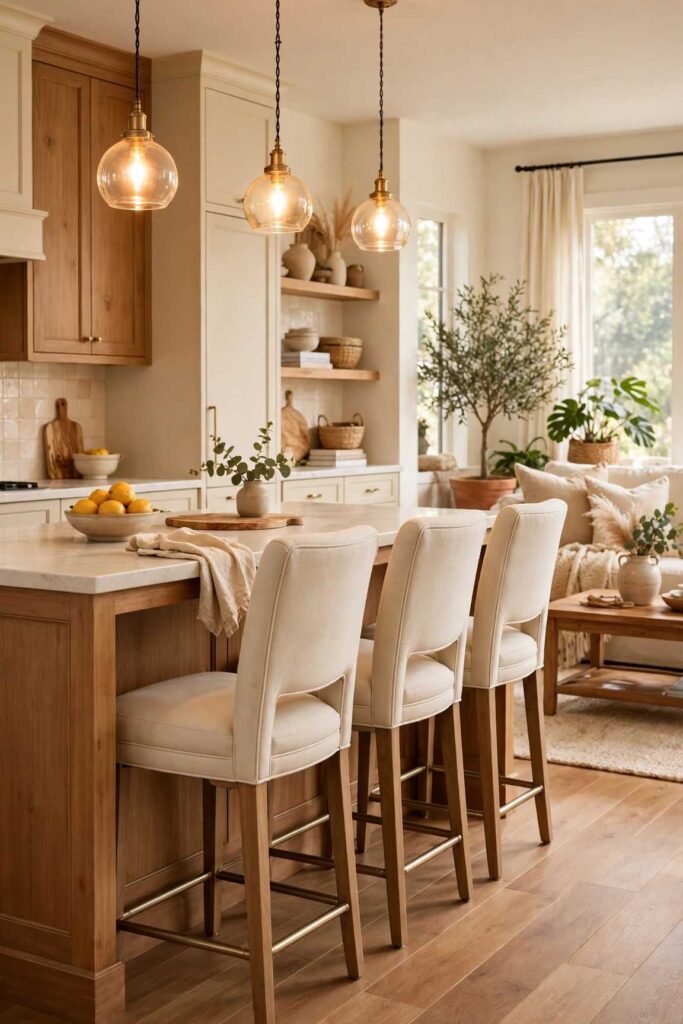
A kitchen island can become more than a work surface when its seating is genuinely comfortable. Choose stools with supportive backs and footrests, and select upholstery or wipeable materials suited to your household. Leave enough knee space beneath the counter and allow comfortable circulation behind seated guests. If you have a narrow kitchen, a small peninsula or a wall-mounted breakfast bar may provide the same social benefit without taking up as much floor space.
Quick Win: Test your existing stools by sitting on them for a few minutes. Adding footrests or replacing hard seats with padded options may make a noticeable difference.
7. Bring in Natural Textures for a Lived-In Feel

Smooth cabinets and stone counters can look refined, but a few contrasting textures help a kitchen feel more welcoming. Combine wood shelving with handmade ceramics, a woven pendant shade, a linen window treatment, or a washable cotton runner. Keep the colors related so the materials add depth rather than visual noise. This approach is particularly useful in newer homes where plain surfaces and simple cabinetry can otherwise make the room feel a little impersonal.
Quick Win: Introduce just two contrasting materials, such as wood and woven cotton, before adding more accessories. A restrained combination often feels more intentional.
8. Make a Small Kitchen Feel Open and Easy to Use
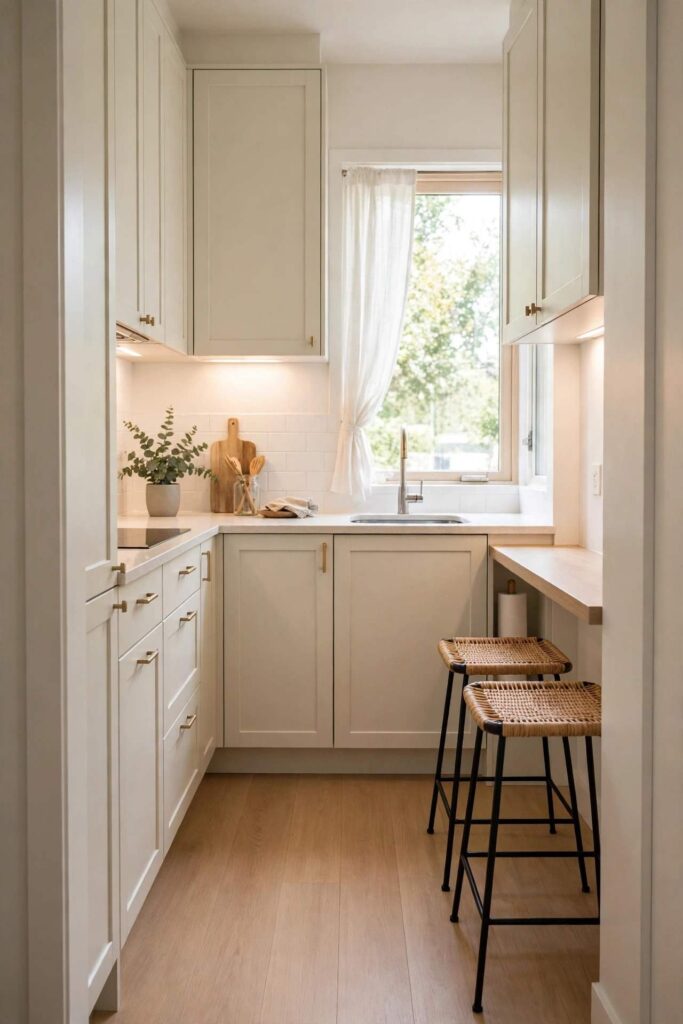
A small kitchen becomes more comfortable when every inch has a purpose. Light-colored cabinets, continuous flooring, and a simple backsplash can make the room feel less visually broken up. Use vertical storage for less frequently used items, keep the main preparation area clear, and choose compact seating that can tuck away when needed. Under-cabinet lights help brighten darker corners, while a slim dining ledge can provide a place for coffee without requiring a full-sized table.
Quick Win: Remove anything that blocks a main walkway or sits unused on the counter. A clearer route between the refrigerator, sink, and cooking area makes a small kitchen easier to navigate.
How to Make Your Kitchen Feel More Comfortable Every Day
A comfortable kitchen isn’t defined by its size, price tag, or the latest design trend. It’s a space where the lighting feels pleasant, everyday essentials are easy to reach, and people naturally want to spend time together.
Start with one improvement that addresses your biggest frustration, whether that’s crowded countertops, uncomfortable seating, or a room that feels too cold. Build from there using materials, colors, and details that suit your home. Even small changes can make your kitchen feel more welcoming without stretching your budget.
Frequently Asked Questions
Comfortable kitchens combine an efficient layout, pleasant lighting, practical storage, and welcoming materials. Comfortable seating and easy access to everyday essentials also make the room more enjoyable to use.
Warm white, cream, sage green, soft taupe, muted olive, and natural wood tones are excellent choices. You can introduce darker colors through accents or cabinetry while keeping the overall space balanced.
Add warm lighting, wooden accessories, a washable runner, soft window treatments, and a few carefully chosen decorative pieces. Clearing clutter and rearranging existing furniture can also make a significant difference.
Keep walkways clear, use vertical storage, choose compact seating, and organize frequently used items within easy reach. Light finishes and well-placed task lighting can help the room feel more open.
A combination of ambient, task, and accent lighting works best. Warm-white lighting around 2700–3000K creates a relaxed atmosphere, while brighter task lighting improves visibility for cooking.
Yes, if the island fits the room and provides useful preparation space, storage, or seating. In smaller kitchens, a peninsula or compact breakfast bar may offer similar benefits with less obstruction.
Introduce natural wood, textured fabrics, handmade ceramics, warm lighting, and earthy colors. These details soften sleek cabinetry and stone surfaces without sacrificing a modern aesthetic.
Choose flooring that balances durability, slip resistance, ease of cleaning, and visual warmth. Quality vinyl, porcelain tile, and properly finished wood can all work well depending on moisture exposure and household needs.
Start by decluttering, improving lighting, updating cabinet hardware, and adding a few useful accessories. Repainting a small area or rearranging existing seating can refresh the room without requiring a major investment.
Avoid overcrowded counters, harsh lighting without task illumination, inadequate walkway space, and seating that blocks cabinet doors. Prioritize daily function before adding decorative accessories.
Create a natural gathering point, such as a breakfast nook, island seating area, or small coffee station. Keep commonly used items accessible and leave enough room for people to move around comfortably while someone cooks.
Natural wood, linen, cotton, woven fibers, matte finishes, and handmade ceramics introduce warmth and texture. Combine them with durable countertop and backsplash materials to keep the space practical.
Absolutely. Minimalist kitchens can feel inviting when they include warm wood tones, subtle texture, comfortable lighting, and a few meaningful accessories. The key is to reduce clutter without removing all signs of personality.