

These living room ideas focus on warmth, texture and connection. Most living rooms don’t suffer from a lack of furniture; they suffer from a lack of connection. You buy the matching sofa set, paint the walls a safe shade of grey or flat builder white, and suddenly realize the room feels like an echoing showroom waiting for someone to drop by, rather than a space that invites you to kick off your shoes and stay awhile. Making a space feel grounded and deeply lived-in doesn’t require knocking down drywall or ordering an entirely new catalog suite. What turns a standard seating area into a restorative sanctuary is thoughtful contrast, tactile warmth, and intentional focal points.
In This Article
- 1. Ground the Space with Earthy Terracotta and Olive Tones
- 2. Anchor Seating Around a Floating Circular Coffee Table
- 3. Introduce Tone-on-Tone Limewash Accent Walls
- 4. Layer Multiple Light Sources at Varied Heights
- 5. Mix Vintage Patina with Contemporary Silhouettes
- 6. Frame Windows with High and Wide Belgian Linen Drapes
- 7. Build Character with Built-In Bookcases and Curated Styling
- 8. Define Conversation Zones with Oversized Natural Fiber Rugs
- 9. Contrast Matte Surfaces with Organic Black Iron Accents
- 10. Design an Intimate Corner for Slow Reading
- 11. Infuse Life with Architectural Statement Branches
- 12. Soften Hard Lines with Warm, Fluted Wood Detailing
- 13. Create Visual Harmony with a Unified Tonal Palette
- 14. Establish Modern Warmth with Camel Leather Seating
- 15. Curate an Off-Center, Asymmetrical Gallery Wall
- 16. Incorporate Low-Slung Modular Seating for Relaxed Entertaining
1. Ground the Space with Earthy Terracotta and Olive Tones
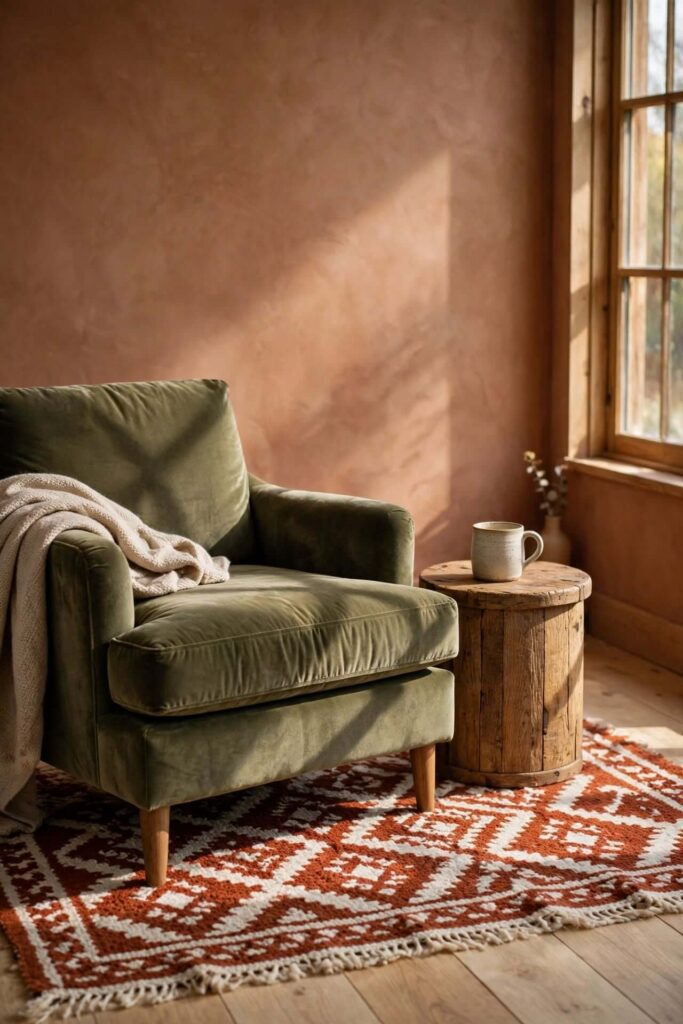
These living room ideas move away from sterile, cool undertones to instantly breathe life into flat architecture. Warm ochre, muted sage, rust, and terracotta shades absorb light gently, giving expansive or drafty spaces an anchored feel without darkening the entire perimeter. Pair a washed olive accent chair with a clay-toned wool rug and untreated oak side tables. This palette works exceptionally well in north-facing rooms that naturally receive cold, bluish daylight, warming the interior without requiring saturated accent walls.
2. Anchor Seating Around a Floating Circular Coffee Table
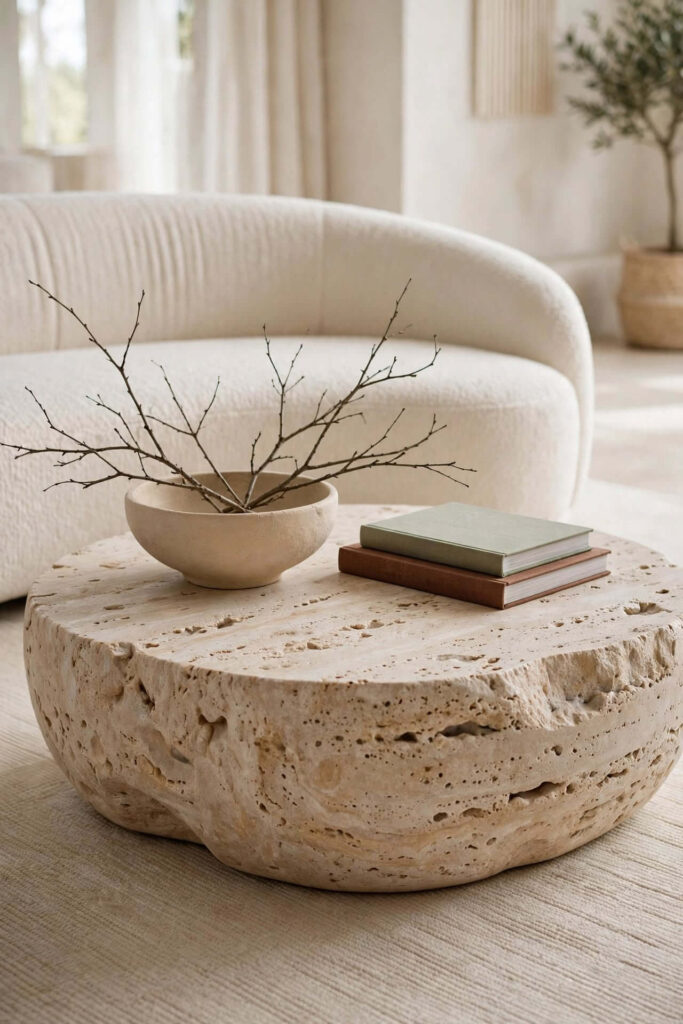
Pushing bulky square tables into the center of a living room often interrupts comfortable foot traffic and makes boxy floor plans feel rigid. Swapping to a rounded coffee table softens sharp architectural angles and creates natural pathways. The trick here is selecting a low-profile silhouette in porous travertine or wire-brushed oak, pairing it with clean-lined seating. This layout is especially forgiving in [Internal Link: Small Living Room Ideas] where flow is vital.
Quick Win: Place a round wooden tray on your existing coffee table and cluster three items of varied heights (a branch cutting, a candle, and an open design book) to immediately break up rigid lines.
3. Introduce Tone-on-Tone Limewash Accent Walls
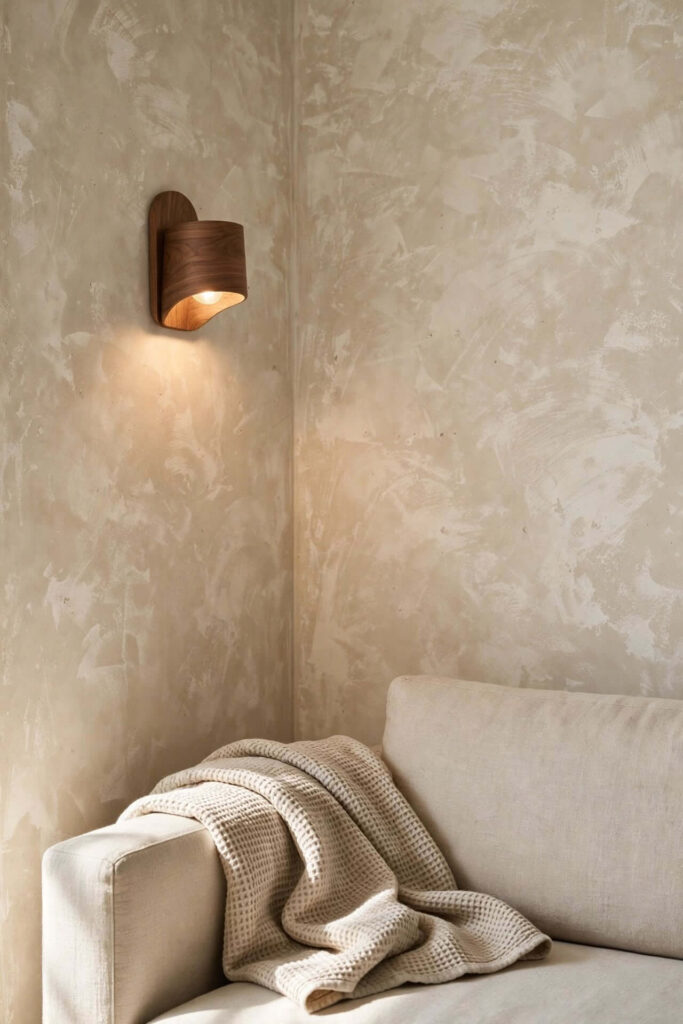
If drywall feels two-dimensional, a mineral limewash or Roman clay finish provides depth without overwhelming the eye. The chalky, cloud-like movement creates dynamic shadows as the sun moves across the room, mimicking natural stone or historic European villas. Keep the upholstery understated—such as flaxen linen, muted canvas, and natural bleached cotton—so the wall texture remains the gentle backdrop of the room rather than competing with decorative clutter.
4. Layer Multiple Light Sources at Varied Heights
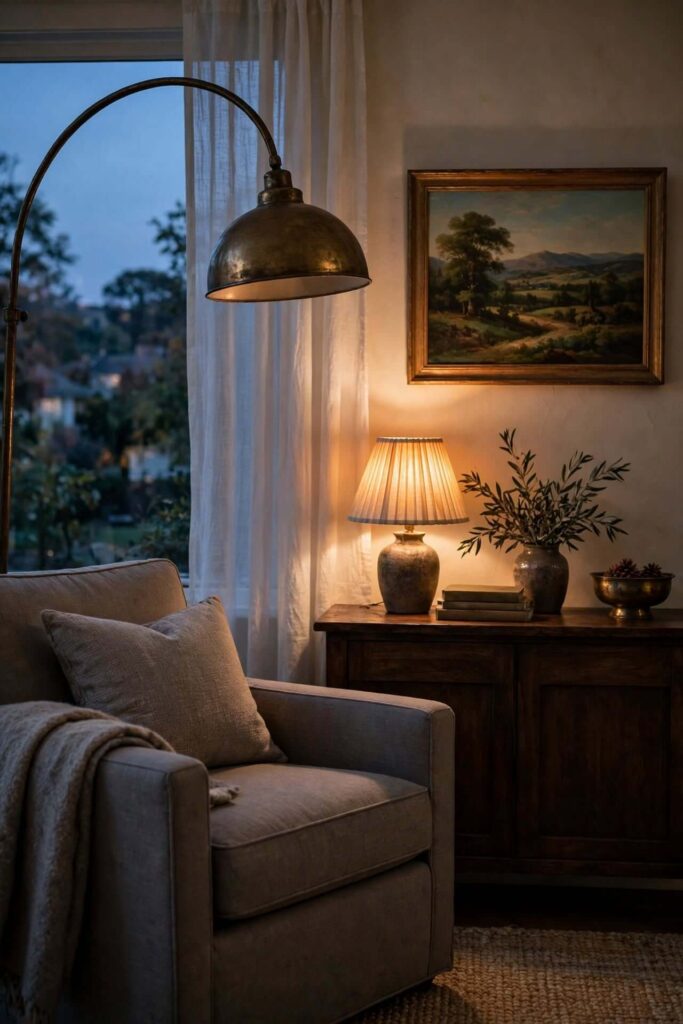
A single overhead ceiling fixture flattens a room and kills intimacy the moment the sun goes down. A warm atmosphere relies on a three-tiered lighting strategy: floor lamps for ambient spread, table lamps for task seating, and picture lights or sconces for mood. Place warm-temperature LED bulbs (2700K or lower) across three corners of the room at chest and eye levels to establish gentle pockets of illumination.
Quick Win: Add a plug-in dimmer switch to your existing floor lamps to instantly shift the room’s mood from day to night without electrical wiring.
5. Mix Vintage Patina with Contemporary Silhouettes
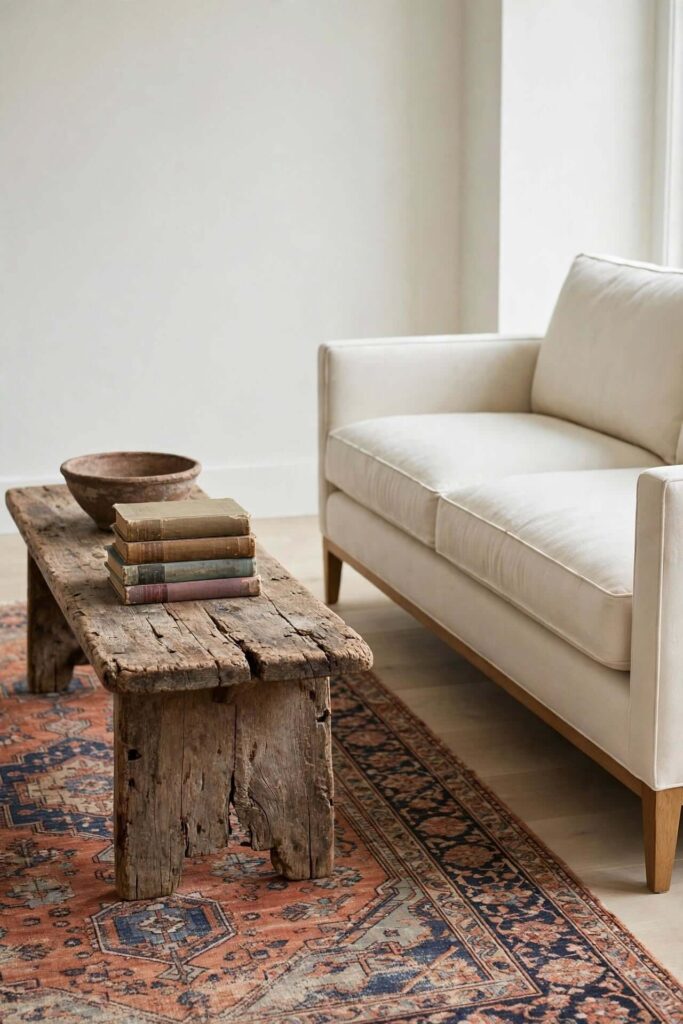
A room furnished entirely from a single retail catalog risks looking static and devoid of personality. Mixing an antique piece—such as a weathered pine bench or an aged gilded mirror—with crisp contemporary seating brings collected, timeless elegance to modern spaces. The juxtaposition of rough, aged wood against clean, tailored upholstery gives new-build homes instant character, making the space feel assembled over years rather than overnight.
Shop the Look
| Item | What to Look For | Approx. Price Range |
| Vintage Accent Bench | Salvaged pine, elm, or weathered walnut with visible joinery | $120 – $400 |
| Tailored Slipcovered Sofa | Neutral performance linen with straight track arms | $1,200 – $2,800 |
| Antiqued Brass Accent | Matte, unlacquered finish with slight age oxidation | $45 – $180 |
6. Frame Windows with High and Wide Belgian Linen Drapes

Hanging curtain rods directly above window casings shrinks the perceived scale of the room. Mount drapery rods 6 to 10 inches above the frame—near the ceiling line—and extend them past the frame edges. Choose heavy, unlined Belgian linen curtains that lightly kiss the floorboards. When open, the fabric stacks neatly against the wall, allowing the entire window pane to remain uncovered while visually doubling the room’s vertical height.
7. Build Character with Built-In Bookcases and Curated Styling
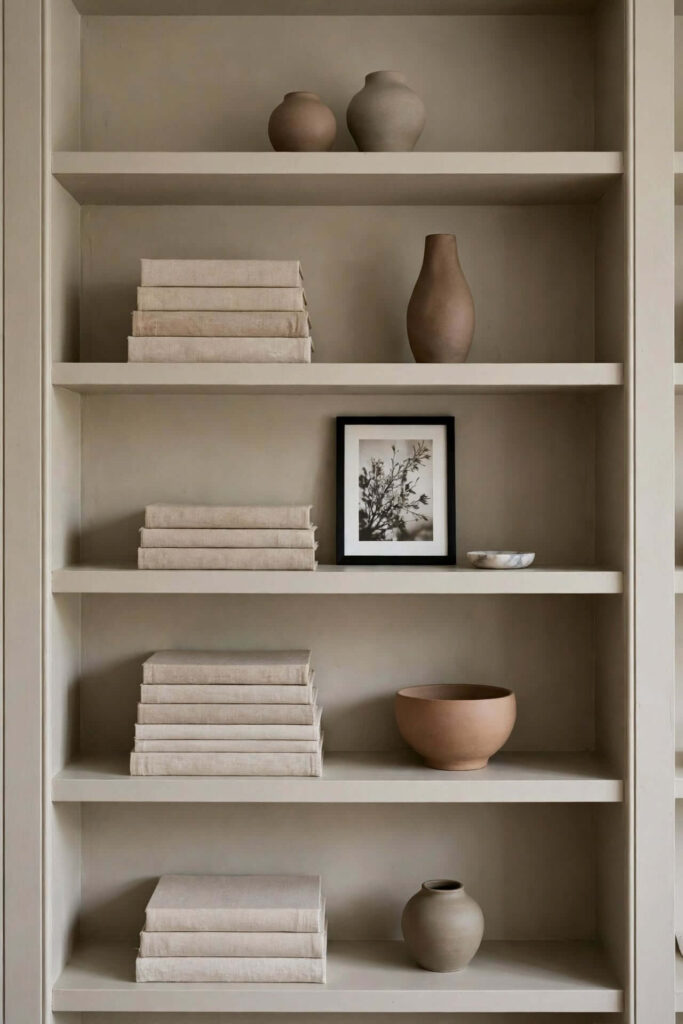
Custom or semi-custom built-in shelving turns blank walls into practical focal points that display personal narrative. Avoid filling shelves with decorative objects purchased in bulk; leave breathing room between stacks of books placed both vertically and horizontally. Intersperse tactile ceramics, framed sketches, and small trailing plants to break up heavy rectangular patterns, providing both vital storage and layered texture to blank architectural boxes.
Quick Win: Turn half of your books backward or remove glossy paper dust jackets to reveal the textured fabric bindings for a cohesive, understated look.
8. Define Conversation Zones with Oversized Natural Fiber Rugs
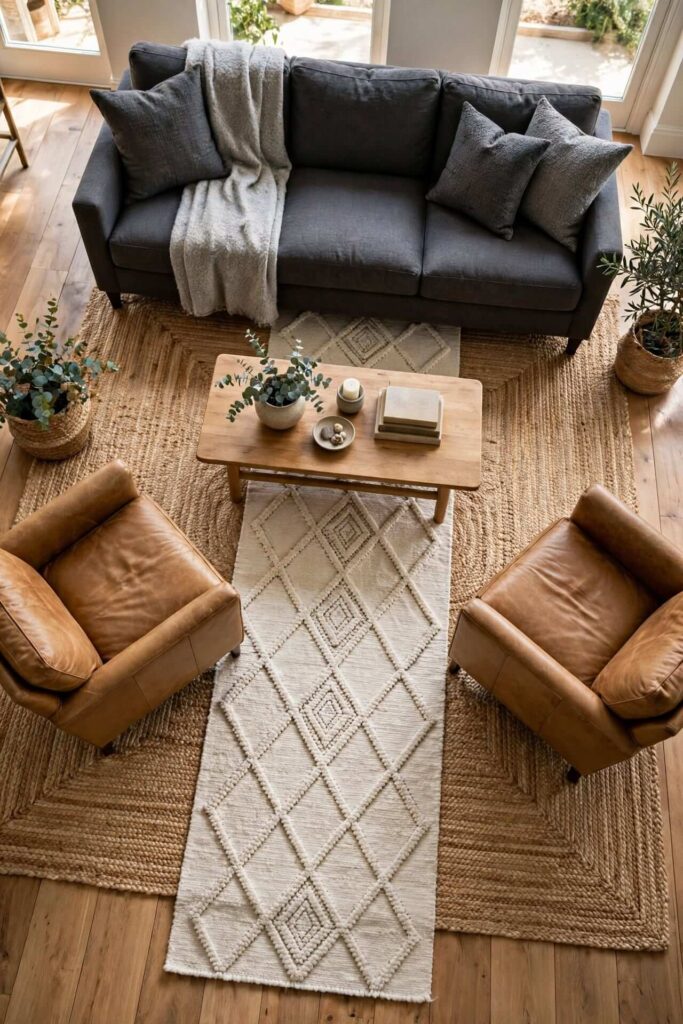
The most common layout error is choosing an undersized area rug that floats disconnected in the center of the seating group. A living room immediately feels grander and more welcoming when the rug anchors all main seating elements. Ensure at least the front two legs of every sofa and lounge chair rest securely on the rug. Layering a soft wool or vintage patterned piece over a large braided jute base introduces warmth underfoot while establishing clear boundaries in open-concept floor plans.
9. Contrast Matte Surfaces with Organic Black Iron Accents
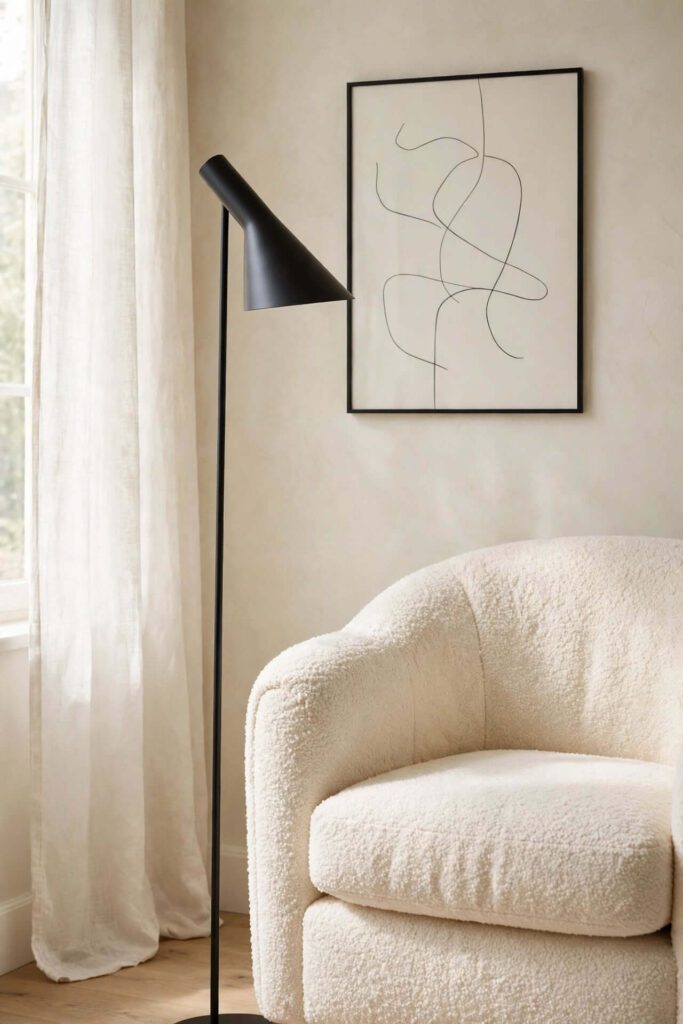
Pale, neutral rooms can sometimes run the risk of looking washed out and ungrounded. Incorporating slender black iron elements—such as a structural floor lamp, thin picture frames, or a blackened metal side table—acts as visual punctuation. These thin architectural lines guide the eye through the room without obstructing light or taking up visual weight, bringing a modern edge to soft, relaxed furnishings.
10. Design an Intimate Corner for Slow Reading
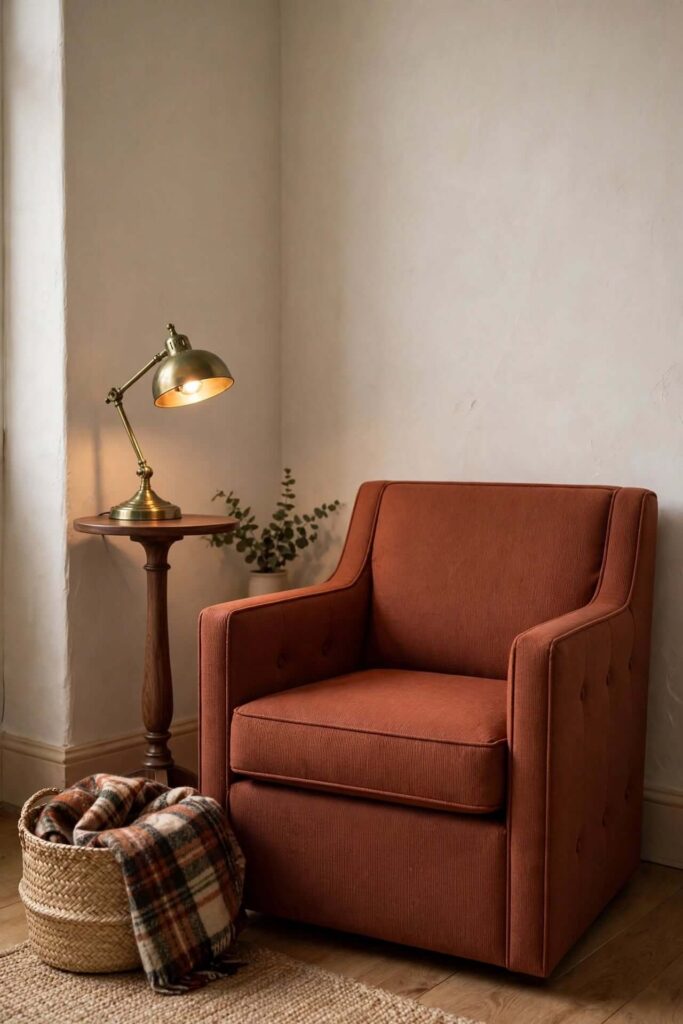
Transforming an awkward, underutilized corner into an intentional seating nook creates an inviting destination away from the television. A comfortable high-back armchair, a compact wooden pedestal table for a warm drink, and an adjustable pharmacy lamp provide everything needed for unwinding. This approach maximizes awkward alcoves and bay windows, adding utility and retreat to living rooms of any size.
Quick Win: Roll a small woven basket next to your favorite armchair and fill it with one folded wool throw and two current reads to visually define a cozy corner nook.
11. Infuse Life with Architectural Statement Branches

While cut flowers fade within days, architectural branches—such as quince, olive, or fig branches—bring organic height and natural structure that lasts for weeks. Place two or three tall, sculptural stems inside a heavy, unglazed terracotta urn positioned on a console table or mantle. Their asymmetrical reach breaks up the flat planes of rectangular walls and artwork, lending a relaxed sense of elegance to modern living spaces.
12. Soften Hard Lines with Warm, Fluted Wood Detailing
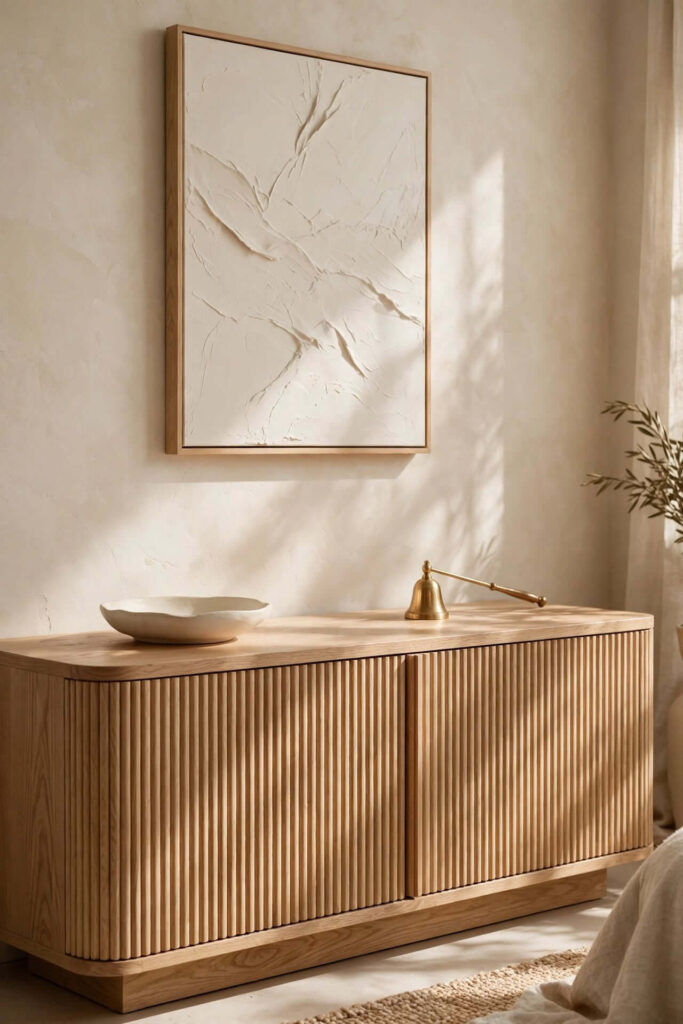
Adding vertical fluting or slat walls introduces textural shadow lines that break up plain sheetrock or flat cabinetry. Whether through a slatted white-oak console, fluted coffee table base, or a subtle wood-accented media wall, the repetitive vertical lines add rhythm and architectural substance. This detail is particularly effective for modern apartments lacking structural moldings, delivering rich tactile interest without visual clutter.
Shop the Look
| Item | What to Look For | Approx. Price Range |
| Fluted Media Console | Solid white oak or walnut veneers with soft-close doors | $450 – $1,200 |
| Ribbed Ceramic Vase | Matte stone finish with defined vertical ridges | $25 – $65 |
| Textured Slatted Sconce | Natural cane or vertical wood slats with warm LED | $60 – $180 |
13. Create Visual Harmony with a Unified Tonal Palette
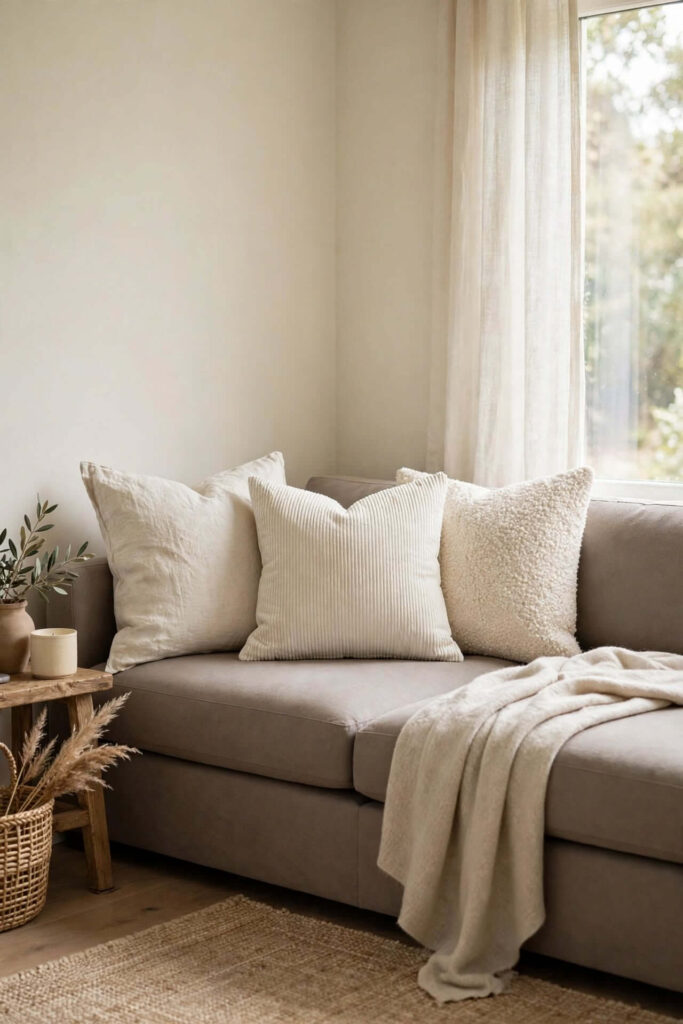
When bold color schemes feel chaotic, embracing a tonal palette creates serene visual flow. Layer varied textures across the same color family—such as mixing warm ivory, cream, sand, and taupe through bouclé, washed linen, raw silk, and bleached wood. By keeping the color value consistent, the eye registers the room as cohesive and calm, allowing the interplay of materials to supply all the visual interest.
Quick Win: Swap mismatched pillow covers for covers made from contrasting fabrics (e.g., velvet, textured linen, and wool fleece) in identical monochromatic sand tones.
14. Establish Modern Warmth with Camel Leather Seating
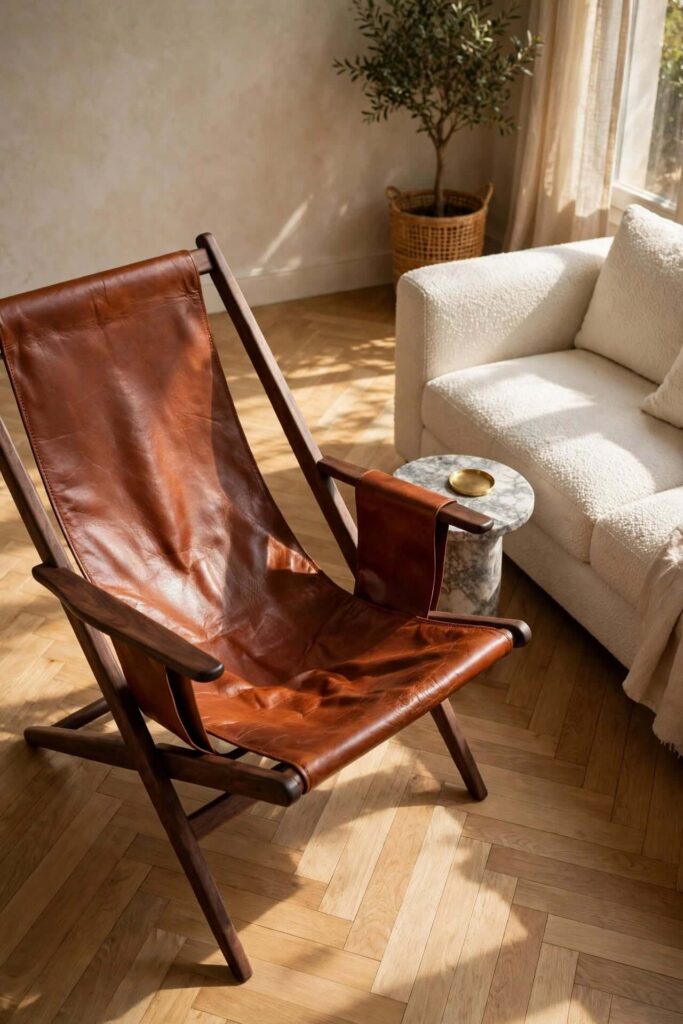
A single leather element breaks up sea-of-fabric monotony and infuses a room with timeless warmth. A cognac or caramel leather accent chair develops an organic patina over time, pairing effortlessly with cool linen sofas, blackened iron tables, and wool rugs. Its sleek, taut finish provides a welcome contrast against looser upholstery, grounding mid-century, modern, and traditional layouts alike.
15. Curate an Off-Center, Asymmetrical Gallery Wall

Uniform grids of matching frames can sometimes make a living room feel rigid and formal. An organic, asymmetrical gallery wall feels personal and collected over time. Combine vintage oil portraits, pencil sketches, and personal architectural photography in mismatched thrifted wood, gilt, and matte black frames. Hanging frames with intentional breathing room around a light switch or above an off-center console creates visual interest without feeling cluttered.
Quick Win: Lay your picture frames out on the floor atop brown craft paper, trace around them, and tape the paper cutouts to the wall with painter’s tape before driving in a single nail.
16. Incorporate Low-Slung Modular Seating for Relaxed Entertaining
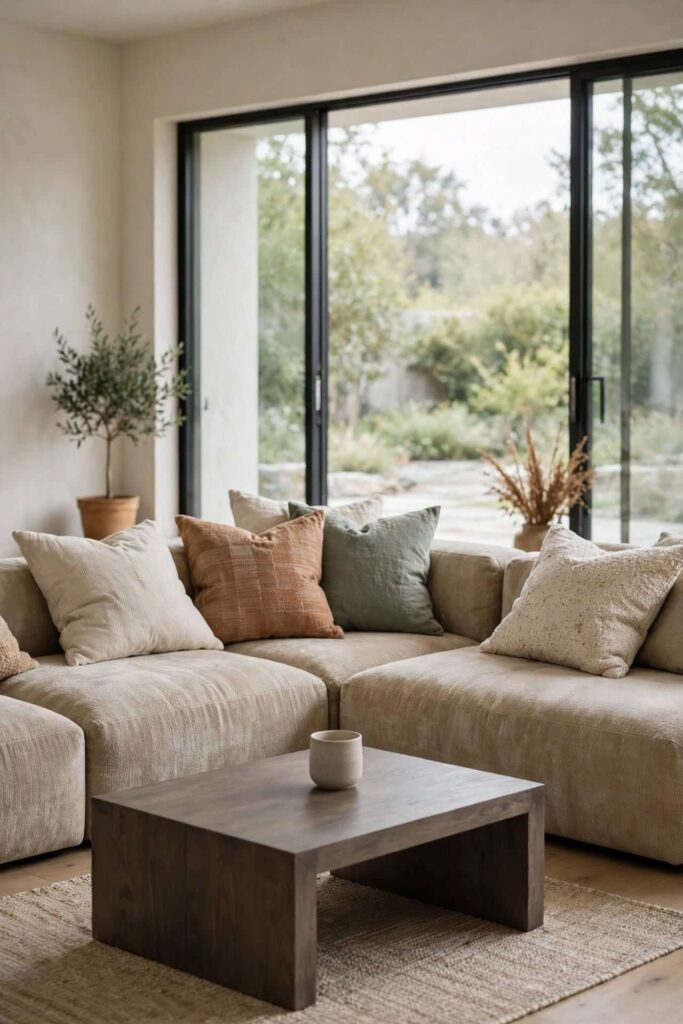
Traditional upright living room furniture can inadvertently signal formality, discouraging guests from truly lounging. Low-slung modular seating with deep cushions and wide armrests sets an immediate, welcoming tone. It invites relaxed conversation and can be rearranged to suit social gatherings or cozy movie nights. This configuration works especially well in rooms with lower ceilings, as the reduced furniture height visually extends wall space upward.
Transforming your living room into a warm, inviting retreat doesn’t require overhauling everything at once. Focus on one or two tactile updates that solve your space’s current pain points—whether that’s swapping harsh overhead lighting for low ambient lamps or layering a vintage runner over neutral carpet. By balancing grounded materials with personal details, you create a restorative room tailored to how you genuinely live every day.
Frequently Asked Questions
Focus on tactile textures rather than purely decorative items. Swap smooth synthetic pillow covers for slubby linen, waffle knits, and velvet, and lay down an oversized wool or jute rug to add physical depth without crowding flat surfaces.
Opt for creamy whites, soft greiges, or light beiges that contain subtle yellow, peach, or red undertones. Avoid neutrals with cool grey or blue undertones, which can appear dull and flat in cold, indirect daylight.
Pushing all furniture flat against the perimeter walls is the most common layout error. Floating your sofa and armchairs inward onto an appropriately sized rug creates an intimate conversation cluster and improves foot traffic around the room.
Artwork should typically be hung so its center point is roughly at eye level, around 57 to 60 inches from the finished floor. When positioning art directly over a sofa, leave approximately 6 to 8 inches of breathing room between the bottom of the frame and the top of the sofa back.
Use non-permanent upgrades like large area rugs to conceal bland flooring, swap builder-grade switch covers, install plug-in wall sconces, and dress windows with tension-mounted, floor-length linen drapes.
Select a rug large enough so that at least the front two legs of all main seating pieces rest securely on top of it. In most standard living rooms, an 8×10 foot or 9×12 foot rug creates a unified, balanced look, whereas a 5×7 foot rug often looks disconnected.
Choose LED bulbs labeled warm white between 2700K and 3000K. This range mimics the inviting, golden glow of incandescent bulbs without casting the harsh blue-white hue common in office lighting.
Yes, mixing two to three wood tones adds authentic, collected warmth. The key is ensuring the woods share matching undertones—such as warm walnut paired with aged white oak—while avoiding stark clashes between high-gloss modern orange stains and raw pale woods.
Incorporate other matte black accents throughout the room—such as a slender floor lamp, iron curtain rods, or dark picture frames—so the TV doesn’t sit as an isolated dark void on an otherwise light wall.
Follow the rule of threes: combine something tall and organic (a branch in a vase), something flat and wide (a stack of art books), and a small sculptural object (a candle or carved stone dish) contained on a tray.
Hang floor-length drapery rods close to the ceiling line, choose low-profile, modular seating, and avoid bulky, downward-projecting ceiling fans or chandeliers that visually compress vertical headroom.
Consider a pair of lightweight nesting tables, a round wooden ottoman topped with a tray, or two compact ceramic garden stools that can easily be moved aside when more floor space is needed.