

Basement bedrooms can easily feel dark, cold, or disconnected from the rest of the home, especially when natural light is limited. But that lower-level location can also become a major design advantage. With the right colors, lighting, furniture placement, and textures, a basement can feel surprisingly warm, private, and inviting. Whether you’re decorating a compact guest room, creating a teenager’s retreat, or turning an unfinished lower level into a comfortable bedroom, the key is to work with the space rather than fight it. These basement bedroom ideas combine practical solutions with stylish details so you can create a room that feels intentional, comfortable, and worth coming home to.
In This Article
- Create a Warm Neutral Basement Bedroom
- Make a Small Basement Bedroom Feel Larger
- Use Moody Colors for a Cozy Retreat
- Brighten the Room With Soft White Walls
- Add a Statement Headboard
- Turn It Into a Cozy Basement Guest Bedroom
- Use Layered Lighting Instead of One Ceiling Fixture
- Bring in Natural Wood for Warmth
- Create a Relaxed Reading Corner
- Add Vertical Wall Paneling
- Try a Soft Sage Green Palette
- Use Built-In Storage Around the Bed
- Give an Unfinished Basement a Finished Look
- Create a Modern Basement Bedroom
- Warm Up a Basement With Textiles
- Design a Cozy Basement Teen Bedroom
- Make the Basement Bedroom Feel Like a Boutique Hotel
- Frequently Asked Questions
1. Create a Warm Neutral Basement Bedroom
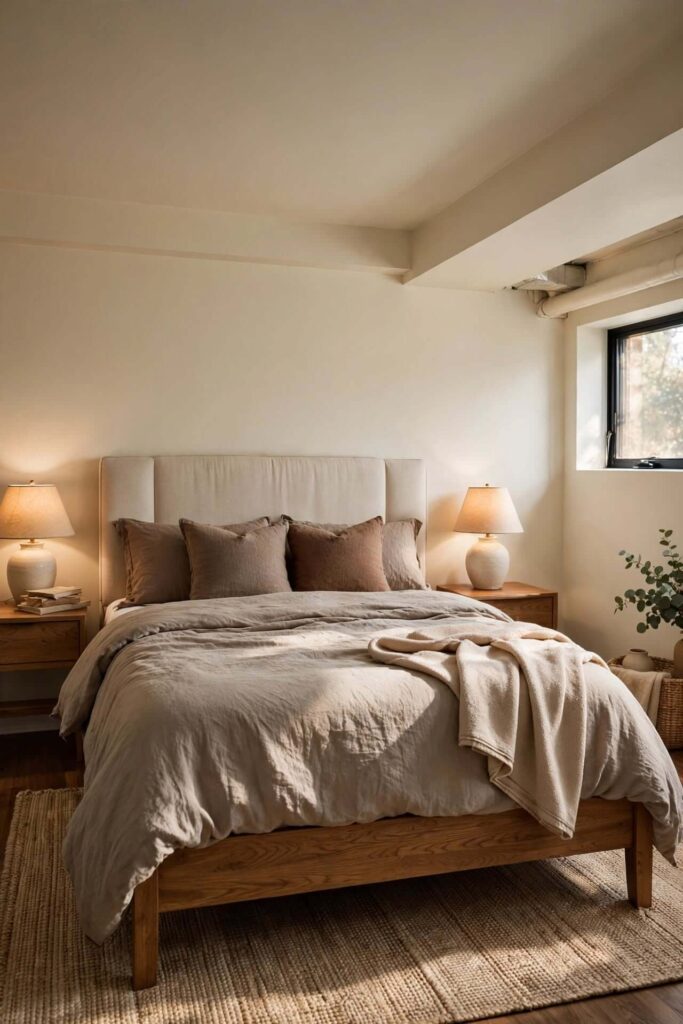
Warm neutrals are one of the easiest basement bedroom ideas and can make a basement bedroom feel considerably more welcoming without making the space look heavy. Try creamy white or warm beige walls with oak furniture, woven textures, soft taupe bedding, and muted brown accents. Instead of using one flat neutral everywhere, layer several closely related shades to create depth. A textured rug and upholstered headboard can also soften hard basement surfaces while making the room feel more finished.
Quick Win: Replace cool-white bulbs with warm-white lighting and add two matching bedside lamps. This simple change can instantly make a basement feel less stark.
2. Make a Small Basement Bedroom Feel Larger
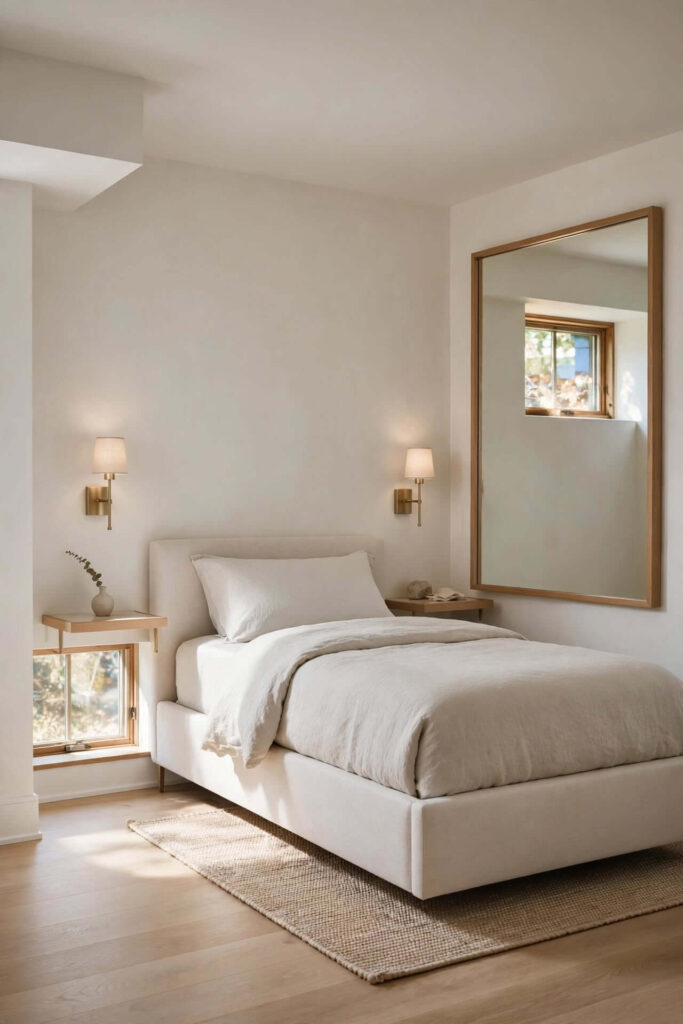
A compact basement bedroom benefits from a restrained layout and furniture that doesn’t visually overwhelm the room. Choose a bed with a simple frame, keep the largest pieces close to the walls, and use a light color palette to reflect available light. Mirrors can bounce light around the room, while furniture with visible legs creates more visual floor space. A wall-mounted sconce can also replace bulky bedside lamps when every inch matters.
Quick Win: Keep the floor around the bed as open as possible. Removing one unnecessary chair, cabinet, or basket can make a small basement bedroom immediately feel more spacious.
3. Use Moody Colors for a Cozy Retreat
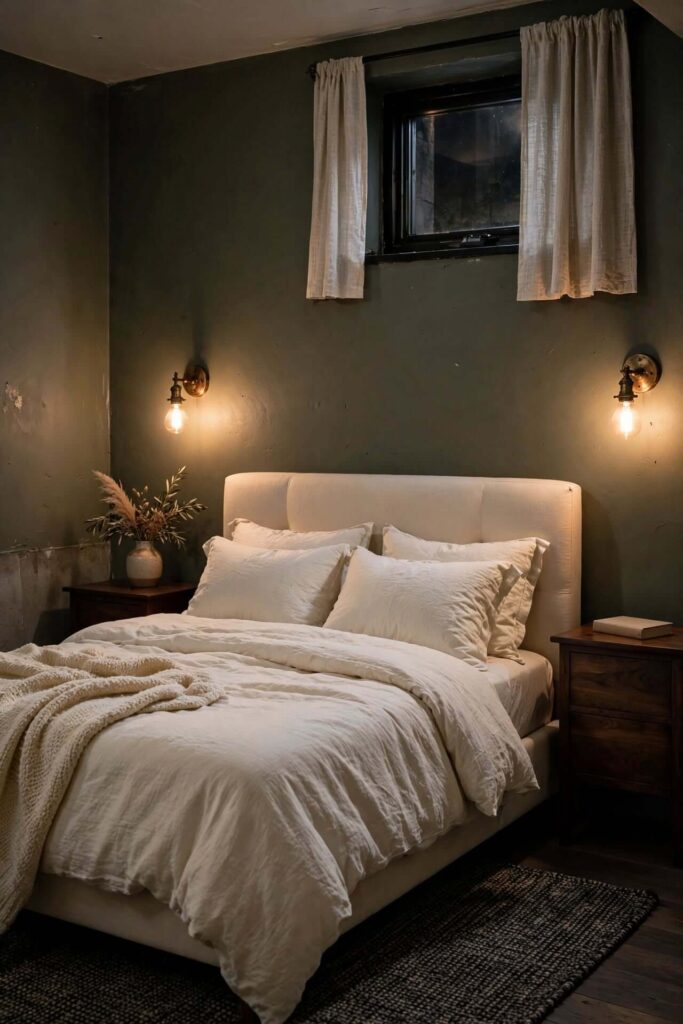
Instead of trying to make a basement look like a sun-filled bedroom, embrace its naturally enclosed atmosphere with deeper colors. Charcoal, muted olive, deep navy, or warm brown can create an intimate retreat when balanced with lighter bedding and thoughtful lighting. The trick is contrast: pair dark walls with creamy textiles, pale wood, brass accents, or soft lamps so the room feels cocooning rather than gloomy.
4. Brighten the Room With Soft White Walls
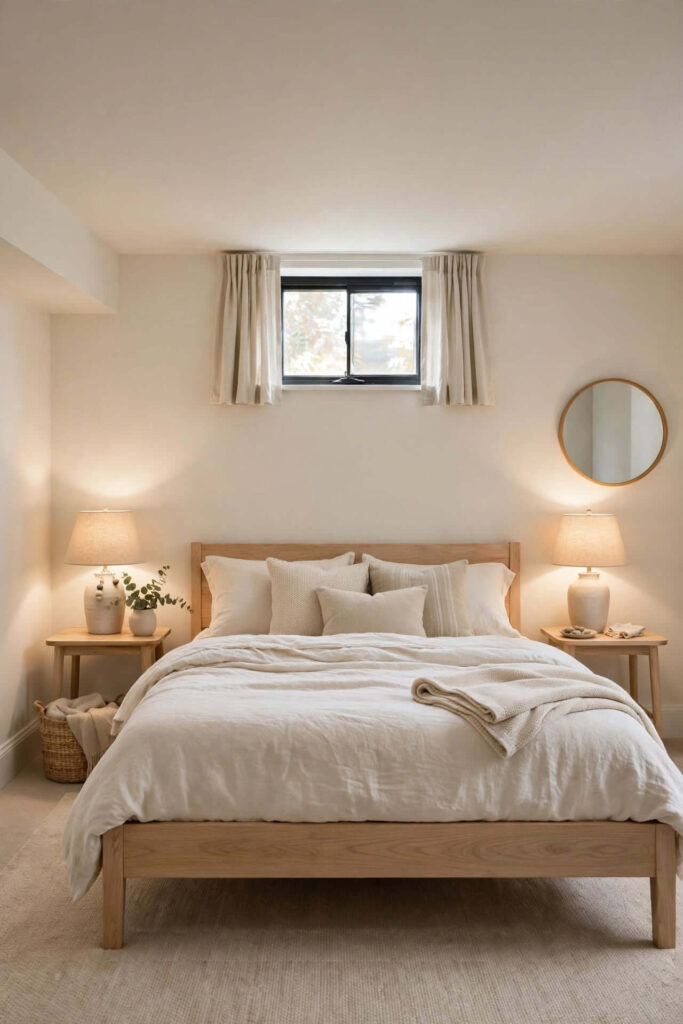
If your basement has limited daylight, soft white walls are one of the brightest basement bedroom ideas and can help the available light travel farther around the room. Avoid an extremely stark white if the space already feels cool; creamy white or warm off-white usually creates a more comfortable atmosphere. Add pale wood, oatmeal bedding, light curtains, and a few reflective surfaces to keep the overall palette bright without making it sterile.
Quick Win: Paint the ceiling the same warm white as the walls for a seamless look that visually lifts a low basement ceiling.
5. Add a Statement Headboard
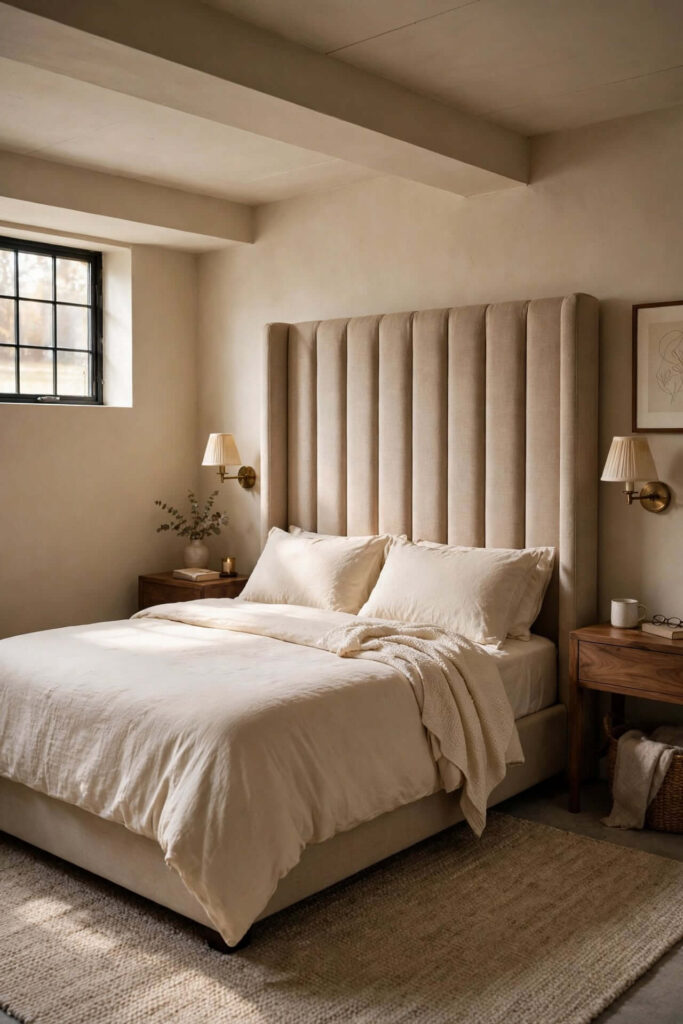
A basement bedroom is one of the smartest basement bedroom ideas and doesn’t need complicated architecture to have a strong focal point. A large upholstered, wood-paneled, or vertically fluted headboard can give the bed presence while making the entire room feel more intentional. In a lower-level room with plain walls, a substantial headboard also introduces texture and visual height. Choose a warm material such as boucle, linen, oak, or walnut depending on the overall style.
6. Turn It Into a Cozy Basement Guest Bedroom

A basement can make an excellent guest bedroom because it offers privacy away from the busiest areas of the home. Keep the design welcoming and flexible with a comfortable queen bed, layered bedding, a small luggage bench, bedside lighting, and accessible storage. Neutral colors make the room work for different guests, while a few personal-feeling touches such as artwork, books, or a small vase keep it from feeling like a hotel.
Quick Win: Place a small bench or sturdy stool near the bed so guests have an easy spot for bags or clothing.
7. Use Layered Lighting Instead of One Ceiling Fixture

Lighting matters more in a basement than almost anywhere else because natural daylight may be limited. Instead of depending on one overhead fixture, combine ceiling lighting with bedside lamps, wall sconces, floor lamps, and subtle accent lighting. This creates different levels of illumination throughout the room. Warm bulbs and fabric shades can make the bedroom feel softer at night, while brighter task lighting keeps it functional.
8. Bring in Natural Wood for Warmth
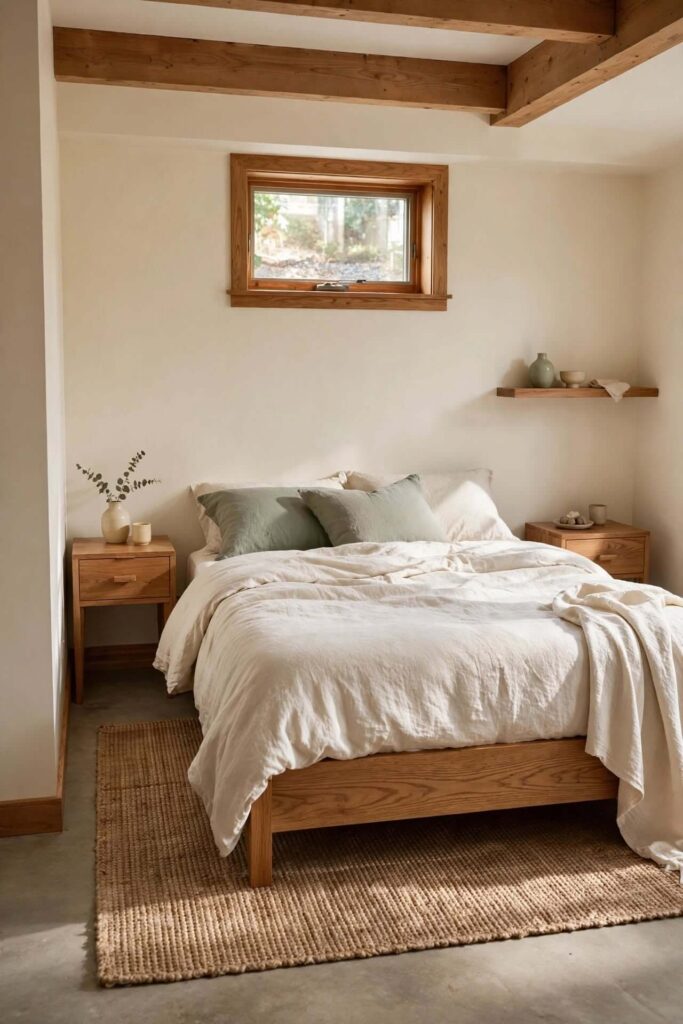
Natural wood is one of the warmest basement bedroom ideas, especially effective in basement bedrooms because it counters the cool feeling that can come from concrete, drywall, tile, or limited sunlight. A wooden bed frame, nightstand, floating shelf, or accent wall can introduce warmth without requiring a complete renovation. Medium oak works beautifully with creams and greens, while darker walnut pairs well with charcoal, navy, and warm beige.
9. Create a Relaxed Reading Corner
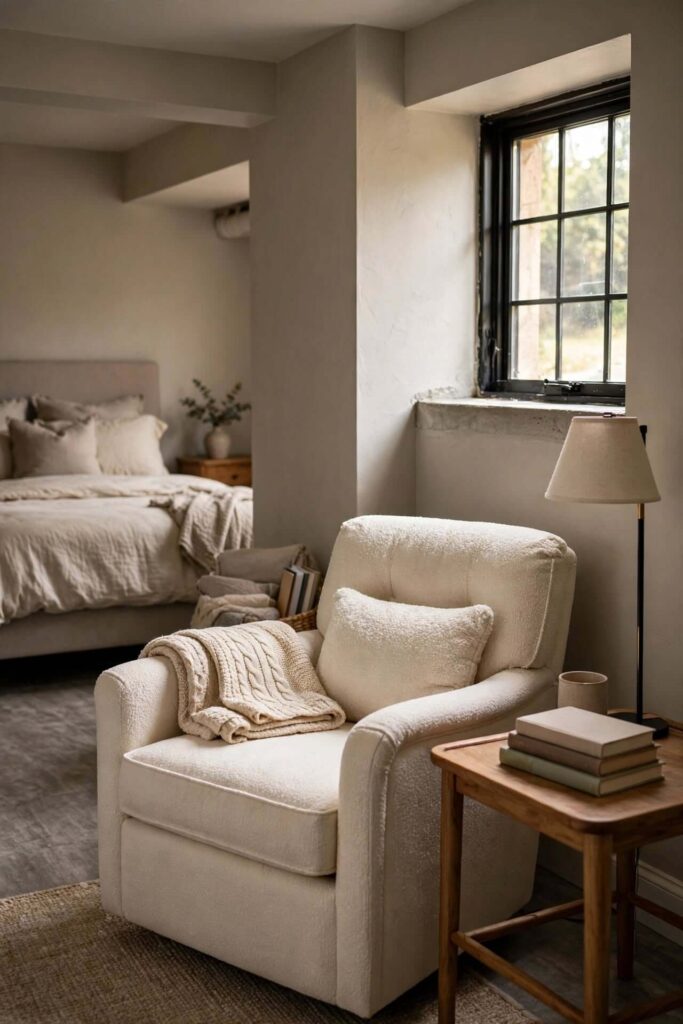
If your basement bedroom has even a small unused corner, these basement bedroom ideas turn it into a quiet reading spot rather than filling the space with unnecessary storage. A compact lounge chair, floor lamp, small side table, and soft throw can create a purposeful secondary zone. This works particularly well in larger basement bedrooms where the bed alone doesn’t fully define the room.
10. Add Vertical Wall Paneling

Vertical wall paneling is one of the simplest basement bedroom ideas and can make a basement bedroom feel taller while adding architectural character to otherwise plain walls. Choose painted MDF panels, narrow wood slats, or simple tongue-and-groove boards depending on your budget and style. Keeping the treatment on the bed wall creates a strong focal point without making the entire room feel busy. Soft beige, warm white, or muted green are particularly versatile choices.
Quick Win: If full wall paneling is too expensive, install a smaller vertical panel feature only behind the headboard.
11. Try a Soft Sage Green Palette
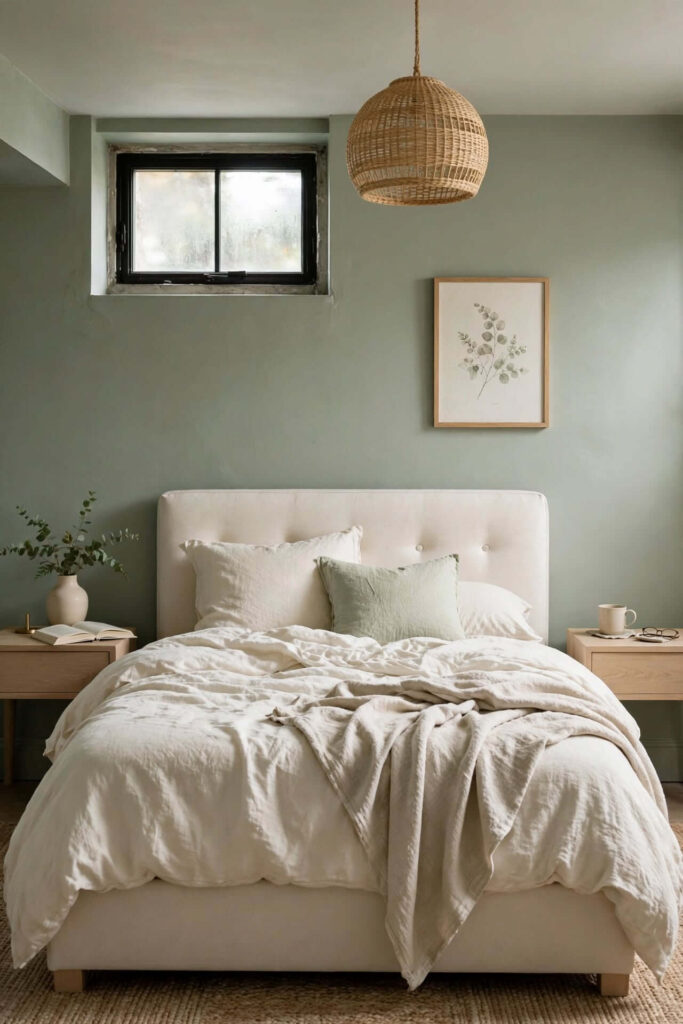
Sage green brings a natural quality to basement bedrooms without the intensity of a deep green. Use it on the walls or through bedding and upholstery, then balance it with warm white, pale oak, cream, and natural woven materials. The combination feels calm rather than overly themed. It is particularly useful when you want the room to feel connected to nature despite having limited outdoor views.
12. Use Built-In Storage Around the Bed
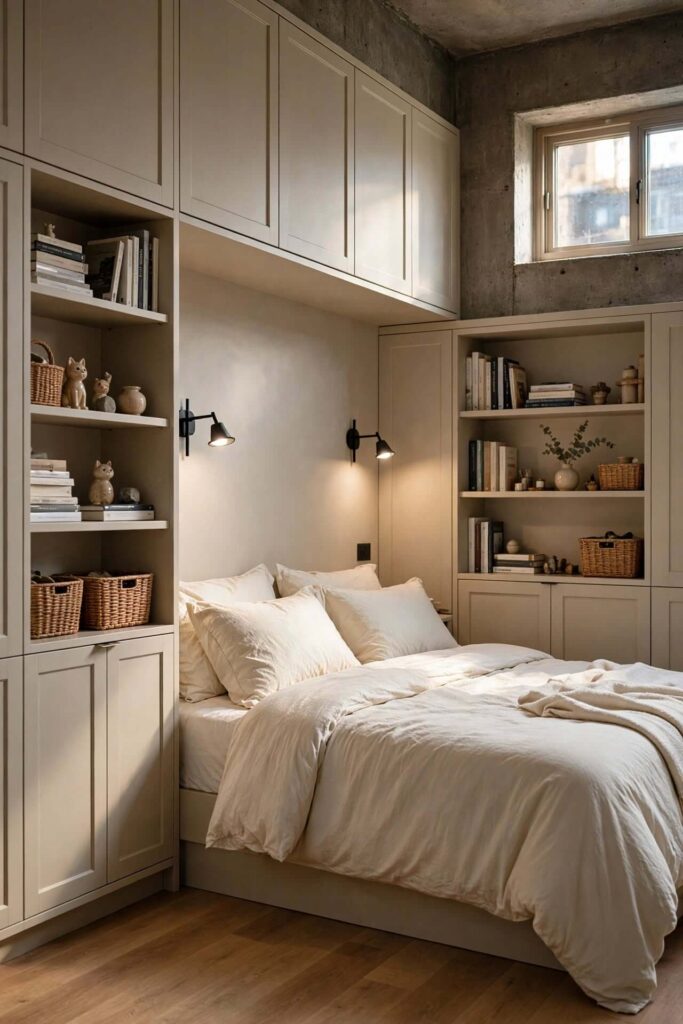
Smart storage is one of the most practical basement bedroom ideas and can make a basement bedroom much more functional, particularly when the room is compact or lacks a large closet. Built-in shelves around the bed can hold books, baskets, lighting, and decorative pieces while keeping the floor clear. Closed cabinetry at the lower portion hides less attractive belongings. Painting the built-ins the same color as the wall gives the arrangement a calm, integrated appearance.
13. Give an Unfinished Basement a Finished Look

An unfinished basement can become a bedroom only after addressing essential building requirements such as safe egress, moisture control, insulation, ventilation, and appropriate electrical and heating systems. Once those basics are handled, simple finishes can transform the atmosphere: drywall, warm flooring, painted walls, layered lighting, and comfortable furniture. Focus on making the room feel intentional rather than trying to disguise every trace of its lower-level location.
14. Create a Modern Basement Bedroom
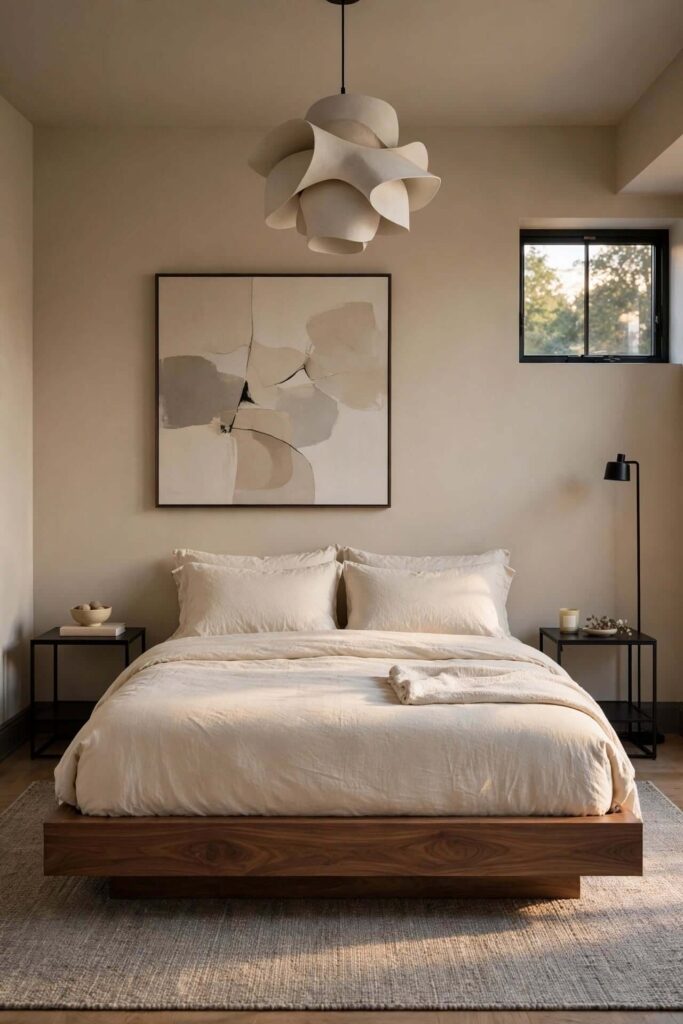
For a contemporary basement bedroom, these basement bedroom ideas keep the architecture simple and let a few strong materials carry the design. Combine warm gray walls with walnut, black metal, cream textiles, and clean-lined furniture. Avoid filling the room with small decorative pieces. A large artwork, sculptural light fixture, and textured rug can provide enough visual interest while preserving the streamlined look that defines modern bedroom decor.
Quick Win: Choose one dominant wood tone and repeat it in two or three pieces rather than mixing several unrelated finishes.
15. Warm Up a Basement With Textiles

Basements often contain harder surfaces that can make a bedroom feel less comfortable. Layering textiles is one of the easiest ways to soften that impression. Start with an area rug, then add linen or cotton bedding, curtains, upholstered furniture, cushions, and a throw. Mixing textures rather than simply adding more objects creates richness without clutter. This approach is also useful when you’re decorating on a limited budget.
16. Design a Cozy Basement Teen Bedroom
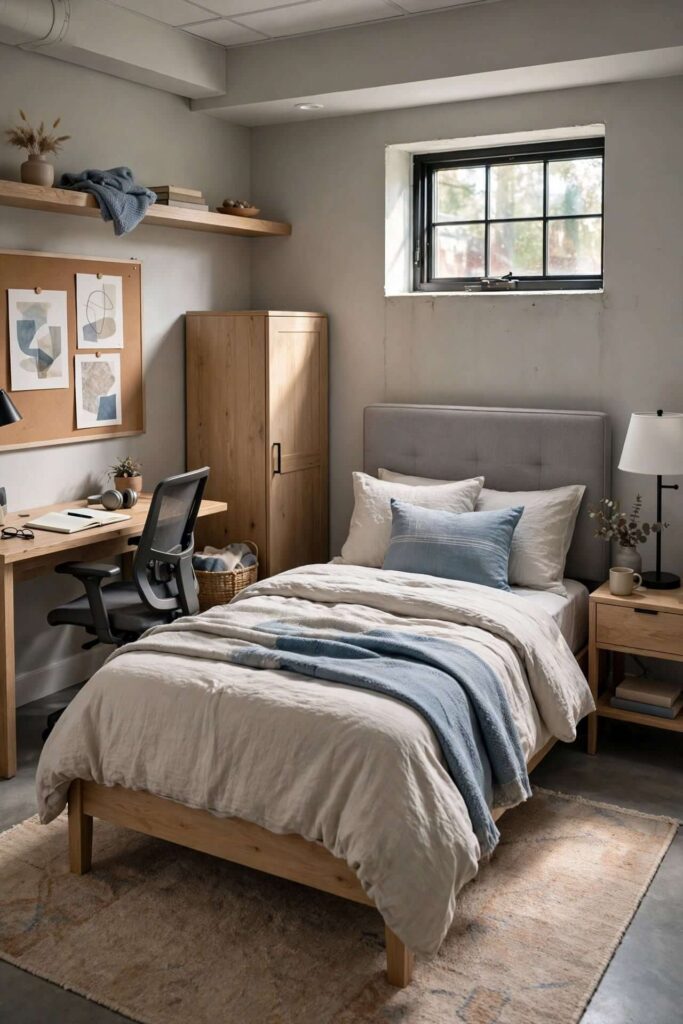
A basement bedroom is one of the best basement bedroom ideas and can give a teenager a private space that feels separate from the rest of the house. Keep the larger pieces timeless—such as a simple bed, desk, and storage—and bring personality through removable artwork, bedding, lighting, and accessories. A compact study desk near the window can make use of available daylight, while closed storage keeps clothes and everyday items from taking over the room.
Quick Win: Use removable wall art or framed prints instead of permanent treatments so the room can evolve as their tastes change.
17. Make the Basement Bedroom Feel Like a Boutique Hotel
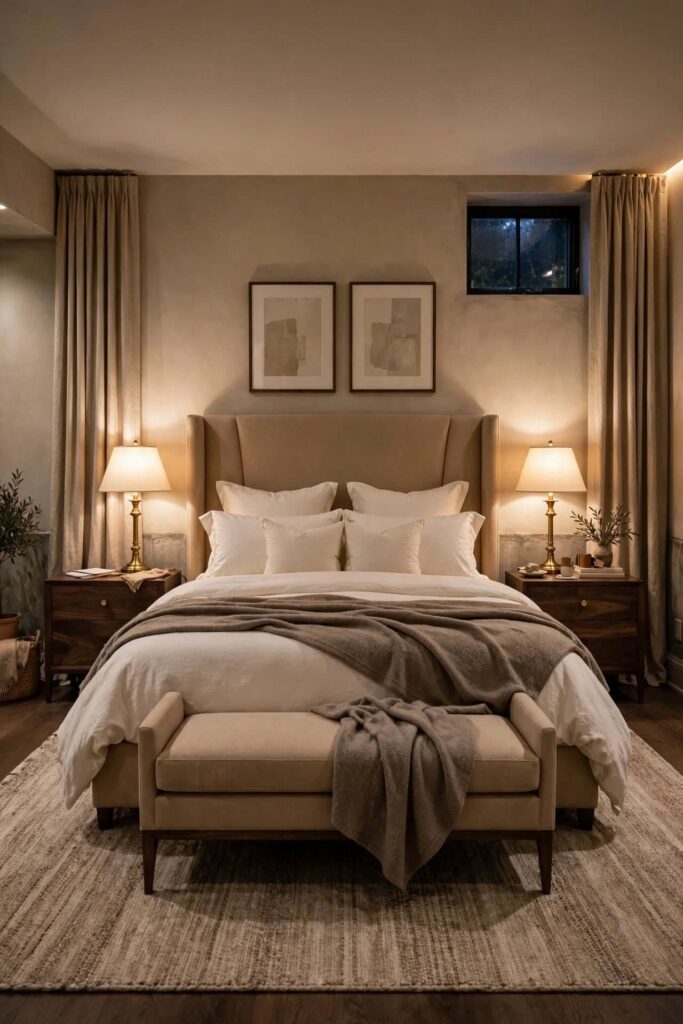
For a more elevated finish, borrow a few basement bedroom ideas from boutique hotel bedrooms: symmetrical bedside tables, layered lighting, quality-feeling bedding, restrained artwork, a bench at the foot of the bed, and a cohesive color palette. You don’t need expensive furniture. Matching lamps, substantial curtains, a padded headboard, and neatly layered textiles can create that polished feeling while keeping the room comfortable.
Conclusion
A basement bedroom doesn’t have to feel like an afterthought. The right combination of warm colors, layered lighting, comfortable textures, smart storage, and thoughtful furniture placement can turn even a challenging lower-level room into a welcoming retreat. You don’t need to recreate every idea here. Choose the elements that fit your room’s size, architecture, lifestyle, and budget, then build the space gradually around the features you love most.
Frequently Asked Questions About Basement Bedroom Ideas
Use warm off-white or light neutral walls, layered lighting, mirrors, and light-colored textiles. Keeping bulky furniture to a minimum can also help available natural light travel through the room.
Warm whites, cream, beige, sage green, muted blue, taupe, and earthy neutrals are versatile choices. Darker colors can also work when balanced with adequate lighting and lighter bedding.
Choose appropriately scaled furniture, keep pathways open, use light colors, and consider mirrors or wall-mounted lighting. Furniture with visible legs can also create more visual floor space.
Layer several sources instead of relying on one ceiling light. Combine ambient ceiling lighting with bedside lamps, wall sconces, floor lamps, or accent lighting.
Yes. Warm lighting, soft textiles, natural wood, creamy neutrals, and carefully selected accent colors can create a cozy atmosphere while keeping the room visually bright.
Moisture-resistant flooring is important in basement environments. Depending on the space and local conditions, options can include properly installed luxury vinyl, engineered materials suitable for basements, tile, or other moisture-conscious flooring systems.
Use under-bed storage, floating shelves, built-in cabinetry, narrow wardrobes, and storage benches. Vertical storage is especially useful when floor space is limited.
They can be. Deep olive, charcoal, navy, or brown can create a cozy atmosphere, but they work best when paired with lighter textiles and sufficient layered lighting.
Start with lighting, bedding, paint, and textiles because these can significantly change the atmosphere without replacing major furniture. Rearranging existing pieces and adding one strong focal point can also make a noticeable difference.
Absolutely. Use clean-lined furniture, a restrained color palette, natural wood, black accents, simple artwork, and uncluttered surfaces to create a contemporary look.
Natural wood, area rugs, upholstered furniture, layered bedding, curtains, and warm lighting can all soften a basement’s naturally cooler feeling. Avoid relying exclusively on hard surfaces.
Check local building requirements and address essentials such as moisture management, insulation, ventilation, heating, electrical systems, and emergency egress. These practical considerations should come before decorating.
Yes, provided the space meets applicable safety and building requirements. A comfortable bed, good lighting, accessible storage, and a few welcoming details can make a basement particularly useful as a private guest room.
Focus on cohesion rather than expensive items. A substantial headboard, symmetrical lighting, quality-looking bedding, full curtains, a textured rug, and coordinated wood or metal finishes can create a more refined appearance.
Trying to compensate for limited daylight by adding too many lights, colors, or decorative objects can make the room feel chaotic. A controlled palette, layered illumination, and appropriately scaled furniture usually create a more comfortable result.