
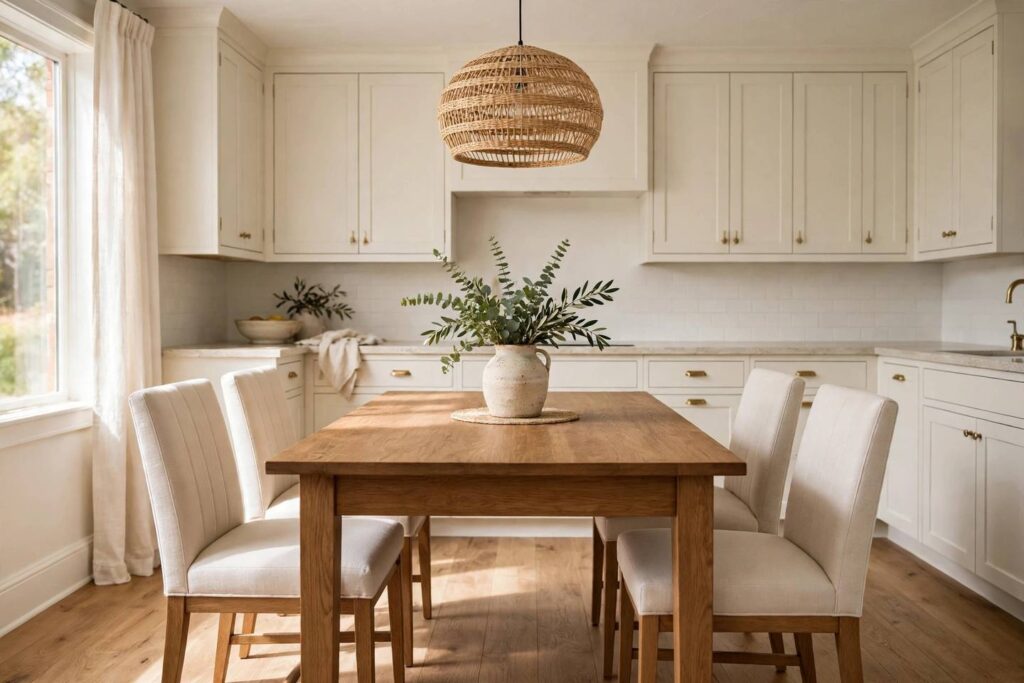
A kitchen table can look lovely on its own yet still feel out of place once you bring it into your kitchen. Perhaps the wood clashes with your cabinets, the chairs look too heavy, or the entire dining area feels disconnected from the rest of the room. The solution isn’t necessarily buying a matching furniture set. The secret is creating a visual connection between a few important elements, including color, materials, shape, and lighting. Whether your kitchen is modern, farmhouse-inspired, traditional, or compact, these practical ideas show you how to match a kitchen table with your decor so it feels intentional, comfortable, and naturally part of your home.
In This Article
- 1. Match the Table to Your Kitchen Cabinet Colors
- 2. Coordinate Wood Tones Without Making Everything Identical
- 3. Choose Dining Chairs That Connect the Table to the Room
- 4. Match the Table Shape to Your Kitchen Layout
- 5. Use the Kitchen Flooring to Guide Your Table Finish
- 6. Repeat a Color From Your Kitchen Backsplash or Countertop
- 7. Coordinate the Table With Your Kitchen Lighting
- 8. Add a Rug to Define the Dining Area
- 9. Style the Table With Accessories That Echo the Kitchen
- 10. Blend Modern and Traditional Elements for a Collected Look
- How to Match a Kitchen Table With Your Decor: A Simple Checklist
- Conclusion
- Frequently Asked Questions
1. Match the Table to Your Kitchen Cabinet Colors
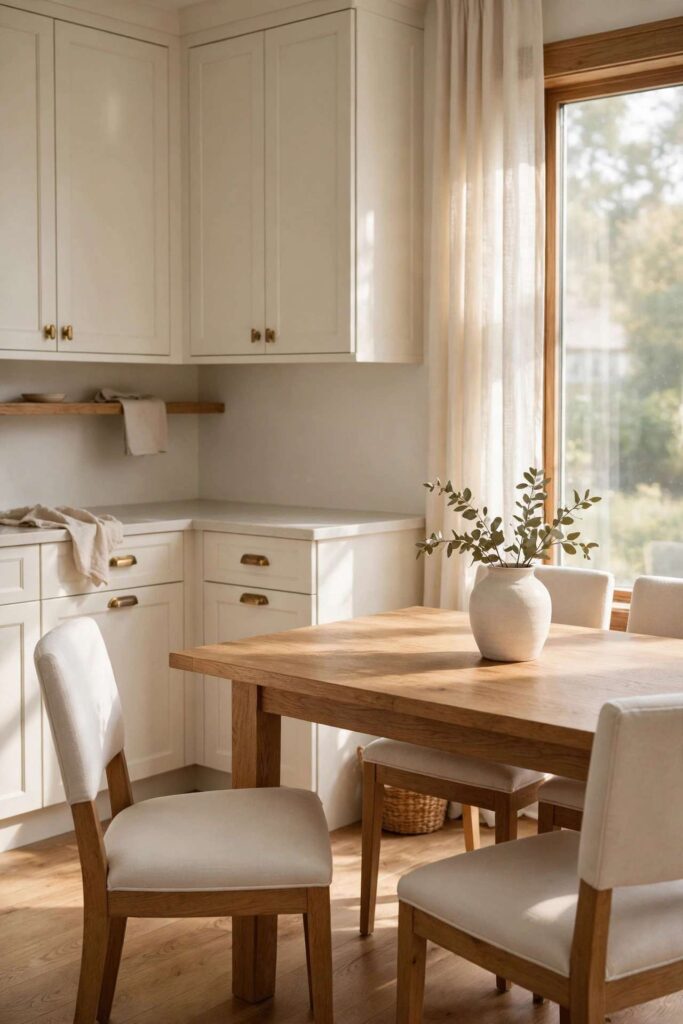
Cabinets cover a large portion of the kitchen, making them a useful starting point when choosing a table. With creamy white cabinets, a natural oak or walnut table adds warmth without overwhelming the room. Dark green or navy cabinets pair beautifully with lighter wood, while charcoal cabinetry can benefit from a medium-toned table that softens the contrast. You don’t need identical finishes; choose colors that complement one another and repeat a small detail, such as brass hardware or a warm wood accent, for a connected look. Getting this balance right is a key part of learning how to match a kitchen table with your decor.
Quick Win: Photograph your cabinets in natural daylight and compare the picture with your table options. This helps you spot undertones that may be difficult to notice under artificial lighting.
2. Coordinate Wood Tones Without Making Everything Identical
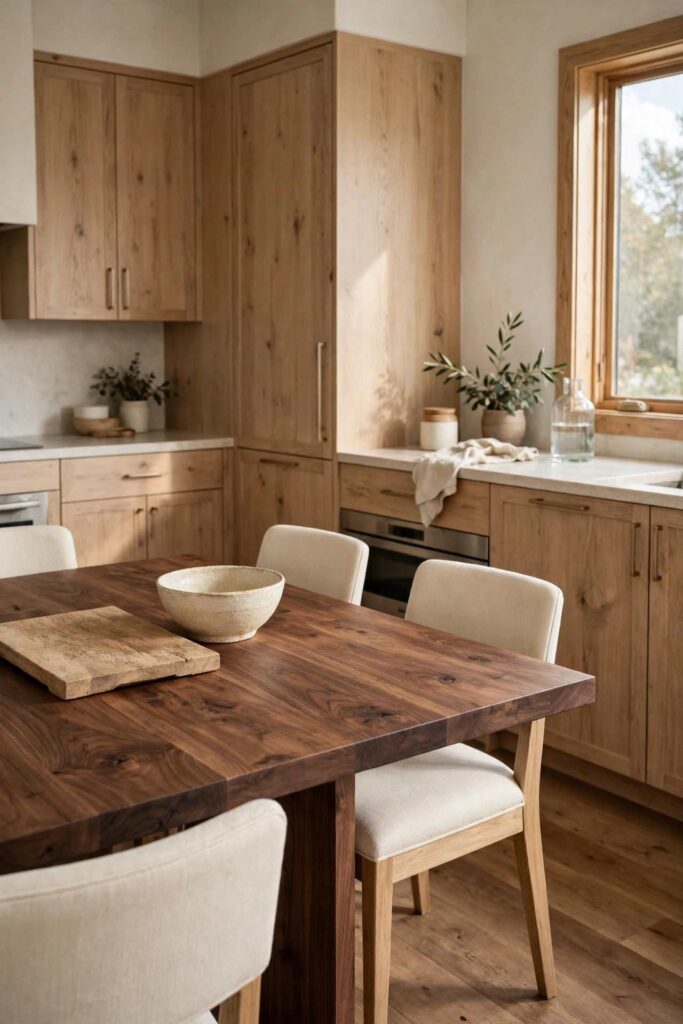
Mixing wood tones gives a kitchen more depth and personality than using the exact same finish everywhere. A walnut table can work with lighter oak cabinets, while a honey-toned table can complement darker wood flooring if the undertones feel harmonious. Aim for two or three wood finishes rather than collecting too many competing shades. Repeat one of the table’s tones in a cutting board, open shelf, or picture frame to make the combination feel deliberate. Mixing tones thoughtfully like this is a practical way to learn how to match a kitchen table with your decor without buying a matching set.
Quick Win: Place wood samples side by side in your kitchen. Compare whether they share warm, cool, or neutral undertones instead of judging each finish separately.
3. Choose Dining Chairs That Connect the Table to the Room

Your dining chairs can bridge the gap between a kitchen table and the surrounding decor. For example, a wooden table paired with cream upholstered chairs feels softer, while black metal chairs can introduce definition in a modern kitchen with pale cabinets. If your table and chairs have different finishes, repeat one shared element through their shape, material, or color. This approach is especially useful when you want a collected look instead of a furniture set that feels too coordinated. Chairs like these show how to match a kitchen table with your decor while keeping the look collected rather than overly coordinated.
Quick Win: If your chairs already work structurally, try changing only the seat cushions or upholstery color before replacing them.
4. Match the Table Shape to Your Kitchen Layout
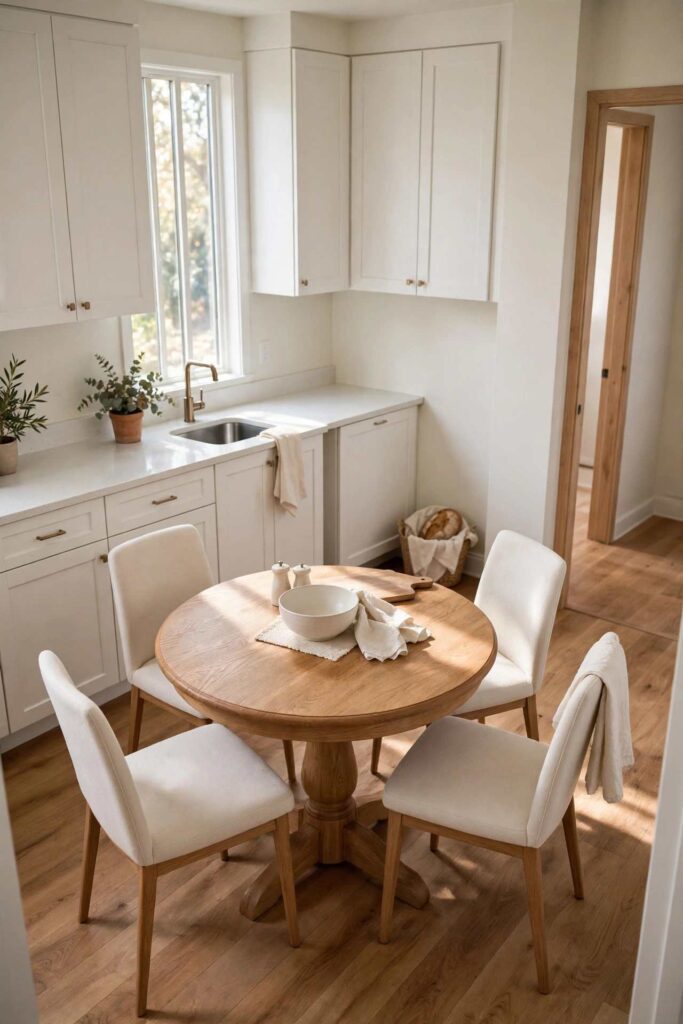
A table’s shape affects how comfortably it fits into the room and how well it complements the kitchen’s architecture. Round tables soften kitchens filled with straight cabinet lines and work particularly well in compact dining corners. Rectangular tables suit longer rooms and can echo the lines of a kitchen island, while square tables can anchor a small, symmetrical dining nook. Before choosing a shape, measure the available space and allow roughly 36 inches of clearance around the table where possible. Shape is often overlooked when learning how to match a kitchen table with your decor, yet it affects both comfort and style.
5. Use the Kitchen Flooring to Guide Your Table Finish

Flooring and table finishes should work together without blending into one indistinguishable surface. On pale tile or stone flooring, a medium or dark wood table creates a clear focal point. If you have dark floors, a lighter oak or ash table can brighten the dining area. For wood flooring and a wooden table, choose noticeably different tones or introduce a rug to separate the surfaces visually. This makes the room feel layered rather than overly matched.
Quick Win: If your floor and table look almost identical, introduce contrast through the chairs, a washable dining rug, or a darker tabletop accessory.
6. Repeat a Color From Your Kitchen Backsplash or Countertop
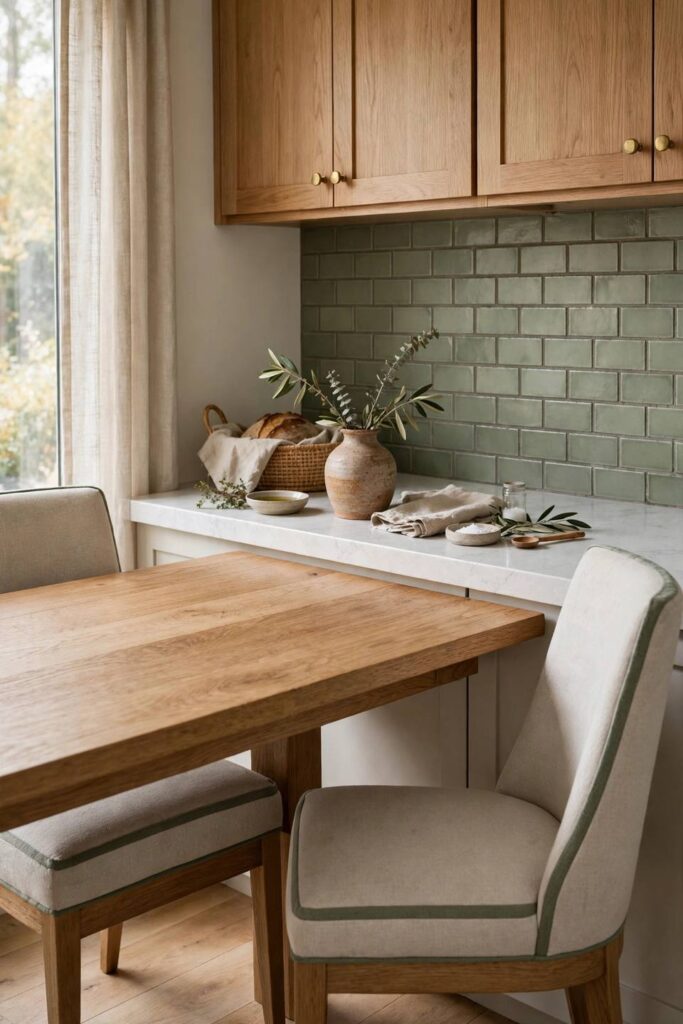
A backsplash or countertop can provide an easy color palette for the dining area. If your kitchen has sage green tiles, repeat that shade in chair cushions or a ceramic centerpiece while choosing a table in natural oak or walnut. Marble-look counters with gray veining can pair with charcoal chairs and a light wood table. The key is to repeat one or two colors rather than matching every surface, allowing the table to stand out while still feeling connected to the kitchen. Repeating one of these colours is a simple way to learn how to match a kitchen table with your decor.
7. Coordinate the Table With Your Kitchen Lighting

Lighting helps define the dining area, particularly in open-plan kitchens where the table sits between cooking and living spaces. A black pendant light can connect a dark table base to black cabinet hardware, while a woven shade complements a rustic wood table. For a more polished look, consider a brass fixture above a walnut table with warm neutral cabinetry. Hang the light at a practical height that illuminates the tabletop without obstructing views across the room. Good lighting also helps you see how to match a kitchen table with your decor in the evenings, when warm light changes how wood tones look.
Quick Win: Replace a mismatched lampshade or pendant before buying new furniture. A well-chosen fixture can make an existing kitchen table feel more intentional.
8. Add a Rug to Define the Dining Area

A rug can visually connect a kitchen table with nearby furniture, especially in an open-plan layout. Choose a low-pile, easy-to-clean design that complements the cabinets and flooring rather than competing with them. A muted geometric rug suits a contemporary table, while a faded traditional pattern can add character to simple cabinetry. Make sure the rug extends far enough beyond the table for chairs to remain on it when pulled out; this improves both appearance and everyday usability. Choosing a rug in a colour from the room is another easy way to learn how to match a kitchen table with your decor.
9. Style the Table With Accessories That Echo the Kitchen
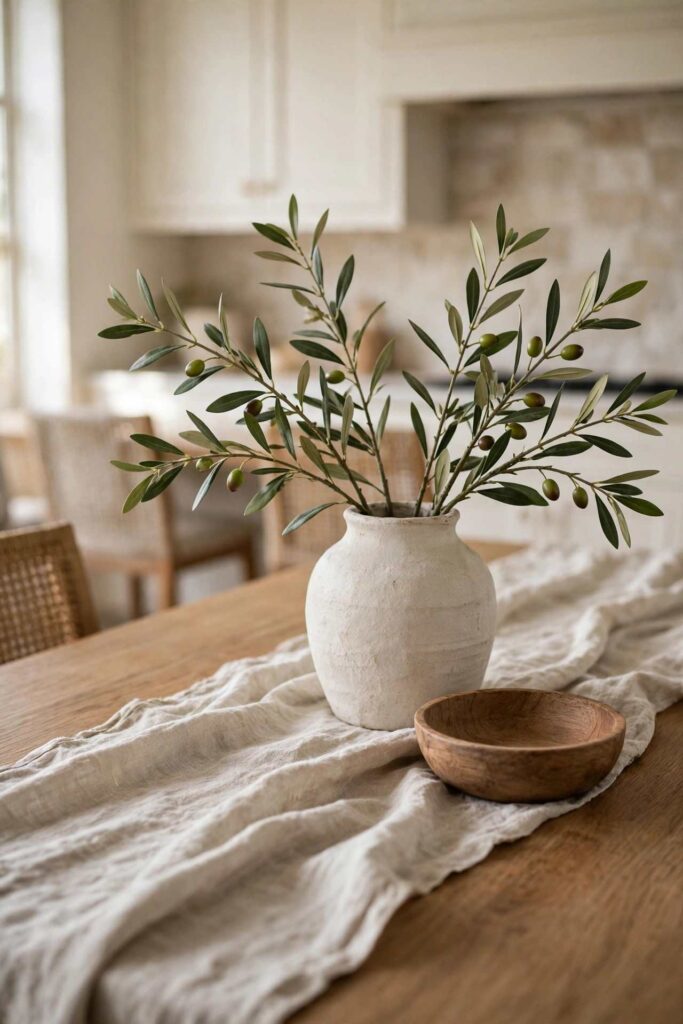
Tabletop accessories are an inexpensive way to connect furniture with the rest of your decor. A ceramic vase in a color repeated from the backsplash, a linen runner that echoes window treatments, or a wooden bowl that matches open shelving can bring the arrangement together. Keep the centerpiece low enough for conversation and leave enough room for serving dishes. This approach is particularly effective when you want to keep your existing table but make the dining area feel more finished. Accessories chosen this way help show how to match a kitchen table with your decor without a large budget.
Quick Win: Group three items with different heights and textures, such as a ceramic vase, a small wooden bowl, and a folded linen runner. Keep the palette simple to avoid visual clutter.
10. Blend Modern and Traditional Elements for a Collected Look
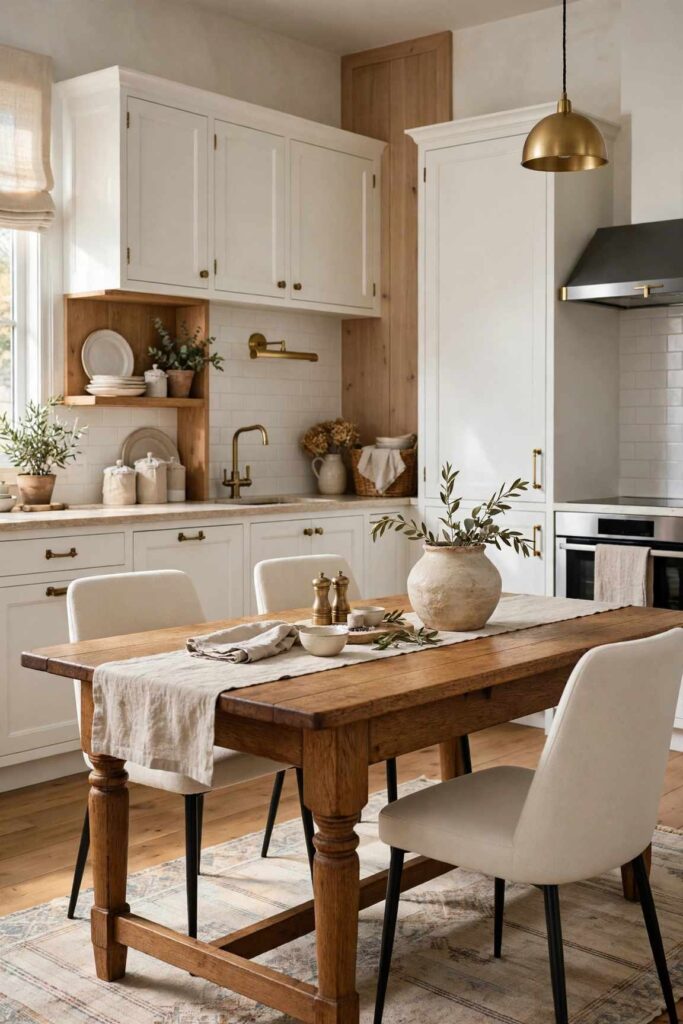
Your kitchen table doesn’t have to match the exact style of your cabinets or chairs. A traditional farmhouse table can feel fresh with streamlined upholstered chairs, while a modern pedestal table can soften a classic kitchen with shaker cabinets and aged brass hardware. To keep the mix cohesive, repeat a shared material or color and avoid combining too many statement pieces. This is an excellent approach for homes furnished gradually, where the most interesting pieces may come from different periods.
How to Match a Kitchen Table With Your Decor: A Simple Checklist
Before buying a new table or updating your dining area, check these details:
- Color: Does the table complement your cabinets, walls, and countertop?
- Materials: Do its wood, metal, or upholstered elements relate to existing finishes?
- Contrast: Is there enough difference between the table and floor to define the dining area?
- Proportion: Does the table fit the room without blocking walkways or cabinet access?
- Seating: Can your chairs fit comfortably around the table?
- Lighting: Does the pendant or ceiling fixture suit the table’s size and style?
- Styling: Can a few accessories connect the table to the rest of the kitchen?
You don’t need every element to match. A few thoughtful connections are usually enough to make the room feel cohesive.
Conclusion
How to match a kitchen table with your decor becomes much easier when you focus on the relationship between colors, materials, proportions, and lighting. You don’t need a perfectly coordinated furniture set or a complete kitchen makeover to create a welcoming space. Start with the pieces you already own, identify what feels disconnected, and make a few intentional changes. Whether you prefer modern simplicity, rustic warmth, or an eclectic mix, choose combinations that suit your home, daily routine, and budget.
Frequently Asked Questions
Learning how to match a kitchen table with your decor starts with your kitchen cabinets, flooring, countertops, and existing chairs. Choose a table that complements at least two of these elements through color, material, or style rather than trying to match everything exactly.
No, your kitchen table doesn’t need to match your cabinets exactly. Contrasting finishes, such as a walnut table with white cabinets or a light oak table with dark cabinetry, can add depth and visual interest.
Natural oak, medium brown wood, and understated walnut finishes are versatile choices for many kitchen styles. Neutral finishes work especially well when you want to change chair upholstery, wall colors, or accessories later.
Not necessarily. A table that contrasts with the island can create a more layered interior, provided the finishes share a complementary undertone or material. For example, a walnut dining table can work beautifully beside a light quartz island.
Yes, mixing wood tones can make a kitchen feel more natural and thoughtfully furnished. Choose finishes with compatible undertones, create enough contrast to distinguish the pieces, and repeat one wood tone elsewhere in the room.
Upholstered chairs, bentwood chairs, and slim metal-frame designs can all complement a wooden table. Consider the table’s shape, the room’s style, and your comfort needs when selecting chair materials and colors.
A light oak, ash, or natural maple table can brighten a kitchen with dark cabinets. If you prefer a darker table, introduce contrast through lighter chairs, warm lighting, or a pale centerpiece.
Look for a round pedestal table, a compact square design, or an extendable table that adapts to your needs. Measure the room first and aim for approximately 36 inches of clearance around the table wherever the layout permits.
Exact matching isn’t necessary. In fact, a table with a lighter or darker finish can stand out more effectively against the floor, while rugs and contrasting chair upholstery can help separate similar wood tones.
Connect it to the room with coordinated chairs, a complementary centerpiece, or a pendant light that repeats one of its finishes. Even a single repeated color or material can help unrelated furniture pieces feel connected.
A low-pile, washable rug is often practical because it is easier to clean and allows chairs to move more smoothly. Choose a pattern and color that complement the table and ensure the rug extends beyond the chairs when they are pulled out.
Use one simple centerpiece, such as a ceramic vase, a shallow wooden bowl, or a small arrangement of greenery. Keep enough clear surface area for meals, homework, and everyday activities.
Absolutely. A farmhouse table can bring warmth and character to a modern kitchen, particularly when paired with streamlined chairs, simple lighting, and uncluttered accessories. Repeating a material or color helps tie the contrasting styles together.
Try refinishing the tabletop, painting the base, replacing chair cushions, or adding a complementary table runner. Updating the pendant light or introducing a few coordinated accessories can also refresh the dining area without replacing the furniture.
One common mistake is trying to make every finish identical, which can leave the room feeling flat or overly coordinated. Another is overlooking scale: a table that is too large can disrupt movement, while one that is too small may look disconnected from the surrounding furniture.