
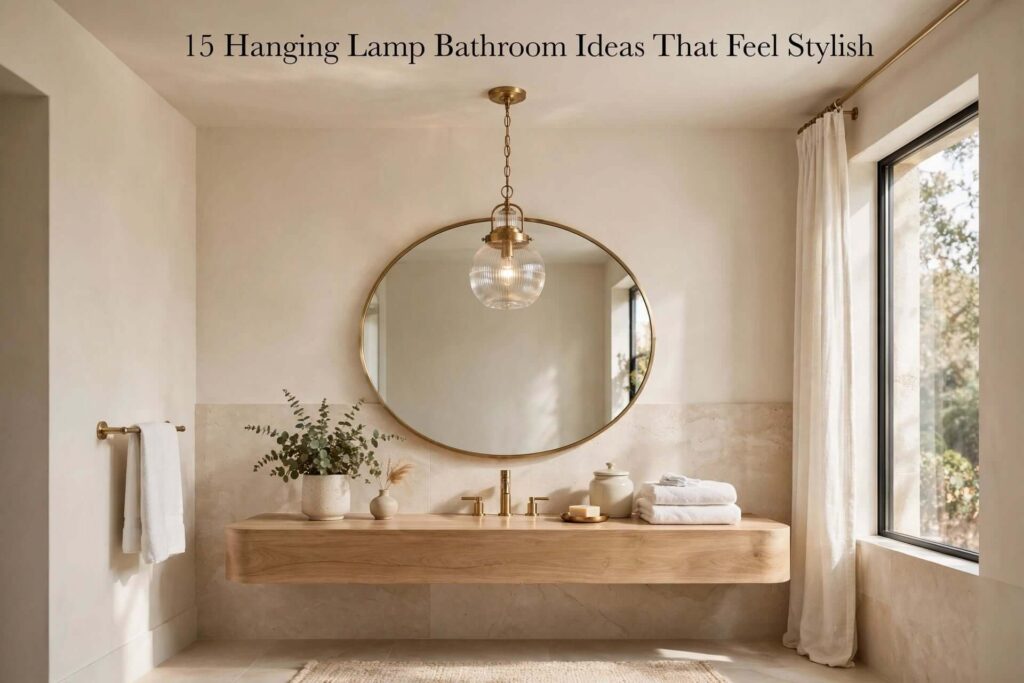
A bathroom can have beautiful tile, a great vanity, and thoughtful accessories yet still feel unfinished when the lighting is flat or purely functional. A hanging lamp bathroom design adds another layer of character, bringing height, warmth, and a more intentional focal point to the space. The key is choosing the right scale, finish, placement, and fixture rating rather than simply adding a decorative pendant. From a single sculptural light over a vanity to matching pendants beside a mirror, these ideas show how to make hanging bathroom lights feel natural, practical, and polished.
1. Add a Pendant Beside the Bathroom Mirror
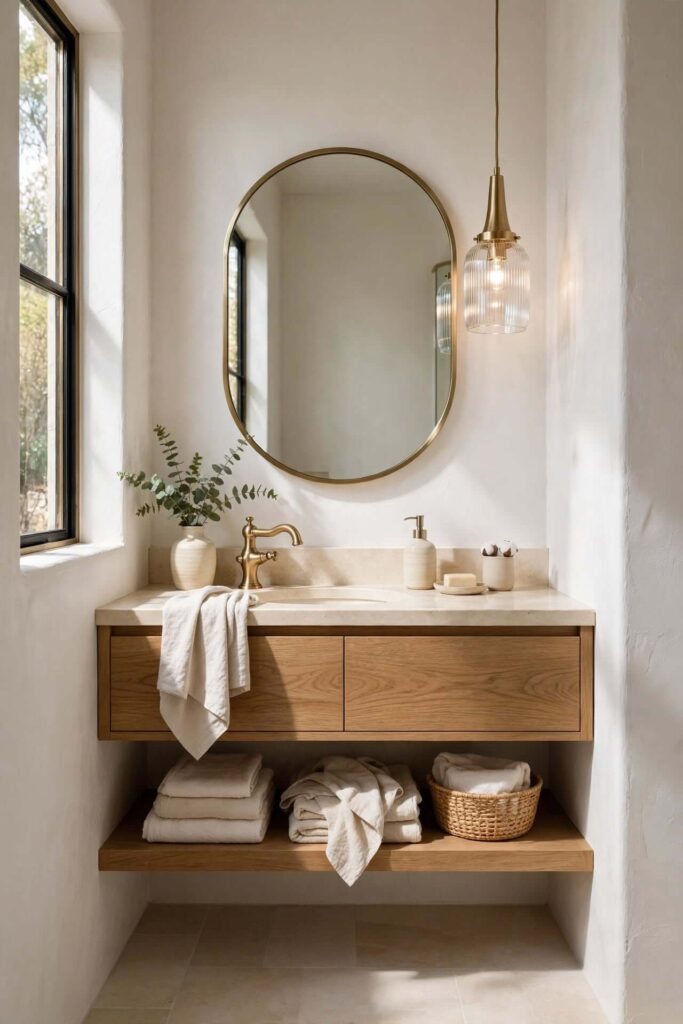
A single pendant hanging beside the vanity mirror can make a bathroom feel more considered without overwhelming it. Choose a slim fixture with an opal glass shade, aged brass hardware, or matte black details, depending on your existing finishes. Position it so it complements the mirror rather than competing with it. This approach works particularly well in narrow bathrooms where a bulky wall sconce may feel crowded.
Quick Win: Match the pendant finish to one existing bathroom detail, such as the faucet or cabinet hardware, to create an intentional connection.
2. Use Matching Pendants on Both Sides
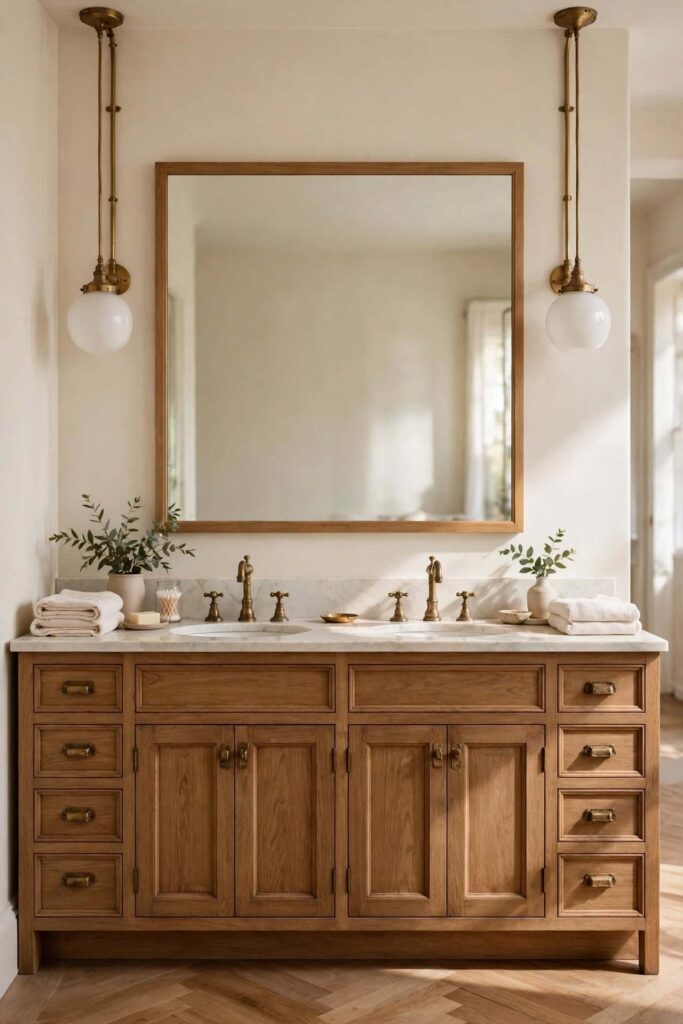
For a balanced vanity, two matching hanging bathroom lights can frame the mirror beautifully. Look for compact pendants that provide useful illumination without visually crowding the vanity. Clear or frosted glass works especially well because it keeps the composition light and allows the fixtures to become part of the room rather than dominating it.
3. Hang a Sculptural Light Over a Freestanding Tub
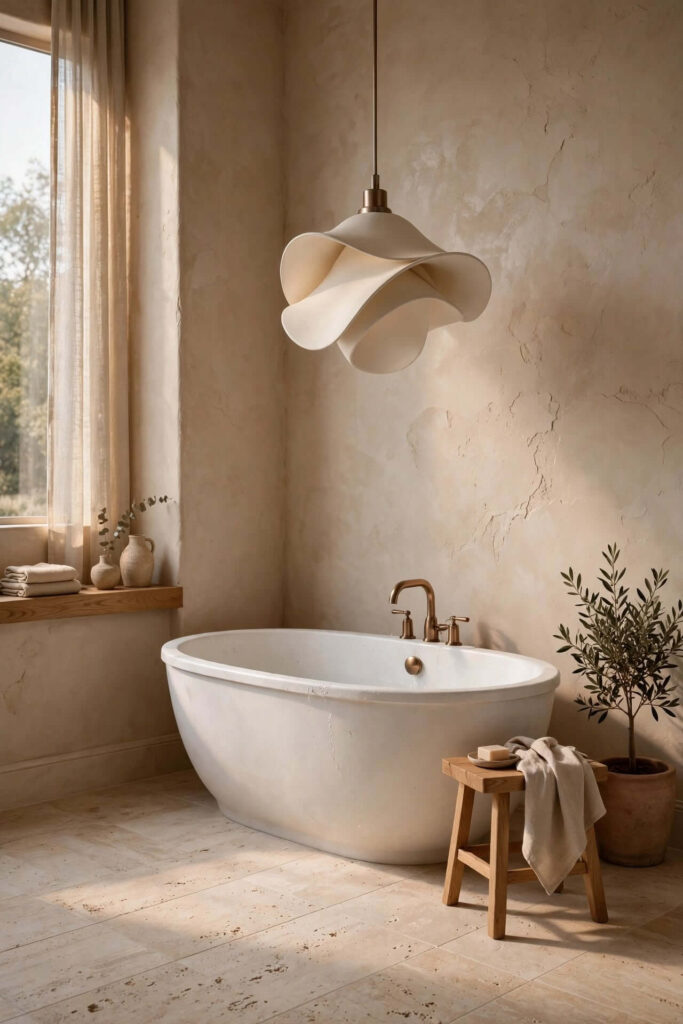
A freestanding bathtub creates a natural opportunity for a statement hanging lamp. Instead of choosing a very elaborate chandelier, try a sculptural pendant with an interesting silhouette and understated finish. A large bathroom with neutral stone, plaster walls, or warm wood can handle a more dramatic fixture, while the rest of the decor should remain relatively quiet.
Quick Win: Let the pendant be the visual statement and keep nearby accessories minimal so the bathtub and light remain the focus.
4. Try an Opal Glass Pendant for Soft Light
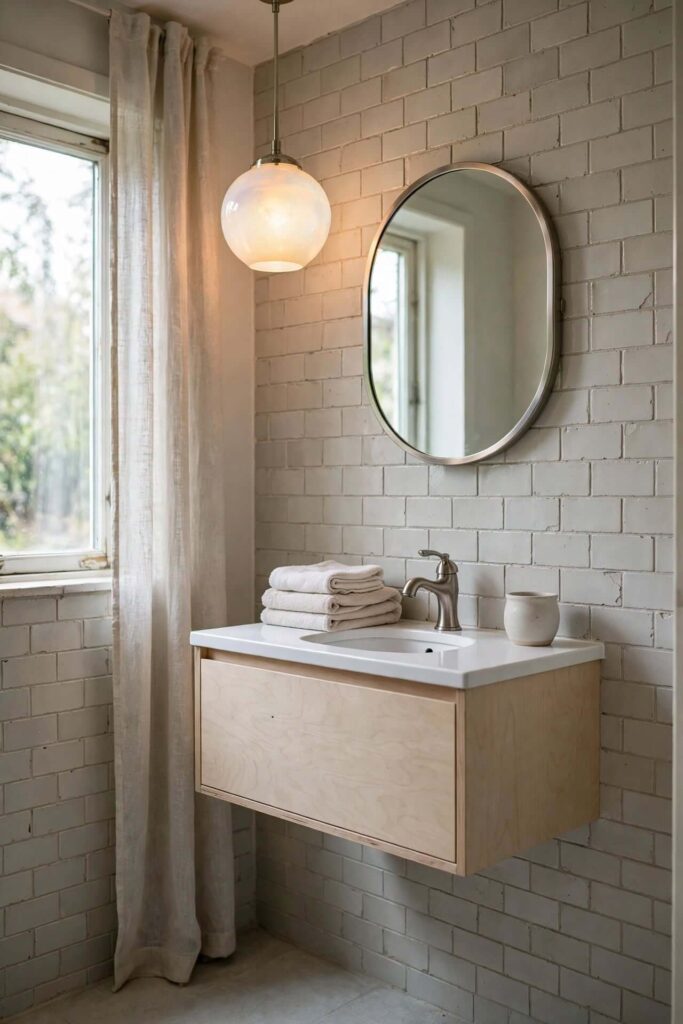
Opal glass is a practical choice when you want the gentle appearance of a hanging lamp without harsh glare. Its milky finish diffuses the bulb and pairs naturally with modern, Scandinavian, transitional, and minimalist bathrooms. Combine it with pale tile, light wood, and simple hardware for an airy look that does not make a small bathroom feel visually heavy.
5. Pair Black Pendants With White Tile
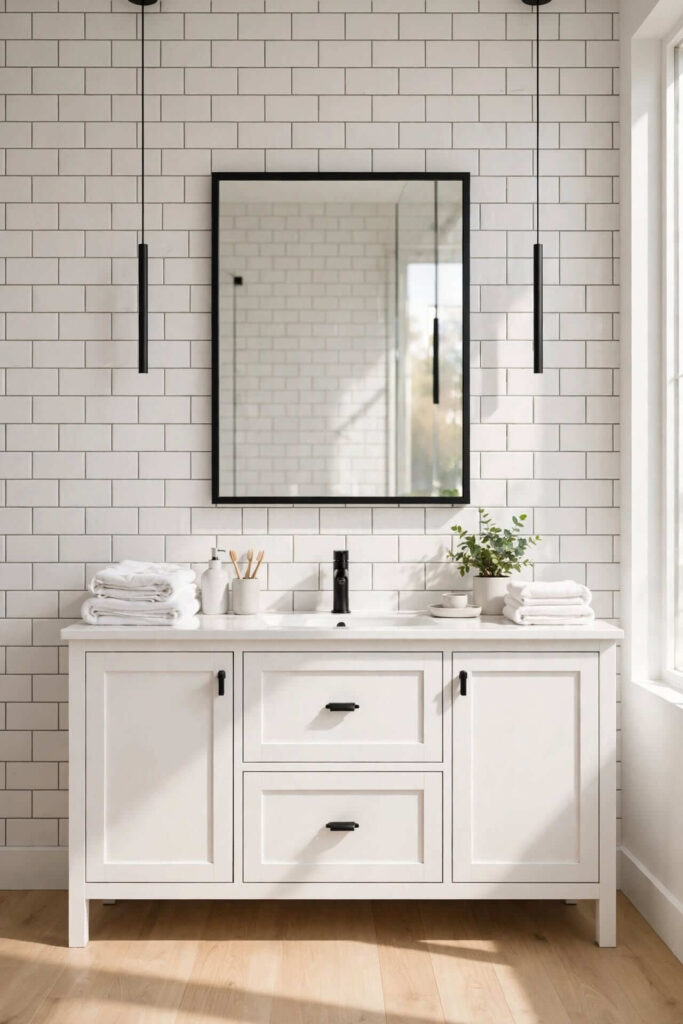
Black hanging lamps create crisp contrast against classic white bathroom tile. This combination is especially effective in bathrooms with subway tile, white marble, or simple ceramic surfaces. Keep the silhouette clean—such as a black metal dome or slim cage pendant—and repeat black in small details like the mirror frame, faucet, or cabinet pulls.
6. Choose a Rattan Pendant for Warmth
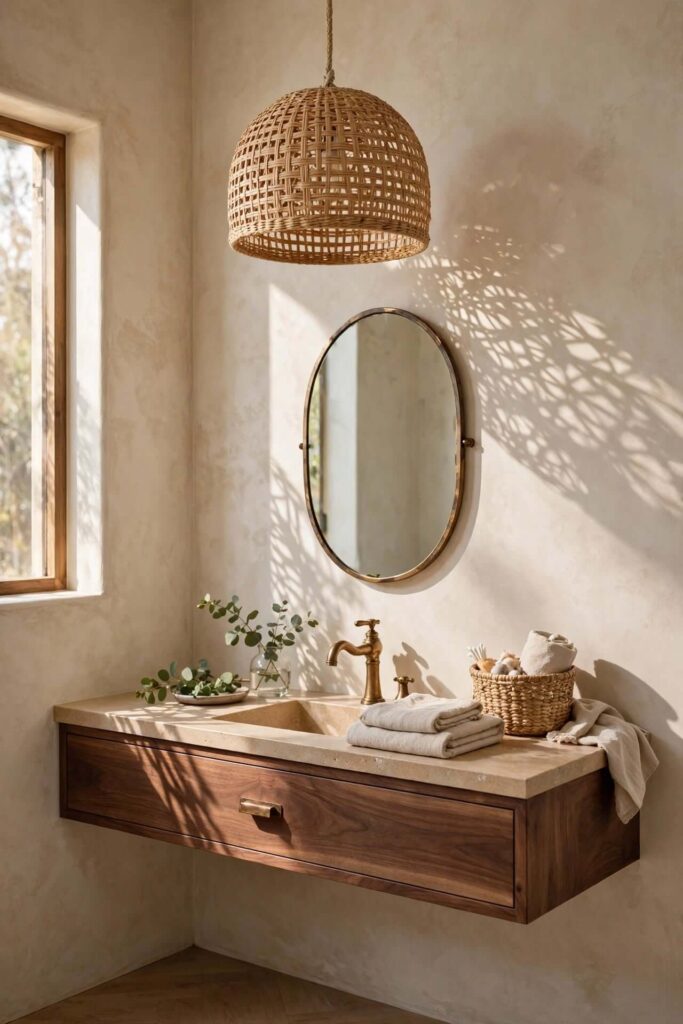
A woven or rattan pendant can soften a bathroom filled with hard surfaces such as tile, stone, and glass. Its natural texture brings warmth without requiring a major renovation. Try one over a wood vanity or near a freestanding tub, and repeat the organic feeling with a timber stool, woven basket, or small natural-fiber accessory.
7. Use a Long Pendant in a High-Ceiling Bathroom
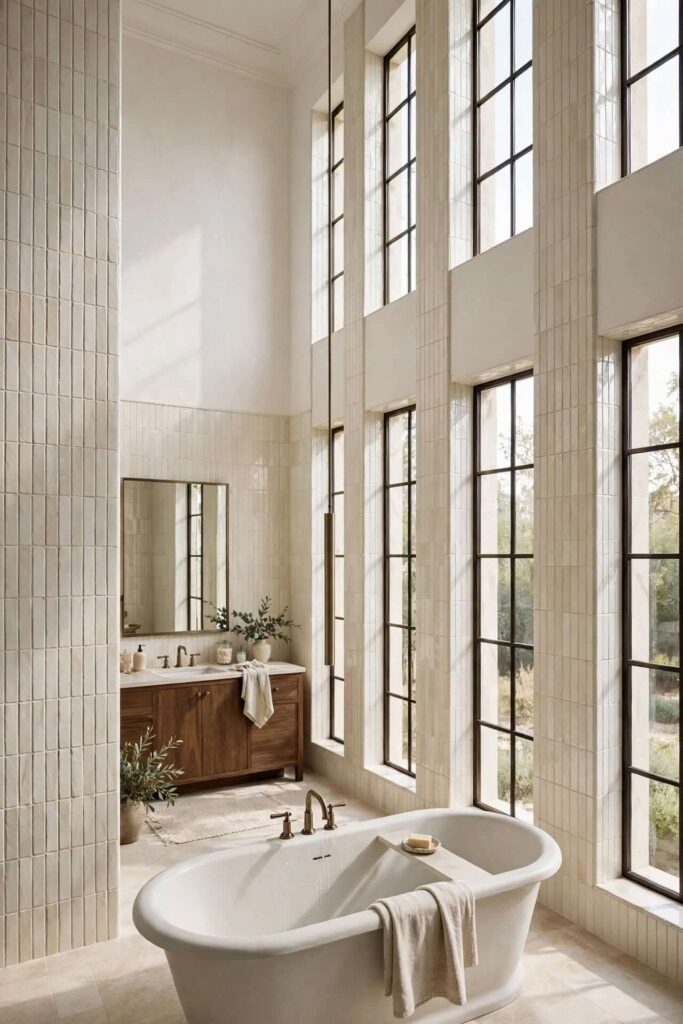
A tall bathroom with generous ceiling height can accommodate a vertically elongated pendant that draws the eye upward. Choose a fixture with a slim silhouette so it adds height without making the room feel crowded. This works especially well in bathrooms with a freestanding tub, tall windows, or dramatic vertical tile.
8. Add a Small Pendant to a Compact Powder Room
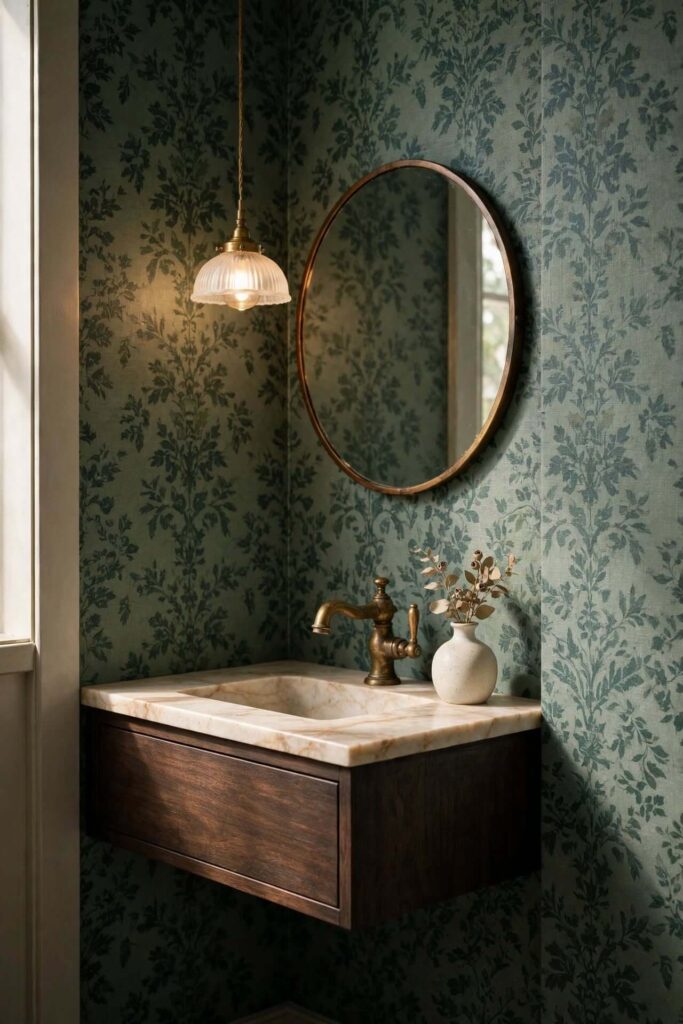
A powder room does not need a large lighting fixture to make an impression. A petite pendant can become a decorative focal point above or beside a compact vanity, particularly when paired with patterned wallpaper or rich-colored tile. Because the room is small, choose a fixture with a visually light shape and avoid overcrowding the walls.
Quick Win: In a tiny powder room, use one memorable pendant instead of adding several competing decorative elements.
9. Mix Brass With Warm Neutral Finishes
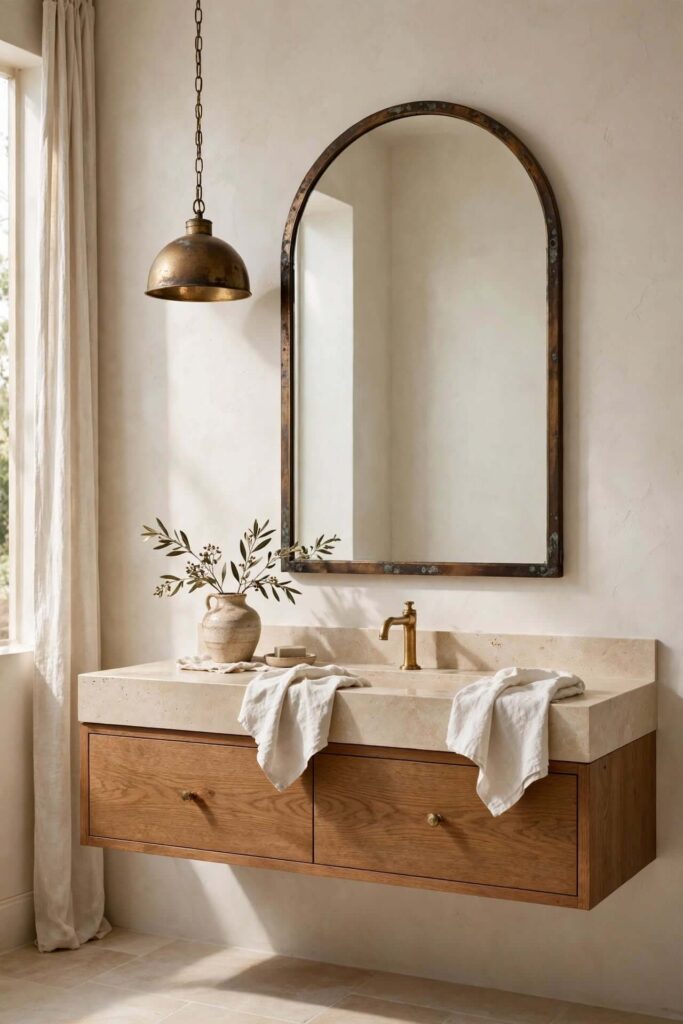
A brass pendant can bring warmth to a bathroom without making it feel overly formal. Pair it with creamy walls, beige stone, warm oak, and off-white textiles for a relaxed look. The trick is to repeat the brass finish in small amounts—perhaps through the faucet, mirror frame, or cabinet hardware—rather than covering every surface in the same metallic tone.
10. Use a Glass Pendant With Dark Tile
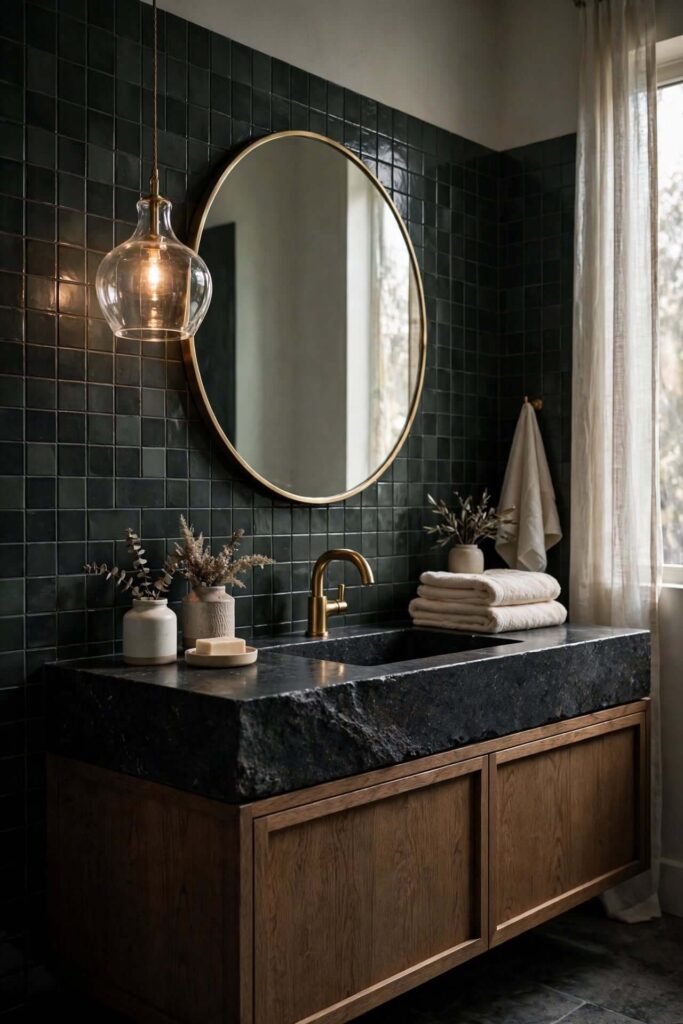
Dark bathroom tile can make a hanging lamp feel especially atmospheric. A transparent or lightly tinted glass pendant keeps the fixture visually delicate while allowing the bulb to become part of the design. Pair charcoal, deep green, or navy tile with warm metal hardware and soft towels to prevent the room from feeling too stark.
11. Try a Soft Linen-Shade Pendant
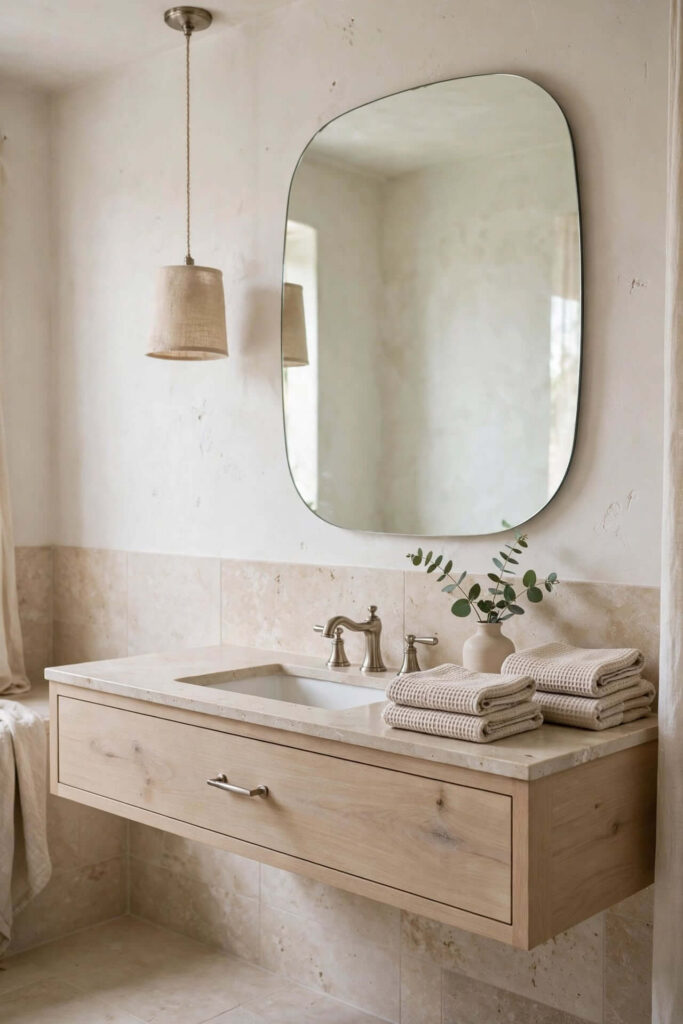
A fabric or linen-look pendant can introduce softness into a bathroom dominated by tile and polished surfaces. Choose a moisture-appropriate fixture and keep the shade relatively simple. Cream or natural linen tones work particularly well with warm white walls, light wood, and brushed metal finishes for a calm, spa-inspired atmosphere.
12. Create Contrast With a Vintage-Inspired Pendant

A vintage-inspired hanging lamp can add character to a modern bathroom that otherwise feels too new or uniform. Try aged brass, antique bronze, ribbed glass, or a classic globe shape against contemporary tile. This mix of old and new gives the room a collected appearance without requiring vintage furniture throughout the space.
Quick Win: Repeat just one vintage finish elsewhere—such as an antique-style mirror or aged-brass faucet—to make the pendant feel connected to the room.
13. Hang a Pair Over a Long Double Vanity
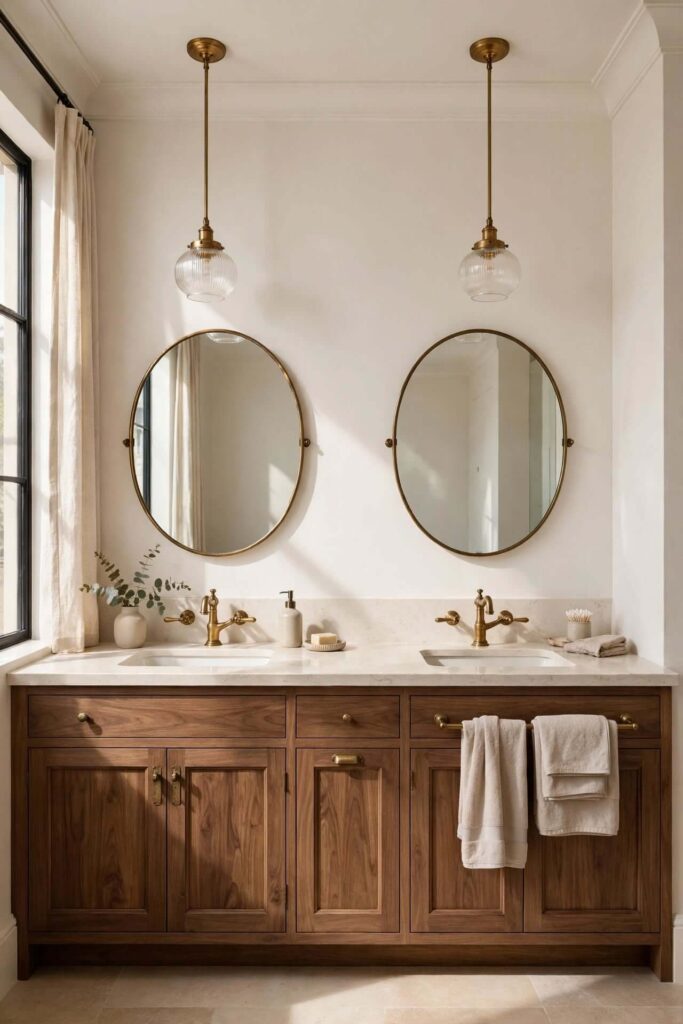
A long double vanity benefits from lighting that visually divides and balances the space. Two pendant lamps can create individual lighting zones while keeping the overall composition symmetrical. Choose fixtures that are substantial enough to relate to the vanity width, but leave enough breathing room around the mirrors, faucets, and countertop.
14. Use a Small Pendant in a Minimalist Bathroom
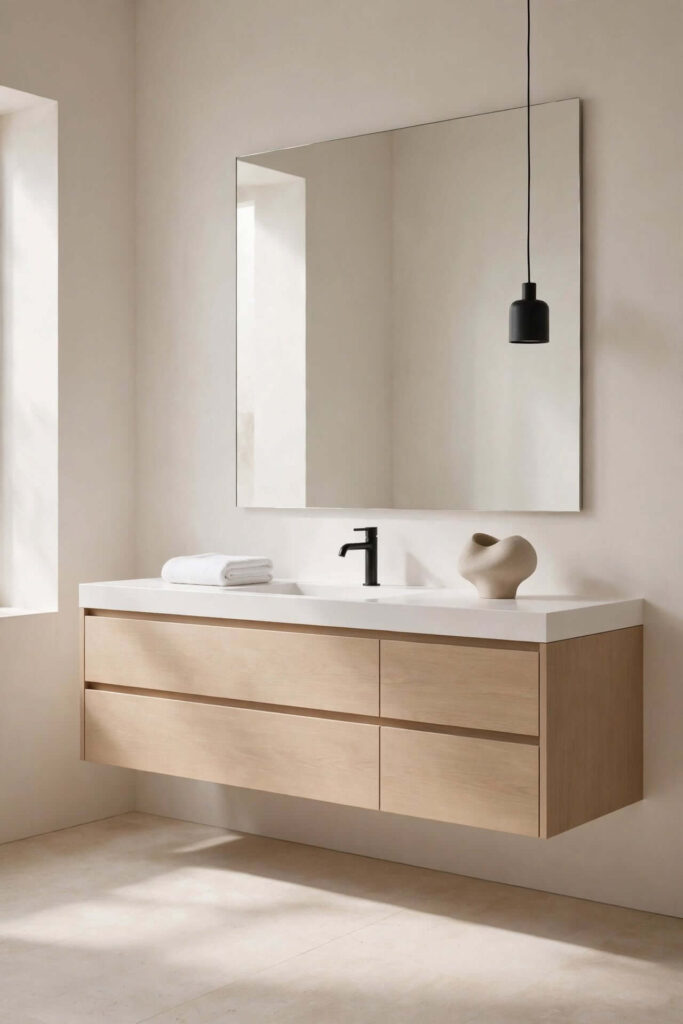
Minimalist bathrooms benefit from restraint, so choose a pendant with a simple silhouette and let the architecture do most of the work. A matte-white, black, or brushed-metal fixture can provide just enough visual interest above a floating vanity. Keep accessories limited and rely on texture from stone, wood, towels, and tile.
15. Combine Pendant Lighting With Natural Wood
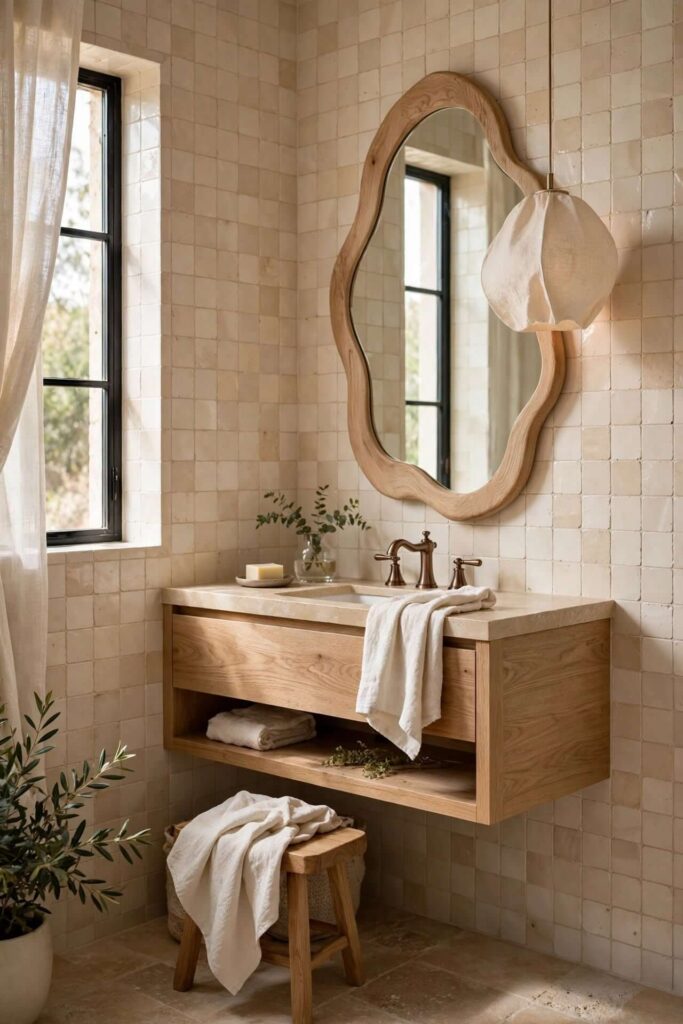
Natural wood and a hanging lamp create an inviting combination that works across many bathroom styles. Try a warm oak vanity with a softly shaped pendant, creamy tile, and brushed bronze or brass fixtures. The wood prevents the room from feeling cold, while the pendant adds a decorative layer without requiring extensive styling.
Conclusion
A hanging lamp bathroom design can change the atmosphere of the entire space without requiring a complete renovation. Whether you prefer warm rattan, crisp black metal, soft opal glass, or an elegant brass pendant, the best choice should suit your bathroom’s scale and existing finishes. You also do not need to copy an entire look. Choose one lighting idea that fits your space, budget, and personal style, then build around it gradually.
Frequently Asked Questions
1. Can you use a hanging lamp in a bathroom?
Yes, but the fixture must be specifically suitable for the bathroom location and moisture conditions. Always check its damp/wet-location rating and follow local electrical requirements.
2. Where should a hanging bathroom light be placed?
Common locations include beside a vanity mirror, over a vanity, or in an appropriate area above a freestanding bathtub. Placement depends on the fixture, ceiling height, bathroom layout, and required electrical clearances.
3. Are pendant lights good for bathroom vanities?
They can be both decorative and functional when properly positioned. Smaller pendants work particularly well beside mirrors or as part of a layered lighting scheme.
4. What type of hanging lamp is best for a small bathroom?
Choose a compact pendant with a simple silhouette and a light visual presence. Opal glass, small globes, and slim metal fixtures can provide interest without making the room feel crowded.
5. Can I use a pendant light above a bathtub?
A pendant can be used in some bathroom layouts, but electrical safety and local code requirements are particularly important around tubs and showers. The fixture must be appropriately rated and installed at the required clearance.
6. What color pendant works with a white bathroom?
Black, brass, bronze, chrome, and natural woven finishes can all work with white bathrooms. Choose a finish that connects with existing hardware or introduces an intentional contrast.
7. Are glass pendant lights suitable for bathrooms?
Bathroom-suitable glass fixtures can work well because they allow light to spread while maintaining a visually light appearance. Make sure the specific fixture has the appropriate rating for its intended location.
8. Can hanging lights make a small bathroom look bigger?
A visually light pendant can help prevent a small bathroom from feeling flat or crowded, especially when combined with mirrors and good ambient lighting. Avoid oversized fixtures that dominate the available space.
9. Should bathroom pendant lights match the faucet?
They do not have to match exactly. Coordinating finishes can create cohesion, while thoughtfully mixed metals can give the bathroom a more collected appearance.
10. What light color is best for a bathroom?
A neutral-to-warm white light is often comfortable for general bathroom use and creates a welcoming atmosphere. The ideal color temperature also depends on whether the bathroom needs accurate grooming or makeup lighting.
11. Can I use a rattan hanging lamp in a bathroom?
Rattan and woven materials can look beautiful, but moisture exposure must be considered carefully. Only use a fixture specifically designed and rated for the bathroom environment.
12. How large should a bathroom pendant be?
The fixture should relate to the size of the vanity, bathroom, and ceiling height. In a compact bathroom, a smaller pendant is generally easier to balance, while a spacious bathroom can accommodate a larger statement fixture.
13. Can I use hanging lights with recessed lights?
Yes. Layering pendant or hanging lighting with recessed ambient lighting can make the bathroom more functional and visually balanced. Each light source can serve a different purpose.
14. Are hanging lamps suitable for modern bathrooms?
Absolutely. Minimal black pendants, opal globes, sculptural fixtures, and streamlined metal designs can complement modern bathroom architecture particularly well.
15. What is the biggest mistake when choosing a bathroom hanging lamp?
Choosing a fixture based only on appearance can cause problems if it is incorrectly sized or unsuitable for the bathroom’s moisture conditions. Check the fixture rating, placement requirements, scale, and available clearance before installation.
Related Articles
- [Internal Link: Modern Bathroom Lighting Ideas]
- [Internal Link: Small Bathroom Lighting Ideas]
- [Internal Link: Bathroom Vanity Lighting Ideas]