

A dark bedroom can feel incredibly cozy, but getting the balance right matters. Too much black or deep color can make a room feel smaller, flat, or overly heavy, while the right combination of lighting, texture, wood, and soft fabrics can create a warm retreat that feels intentionally designed. Whether you want dramatic walls, a moody hotel-inspired atmosphere, or simply a richer alternative to an all-white bedroom, small changes can make a surprisingly big difference. These dark bedroom ideas show how to work with deeper shades without sacrificing comfort, brightness, or personality.
1. Layer Deep Charcoal Walls With Warm Bedding
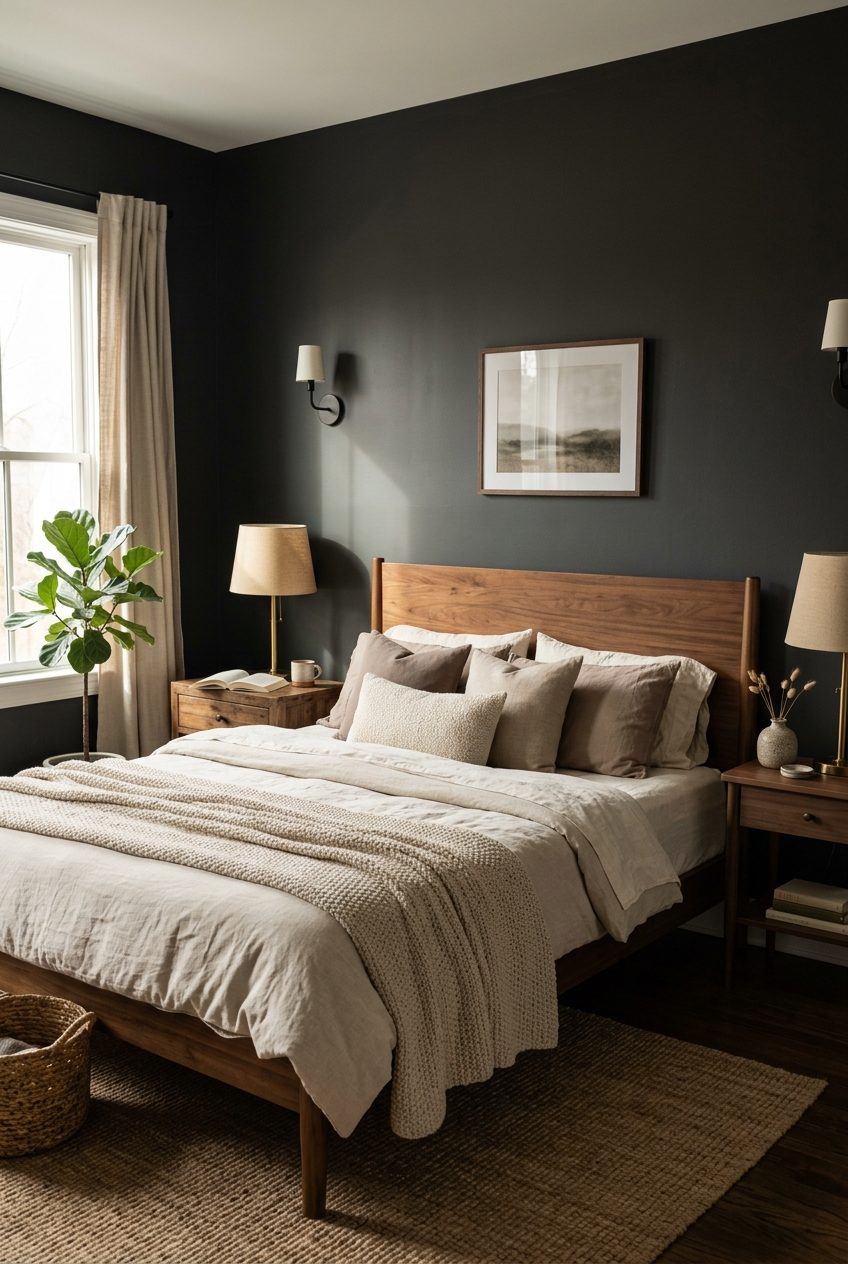
Charcoal walls are one of the easiest ways to create a sophisticated dark bedroom without making it feel completely black. Balance the deeper backdrop with warm ivory bedding, taupe cushions, and a textured throw at the foot of the bed. Medium or light wood furniture adds natural contrast, while warm bedside lamps keep the room from feeling cold. This combination works particularly well in bedrooms with good natural light or rooms where you want a cozy, cocoon-like atmosphere.
2. Create a Moody Black Bedroom With Brass Accents
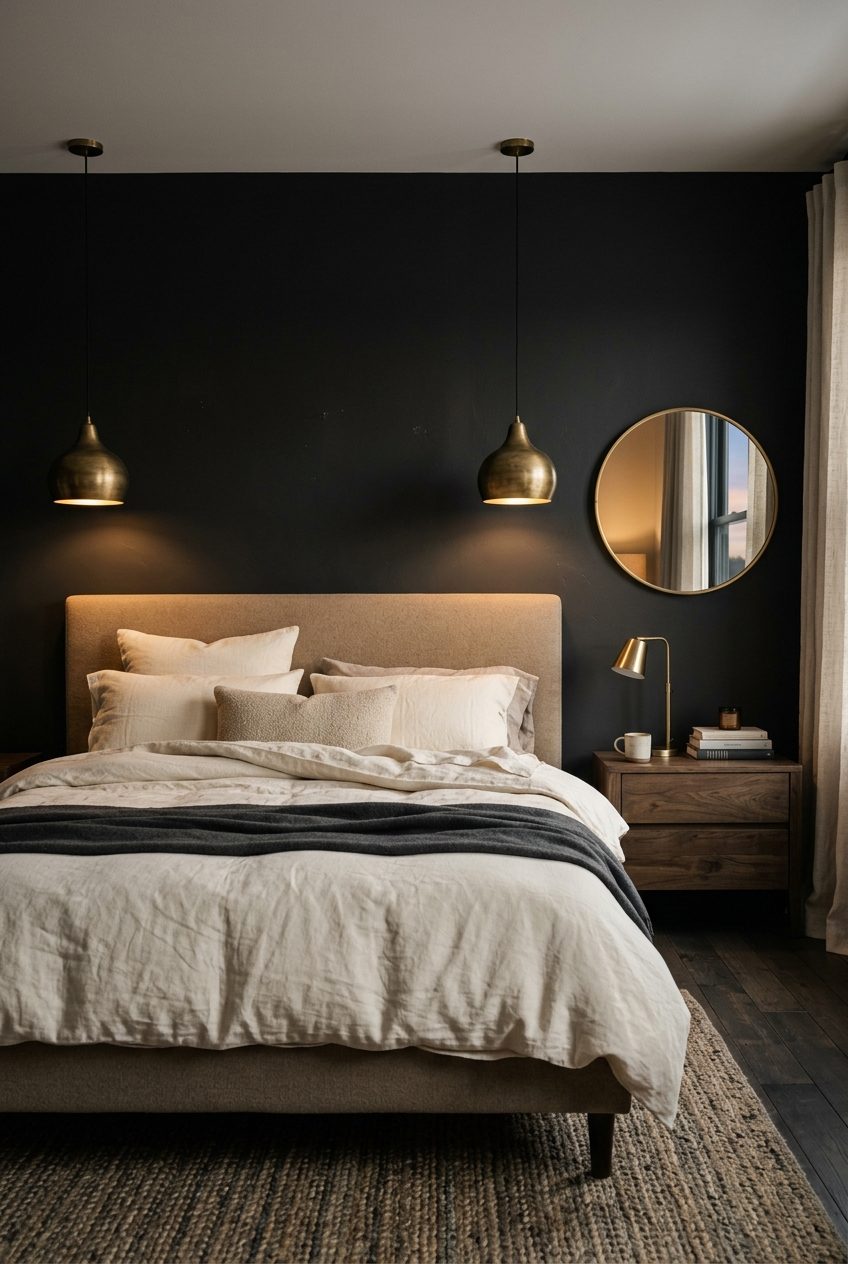
Black walls can give a bedroom a dramatic boutique-hotel feel when paired with warmer finishes. Instead of adding lots of color, introduce contrast through aged brass lamps, warm cream bedding, and perhaps a small wooden bench. Matte black walls tend to feel more sophisticated than glossy finishes, especially when paired with soft textiles. The key is to let brass and warm neutrals break up the darkness rather than covering every surface with additional accessories.
3. Pair Dark Green Walls With Natural Wood
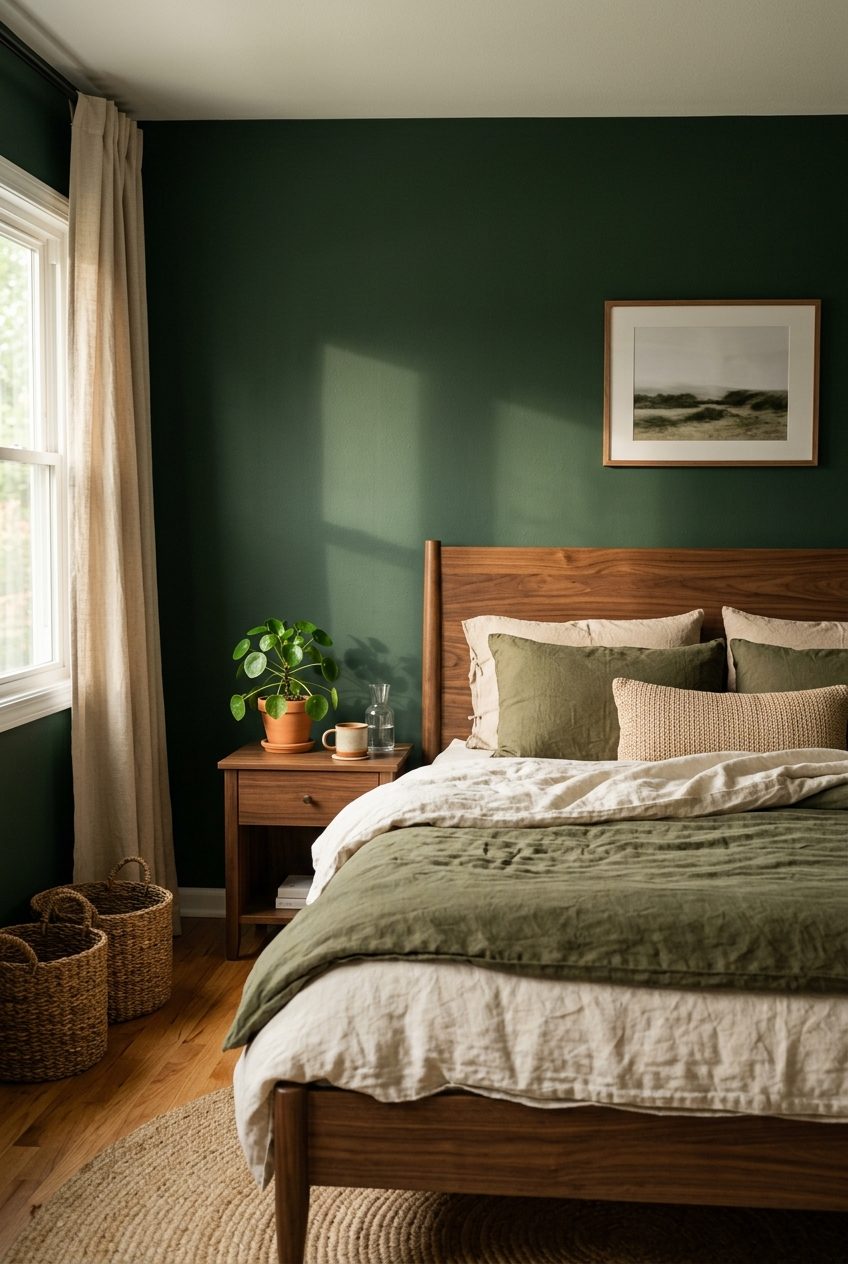
Dark green is an excellent alternative to black when you want a rich bedroom that still feels connected to nature. Try forest, olive, or deep moss green on the walls and pair it with walnut or oak furniture. Cream bedding softens the palette, while woven baskets, linen curtains, and small botanical accents reinforce the earthy feeling. This look works especially well for homeowners who want a moody bedroom without the stark contrast of pure black.
4. Use a Dark Accent Wall Behind the Bed
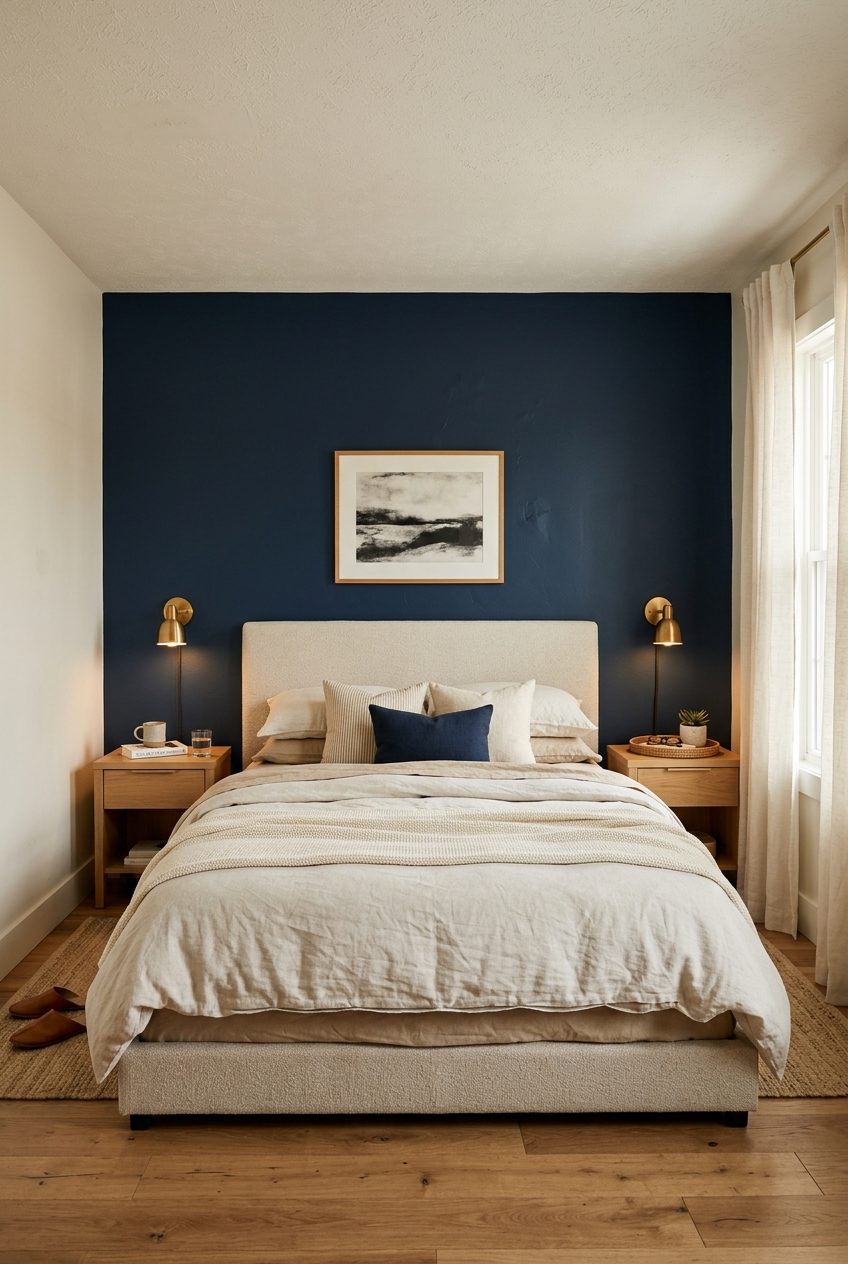
If painting the entire room feels too dramatic, focus the deeper color behind the bed. A charcoal, navy, espresso, or deep olive accent wall creates a strong focal point while leaving the remaining walls lighter. This approach is especially useful in smaller bedrooms because it introduces depth without surrounding the entire space with a dark shade. Keep the bedding and nearby furniture relatively simple so the accent wall remains the visual anchor.
5. Add Texture to a Dark Bedroom
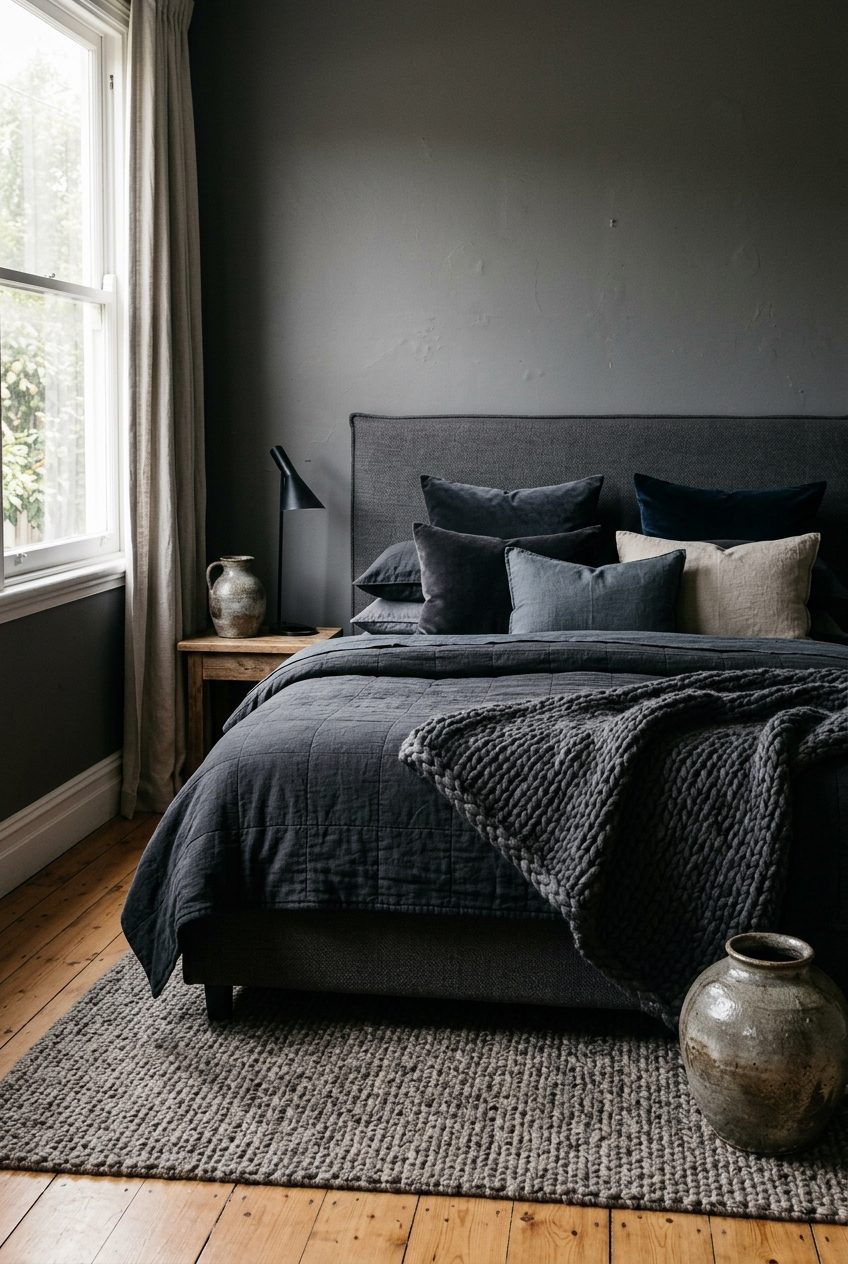
Dark colors become much more inviting when several tactile materials are layered together. Think velvet or linen cushions, a quilted duvet, a chunky throw, a wool rug, and natural wood furniture. The different surfaces catch light differently, preventing the room from looking like one flat block of color. This is particularly effective when your walls, bedding, or furniture are all within the same deep color family.
6. Mix Dark Walls With Warm Wood
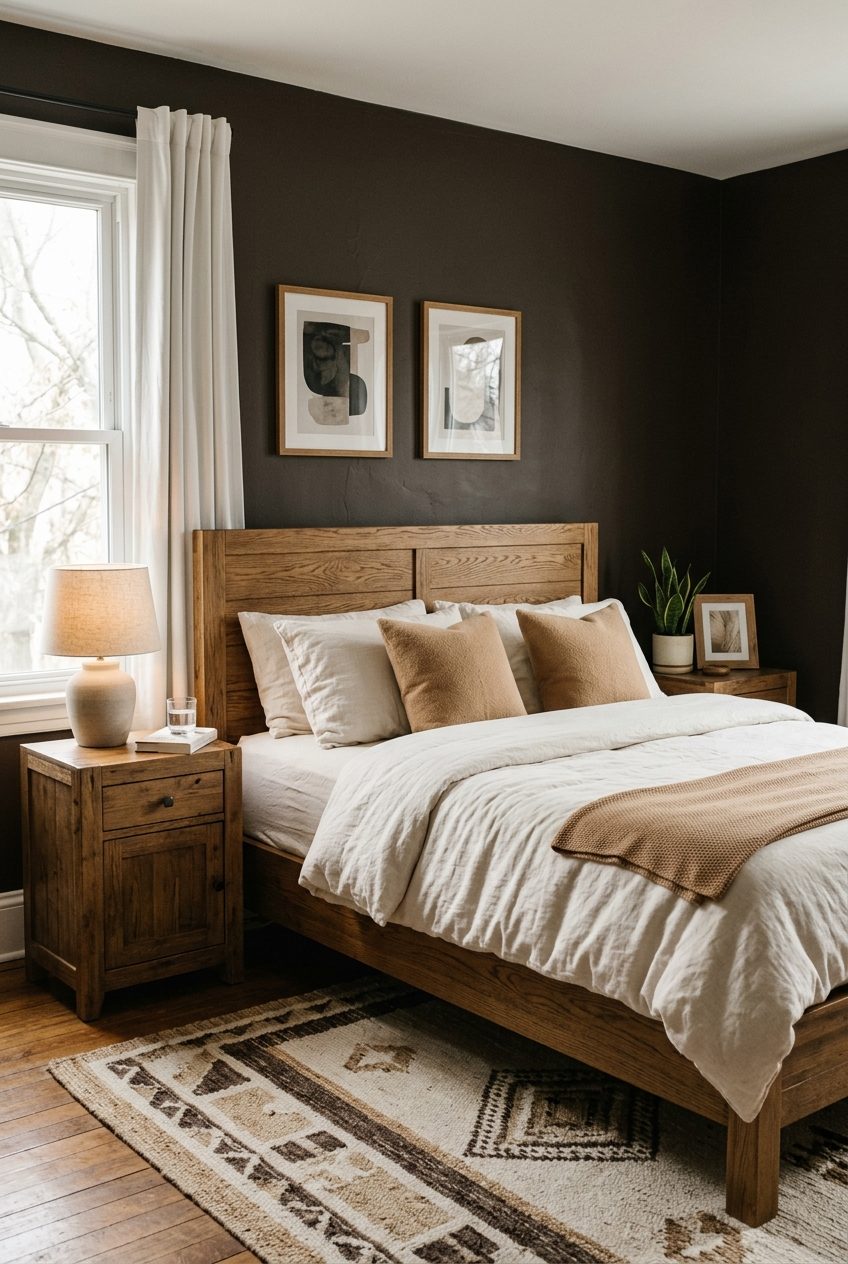
Warm wood can completely change the personality of a dark bedroom. Instead of relying on pale furniture to create contrast, use walnut, oak, or medium-toned wood to add warmth and visual depth. A wooden bed, nightstand, dresser, or exposed ceiling detail can keep the room grounded. Pair the wood with cream, camel, or soft beige textiles for a relaxed palette that feels sophisticated without becoming overly formal.
7. Make the Bed the Dark Bedroom Focal Point
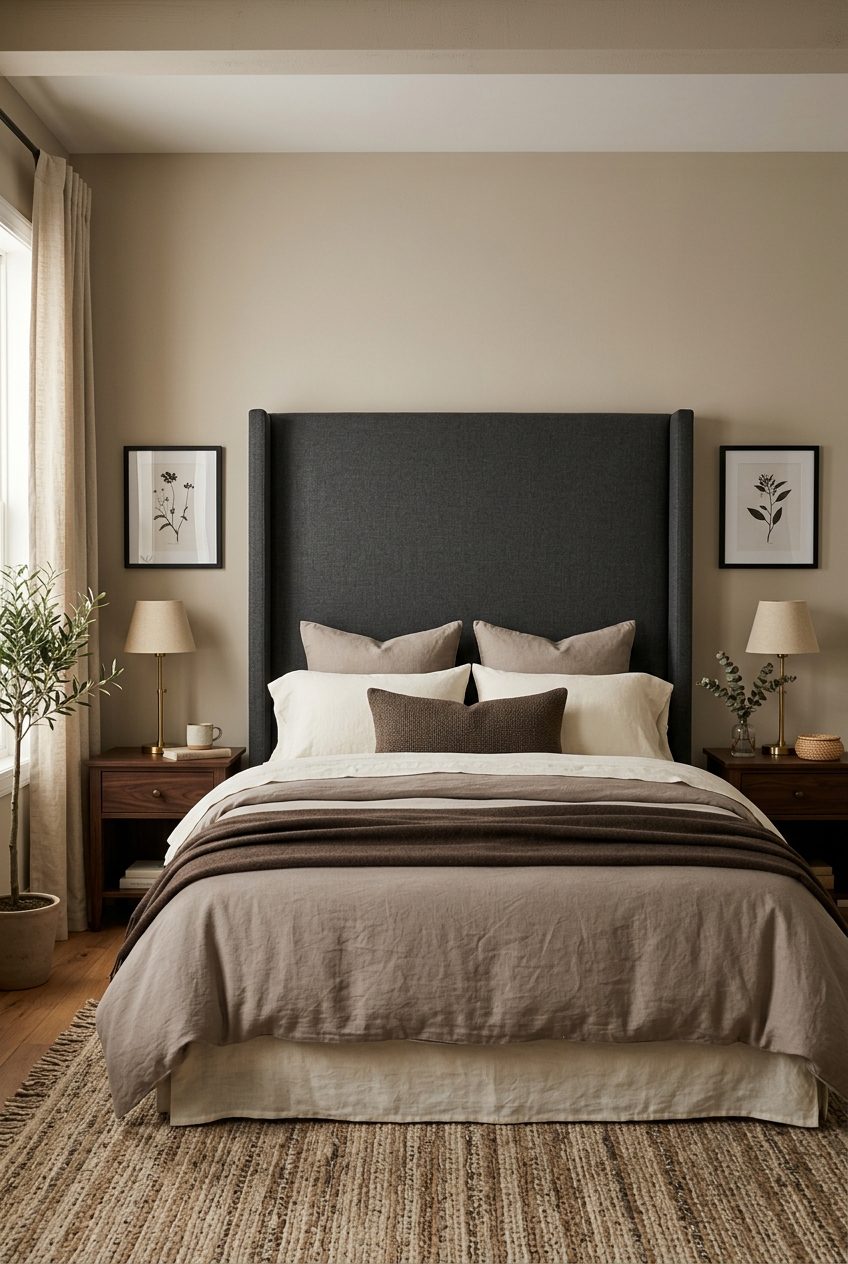
Sometimes the walls can remain relatively simple while the bed creates the drama. Choose a tall upholstered headboard in charcoal, deep navy, brown, or forest green and layer it with contrasting bedding. A substantial headboard draws the eye upward and gives the bedroom a more luxurious appearance without requiring extensive remodeling. This idea works particularly well for renters who want a darker aesthetic but cannot repaint their walls.
8. Try a Deep Navy Bedroom
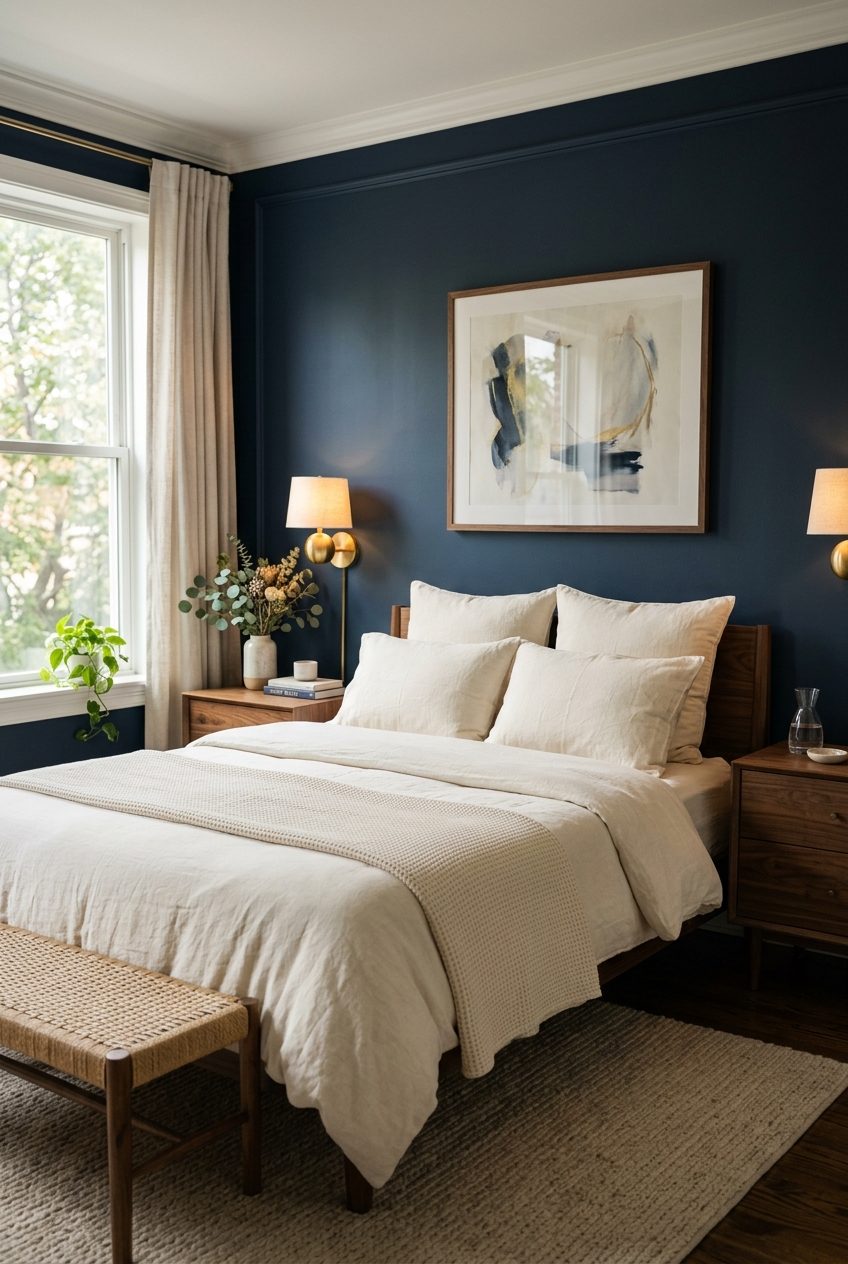
Deep navy offers the drama of a dark color while retaining a softer, more traditional character. Pair navy walls with crisp cream bedding, walnut furniture, and warm metallic lighting. If the room has white trim, leaving it bright can create a clean architectural frame around the darker walls. Navy works particularly well in bedrooms with classic furniture, contemporary shapes, or coastal-inspired details that need a richer color foundation.
9. Layer Warm Bedroom Lighting
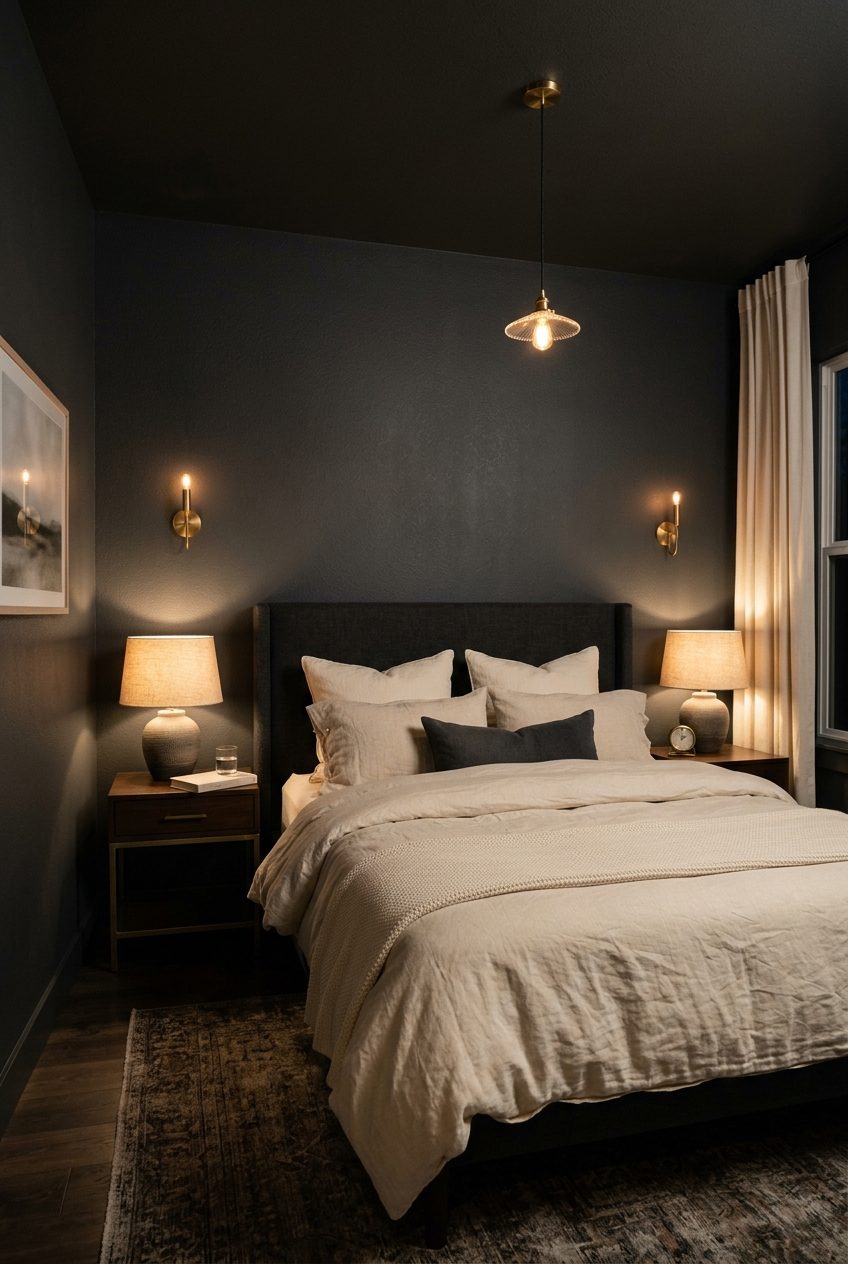
Lighting is what keeps a dark bedroom from feeling gloomy after sunset. Combine several sources instead of relying on one bright ceiling fixture. Bedside lamps, wall sconces, a pendant, and subtle accent lighting can create overlapping pools of warm light. Choose bulbs with a warm color temperature and use fabric or frosted shades to soften the glow. The result is a room that feels atmospheric at night rather than simply dark.
10. Soften the Look With Cream and Beige
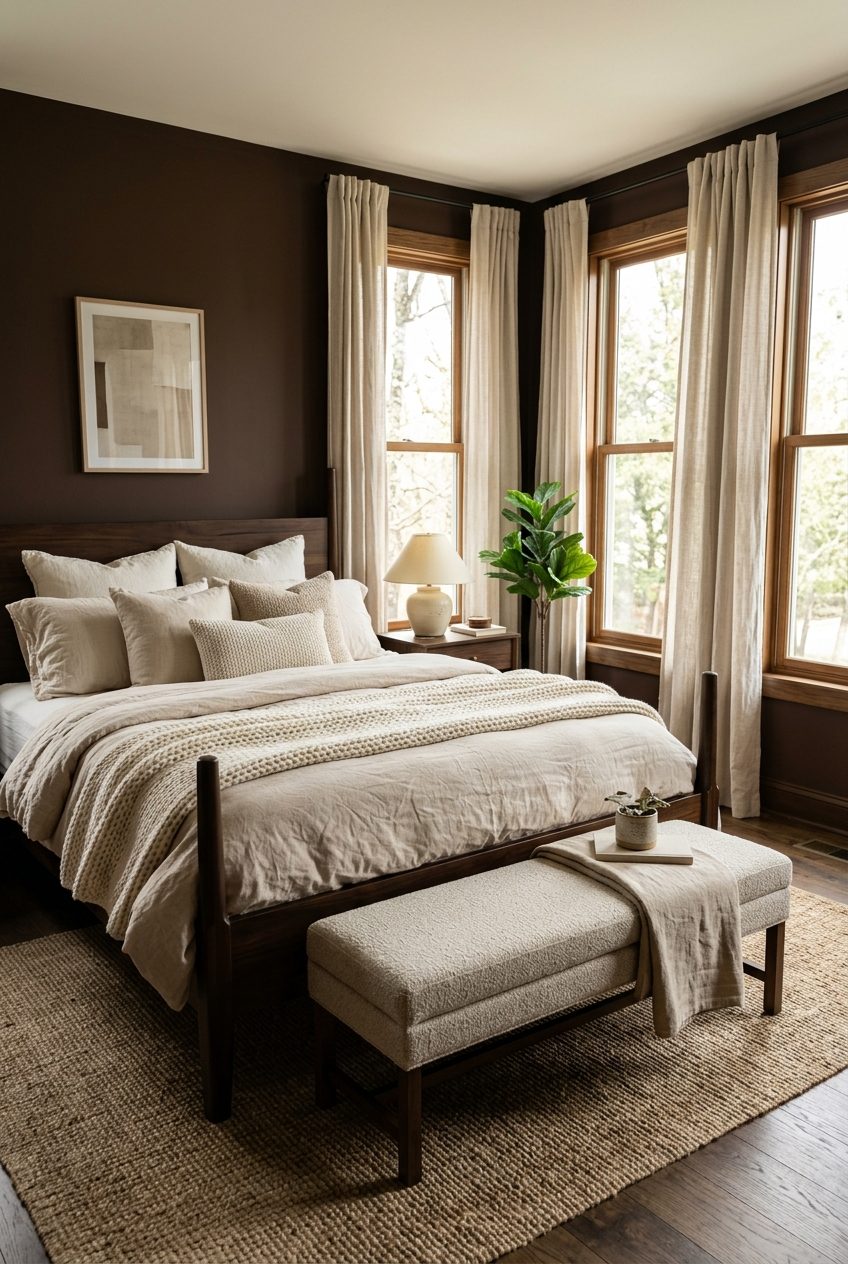
A dark bedroom does not need to be filled with dark furniture and accessories. Cream and beige can provide enough visual relief to make deep walls feel welcoming. Try an ivory duvet, beige upholstered bench, light curtains, and a neutral rug against a darker backdrop. This combination is especially useful when you want a moody bedroom aesthetic that still feels bright enough during the day.
11. Use Floor-to-Ceiling Dark Curtains
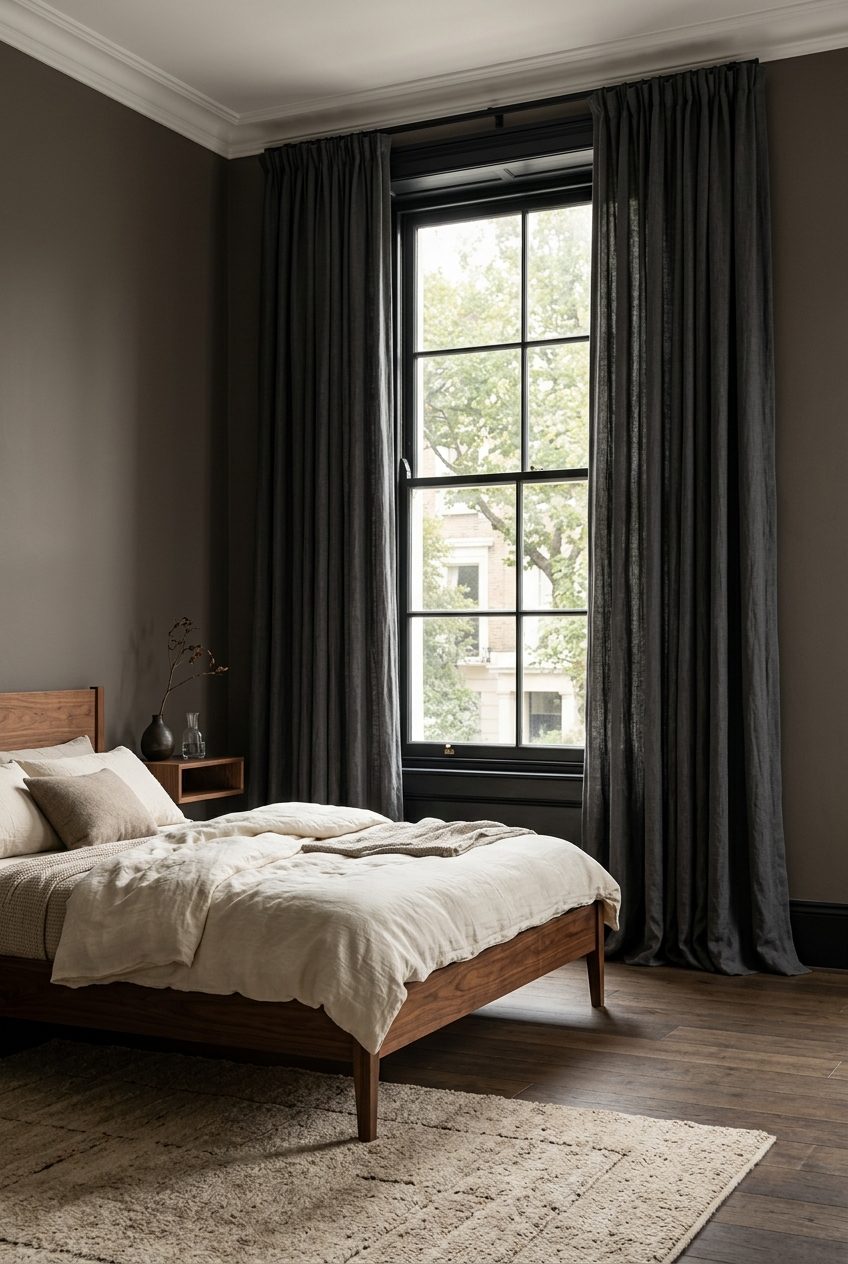
Dark curtains can make a bedroom feel more enveloping while adding softness to hard architectural lines. Hang them close to the ceiling and let them fall generously to the floor for a taller, more finished appearance. Choose linen, cotton, or another softly textured fabric rather than shiny synthetic material. If the walls are already dark, select curtains just slightly lighter or darker to create a layered monochromatic effect.
12. Add a Moody Gallery Wall
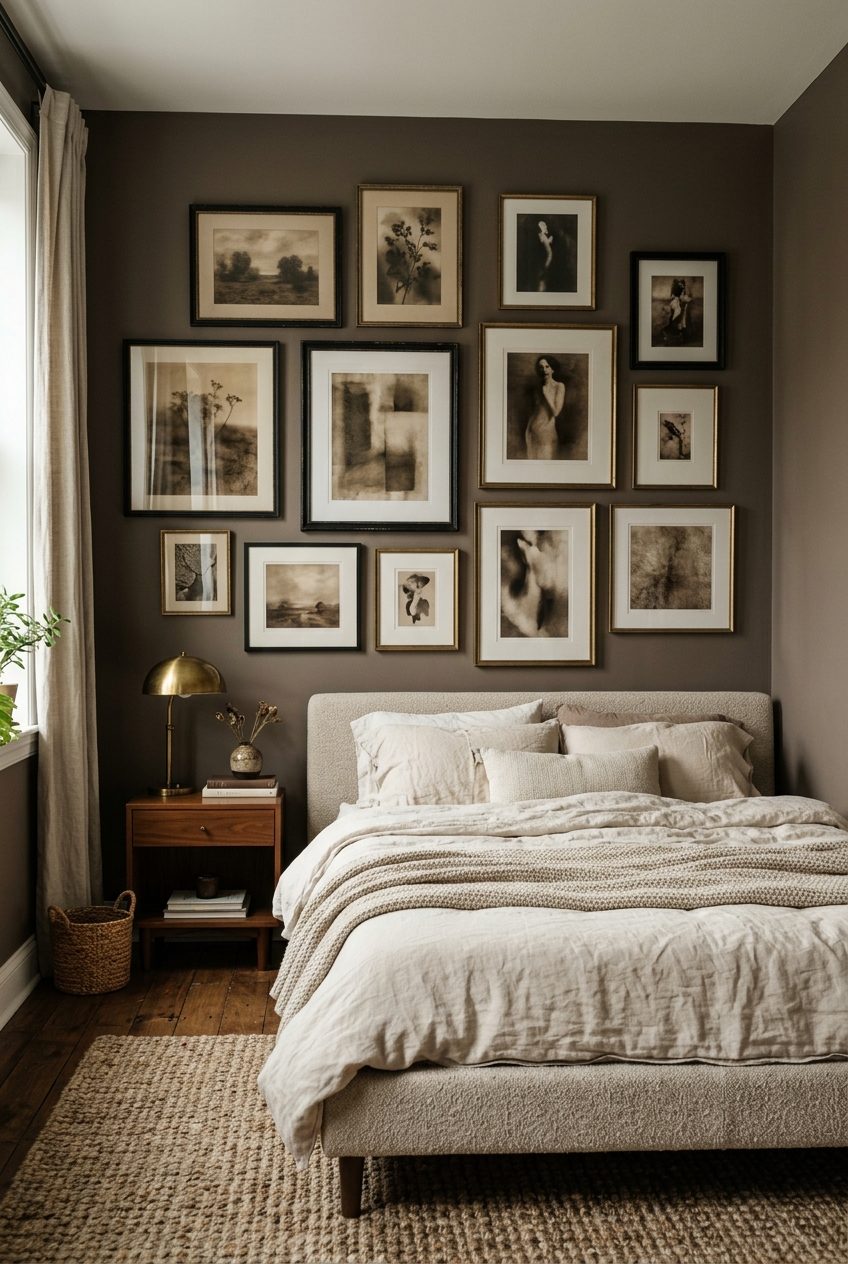
Artwork can prevent a dark bedroom from feeling visually empty. Instead of choosing several bright pieces, create a restrained gallery wall using sepia photography, muted landscapes, charcoal sketches, or vintage-inspired prints. Black, walnut, or aged-brass frames will keep the collection connected to the room’s darker palette. Keep the arrangement relatively simple so it adds personality without turning the wall into visual clutter.
13. Create a Dark Bedroom With Chocolate Brown
Chocolate brown brings warmth and richness to a bedroom without the intensity of black. Use it on walls, cabinetry, or larger furniture and combine it with caramel, cream, and warm wood. Brass or bronze hardware can add a refined finishing touch. This palette works especially well in bedrooms where you want a cozy, enveloping feeling that still feels contemporary rather than overly dramatic.
14. Combine Black and Natural Linen
Black and natural linen create an easy contrast between drama and softness. Use matte black walls or furniture as the foundation, then layer unbleached linen bedding, oatmeal cushions, and a natural fiber rug. The slightly imperfect texture of linen keeps black surfaces from feeling severe. This approach is particularly appealing if you prefer minimalist dark bedroom decor but still want the room to feel relaxed and comfortable.
15. Bring in a Soft Area Rug
A rug can visually soften a dark bedroom while adding warmth underfoot. Choose a large rug in a muted cream, taupe, rust, or gray-beige tone and place it so the lower portion of the bed sits comfortably on top. The contrast helps define the sleeping zone, particularly in larger bedrooms with dark floors or walls. A textured wool or vintage-style rug can also add character without introducing too many new colors.
16. Use Dark Paneling for Architectural Character
Wall paneling can give a dark bedroom more architectural depth than paint alone. Consider vertical paneling in deep green, charcoal, navy, or brown behind the bed to create a built-in focal point. Keep the surrounding furniture relatively streamlined so the wall remains the star. Vertical paneling can also emphasize ceiling height, making it especially useful in bedrooms with lower proportions.
17. Finish With a Cozy Dark Hotel-Inspired Look
For a polished final look, combine several dark bedroom elements rather than relying on one dramatic feature. Think deep walls, a substantial upholstered headboard, layered neutral bedding, warm wood, brass lighting, full curtains, and a textured rug. Keep accessories intentional and limited so the room feels luxurious rather than crowded. This approach works particularly well if you want your bedroom to feel like a quiet boutique retreat at the end of the day.
Conclusion
Dark bedrooms can feel warm, intimate, and surprisingly sophisticated when deeper colors are balanced with the right textures, lighting, and natural materials. You don’t need to recreate an entire room to achieve the effect. Start with one elementu2014a painted wall, darker bedding, warm lighting, or a textured rugu2014and build from there. Choose the combinations that fit your room, personality, and budget, then let the darker palette create the cozy atmosphere you’re after.
Frequently Asked Questions
1. Are dark colors good for a bedroom?
Yes. Dark colors can create a cozy, restful atmosphere and give a bedroom more visual depth. The key is balancing them with suitable lighting, textures, and lighter or warmer elements.
2. What is the best dark color for a bedroom?
Charcoal, deep navy, forest green, chocolate brown, and deep taupe are popular choices. The best shade depends on your natural light, existing furniture, and the atmosphere you want.
3. Do dark walls make a bedroom look smaller?
They can make a room feel more enclosed, but that is not always a disadvantage in a bedroom. Using mirrors, appropriate lighting, lighter bedding, and carefully chosen furniture can keep the space from feeling cramped.
4. How can I make a dark bedroom feel cozy?
Layer warm lighting, soft bedding, rugs, curtains, wood, and tactile fabrics. These materials add visual warmth and prevent dark walls from feeling flat or cold.
5. What colors go well with a dark bedroom?
Cream, beige, camel, warm white, walnut, oak, muted rust, brass, and bronze all work well with darker bedroom colors. Choose warm neutrals when you want a softer atmosphere.
6. Is black a good color for bedroom walls?
Black can work beautifully, particularly as an accent wall or in a room with sufficient natural and artificial lighting. Matte finishes generally create a softer appearance than highly glossy surfaces.
7. How do you brighten a dark bedroom?
Use layered lighting, mirrors, light-colored bedding, reflective metal accents, and curtains that allow natural light in during the day. A lighter rug can also create useful visual contrast.
8. Can a small bedroom have dark walls?
Yes. Dark walls can actually make a small bedroom feel intimate and intentional. Keep furniture appropriately scaled and introduce lighter bedding or curtains to maintain visual balance.
9. What bedding looks best in a dark bedroom?
Cream, ivory, oatmeal, beige, and soft gray bedding are versatile choices. For a more dramatic monochromatic look, layer different shades and textures within the same dark color family.
10. How can renters create a dark bedroom?
Renters can use dark bedding, curtains, rugs, removable wallpaper, large artwork, upholstered headboards, and dark furniture. These changes create a moody atmosphere without permanently altering the walls.
11. What lighting is best for a dark bedroom?
Use multiple warm light sources rather than relying on one ceiling fixture. Bedside lamps, sconces, pendants, and subtle accent lights can create a softer and more layered evening atmosphere.
12. Can you mix different dark colors in one bedroom?
Yes. Deep navy, charcoal, forest green, brown, and black can work together when their undertones are compatible. Use one dominant shade and introduce the others through furniture, textiles, or accents.
13. What wood looks best with dark bedroom colors?
Walnut and medium-to-warm oak are particularly effective because their natural warmth balances deeper wall colors. Very cool gray-toned wood can sometimes make a dark palette feel colder.
14. How do I make a dark bedroom look luxurious?
Focus on texture and proportion rather than adding lots of decorations. An upholstered headboard, layered bedding, warm metal lighting, full-length curtains, quality-looking textiles, and natural wood can create a refined appearance.
15. What is a common mistake when decorating a dark bedroom?
Making every surface equally dark can flatten the room visually. Introduce contrast through warm wood, lighter textiles, varied textures, and layered lighting so the darker palette has depth.
Related Articles
- Cozy Bedroom Ideas That Feel Warm and Inviting
- Bedroom Color Combination Ideas for a Stylish Space
- Small Bedroom Ideas That Maximize Space
- Green Bedroom Ideas for a Calm and Cozy Look
- Modern Bedroom Ideas for a Relaxed Retreat